

En tokeniseringsplattform lar deg konvertere virkelige eller digitale aktiva til sikre digitale tokens på en blokkjede. Hvis du sammenligner tokeniseringsplattformer, trenger du løsninger med sterke funksjoner for etterlevelse, aktivaforvaltning og integrasjoner som du kan stole på. Ved å velge riktig leverandør kan du unngå regulatorisk risiko og samtidig legge til rette for raskere og mer transparente transaksjoner.
I denne veiledningen får du en tydelig oversikt over de mest pålitelige tokeniseringsplattformene i 2026, slik at du trygt kan vurdere hvilken løsning som best støtter virksomheten, kundene og aktivaene dine.
Hvorfor du kan stole på våre programvareanbefalinger
6,700+
Reviews
20
Industry experts
16+
Evaluation factors
14
Years
Teamet vårt har testet og anmeldt programvare siden 2012. Vi er selv økonomiledere, så vi vet hvor vanskelig og hvor viktig det er å velge riktig programvare.
I denne guiden har vi vurdert verktøyene gjennom praktisk testing og uavhengig research og gitt dem poeng ut fra våre utvelgelseskriterier.
Anmeldelsene våre bygger på vår egen redaksjonelle vurdering. De er ikke et salgsargument.
Sammenligningstabell for tokeniseringsplattformer
Denne sammenligningstabellen oppsummerer prisopplysningene for mine utvalgte tokeniseringsplattformer:
| Tool | Best For | Trial Info | Price | ||
|---|---|---|---|---|---|
| 1 | Best for digital securities trading access | Not available | Pricing upon request | Website | |
| 2 | Best for private market investment access | Not available | Pricing upon request | Website | |
| 3 | Best for institutional-grade tokenized funds | Not available | Pricing upon request | Website | |
| 4 | Best for real-world asset tokenization | Not available | Pricing upon request | Website | |
| 5 | Best for white-label real estate platforms | Free demo available | From $300/month | Website | |
| 6 | Best for modular compliance frameworks | Not available | From $3,250/month | Website | |
| 7 | Best for regulated digital asset solutions | Not available | Pricing upon request | Website | |
| 8 | Best for secure on-chain asset management | Free demo available | From $999/month | Website | |
| 9 | Best for enterprise blockchain tokenization | Free plan available | Pricing upon request | Website | |
| 10 | Best for integrated private asset infrastructures | Not available | Pricing upon request | Website |


Anmeldelser av de beste tokeniseringsplattformene
Nedenfor finner du mine detaljerte sammendrag av de beste tokeniseringsplattformene som kom med på kortlisten min. Anmeldelsene mine gir en grundig gjennomgang av funksjonene, etterlevelsesmulighetene og integrasjonene til hver plattform, slik at du kan finne den som passer best for deg.

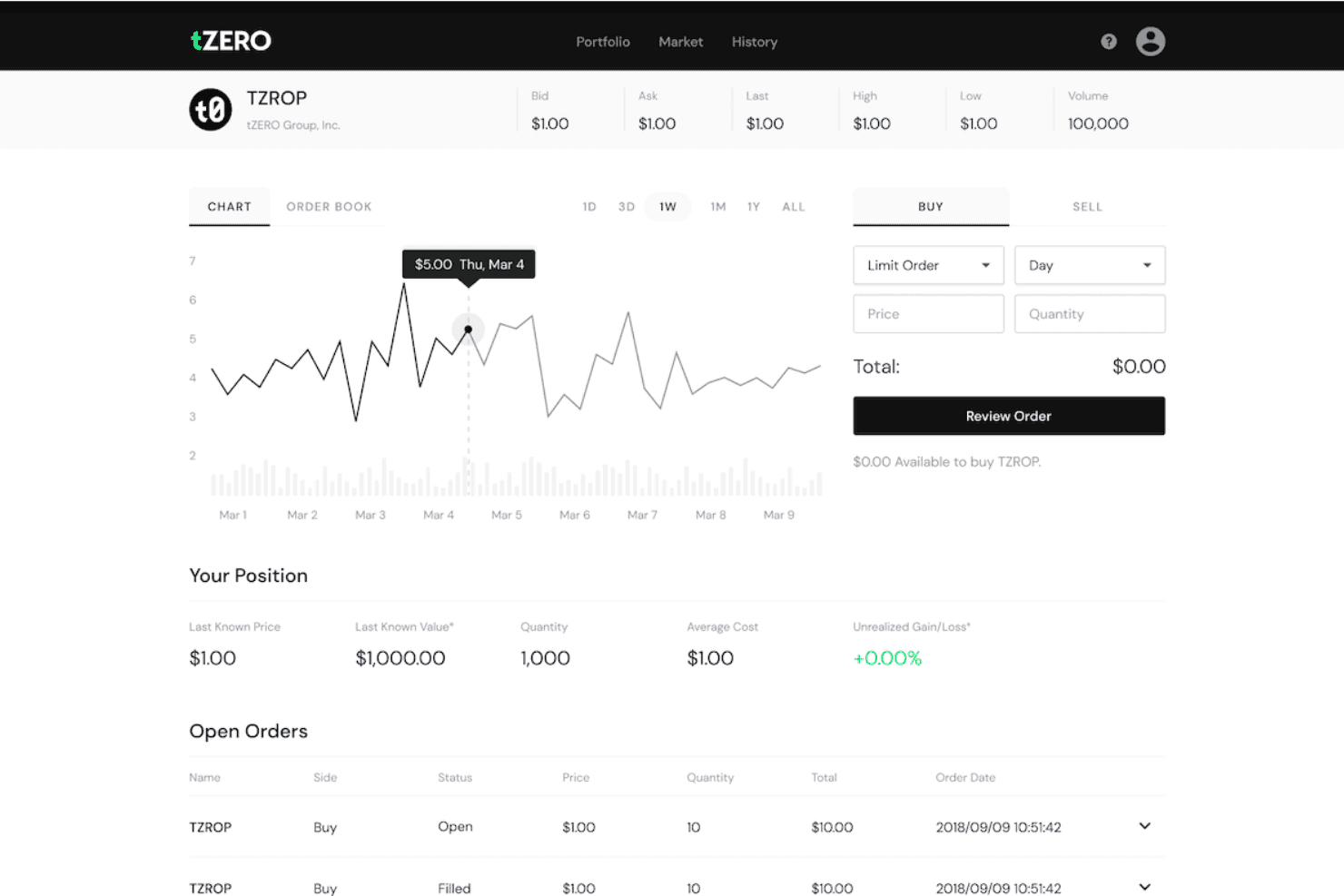
tZERO offers a trading interface for TZROP tokens with real-time charts, order placement, portfolio position, and open orders. tZERO is a regulated digital securities platform focused on tokenizing assets like real estate, funds, and private equity and providing integrated compliance, cap table management, and secondary trading through its alternative trading system.
Who Is tZERO Best For?
Institutional finance teams and asset managers needing regulated digital asset issuance and trading for US-based or SEC-compliant security token offerings.
Why I Picked tZERO
I picked tZERO as one of the best because I appreciate its regulated ATS, which lets my team trade security tokens compliantly. I can tokenize real estate and private equity, then enable digital secondary trading access, all on one platform.
tZERO Key Features
- Automated compliance screening: Built-in KYC and AML checks for onboarding and trading participants.
- On-chain cap table management: Real-time updates of token holder records and ownership changes.
- Smart contract-based transfer controls: Automated enforcement of transfer restrictions using blockchain rules.
- Issuer and investor dashboards: Centralized portals to track distributions, transactions, and corporate actions.
tZERO Integrations
tZERO offers native integrations with Zerohash, Fireblocks, Archax, Lynq, ArcaLabs, and Alphaledger. An API is available for custom integrations.
Pros and Cons
Pros:
- Real-time cap table and investor updates
- Automated on-chain compliance and transfer controls
- Regulated secondary market for security tokens
Cons:
- Smart contract customization options are restricted
- Global regulatory differences restrict availability
Learn more about tZERO:
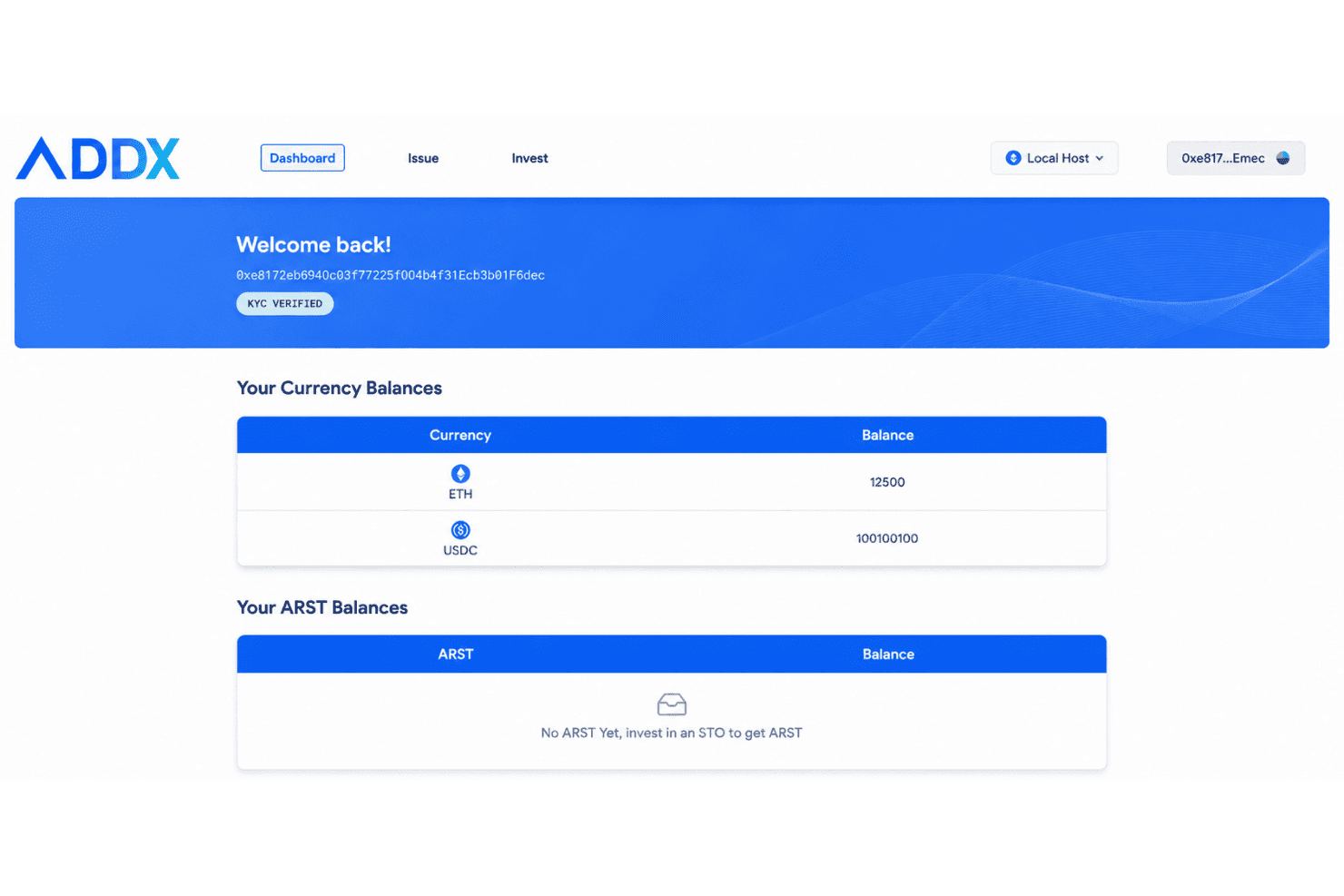
ADDX features a user dashboard showing currency balances in ETH and USDC, alongside an ARST token balance section for STO investors. ADDX is a regulated tokenization platform for private market assets that lets you fractionalize, issue, manage, and trade digital securities on blockchain rails with integrated compliance and settlement tools.
Who Is ADDX Best For?
Institutional investors, stakeholders, and finance teams who need regulated access to tokenized private market assets in Asia-Pacific.
Why I Picked ADDX
I picked ADDX as one of the best because I can tokenize and fractionalize private market assets, automate compliance for accredited investors, and enable secondary market access, which aligns with its focus on private market investment access.
ADDX Key Features
- On-chain investor registry: Tracks investor ownership and transactions directly on the blockchain.
- Regulatory licenses: Operates under MAS-regulated Recognised Market Operator and Capital Markets Services licenses.
- Automated smart contract settlements: Automates settlement processes for digital securities using smart contracts.
- Licensed custody partnerships: Safeguards assets with institutional-grade custody partners for fund segregation.
ADDX Integrations
Native integrations are not publicly listed.
Pros and Cons
Pros:
- Integrated compliance and investor onboarding workflows
- Secondary trading of fractionalized private assets
- Regulated by the Monetary Authority of Singapore
Cons:
- Secondary market liquidity can be inconsistent
- Limited to accredited and institutional investors
Learn more about ADDX: Best for institutional-grade tokenized funds
- Not available
- Pricing upon request
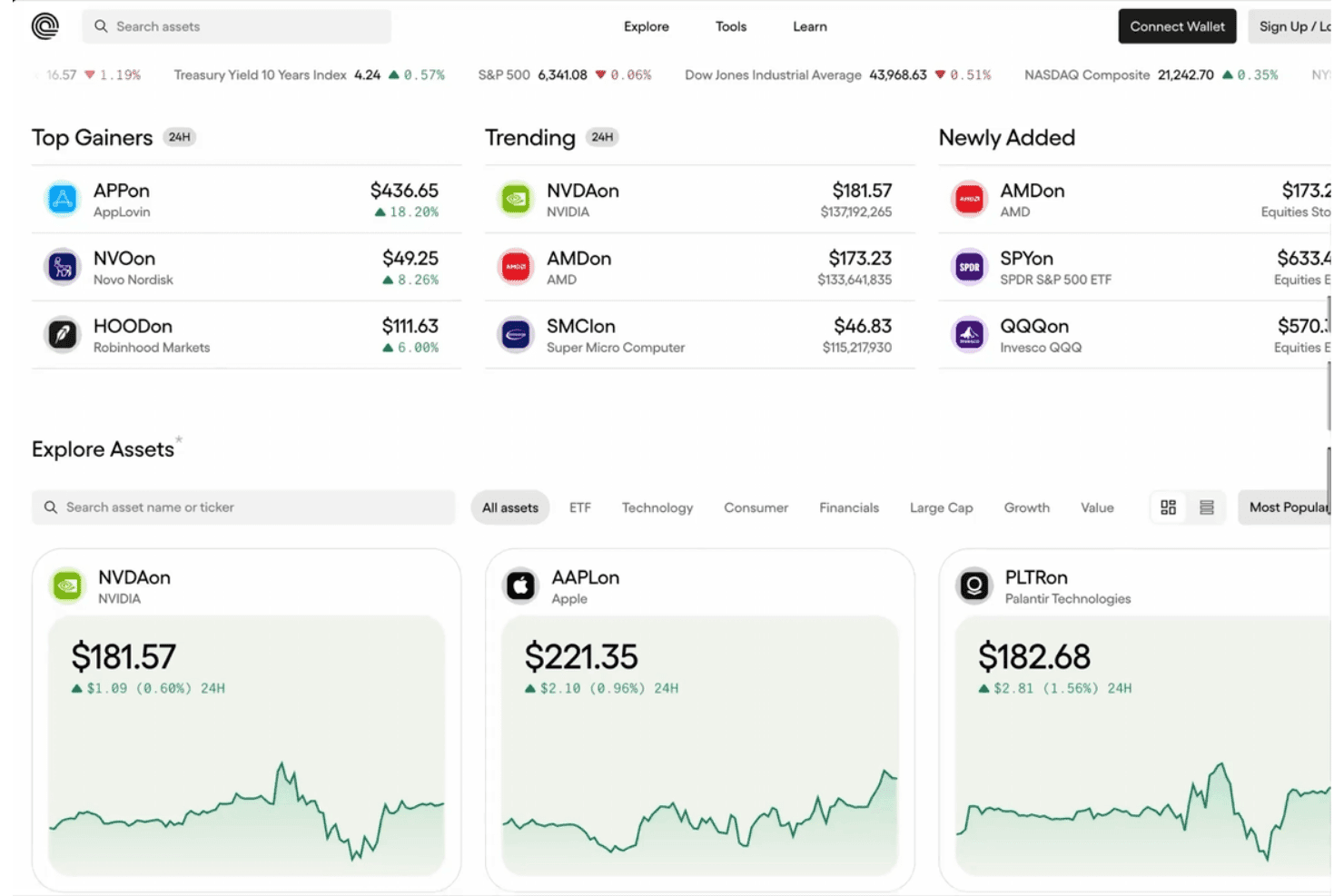
Ondo Finance offers stock and crypto asset tracking with top gainers, trending assets, and tokenized equities like NVDAon and AAPLon. Ondo Finance is a tokenization platform designed for institutions to issue, manage, and transfer blockchain-based fund tokens backed by regulated, real-world assets like U.S. Treasuries and money market instruments.
Who Is Ondo Finance Best For?
Institutional finance teams and asset managers seeking compliant, on-chain tokenization and administration of regulated fund products.
Why I Picked Ondo Finance
I picked Ondo Finance for my shortlist because I can issue and manage tokenized funds using on-chain smart contracts, with built-in regulatory compliance and smooth institutional custody that backs every asset in real time.
Ondo Finance Key Features
- On-chain cap table management: Maintain a real-time, blockchain-based registry of investor holdings and transfers.
- Jurisdictional transfer controls: Automatically enforce regional restrictions on token transfers within the platform.
- Automated interest distribution: Distribute yield and payments to token holders using programmable rules.
- Multiple custody integrations: Connect to institutional wallets and major custodians for secure asset storage.
Ondo Finance Integrations
Ondo Finance offers native integrations with Aptos, BitGo, BlackRock, Coinbase, Ethereum, Fireblocks, Gauntlet, Mantle, Noble, and Polygon, among others. An API is available for custom integrations.
Pros and Cons
Pros:
- Real-world asset backing with big-name partners
- Automated distributions and investor reporting
- On-chain compliance controls for institutional requirements
Cons:
- Heavy reliance on centralized administration
- High minimum investments for core products
Learn more about Ondo Finance:
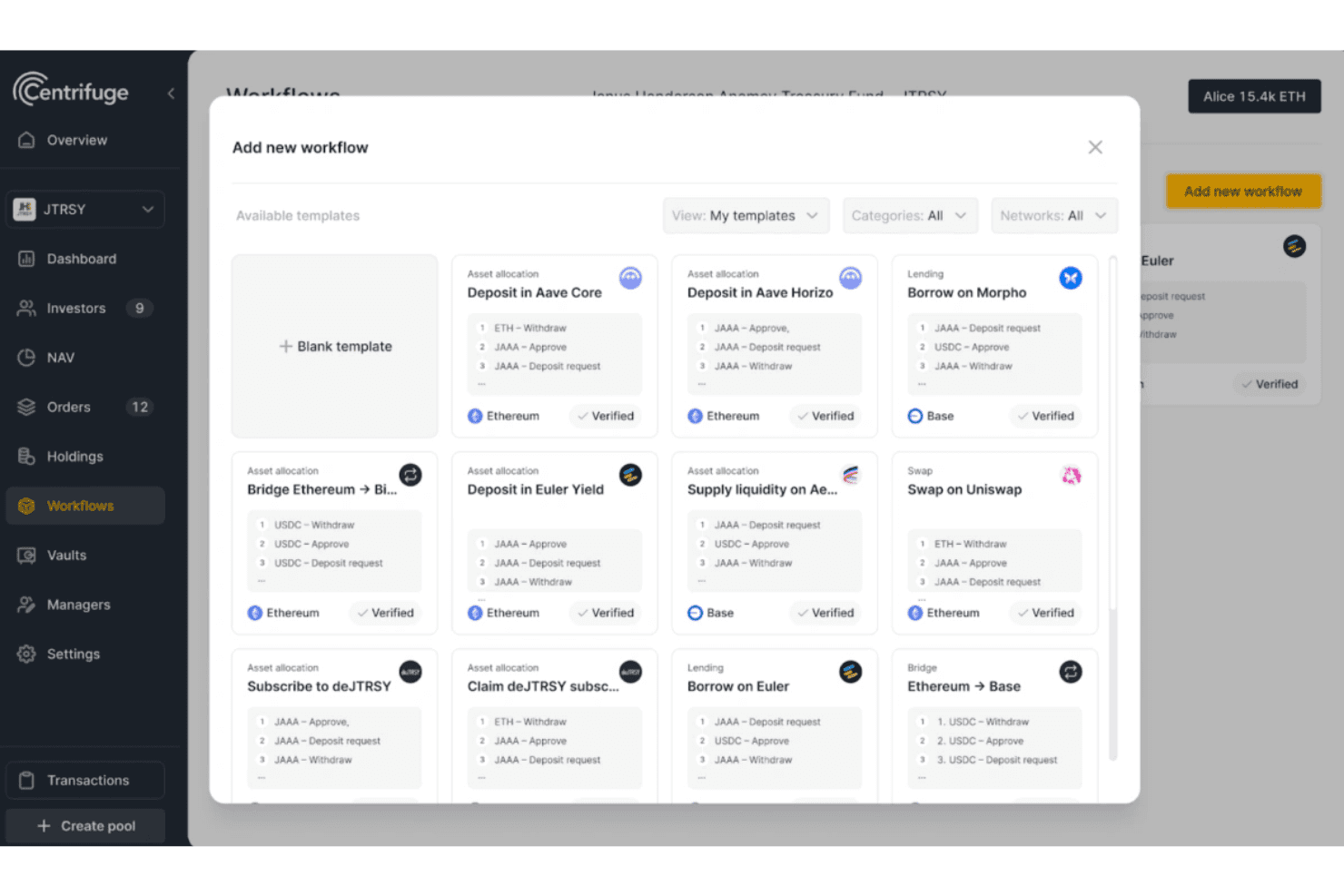
Centrifuge offers a workflow automation feature with pre-built templates for DeFi operations like lending, swapping, and asset allocation across networks. Centrifuge is a blockchain-based tokenization platform that lets you create, issue, and manage on-chain representations of real-world assets, including loans, invoices, and real estate investment opportunities.
Who Is Centrifuge Best For?
Centrifuge is a strong fit for asset managers and leaders in financial markets looking to tokenize and finance real-world assets on blockchain infrastructure.
Why I Picked Centrifuge
I picked Centrifuge as one of the best because I can tokenize real-world assets like invoices and property on a purpose-built blockchain, set smart contract-based compliance rules, and access on-chain liquidity pools specifically for asset-backed tokens.
Centrifuge Key Features
- On-chain cap table management: Manage investor ownership and changes on blockchain infrastructure.
- Integrated KYC/AML workflows: Automate onboarding compliance checks for all platform participants.
- Institutional wallet integrations: Connect to custodial wallets including Fireblocks and Ledger.
- Multi-chain interoperability: Operate assets across the Centrifuge Chain and Ethereum networks.
Centrifuge Integrations
Native integrations are not publicly listed. An API is available for custom integrations.
Pros and Cons
Pros:
- DeFi liquidity pools for asset-backed tokens
- Automated on-chain compliance and investor management
- Native support for tokenizing real-world assets
Cons:
- Underlying assets are highly illiquid
- No regulated built-in secondary marketplace
Learn more about Centrifuge: Best for white-label real estate platforms
- Free demo available
- From $300/month
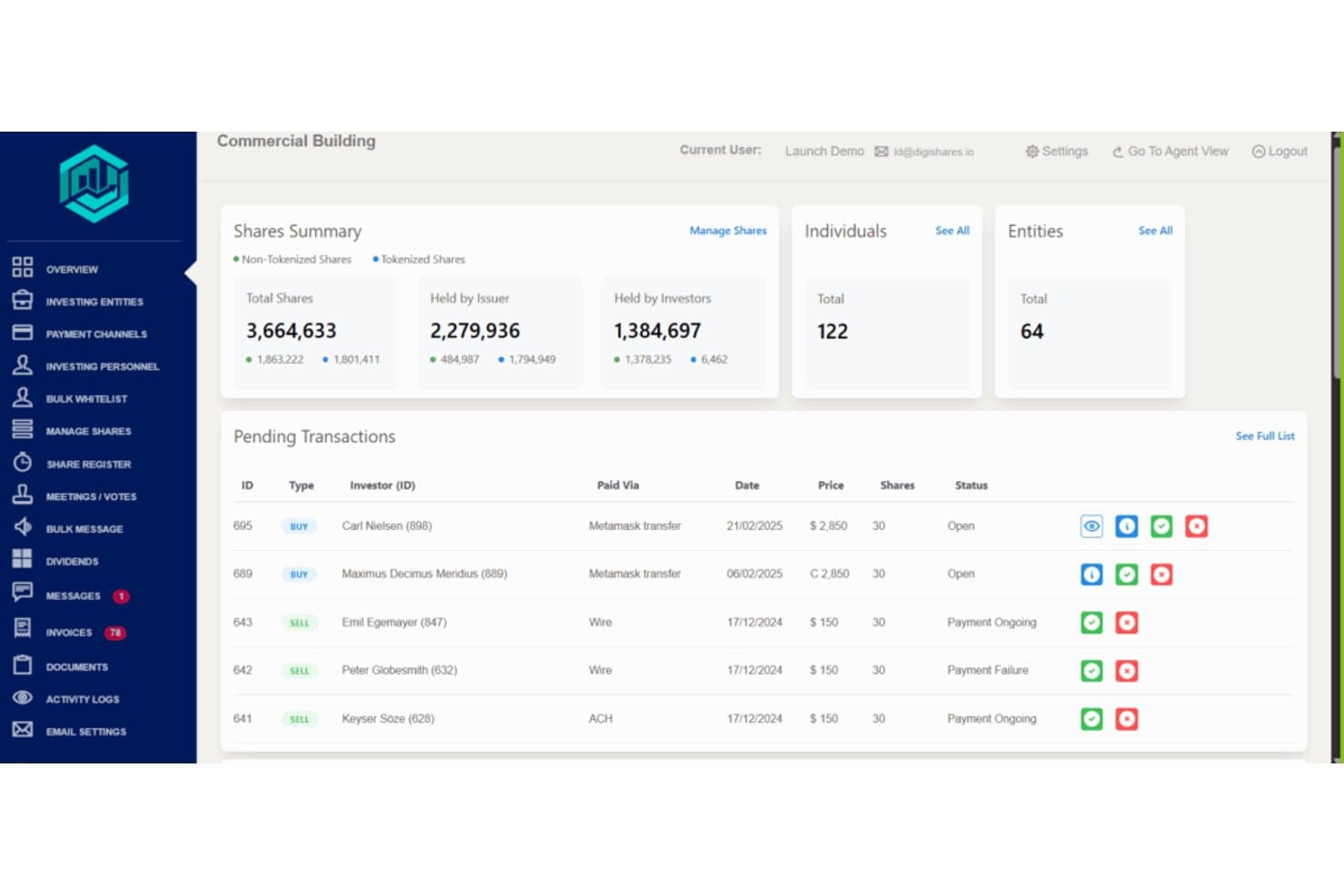
DigiShares offers a commercial building tokenization dashboard with shares summary, pending transactions, and investor management tools. DigiShares is a tokenization platform designed for real-world assets that lets you issue, manage, and trade digital securities through a white-label system tailored for asset classes like real estate and private funds.
Who Is DigiShares Best For?
Real estate issuers, fund administrators, and asset management firms seeking a customizable solution for digitalizing and managing fractional ownership.
Why I Picked DigiShares
I picked DigiShares as one of the best because it lets my team launch white-label real estate portals with asset tokenization, full compliance automation, and built-in investor onboarding tailored for real estate projects.
DigiShares Key Features
- On-chain cap table management: Tracks ownership and updates investor records in real time.
- Corporate actions automation: Executes dividend distributions and voting directly via smart contracts.
- Multi-wallet compatibility: Supports self-custody, institutional, and custodial wallets for asset holding.
- Secondary market connectivity: Integrates with external exchanges and ATS for post-issuance trading.
DigiShares Integrations
DigiShares offers native integrations with Stripe, DocuSign, Dwolla, Xendit, Dropbox Sign, Tangany, and WallerConnect, among others. An API is available for custom integrations.
Pros and Cons
Pros:
- On-chain cap table and corporate governance tools
- Automated investor onboarding and compliance workflows
- White-label portals for real estate tokenization
Cons:
- Custom API setup requires technical expertise
- Limited independent user reviews available
Learn more about DigiShares:
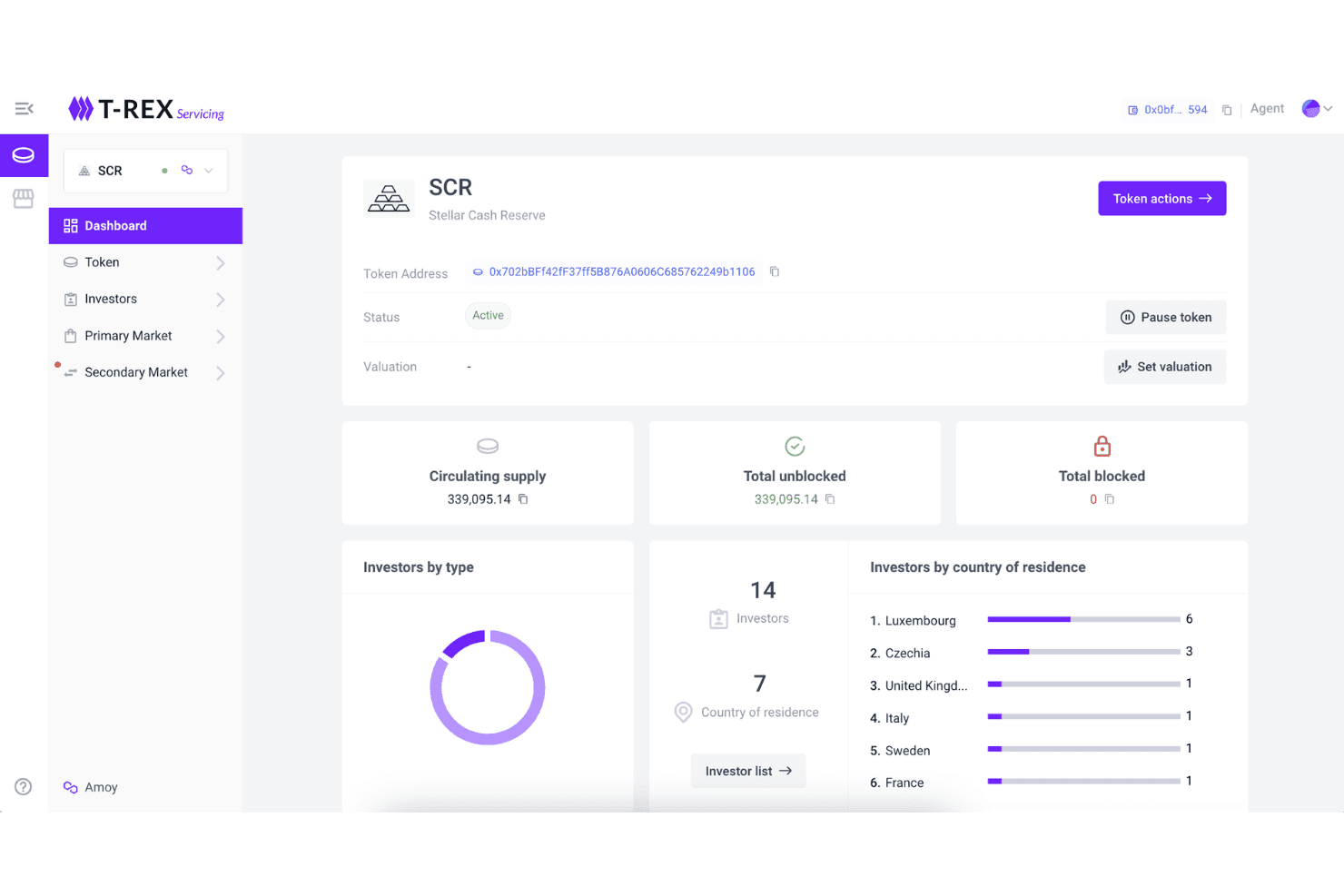
Tokeny's T-REX Servicing platform offers a token dashboard for SCR (Stellar Cash Reserve) with supply metrics and investor distribution data. Tokeny is an institutional-grade tokenization platform for financial assets, offering tools for asset tokenization, on-chain compliance, smart contract management, cap table maintenance, and integration with custodians and secondary markets.
Who Is Tokeny Best For?
Tokeny is a strong choice for financial institutions and asset managers seeking institutional-grade tokenization with built-in compliance controls.
Why I Picked Tokeny
I picked Tokeny as one of the best because I can set up compliance modules for each jurisdiction, use programmable transfer rules, and manage tokenized securities with customizable permission controls. I see this modular compliance framework as a real differentiator.
Tokeny Key Features
- On-chain cap table management: Maintain a real-time, blockchain-based register of security token ownership and movements.
- Multi-chain issuance support: Launch and manage tokens on Ethereum, Polygon, and other supported blockchains.
- API access for system integration: Connect to external financial, compliance, or fund administration systems using efficient APIs.
- Secondary market connectivity: Enable compliant transfers and peer-to-peer trading through integrations with regulated trading venues.
Tokeny Integrations
Tokeny offers native integrations with Fireblocks, Tangany, Inveniam, Moneirum, Artory, and Polygon, and provides an API for custom integrations.
Pros and Cons
Pros:
- On-chain cap table management with audit trails
- Smart contract programmability for lifecycle events
- Modular compliance rules engine for global jurisdictions
Cons:
- Minimum project size requirements for onboarding
- Requires identity verification for transfers
Learn more about Tokeny:
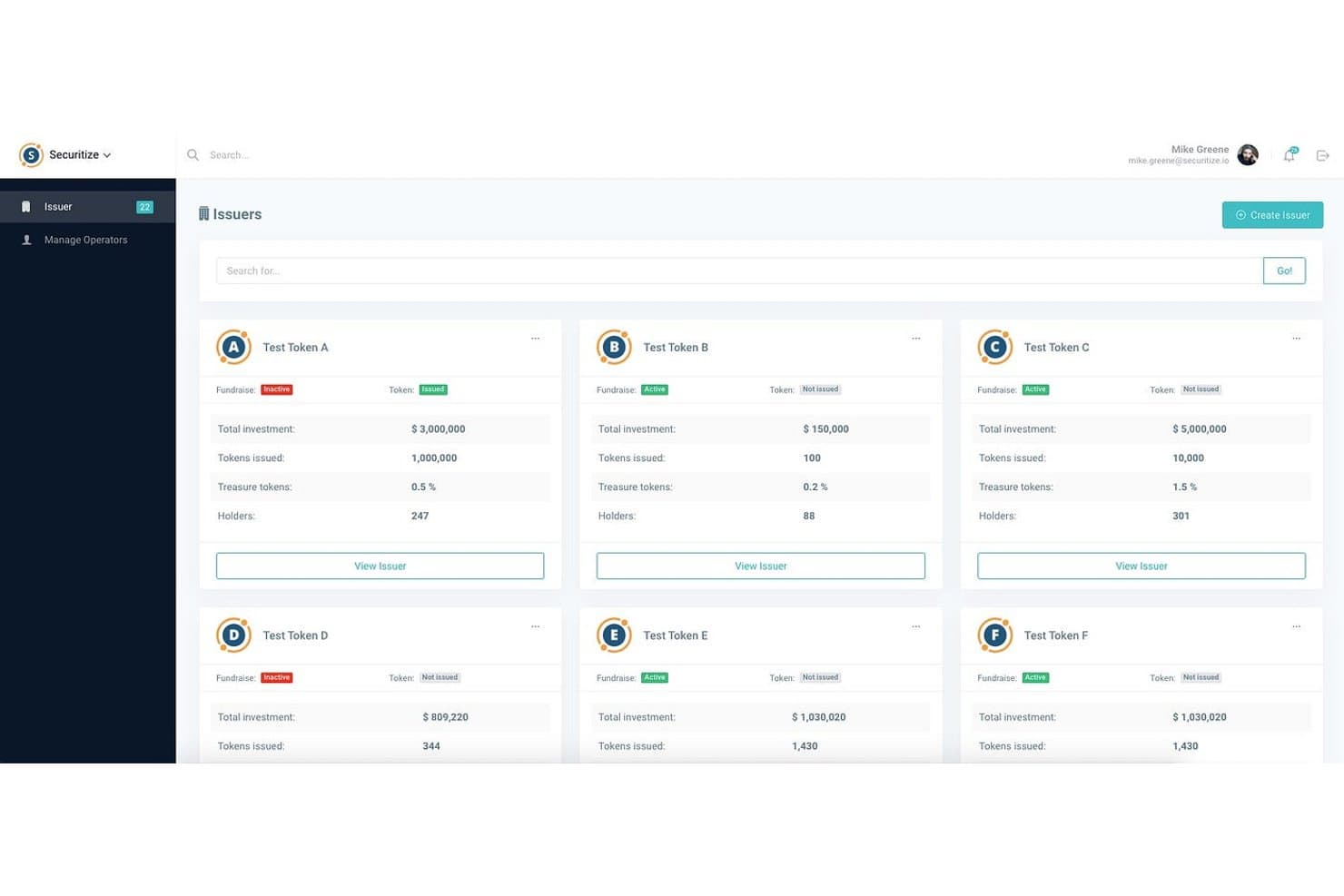
Securitize offers a multi-issuer dashboard where users can manage and monitor multiple tokenized asset issuers with investment and token metrics at a glance. Securitize is a tokenization platform focused on regulated digital assets, offering compliant asset issuance, investor onboarding, cap table management, and integrated secondary market trading for fund managers, enterprises, and capital markets teams.
Who Is Securitize Best For?
Securitize is a strong fit for institutional asset managers and fund administrators seeking compliant digital asset issuance and trading on regulated infrastructure.
Why I Picked Securitize
I picked Securitize as one of the best tokenization platforms because I can issue fully compliant digital securities, automate investor onboarding with built-in KYC, and connect assets to its regulated secondary market. That’s key for regulated digital asset solutions.
Securitize Key Features
- On-chain cap table management: View and update real-time shareholder records directly on blockchain infrastructure.
- Automated corporate actions: Handle distributions and voting events for digital securities within a single dashboard.
- Configurable smart contracts: Set custom rules for dividend flows, transfer restrictions, and lifecycle events.
- Flexible custody integrations: Support for multiple wallet types, including institutional custodians and multi-signature wallets.
Securitize Integrations
Securitize offers native integrations with Asana and integrates with Jira, Bitbucket, Confluence, Slack, and Logz.io through the Cortex ecosystem. It also connects with blockchain networks like TRON and Avalanche. An API is available for custom integrations.
Pros and Cons
Pros:
- Institutional-grade custody options available
- Automated on-chain compliance and investor onboarding
- Regulated secondary market for digital securities
Cons:
- Regulatory shifts present ongoing compliance risks
- The onboarding process can be complex
Learn more about Securitize: Best for secure on-chain asset management
- Free demo available
- From $999/month
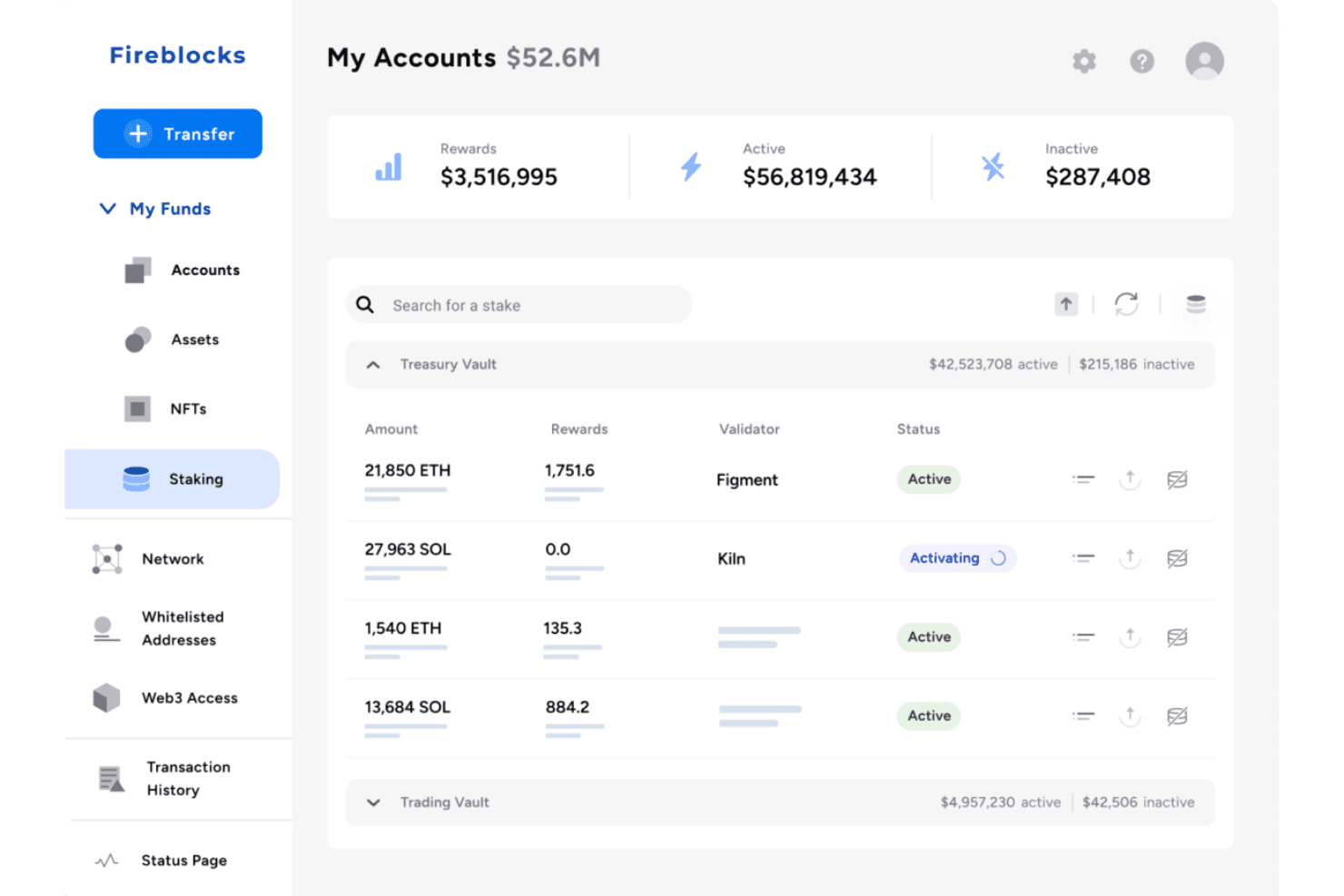
Fireblocks Tokenization offers a staking dashboard where users can monitor active and inactive assets, rewards, and validator statuses across multiple vaults. Fireblocks Tokenization is an institutional tokenization platform that lets you create, issue, and manage digital representations of assets across multiple blockchains with customizable smart contracts, compliance tools, and secure custody infrastructure.
Who Is Fireblocks Tokenization Best For?
Institutional asset managers and finance teams who need to tokenize and govern digital assets securely across multiple blockchain networks.
Why I Picked Fireblocks Tokenization
I picked Fireblocks Tokenization because I can securely tokenize and govern any asset on-chain, use its MPC wallet infrastructure, and control compliance workflows all from one platform. This is why I see it as best for secure on-chain asset management.
Fireblocks Tokenization Key Features
- Multi-chain deployment: Launch tokens and smart contracts across 35+ supported blockchains.
- Pre-built smart contract templates: Use ready-made, customizable templates for quick asset tokenization.
- Granular role-based user permissions: Set fine-grained access controls for different admin, governance, and operational roles.
- Real-time activity monitoring: Track all tokenization and transaction actions as they occur, with audit-ready logging.
Fireblocks Tokenization Integrations
Fireblocks Tokenization offers 150+ native integrations, including Solana, TRON, Polygon, Optimism, Cardano, Rootstock, Mantle, Base, Bitcoin, Ethereum, and more. An API is available for custom integrations and tokenization solutions.
Pros and Cons
Pros:
- Real-time on-chain activity monitoring
- Institutional-grade MPC wallet infrastructure
- Supports tokenization on 35+ major blockchains
Cons:
- Intricate developer API integration curve
- B2B contract minimums prevent small trials
Learn more about Fireblocks Tokenization: Best for enterprise blockchain tokenization
- Free plan available
- Pricing upon request
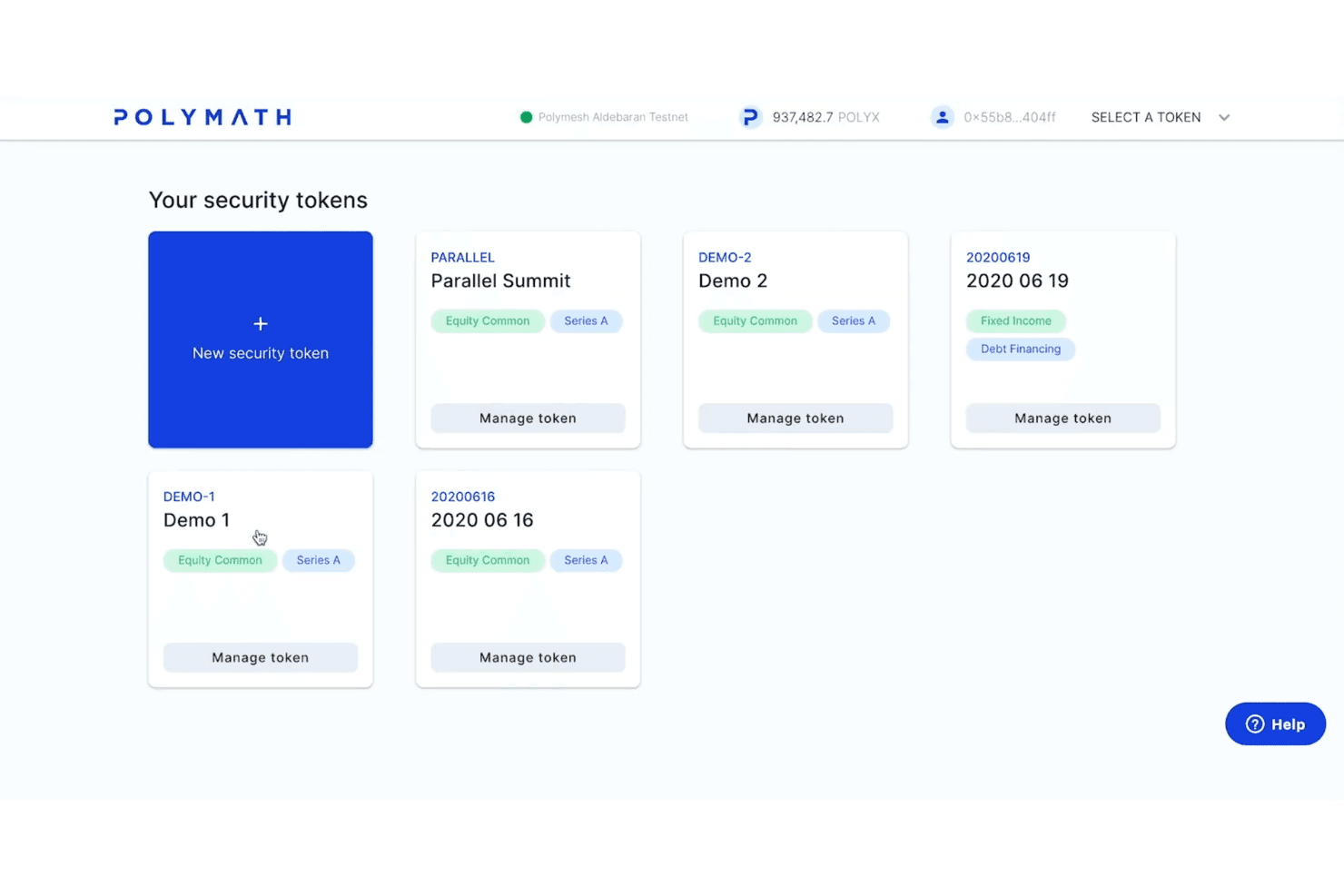
Polymath displays a security token dashboard where users can view and manage multiple tokenized assets on the Polymesh testnet. Polymath is an enterprise-focused tokenization platform purpose-built for creating, issuing, and managing blockchain-based digital securities with advanced compliance and asset management features.
Who Is Polymath Best For?
Polymath suits asset managers, fund administrators, and finance teams at enterprises or institutions that need compliance-driven digital asset workflows and tokenization services.
Why I Picked Polymath
I picked Polymath as one of the best because I can create and manage compliant security tokens for a wide range of assets, automate corporate actions with their smart contracts, and access integrations with regulated secondary markets for enterprise blockchain tokenization.
Polymath Key Features
- Confidential assets module: Enables privacy controls for on-chain data and transactions on Polymesh.
- On-chain identity verification: Requires all participants to complete KYC to transact, increasing compliance.
- Role-based permission controls: Lets enterprises restrict platform access by role and responsibility.
- Automated dividend distributions: Supports programmable, compliant dividend payments directly to token holders.
Polymath Integrations
Polymath offers native integrations with SAP, Adyen, PipeDrive, Vertex, AWS, Microsoft Azure, MySQL, Kubernetes, Docker, and more. An API is available for custom integrations.
Pros and Cons
Pros:
- Wide asset type support for tokenization
- On-chain cap table and investor registry
- Deep protocol-level compliance automation
Cons:
- Limited public third-party reviews and feedback
- Focuses heavily on institutional clients
Learn more about Polymath:
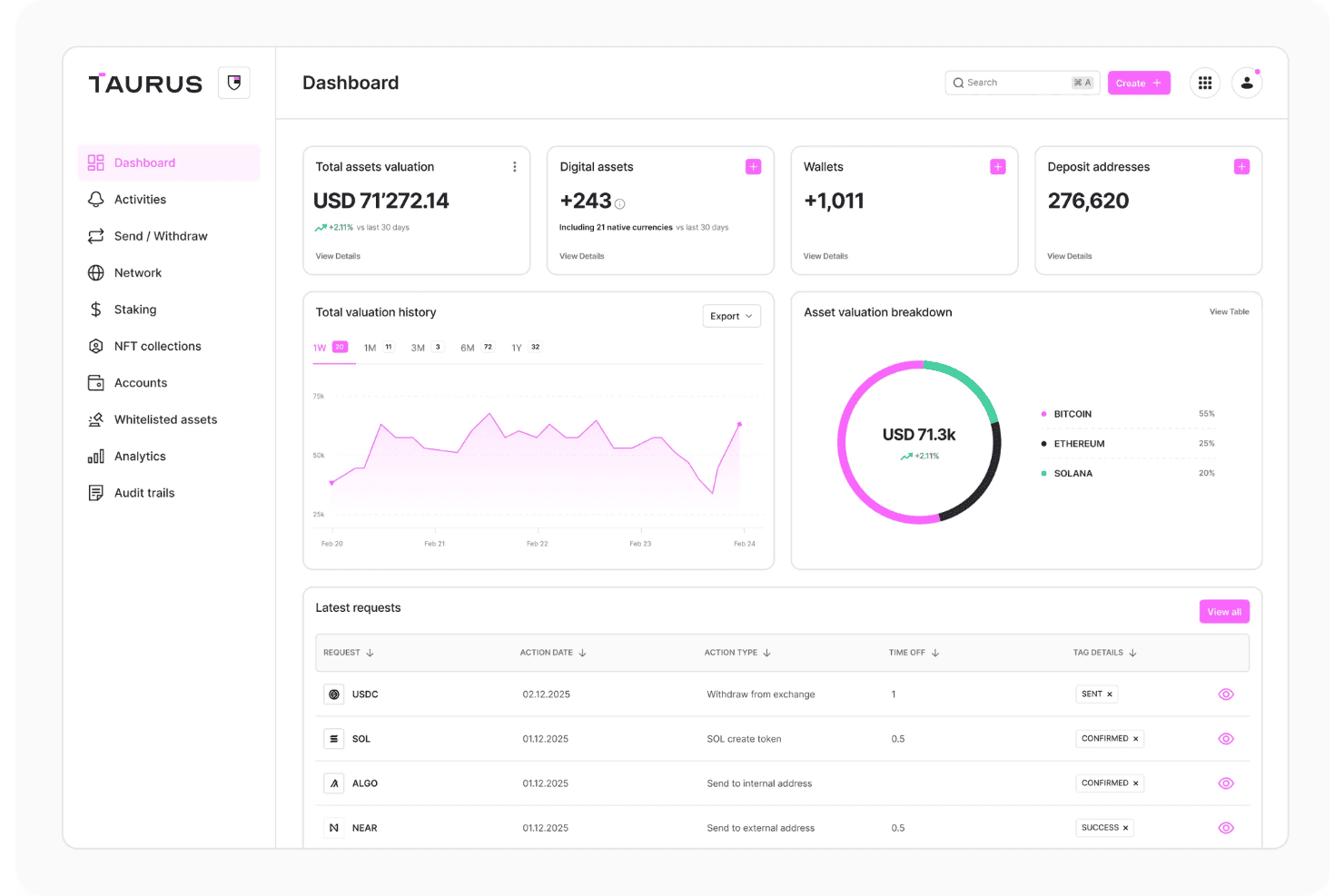
Taurus provides a comprehensive digital asset management dashboard displaying total asset valuation, wallet counts, and transaction history. Taurus is an enterprise-grade digital asset infrastructure platform that covers tokenization, custody, trading, and settlement for financial assets across both public and permissioned blockchains.
Who Is Taurus Best For?
Taurus is built for regulated financial institutions — banks, broker-dealers, CSDs, and asset servicers — that need to bring traditional financial assets on-chain at an institutional scale.
Why I Picked Taurus
I picked Taurus as one of the best because no other platform bundles tokenization, institutional custody, and a regulated secondary market under one natively connected infrastructure. Taurus-CAPITAL lets me deploy audited smart contracts across 10+ blockchains, while Taurus-PROTECT handles HSM and MPC-backed custody in the same environment. A fund tokenized in CAPITAL is already secured and settleable on TDX, Taurus's own FINMA-regulated trading facility, without any external bridging.
Taurus Key Features
- Multi-protocol issuance: Issue assets across Ethereum, Polygon, Avalanche, Solana, Stellar, Tezos, ICP, and permissioned blockchains.
- Any-standard smart contract support: Upload and interact with ERC1400, ERC3643, SPL, custom ERC20, ERC721, and more.
- Lifecycle automation: Automate and execute corporate actions directly on-chain through configurable workflows.
- Detailed audit trails: Track all transactions and user actions with real-time logs and exportable reporting.
Taurus Integrations
Taurus offers native integrations with Temenos for core banking and operates unified API connectivity with 10+ public and permissioned blockchains, including Ethereum, Polygon, Solana, Tezos, ICP, Stellar, Hyperledger BESU, and Quorum. An API is available for custom integrations.
Pros and Cons
Pros:
- Granular on-chain compliance and permissioning options
- Native support for multiple public and private blockchains
- Regulated secondary market built into the platform
Cons:
- KYC/AML features depend on third-party providers
- Investor lifecycle tooling not fully native
Learn more about Taurus:
Andre tokeniseringsplattformer
Her er noen flere alternativer for tokeniseringsplattformer som ikke kom med på kortlisten min, men som likevel er verdt å se nærmere på:
- 11InvestaXBest for digital securities issuance
- 12ZoniqxBest for lifecycle management automation
- 13KaleidoBest for modular network infrastructure
- 14BitbondBest for no-code institutional asset coverage
- 15DTCC Digital AssetsBest for post-trade settlement integration
- 16AlphaPointBest for policy-enforced issuance controls
- 17SpydraBest for configurable enterprise deployments
- 18SuperstateBest for onchain mutual and ETF tokenization
- 19Maple FinanceBest for governance-driven protocol management
- 20STOKRBest for direct tokenized investment access
How I Evaluate Tokenization Platforms
I split my evaluation into baseline acceptance criteria—KYC, smart contracts, cap table management—and the differentiators that distinguish the best platforms.
Core Functionality (Table Stakes For This List)
When I'm selecting tools for my list, I rank each one on a scale from 0 (does not offer the functionality) to 5 (excels in this area) for each core functionality listed below. Then, I calculate the tool's total score into a percentage. Each tool needs to achieve a minimum total score of 65% to be considered for inclusion.
- Asset Tokenization Engine: I evaluate how many asset classes a platform supports and whether it can handle equity, debt, real estate, and fund tokens across multiple blockchains.
- Smart Contract Management: Configurable contracts matter. I look for templates that automate dividend distributions, transfer restrictions, and corporate actions.
- Compliance & KYC/AML: I check whether the platform enforces jurisdiction-based transfer rules and automates investor accreditation during onboarding workflows.
- Cap Table & Investor Management: A reliable on-chain registry should track ownership changes, support corporate actions, and produce audit-ready reports in real time.
- Custody & Wallet Integration: I look for flexible custody options, including MPC and multi-sig wallets, plus integrations with qualified institutional custodians.
- Secondary Market Connectivity: Post-issuance liquidity is key. I evaluate whether the platform connects to regulated ATS venues, exchanges, or peer-to-peer transfer channels.
Once I have a list of tools that meet the criteria, I consider what sets each platform apart.
Differentiating Factors (What Sets Vendors Apart)
Here's how I compare and contrast different vendors:
Standout Features
Vaultless tokenization generates tokens algorithmically without storing sensitive data in a centralized vault. That approach cuts your attack surface and lowers infrastructure overhead. Multi-cloud key management is another factor I weigh. Platforms that integrate with AWS KMS, Azure Key Vault, or Google Cloud KMS give you more flexibility across hybrid environments. I also check for Tokenization-as-a-Service APIs that let your team embed tokenization into custom apps and CI/CD pipelines via RESTful endpoints and SDKs.
Beyond Features
Compliance certifications are a major differentiator. I look for independent attestations like SOC 2 Type II, ISO 27001, and FIPS 140-2 validated modules—these tell you the platform can reduce your PCI DSS or HIPAA audit scope in practice. Deployment flexibility matters too, especially if your organization needs regional data residency or air-gapped environments. Ecosystem integrations are worth evaluating closely. Platforms that connect natively to ERPs like SAP or Oracle and data platforms like Snowflake save your team from building custom middleware.
Slik velger du en tokeniseringsplattform
Det er lett å gå seg vill i lange funksjonslister og komplekse prismodeller. For å hjelpe deg med å holde fokus mens du går gjennom den unike programvareutvelgelsesprosessen din, finner du her en sjekkliste over faktorer du bør ha i bakhodet:
| Faktor | Hva du bør vurdere |
|---|---|
| FaktorSkalerbarhet | Hva du bør vurdereEr plattformen tilpasset det forventede volumet av aktiva og transaksjonsveksten din? Vil det kreve en omfattende migrering når virksomheten utvides? |
| FaktorIntegrasjoner | Hva du bør vurdereHvilke viktige systemer (ERP, CRM, depotforvaltere) må kobles til? Vil plattformen redusere manuelt arbeid og enkelt passe inn i den bredere teknologiplattformen din? |
| FaktorTilpasningsmuligheter | Hva du bør vurdereHvor mye fleksibilitet trenger du for aktivatyper, etterlevelsesregler eller logikk i smarte kontrakter? Er arbeidsflyter uten kode tilstrekkelig, eller trenger du tilpasset utviklingsarbeid? |
| FaktorBrukervennlighet | Hva du bør vurdereKan teamet ditt håndtere kjerneoppgaver – utstedelse av tokens, arbeidsflyter for etterlevelse og investorforvaltning – uten spesialisert kunnskap om blokkjeder? |
| FaktorImplementering og innføring | Hva du bør vurdereHvor stor intern innsats vil innføringen kreve? Spør om verktøy for migrering, datatilordning og opplæringsressurser for administrator- og driftsteamene dine. |
| FaktorKostnad | Hva du bør vurdereHvilken prismodell passer best: per aktivum, per transaksjon eller etter bruksnivå? Se etter skjulte kostnader og avklar tjenestenivåavtaler, brukerstøtte og kostnader for avtokenisering. |
| FaktorSikkerhetstiltak | Hva du bør vurdereHvilken kryptering, tilgangskontroll og hvilke revisjonsspor er inkludert? Finnes det uavhengige sertifiseringer som viser sikkerhetspraksis på bedriftsnivå? |
| FaktorKrav til etterlevelse | Hva du bør vurdereStøtter plattformen rapporteringsjurisdiksjonene og investortypene dine? Kan den holde tritt når regelverket eller behovene på tvers av landegrenser endres? |
Hva er tokeniseringsplattformer?
En tokeniseringsplattform er programvare som lar deg konvertere virkelige eller digitale aktiva til sikre digitale tokens på en blokkjede. Disse plattformene støtter etterlevelsesvennlig utstedelse av aktiva, registrering av investorer og administrasjon av eieropplysninger for finansielle aktiva som egenkapital, gjeld eller fond. De omfatter ofte innebygde verktøy for etterlevelse, administrasjon av smarte kontrakter og tilkobling til sekundærmarkeder, slik at hele livssyklusen til aktivaene kan håndteres sikkert og transparent.
Funksjoner
Når du velger en tokeniseringsplattform, bør du se etter følgende viktige funksjoner:
- Motor for tokenisering av aktiva: Gjør det mulig å opprette og utstede digitale token som representerer aksjer, fond, eiendom eller andre aktiva direkte på en blokkjede.
- Administrasjon av smartkontrakter: Lar deg konfigurere, distribuere og administrere smartkontrakter som automatiserer eierrettigheter, overføringer, utbytte og etterlevelsesrelaterte hendelser.
- Verktøy for etterlevelse og KYC/AML: Automatiserer registreringen av investorer ved å verifisere identiteter, håndheve jurisdiksjonsregler og støtte nødvendig dokumentasjon for regulatorisk etterlevelse.
- Eiertabell og investoradministrasjon: Sporer tokeninnehavere, endringer i eierskap og selskapsbeslutninger i sanntid, noe som forenkler revisjoner og rapportering gjennom hele aktivets livssyklus.
- Integrasjon med oppbevaringstjenester og lommebøker: Støtter tilkoblinger til digitale lommebøker og oppbevaringstjenester, slik at digitale aktivatoken kan lagres og overføres sikkert for investorer og utstedere.
- Tilgang til sekundærmarkedet: Tilrettelegger for handel med og overføring av token etter utstedelse gjennom integrasjon med regulerte børser, node-til-node-løsninger eller ATS-plattformer.
- Revisjonsspor og rapportering: Gir detaljerte logger over alle transaksjoner, tillatelser og endringer, noe som gjør regulatoriske gjennomganger og investorkommunikasjon transparente og effektive.
- Rollebaserte tillatelser: Lar deg definere tilgangsnivåer for ulike brukertyper – for eksempel administratorer, utstedere eller investorer – for å beskytte sensitive arbeidsflyter og data.
- Arbeidsflytautomatisering: Forbedrer rutineprosesser som investorakkreditering, utbetaling av utbytte og etterlevelseskontroller ved å automatisere komplekse oppgaver i flere trinn.
- API-tilkobling: Muliggjør integrasjon med andre forretningssystemer – for eksempel ERP-er, CRM-er eller dataplattformer – slik at du kan administrere og synkronisere informasjon på en smidig måte.
Tokeniseringsplattformløsninger inkluderer vanligvis ikke KI som en del av funksjonstilbudet.
Fordeler
Implementering av en tokeniseringsplattform gir flere fordeler for teamet og virksomheten din. Her er noen av fordelene du kan se frem til:
- Mulighet for brøkeierskap: Tokenisering lar deg dele opp aktiva fra den virkelige verden i mindre, omsettelige andeler, slik at tidligere illikvide aktiva blir tilgjengelige for et bredere utvalg investorer.
- Forbedrede arbeidsflyter for etterlevelse: Innebygde KYC/AML- og jurisdiksjonskontroller automatiserer regulatoriske kontroller og håndheving, noe som reduserer manuelt arbeid og risikoen for manglende etterlevelse.
- Operasjonell effektivitet: Automatiserte smartkontrakter og arbeidsflytverktøy forenkler oppgaver som utbetaling av utbytte, journalføring og registrering av investorer for økonomi- og driftsteamene dine.
- Forbedret sikkerhet: Funksjoner som integrasjon med oppbevaringstjenester, nøkkeladministrasjon i flere skyer og revisjonsspor bidrar til å beskytte aktivaopplysninger og støtte virksomhetens sikkerhetsstandarder.
- Nøyaktig eiertabell i sanntid: Blokkjederegistre gir løpende oversikt over eierskap og full åpenhet rundt selskapsbeslutninger og investorkommunikasjon.
- Tilgang til sekundærmarkeder: Integrasjon med regulerte markedsplasser og ATS-plattformer kan gi investorer nye likviditetsalternativer for de digitale aktivaene deres.
- Sømløs integrasjon i økosystemet: API-tilkobling og fleksible distribusjonsmodeller gjør det enklere å integrere tokenisering i eksisterende systemer og arbeidsflyter.
Kostnader og priser
Valg av tokeniseringsplattform krever en forståelse av de ulike prismodellene og abonnementene som er tilgjengelige. Kostnadene varierer basert på funksjoner, teamstørrelse, tillegg og mer. Tabellen nedenfor oppsummerer vanlige abonnementer, gjennomsnittsprisene deres og typiske funksjoner som er inkludert i tokeniseringsplattformløsninger:
Plansammenligningstabell for tokeniseringsplattform
| Abonnementstype | Gjennomsnittspris | Vanlige funksjoner |
|---|---|---|
| AbonnementstypeGratisabonnement | Gjennomsnittspris$0 | Vanlige funksjonerGrunnleggende tokenisering av aktiva, enkelt investorregister og begrenset antall API-kall. |
| AbonnementstypePersonlig abonnement | Gjennomsnittspris$20-$100/bruker/måned | Vanlige funksjonerTilgang for én bruker, verktøy for utstedelse av aktiva, grunnleggende etterlevelsesmoduler, standardrapportering og støtte fra fellesskapet. |
| AbonnementstypeBedriftsabonnement | Gjennomsnittspris$500-$2,000/måned | Vanlige funksjonerAdministrasjon av flere brukere, automatiserte smartkontrakter, forbedret etterlevelse, avanserte integrasjoner og prioritert e-poststøtte. |
| AbonnementstypeAbonnement for store virksomheter | Gjennomsnittspris$3,000+/måned | Vanlige funksjonerTilpassede SLA-er, lokal eller hybrid distribusjon, integrasjoner med flere skyer, avansert styring, dedikert CSM og førsteklasses kundestøtte døgnet rundt. |
Vanlige spørsmål om tokeniseringsplattformer
Her er noen svar på vanlige spørsmål om tokeniseringsplattformer:
Hvordan støtter en tokeniseringsplattform etterlevelse av regelverket?
En tokeniseringsplattform inkluderer ofte innebygde verktøy for KYC, AML og jurisdiksjonskontroller. Dette hjelper teamet ditt med å automatisere innsamling av dokumenter, bekrefte investorers identitet og håndheve regionale begrensninger, noe som gjør det enklere å overholde regelverket etter hvert som det utvikler seg.
Kan en tokeniseringsplattform integreres med de eksisterende systemene våre?
Ja, de fleste tokeniseringsplattformer tilbyr API-tilkobling og ferdigbygde integrasjoner for systemer som ERP-er, CRM-er, depotmottakere og datavarehus. Dette gjør det mulig å synkronisere eierskap, automatisere rapportering og forbedre arbeidsflyter uten store forstyrrelser.
Hvilke distribusjonsalternativer er vanligst?
Distribusjonsalternativene omfatter vanligvis SaaS, privat sky, lokalt installerte løsninger eller hybride oppsett. Denne fleksibiliteten gjør det mulig å tilpasse plattformen til behovene dine knyttet til datalokasjon, risiko og etterlevelse – særlig hvis du opererer i flere regioner eller betjener sterkt regulerte bransjer.
Hvordan sørger tokeniseringsplattformer for sikkerhet rundt data og eiendeler?
Plattformene bruker kryptering, sterke tilgangskontroller og detaljerte revisjonslogger for å beskytte tokeniserte eiendeler og sensitive data. Mange tilbyr også integrasjoner med HSM-er og tjenester for nøkkeladministrasjon i skyen som oppfyller bransjestandarder for sikkerhet og etterprøvbarhet.
Hvilken type støtte er tilgjengelig for bedriftsbrukere?
Bedriftsbrukere får vanligvis dedikerte kundeansvarlige, migreringstjenester, opplæringsressurser og teknisk støtte døgnet rundt. Dette bidrar til å sikre smidig implementering, daglig drift og rask problemløsning etter hvert som programmet for tokeniserte eiendeler vokser.