

Programvare for likviditetsstyring hjelper teamet ditt med å håndtere kontantbeholdning, likviditet, betalinger og finansiell risiko på tvers av organisasjonen. Hvis du leter etter den beste programvaren for likviditetsstyring, balanserer du sannsynligvis komplekse kontantstrømmer, rapportering på tvers av flere enheter og behovet for sanntidsinnsikt – samtidig som du sikrer etterlevelse og støtter strategiske beslutninger. Denne listen hjelper deg med å sammenligne ledende løsninger, forstå deres unike styrker og velge riktig plattform for å forbedre kontroll, nøyaktighet og effektivitet i likviditetsstyringen.
Hvorfor du kan stole på våre programvareanbefalinger
6,700+
Reviews
20
Industry experts
16+
Evaluation factors
14
Years
Teamet vårt har testet og anmeldt programvare siden 2012. Vi er selv økonomiledere, så vi vet hvor vanskelig og hvor viktig det er å velge riktig programvare.
I denne guiden har vi vurdert verktøyene gjennom praktisk testing og uavhengig research og gitt dem poeng ut fra våre utvelgelseskriterier.
Anmeldelsene våre bygger på vår egen redaksjonelle vurdering. De er ikke et salgsargument.
Sammenligningstabell for programvare for likviditetsstyring
Denne sammenligningstabellen oppsummerer prisopplysningene for mine beste utvalgte løsninger for likviditetsstyring:
| Tool | Best For | Trial Info | Price | ||
|---|---|---|---|---|---|
| 1 | Best for AI-native treasury deployment | Free plan available | Pricing upon request | Website | |
| 2 | Best for cash flow planning for SMEs | Free demo + free trial available | Pricing upon request | Website | |
| 3 | Best for direct API bank integrations | Free demo available | From $24,000/year | Website | |
| 4 | Best for large enterprise scalability | Free demo available | Pricing upon request | Website | |
| 5 | Best for AI-powered cash forecasting | Free demo available | Pricing upon request | Website | |
| 6 | Best for payment workflow automation | Free demo available | Pricing upon request | Website | |
| 7 | Best for global cash visibility across entities | Free demo available | Pricing upon request | Website | |
| 8 | Best for multi-bank connectivity | Free demo available | Pricing upon request | Website | |
| 9 | Best for financial institution integration | Not available | Pricing upon request | Website | |
| 10 | Best for real-time cash management | Free demo available | Pricing upon request | Website |


Anmeldelser av programvare for likviditetsstyring
Nedenfor finner du mine detaljerte sammendrag av programvaren for likviditetsstyring som kom med på kortlisten min. Anmeldelsene mine gir en detaljert oversikt over funksjonene, de beste bruksområdene og integrasjonene til hver plattform, slik at du kan finne den som passer best for deg.
 Best for AI-native treasury deployment
- Free plan available
- Pricing upon request
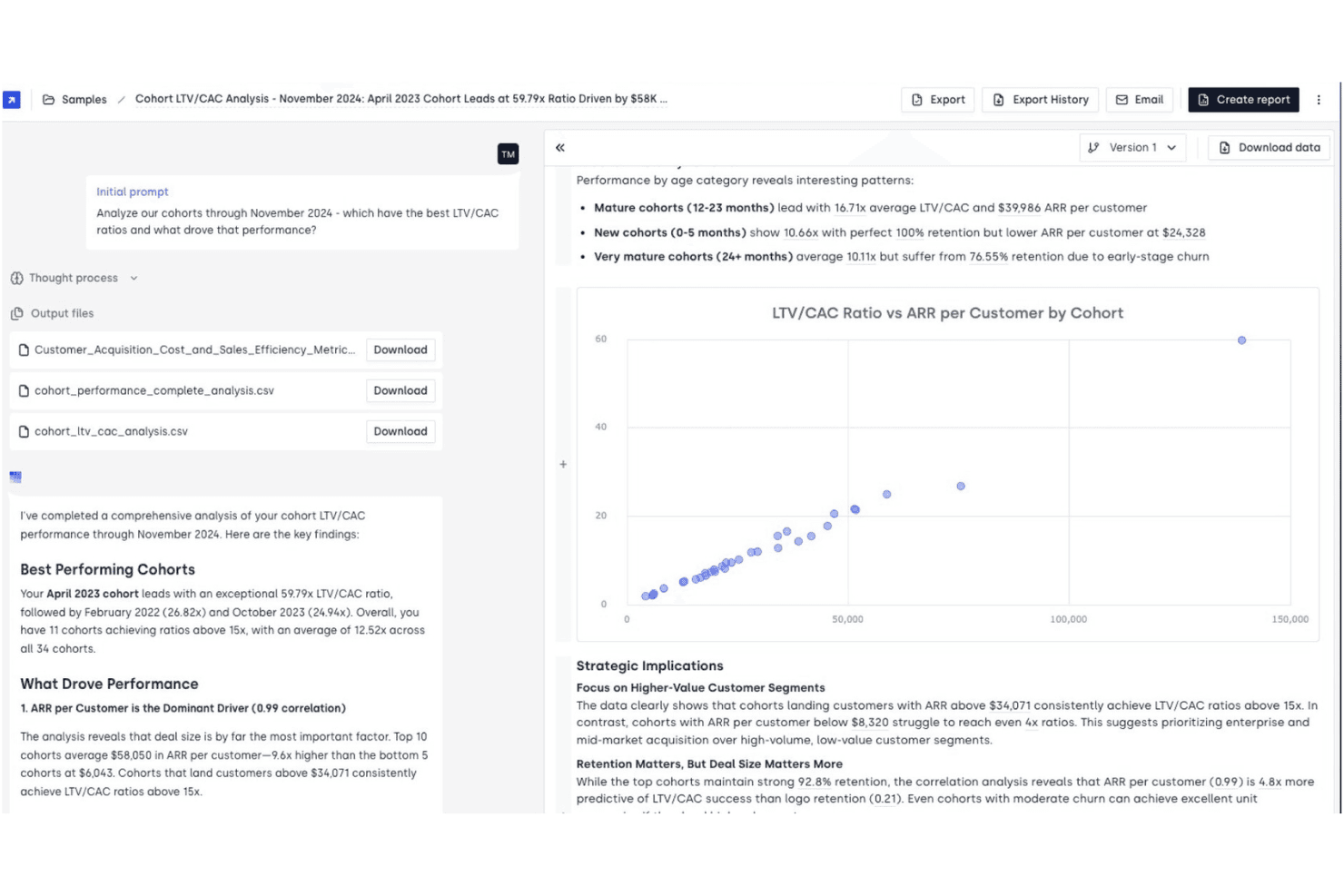
Concourse lets users analyze cohort LTV/CAC ratios with AI-generated insights. Concourse is an AI-native treasury and finance platform that uses autonomous agents to deliver real-time cash visibility, automated liquidity forecasting, FX exposure monitoring, and reconciliation workflows on top of your existing ERP, TMS, and banking infrastructure.
Who Is Concourse Best For?
Concourse is a strong fit for treasury and finance teams that want AI-driven cash visibility and forecasting layered on top of their existing ERP and banking infrastructure—without replacing it.
Why I Picked Concourse
I picked Concourse as one of the best because it's the only platform on my shortlist built AI-first, not AI-bolted-on. Its Forecasting Agent pulls live ERP and bank data to generate rolling 13-week cash forecasts that update continuously with actuals, which is a real step up from static spreadsheet models. I also love that its Bond Rotation Agent monitors maturities and flags reinvestment opportunities in real time, so idle cash doesn't sit unnoticed.
Concourse Key Features
- Natural language cash querying: Ask plain-language questions about your global cash position and get instant answers pulled from live bank and ERP data.
- Bond Rotation Agent: Monitors bond maturities and alerts your team to reinvestment opportunities based on current market rates and credit ratings.
- Autonomous Close Agent: Orchestrates month-end reconciliation end-to-end, flagging exceptions early so your team can resolve issues before close.
- Multi-surface report delivery: Pushes insights and reports directly into Slack, Teams, Excel, and PowerPoint so stakeholders get what they need without logging into another tool.
Concourse Integrations
Concourse supports 100+ system connections, including Oracle, SAP, NetSuite, Workday, Snowflake, Google BigQuery, Wells Fargo, Goldman Sachs, and Ripple. Most connections use OAuth or API keys, with API support for custom integrations.
Pros and Cons
Pros:
- Natural language queries for treasury data
- Rolling AI-driven cash and liquidity forecasts
- Real-time cash visibility across banks and ERPs
Cons:
- Lacks native hedge accounting functionality
- Does not initiate payments directly
Learn more about Concourse: Best for cash flow planning for SMEs
- Free demo + free trial available
- Pricing upon request
Visit WebsiteCustomer Rating:4.4/5
Agicap monitors cash, forecasts flow, and enhances financial planning. Agicap gives small and midsize businesses a way to forecast, monitor, and manage cash flow in real time. It’s built for finance teams and business owners who need to track liquidity across multiple bank accounts and scenarios without relying on spreadsheets. The platform helps users anticipate cash gaps, model different outcomes, and make informed decisions about spending and investment.
Why I Picked Agicap
Agicap stands out for its focus on cash flow planning tailored to the needs of SMEs. The platform lets users consolidate data from multiple bank accounts and business units, giving a clear, up-to-date view of liquidity. I appreciate how Agicap allows you to build custom cash flow forecasts and run scenario analyses, so you can quickly see the impact of different business decisions. For treasury teams that need to anticipate cash gaps and plan for growth, Agicap offers targeted tools that go beyond basic tracking.
Agicap Key Features
Some other features that make Agicap useful for treasury teams include:
- Bank Feed Synchronization: Connect and sync transactions from multiple bank accounts automatically.
- User Access Management: Set permissions and roles for different team members within the platform.
- Invoice Tracking: Monitor incoming and outgoing invoices to keep tabs on receivables and payables.
- Data Import and Export: Import financial data from spreadsheets or export reports for further analysis.
Agicap Integrations
Integrations include Business Central, Xero, HSBC UK, Barclays, Oracle NetSuite, NatWest, Sage Intacct, Workday, Stripe, Google Drive, and more.
Pros and Cons
Pros:
- Multi-user access with custom permissions
- Scenario modeling for cash projections
- Real-time cash visibility across accounts
Cons:
- Not suited for complex enterprise treasury
- Limited advanced liquidity management features
Learn more about Agicap: Best for direct API bank integrations
- Free demo available
- From $24,000/year
Visit WebsiteCustomer Rating:4.4/5
Trovata delivers real-time cash visibility, forecasting, and bank insights. Trovata is designed for finance teams that want direct, real-time API connections to their banks without relying on legacy file-based integrations. It’s a strong fit for organizations that need up-to-the-minute cash visibility and automated reporting across multiple accounts. The platform helps you unify bank data, simplify cash positioning, and automate workflows for more responsive treasury management.
Why I Picked Trovata
Direct API bank integrations set Trovata apart for treasury teams that need real-time access to cash positions and transactions. Instead of relying on outdated file transfers, Trovata connects directly to banks through APIs, so you always have up-to-date data at your fingertips. I appreciate how this approach enables automated cash reporting and instant bank reconciliation, which can help reduce manual work and errors. For organizations that prioritize speed and accuracy in their treasury operations, Trovata’s API-driven model is a strong fit.
Trovata Key Features
In addition to its direct API bank integrations, I also found several other features that support treasury management:
- Automated Cash Forecasting: Build and update cash forecasts using real-time bank data and customizable models.
- Multi-Bank Reporting: Consolidate account balances and transactions from multiple banks into unified reports.
- Custom Tagging and Search: Organize and filter transactions with custom tags and advanced search capabilities.
- Audit Trail and Activity Logs: Track user actions and changes within the platform for compliance and transparency.
Trovata Integrations
Integrations include Oracle NetSuite, SAP S/4 Hana, Blackline, and more.
Pros and Cons
Pros:
- Multi-bank reporting consolidates accounts
- Automated forecasting uses live transaction data
- API bank connections enable real-time cash visibility
Cons:
- Lacks support for emerging assets like crypto
- Bank connection management can be complex
Learn more about Trovata: Best for large enterprise scalability
- Free demo available
- Pricing upon request
Visit WebsiteCustomer Rating:3.8/5
Fiserv optimizes cash flow, payments, and risk for businesses. Built for organizations with complex treasury needs, Fiserv offers a suite of solutions tailored to large enterprises and financial institutions. Its platform is designed to handle high transaction volumes, multi-entity structures, and global cash management requirements. Fiserv helps teams centralize control, automate workflows, and maintain compliance across diverse banking relationships.
Why I Picked Fiserv
For treasury teams managing operations at scale, Fiserv stands out for its ability to support large enterprise environments. The platform is built to handle high transaction volumes and complex account structures, which is essential for organizations with multiple subsidiaries or global operations. I appreciate how Fiserv offers advanced cash concentration and liquidity management tools that help centralize control across diverse banking relationships. If your business needs a solution that can adapt to enterprise-level demands and regulatory requirements, Fiserv is a strong choice.
Fiserv Key Features
In addition to its scalability for large enterprises, I also found several other features that support treasury management:
- Automated Payment Processing: Manage and execute high-volume payments with built-in controls and approval workflows.
- Fraud Detection and Risk Monitoring: Monitor transactions in real time with advanced fraud prevention and risk analytics.
- Bank Account Reconciliation: Match transactions and balances across multiple banks and accounts automatically.
- Regulatory Compliance Tools: Access built-in modules to help meet evolving regulatory and reporting requirements.
Fiserv Integrations
Native integrations are not currently listed.
Pros and Cons
Pros:
- Automated payments with approval workflows
- Advanced fraud detection and risk monitoring
- Scales for high transaction volumes
Cons:
- Batch processing can limit real-time data consistency
- Overlapping product suite can cause workflow confusion
Learn more about Fiserv:

HighRadius automates cash flow, credit, and collections for finance teams. HighRadius brings AI-driven automation to treasury teams that need accurate, dynamic cash forecasting. It’s especially useful for large enterprises and finance professionals managing complex receivables and payables across multiple business units. The platform helps you predict cash positions with greater precision by analyzing real-time data and historical trends.
Why I Picked HighRadius
What sets HighRadius apart is its focus on AI-powered cash forecasting, which is a top priority for treasury teams looking to improve accuracy and agility. The platform uses machine learning algorithms to analyze historical payment patterns and real-time transaction data, helping you predict future cash flows with more confidence. I like that it also offers scenario modeling, so you can test the impact of different business events on your cash position. These features make HighRadius a strong fit for organizations that need to manage liquidity proactively and reduce forecasting errors.
HighRadius Key Features
Some other features in HighRadius that treasury teams may find valuable include:
- Automated Cash Application: Match incoming payments to open invoices using AI to reduce manual processing.
- Bank Connectivity Suite: Connect directly to global banks for real-time transaction data and reconciliation.
- Collections Management: Track, prioritize, and automate follow-ups on outstanding receivables within a single dashboard.
- Dispute Management: Log, track, and resolve payment disputes with built-in workflow tools.
HighRadius Integrations
Native integrations are not currently listed.
Pros and Cons
Pros:
- Real-time bank connectivity updates cash positions
- Automated cash application reduces manual work
- AI-driven forecasting improves cash accuracy
Cons:
- Payment posting can be delayed or error-prone
- Batch-based integrations delay real-time data syncing
Learn more about HighRadius:

Serrala enhances cash, credit, and risk processes for enterprises. Serrala is designed for finance teams that need to automate and control complex payment workflows across global operations. It’s especially relevant for organizations handling high transaction volumes or requiring strict compliance and audit trails. The platform helps you centralize, standardize, and secure payment processes while reducing manual intervention and risk.
Why I Picked Serrala
For treasury teams that need to automate and control payment workflows, Serrala offers specialized tools that address these needs directly. The platform provides configurable approval chains and automated payment scheduling, which help reduce errors and ensure compliance with internal controls. I appreciate that Serrala also includes audit-ready reporting features, making it easier to track every step of the payment process. These capabilities make Serrala a strong choice for organizations that prioritize security, transparency, and efficiency in their payment operations.
Serrala Key Features
Some other features in Serrala that treasury professionals may find useful include:
- Multi-Bank Connectivity: Connect to multiple banks for centralized payment processing and reconciliation.
- Fraud Detection Tools: Monitor transactions in real time to flag suspicious payment activity.
- Cash Visibility Dashboard: View consolidated cash positions across accounts and entities in one interface.
- ERP Integration: Sync payment data directly with leading ERP systems for end-to-end process automation.
Serrala Integrations
Integrations include SAP, Microsoft Teams, and more.
Pros and Cons
Pros:
- Real-time fraud detection mitigates risks
- Multi-bank connectivity centralizes cash management
- Automated workflows reduce manual payment errors
Cons:
- Accuracy depends on payer data quality
- Rule creation and updates require technical expertise
Learn more about Serrala: Best for global cash visibility across entities
- Free demo available
- Pricing upon request

GTreasury simplifies cash, manages risk, and boosts financial reporting. GTreasury is designed for finance teams that need real-time visibility and control over global cash positions. It’s a strong fit for multinational organizations managing complex, multi-entity structures and diverse banking relationships. The platform helps you centralize cash, payments, and liquidity data so you can make informed decisions across all your entities. With best-in-class capabilities like cash pooling and support for managing transactions such as credit card payments, GTreasury helps simplify treasury operations at scale.
Why I Picked GTreasury
I chose GTreasury because it gives treasury teams a clear, consolidated view of global cash positions across multiple entities and currencies. The platform’s real-time cash visibility dashboard lets you track balances and transactions from all your banks in one place, which is essential for organizations with complex, international structures. I also appreciate its liquidity management tools, which help you forecast and optimize cash usage across regions. These features make GTreasury a strong choice for businesses that need to manage cash and liquidity on a global scale.
GTreasury Key Features
Some other features in GTreasury that stand out for treasury teams include:
- Automated Bank Reconciliation: Match transactions from multiple banks automatically to reduce manual effort and errors.
- Payment Factory: Centralize and standardize payment processing for all subsidiaries within a single workflow.
- Risk Management Module: Monitor and manage exposures to interest rate, FX, and commodity risks within the platform.
- Regulatory Compliance Tools: Track and document compliance with global financial regulations directly in your treasury workflows.
GTreasury Integrations
Native integrations are not currently listed.
Pros and Cons
Pros:
- Built-in risk management for FX and rates
- Advanced liquidity forecasting and modeling
- Real-time global cash visibility across entities
Cons:
- Interface may feel dated
- Implementation can be lengthy for large teams
Learn more about GTreasury:

Nomentia improves cash forecasting, liquidity, and financial reporting. Nomentia stands out for treasury teams that need to manage payments and cash flows across multiple banks and geographies. It’s especially useful for multinational organizations or businesses with complex banking relationships. The platform helps you centralize bank connectivity, automate cash management, and gain real-time visibility into global liquidity.
Why I Picked Nomentia
When you need to connect with dozens or even hundreds of banks, Nomentia offers a level of multi-bank connectivity that’s hard to match. The platform supports direct connections to a wide range of global banks, allowing treasury teams to manage payments, statements, and balances from a single interface. I like that Nomentia also provides automated bank statement collection and standardized payment formats, which help reduce manual work and errors. These features make it a strong fit for organizations that need to centralize and control complex banking relationships within their treasury operations.
Nomentia Key Features
In addition to its multi-bank connectivity, I also found several other features that support treasury operations:
- Cash Forecasting Module: Generate short- and long-term cash flow forecasts using real-time bank data.
- Payment Factory Functionality: Centralize and standardize payment processing across multiple subsidiaries and business units.
- Fraud Detection and Compliance Tools: Monitor transactions for suspicious activity and ensure regulatory compliance.
- User Access Controls: Set granular permissions and approval workflows for different user roles within your organization.
Nomentia Integrations
Native integrations are not currently listed.
Pros and Cons
Pros:
- Automated cash forecasting with bank data
- Centralized payments across entities
- Direct connections to global banks
Cons:
- Transaction timeouts occur in high-volume processes
- Some workflows rely on predefined templates
Learn more about Nomentia:

Teciem boosts cash efficiency, mitigates risk, and ensures compliance. Teciem is designed for organizations that need deep integration with financial institutions and capital markets. Its platform is especially useful for treasury teams in banks, large corporates, and financial services firms that manage complex portfolios and require real-time connectivity. Teciem helps users automate deal capture, streamline risk management, and connect directly to global banking networks.
Why I Picked Teciem
What sets Teciem apart is its strong focus on financial institution integration, which is essential for treasury teams that need direct connectivity to banks and capital markets. The platform offers real-time transaction processing and automated deal capture, making it easier to manage complex financial instruments and exposures. I appreciate how Teciem supports straight-through processing and provides risk analytics, which are both critical for organizations operating in fast-moving financial environments. If your treasury operations depend on smooth interaction with global banking networks, Teciem is built to meet those needs.
Teciem Key Features
In addition to its integration capabilities with financial institutions, I also found several other features that support treasury management:
- Cash Flow Forecasting: Generate detailed cash flow projections using real-time and historical data.
- Hedge Accounting Support: Track and manage hedge relationships with built-in compliance tools.
- Multi-Currency Management: Handle transactions and reporting across multiple currencies and jurisdictions.
- Audit Trail and Reporting: Maintain a complete audit trail and access customizable financial reports.
Teciem Integrations
Native integrations are not currently listed.
Pros and Cons
Pros:
- Real-time cash visibility across accounts
- Advanced risk analytics and compliance tools
- Direct SWIFT integration with global banks
Cons:
- Product suite complexity creates fragmented workflows
- Strong reliance on SAP environments
Learn more about Teciem:

Atlar accelerates cash management, payments, and forecasting. Atlar gives finance teams real-time visibility and control over their cash positions across multiple banks and accounts. It’s especially useful for fast-growing companies and finance professionals who need to automate cash management, reconciliation, and payments without relying on manual processes. Atlar stands out for its API-first approach, letting users connect directly to their banks and automate workflows for up-to-the-minute cash insights.
Why I Picked Atlar
For treasury teams that need up-to-the-minute cash visibility, Atlar’s real-time cash management capabilities are hard to match. The platform connects directly to your banks and retrieves live balances and transactions, so you always know your true cash position. I like that Atlar also automates reconciliation and payment workflows, reducing manual work and the risk of errors. If your business relies on accurate, real-time cash data to make decisions, Atlar is built to deliver exactly that.
Atlar Key Features
Some other features that make Atlar useful for treasury teams include:
- Automated Bank Connectivity: Connect to multiple banks and accounts through a single API.
- Custom Alerts and Notifications: Set up real-time alerts for specific cash movements or balances.
- User Access Controls: Manage permissions and roles for different team members.
- Audit Logging: Track all user actions and changes for compliance and review.
Atlar Integrations
Integrations include SAP, Workday, Business Central, Light, Campfire, Oracle NetSuite, and more.
Pros and Cons
Pros:
- API-first design enables bank connectivity
- Automated reconciliation reduces manual work
- Real-time cash visibility across banks
Cons:
- Data quality depends on bank/ERP data consistency
- Extra fees for additional bank connections beyond limits
Learn more about Atlar:
Annen programvare for likviditetsstyring
Her er noen flere alternativer for programvare for likviditetsstyring som ikke kom med på kortlisten min, men som likevel er verdt å se nærmere på:
- 11Coupa Treasury & Cash ManagementBest for spend management integration
- 12DebtBookBest for debt and lease tracking
- 13Treasury SystemsBest for Nordic market compliance
- 14KyribaBest for risk management analytics
- 15CentimeBest for integrated AR and AP management
- 16SAPBest for enterprise resource planning integration
- 17Modern TreasuryBest for automated payment reconciliation
How I Evaluate Treasury Management Software
I look at treasury tools through two lenses: a baseline of must-haves like multi-bank cash positioning and SWIFT connectivity, and the differentiators that distinguish one platform from another.
Core Functionality (Table Stakes For This List)
When I'm selecting tools for my list, I rank each one on a scale from 0 (does not offer the functionality) to 5 (excels in this area) for each core functionality listed below. Then, I calculate the tool's total score into a percentage. Each tool needs to achieve a minimum total score of 65% to be considered for inclusion.
- Cash Visibility & Positioning: I evaluate whether a platform can pull balances from multiple banks and currencies into one view, so treasury teams can build a reliable daily cash position without toggling between bank portals.
- Cash Forecasting: A tool should let you build forecasts across multiple time horizons and compare them against actuals. I look for variance analysis and scenario modeling that go beyond basic spreadsheet uploads.
- Bank Connectivity: This covers the range of supported connection methods—SWIFT, host-to-host, APIs, BAI2/MT940 file imports. I check how many banks a platform connects to out of the box and whether it handles onboarding logistics.
- Payments & Reconciliation: I look at payment initiation workflows, approval routing, and how the tool matches bank transactions back to the book. Multi-entity payment processing with configurable approval chains is a key factor here.
- Risk Management: I evaluate whether a platform supports FX exposure tracking, deal capture, and mark-to-market valuation. Tools like Kyriba and FIS offer hedge accounting modules, and I consider depth of coverage for interest rate and counterparty risk.
- Compliance & Controls: Role-based access, segregation of duties, and audit trails matter here. I check for SOX-aligned workflows and whether the tool generates the kind of reporting your auditors and regulators expect to see.
Once I have a list of tools that meet this criteria, I consider what sets each platform apart.
Differentiating Factors (What Sets Vendors Apart)
Here's how I compare and contrast different vendors:
Standout Features
AI-driven forecasting is a big differentiator. Platforms like Kyriba and HighRadius use machine learning to refine cash predictions over time, which matters when you're managing liquidity across dozens of entities. I also evaluate in-house banking capabilities—tools that support intercompany netting and internal loans help multinational teams reduce external transaction volumes. ERP-native connectors are worth checking too. A certified SAP or Oracle integration saves weeks of implementation work compared to custom middleware builds.
Beyond Features
Implementation timelines vary widely in this space. I look at whether a vendor offers managed bank onboarding and treasury-specific consultants, since a SWIFT setup alone can take months without the right support. Security certifications like SOC 1/SOC 2 Type II and ISO 27001 are table stakes, but I also check for data residency options—important when your entities span multiple jurisdictions. Pricing models deserve scrutiny too. Some vendors charge per entity or per bank connection, which can quietly inflate costs as your treasury operations scale.
Slik velger du programvare for likviditetsstyring
Det er lett å gå seg vill i lange funksjonslister og komplekse prisstrukturer. For å holde fokus mens du arbeider deg gjennom den unike prosessen med å velge programvare, får du her en sjekkliste over faktorer du bør ha i bakhodet:
| Faktor | Hva du bør vurdere |
|---|---|
| FaktorSkalerbarhet | Hva du bør vurdereVil programvaren støtte veksten din i transaksjonsvolum, enheter og valutaer over tid? |
| FaktorIntegrasjoner | Hva du bør vurdereKobler den seg direkte til bankene, ERP-systemene og regnskapssystemene dine, eller trenger du spesialtilpasninger? |
| FaktorTilpasningsmuligheter | Hva du bør vurdereKan du tilpasse arbeidsflyter, rapporter og dashbord til teamets prosesser og behov for etterlevelse? |
| FaktorBrukervennlighet | Hva du bør vurdereVil teamet ditt ta i bruk verktøyet raskt, eller vil grensesnittet gjøre den daglige likviditetsstyringen langsommere? |
| FaktorImplementering og opplæring | Hva du bør vurdereHvor lang tid vil det ta å komme i gang, og hvilke ressurser eller hvilken opplæring trenger du? |
| FaktorKostnad | Hva du bør vurdereEr alle kostnader – lisenser, kundestøtte, integrasjoner og oppgraderinger – tydelige og innenfor budsjettet ditt? |
| FaktorSikkerhetstiltak | Hva du bør vurdereTilbyr programvaren solide kontroller, revisjonsspor og databeskyttelse som oppfyller risikoprofilen din? |
| FaktorKrav til etterlevelse | Hva du bør vurdereKan verktøyet håndtere dine spesifikke regulatoriske krav og rapporteringsforpliktelser, særlig i regionene dine? |
Hva er programvare for likviditetsstyring?
Programvare for likviditetsstyring er et likviditetsstyringssystem og en likviditetsplattform som hjelper organisasjoner med å håndtere kontantbeholdning, likviditet, bankforbindelser og finansiell risiko. Den sentraliserer viktige likviditetsfunksjoner som kontantstrømprognoser, betalingsbehandling, avstemming av bankkontoer og rapportering av etterlevelse i én enkelt plattform. Finansavdelinger, inkludert CFO-en og interne likviditetsmedarbeidere, bruker disse verktøyene til å få bedre oversikt over balansen, automatisere rutineoppgaver på tvers av leverandør- og kundereskontro og håndtere finansielle transaksjoner mer effektivt. Med funksjoner som scenarioplanlegging og risikoreduksjon bidrar disse systemene til å sikre at regulatoriske krav oppfylles på tvers av flere kontoer, valutaer og enheter.
Funksjoner i programvare for likviditetsstyring
Når du velger programvare for likviditetsstyring, bør du se etter følgende viktige funksjoner:
- Oversikt over kontantbeholdning: Overvåker saldoer i sanntid på tvers av alle bankkontoer for å gi deg et tydelig bilde av tilgjengelig likviditet til enhver tid.
- Automatisert betalingsbehandling: Planlegger, initierer og godkjenner betalinger med innebygde kontroller for å redusere manuell innblanding og feil.
- Avstemming av bankkontoer: Sammenligner transaksjoner mellom kontoutskriftene fra banken og interne registre, slik at du raskt kan identifisere avvik.
- Gjelds- og investeringsstyring: Følger opp lån, kredittlinjer og investeringsporteføljer, inkludert renteberegninger og forfallsplaner.
- Støtte for flere valutaer: Håndterer transaksjoner, saldoer og rapportering i flere valutaer, inkludert omregning og svingninger i valutakurser.
- Rapportering av regulatorisk etterlevelse: Genererer rapporter som kreves for revisjoner og regulatorisk rapportering, og støtter lokale og internasjonale standarder.
- Revisjonsspor og brukertillatelser: Logger alle brukerhandlinger og endringer, og lar deg angi detaljerte tilgangskontroller for sikkerhet og etterlevelse.
- Kontantstrømprognoser: Beregner fremtidige kontantstrømmer basert på historiske data, åpne fakturaer og planlagte betalinger for å støtte likviditetsplanlegging.
- Banktilkobling: Integreres direkte med bankforbindelser for sikker datautveksling, innhenting av kontoutskrifter og initiering av betalinger.
- Tilpassbare oversikter og rapporter: Lar deg tilpasse visualiseringer og rapporter etter teamets behov, slik at det blir enklere å overvåke viktige måltall og trender.
Vanlige AI-funksjoner i programvare for likviditetsstyring
I tillegg til standardfunksjonene i programvare for likviditetsstyring som er nevnt ovenfor, tar mange av disse løsningene i bruk AI med funksjoner som:
- Avviksdeteksjon: Bruker AI til automatisk å flagge uvanlige transaksjoner eller mønstre i kontantstrømmer, slik at team kan identifisere mulig svindel eller feil før de eskalerer.
- Prediktive kontantstrømprognoser: Utnytter maskinlæring til å analysere historiske data og eksterne variabler, og produserer mer nøyaktige og dynamiske prognoser for kontantstrømmer.
- Automatiserte forslag til avstemming: Bruker AI til å sammenligne transaksjoner og foreslå sannsynlige avstemminger, noe som reduserer tiden som brukes på manuell gjennomgang og forbedrer nøyaktigheten.
- Intelligent betalingsruting: Optimaliserer betalingsveier ved å analysere kostnader, tidspunkt og risikofaktorer, og anbefaler den mest effektive ruten for hver transaksjon.
- Spørringer i naturlig språk: Lar brukere stille spørsmål om likviditetsdata på vanlig språk, der AI tolker spørsmålene og returnerer relevant innsikt eller rapporter.
Fordeler med programvare for likviditetsstyring
Implementering av programvare for likviditetsstyring gir flere fordeler for teamet og virksomheten din. Her er noen av fordelene du kan se frem til:
- Bedre oversikt over kontantbeholdningen: Sporing og prognoser for kontantbeholdningen i sanntid hjelper deg med å ta informerte likviditetsbeslutninger på tvers av alle kontoer og enheter.
- Redusert manuelt arbeid: Automatisert betalingsbehandling, avstemming og rapportering minimerer repetitive oppgaver og frigjør tid for teamet ditt.
- Bedre etterlevelse og revisjonsberedskap: Innebygd regulatorisk rapportering, revisjonsspor og brukertillatelser støtter etterlevelsesforpliktelsene dine og forenkler revisjoner.
- Bedre risikostyring: Støtte for flere valutaer, gjeldsoppfølging og AI-drevet avviksdeteksjon hjelper deg med å identifisere og håndtere finansiell risiko på et tidlig stadium.
- Raskere beslutningstaking: Tilpassbare oversikter og AI-drevet innsikt gir rettidig og handlingsrettet informasjon til ledere innen likviditet og økonomi.
- Bedre sikkerhetskontroller: Detaljerte brukertillatelser, sikre banktilkoblinger og detaljerte aktivitetslogger beskytter sensitive finansielle data.
- Skalerbare prosesser: Fleksible integrasjoner og en skalerbar arkitektur gjør det mulig for likviditetsprosessene å vokse i takt med virksomhetens behov.
Kostnader og priser for programvare for likviditetsstyring
Valg av programvare for likviditetsstyring krever en forståelse av de ulike prismodellene og abonnementene som er tilgjengelige. Kostnadene varierer basert på funksjoner, teamstørrelse, tillegg og mer. Tabellen nedenfor oppsummerer vanlige abonnementer, gjennomsnittsprisene deres og typiske funksjoner som er inkludert i løsninger for programvare for likviditetsstyring:
Sammenligningstabell for abonnementer for programvare for likviditetsstyring
| Abonnementstype | Gjennomsnittspris | Vanlige funksjoner |
|---|---|---|
| AbonnementstypeGratisabonnement | Gjennomsnittspris$0 | Vanlige funksjonerGrunnleggende likviditetssporing, begrenset betalingsbehandling, enkel rapportering og begrenset brukertilgang. |
| AbonnementstypePersonlig abonnement | Gjennomsnittspris$20–$50 per bruker per måned | Vanlige funksjonerTilgang for én bruker, grunnleggende likviditetsstyring, betalingsautomatisering og enkle avstemmingsverktøy. |
| AbonnementstypeBedriftsabonnement | Gjennomsnittspris$100–$400 per måned | Vanlige funksjonerStøtte for flere brukere, avansert avstemming, håndtering av flere valutaer, rapportering av etterlevelse og integrasjoner. |
| AbonnementstypeVirksomhetsabonnement | Gjennomsnittspris$1,000–$5,000 per måned | Vanlige funksjonerTilpassede arbeidsflyter, dedikert kundestøtte, avansert sikkerhet, API-tilgang og fullstendige revisjonsspor. |
Vanlige spørsmål om programvare for likviditetsstyring
Her er noen svar på vanlige spørsmål om programvare for likviditetsstyring:
Hvordan hjelper programvare for likviditetsstyring med kontantstrømprognoser?
Programvare for likviditetsstyring bruker historiske data, åpne fakturaer og planlagte betalinger til å anslå fremtidige kontantstrømmer. Dette hjelper deg med å forutse likviditetsbehov, planlegge investeringer og unngå underskudd ved å gi et tydeligere bilde av den økonomiske situasjonen din.
Kan programvare for likviditetsstyring integreres med mitt eksisterende ERP- eller regnskapssystem?
Ja, de fleste løsninger for programvare for likviditetsstyring tilbyr integrasjoner med populære ERP- og regnskapsplattformer. Dette muliggjør automatisk synkronisering av data, reduserer manuell registrering og sørger for at regnskapsopplysningene dine forblir korrekte og oppdaterte.
Hvilke sikkerhetstiltak bør jeg forvente av programvare for likviditetsstyring?
Du bør forvente funksjoner som tilgangskontroller for brukere, datakryptering, revisjonsspor og sikker tilkobling til banker. Disse sikkerhetstiltakene bidrar til å beskytte sensitive økonomiske data og støtter etterlevelse av interne og eksterne sikkerhetsstandarder.
Hvor lang tid tar det å implementere programvare for likviditetsstyring?
Tidsrammen for implementering varierer, men de fleste løsninger kan settes opp på alt fra noen uker til noen måneder. Faktorer som spiller inn, er kompleksiteten i arbeidsflytene dine, antallet integrasjoner og nivået på støtten og opplæringen som leverandøren tilbyr.
Er programvare for likviditetsstyring egnet for multinasjonale organisasjoner?
Ja, mange løsninger for likviditetsstyring støtter transaksjoner i flere valutaer, global banktilkobling og regionsspesifikk rapportering av etterlevelse. Dette gjør dem godt egnet for organisasjoner med internasjonal virksomhet og komplekse behov innen likviditetsstyring.