

Fiserv Review: Pros, Cons, Features and Pricing
Fiserv offers competitive pricing and robust technology, making it a reliable accounts payable software.

We review tools independently, and commissions help fund our testing. See our transparency policy, our methodology, or suggest a tool.
Fiserv is an accounts payable software built for organizations that process high volumes of payments and need AP automation tied directly to banking and payment network infrastructure. I'd consider it over a tool like SAP Concur if your priority is payment execution and financial institution connectivity rather than expense-heavy workflows and ERP-centric reporting. It's a strong fit for finance teams that need AP operations to run close to the payment rails, not just on top of them.
Fiserv Evaluation Summary
3.8/5
- Pricing upon request
- Free demo available
Why Trust Our Software Recommendations
6,700+
Reviews
20
Industry experts
16+
Evaluation factors
14
Years
Our team has been testing and reviewing software since 2012. As finance leaders ourselves, we know how difficult—and important—it is to choose the right software.
For this guide, we evaluated tools using hands-on testing and independent research, scoring tools using our selection criteria.
Our reviews reflect our human editorial judgment, not a sales pitch.
Fiserv Overview
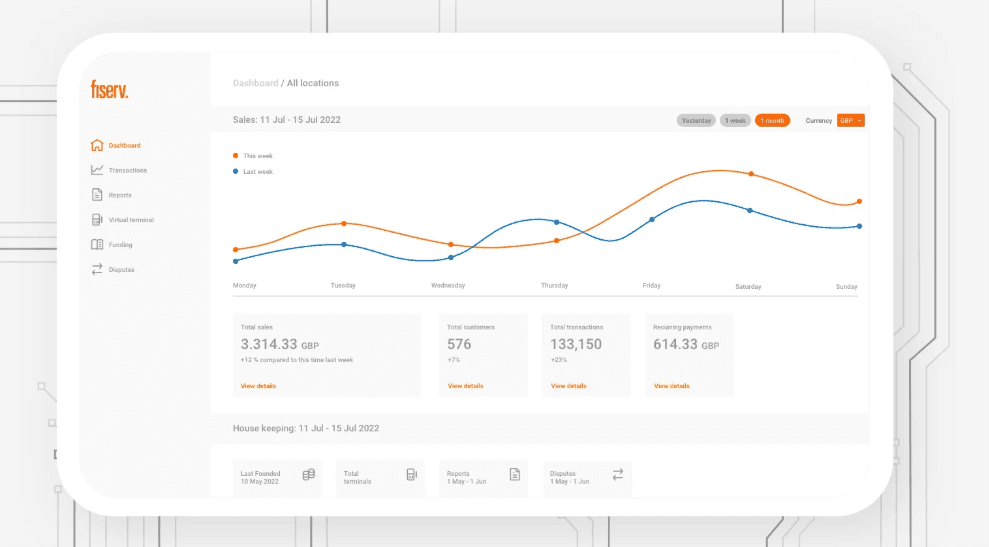
In my opinion, Fiserv is a competent Accounts Payable Software platform that offers a blend of solid features and usability. Its core functionalities are reliable, and the standout features, such as integration options with financial institutions and merchant services, make it appealing for businesses with diverse needs. The platform is relatively user-friendly, though onboarding may require some patience. Customer support could be more responsive, but it generally meets expectations. Fiserv is competitively priced and offers good value, especially for medium-sized businesses that need a robust accounts payable solution. It may not be the top choice for small startups due to its complexity, but for established teams with structured business management processes, it provides a comprehensive suite of tools to manage payment processing, vendor workflows, and operational efficiency effectively.
Pros
- Strong security features that help protect sensitive financial data.
- Interface is generally easy for teams to navigate.
- Broad technology capabilities with a wide range of integrations.
Cons
- Some users feel the interface looks dated or clunky.
- Pricing and fees can be unpredictable and on the higher side.
- Some users report inconsistent customer support and occasionally disruptive updates.
- Initial setup process can be complex and time-consuming.
Is Fiserv Right For Your Needs?
Who Would be a Good Fit for Fiserv?
Fiserv is well-suited for financial institutions and businesses that require robust transaction processing and payment solutions. If your work involves handling high volumes of financial transactions or requires integrated payment solutions, Fiserv’s extensive suite of tools supports these needs. Its capabilities in managing complex financial operations make it a strong choice for banks, credit unions, and payment service providers.
- Financial InstitutionsFiserv’s comprehensive transaction processing tools are ideal for banks and credit unions managing large volumes of transactions.
- Payment Service ProvidersFiserv supports diverse payment methods, making it perfect for businesses providing payment services.
- RetailFor retailers, Fiserv offers integrated payment solutions that simplify the checkout process for customers.
- HealthcareHealthcare providers benefit from Fiserv’s billing and payment processing, ensuring smooth financial operations.
- Small BusinessesSmall businesses can leverage Fiserv’s scalable solutions to handle payments efficiently as they grow.
- E-commerceE-commerce businesses find Fiserv’s secure payment processing essential for online transactions.
- Project Manager/Risk managementProject managers in banking and risk management teams often choose Fiserv for its structured workflows and compliance-focused tools.
Who Would be a Bad Fit for Fiserv?
Fiserv may be a bad fit for businesses seeking low-cost payment processing, modern technology, or highly responsive client support, as some of its platforms have been described as expensive or outdated. Fiserv might not be ideal for organizations that need comprehensive financial features like budgeting and expense tracking. If your team relies heavily on integrations with other software, Fiserv's limited integration capabilities could hinder your workflow. Its occasional allocation glitches can also be problematic for teams requiring precise financial management.
- StartupsIf you need extensive budgeting and expense features, Fiserv won't meet your needs.
- Small BusinessesLimited integrations can disrupt your operations if you rely on diverse software tools.
- RetailFiserv's lack of detailed inventory management could be a drawback for you.
- FreelancersThe occasional allocation glitches can be a hassle if precision is crucial in your work.
- Tech CompaniesIf you need seamless software integrations, Fiserv's limited options might frustrate your team.
- Finance DepartmentsWithout robust budgeting tools, Fiserv may not fulfill your department's needs for detailed financial planning.
How We Test & Score Tools
We’ve spent years building, refining, and improving our software testing and scoring system. The rubric is designed to capture the nuances of software selection and what makes a tool effective, focusing on critical aspects of the decision-making process.
Below, you can see exactly how our testing and scoring works across seven criteria. It allows us to provide an unbiased evaluation of the software based on core functionality, standout features, ease of use, onboarding, customer support, integrations, customer reviews, and value for money.
Core Functionality (25% of final scoring)
The starting point of our evaluation is always the core functionality of the tool. Does it have the basic features and functions that a user would expect to see? Are any of those core features locked to higher-tiered pricing plans? At its core, we expect a tool to stand up against the baseline capabilities of its competitors.
Standout Features (25% of final scoring)
Next, we evaluate uncommon standout features that go above and beyond the core functionality typically found in tools of its kind. A high score reflects specialized or unique features that make the product faster, more efficient, or offer additional value to the user.
We also evaluate how easy it is to integrate with other tools typically found in the tech stack to expand the functionality and utility of the software. Tools offering plentiful native integrations, 3rd party connections, and API access to build custom integrations score best.
Ease of Use (10% of final scoring)
We consider how quick and easy it is to execute the tasks defined in the core functionality using the tool. High scoring software is well designed, intuitive to use, offers mobile apps, provides templates, and makes relatively complex tasks seem simple.
Onboarding (10% of final scoring)
We know how important rapid team adoption is for a new platform, so we evaluate how easy it is to learn and use a tool with minimal training. We evaluate how quickly a team member can get set up and start using the tool with no experience. High scoring solutions indicate little or no support is required.
Customer Support (10% of final scoring)
We review how quick and easy it is to get unstuck and find help by phone, live chat, or knowledge base. Tools and companies that provide real-time support score best, while chatbots score worst.
Customer Reviews (10% of final scoring)
Beyond our own testing and evaluation, we consider the net promoter score from current and past customers. We review their likelihood, given the option, to choose the tool again for the core functionality. A high scoring software reflects a high net promoter score from current or past customers.
Value for Money (10% of final scoring)
Lastly, in consideration of all the other criteria, we review the average price of entry level plans against the core features and consider the value of the other evaluation criteria. Software that delivers more, for less, will score higher.
Core Features
Automated Invoice Processing: This feature helps you manage invoices with minimal manual intervention. It captures data from invoices and automatically routes them for approval, saving your team time and reducing errors.
Expense Management: You can track and categorize business expenses efficiently. This feature ensures all expenses align with your company policies, helping you keep a close eye on spending.
Vendor Management: Keep all your supplier information in one place. This feature lets you easily track vendor performance and maintain strong relationships.
Payment Scheduling: Plan and schedule payments to vendors automatically. This ensures timely payments and helps you avoid late fees.
Compliance Tracking: Stay on top of regulatory requirements effortlessly. This feature helps ensure your accounts payable processes meet all necessary legal standards.
Reporting and Analytics: Gain insights into your accounts payable activities with detailed reports. This feature provides data that can help you make informed financial decisions.
Ease of Use
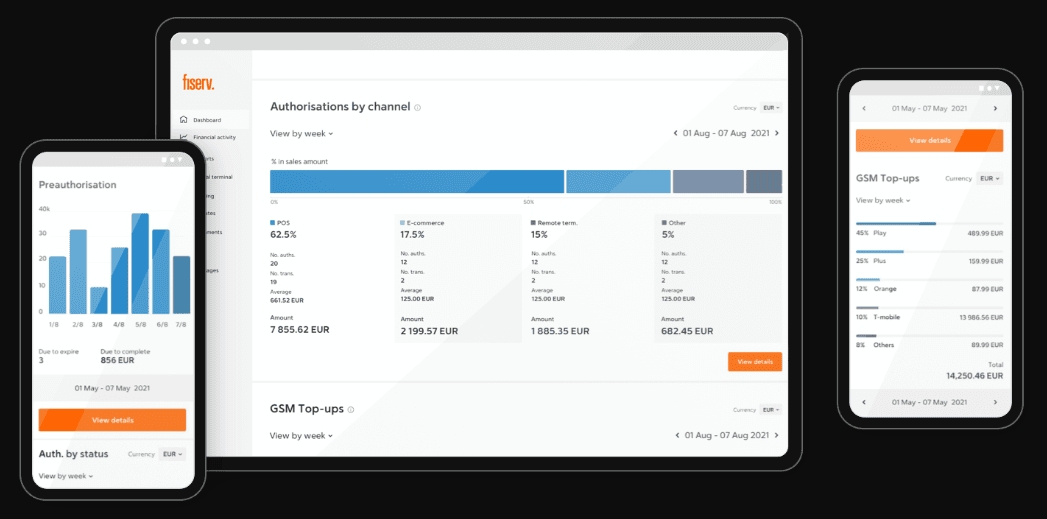
Fiserv's Accounts Payable Software is generally user-friendly, with a straightforward interface that simplifies navigation. Many users find it easy to use and navigate, particularly for front and back office operations and simpler transaction processing. However, some reviewers note the interface can feel dated or clunky, and performance can be inconsistent when handling advanced features or customization. So, teams needing modern design, heavy customization, or advanced analytics may encounter challenges. Users appreciate the automation features, which save time and reduce manual errors. And compared to other software, Fiserv stands out for its comprehensive support and documentation, making it easier for your team to adapt and maximize its capabilities.
Integrations
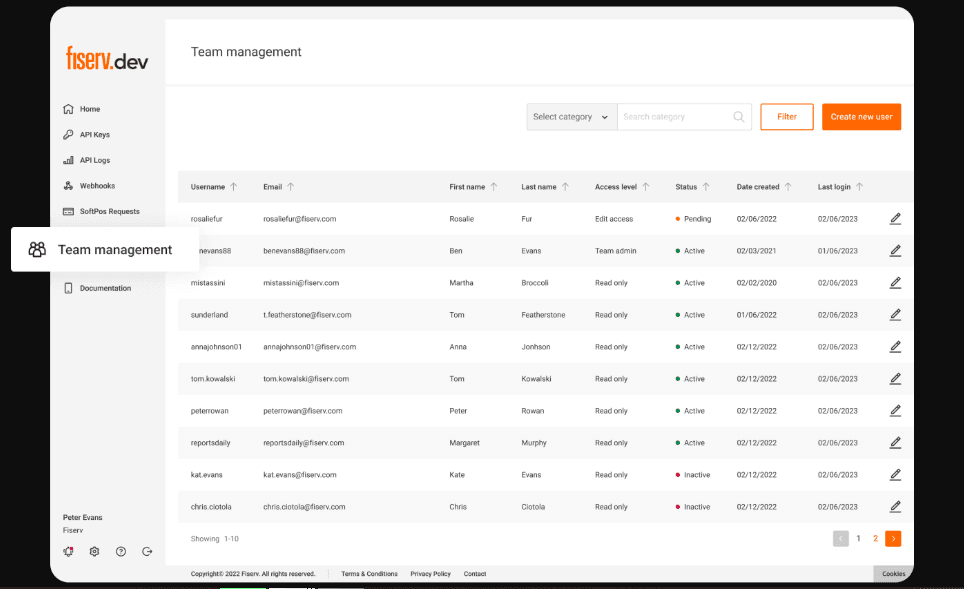
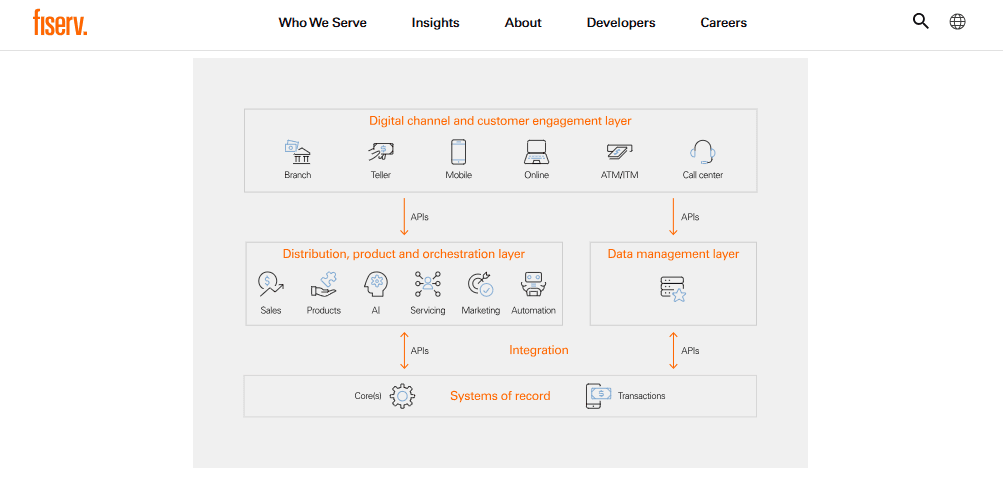
Fiserv works with a vast array of partners, platforms, and custom client solutions, making it impractical to list every integration. A few of them will include Cleartouch, Precision, and Premier. The integrations are often tailored to specific client needs, so the available connections can vary depending on the product, region, and type of financial institution.
Fiserv also provides an API that allows for real-time sharing of data and processes, and it connects with third-party integration tools.
Fiserv Specs
- 2-Factor Authentication: Yes
- A/B Testing: Yes
- Analytics: No
- API: Yes
- BitCoin: No
- Conversion Tracking: Yes
- Dashboard: Yes
- Data Export: Yes
- Data Import: Yes
- Data Visualization: Yes
- Design Templates: No
- External Integrations: Yes
- Inventory Tracking: No
- Keyword Tracking: Yes
- Marketing Automation: Yes
- Multi-User: Yes
- Notifications: Yes
- Order Management: No
- Payment Gateway Integration: No
- Payment Processor: No
- PayPal: No
- Product Catalog: No
- Review Monitoring: No
- SAP Integration: No
- Scheduling: Yes
- Stripe: No
- Third-Party Plugins/Add-Ons: Yes


