

O software de gestão de tesouraria ajuda a sua equipa a gerir o dinheiro disponível, a liquidez, os pagamentos e o risco financeiro em toda a organização. Se está à procura do melhor software de gestão de tesouraria, é provável que tenha de equilibrar fluxos de caixa complexos, relatórios para várias entidades e a necessidade de visibilidade em tempo real — tudo isto garantindo simultaneamente a conformidade e apoiando decisões estratégicas. Esta lista irá ajudá-lo a comparar as principais soluções, compreender os seus pontos fortes únicos e escolher a plataforma certa para melhorar o controlo, a precisão e a eficiência das suas operações de tesouraria.
Why Trust Our Software Recommendations
6,700+
Reviews
20
Industry experts
16+
Evaluation factors
14
Years
Our team has been testing and reviewing software since 2012. As finance leaders ourselves, we know how difficult—and important—it is to choose the right software.
For this guide, we evaluated tools using hands-on testing and independent research, scoring tools using our selection criteria.
Our reviews reflect our human editorial judgment, not a sales pitch.
Tabela comparativa de software de gestão de tesouraria
Esta tabela comparativa resume os detalhes de preços das minhas principais escolhas de software de gestão de tesouraria:
Sorted by: Default
| Tool | Starting Price | Website | |
|---|---|---|---|
Best for AI-native treasury deployment | Not rated | Pricing upon request Free plan available | Website |
Best for cash flow planning for SMEs | 4.4 out of 5 | Pricing upon request Free demo + free trial available | Website |
Best for direct API bank integrations | 4.4 out of 5 | $24,000/year Free demo available | Website |
Best for large enterprise scalability | 3.8 out of 5 | Pricing upon request Free demo available | Website |
Best for AI-powered cash forecasting | Not rated | Pricing upon request Free demo available | Website |
Best for payment workflow automation | Not rated | Pricing upon request Free demo available | Website |
Best for global cash visibility across entities | Not rated | Pricing upon request Free demo available | Website |
Best for multi-bank connectivity | Not rated | Pricing upon request Free demo available | Website |
Best for financial institution integration | Not rated | Pricing upon request Not available | Website |
Best for real-time cash management | Not rated | Pricing upon request Free demo available | Website |


Avaliações de software de gestão de tesouraria
Apresentamos abaixo os meus resumos detalhados do software de gestão de tesouraria que entrou na minha lista restrita. As minhas avaliações analisam detalhadamente as funcionalidades, os melhores casos de utilização e as integrações de cada plataforma, para ajudá-lo a encontrar a melhor opção para si.
 Best for AI-native treasury deployment
- Free plan available
- Pricing upon request
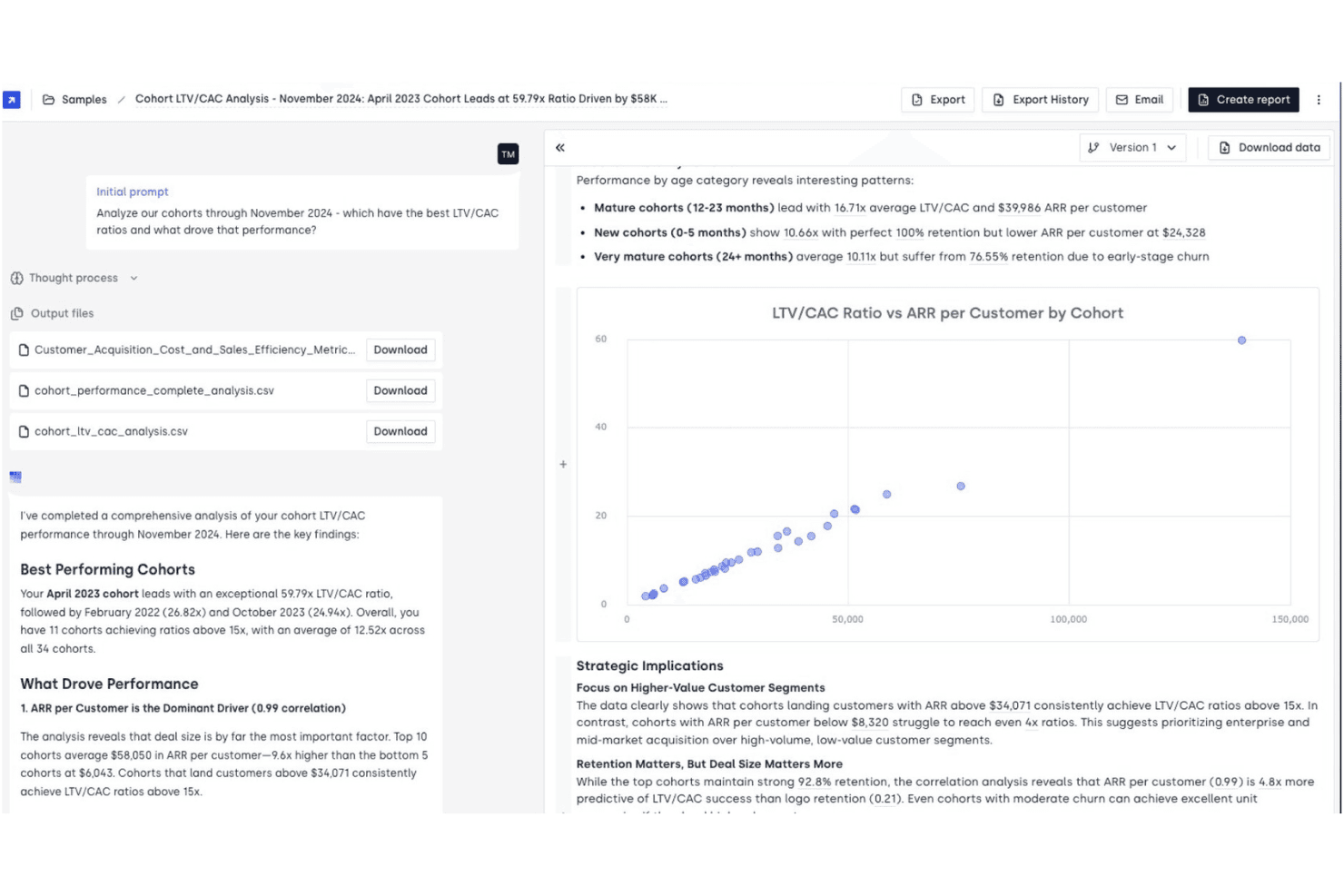
Concourse lets users analyze cohort LTV/CAC ratios with AI-generated insights. Concourse is an AI-native treasury and finance platform that uses autonomous agents to deliver real-time cash visibility, automated liquidity forecasting, FX exposure monitoring, and reconciliation workflows on top of your existing ERP, TMS, and banking infrastructure.
Who Is Concourse Best For?
Concourse is a strong fit for treasury and finance teams that want AI-driven cash visibility and forecasting layered on top of their existing ERP and banking infrastructure—without replacing it.
Why I Picked Concourse
I picked Concourse as one of the best because it's the only platform on my shortlist built AI-first, not AI-bolted-on. Its Forecasting Agent pulls live ERP and bank data to generate rolling 13-week cash forecasts that update continuously with actuals, which is a real step up from static spreadsheet models. I also love that its Bond Rotation Agent monitors maturities and flags reinvestment opportunities in real time, so idle cash doesn't sit unnoticed.
Concourse Key Features
- Natural language cash querying: Ask plain-language questions about your global cash position and get instant answers pulled from live bank and ERP data.
- Bond Rotation Agent: Monitors bond maturities and alerts your team to reinvestment opportunities based on current market rates and credit ratings.
- Autonomous Close Agent: Orchestrates month-end reconciliation end-to-end, flagging exceptions early so your team can resolve issues before close.
- Multi-surface report delivery: Pushes insights and reports directly into Slack, Teams, Excel, and PowerPoint so stakeholders get what they need without logging into another tool.
Concourse Integrations
Concourse supports 100+ system connections, including Oracle, SAP, NetSuite, Workday, Snowflake, Google BigQuery, Wells Fargo, Goldman Sachs, and Ripple. Most connections use OAuth or API keys, with API support for custom integrations.
Pros and Cons
Pros:
- Natural language queries for treasury data
- Rolling AI-driven cash and liquidity forecasts
- Real-time cash visibility across banks and ERPs
Cons:
- Lacks native hedge accounting functionality
- Does not initiate payments directly
Learn more about Concourse: Best for cash flow planning for SMEs
- Free demo + free trial available
- Pricing upon request
Visit WebsiteCustomer Rating:4.4/5
Agicap monitors cash, forecasts flow, and enhances financial planning. Agicap gives small and midsize businesses a way to forecast, monitor, and manage cash flow in real time. It’s built for finance teams and business owners who need to track liquidity across multiple bank accounts and scenarios without relying on spreadsheets. The platform helps users anticipate cash gaps, model different outcomes, and make informed decisions about spending and investment.
Why I Picked Agicap
Agicap stands out for its focus on cash flow planning tailored to the needs of SMEs. The platform lets users consolidate data from multiple bank accounts and business units, giving a clear, up-to-date view of liquidity. I appreciate how Agicap allows you to build custom cash flow forecasts and run scenario analyses, so you can quickly see the impact of different business decisions. For treasury teams that need to anticipate cash gaps and plan for growth, Agicap offers targeted tools that go beyond basic tracking.
Agicap Key Features
Some other features that make Agicap useful for treasury teams include:
- Bank Feed Synchronization: Connect and sync transactions from multiple bank accounts automatically.
- User Access Management: Set permissions and roles for different team members within the platform.
- Invoice Tracking: Monitor incoming and outgoing invoices to keep tabs on receivables and payables.
- Data Import and Export: Import financial data from spreadsheets or export reports for further analysis.
Agicap Integrations
Integrations include Business Central, Xero, HSBC UK, Barclays, Oracle NetSuite, NatWest, Sage Intacct, Workday, Stripe, Google Drive, and more.
Pros and Cons
Pros:
- Multi-user access with custom permissions
- Scenario modeling for cash projections
- Real-time cash visibility across accounts
Cons:
- Not suited for complex enterprise treasury
- Limited advanced liquidity management features
Learn more about Agicap: Best for direct API bank integrations
- Free demo available
- From $24,000/year
Visit WebsiteCustomer Rating:4.4/5
Trovata delivers real-time cash visibility, forecasting, and bank insights. Trovata is designed for finance teams that want direct, real-time API connections to their banks without relying on legacy file-based integrations. It’s a strong fit for organizations that need up-to-the-minute cash visibility and automated reporting across multiple accounts. The platform helps you unify bank data, simplify cash positioning, and automate workflows for more responsive treasury management.
Why I Picked Trovata
Direct API bank integrations set Trovata apart for treasury teams that need real-time access to cash positions and transactions. Instead of relying on outdated file transfers, Trovata connects directly to banks through APIs, so you always have up-to-date data at your fingertips. I appreciate how this approach enables automated cash reporting and instant bank reconciliation, which can help reduce manual work and errors. For organizations that prioritize speed and accuracy in their treasury operations, Trovata’s API-driven model is a strong fit.
Trovata Key Features
In addition to its direct API bank integrations, I also found several other features that support treasury management:
- Automated Cash Forecasting: Build and update cash forecasts using real-time bank data and customizable models.
- Multi-Bank Reporting: Consolidate account balances and transactions from multiple banks into unified reports.
- Custom Tagging and Search: Organize and filter transactions with custom tags and advanced search capabilities.
- Audit Trail and Activity Logs: Track user actions and changes within the platform for compliance and transparency.
Trovata Integrations
Integrations include Oracle NetSuite, SAP S/4 Hana, Blackline, and more.
Pros and Cons
Pros:
- Multi-bank reporting consolidates accounts
- Automated forecasting uses live transaction data
- API bank connections enable real-time cash visibility
Cons:
- Lacks support for emerging assets like crypto
- Bank connection management can be complex
Learn more about Trovata: Best for large enterprise scalability
- Free demo available
- Pricing upon request
Visit WebsiteCustomer Rating:3.8/5
Fiserv optimizes cash flow, payments, and risk for businesses. Built for organizations with complex treasury needs, Fiserv offers a suite of solutions tailored to large enterprises and financial institutions. Its platform is designed to handle high transaction volumes, multi-entity structures, and global cash management requirements. Fiserv helps teams centralize control, automate workflows, and maintain compliance across diverse banking relationships.
Why I Picked Fiserv
For treasury teams managing operations at scale, Fiserv stands out for its ability to support large enterprise environments. The platform is built to handle high transaction volumes and complex account structures, which is essential for organizations with multiple subsidiaries or global operations. I appreciate how Fiserv offers advanced cash concentration and liquidity management tools that help centralize control across diverse banking relationships. If your business needs a solution that can adapt to enterprise-level demands and regulatory requirements, Fiserv is a strong choice.
Fiserv Key Features
In addition to its scalability for large enterprises, I also found several other features that support treasury management:
- Automated Payment Processing: Manage and execute high-volume payments with built-in controls and approval workflows.
- Fraud Detection and Risk Monitoring: Monitor transactions in real time with advanced fraud prevention and risk analytics.
- Bank Account Reconciliation: Match transactions and balances across multiple banks and accounts automatically.
- Regulatory Compliance Tools: Access built-in modules to help meet evolving regulatory and reporting requirements.
Fiserv Integrations
Native integrations are not currently listed.
Pros and Cons
Pros:
- Automated payments with approval workflows
- Advanced fraud detection and risk monitoring
- Scales for high transaction volumes
Cons:
- Batch processing can limit real-time data consistency
- Overlapping product suite can cause workflow confusion
Learn more about Fiserv:

HighRadius automates cash flow, credit, and collections for finance teams. HighRadius brings AI-driven automation to treasury teams that need accurate, dynamic cash forecasting. It’s especially useful for large enterprises and finance professionals managing complex receivables and payables across multiple business units. The platform helps you predict cash positions with greater precision by analyzing real-time data and historical trends.
Why I Picked HighRadius
What sets HighRadius apart is its focus on AI-powered cash forecasting, which is a top priority for treasury teams looking to improve accuracy and agility. The platform uses machine learning algorithms to analyze historical payment patterns and real-time transaction data, helping you predict future cash flows with more confidence. I like that it also offers scenario modeling, so you can test the impact of different business events on your cash position. These features make HighRadius a strong fit for organizations that need to manage liquidity proactively and reduce forecasting errors.
HighRadius Key Features
Some other features in HighRadius that treasury teams may find valuable include:
- Automated Cash Application: Match incoming payments to open invoices using AI to reduce manual processing.
- Bank Connectivity Suite: Connect directly to global banks for real-time transaction data and reconciliation.
- Collections Management: Track, prioritize, and automate follow-ups on outstanding receivables within a single dashboard.
- Dispute Management: Log, track, and resolve payment disputes with built-in workflow tools.
HighRadius Integrations
Native integrations are not currently listed.
Pros and Cons
Pros:
- Real-time bank connectivity updates cash positions
- Automated cash application reduces manual work
- AI-driven forecasting improves cash accuracy
Cons:
- Payment posting can be delayed or error-prone
- Batch-based integrations delay real-time data syncing
Learn more about HighRadius:

Serrala enhances cash, credit, and risk processes for enterprises. Serrala is designed for finance teams that need to automate and control complex payment workflows across global operations. It’s especially relevant for organizations handling high transaction volumes or requiring strict compliance and audit trails. The platform helps you centralize, standardize, and secure payment processes while reducing manual intervention and risk.
Why I Picked Serrala
For treasury teams that need to automate and control payment workflows, Serrala offers specialized tools that address these needs directly. The platform provides configurable approval chains and automated payment scheduling, which help reduce errors and ensure compliance with internal controls. I appreciate that Serrala also includes audit-ready reporting features, making it easier to track every step of the payment process. These capabilities make Serrala a strong choice for organizations that prioritize security, transparency, and efficiency in their payment operations.
Serrala Key Features
Some other features in Serrala that treasury professionals may find useful include:
- Multi-Bank Connectivity: Connect to multiple banks for centralized payment processing and reconciliation.
- Fraud Detection Tools: Monitor transactions in real time to flag suspicious payment activity.
- Cash Visibility Dashboard: View consolidated cash positions across accounts and entities in one interface.
- ERP Integration: Sync payment data directly with leading ERP systems for end-to-end process automation.
Serrala Integrations
Integrations include SAP, Microsoft Teams, and more.
Pros and Cons
Pros:
- Real-time fraud detection mitigates risks
- Multi-bank connectivity centralizes cash management
- Automated workflows reduce manual payment errors
Cons:
- Accuracy depends on payer data quality
- Rule creation and updates require technical expertise
Learn more about Serrala: Best for global cash visibility across entities
- Free demo available
- Pricing upon request

GTreasury simplifies cash, manages risk, and boosts financial reporting. GTreasury is designed for finance teams that need real-time visibility and control over global cash positions. It’s a strong fit for multinational organizations managing complex, multi-entity structures and diverse banking relationships. The platform helps you centralize cash, payments, and liquidity data so you can make informed decisions across all your entities. With best-in-class capabilities like cash pooling and support for managing transactions such as credit card payments, GTreasury helps simplify treasury operations at scale.
Why I Picked GTreasury
I chose GTreasury because it gives treasury teams a clear, consolidated view of global cash positions across multiple entities and currencies. The platform’s real-time cash visibility dashboard lets you track balances and transactions from all your banks in one place, which is essential for organizations with complex, international structures. I also appreciate its liquidity management tools, which help you forecast and optimize cash usage across regions. These features make GTreasury a strong choice for businesses that need to manage cash and liquidity on a global scale.
GTreasury Key Features
Some other features in GTreasury that stand out for treasury teams include:
- Automated Bank Reconciliation: Match transactions from multiple banks automatically to reduce manual effort and errors.
- Payment Factory: Centralize and standardize payment processing for all subsidiaries within a single workflow.
- Risk Management Module: Monitor and manage exposures to interest rate, FX, and commodity risks within the platform.
- Regulatory Compliance Tools: Track and document compliance with global financial regulations directly in your treasury workflows.
GTreasury Integrations
Native integrations are not currently listed.
Pros and Cons
Pros:
- Built-in risk management for FX and rates
- Advanced liquidity forecasting and modeling
- Real-time global cash visibility across entities
Cons:
- Interface may feel dated
- Implementation can be lengthy for large teams
Learn more about GTreasury:

Nomentia improves cash forecasting, liquidity, and financial reporting. Nomentia stands out for treasury teams that need to manage payments and cash flows across multiple banks and geographies. It’s especially useful for multinational organizations or businesses with complex banking relationships. The platform helps you centralize bank connectivity, automate cash management, and gain real-time visibility into global liquidity.
Why I Picked Nomentia
When you need to connect with dozens or even hundreds of banks, Nomentia offers a level of multi-bank connectivity that’s hard to match. The platform supports direct connections to a wide range of global banks, allowing treasury teams to manage payments, statements, and balances from a single interface. I like that Nomentia also provides automated bank statement collection and standardized payment formats, which help reduce manual work and errors. These features make it a strong fit for organizations that need to centralize and control complex banking relationships within their treasury operations.
Nomentia Key Features
In addition to its multi-bank connectivity, I also found several other features that support treasury operations:
- Cash Forecasting Module: Generate short- and long-term cash flow forecasts using real-time bank data.
- Payment Factory Functionality: Centralize and standardize payment processing across multiple subsidiaries and business units.
- Fraud Detection and Compliance Tools: Monitor transactions for suspicious activity and ensure regulatory compliance.
- User Access Controls: Set granular permissions and approval workflows for different user roles within your organization.
Nomentia Integrations
Native integrations are not currently listed.
Pros and Cons
Pros:
- Automated cash forecasting with bank data
- Centralized payments across entities
- Direct connections to global banks
Cons:
- Transaction timeouts occur in high-volume processes
- Some workflows rely on predefined templates
Learn more about Nomentia:

Teciem boosts cash efficiency, mitigates risk, and ensures compliance. Teciem is designed for organizations that need deep integration with financial institutions and capital markets. Its platform is especially useful for treasury teams in banks, large corporates, and financial services firms that manage complex portfolios and require real-time connectivity. Teciem helps users automate deal capture, streamline risk management, and connect directly to global banking networks.
Why I Picked Teciem
What sets Teciem apart is its strong focus on financial institution integration, which is essential for treasury teams that need direct connectivity to banks and capital markets. The platform offers real-time transaction processing and automated deal capture, making it easier to manage complex financial instruments and exposures. I appreciate how Teciem supports straight-through processing and provides risk analytics, which are both critical for organizations operating in fast-moving financial environments. If your treasury operations depend on smooth interaction with global banking networks, Teciem is built to meet those needs.
Teciem Key Features
In addition to its integration capabilities with financial institutions, I also found several other features that support treasury management:
- Cash Flow Forecasting: Generate detailed cash flow projections using real-time and historical data.
- Hedge Accounting Support: Track and manage hedge relationships with built-in compliance tools.
- Multi-Currency Management: Handle transactions and reporting across multiple currencies and jurisdictions.
- Audit Trail and Reporting: Maintain a complete audit trail and access customizable financial reports.
Teciem Integrations
Native integrations are not currently listed.
Pros and Cons
Pros:
- Real-time cash visibility across accounts
- Advanced risk analytics and compliance tools
- Direct SWIFT integration with global banks
Cons:
- Product suite complexity creates fragmented workflows
- Strong reliance on SAP environments
Learn more about Teciem:

Atlar accelerates cash management, payments, and forecasting. Atlar gives finance teams real-time visibility and control over their cash positions across multiple banks and accounts. It’s especially useful for fast-growing companies and finance professionals who need to automate cash management, reconciliation, and payments without relying on manual processes. Atlar stands out for its API-first approach, letting users connect directly to their banks and automate workflows for up-to-the-minute cash insights.
Why I Picked Atlar
For treasury teams that need up-to-the-minute cash visibility, Atlar’s real-time cash management capabilities are hard to match. The platform connects directly to your banks and retrieves live balances and transactions, so you always know your true cash position. I like that Atlar also automates reconciliation and payment workflows, reducing manual work and the risk of errors. If your business relies on accurate, real-time cash data to make decisions, Atlar is built to deliver exactly that.
Atlar Key Features
Some other features that make Atlar useful for treasury teams include:
- Automated Bank Connectivity: Connect to multiple banks and accounts through a single API.
- Custom Alerts and Notifications: Set up real-time alerts for specific cash movements or balances.
- User Access Controls: Manage permissions and roles for different team members.
- Audit Logging: Track all user actions and changes for compliance and review.
Atlar Integrations
Integrations include SAP, Workday, Business Central, Light, Campfire, Oracle NetSuite, and more.
Pros and Cons
Pros:
- API-first design enables bank connectivity
- Automated reconciliation reduces manual work
- Real-time cash visibility across banks
Cons:
- Data quality depends on bank/ERP data consistency
- Extra fees for additional bank connections beyond limits
Learn more about Atlar:
Outro software de gestão de tesouraria
Eis algumas opções adicionais de software de gestão de tesouraria que não entraram na minha lista restrita, mas que vale a pena conhecer:
- 11Coupa Treasury & Cash ManagementBest for spend management integration
- 12DebtBookBest for debt and lease tracking
- 13Treasury SystemsBest for Nordic market compliance
- 14KyribaBest for risk management analytics
- 15CentimeBest for integrated AR and AP management
- 16SAPBest for enterprise resource planning integration
- 17Modern TreasuryBest for automated payment reconciliation
How I Evaluate Treasury Management Software
I look at treasury tools through two lenses: a baseline of must-haves like multi-bank cash positioning and SWIFT connectivity, and the differentiators that distinguish one platform from another.
Core Functionality (Table Stakes For This List)
When I'm selecting tools for my list, I rank each one on a scale from 0 (does not offer the functionality) to 5 (excels in this area) for each core functionality listed below. Then, I calculate the tool's total score into a percentage. Each tool needs to achieve a minimum total score of 65% to be considered for inclusion.
- Cash Visibility & Positioning: I evaluate whether a platform can pull balances from multiple banks and currencies into one view, so treasury teams can build a reliable daily cash position without toggling between bank portals.
- Cash Forecasting: A tool should let you build forecasts across multiple time horizons and compare them against actuals. I look for variance analysis and scenario modeling that go beyond basic spreadsheet uploads.
- Bank Connectivity: This covers the range of supported connection methods—SWIFT, host-to-host, APIs, BAI2/MT940 file imports. I check how many banks a platform connects to out of the box and whether it handles onboarding logistics.
- Payments & Reconciliation: I look at payment initiation workflows, approval routing, and how the tool matches bank transactions back to the book. Multi-entity payment processing with configurable approval chains is a key factor here.
- Risk Management: I evaluate whether a platform supports FX exposure tracking, deal capture, and mark-to-market valuation. Tools like Kyriba and FIS offer hedge accounting modules, and I consider depth of coverage for interest rate and counterparty risk.
- Compliance & Controls: Role-based access, segregation of duties, and audit trails matter here. I check for SOX-aligned workflows and whether the tool generates the kind of reporting your auditors and regulators expect to see.
Once I have a list of tools that meet this criteria, I consider what sets each platform apart.
Differentiating Factors (What Sets Vendors Apart)
Here's how I compare and contrast different vendors:
Standout Features
AI-driven forecasting is a big differentiator. Platforms like Kyriba and HighRadius use machine learning to refine cash predictions over time, which matters when you're managing liquidity across dozens of entities. I also evaluate in-house banking capabilities—tools that support intercompany netting and internal loans help multinational teams reduce external transaction volumes. ERP-native connectors are worth checking too. A certified SAP or Oracle integration saves weeks of implementation work compared to custom middleware builds.
Beyond Features
Implementation timelines vary widely in this space. I look at whether a vendor offers managed bank onboarding and treasury-specific consultants, since a SWIFT setup alone can take months without the right support. Security certifications like SOC 1/SOC 2 Type II and ISO 27001 are table stakes, but I also check for data residency options—important when your entities span multiple jurisdictions. Pricing models deserve scrutiny too. Some vendors charge per entity or per bank connection, which can quietly inflate costs as your treasury operations scale.
Como escolher um software de gestão de tesouraria
É fácil perder-se em listas extensas de funcionalidades e estruturas de preços complexas. Para o ajudar a manter o foco enquanto percorre o seu processo específico de seleção de software, eis uma lista de fatores a ter em conta:
| Fator | O que considerar |
|---|---|
| FatorEscalabilidade | O que considerarO software irá acompanhar o crescimento do seu volume de transações, número de entidades e moedas ao longo do tempo? |
| FatorIntegrações | O que considerarEstabelece ligação nativa aos seus bancos, sistemas ERP e sistemas de contabilidade, ou será necessário desenvolver soluções personalizadas? |
| FatorPersonalização | O que considerarPode adaptar os fluxos de trabalho, os relatórios e os painéis de controlo aos processos e às necessidades de conformidade da sua equipa? |
| FatorFacilidade de utilização | O que considerarA sua equipa irá adotar rapidamente a ferramenta ou a interface irá tornar mais lentas as operações diárias de tesouraria? |
| FatorImplementação e integração inicial | O que considerarQuanto tempo será necessário para começar a utilizar o sistema e de que recursos ou formação irá precisar? |
| FatorCusto | O que considerarTodos os custos — licenças, suporte, integrações e atualizações — são claros e estão dentro das limitações do seu orçamento? |
| FatorMedidas de segurança | O que considerarO software disponibiliza controlos robustos, registos de auditoria e proteção de dados para responder ao seu perfil de risco? |
| FatorRequisitos de conformidade | O que considerarA ferramenta consegue gerir as suas obrigações regulamentares e de elaboração de relatórios específicas, especialmente nas suas regiões? |
O que é um software de gestão de tesouraria?
O software de gestão de tesouraria é um sistema de gestão de tesouraria e uma plataforma de tesouraria que ajuda as organizações a gerir o dinheiro disponível, a liquidez, as relações bancárias e o risco financeiro. Centraliza funções essenciais de tesouraria, como a previsão de tesouraria, o processamento de pagamentos, a reconciliação de contas bancárias e os relatórios de conformidade, numa única plataforma. As equipas financeiras, incluindo o diretor financeiro e o pessoal interno de tesouraria, utilizam estas ferramentas para obter uma melhor visibilidade do balanço, automatizar tarefas de rotina nas contas a pagar e nas contas a receber e gerir as transações financeiras de forma mais eficiente. Com funcionalidades como o planeamento de cenários e a mitigação de riscos, estes sistemas ajudam a garantir o cumprimento dos requisitos regulamentares em várias contas, moedas e entidades.
Funcionalidades do software de gestão de tesouraria
Ao selecionar um software de gestão de tesouraria, procure as seguintes funcionalidades essenciais:
- Acompanhamento da posição de tesouraria: Monitoriza os saldos em tempo real de todas as contas bancárias, proporcionando uma visão clara da liquidez disponível a qualquer momento.
- Automatização do processamento de pagamentos: Programa, inicia e aprova pagamentos com controlos integrados, reduzindo a intervenção manual e os erros.
- Reconciliação de contas bancárias: Corresponde as transações dos extratos bancários aos registos internos, ajudando a identificar rapidamente discrepâncias.
- Gestão da dívida e dos investimentos: Acompanha empréstimos, linhas de crédito e carteiras de investimento, incluindo cálculos de juros e calendários de vencimento.
- Suporte para várias moedas: Gere transações, saldos e relatórios em várias moedas, processando conversões e flutuações das taxas de câmbio.
- Relatórios de conformidade regulamentar: Gera os relatórios necessários para auditorias e declarações regulamentares, apoiando normas locais e internacionais.
- Registo de auditoria e permissões de utilizador: Regista todas as ações e alterações dos utilizadores e permite definir controlos de acesso detalhados para garantir a segurança e a conformidade.
- Previsão de tesouraria: Projeta fluxos de caixa futuros com base em dados históricos, faturas em aberto e pagamentos planeados, apoiando o planeamento da liquidez.
- Conectividade bancária: Integra-se diretamente com parceiros bancários para permitir a troca segura de dados, a obtenção de extratos e a iniciação de pagamentos.
- Painéis e relatórios personalizáveis: Permite adaptar as visualizações e os relatórios às necessidades da sua equipa, facilitando a monitorização das principais métricas e tendências.
Funcionalidades comuns de IA do software de gestão de tesouraria
Para além das funcionalidades padrão do software de gestão de tesouraria acima mencionadas, muitas destas soluções estão a incorporar IA com funcionalidades como:
- Deteção de anomalias: Utiliza IA para sinalizar automaticamente transações ou padrões invulgares nos fluxos de caixa, ajudando as equipas a identificar possíveis fraudes ou erros antes que se agravem.
- Previsão preditiva de tesouraria: Utiliza aprendizagem automática para analisar dados históricos e variáveis externas, produzindo projeções de fluxos de caixa mais precisas e dinâmicas.
- Sugestões automatizadas de reconciliação: Aplica IA para fazer corresponder transações e sugerir reconciliações prováveis, reduzindo o tempo de análise manual e melhorando a precisão.
- Encaminhamento inteligente de pagamentos: Otimiza os percursos dos pagamentos através da análise dos custos, do momento e dos fatores de risco, recomendando o percurso mais eficiente para cada transação.
- Consultas em linguagem natural: Permite aos utilizadores fazer perguntas sobre os dados de tesouraria em linguagem corrente, com a IA a interpretar e a apresentar informações ou relatórios relevantes.
Benefícios do software de gestão de tesouraria
A implementação de um software de gestão de tesouraria proporciona vários benefícios para a sua equipa e para a sua empresa. Eis alguns dos benefícios que pode esperar:
- Maior visibilidade sobre o dinheiro disponível: O acompanhamento e a previsão da posição de tesouraria em tempo real ajudam a tomar decisões informadas sobre a liquidez em todas as contas e entidades.
- Redução da carga de trabalho manual: O processamento de pagamentos, a reconciliação e os relatórios automatizados minimizam as tarefas repetitivas e libertam tempo da sua equipa.
- Maior conformidade e preparação para auditorias: Os relatórios regulamentares, os registos de auditoria e as permissões de utilizador integrados apoiam as suas obrigações de conformidade e simplificam as auditorias.
- Melhor gestão de riscos: O suporte para várias moedas, o acompanhamento da dívida e a deteção de anomalias baseada em IA ajudam a identificar e a resolver precocemente os riscos financeiros.
- Tomada de decisões mais rápida: Os painéis personalizáveis e as informações baseadas em IA fornecem informação atempada e útil para os responsáveis pela tesouraria e pelas finanças.
- Controlos de segurança reforçados: As permissões de utilizador detalhadas, a conectividade bancária segura e os registos de atividade pormenorizados protegem os dados financeiros sensíveis.
- Operações escaláveis: As integrações flexíveis e a arquitetura escalável permitem que os processos de tesouraria acompanhem o crescimento das necessidades da sua empresa.
Custos e preços do software de gestão de tesouraria
A seleção de um software de gestão de tesouraria requer uma compreensão dos vários modelos de preços e planos disponíveis. Os custos variam consoante as funcionalidades, a dimensão da equipa, os complementos, entre outros fatores. A tabela abaixo resume os planos mais comuns, os seus preços médios e as funcionalidades normalmente incluídas nas soluções de software de gestão de tesouraria:
Tabela de comparação de planos de software de gestão de tesouraria
| Tipo de plano | Preço médio | Funcionalidades comuns |
|---|---|---|
| Tipo de planoPlano gratuito | Preço médio$0 | Funcionalidades comunsAcompanhamento básico de tesouraria, processamento limitado de pagamentos, relatórios simples e acesso restrito dos utilizadores. |
| Tipo de planoPlano pessoal | Preço médio$20–$50/por utilizador/mês | Funcionalidades comunsAcesso para um único utilizador, gestão central de tesouraria, automatização de pagamentos e ferramentas básicas de reconciliação. |
| Tipo de planoPlano empresarial | Preço médio$100–$400/mês | Funcionalidades comunsSuporte para vários utilizadores, reconciliação avançada, gestão de várias moedas, relatórios de conformidade e integrações. |
| Tipo de planoPlano empresarial de grande dimensão | Preço médio$1,000–$5,000/mês | Funcionalidades comunsFluxos de trabalho personalizados, suporte dedicado, segurança avançada, acesso à API e registos de auditoria completos. |
Perguntas frequentes sobre software de gestão de tesouraria
Eis algumas respostas a perguntas comuns sobre software de gestão de tesouraria:
Como é que o software de gestão de tesouraria ajuda na previsão dos fluxos de caixa?
O software de gestão de tesouraria utiliza dados históricos, faturas pendentes e pagamentos planeados para projetar fluxos de caixa futuros. Isto ajuda a antecipar as necessidades de liquidez, a planear investimentos e a evitar défices, proporcionando uma visão mais clara da sua situação financeira.
O software de gestão de tesouraria pode integrar-se com o meu ERP ou sistema de contabilidade existente?
Sim, a maioria dos softwares de gestão de tesouraria oferece integrações com plataformas ERP e de contabilidade populares. Isto permite a sincronização automática de dados, reduz a introdução manual e garante que os seus registos financeiros se mantêm corretos e atualizados.
Que medidas de segurança devo esperar de um software de gestão de tesouraria?
Deve esperar funcionalidades como controlos de acesso dos utilizadores, encriptação de dados, registos de auditoria e ligação bancária segura. Estas salvaguardas ajudam a proteger dados financeiros sensíveis e apoiam a conformidade com as normas de segurança internas e externas.
Quanto tempo demora a implementar um software de gestão de tesouraria?
Os prazos de implementação variam, mas a maioria das soluções pode ser configurada num período que vai de algumas semanas a alguns meses. Entre os fatores relevantes incluem-se a complexidade dos seus fluxos de trabalho, o número de integrações e o nível de suporte e formação disponibilizado pelo fornecedor.
O software de gestão de tesouraria é adequado para organizações multinacionais?
Sim, muitas soluções de gestão de tesouraria suportam transações em várias moedas, ligação a bancos de todo o mundo e relatórios de conformidade específicos de cada região. Isto torna-as especialmente adequadas para organizações com operações internacionais e necessidades de tesouraria complexas.