

Uma plataforma de tokenização permite converter ativos do mundo real ou digitais em tokens digitais seguros numa cadeia de blocos. Se estiver a comparar plataformas de tokenização, precisa de soluções com funcionalidades sólidas de conformidade, gestão de ativos e integração em que possa confiar. Escolher o fornecedor certo ajuda a evitar riscos regulamentares, ao mesmo tempo que permite transações mais rápidas e transparentes.
Neste guia, obterá uma visão clara das plataformas de tokenização mais fiáveis em 2026, para poder avaliar com confiança qual a solução que melhor apoia a sua empresa, os seus clientes e os seus ativos.
Why Trust Our Software Recommendations
6,700+
Reviews
20
Industry experts
16+
Evaluation factors
14
Years
Our team has been testing and reviewing software since 2012. As finance leaders ourselves, we know how difficult—and important—it is to choose the right software.
For this guide, we evaluated tools using hands-on testing and independent research, scoring tools using our selection criteria.
Our reviews reflect our human editorial judgment, not a sales pitch.
Tabela comparativa de plataformas de tokenização
Esta tabela comparativa resume os detalhes de preços das minhas principais escolhas de plataformas de tokenização:
Sorted by: Default
| Tool | Starting Price | Website | |
|---|---|---|---|
Best for digital securities trading access | Not rated | Pricing upon request Not available | Website |
Best for private market investment access | Not rated | Pricing upon request Not available | Website |
Best for institutional-grade tokenized funds | Not rated | Pricing upon request Not available | Website |
Best for real-world asset tokenization | Not rated | Pricing upon request Not available | Website |
Best for white-label real estate platforms | Not rated | $300/month Free demo available | Website |
Best for modular compliance frameworks | Not rated | $3,250/month Not available | Website |
Best for regulated digital asset solutions | Not rated | Pricing upon request Not available | Website |
Best for secure on-chain asset management | Not rated | $999/month Free demo available | Website |
Best for enterprise blockchain tokenization | Not rated | Pricing upon request Free plan available | Website |
Best for integrated private asset infrastructures | Not rated | Pricing upon request Not available | Website |


Avaliações das melhores plataformas de tokenização
Seguem-se os meus resumos detalhados das melhores plataformas de tokenização que entraram na minha lista restrita. As minhas avaliações analisam em pormenor as funcionalidades, as capacidades de conformidade e as integrações de cada plataforma, para o ajudar a encontrar a melhor opção para si.

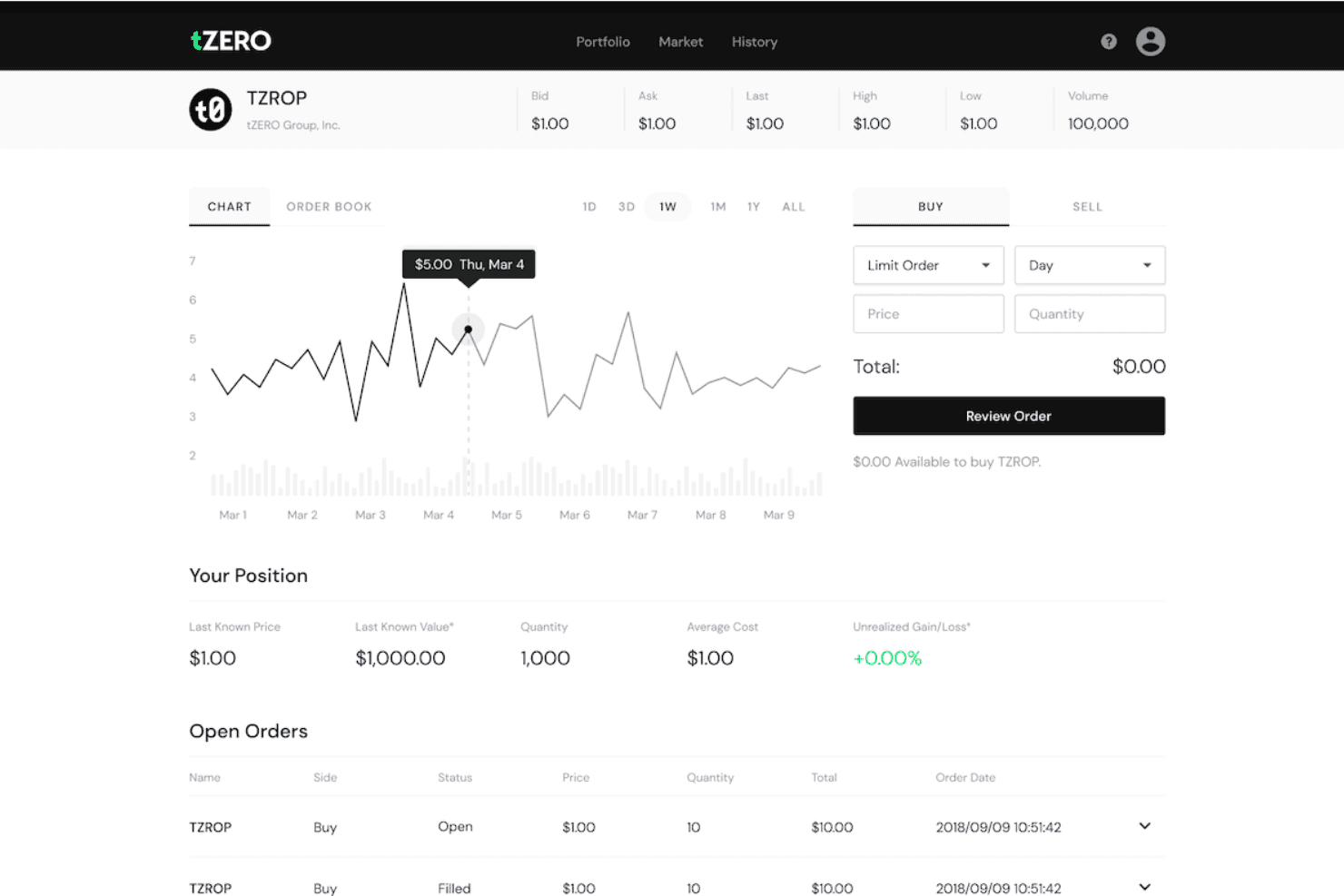
tZERO offers a trading interface for TZROP tokens with real-time charts, order placement, portfolio position, and open orders. tZERO is a regulated digital securities platform focused on tokenizing assets like real estate, funds, and private equity and providing integrated compliance, cap table management, and secondary trading through its alternative trading system.
Who Is tZERO Best For?
Institutional finance teams and asset managers needing regulated digital asset issuance and trading for US-based or SEC-compliant security token offerings.
Why I Picked tZERO
I picked tZERO as one of the best because I appreciate its regulated ATS, which lets my team trade security tokens compliantly. I can tokenize real estate and private equity, then enable digital secondary trading access, all on one platform.
tZERO Key Features
- Automated compliance screening: Built-in KYC and AML checks for onboarding and trading participants.
- On-chain cap table management: Real-time updates of token holder records and ownership changes.
- Smart contract-based transfer controls: Automated enforcement of transfer restrictions using blockchain rules.
- Issuer and investor dashboards: Centralized portals to track distributions, transactions, and corporate actions.
tZERO Integrations
tZERO offers native integrations with Zerohash, Fireblocks, Archax, Lynq, ArcaLabs, and Alphaledger. An API is available for custom integrations.
Pros and Cons
Pros:
- Real-time cap table and investor updates
- Automated on-chain compliance and transfer controls
- Regulated secondary market for security tokens
Cons:
- Smart contract customization options are restricted
- Global regulatory differences restrict availability
Learn more about tZERO:
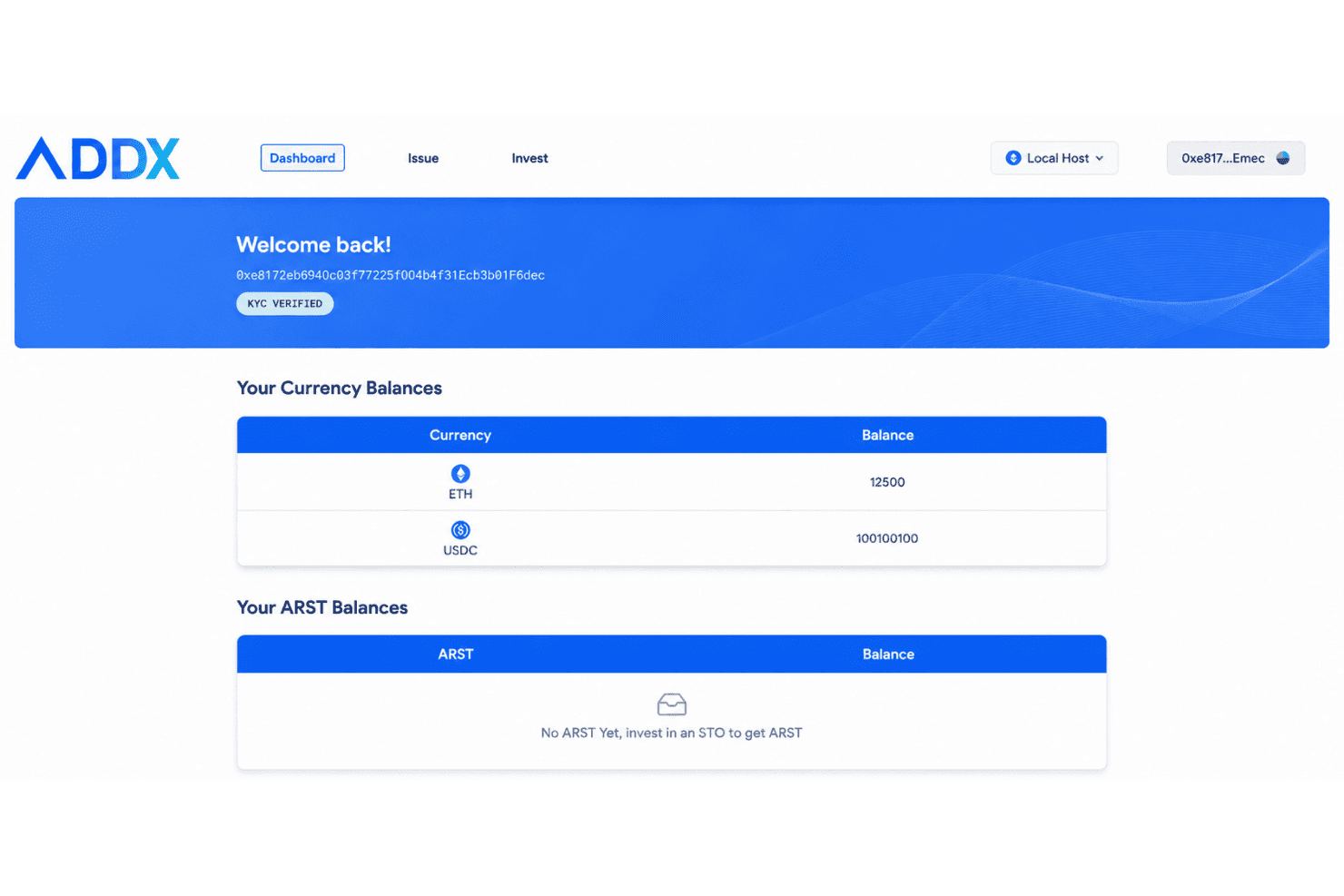
ADDX features a user dashboard showing currency balances in ETH and USDC, alongside an ARST token balance section for STO investors. ADDX is a regulated tokenization platform for private market assets that lets you fractionalize, issue, manage, and trade digital securities on blockchain rails with integrated compliance and settlement tools.
Who Is ADDX Best For?
Institutional investors, stakeholders, and finance teams who need regulated access to tokenized private market assets in Asia-Pacific.
Why I Picked ADDX
I picked ADDX as one of the best because I can tokenize and fractionalize private market assets, automate compliance for accredited investors, and enable secondary market access, which aligns with its focus on private market investment access.
ADDX Key Features
- On-chain investor registry: Tracks investor ownership and transactions directly on the blockchain.
- Regulatory licenses: Operates under MAS-regulated Recognised Market Operator and Capital Markets Services licenses.
- Automated smart contract settlements: Automates settlement processes for digital securities using smart contracts.
- Licensed custody partnerships: Safeguards assets with institutional-grade custody partners for fund segregation.
ADDX Integrations
Native integrations are not publicly listed.
Pros and Cons
Pros:
- Integrated compliance and investor onboarding workflows
- Secondary trading of fractionalized private assets
- Regulated by the Monetary Authority of Singapore
Cons:
- Secondary market liquidity can be inconsistent
- Limited to accredited and institutional investors
Learn more about ADDX: Best for institutional-grade tokenized funds
- Not available
- Pricing upon request
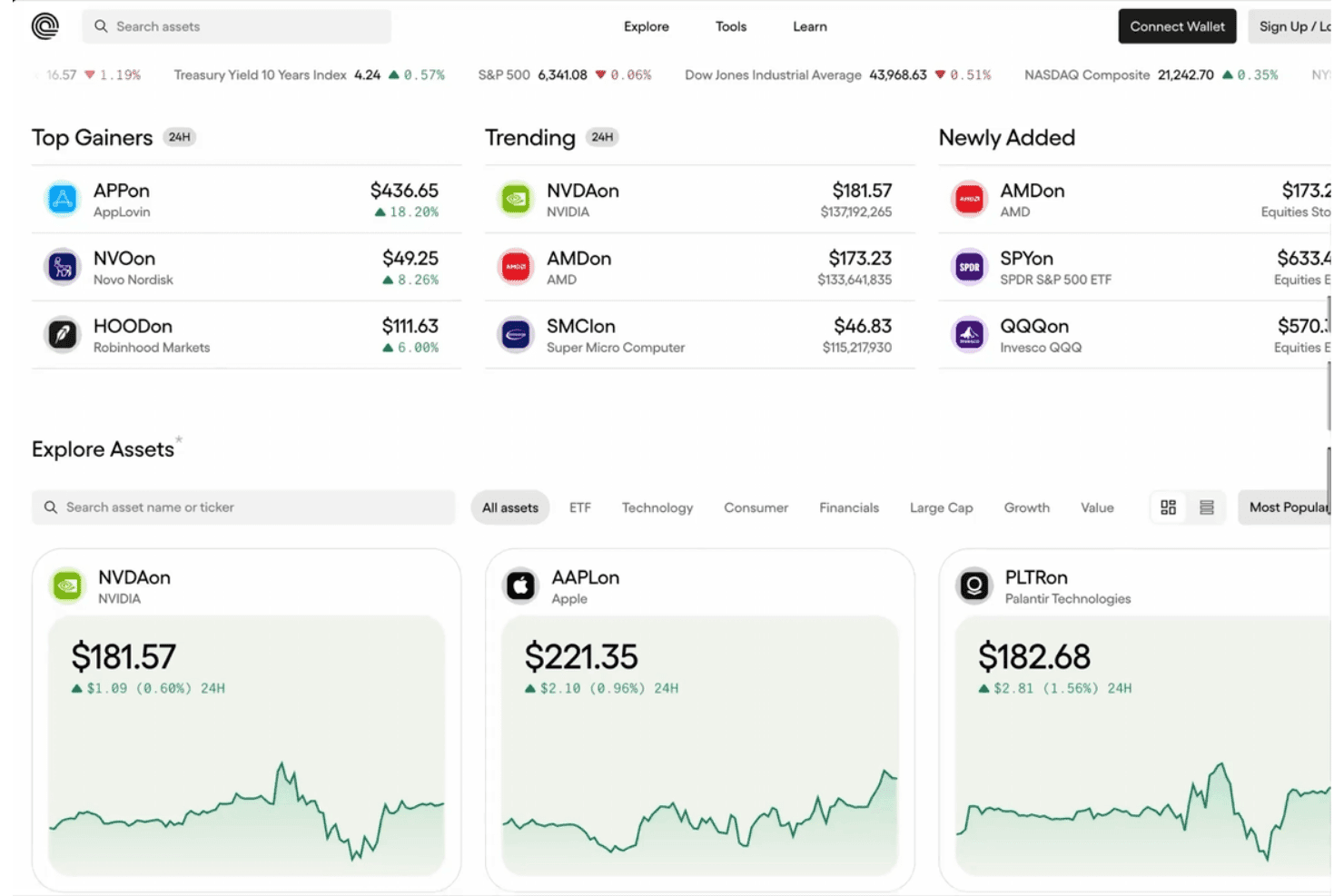
Ondo Finance offers stock and crypto asset tracking with top gainers, trending assets, and tokenized equities like NVDAon and AAPLon. Ondo Finance is a tokenization platform designed for institutions to issue, manage, and transfer blockchain-based fund tokens backed by regulated, real-world assets like U.S. Treasuries and money market instruments.
Who Is Ondo Finance Best For?
Institutional finance teams and asset managers seeking compliant, on-chain tokenization and administration of regulated fund products.
Why I Picked Ondo Finance
I picked Ondo Finance for my shortlist because I can issue and manage tokenized funds using on-chain smart contracts, with built-in regulatory compliance and smooth institutional custody that backs every asset in real time.
Ondo Finance Key Features
- On-chain cap table management: Maintain a real-time, blockchain-based registry of investor holdings and transfers.
- Jurisdictional transfer controls: Automatically enforce regional restrictions on token transfers within the platform.
- Automated interest distribution: Distribute yield and payments to token holders using programmable rules.
- Multiple custody integrations: Connect to institutional wallets and major custodians for secure asset storage.
Ondo Finance Integrations
Ondo Finance offers native integrations with Aptos, BitGo, BlackRock, Coinbase, Ethereum, Fireblocks, Gauntlet, Mantle, Noble, and Polygon, among others. An API is available for custom integrations.
Pros and Cons
Pros:
- Real-world asset backing with big-name partners
- Automated distributions and investor reporting
- On-chain compliance controls for institutional requirements
Cons:
- Heavy reliance on centralized administration
- High minimum investments for core products
Learn more about Ondo Finance:
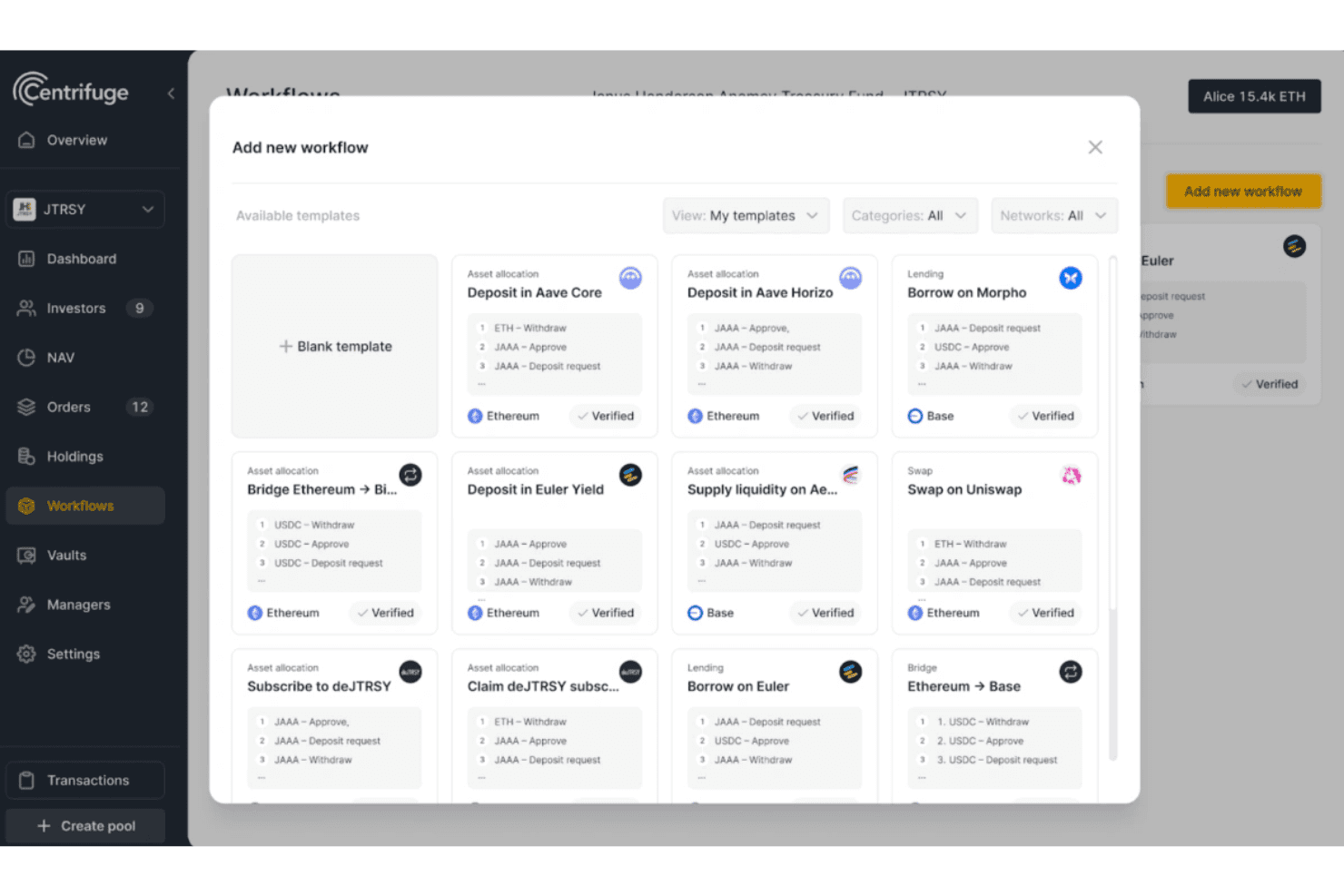
Centrifuge offers a workflow automation feature with pre-built templates for DeFi operations like lending, swapping, and asset allocation across networks. Centrifuge is a blockchain-based tokenization platform that lets you create, issue, and manage on-chain representations of real-world assets, including loans, invoices, and real estate investment opportunities.
Who Is Centrifuge Best For?
Centrifuge is a strong fit for asset managers and leaders in financial markets looking to tokenize and finance real-world assets on blockchain infrastructure.
Why I Picked Centrifuge
I picked Centrifuge as one of the best because I can tokenize real-world assets like invoices and property on a purpose-built blockchain, set smart contract-based compliance rules, and access on-chain liquidity pools specifically for asset-backed tokens.
Centrifuge Key Features
- On-chain cap table management: Manage investor ownership and changes on blockchain infrastructure.
- Integrated KYC/AML workflows: Automate onboarding compliance checks for all platform participants.
- Institutional wallet integrations: Connect to custodial wallets including Fireblocks and Ledger.
- Multi-chain interoperability: Operate assets across the Centrifuge Chain and Ethereum networks.
Centrifuge Integrations
Native integrations are not publicly listed. An API is available for custom integrations.
Pros and Cons
Pros:
- DeFi liquidity pools for asset-backed tokens
- Automated on-chain compliance and investor management
- Native support for tokenizing real-world assets
Cons:
- Underlying assets are highly illiquid
- No regulated built-in secondary marketplace
Learn more about Centrifuge: Best for white-label real estate platforms
- Free demo available
- From $300/month
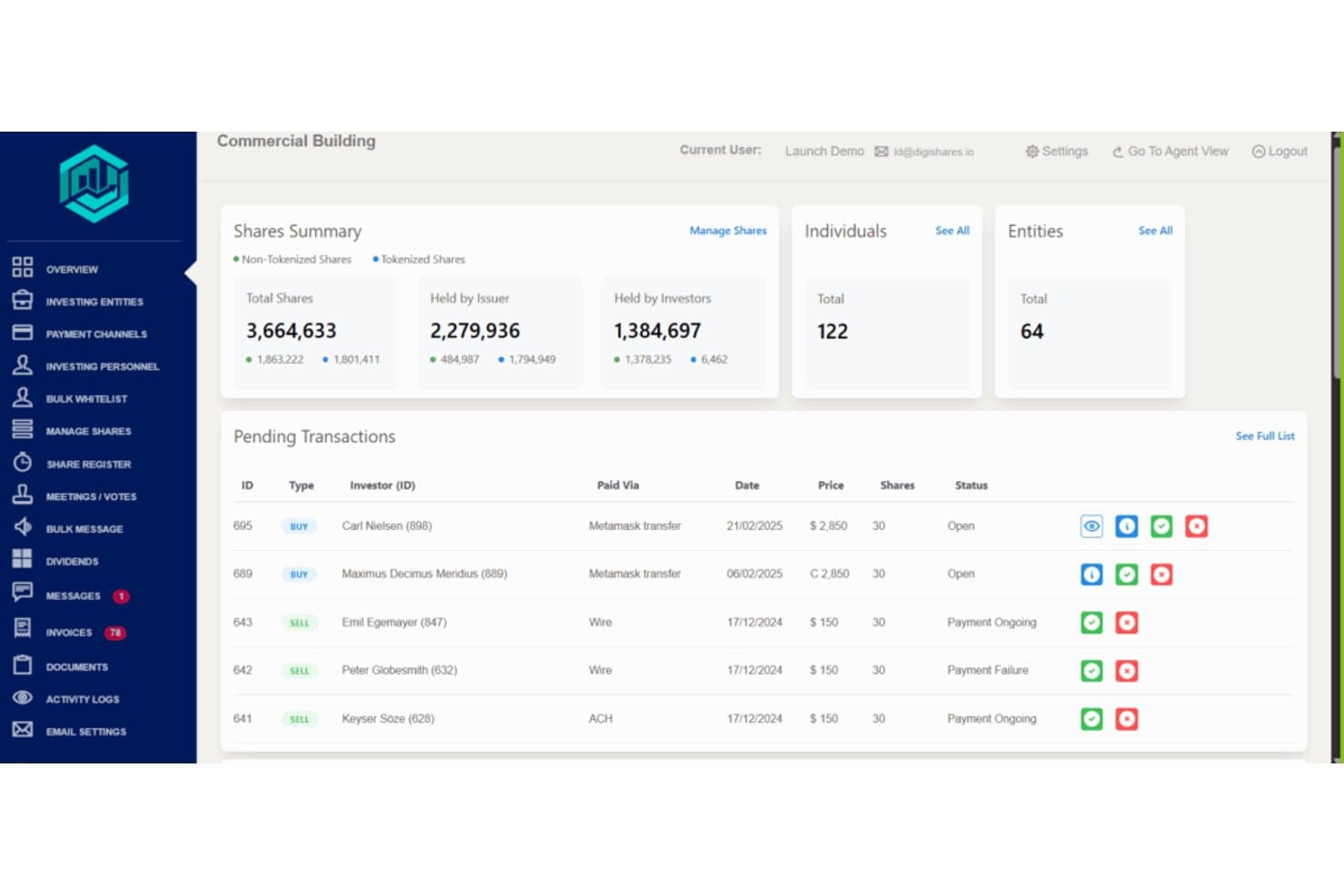
DigiShares offers a commercial building tokenization dashboard with shares summary, pending transactions, and investor management tools. DigiShares is a tokenization platform designed for real-world assets that lets you issue, manage, and trade digital securities through a white-label system tailored for asset classes like real estate and private funds.
Who Is DigiShares Best For?
Real estate issuers, fund administrators, and asset management firms seeking a customizable solution for digitalizing and managing fractional ownership.
Why I Picked DigiShares
I picked DigiShares as one of the best because it lets my team launch white-label real estate portals with asset tokenization, full compliance automation, and built-in investor onboarding tailored for real estate projects.
DigiShares Key Features
- On-chain cap table management: Tracks ownership and updates investor records in real time.
- Corporate actions automation: Executes dividend distributions and voting directly via smart contracts.
- Multi-wallet compatibility: Supports self-custody, institutional, and custodial wallets for asset holding.
- Secondary market connectivity: Integrates with external exchanges and ATS for post-issuance trading.
DigiShares Integrations
DigiShares offers native integrations with Stripe, DocuSign, Dwolla, Xendit, Dropbox Sign, Tangany, and WallerConnect, among others. An API is available for custom integrations.
Pros and Cons
Pros:
- On-chain cap table and corporate governance tools
- Automated investor onboarding and compliance workflows
- White-label portals for real estate tokenization
Cons:
- Custom API setup requires technical expertise
- Limited independent user reviews available
Learn more about DigiShares:
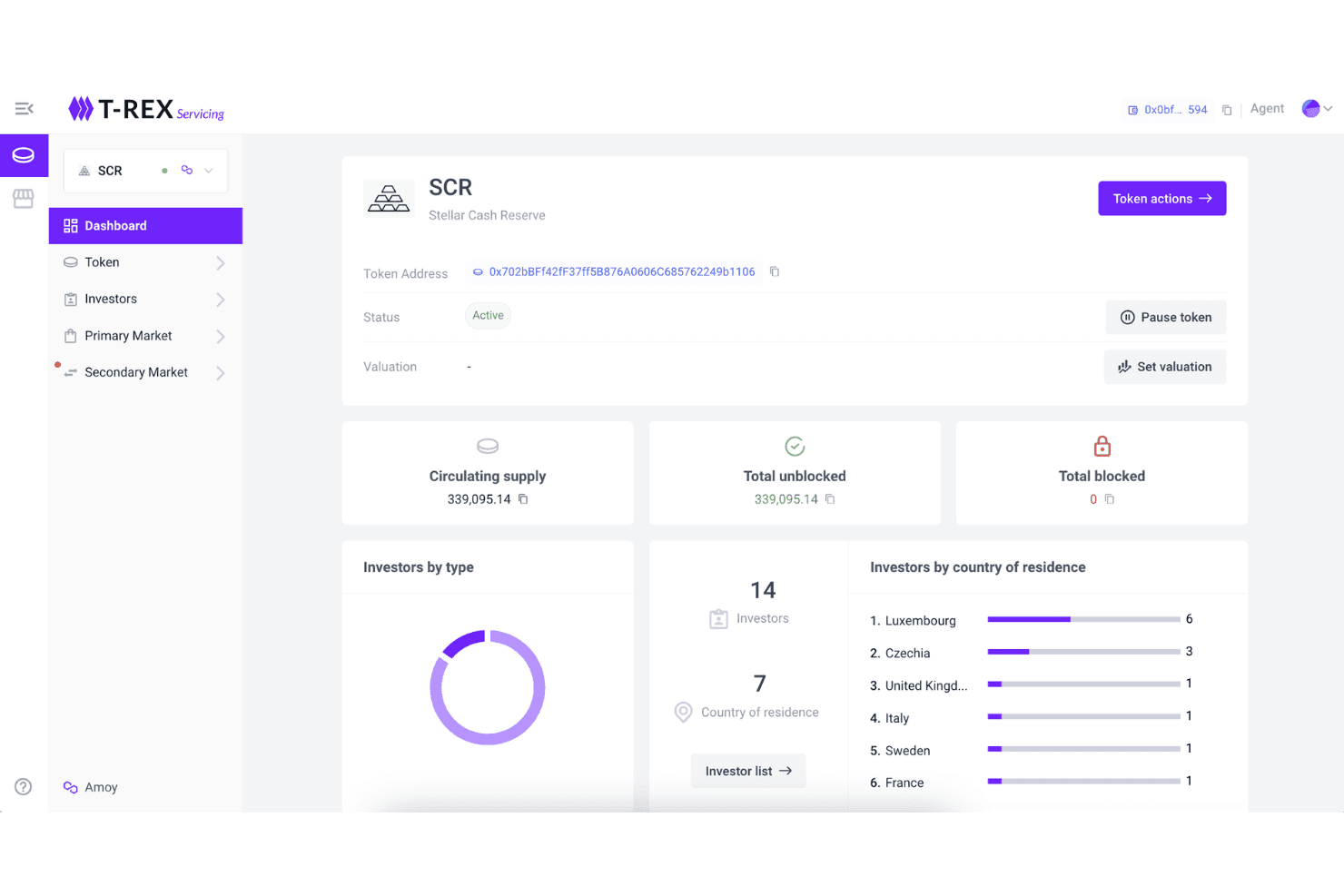
Tokeny's T-REX Servicing platform offers a token dashboard for SCR (Stellar Cash Reserve) with supply metrics and investor distribution data. Tokeny is an institutional-grade tokenization platform for financial assets, offering tools for asset tokenization, on-chain compliance, smart contract management, cap table maintenance, and integration with custodians and secondary markets.
Who Is Tokeny Best For?
Tokeny is a strong choice for financial institutions and asset managers seeking institutional-grade tokenization with built-in compliance controls.
Why I Picked Tokeny
I picked Tokeny as one of the best because I can set up compliance modules for each jurisdiction, use programmable transfer rules, and manage tokenized securities with customizable permission controls. I see this modular compliance framework as a real differentiator.
Tokeny Key Features
- On-chain cap table management: Maintain a real-time, blockchain-based register of security token ownership and movements.
- Multi-chain issuance support: Launch and manage tokens on Ethereum, Polygon, and other supported blockchains.
- API access for system integration: Connect to external financial, compliance, or fund administration systems using efficient APIs.
- Secondary market connectivity: Enable compliant transfers and peer-to-peer trading through integrations with regulated trading venues.
Tokeny Integrations
Tokeny offers native integrations with Fireblocks, Tangany, Inveniam, Moneirum, Artory, and Polygon, and provides an API for custom integrations.
Pros and Cons
Pros:
- On-chain cap table management with audit trails
- Smart contract programmability for lifecycle events
- Modular compliance rules engine for global jurisdictions
Cons:
- Minimum project size requirements for onboarding
- Requires identity verification for transfers
Learn more about Tokeny:
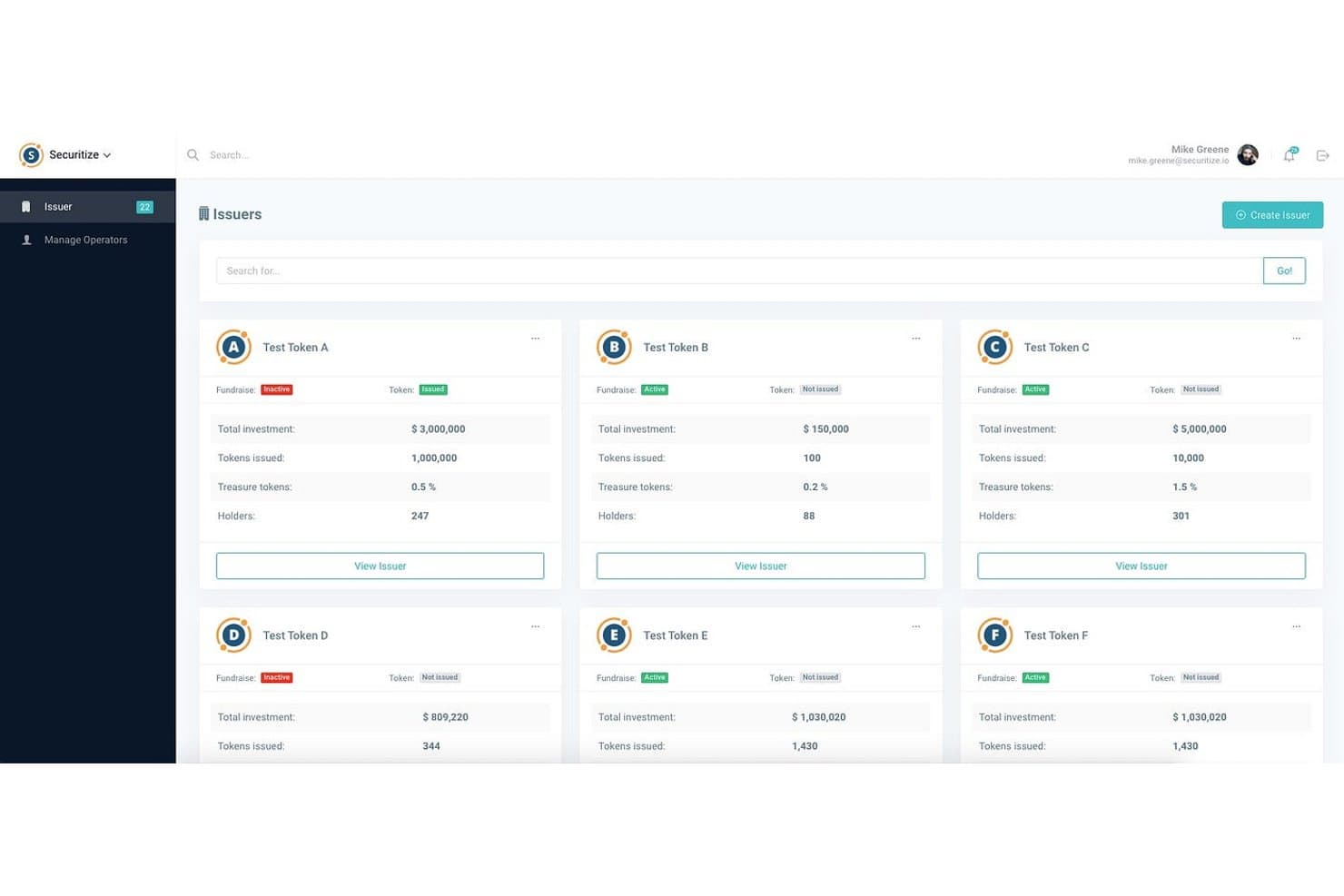
Securitize offers a multi-issuer dashboard where users can manage and monitor multiple tokenized asset issuers with investment and token metrics at a glance. Securitize is a tokenization platform focused on regulated digital assets, offering compliant asset issuance, investor onboarding, cap table management, and integrated secondary market trading for fund managers, enterprises, and capital markets teams.
Who Is Securitize Best For?
Securitize is a strong fit for institutional asset managers and fund administrators seeking compliant digital asset issuance and trading on regulated infrastructure.
Why I Picked Securitize
I picked Securitize as one of the best tokenization platforms because I can issue fully compliant digital securities, automate investor onboarding with built-in KYC, and connect assets to its regulated secondary market. That’s key for regulated digital asset solutions.
Securitize Key Features
- On-chain cap table management: View and update real-time shareholder records directly on blockchain infrastructure.
- Automated corporate actions: Handle distributions and voting events for digital securities within a single dashboard.
- Configurable smart contracts: Set custom rules for dividend flows, transfer restrictions, and lifecycle events.
- Flexible custody integrations: Support for multiple wallet types, including institutional custodians and multi-signature wallets.
Securitize Integrations
Securitize offers native integrations with Asana and integrates with Jira, Bitbucket, Confluence, Slack, and Logz.io through the Cortex ecosystem. It also connects with blockchain networks like TRON and Avalanche. An API is available for custom integrations.
Pros and Cons
Pros:
- Institutional-grade custody options available
- Automated on-chain compliance and investor onboarding
- Regulated secondary market for digital securities
Cons:
- Regulatory shifts present ongoing compliance risks
- The onboarding process can be complex
Learn more about Securitize: Best for secure on-chain asset management
- Free demo available
- From $999/month
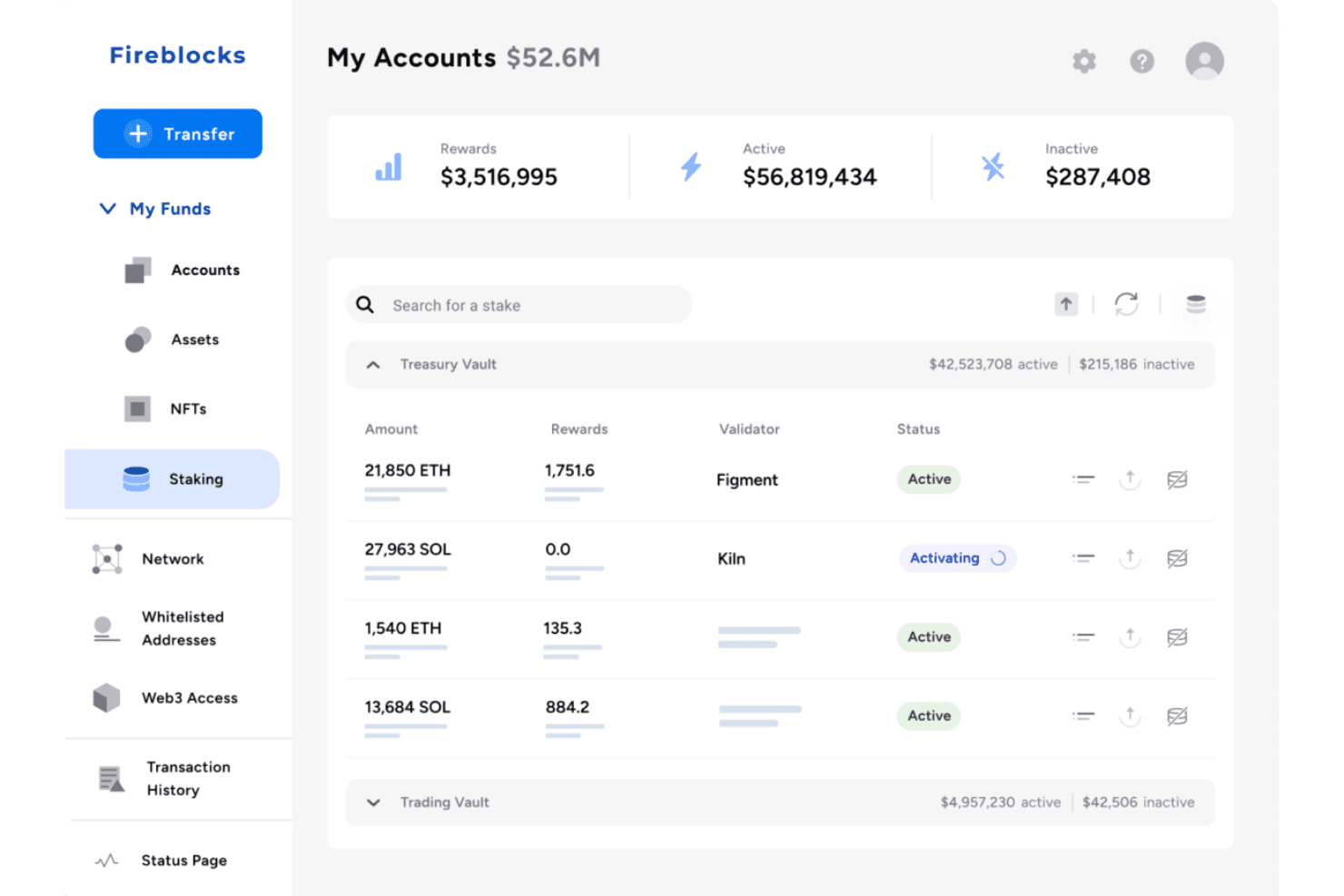
Fireblocks Tokenization offers a staking dashboard where users can monitor active and inactive assets, rewards, and validator statuses across multiple vaults. Fireblocks Tokenization is an institutional tokenization platform that lets you create, issue, and manage digital representations of assets across multiple blockchains with customizable smart contracts, compliance tools, and secure custody infrastructure.
Who Is Fireblocks Tokenization Best For?
Institutional asset managers and finance teams who need to tokenize and govern digital assets securely across multiple blockchain networks.
Why I Picked Fireblocks Tokenization
I picked Fireblocks Tokenization because I can securely tokenize and govern any asset on-chain, use its MPC wallet infrastructure, and control compliance workflows all from one platform. This is why I see it as best for secure on-chain asset management.
Fireblocks Tokenization Key Features
- Multi-chain deployment: Launch tokens and smart contracts across 35+ supported blockchains.
- Pre-built smart contract templates: Use ready-made, customizable templates for quick asset tokenization.
- Granular role-based user permissions: Set fine-grained access controls for different admin, governance, and operational roles.
- Real-time activity monitoring: Track all tokenization and transaction actions as they occur, with audit-ready logging.
Fireblocks Tokenization Integrations
Fireblocks Tokenization offers 150+ native integrations, including Solana, TRON, Polygon, Optimism, Cardano, Rootstock, Mantle, Base, Bitcoin, Ethereum, and more. An API is available for custom integrations and tokenization solutions.
Pros and Cons
Pros:
- Real-time on-chain activity monitoring
- Institutional-grade MPC wallet infrastructure
- Supports tokenization on 35+ major blockchains
Cons:
- Intricate developer API integration curve
- B2B contract minimums prevent small trials
Learn more about Fireblocks Tokenization: Best for enterprise blockchain tokenization
- Free plan available
- Pricing upon request
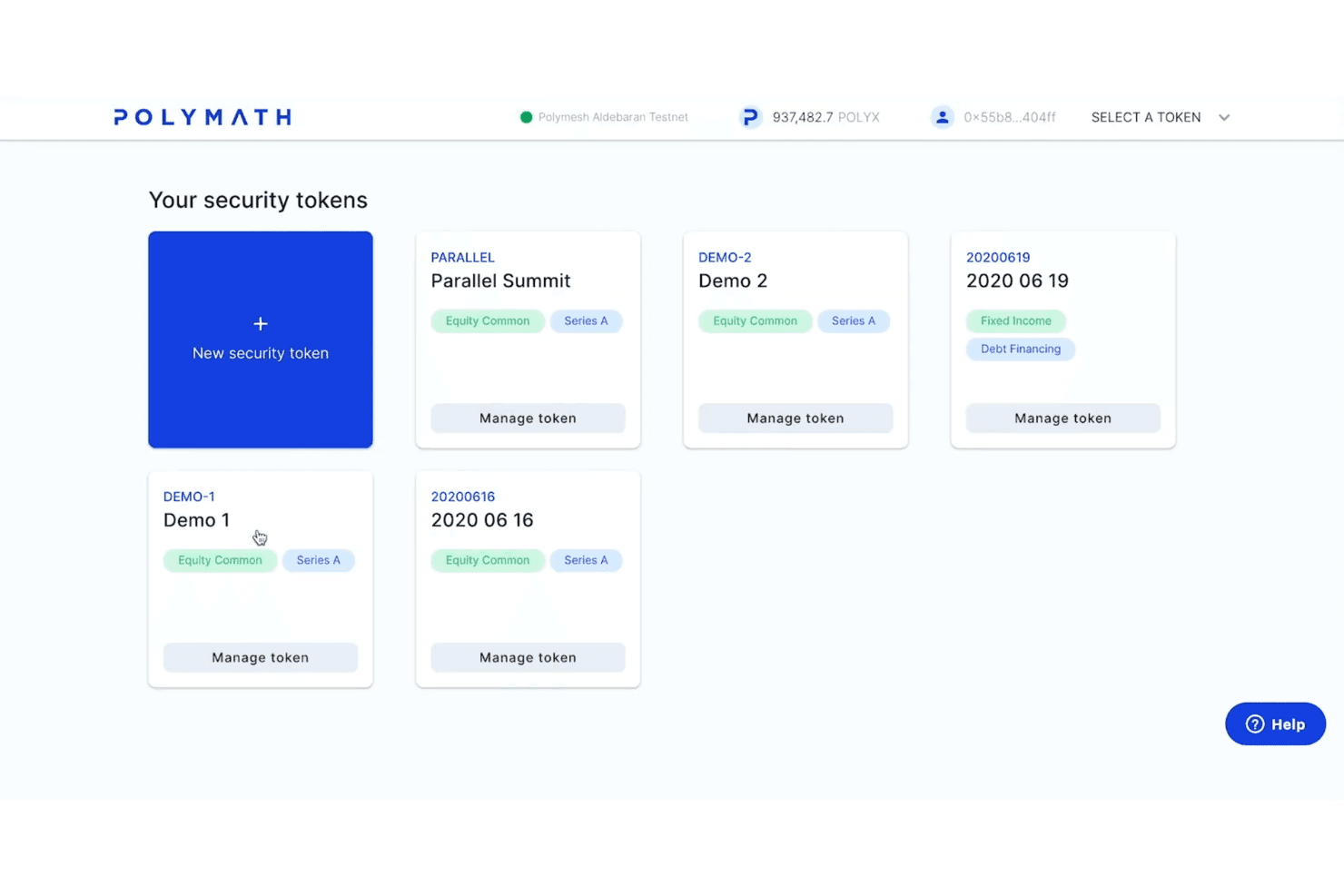
Polymath displays a security token dashboard where users can view and manage multiple tokenized assets on the Polymesh testnet. Polymath is an enterprise-focused tokenization platform purpose-built for creating, issuing, and managing blockchain-based digital securities with advanced compliance and asset management features.
Who Is Polymath Best For?
Polymath suits asset managers, fund administrators, and finance teams at enterprises or institutions that need compliance-driven digital asset workflows and tokenization services.
Why I Picked Polymath
I picked Polymath as one of the best because I can create and manage compliant security tokens for a wide range of assets, automate corporate actions with their smart contracts, and access integrations with regulated secondary markets for enterprise blockchain tokenization.
Polymath Key Features
- Confidential assets module: Enables privacy controls for on-chain data and transactions on Polymesh.
- On-chain identity verification: Requires all participants to complete KYC to transact, increasing compliance.
- Role-based permission controls: Lets enterprises restrict platform access by role and responsibility.
- Automated dividend distributions: Supports programmable, compliant dividend payments directly to token holders.
Polymath Integrations
Polymath offers native integrations with SAP, Adyen, PipeDrive, Vertex, AWS, Microsoft Azure, MySQL, Kubernetes, Docker, and more. An API is available for custom integrations.
Pros and Cons
Pros:
- Wide asset type support for tokenization
- On-chain cap table and investor registry
- Deep protocol-level compliance automation
Cons:
- Limited public third-party reviews and feedback
- Focuses heavily on institutional clients
Learn more about Polymath:
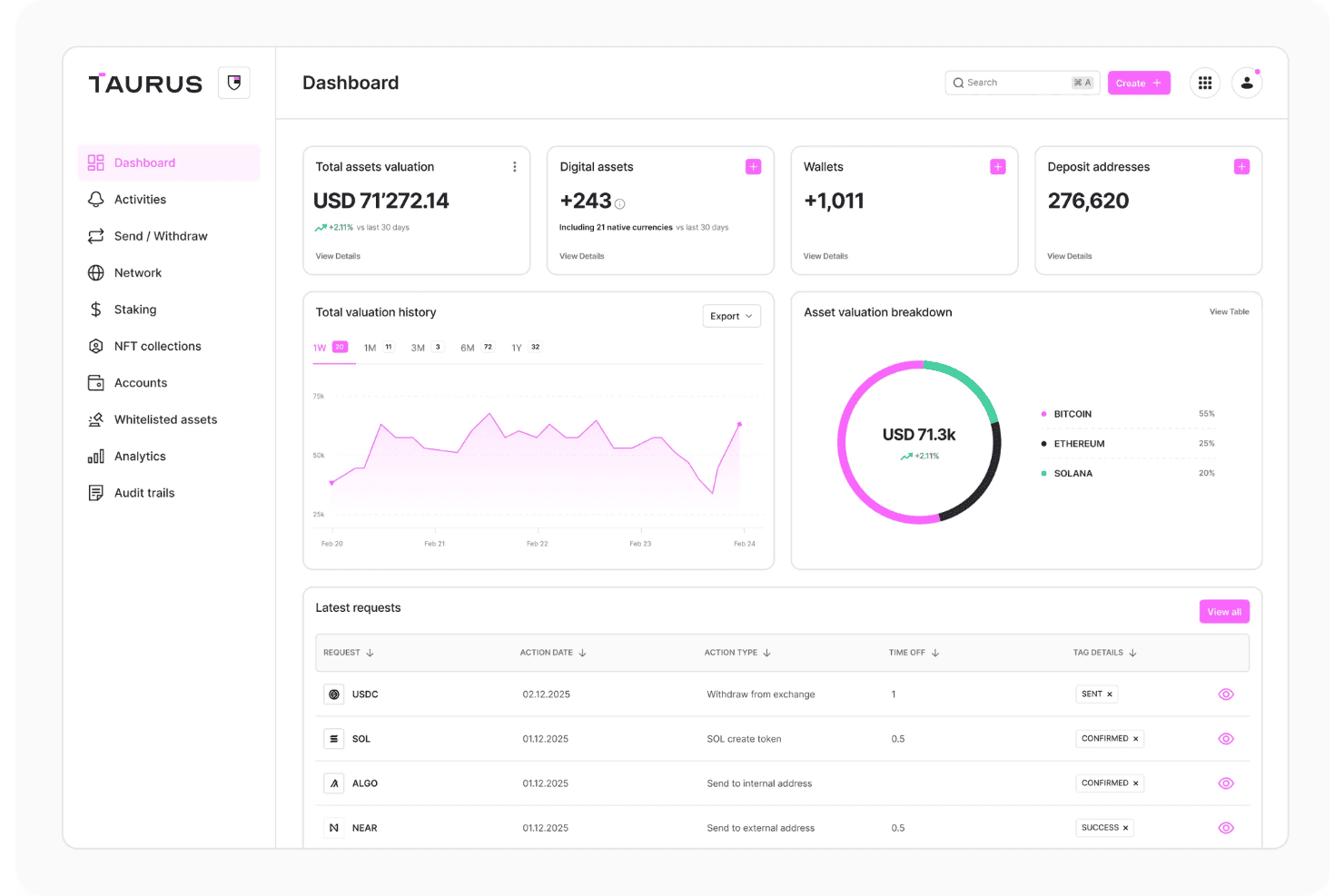
Taurus provides a comprehensive digital asset management dashboard displaying total asset valuation, wallet counts, and transaction history. Taurus is an enterprise-grade digital asset infrastructure platform that covers tokenization, custody, trading, and settlement for financial assets across both public and permissioned blockchains.
Who Is Taurus Best For?
Taurus is built for regulated financial institutions — banks, broker-dealers, CSDs, and asset servicers — that need to bring traditional financial assets on-chain at an institutional scale.
Why I Picked Taurus
I picked Taurus as one of the best because no other platform bundles tokenization, institutional custody, and a regulated secondary market under one natively connected infrastructure. Taurus-CAPITAL lets me deploy audited smart contracts across 10+ blockchains, while Taurus-PROTECT handles HSM and MPC-backed custody in the same environment. A fund tokenized in CAPITAL is already secured and settleable on TDX, Taurus's own FINMA-regulated trading facility, without any external bridging.
Taurus Key Features
- Multi-protocol issuance: Issue assets across Ethereum, Polygon, Avalanche, Solana, Stellar, Tezos, ICP, and permissioned blockchains.
- Any-standard smart contract support: Upload and interact with ERC1400, ERC3643, SPL, custom ERC20, ERC721, and more.
- Lifecycle automation: Automate and execute corporate actions directly on-chain through configurable workflows.
- Detailed audit trails: Track all transactions and user actions with real-time logs and exportable reporting.
Taurus Integrations
Taurus offers native integrations with Temenos for core banking and operates unified API connectivity with 10+ public and permissioned blockchains, including Ethereum, Polygon, Solana, Tezos, ICP, Stellar, Hyperledger BESU, and Quorum. An API is available for custom integrations.
Pros and Cons
Pros:
- Granular on-chain compliance and permissioning options
- Native support for multiple public and private blockchains
- Regulated secondary market built into the platform
Cons:
- KYC/AML features depend on third-party providers
- Investor lifecycle tooling not fully native
Learn more about Taurus:
Outras plataformas de tokenização
Eis algumas opções adicionais de plataformas de tokenização que não entraram na minha lista restrita, mas que ainda vale a pena consultar:
- 11InvestaXBest for digital securities issuance
- 12ZoniqxBest for lifecycle management automation
- 13KaleidoBest for modular network infrastructure
- 14BitbondBest for no-code institutional asset coverage
- 15DTCC Digital AssetsBest for post-trade settlement integration
- 16AlphaPointBest for policy-enforced issuance controls
- 17SpydraBest for configurable enterprise deployments
- 18SuperstateBest for onchain mutual and ETF tokenization
- 19Maple FinanceBest for governance-driven protocol management
- 20STOKRBest for direct tokenized investment access
How I Evaluate Tokenization Platforms
I split my evaluation into baseline acceptance criteria—KYC, smart contracts, cap table management—and the differentiators that distinguish the best platforms.
Core Functionality (Table Stakes For This List)
When I'm selecting tools for my list, I rank each one on a scale from 0 (does not offer the functionality) to 5 (excels in this area) for each core functionality listed below. Then, I calculate the tool's total score into a percentage. Each tool needs to achieve a minimum total score of 65% to be considered for inclusion.
- Asset Tokenization Engine: I evaluate how many asset classes a platform supports and whether it can handle equity, debt, real estate, and fund tokens across multiple blockchains.
- Smart Contract Management: Configurable contracts matter. I look for templates that automate dividend distributions, transfer restrictions, and corporate actions.
- Compliance & KYC/AML: I check whether the platform enforces jurisdiction-based transfer rules and automates investor accreditation during onboarding workflows.
- Cap Table & Investor Management: A reliable on-chain registry should track ownership changes, support corporate actions, and produce audit-ready reports in real time.
- Custody & Wallet Integration: I look for flexible custody options, including MPC and multi-sig wallets, plus integrations with qualified institutional custodians.
- Secondary Market Connectivity: Post-issuance liquidity is key. I evaluate whether the platform connects to regulated ATS venues, exchanges, or peer-to-peer transfer channels.
Once I have a list of tools that meet the criteria, I consider what sets each platform apart.
Differentiating Factors (What Sets Vendors Apart)
Here's how I compare and contrast different vendors:
Standout Features
Vaultless tokenization generates tokens algorithmically without storing sensitive data in a centralized vault. That approach cuts your attack surface and lowers infrastructure overhead. Multi-cloud key management is another factor I weigh. Platforms that integrate with AWS KMS, Azure Key Vault, or Google Cloud KMS give you more flexibility across hybrid environments. I also check for Tokenization-as-a-Service APIs that let your team embed tokenization into custom apps and CI/CD pipelines via RESTful endpoints and SDKs.
Beyond Features
Compliance certifications are a major differentiator. I look for independent attestations like SOC 2 Type II, ISO 27001, and FIPS 140-2 validated modules—these tell you the platform can reduce your PCI DSS or HIPAA audit scope in practice. Deployment flexibility matters too, especially if your organization needs regional data residency or air-gapped environments. Ecosystem integrations are worth evaluating closely. Platforms that connect natively to ERPs like SAP or Oracle and data platforms like Snowflake save your team from building custom middleware.
Como escolher uma plataforma de tokenização
É fácil ficar atolado em listas extensas de funcionalidades e estruturas de preços complexas. Para o ajudar a manter o foco enquanto percorre o seu processo específico de seleção de software, apresentamos uma lista de verificação dos fatores a ter em conta:
| Fator | O que considerar |
|---|---|
| FatorEscalabilidade | O que considerarA plataforma está alinhada com o volume de ativos e o crescimento das transações previstos? Será necessária uma migração significativa à medida que a sua empresa cresce? |
| FatorIntegrações | O que considerarQue sistemas essenciais (ERP, CRM, entidades de custódia) precisam de estabelecer ligação? A plataforma reduzirá o trabalho manual e adaptar-se-á facilmente ao seu ecossistema tecnológico mais amplo? |
| FatorPersonalização | O que considerarDe quanta flexibilidade precisa para tipos de ativos, regras de conformidade ou lógica de contratos inteligentes? Os fluxos de trabalho sem código são suficientes ou precisará de desenvolvimento personalizado? |
| FatorFacilidade de utilização | O que considerarA sua equipa consegue gerir as tarefas principais — emissão de tokens, fluxos de trabalho de conformidade, gestão de investidores — sem conhecimentos especializados de cadeia de blocos? |
| FatorImplementação e integração inicial | O que considerarQuanto esforço interno exigirá a integração inicial? Informe-se sobre ferramentas de migração, mapeamento de dados e recursos de formação para as suas equipas de administração e operações. |
| FatorCusto | O que considerarQue modelo de preços é mais adequado: por ativo, por transação ou por escalão de utilização? Procure encargos ocultos e esclareça os SLA, o suporte e os custos de destokenização. |
| FatorMedidas de segurança | O que considerarQue encriptação, controlos de acesso e registos de auditoria estão incluídos? Estão disponíveis certificações independentes que demonstrem práticas de segurança de nível empresarial? |
| FatorRequisitos de conformidade | O que considerarA plataforma é compatível com as jurisdições de comunicação e os tipos de investidores que utiliza? Consegue acompanhar a evolução da regulamentação ou das necessidades transfronteiriças? |
O que são plataformas de tokenização?
Uma plataforma de tokenização é um software que permite converter ativos do mundo real ou digitais em tokens digitais seguros numa cadeia de blocos. Estas plataformas permitem a emissão de ativos em conformidade, a integração de investidores e a gestão de registos de propriedade de ativos financeiros, como participações de capital, dívida ou fundos. Incluem frequentemente ferramentas de conformidade integradas, gestão de contratos inteligentes e ligação a mercados secundários, de modo a facilitar todo o ciclo de vida dos ativos de forma segura e transparente.
Funcionalidades
Ao selecionar uma plataforma de tokenização, esteja atento às seguintes funcionalidades principais:
- Motor de tokenização de ativos: Permite-lhe criar e emitir tokens digitais que representam ações, fundos, imóveis ou outros ativos diretamente numa blockchain.
- Gestão de contratos inteligentes: Permite-lhe configurar, implementar e gerir contratos inteligentes que automatizam direitos de propriedade, transferências, dividendos e eventos de conformidade.
- Ferramentas de conformidade e KYC/AML: Automatiza o processo de integração de investidores através da verificação de identidades, da aplicação de regras jurisdicionais e do suporte à documentação necessária para a conformidade regulamentar.
- Gestão da tabela de capitalização e de investidores: Acompanha, em tempo real, os detentores de tokens, as alterações de propriedade e as ações societárias, simplificando auditorias e relatórios ao longo do ciclo de vida do ativo.
- Integração de custódia e carteiras: Suporta ligações a carteiras digitais e entidades de custódia, permitindo o armazenamento e a transferência seguros de tokens de ativos digitais para investidores e emitentes.
- Acesso ao mercado secundário: Facilita a negociação e a transferência de tokens após a emissão através da integração com bolsas regulamentadas, soluções entre pares ou plataformas ATS.
- Registos de auditoria e relatórios: Fornece registos detalhados de todas as transações, permissões e alterações, tornando as análises regulamentares e as comunicações com investidores transparentes e eficientes.
- Permissões baseadas em funções: Permite-lhe definir níveis de acesso para diferentes tipos de utilizadores—como administradores, emitentes ou investidores—para proteger fluxos de trabalho e dados sensíveis.
- Automatização de fluxos de trabalho: Melhora processos de rotina, como a acreditação de investidores, a distribuição de dividendos e as verificações de conformidade, através da automatização de tarefas complexas e compostas por várias etapas.
- Conectividade através de API: Permite a integração com os seus outros sistemas empresariais—como ERPs, CRMs ou plataformas de dados—para que possa gerir e sincronizar informações de forma simples.
As soluções de plataformas de tokenização normalmente não incluem IA como parte da sua oferta de funcionalidades.
Benefícios
A implementação de uma plataforma de tokenização proporciona vários benefícios à sua equipa e à sua empresa. Eis alguns dos que pode esperar:
- Possibilidade de propriedade fracionada: A tokenização permite dividir ativos do mundo real em participações mais pequenas e negociáveis, tornando ativos anteriormente ilíquidos acessíveis a um conjunto mais vasto de investidores.
- Melhoria dos fluxos de trabalho de conformidade: Os controlos incorporados de KYC/AML e jurisdicionais automatizam as verificações e a aplicação dos requisitos regulamentares, reduzindo o esforço manual e o risco de incumprimento.
- Eficiência operacional: Os contratos inteligentes automatizados e as ferramentas de fluxos de trabalho simplificam tarefas como o pagamento de dividendos, a manutenção de registos e a integração de investidores para as suas equipas financeiras e operacionais.
- Segurança melhorada: Funcionalidades como a integração de custódia, a gestão de chaves em várias nuvens e os registos de auditoria ajudam a proteger os dados dos ativos e a cumprir as normas de segurança empresariais.
- Precisão da tabela de capitalização em tempo real: Os registos na cadeia de blocos proporcionam um acompanhamento atualizado da propriedade e total transparência relativamente às ações societárias e às comunicações com investidores.
- Acesso a mercados secundários: A integração com mercados regulamentados e plataformas ATS pode proporcionar aos investidores novas opções de liquidez para os seus ativos digitais.
- Integração harmoniosa no ecossistema: A conectividade através de API e os modelos de implementação flexíveis facilitam a integração da tokenização nos seus sistemas e fluxos de trabalho existentes.
Custos e preços
A seleção de uma plataforma de tokenização exige compreender os vários modelos de preços e planos disponíveis. Os custos variam consoante as funcionalidades, a dimensão da equipa, os complementos e outros fatores. A tabela abaixo resume os planos comuns, os respetivos preços médios e as funcionalidades normalmente incluídas nas soluções de plataformas de tokenização:
Tabela de comparação de planos para plataformas de tokenização
| Tipo de plano | Preço médio | Funcionalidades comuns |
|---|---|---|
| Tipo de planoPlano gratuito | Preço médio$0 | Funcionalidades comunsTokenização básica de ativos, registo simples de investidores e chamadas de API limitadas. |
| Tipo de planoPlano pessoal | Preço médio$20-$100/utilizador/mês | Funcionalidades comunsAcesso para um único utilizador, ferramentas de emissão de ativos, módulos básicos de conformidade, relatórios padrão e apoio da comunidade. |
| Tipo de planoPlano empresarial | Preço médio$500-$2,000/mês | Funcionalidades comunsGestão de vários utilizadores, contratos inteligentes automatizados, conformidade melhorada, integrações avançadas e apoio prioritário por e-mail. |
| Tipo de planoPlano empresarial avançado | Preço médio$3,000+/mês | Funcionalidades comunsSLA personalizados, implementação no local ou híbrida, integrações com várias nuvens, governação avançada, CSM dedicado e apoio premium 24 horas por dia, 7 dias por semana. |
Perguntas frequentes sobre plataformas de tokenização
Eis algumas respostas a perguntas comuns sobre plataformas de tokenização:
Como é que uma plataforma de tokenização apoia a conformidade regulamentar?
Uma plataforma de tokenização inclui frequentemente ferramentas integradas para KYC, AML e controlos jurisdicionais. Isto ajuda a sua equipa a automatizar a recolha de documentos, verificar as identidades dos investidores e aplicar restrições regionais, facilitando a manutenção da conformidade à medida que a regulamentação evolui.
Uma plataforma de tokenização pode integrar-se nos nossos sistemas existentes?
Sim, a maioria das plataformas de tokenização disponibiliza conectividade através de API e integrações pré-construídas para sistemas como ERP, CRM, custodiantes e armazéns de dados. Isto permite sincronizar a titularidade, automatizar os relatórios e melhorar os fluxos de trabalho sem grandes interrupções.
Quais são as opções de implementação habituais?
As opções de implementação incluem normalmente SaaS, nuvem privada, instalações locais ou configurações híbridas. Esta flexibilidade permite alinhar a plataforma com as suas necessidades de residência dos dados, risco e conformidade — especialmente se operar em várias regiões ou servir setores altamente regulamentados.
Como é que as plataformas de tokenização garantem a segurança dos dados e dos ativos?
As plataformas utilizam encriptação, controlos de acesso robustos e registos de auditoria detalhados para proteger os ativos tokenizados e os dados sensíveis. Muitas também disponibilizam integrações com HSMs e serviços de gestão de chaves na nuvem que cumprem as normas do setor em matéria de segurança e auditabilidade.
Que tipo de apoio está disponível para utilizadores empresariais?
Os utilizadores empresariais recebem normalmente gestores dedicados de sucesso do cliente, serviços de migração, recursos de formação e apoio técnico 24 horas por dia, 7 dias por semana. Isto ajuda a garantir uma integração sem problemas, operações diárias eficientes e uma resolução rápida dos problemas à medida que o seu programa de ativos tokenizados cresce.