


Dext vs. Ramp: Comparison and Expert Reviews for 2026
Dext and Ramp use AI to reduce manual finance work, but they support different parts of the accounting process. Learn how they handle bookkeeping automation, spend management, and financial control.

We review tools independently, and commissions help fund our testing. See our transparency policy, our methodology, or suggest a tool.
Manual receipt chasing, disconnected expense tools, and slow bookkeeping reviews can quietly drain a finance team’s time. For CFOs and accounting leaders, the bigger question is whether you need better bookkeeping automation or tighter control over company spending.
For teams comparing AI bookkeeping software, Dext and Ramp represent two very different approaches. Dext focuses on document capture, data extraction, bookkeeping automation, and practice oversight, while Ramp combines corporate cards, expense management, accounts payable, procurement, and spend controls.
In this comparison, I’ll assess their features, pricing, usability, security, strengths, limitations, and best-fit use cases so you can see which approach better matches your finance operations.
Dext
4.5/5
- 14-day free trial
- Pricing upon request
Ramp
4.8/5
- Free plan + free demo available
- From $15/user/month
Why Trust Our Software Recommendations
6,700+
Reviews
20
Industry experts
16+
Evaluation factors
14
Years
Our team has been testing and reviewing software since 2012. As finance leaders ourselves, we know how difficult—and important—it is to choose the right software.
For this guide, we evaluated tools using hands-on testing and independent research, scoring tools using our selection criteria.
Our reviews reflect our human editorial judgment, not a sales pitch.
| Dext | Ramp | |
|---|---|---|
| Free Trial | 14-day free trial | Free plan + free demo available |
| Pricing | Pricing upon request | From $15/user/month |
Dext vs. Ramp Pricing & Hidden Costs
Dext uses separate subscription structures for businesses and accounting practices, with costs generally scaling by document and user capacity, client count, and optional tools. Additional expenses may come from advanced extraction, AI Assist, Data Health & Insights, Commerce Lite, or extra storage. Meanwhile, Ramp uses a tiered model that scales by users, team size, and feature requirements, with advanced accounting automation, procurement, global capabilities, and enterprise services reserved for higher tiers or add-ons. Payment fees, foreign exchange costs, and implementation services may also increase the total cost.
Choosing between the two largely comes down to what drives your usage. Dext may be easier to justify when document processing and bookkeeping volume are the main considerations, while Ramp may offer better value when its cards, expense management, accounts payable, procurement, and spend controls can replace multiple finance tools.
| Dext | Ramp | |
|---|---|---|
| 2-Factor Authentication | Yes | Yes |
| API | Yes | Yes |
| Approval Workflows | Yes | Yes |
| Audit Trail | Yes | Yes |
| Balance Sheet | Yes | No |
| Billing/Invoicing | Yes | Yes |
| Budgeting | No | Yes |
| Calendar Management | No | No |
| Compliance Tracking | No | Yes |
| Contact Management | Yes | Yes |
| CRM Integration | No | No |
| Custom Reports | No | Yes |
| Customer Management | Yes | No |
| Dashboard | Yes | Yes |
| Data Export | Yes | Yes |
| Data Import | Yes | Yes |
| Data Visualization | Yes | Yes |
| Document Management | Yes | Yes |
| Expense Tracking | Yes | Yes |
| External Integrations | Yes | Yes |
| Forecasting | No | Yes |
| Inventory Tracking | Yes | No |
| Multi-Currency | Yes | Yes |
| Multi-User | Yes | Yes |
| Notifications | Yes | Yes |
| P&L | Yes | No |
| Risk Assessment | No | Yes |
| SAP Integration | Yes | Yes |
| Scheduling | No | Yes |
| Supplier Management | Yes | Yes |
| Workflow Management | Yes | Yes |
| Integration | Dext | Ramp |
|---|---|---|
| IntegrationQuickBooks Online | Dext✅ | Ramp✅ |
| IntegrationXero | Dext✅ | Ramp✅ |
| IntegrationFreeAgent | Dext✅ | Ramp❌ |
| IntegrationNetSuite | Dext❌ | Ramp✅ |
| IntegrationGusto | Dext✅ | Ramp✅ |
| IntegrationMicrosoft Teams | Dext❌ | Ramp✅ |
| IntegrationZoho Books | Dext✅ | Ramp✅ |
| IntegrationKashFlow | Dext✅ | Ramp❌ |
| IntegrationAPI | Dext✅¹ | Ramp✅ |
| IntegrationZapier | Dext✅ | Ramp❌ |
¹ Product-specific APIs
Both Dext and Ramp support broad integration ecosystems, but their connectivity reflects different product priorities. Dext focuses on publishing and automating bookkeeping data across accounting platforms, while Ramp spans accounting and ERP, payroll, procurement, productivity, travel, and broader finance operations. Overall, Dext provides more bookkeeping-focused connectivity, whereas Ramp offers a wider ecosystem for company-wide financial workflows.
| Factor | Dext | Ramp |
|---|---|---|
| FactorCertifications & Privacy | DextCertified under ISO/IEC 27001:2022 and ISO 9001:2015, with GDPR-compliant data processing and published security documentation. | RampUndergoes annual ISO 27001, SOC 1, SOC 2, and PCI audits to validate its security and compliance controls. |
| FactorEncryption & Data Protection | DextUses encryption, secure information-transfer controls, cloud-security safeguards, and role-based internal access to protect financial data. | RampEncrypts data at rest and in transit, follows PCI requirements for card information, and monitors accounts for suspicious activity. |
| FactorAccess & Authentication | DextSupports user roles, permissions, SSO, passkeys, and 2FA through an authenticator app, SMS, or email. | RampProvides customizable roles, SSO and SAML authentication, MFA, SCIM provisioning, sign-in controls, and audit logs. |
| FactorPayments & Financial Controls | DextFor eligible UK customers using Xero, Dext Payments uses safeguarded funds, supplier verification, approval controls, payment limits, and fraud-risk warnings. | RampUses configurable card limits, merchant and category restrictions, approval workflows, automated policy enforcement, and fraud monitoring to control company spending. |
| FactorReliability & Continuity | DextReports 99.97% uptime and publishes a live status page, alongside documented backup, capacity-management, business-continuity, and disaster-recovery controls. | RampUses continuous monitoring and incident-response processes, although its public materials provide less detail on formal uptime commitments and continuity controls. |
Both Dext and Ramp provide strong encryption, access controls, and external compliance assurance. Dext offers greater transparency around uptime and continuity while protecting document and payment workflows, whereas Ramp provides broader card, identity, and spend-control safeguards. The better fit depends on whether your priority is secure bookkeeping automation or company-wide financial governance.
| Factor | Dext | Ramp |
|---|---|---|
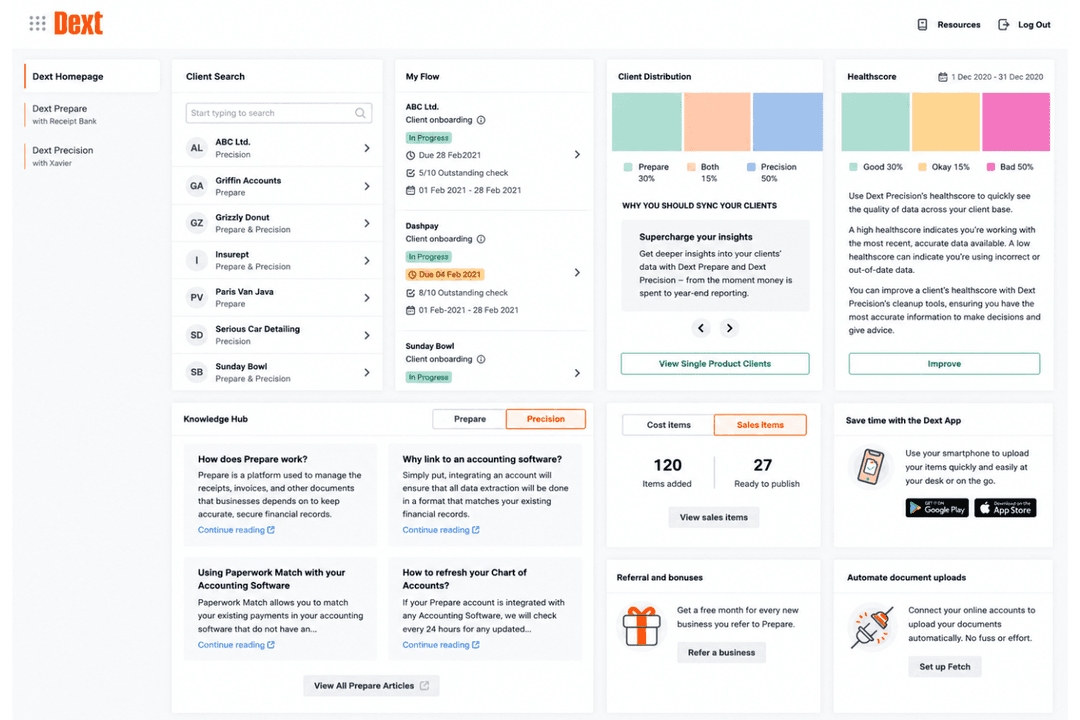
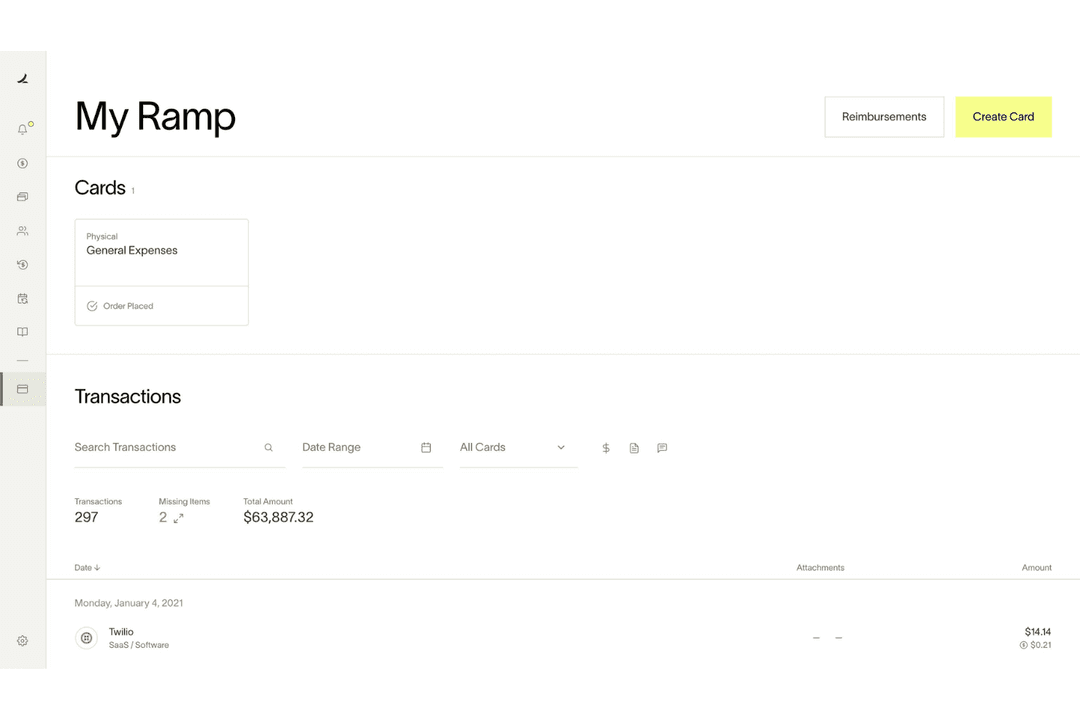
| FactorUser Interface | DextDedicated business and practice dashboards organize document capture, expenses, publishing, client activity, and bookkeeping workflows, although the wider feature set can take time to learn. | RampA clean, employee-friendly interface brings cards, expenses, approvals, travel, bills, and spend reporting into a unified workflow. |
| FactorOnboarding | DextAutomated checklists, product tours, videos, and role-based guidance support setup, while advanced permissions, approval rules, and practice workflows require additional configuration. | RampGuided account setup helps teams issue cards, invite employees, connect accounting software, and establish initial policies, although larger rollouts may require more planning. |
| FactorSetup & Configuration | DextCore receipt and invoice capture is quick to adopt, while firms can gradually configure Supplier Rules, Auto-Publish, ledger connections, client assignments, and team controls. | RampFinance teams can configure card limits, expense policies, approval chains, accounting rules, and integrations, but complex multi-entity or procurement workflows may take longer to implement. |
| FactorMobile & Workflow Experience | DextNative iOS and Android apps support receipt capture, expense claims, mileage tracking, and client submissions, while web-based controls handle approvals and automate bookkeeping. | RampEmployees can submit receipts and expenses through the mobile app, SMS, Slack, or web, while managers can review approvals and manage cards remotely. |
| FactorCustomer Support | DextProvides 24/5 human support, Fin AI assistance, an extensive Help Centre, and plan-dependent access to training, account managers, and customer success guidance. | RampOffers self-service documentation, chat-based support, and onboarding resources, with dedicated account management and priority support available on higher-tier plans. |
From an ease-of-use perspective, Dext leans into an accounting-focused experience, with guided setup, mobile receipt capture, and structured workflows for document processing, publishing, and client oversight. Meanwhile, Ramp offers a broader but more configurable environment, bringing cards, expenses, approvals, travel, bills, and spend controls into the same system, which can require more initial setup for policies, roles, and integrations. Accounting firms and document-heavy finance teams may find Dext more natural to adopt, while companies looking for an employee-friendly way to manage spending across the organization may prefer Ramp’s wider operational scope.
Dext
- Proprietary AI and automation rules reduce manual bookkeeping across high document volumes.
- Practice Advanced adds smart workflows, team controls, and firm-wide performance visibility.
- Data Health & Insights helps Xero and QuickBooks Online users catch and fix errors faster.
- Plans, allowances, and overage charges can make pricing difficult to predict.
- Firms may still spend time chasing clients for missing receipts and invoices.
- Fetch, Sage Line 50, and complex ecommerce setups offer more limited automation.
Ramp
- AI-driven spend controls reduce manual finance and approval work.
- Unlimited virtual cards simplify secure employee and vendor spending.
- Broad integrations connect finance, HR, travel, and procurement systems.
- No native accounts receivable workflow for broader financial operations management.
- Advanced automation and ERP integrations require higher-tier paid plans.
- Administrative setup becomes complex across large multi-entity organizations.
Dext
- Accounting FirmsMulti-client dashboards, automation rules, workflows, and data-quality tools help firms manage more client work without adding the same amount of manual processing.
- Small and Mid-Sized BusinessesReceipt capture, automated extraction, and expense workflows reduce the time internal teams spend entering and organizing bookkeeping data.
- Multi-Entity Businesses and FranchisesConsistent rules, centralized document collection, and accounting integrations support businesses managing several entities, branches, or locations.
- Retail and Ecommerce BusinessesDext helps process supplier invoices, employee expenses, and ecommerce sales data for businesses with relatively straightforward online selling setups.
- Real Estate and Construction BusinessesMobile capture and expense approvals make it easier to collect receipts and invoices from properties, job sites, employees, and contractors.
- Hospitality and Wellness BusinessesBusinesses handling frequent supplier bills and staff expenses can use Dext to keep documents organized and move data into their bookkeeping software faster.
Ramp
- Tech StartupsRamp's automation and real-time controls support rapid scaling and distributed teams.
- Mid-Sized SaaS CompaniesAI-driven expense management and approval workflows help control recurring software, travel, and operational spending.
- Finance DepartmentsCentralized spend visibility, accounting automation, and audit trails simplify financial oversight and month-end close processes.
- Multi-Entity OrganizationsShared spend controls and centralized workflows help manage budgets, approvals, and payments across multiple entities.
- Procurement-Focused TeamsIntegrated procurement, vendor management, and approval workflows reduce operational friction across purchasing processes.
- Distributed & Remote TeamsMobile approvals, virtual cards, receipt capture, and Slack-based workflows support employees working from anywhere.
Who Should Use Dext, and Who Should Use Ramp?
Dext is best suited to accountants, bookkeepers, and finance teams that need reliable document capture, invoice processing, expense management, and bookkeeping automation. It is particularly useful for accounting firms, small and mid-sized businesses, and teams handling high document volumes or complex categorization across multiple clients or entities.
Meanwhile, Ramp is a better fit for fast-growing companies and tech-forward finance teams that want centralized control over company-wide spending. Its corporate cards, procurement workflows, travel management, AI-driven expense reviews, and real-time reporting make it especially useful for startups, mid-sized SaaS companies, multi-entity organizations, procurement teams, and distributed workforces with complex approval needs.
| Dext | Ramp | |
|---|---|---|
| Accounting Ecosystem | Dext Connects with more than 36 accounting platforms, giving accounting practices and businesses broader publishing flexibility. | Ramp Connects spend data with accounting and ERP systems, with more advanced ERP and multi-entity capabilities available on higher tiers. |
| Core Focus | Dext Automates document capture, data extraction, categorization, and publishing for bookkeeping and accounting workflows. | Ramp Manages company spending across corporate cards, expenses, accounts payable, procurement, travel, and reimbursements. |
| Practice and Operational Oversight | Dext Practice Advanced provides client assignments, bookkeeping deadlines, smart workflows, team controls, and practice reporting, while the Data Health & Insights add-on provides Health Scores and data-quality checks. | Ramp Provides company-wide visibility into budgets, vendors, transactions, policy compliance, and spend across teams and entities. |
| Primary Users | Dext Built mainly for accountants, bookkeepers, accounting practices, and finance teams managing document-heavy bookkeeping. | Ramp Designed for internal finance teams and employees managing company-wide purchasing, expenses, cards, and approvals. |
| Spend Control | Dext Primarily processes financial documents and expense claims after spending occurs, with approval controls before items are published. | Ramp Controls spending before and after purchases through card limits, policy rules, spend requests, approval workflows, and automated reviews. |
| Access and Security | Both provide user roles, permission controls, authentication safeguards, encryption, and audit visibility to protect financial data and control team access. |
|---|---|
| Accounting Sync | Both connect approved financial data with accounting systems, helping teams keep transaction records current without repeatedly entering the same information. |
| AI-Assisted Coding | Both use AI, accounting rules, and previous transaction data to categorize expenses, complete accounting fields, and prepare records for review or publishing. |
| Approval Workflows | Both support configurable approval steps that route expenses or financial documents to the appropriate reviewers before they are finalized. |
| Document Capture | Both let users submit receipts and invoices digitally, then extract transaction details such as supplier, date, amount, tax, and payment information to reduce manual entry. |