

Harvest Review: Pros, Cons, Features and Pricing
Harvest excels in providing intuitive time-tracking and expense management features, making it a standout choice for teams seeking simplicity and efficiency.

We review tools independently, and commissions help fund our testing. See our transparency policy, our methodology, or suggest a tool.
Harvest is an expense management software built around time tracking, which makes it a good fit for service businesses that bill clients for both hours and project costs. I'd pick it over a standalone tool like Expensify if your team needs to connect expenses directly to projects and time entries, then pull everything into a single client invoice without rebuilding that context in a separate platform.
Harvest Evaluation Summary
4.4/5
- From $9/user/month (billed annually)
- Free trial + free plan available
Why Trust Our Software Recommendations
6,700+
Reviews
20
Industry experts
16+
Evaluation factors
14
Years
Our team has been testing and reviewing software since 2012. As finance leaders ourselves, we know how difficult—and important—it is to choose the right software.
For this guide, we evaluated tools using hands-on testing and independent research, scoring tools using our selection criteria.
Our reviews reflect our human editorial judgment, not a sales pitch.
Harvest Overview
In my opinion, Harvest is a solid choice for teams needing intuitive time and expense tracking. Its straightforward interface and reliable customer support make it easy to adopt, especially for small to medium-sized businesses and creative agencies. While it offers excellent core features, its standout features are not as extensive as some providers, like Toggl. However, its ease of use and value for money often outweigh this for those prioritizing simplicity over complex integrations. If you're seeking a user-friendly tool with efficient onboarding, Harvest could be the right fit for your team.
Pros
- You can easily track hours with its intuitive interface.
- Your team will appreciate the efficient expense reporting features.
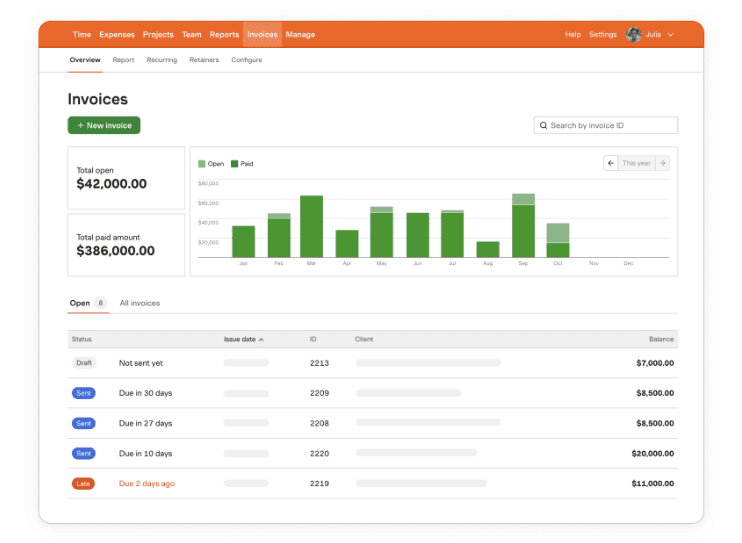
- It generates accurate billing and sends invoices quickly.
Cons
- Your team might find the reporting features somewhat limited.
- Larger teams could feel restricted by its lack of advanced customization.
- You might miss more robust project management tools.
Is Harvest Right For Your Needs?
Who Would be a Good Fit for Harvest?
Harvest is ideal for industries where tracking billable hours is crucial and where simple, effective reporting is valued. It's a great fit for small to medium-sized businesses, creative agencies, and consultants who need straightforward time and expense tracking. Your team will find it easy to adopt due to its user-friendly interface and efficient invoicing features. If your work involves managing different projects and clients, Harvest's capabilities align well with your needs.
- Creative AgenciesYour team will benefit from Harvest's time tracking features and client invoicing capabilities.
- ConsultantsYou'll find it efficient to use Harvest's simple expense reporting and billing tools to manage client work.
- FreelancersYou can track billable hours and generate invoices quickly with Harvest.
- Small BusinessesYour company will appreciate Harvest's user-friendly interface and efficient expense management.
- Project ManagersYou'll find Harvest useful for tracking time across multiple projects.
- Marketing TeamsYour team can easily track time spent on campaigns and manage client billing with Harvest.
Who Would be a Bad Fit for Harvest?
Harvest might not suit large enterprises or complex project teams needing advanced customization and reporting features. If your work involves intricate project management or requires deep integrations with other systems, Harvest's straightforward approach may feel limiting. This software is not suitable for teams that need highly detailed analytics or extensive customization.
- Large EnterprisesYour company might find Harvest's lack of advanced customization and reporting insufficient for complex needs.
- IT DepartmentsYou may find Harvest's limited integrations restrictive for technical project management.
- Manufacturing FirmsYour team could need more robust project management tools than Harvest offers.
- Financial InstitutionsYou might seek more detailed reporting and analytics than Harvest provides.
- Healthcare OrganizationsYour work might require more specialized tracking and compliance features than Harvest offers.
- Construction CompaniesYou could find the project management features too basic for complex job tracking needs.
How We Test & Score Tools
We’ve spent years building, refining, and improving our software testing and scoring system. The rubric is designed to capture the nuances of software selection and what makes a tool effective, focusing on critical aspects of the decision-making process.
Below, you can see exactly how our testing and scoring works across seven criteria. It allows us to provide an unbiased evaluation of the software based on core functionality, standout features, ease of use, onboarding, customer support, integrations, customer reviews, and value for money.
Core Functionality (25% of final scoring)
The starting point of our evaluation is always the core functionality of the tool. Does it have the basic features and functions that a user would expect to see? Are any of those core features locked to higher-tiered pricing plans? At its core, we expect a tool to stand up against the baseline capabilities of its competitors.
Standout Features (25% of final scoring)
Next, we evaluate uncommon standout features that go above and beyond the core functionality typically found in tools of its kind. A high score reflects specialized or unique features that make the product faster, more efficient, or offer additional value to the user.
We also evaluate how easy it is to integrate with other tools typically found in the tech stack to expand the functionality and utility of the software. Tools offering plentiful native integrations, 3rd party connections, and API access to build custom integrations score best.
Ease of Use (10% of final scoring)
We consider how quick and easy it is to execute the tasks defined in the core functionality using the tool. High scoring software is well designed, intuitive to use, offers mobile apps, provides templates, and makes relatively complex tasks seem simple.
Onboarding (10% of final scoring)
We know how important rapid team adoption is for a new platform, so we evaluate how easy it is to learn and use a tool with minimal training. We evaluate how quickly a team member can get set up and start using the tool with no experience. High scoring solutions indicate little or no support is required.
Customer Support (10% of final scoring)
We review how quick and easy it is to get unstuck and find help by phone, live chat, or knowledge base. Tools and companies that provide real-time support score best, while chatbots score worst.
Customer Reviews (10% of final scoring)
Beyond our own testing and evaluation, we consider the net promoter score from current and past customers. We review their likelihood, given the option, to choose the tool again for the core functionality. A high scoring software reflects a high net promoter score from current or past customers.
Value for Money (10% of final scoring)
Lastly, in consideration of all the other criteria, we review the average price of entry level plans against the core features and consider the value of the other evaluation criteria. Software that delivers more, for less, will score higher.
Core Features
These key features make Harvest a comprehensive solution for time and expense management:
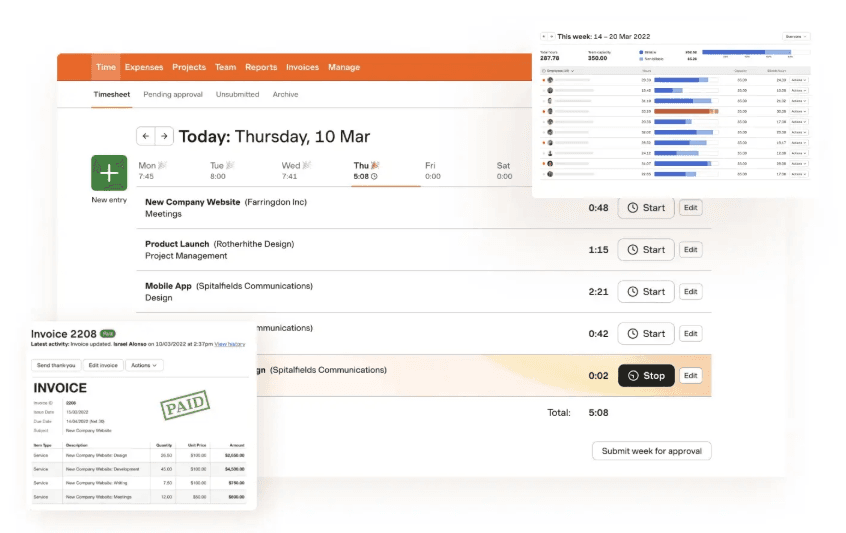
Time Tracking: Harvest lets you track time effortlessly with a simple interface. Your team can log hours quickly using timesheets and set up notifications to ensure accurate billable time.
Expense Tracking: You can easily record and categorize expenses. This feature helps keep your project costs organized and under control.
Invoicing: Harvest allows you to generate invoices and bill clients directly from the platform. It's a straightforward process that speeds up your billing cycle. You can also accept payments via PayPal, Stripe, and credit card.
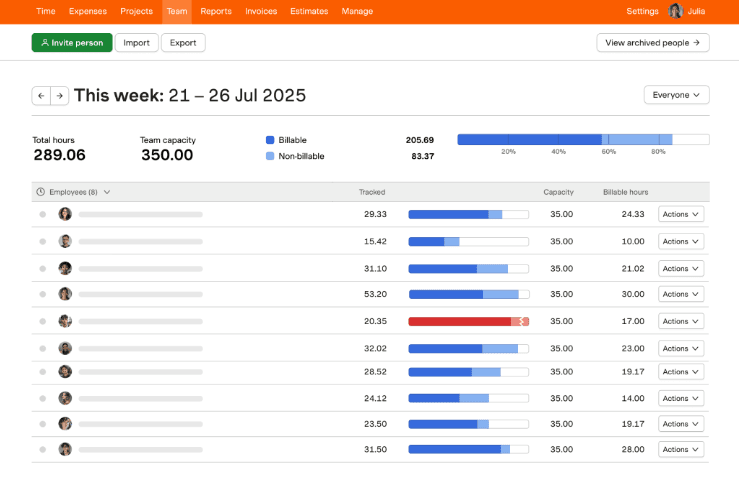
Reporting: You get access to basic reports and dashboards that help you understand your team's performance. Its real-time insight is also useful for spotting trends and making informed decisions.
Project Management: Manage project timelines and budgets with ease. Harvest keeps everything in one workspace, so you can focus on getting work done.
Client Management: Store and manage client details within Harvest. This CRM-like feature ensures you have quick access to essential client information.
Ease of Use
Harvest stands out for its user-friendly interface that makes time and expense tracking a breeze. This all-in-one platform is easy to use, thanks to its intuitive design. Compared to other options, Harvest simplifies your daily workflow with features like drag-and-drop time entry and clear reporting tools, making it a great choice for teams seeking straightforward and efficient solutions.
Integrations
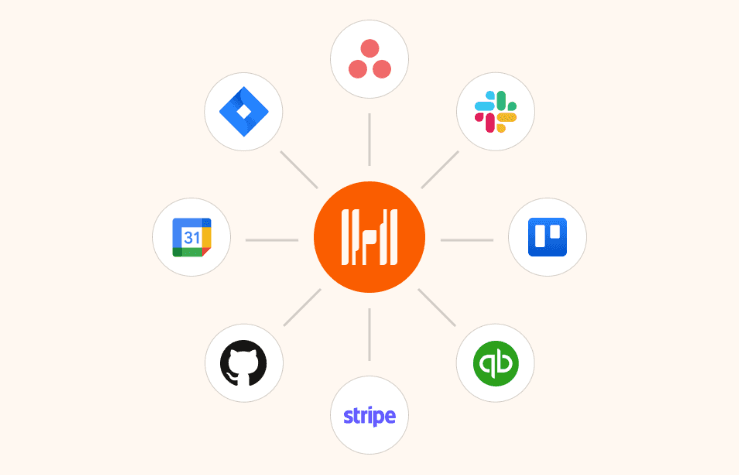
Harvest integrates with Asana, Basecamp, GitHub, Slack, Trello, QuickBooks Online, Xero, Stripe, PayPal, Chrome, Jira, Outlook, Google Calendar, Zapier, IFTTT, Zendesk, Alfred, Google Workspace, Teamwork Projects, Flow, Firefox, Edge, and more.
Harvest also offers an API for custom integrations and connects with third-party integration tools like Zapier to help you automate tasks.
Harvest Specs
- Analytics: Yes
- API: Yes
- Approval Workflows: No
- Attendance Tracking: No
- Batch Permissions & Access: Yes
- Billing/Invoicing: Yes
- Budgeting: Yes
- Calendar Management: No
- Dashboard: Yes
- Data Export: Yes
- Data Import: Yes
- Data Visualization: Yes
- Expense Tracking: Yes
- External Integrations: Yes
- Forecasting: Yes
- Multi-User: Yes
- Notifications: Yes
- Project Management: Yes
- Resource Management: Yes
- Scheduling: Yes
- Task Scheduling/Tracking: Yes
- Time Management: No
- Timesheets: Yes
- Vacation & Absence Calendar: No


