


Microsoft Dynamics 365 Business Central Review: Key Features, Pros, Cons, and Pricing



Microsoft Dynamics 365 Business Central is a CFO ERP software built for mid-sized businesses that need integrated financial management, supply chain tracking, and operations in a single platform. I'd consider it if your team already works in Microsoft 365 and wants an ERP that connects natively with Excel, Teams, and Outlook—without the higher licensing costs and more complex implementations that typically come with NetSuite at a comparable scale.
Microsoft Dynamics 365 Business Central Evaluation Summary
- From $80/user/month (billed annually)
- 30-day free trial
Why Trust Our Software Recommendations
Our team has been testing and reviewing software since 2012. As finance leaders ourselves, we know how difficult—and important—it is to choose the right software.
For this guide, we evaluated tools using hands-on testing and independent research, scoring tools using our selection criteria.
Our reviews reflect our human editorial judgment, not a sales pitch.
Microsoft Dynamics 365 Business Central Overview
In my opinion, Business Central is best for organizations seeking a scalable, cloud-based ERP with strong financial controls and straightforward reporting, especially if you want to unify workflows across finance, sales, and operations without steep learning curves.
pros
-
It offers extensive customization options to fit your business needs.
-
The financial management tools provide comprehensive insights for better decision-making.
-
It seamlessly integrates with other Microsoft products, enhancing your team's productivity.
cons
-
Some users find the initial setup complex and time-consuming.
-
The user interface can feel outdated compared to other modern ERP solutions.
-
There may be a learning curve for teams not already familiar with Microsoft products.
Is Microsoft Dynamics 365 Business Central Right For Your Needs?
Who Would be a Good Fit for Microsoft Dynamics 365 Business Central?
Microsoft Dynamics 365 Business Central is ideal for small to medium-sized businesses in industries like retail, manufacturing, and service where you need a comprehensive view of your operations. If your team relies on Microsoft products, this ERP solution integrates smoothly, enhancing productivity and collaboration. Finance teams benefit from its robust financial management tools, while operations managers appreciate the customization options that align with specific business needs.
-
Retail Businesses
You can streamline inventory management and gain valuable insights into sales trends with its comprehensive reporting tools.
-
Manufacturing Companies
Your production processes can become more efficient with its detailed planning and scheduling functionalities.
-
Service Providers
You can manage projects more effectively with its integrated project management features.
-
Finance Departments
Your team will benefit from advanced financial reporting and analysis capabilities, providing deeper insights into financial health.
-
Operations Managers
You can tailor the system to your specific operational needs with its extensive customization options.
-
Microsoft Product Users
Your work becomes more seamless with its native integration with other Microsoft applications, boosting overall productivity.
Who Would be a Bad Fit for Microsoft Dynamics 365 Business Central?
Microsoft Dynamics 365 Business Central might not suit large enterprises with highly complex operations needing extensive customization beyond its capabilities. If your team isn’t familiar with Microsoft products, the learning curve could slow down adoption. Also, businesses requiring highly specialized industry-specific features might find its offerings too generic, lacking depth for niche requirements.
-
Large Enterprises
You might find it lacking in scalability for managing extremely large volumes of data and transactions.
-
Highly Specialized Industries
Your industry-specific needs might not be met due to its more general feature set.
-
Non-Microsoft Users
Your team could struggle with the interface if they’re not accustomed to Microsoft environments.
-
Tech-averse Teams
You may find the system’s complexity overwhelming if your team isn’t tech-savvy.
-
Niche Market Players
Your unique operational processes might not align well with its standard functionalities.
-
Rapidly Growing Startups
You might outgrow its capabilities quickly if you’re scaling at a fast pace.
How We Test & Score Tools
We’ve spent years building, refining, and improving our software testing and scoring system. The rubric is designed to capture the nuances of software selection and what makes a tool effective, focusing on critical aspects of the decision-making process.
Below, you can see exactly how our testing and scoring works across seven criteria. It allows us to provide an unbiased evaluation of the software based on core functionality, standout features, ease of use, onboarding, customer support, integrations, customer reviews, and value for money.
Core Functionality (25% of final scoring)
The starting point of our evaluation is always the core functionality of the tool. Does it have the basic features and functions that a user would expect to see? Are any of those core features locked to higher-tiered pricing plans? At its core, we expect a tool to stand up against the baseline capabilities of its competitors.
Standout Features (25% of final scoring)
Next, we evaluate uncommon standout features that go above and beyond the core functionality typically found in tools of its kind. A high score reflects specialized or unique features that make the product faster, more efficient, or offer additional value to the user.
We also evaluate how easy it is to integrate with other tools typically found in the tech stack to expand the functionality and utility of the software. Tools offering plentiful native integrations, 3rd party connections, and API access to build custom integrations score best.
Ease of Use (10% of final scoring)
We consider how quick and easy it is to execute the tasks defined in the core functionality using the tool. High scoring software is well designed, intuitive to use, offers mobile apps, provides templates, and makes relatively complex tasks seem simple.
Onboarding (10% of final scoring)
We know how important rapid team adoption is for a new platform, so we evaluate how easy it is to learn and use a tool with minimal training. We evaluate how quickly a team member can get set up and start using the tool with no experience. High scoring solutions indicate little or no support is required.
Customer Support (10% of final scoring)
We review how quick and easy it is to get unstuck and find help by phone, live chat, or knowledge base. Tools and companies that provide real-time support score best, while chatbots score worst.
Customer Reviews (10% of final scoring)
Beyond our own testing and evaluation, we consider the net promoter score from current and past customers. We review their likelihood, given the option, to choose the tool again for the core functionality. A high scoring software reflects a high net promoter score from current or past customers.
Value for Money (10% of final scoring)
Lastly, in consideration of all the other criteria, we review the average price of entry level plans against the core features and consider the value of the other evaluation criteria. Software that delivers more, for less, will score higher.
Core Features
Financial Management
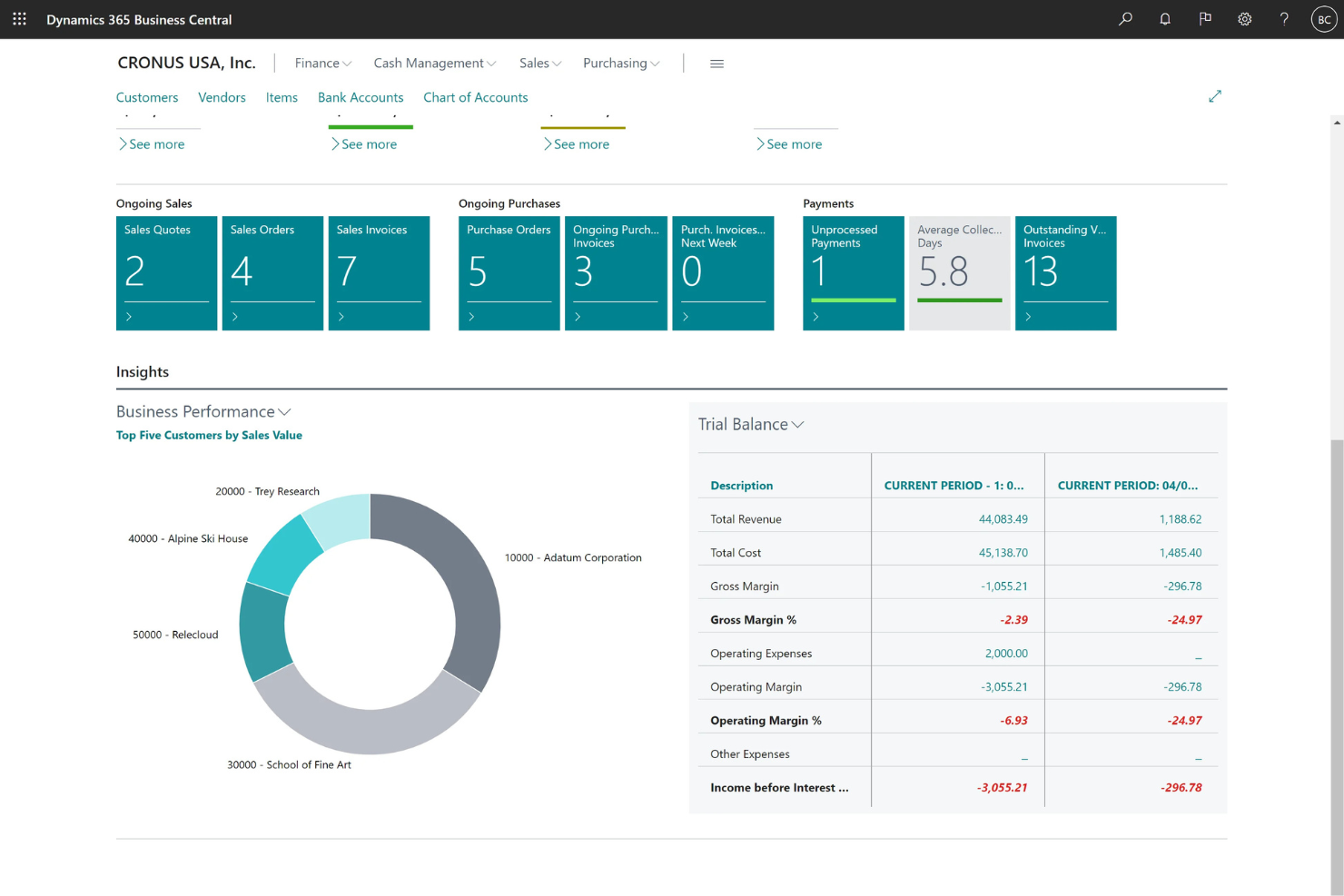
Manage your finances with tools that provide insights into cash flow, budgeting, and financial forecasting. It helps your team make informed decisions quickly.
Sales and Service Management
Track customer interactions and service requests effortlessly. This feature enables you to enhance customer satisfaction by streamlining sales processes.
Supply Chain Management
Optimize your inventory levels and ensure timely order fulfillment. You can reduce costs by managing your supply chain more efficiently.
Project Management
Plan, manage, and analyze projects with real-time data. Your team can track progress and allocate resources effectively.
Operations Management
Oversee your production and distribution processes seamlessly. It allows you to maintain control over your operations and improve productivity.
Reporting and Analytics
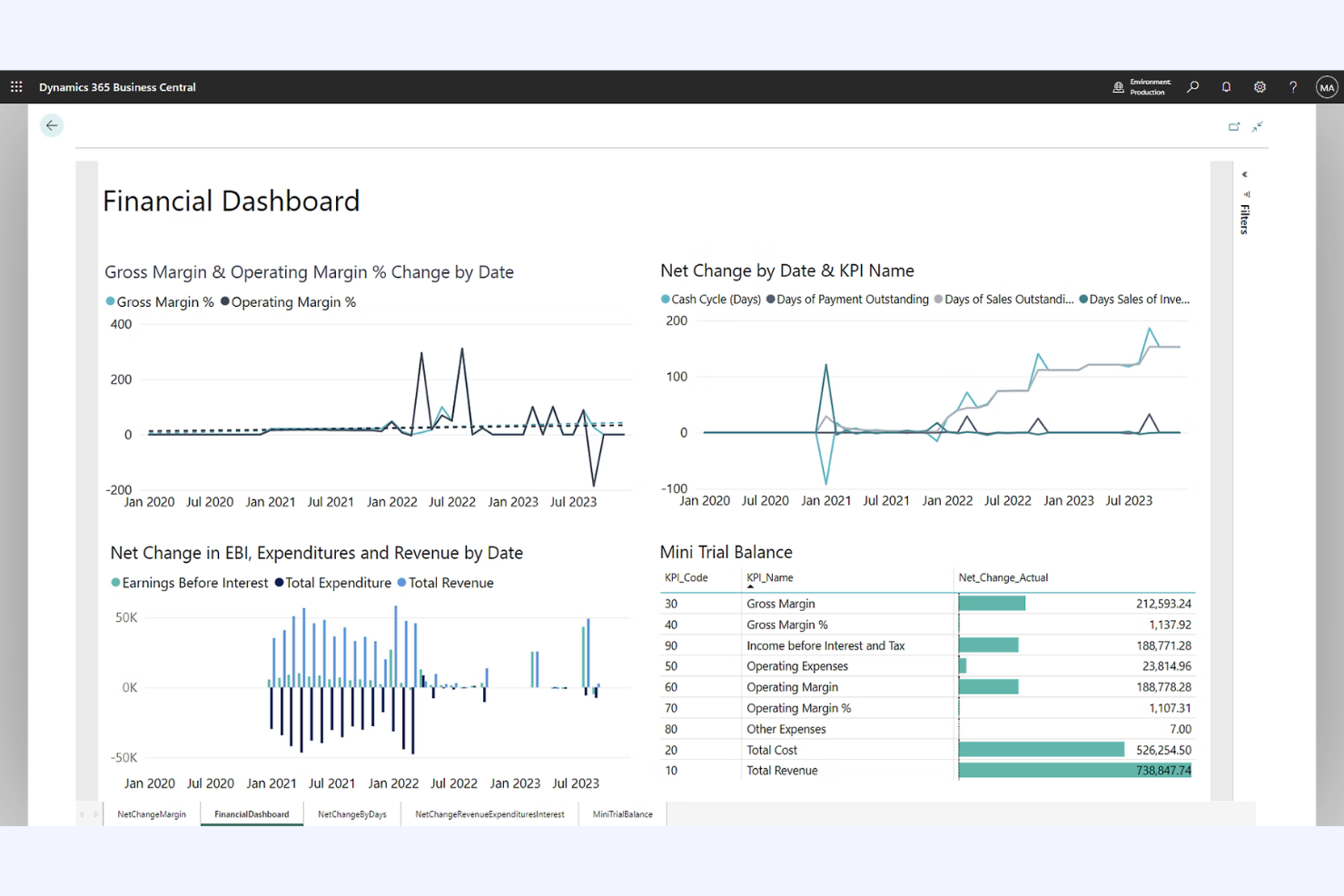
Access customizable reports and dashboards for data-driven insights. You can make strategic decisions with confidence using detailed analytics.
Standout Features
Customizable Workflows
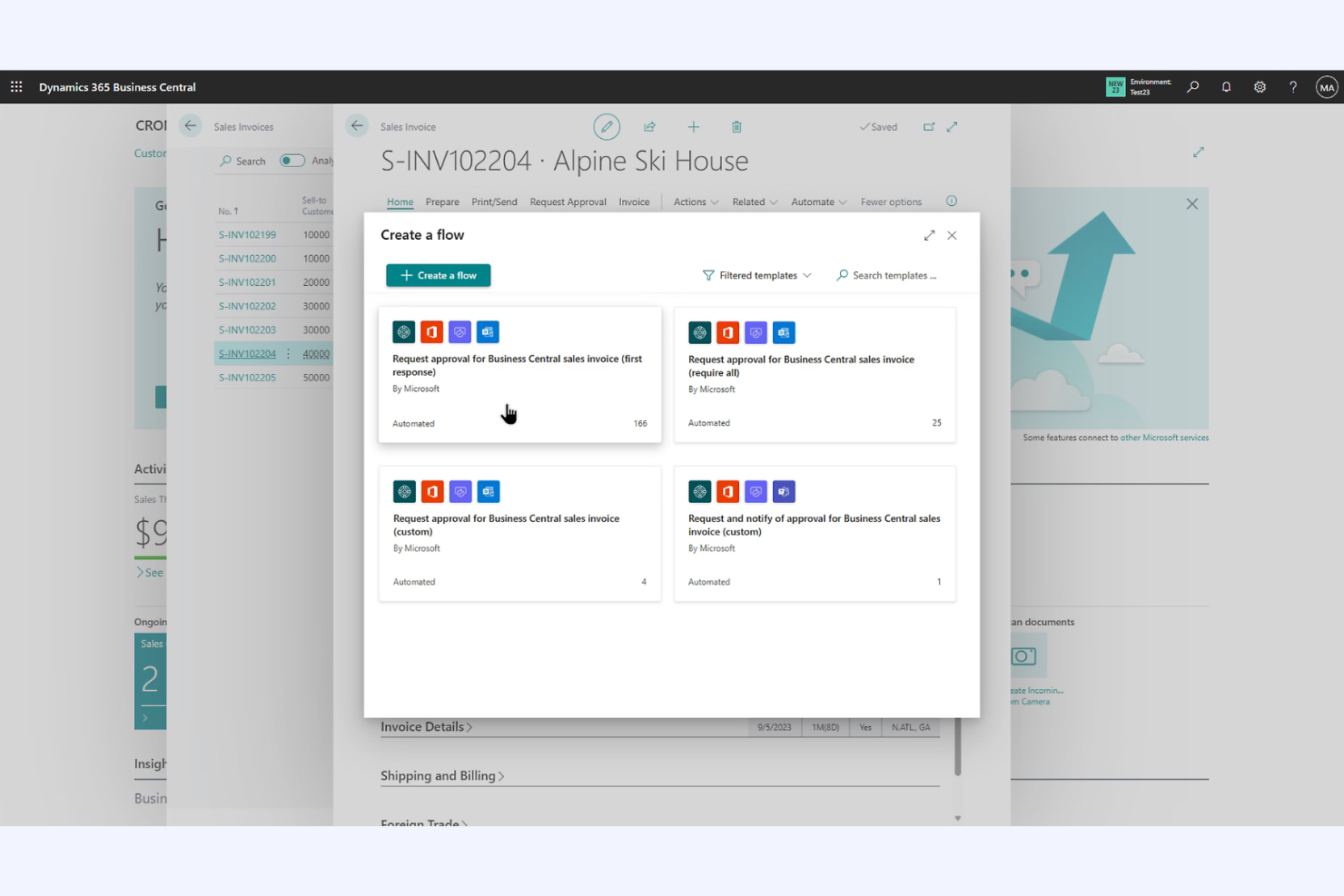
Tailor workflows to fit your business processes without complex coding. This flexibility means your team can adapt the system to unique operational needs.
Role-Based Access
Assign permissions based on job functions to ensure data security. Your team can access only the information they need, reducing the risk of data breaches.
Ease of Use
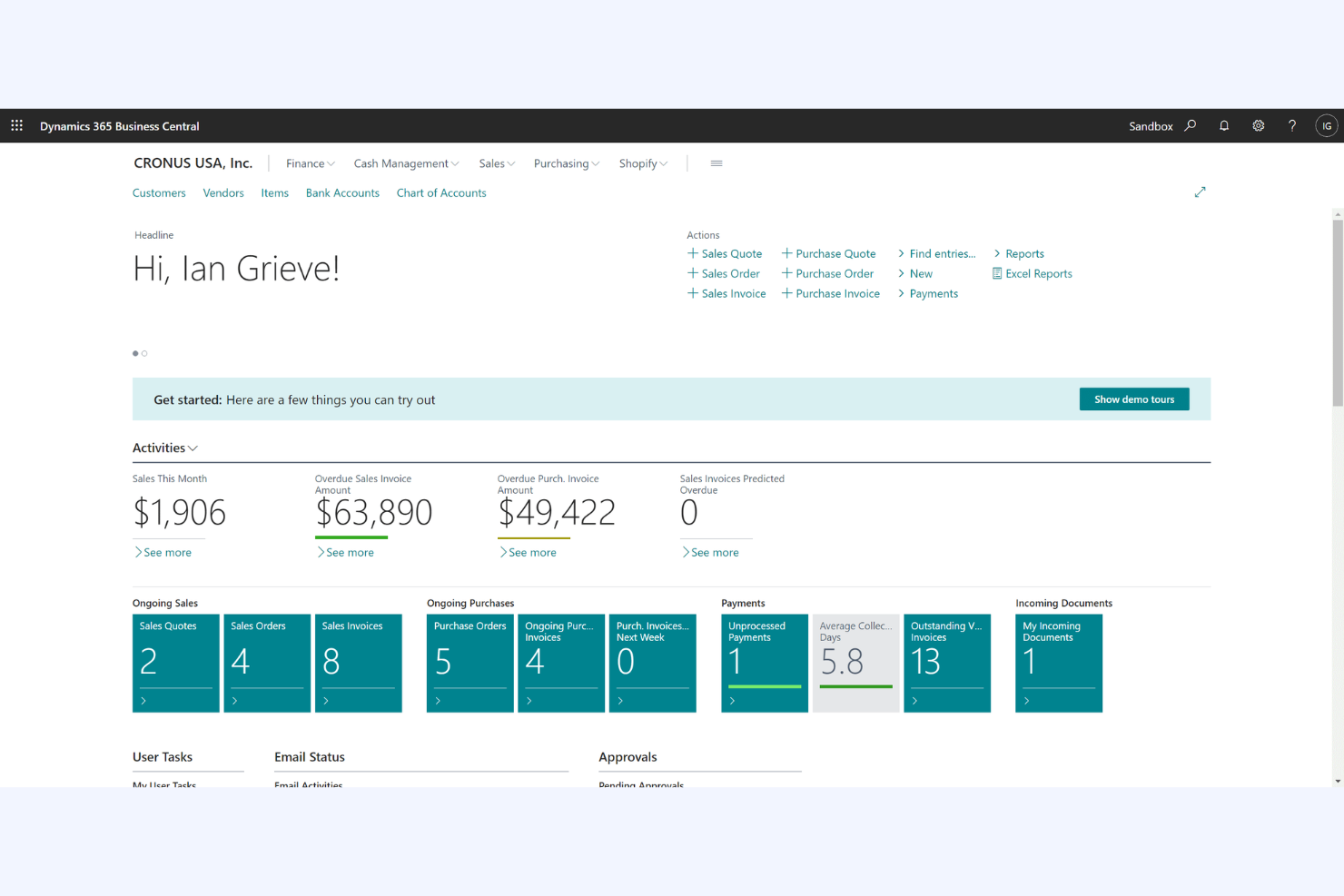
Microsoft Dynamics 365 Business Central offers a user-friendly interface, though its complexity can be daunting for those not familiar with Microsoft products. The intuitive dashboards and customizable views make navigation easier for your team, but the initial learning curve might slow down adoption. Once you get past that, the seamless integration with familiar Microsoft tools enhances usability, allowing your team to streamline workflows and improve efficiency.
Onboarding
Onboarding with Microsoft Dynamics 365 Business Central can be a mixed experience; the setup is thorough but may feel overwhelming at first. Your team will appreciate the extensive documentation and tutorials available, which can ease the transition. However, the initial setup might require extra time and effort to fully configure. With dedicated support and resources, you can eventually streamline the process and achieve quicker time to value once the system is up and running.

Customer Support
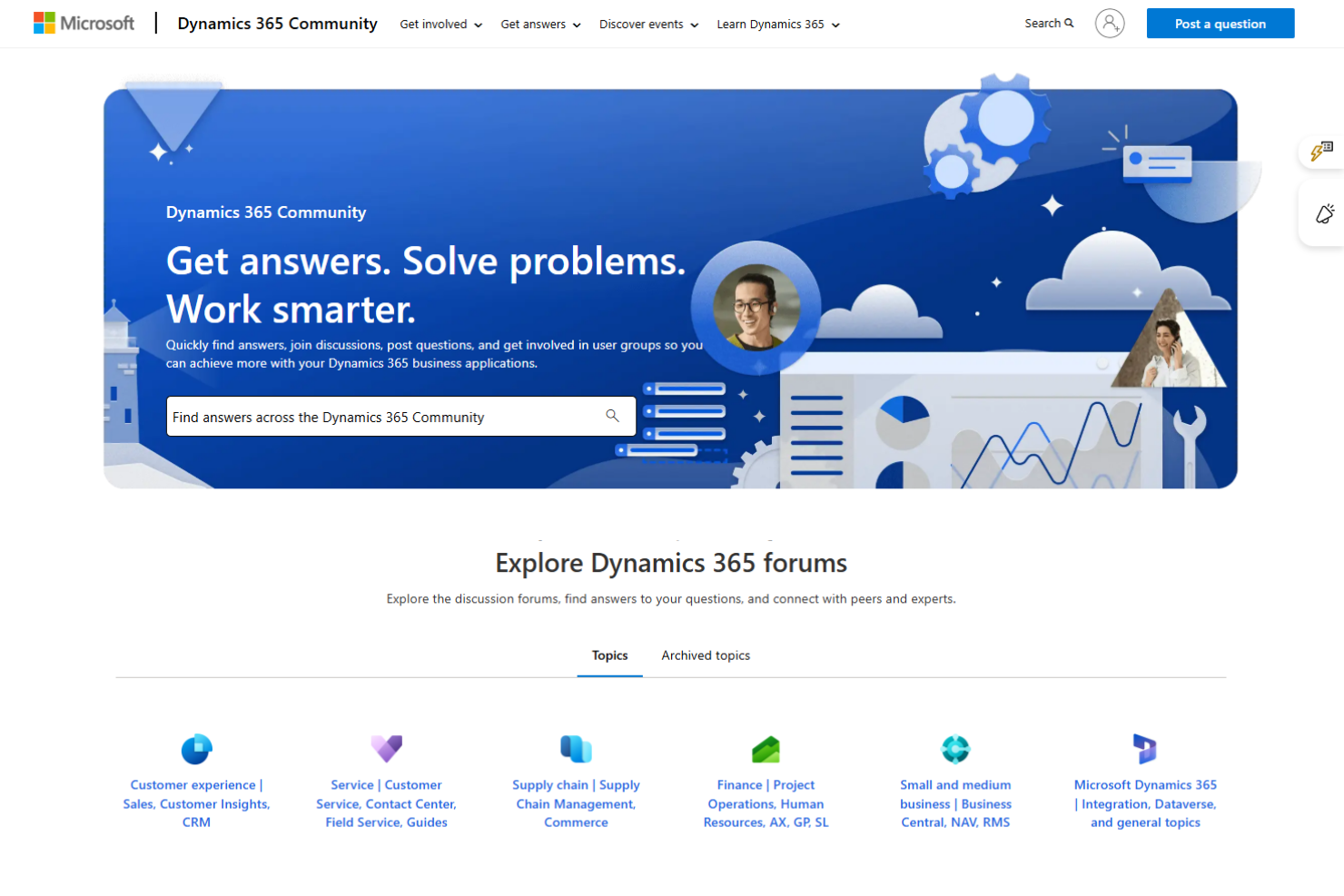
Customer support for Microsoft Dynamics 365 Business Central is reliable but could be more responsive. Your team has access to a variety of support channels, including online resources and community forums, which can be helpful. However, some users feel that direct support can be slow at times. The wealth of self-service options, though, empowers your team to troubleshoot and resolve issues independently, which can mitigate the wait for direct assistance.
Integrations
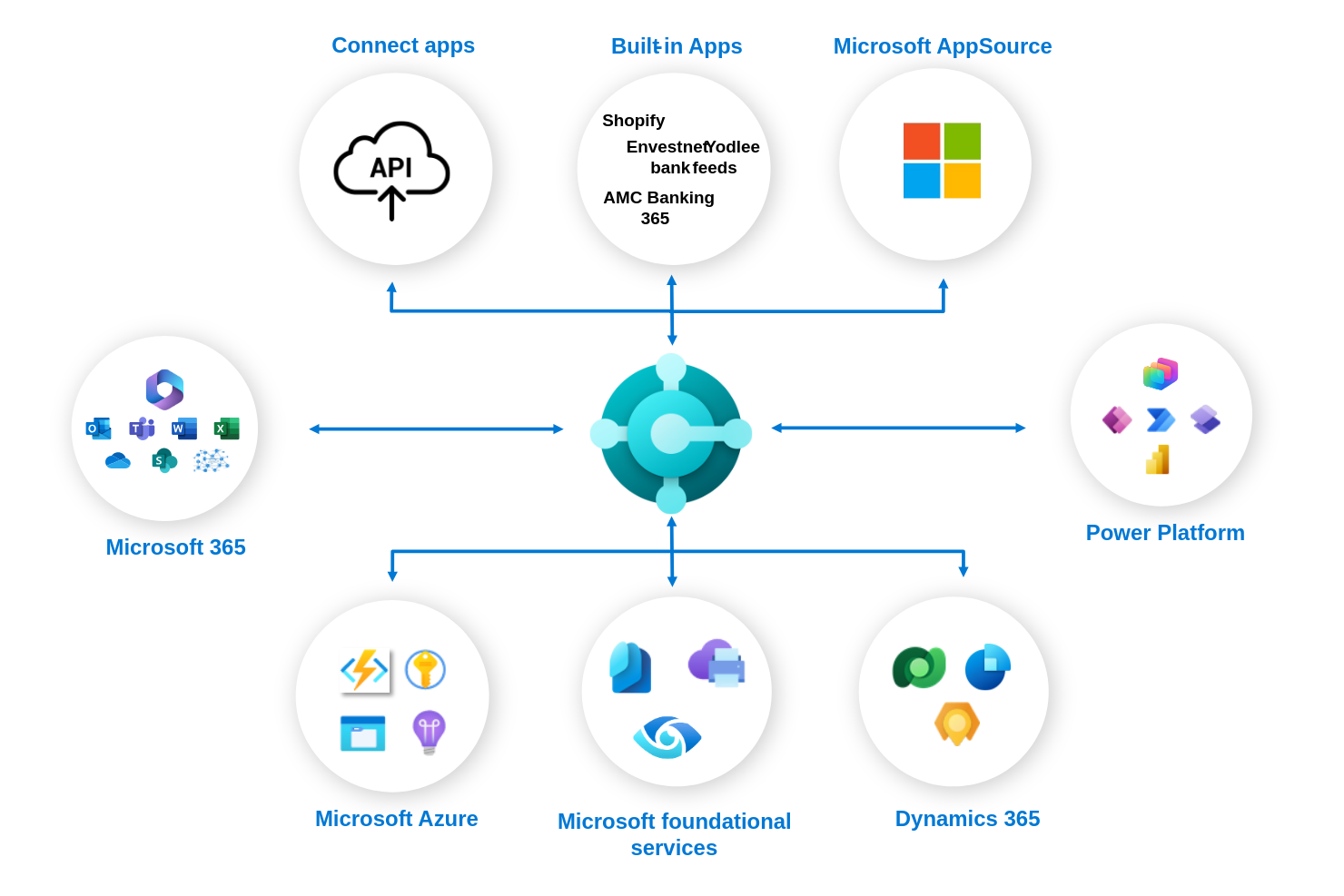
Microsoft Dynamics 365 Business Central integrates with Microsoft 365, Power BI, Microsoft Teams, Outlook, Excel, Shopify, PayPal, Dynamics 365 Sales, Azure Active Directory, and DocuSign, among others.
The platform also offers a robust API and connects with third-party integration tools for custom workflows and additional app connections.
Value for Money
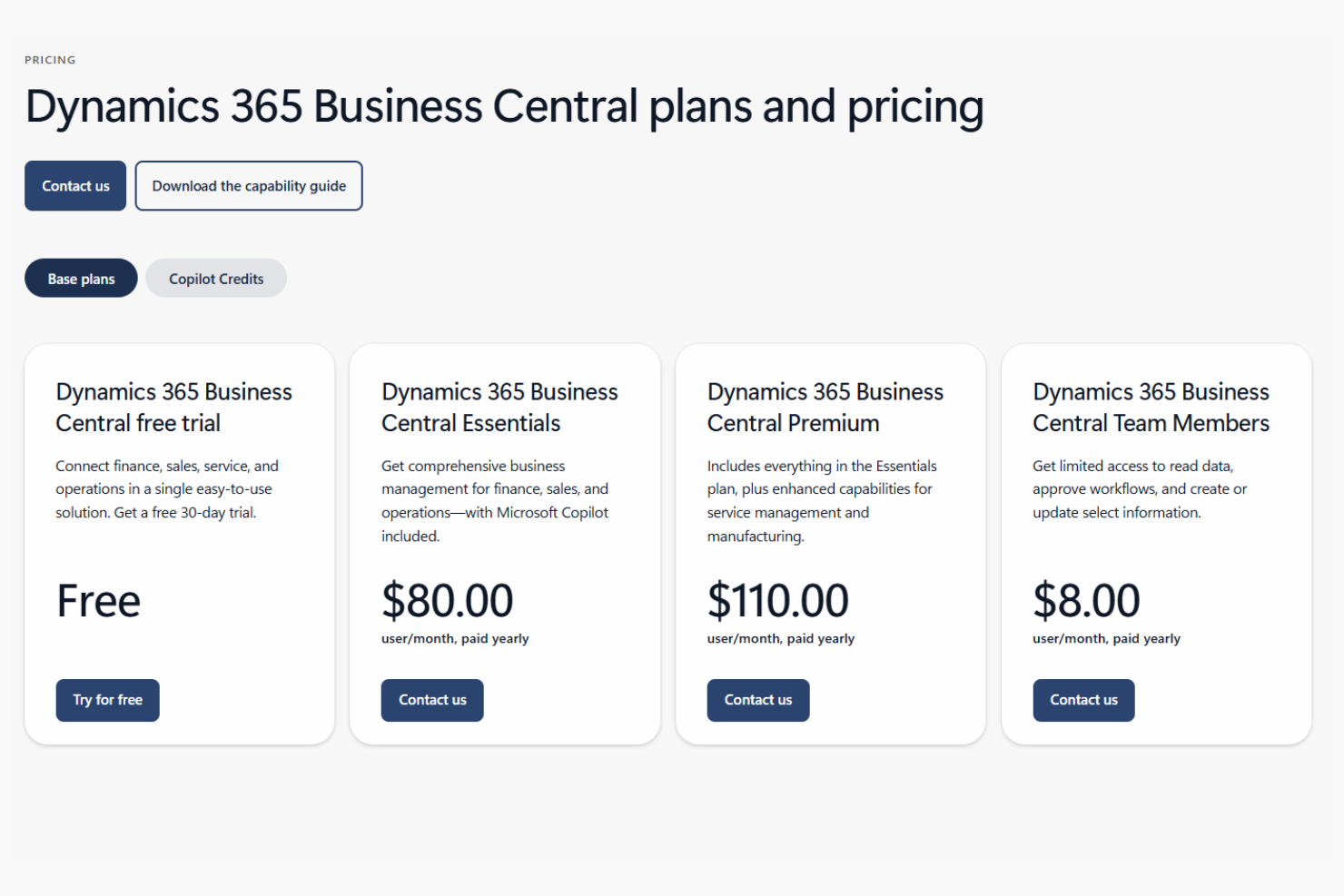
Microsoft Dynamics 365 Business Central is seen as a strong value for mid-sized businesses, offering a wide range of ERP features at a predictable per-user monthly cost. Users appreciate the flexible licensing and ability to scale, though some note that advanced features and partner support can increase total costs. Transparent pricing and modular add-ons help teams control spend.
- Essentials: Core financials, sales, purchasing, and inventory management.
- Premium: Adds service management and manufacturing capabilities.
- Team Members: Limited access for light users to view data and perform basic tasks.
Microsoft Dynamics 365 Business Central Specs
- Accounts Payable
- Accounts Receivable
- API
- Budgeting
- Calendar Management
- Compliance Tracking
- Customer Management
- Dashboard
- Data Export
- Data Import
- Data Visualization
- Expense Tracking
- External Integrations
- Financial Analysis
- Forecasting
- Inventory Tracking
- Multi-Currency
- Multi-User
- Notifications
- Order Management
- Payroll
- Project Management
- Purchase Orders
- Resource Management
- Scheduling
- Supplier Management
- Task Scheduling/Tracking
- Third-Party Plugins/Add-Ons
- Warehouse Management
- Workflow Management
Microsoft Dynamics 365 Business Central FAQs
How easy is it to customize Microsoft Dynamics 365 Business Central for my business needs?
Can my team access Microsoft Dynamics 365 Business Central remotely?
How does Microsoft Dynamics 365 Business Central handle data security and compliance?
What kind of training resources are available for new users?
How does Microsoft Dynamics 365 Business Central support business growth?
Is it possible to migrate data from our current system to Microsoft Dynamics 365 Business Central?
How reliable is the uptime for Microsoft Dynamics 365 Business Central?
What kind of ongoing support can we expect from Microsoft Dynamics 365 Business Central?
Microsoft Dynamics 365 Business Central Company Overview & History
Microsoft Dynamics 365 Business Central is an enterprise resource planning (ERP) solution developed by Microsoft Corporation, headquartered in Redmond, Washington. Business Central is part of the broader Microsoft Dynamics 365 suite, which integrates ERP and customer relationship management (CRM) capabilities. Microsoft, a global technology leader with over 220,000 employees worldwide, owns and develops a wide range of business software products, including Office 365, Azure, and LinkedIn. Business Central is used by organizations of all sizes across industries, with notable clients including small and midsize businesses seeking cloud-based financial and operational management.
Microsoft Dynamics 365 Business Central Major Milestones
- 2018: Initial release of Microsoft Dynamics 365 Business Central as a cloud-based ERP solution.
- 2020: Expanded global availability and integration with Microsoft Teams and Power Platform.
- 2022: Introduction of enhanced AI-driven features and automation capabilities.
- 2023: Recognition in industry reports for cloud ERP adoption and integration with Microsoft Copilot AI tools.