

Las 10 mejores alternativas a Procore para la construcción en 2026

Lista de las mejores alternativas a Procore


Como director financiero, te enfrentas constantemente a la presión de gestionar presupuestos, optimizar recursos y garantizar la entrega puntual de los proyectos. El software de gestión de la construcción puede marcar la diferencia, pero no todas las herramientas se adaptan a todos los modelos de negocio. Si Procore no satisface tus necesidades, no eres el único.
Según mi experiencia, es importante encontrar un software que se adapte a tus desafíos específicos. Ya sea por el coste, la escalabilidad o las funciones específicas del sector, existen alternativas que podrían ajustarse mejor a tu equipo.
He revisado y evaluado de forma independiente varias alternativas a Procore para ayudarte a tomar una decisión informada. En este artículo, compartiré mis principales opciones, centrándome en cómo cada solución puede satisfacer las necesidades específicas de tu empresa.
¿Qué es Procore?
Procore es un software de gestión de la construcción que ayuda a los equipos a gestionar los proyectos de principio a fin. Lo utilizan ampliamente jefes de proyecto, ingenieros y contratistas que necesitan mantener los proyectos dentro del plazo y el presupuesto. Las funciones de gestión documental, colaboración en tiempo real y seguimiento financiero ayudan a mejorar la eficiencia, la comunicación y el control de costes. En general, Procore ofrece una plataforma para simplificar los procesos de construcción y mejorar la visibilidad de los proyectos.
Tabla comparativa de alternativas a Procore
Esta tabla comparativa resume los detalles de precios de mis principales alternativas seleccionadas a Procore.
| Tool | Best For | Trial Info | Price | ||
|---|---|---|---|---|---|
| 1 | Ideal para la gestión de carteras de proyectos a gran escala | Demostración gratuita disponible | Precios bajo solicitud | Website | |
| 2 | Ideal para la gestión de proyectos todo en uno | Demostración gratuita disponible | Precio bajo solicitud | Website | |
| 3 | Ideal para la colaboración en tiempo real en el sitio de trabajo | Plan gratuito disponible | Desde $39/usuario/mes (facturado anualmente) | Website | |
| 4 | Ideal para contratistas comerciales | Demostración gratuita disponible | Precios bajo consulta | Website | |
| 5 | Ideal para constructores de proyectos personalizados y empresas de remodelación | Demostración gratuita disponible | Precios disponibles previa solicitud | Website | |
| 6 | Ideal para empresas de servicios para el hogar | Demostración gratuita disponible | Precios bajo solicitud | Website | |
| 7 | Ideal para el seguimiento sencillo de proyectos | Prueba gratuita de 30 días + demostración gratuita disponible | Desde $15/usuario/mes (facturado anualmente) | Website | |
| 8 | Ideal para contratistas generales | Demostración gratuita disponible | Precios bajo solicitud | Website | |
| 9 | Ideal para la gestión de proyectos impulsada por IA | Plan gratuito disponible | Desde $165/proyecto/mes | Website | |
| 10 | Ideal para contratistas especializados | Demo gratuita disponible | Precios bajo solicitud | Website |
Por qué confiar en nuestras recomendaciones de software
Nuestras reseñas reflejan nuestro criterio independiente, no un discurso de ventas. Descubra cómo mantenemos la transparencia.
Para esta guía, evaluamos las herramientas mediante pruebas prácticas e investigación independiente, puntuando las herramientas según nuestros criterios de selección.
Nuestras reseñas reflejan nuestro criterio editorial humano, no un discurso de ventas.
Análisis de las mejores alternativas a Procore
A continuación se muestran mis resúmenes detallados de las mejores alternativas a Procore que llegaron a mi lista. Mis análisis ofrecen una visión detallada de las funciones principales, ventajas y desventajas, integraciones y casos de uso ideales de cada herramienta para ayudarte a encontrar la mejor opción para ti.

Ideal para la gestión de carteras de proyectos a gran escala
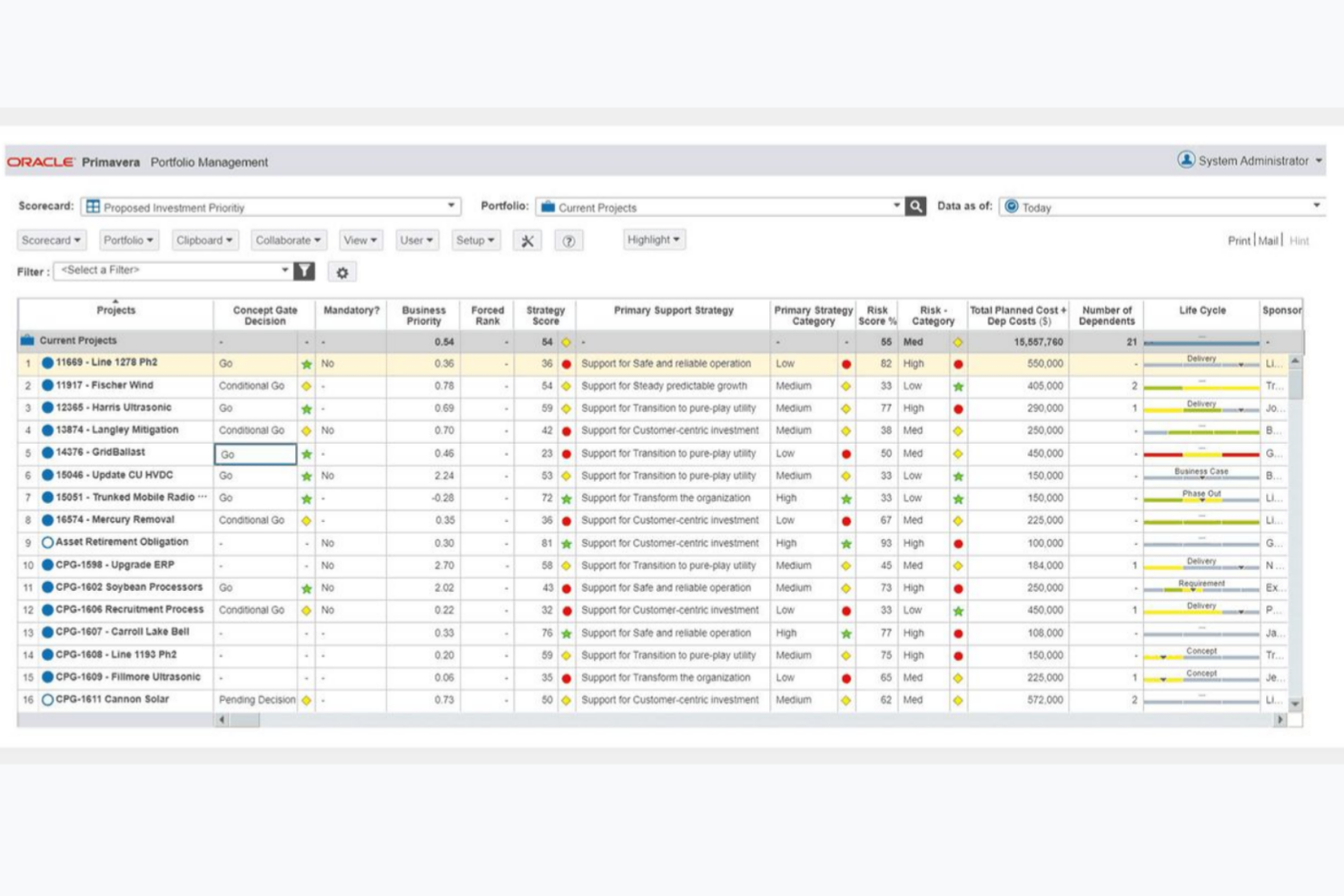
Oracle Primavera es un software de gestión de carteras de proyectos diseñado para proyectos a gran escala y empresas. Lo utilizan ampliamente gerentes de proyectos, planificadores y programadores en sectores como la construcción, la ingeniería y la energía.
Por qué es una buena alternativa a Procore: Oracle Primavera ofrece gestión avanzada de carteras, optimización de recursos y análisis de riesgos, lo que ayuda a gestionar proyectos complejos y alinearlos con los objetivos empresariales. Estas capacidades respaldan la planificación y ejecución estratégicas, proporcionando una visión completa del rendimiento del proyecto. Su enfoque en la gestión de múltiples proyectos dentro de una cartera lo distingue de Procore, ya que ofrece mejores herramientas de asignación y priorización de recursos.
Características e integraciones destacadas:
Las características incluyen planificación de escenarios para evaluar diferentes resultados de proyectos, seguimiento de proyectos para garantizar entregas puntuales y nivelación de recursos para optimizar su uso. El software también proporciona herramientas detalladas de generación de informes, que ayudan a analizar los datos del proyecto y tomar decisiones fundamentadas.
Las integraciones incluyen Sistema de proyectos de SAP, Mantenimiento de plantas de SAP y SAP PS y PM.
Pros and Cons
Pros:
- Gestión avanzada de recursos
- Análisis de riesgos
- Adecuado para proyectos a gran escala
Cons:
- No hay información pública sobre los precios
- Flexibilidad limitada para proyectos pequeños

Ideal para la gestión de proyectos todo en uno
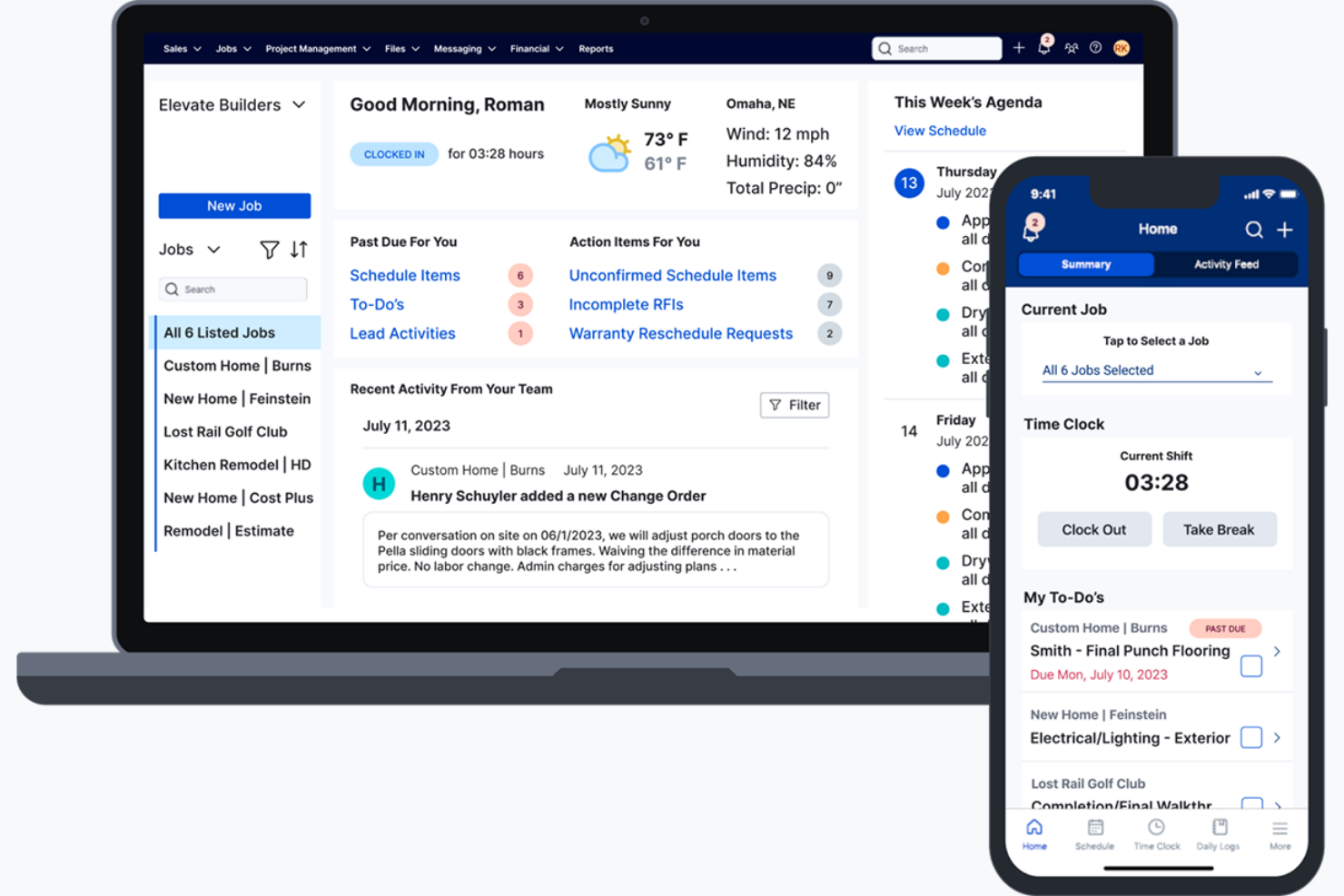
Buildertrend es un software de gestión de proyectos de construcción diseñado para que los constructores residenciales y comerciales gestionen proyectos, cronogramas y comunicaciones con clientes. Los contratistas y remodeladores lo utilizan para aumentar la eficiencia de los proyectos y la satisfacción de los clientes.
Por qué es una buena alternativa a Procore: Buildertrend ofrece funciones como programación, elaboración de presupuestos y herramientas de comunicación con clientes, lo que lo hace ideal para constructores que buscan una solución todo en uno. Estas herramientas ayudan a tu equipo a gestionar proyectos de principio a fin, garantizando que todo siga según lo previsto. Su enfoque en proporcionar una plataforma completa de gestión de proyectos la distingue de Procore, ya que ofrece un enfoque integrado para la gestión de la construcción.
Características destacadas & integraciones:
Las funciones incluyen el seguimiento del tiempo para supervisar los costes laborales, el almacenamiento de documentos para acceder fácilmente a los archivos del proyecto y la gestión de órdenes de cambio para gestionar ajustes. También puedes utilizar herramientas de gestión de ofertas para gestionar el proceso de licitación y conseguir más proyectos.
Las integraciones incluyen QuickBooks, Xero, Gusto, Salesforce, HubSpot y Pipedrive.
Pros and Cons
Pros:
- Solución completa de gestión de proyectos
- Potentes capacidades de programación
- Herramientas eficaces de elaboración de presupuestos
Cons:
- Curva de aprendizaje para equipos nuevos en el uso de software de construcción
- Limitado para construcciones a gran escala

Ideal para la colaboración en tiempo real en el sitio de trabajo
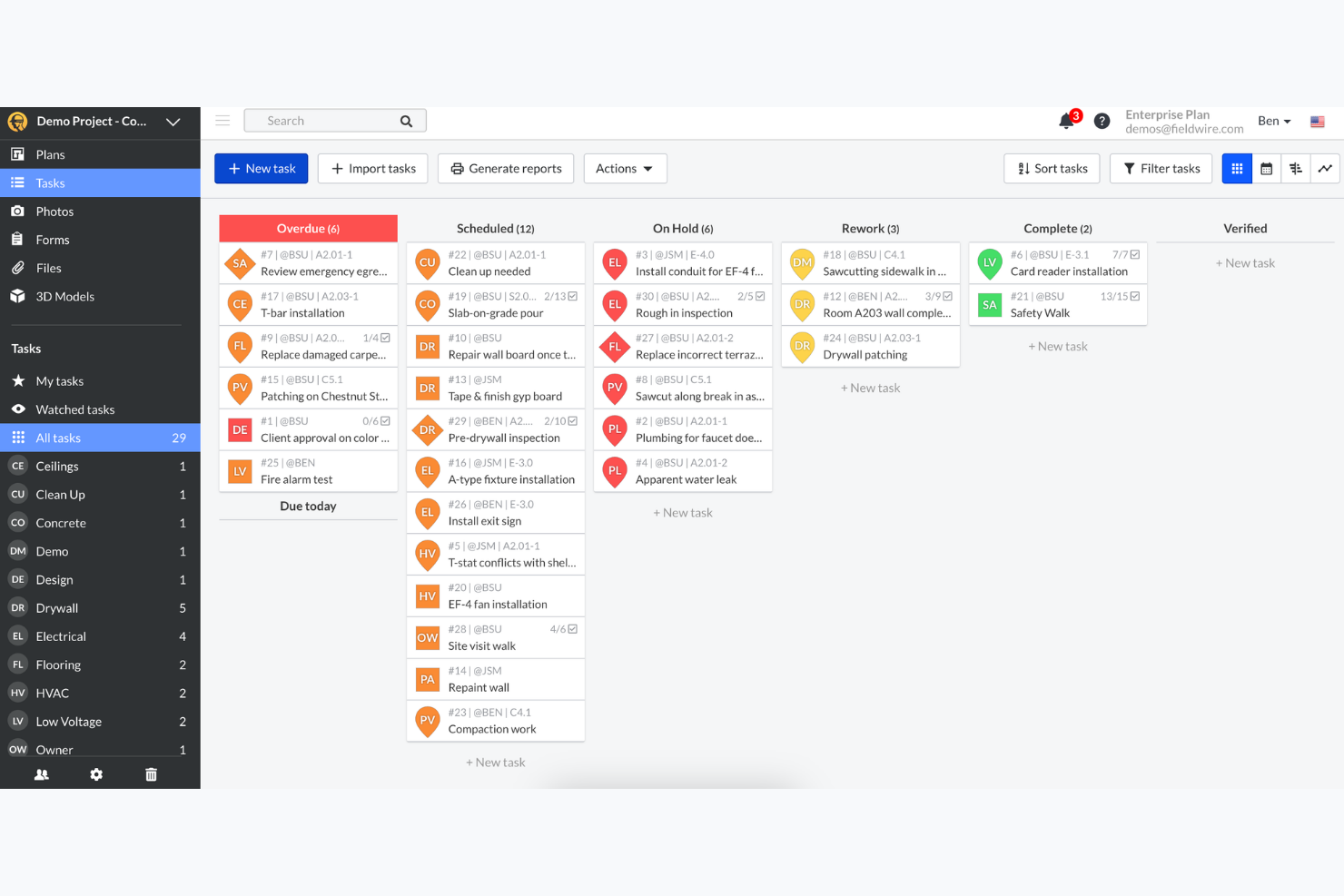
Fieldwire es un software de gestión en campo diseñado para que los equipos de construcción coordinen tareas y gestionen proyectos en el sitio. Se utiliza principalmente por gerentes de construcción, ingenieros y trabajadores de campo para simplificar la comunicación y garantizar la eficiencia del proyecto.
Por qué es una buena alternativa a Procore: Fieldwire ofrece funciones como gestión de tareas, visualización de planos y seguimiento de problemas, lo que mejora la colaboración en tiempo real en los sitios de trabajo. Estas herramientas permiten que tu equipo se mantenga conectado e informado durante todo el ciclo de vida del proyecto. Su énfasis en las actualizaciones en tiempo real y la colaboración en campo lo convierte en una opción diferenciada para los equipos que necesitan una gestión eficaz en el sitio.
Funciones e integraciones destacadas:
Las funciones incluyen la gestión de listas de pendientes para realizar un seguimiento de los problemas del proyecto, la programación de tareas para mantener a todos informados y la documentación fotográfica para crear registros visuales del proyecto. Puedes utilizar herramientas de generación de informes para obtener información sobre el progreso del proyecto y el rendimiento del equipo.
Las integraciones incluyen Dropbox, Box, OneDrive, Google Drive, QuickBooks, Datagrid y Microsoft Project.
Pros and Cons
Pros:
- Eficaz para la gestión en campo
- Potentes herramientas de coordinación de tareas
- Admite actualizaciones en tiempo real
Cons:
- Funciones avanzadas limitadas
- Enfocado en las operaciones de campo

BuildOps
Ideal para contratistas comerciales
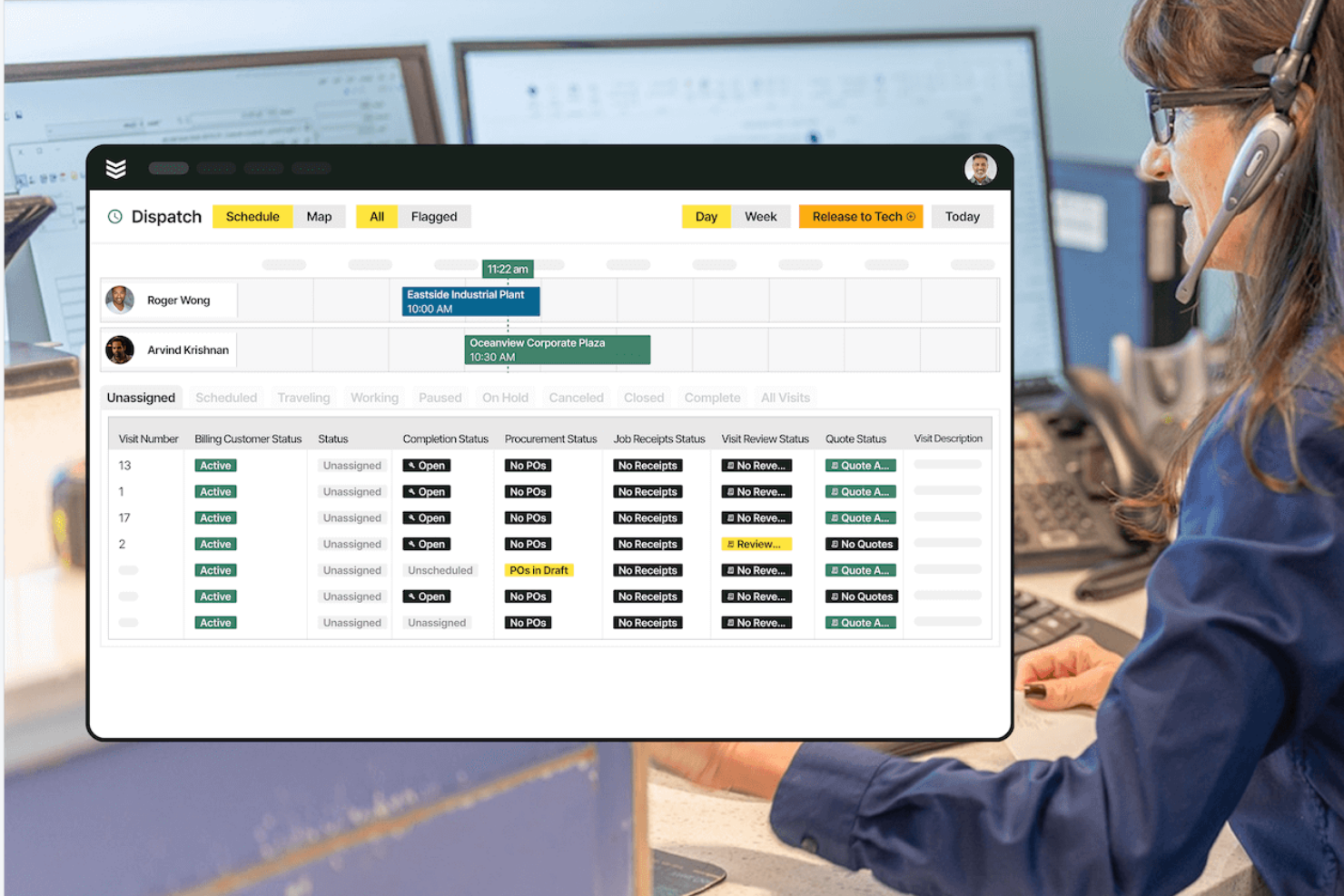
BuildOps es un software de gestión de servicios de campo y proyectos diseñado para que los contratistas comerciales supervisen las operaciones y simplifiquen los flujos de trabajo. Se utiliza principalmente en empresas de los sectores de climatización, fontanería y electricidad para gestionar tareas de servicio y proyectos de manera eficiente.
Por qué es una buena alternativa a Procore: BuildOps ofrece funciones como la asignación de servicios, la gestión de órdenes de trabajo y el mantenimiento preventivo, proporcionando a los contratistas comerciales un conjunto práctico de herramientas de gestión de proyectos diseñadas para las operaciones diarias de campo y oficina. Estas capacidades ayudan a los equipos a coordinar tareas, mantener los plazos de los proyectos y respaldar los flujos de trabajo de construcción en trabajos centrados en servicios. Con herramientas de colaboración integradas y un enfoque integral para gestionar llamadas de servicio y mantenimiento recurrente, responde a las necesidades específicas de la contratación comercial.
Funciones e integraciones destacadas:
Las funciones incluyen la gestión de inventario para realizar un seguimiento de piezas y suministros, la gestión de clientes para mejorar las interacciones con ellos y el acceso móvil para la colaboración del equipo desde cualquier lugar. También puedes utilizar herramientas de análisis para obtener información sobre el rendimiento empresarial y optimizar las operaciones.
Las integraciones incluyen QuickBooks, Sage Intacct, NetSuite y Viewpoint.
Pros and Cons
Pros:
- Adaptado para contratistas comerciales
- Gestión sólida de órdenes de trabajo
- Funciones eficaces de asignación de servicios
Cons:
- Centrado en sectores basados en servicios
- Limitado para proyectos a gran escala

Ideal para constructores de proyectos personalizados y empresas de remodelación
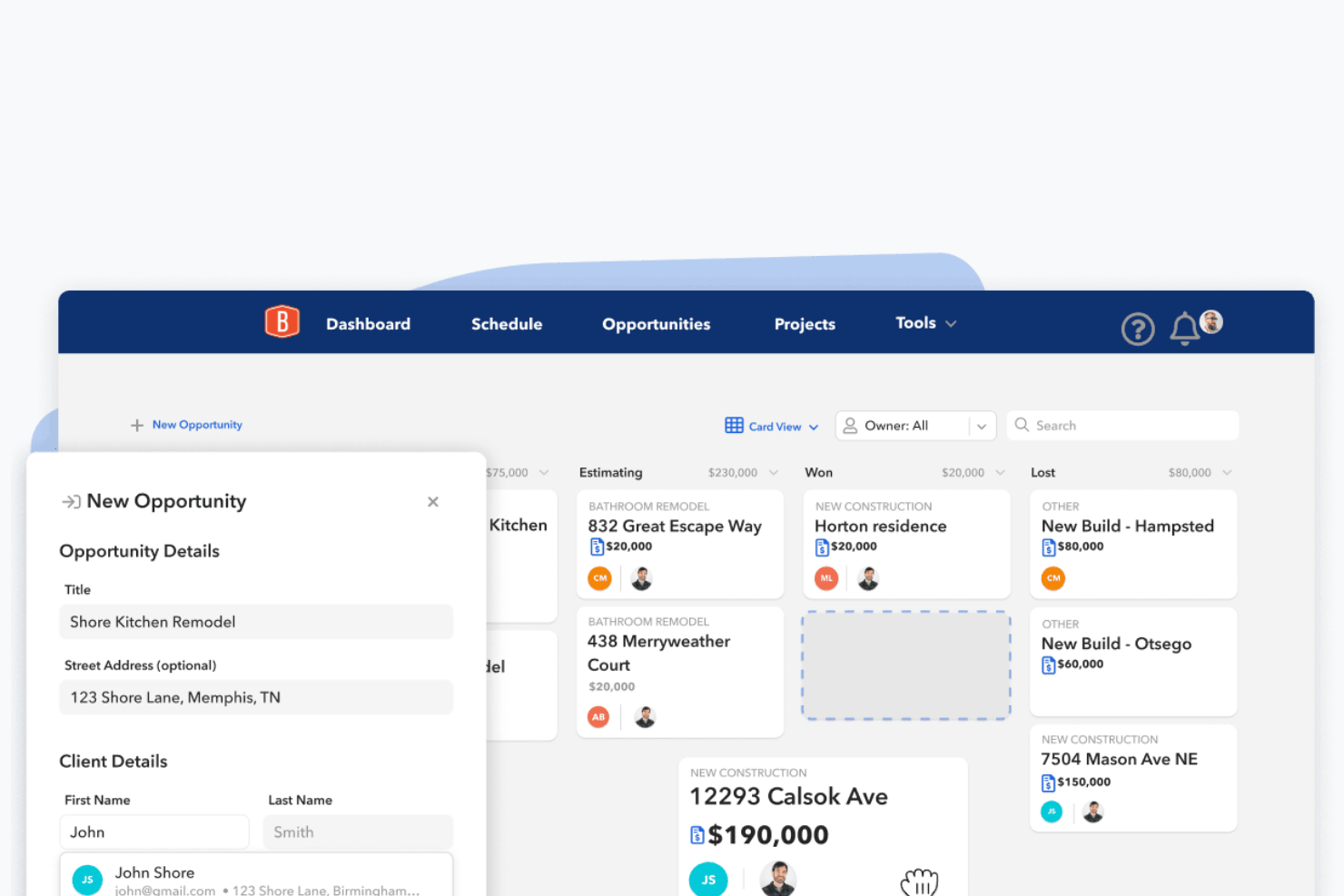
BuildBook es un software de gestión de la construcción diseñado para constructores de proyectos personalizados y empresas de remodelación, que permite gestionar proyectos y las comunicaciones con los clientes. Lo utilizan pequeñas y medianas empresas de construcción para aumentar la transparencia de los proyectos y la satisfacción de los clientes.
Por qué es una buena alternativa a Procore: BuildBook ayuda a los constructores a mantener la claridad, la coherencia y la satisfacción del cliente durante cada fase de un proyecto. Sus herramientas de comunicación, cronogramas de proyectos y registros diarios mantienen alineados a los equipos y a los propietarios, mientras que sus módulos específicos respaldan las necesidades organizativas de los constructores de proyectos personalizados. Estas capacidades proporcionan una mayor visibilidad del progreso del proyecto y pueden mejorar la rentabilidad general al reducir los malentendidos, los retrasos y el trabajo repetido.
Funciones e integraciones destacadas:
Las funciones incluyen el intercambio de fotografías para documentar visualmente el progreso del proyecto, herramientas presupuestarias para hacer un seguimiento de los gastos y gestión de tareas para garantizar la finalización puntual de las actividades del proyecto. También puedes utilizar funciones de colaboración en equipo para mantener a todos alineados e informados.
Las integraciones incluyen QuickBooks.
Pros and Cons
Pros:
- Compatibilidad con dispositivos móviles
- Potentes herramientas de comunicación con los clientes
- Documentación eficaz de proyectos
Cons:
- Opciones limitadas de generación de informes
- Pocas opciones de colaboración para los socios comerciales

Ideal para empresas de servicios para el hogar
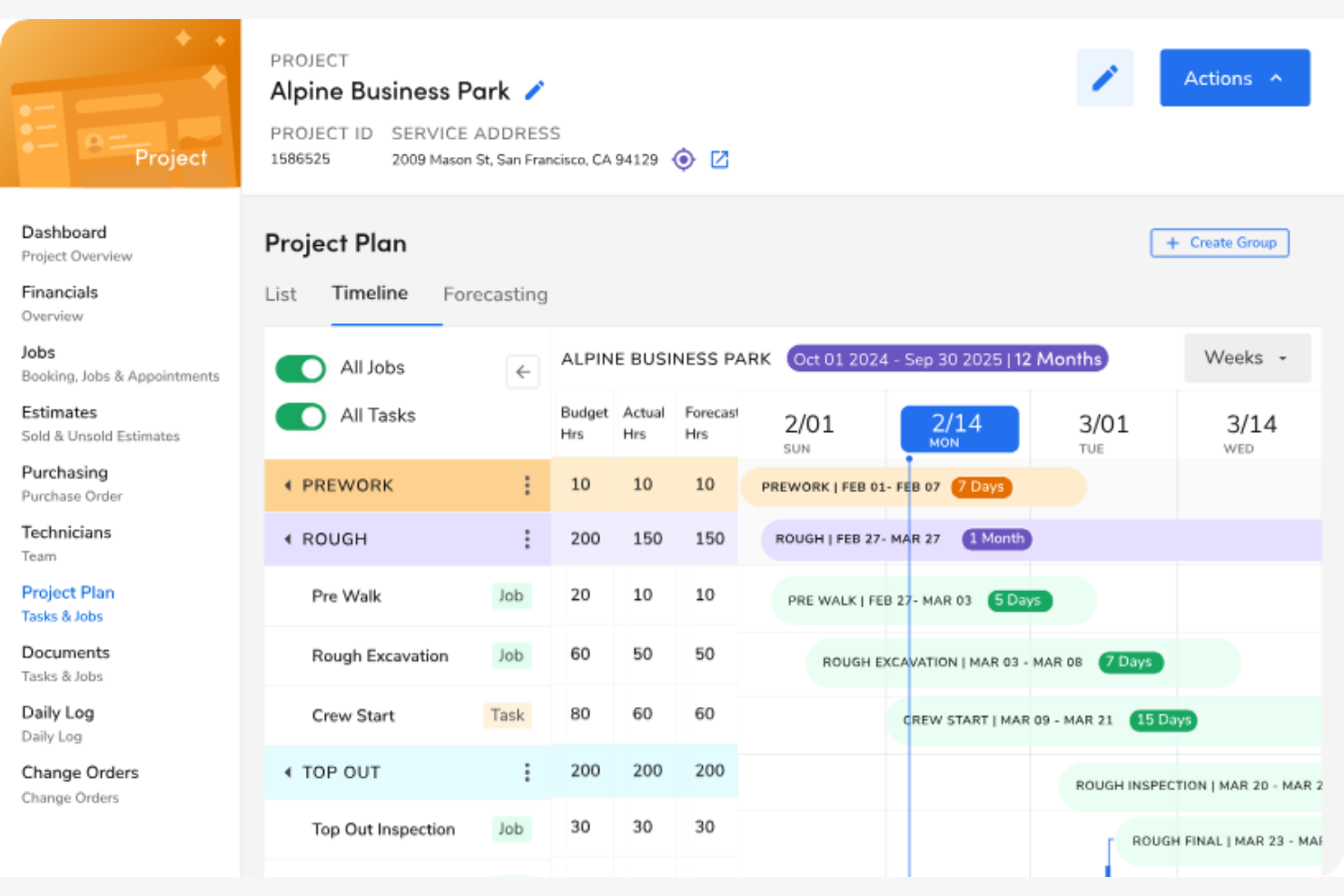
ServiceTitan es un software de gestión de servicios en campo diseñado para empresas de servicios para el hogar, como HVAC, fontanería y electricidad. Ayuda a los propietarios de negocios a gestionar eficazmente la programación, el despacho y las comunicaciones con los clientes.
Por qué es una buena alternativa a Procore: ServiceTitan ofrece funciones como acceso móvil, gestión de relaciones con los clientes y facturación, lo que lo hace ideal para gestionar las operaciones en campo. Estas herramientas ayudan a simplificar la programación de trabajos y a mejorar la satisfacción del cliente. Su enfoque en las industrias de servicios para el hogar lo diferencia de Procore, ya que proporciona soluciones adaptadas a pequeñas y medianas empresas de servicios.
Características destacadas & integraciones:
Las características incluyen herramientas de despacho para optimizar las operaciones en campo, automatización de marketing para aumentar la interacción con los clientes y herramientas de generación de informes para obtener información sobre el rendimiento del negocio. También puedes gestionar el inventario para asegurarte de tener las piezas adecuadas cuando las necesites.
Las integraciones incluyen Google, Sage Intacct y GreenSky.
Pros and Cons
Pros:
- Ideal para empresas de servicios para el hogar
- Herramientas eficaces de gestión de clientes
- Admite operaciones móviles en campo
Cons:
- Enfocado en industrias de servicios específicas
- Limitado para la construcción a gran escala

Ideal para el seguimiento sencillo de proyectos
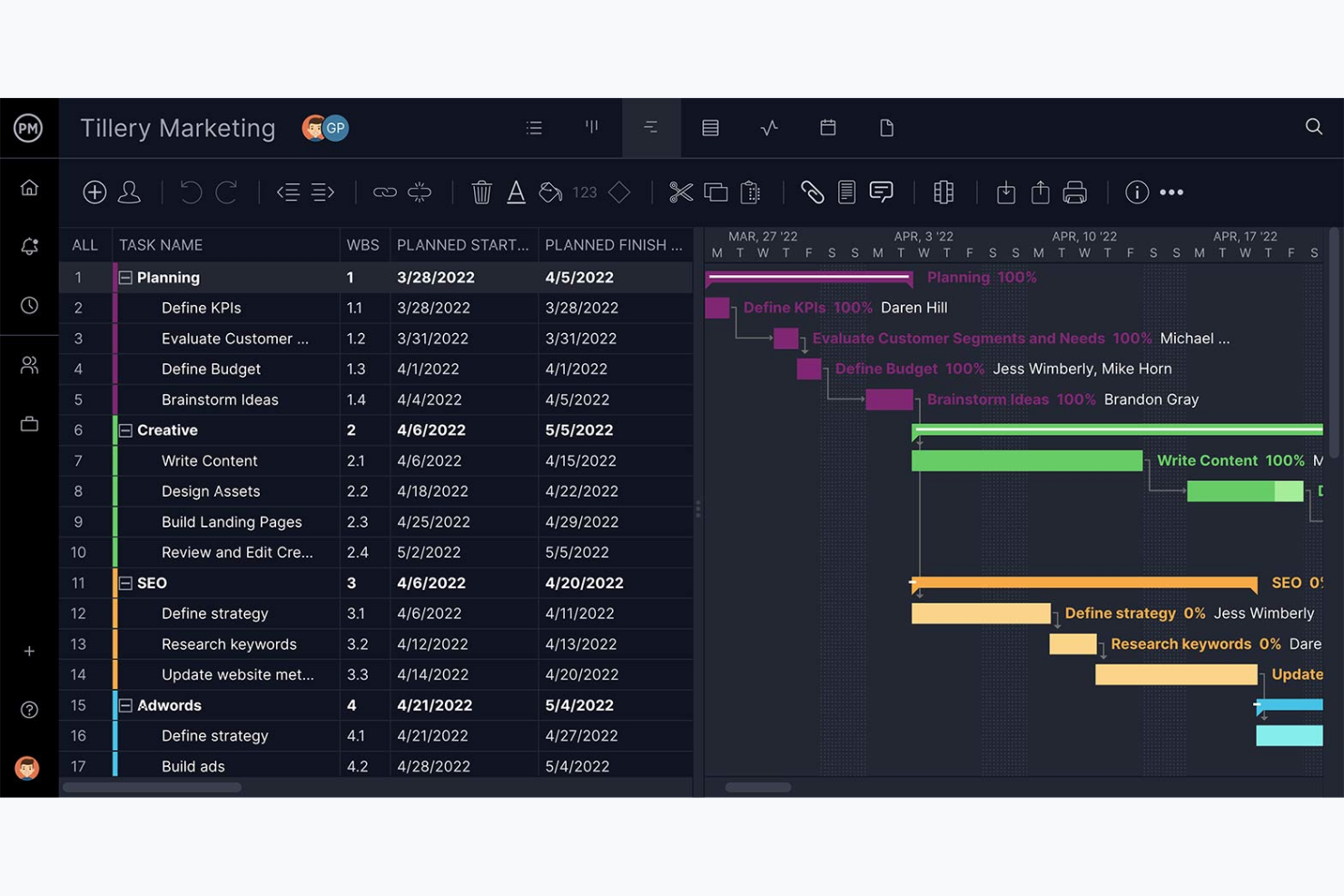
ProjectManager es un software de gestión de proyectos basado en la nube, diseñado para equipos que buscan gestionar tareas, proyectos y recursos de manera eficiente. Es ampliamente utilizado por gerentes de proyectos y líderes de equipos de diversas industrias para planificar, supervisar y elaborar informes sobre los proyectos.
Por qué es una buena alternativa a Procore: ProjectManager ofrece funciones como paneles en tiempo real, gestión de tareas y asignación de recursos en una interfaz fácil de usar, lo que ayuda a tu equipo a colaborar eficazmente en los sitios de trabajo. Estas herramientas proporcionan transparencia y garantizan que todos estén informados y alineados. Su enfoque en las actualizaciones en tiempo real y la colaboración ofrece un método interactivo para gestionar proyectos.
Funciones e integraciones destacadas:
Las funciones incluyen diagramas de Gantt para la planificación visual de proyectos, seguimiento del tiempo para supervisar las horas del proyecto y gestión de la carga de trabajo para equilibrar los esfuerzos del equipo. También puedes utilizar herramientas de generación de informes para obtener información y tomar decisiones basadas en datos.
Las integraciones incluyen Microsoft Project, Microsoft Excel, Google Drive, Dropbox, Slack, Trello, Jira, Salesforce y QuickBooks.
Pros and Cons
Pros:
- Actualizaciones de proyectos en tiempo real
- Gestión eficaz de tareas
- Admite la asignación de recursos
Cons:
- Puede resultar abrumador al principio
- Funcionalidad móvil limitada

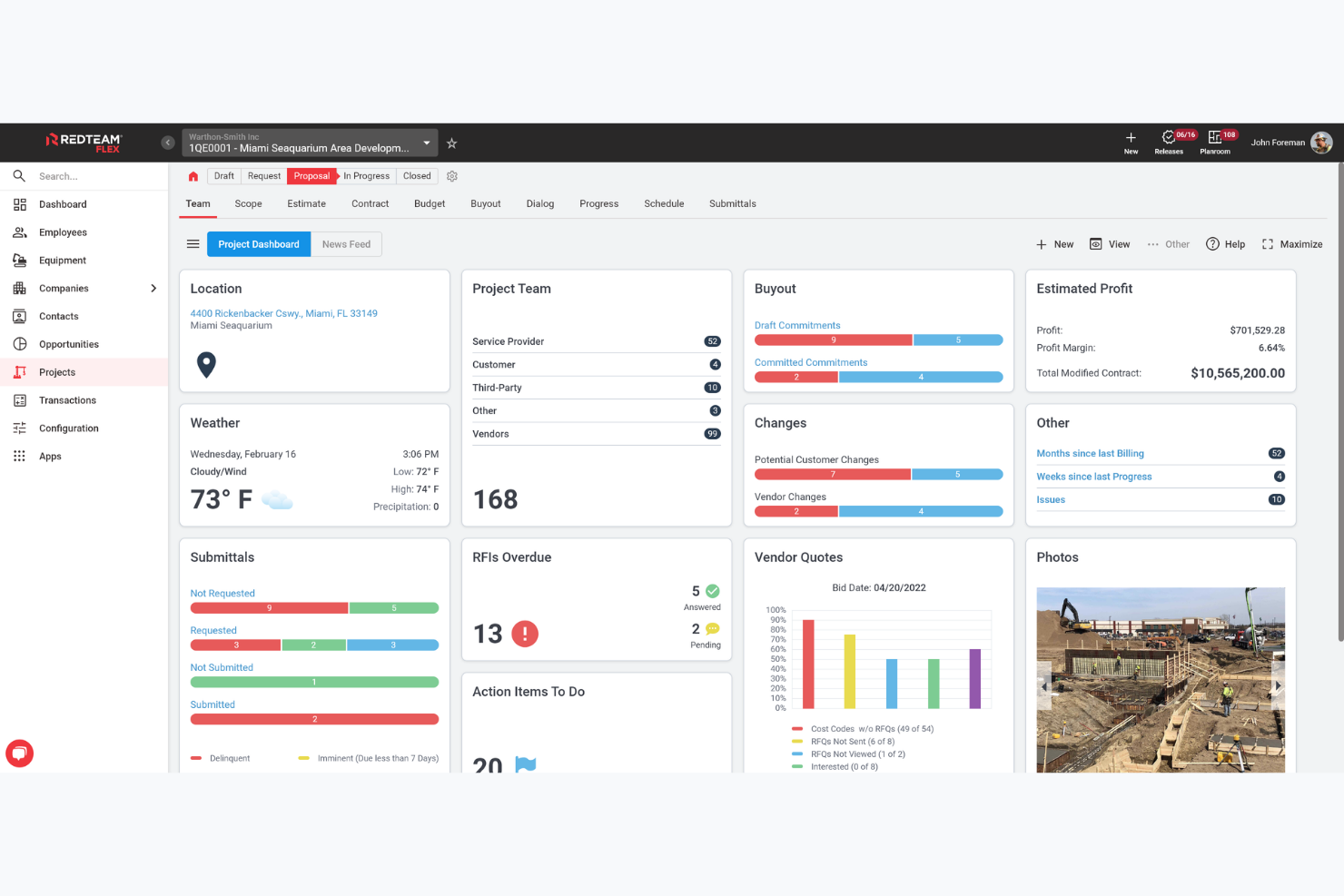
RedTeam es un software de gestión de la construcción diseñado para que los contratistas generales gestionen proyectos, desde la licitación hasta el cierre. Los equipos de construcción lo utilizan para gestionar proyectos, finanzas y colaboración.
Por qué es una buena alternativa a Procore: RedTeam ofrece funciones como gestión de licitaciones, gestión de contratos y gestión en campo, lo que lo hace ideal para contratistas generales. Proporciona herramientas para gestionar la comunicación con subcontratistas, el seguimiento de costes y la documentación del proyecto. Estas capacidades favorecen una ejecución eficiente de los proyectos y garantizan que todos los miembros del equipo estén alineados.
Funciones e integraciones destacadas:
Las funciones incluyen gestión de documentos para acceder fácilmente a los archivos del proyecto, cálculo de costes de trabajos para realizar un seguimiento de los gastos y gestión de órdenes de cambio para gestionar los ajustes del proyecto. También puedes utilizar herramientas de programación para planificar los plazos y garantizar la entrega puntual del proyecto.
Las integraciones incluyen QuickBooks, Sage 100 Contractor, Sage 300 CRE, Acumatica y Docusign.
Pros and Cons
Pros:
- Adaptado para contratistas generales
- Potentes herramientas de seguimiento de costes
- Gestión eficaz de licitaciones
Cons:
- Enfocado en la contratación general
- Flexibilidad limitada para otros sectores

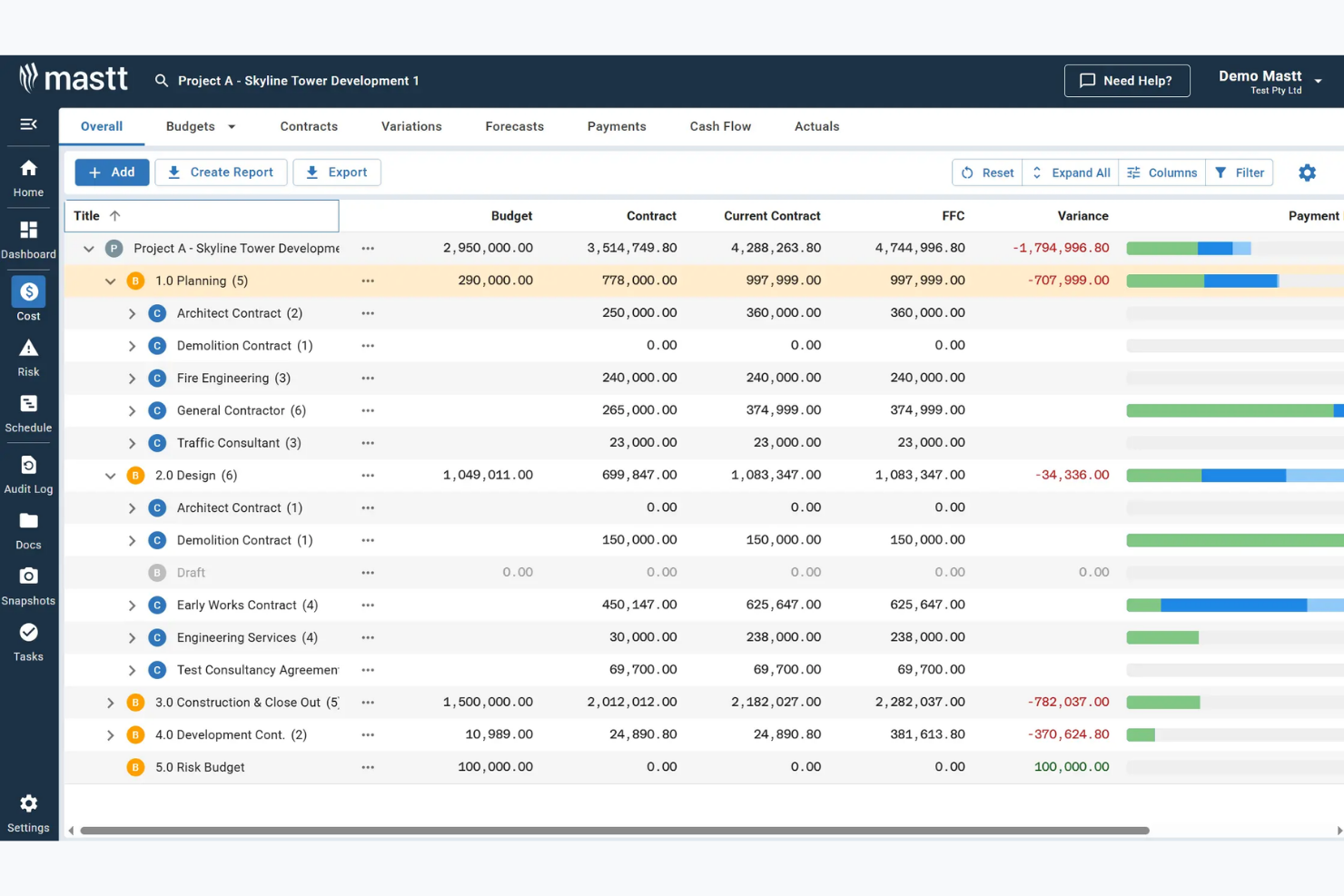
Mastt es un software de gestión de proyectos de construcción impulsado por IA, diseñado para mejorar la ejecución de proyectos y la eficiencia operativa. La utilizan principalmente propietarios de proyectos, promotores inmobiliarios y pequeñas empresas de sectores como la aviación y la atención sanitaria.
Por qué es una buena alternativa a Procore: Mastt ofrece entrada de datos impulsada por IA, paneles en tiempo real y controles de proyectos automatizados, que respaldan la gestión avanzada de proyectos y la toma de decisiones. Estas funciones te ayudan a gestionar los costes, los riesgos y los plazos de manera eficiente, proporcionando una visión clara de todos los proyectos. La plataforma se centra en herramientas de IA para el análisis de documentos y la revisión de contratos, y ofrece capacidades de gestión de datos.
Funciones e integraciones destacadas:
Las funciones incluyen presupuestos de proyectos, análisis de variaciones y previsión del flujo de caja. El software también proporciona gestión de cronogramas, gestión de riesgos y herramientas de IA para la revisión de documentos y pagos. Estas funciones ofrecen a tu equipo datos en tiempo real y capacidades simplificadas de gestión de proyectos.
Las integraciones no aparecen listadas públicamente.
Pros and Cons
Pros:
- Información de datos impulsada por IA
- Seguimiento de proyectos en tiempo real
- Gestión de riesgos simplificada
Cons:
- Información limitada sobre los precios públicos
- No hay información sobre las integraciones

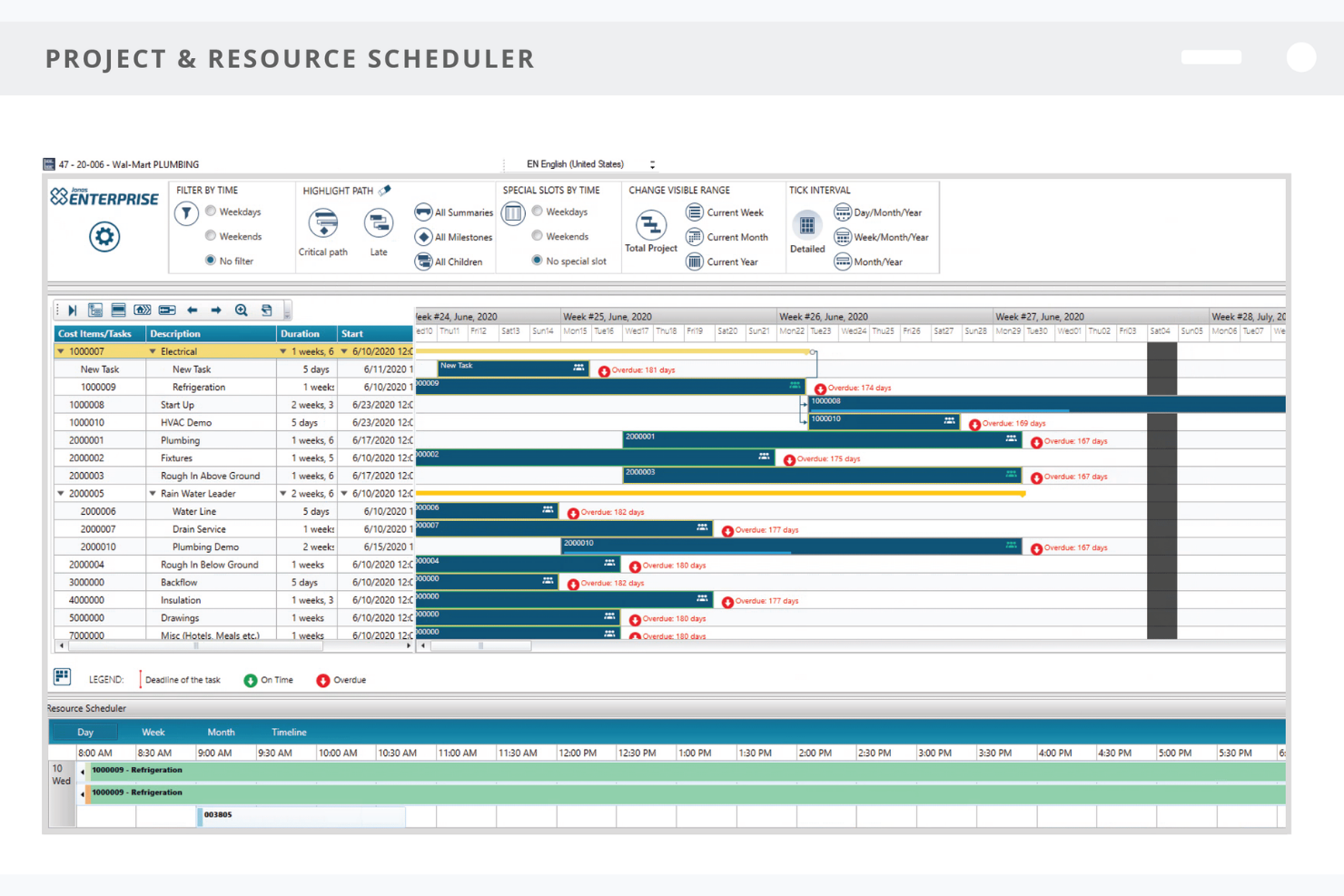
Jonas Construction Software es un software de gestión de la construcción diseñado para contratistas especializados, que proporciona herramientas para gestionar eficazmente la contabilidad, la gestión de proyectos y las operaciones de servicio. Las empresas contratistas lo utilizan para gestionar sus flujos de trabajo y mejorar la supervisión financiera.
Por qué es una buena alternativa a Procore: Jonas Construction Software proporciona herramientas para el cálculo de costes de trabajos, la gestión de servicios y el control de documentos, diseñadas para ayudar a los contratistas especializados a mejorar la supervisión de los proyectos. Los equipos pueden gestionar trabajos, realizar un seguimiento de los gastos y mantener una documentación detallada de los proyectos, incluidos los documentos de presentación, las mediciones y las anotaciones. Los permisos integrados garantizan que los miembros adecuados del equipo tengan acceso a los documentos críticos, lo que ayuda a mantener la precisión y la responsabilidad en todos los proyectos. Con funciones adaptadas a las necesidades de los contratistas especializados, Jonas Construction Software facilita operaciones eficientes y mejores resultados en los proyectos.
Características destacadas e integraciones:
Las características incluyen la gestión de equipos para realizar un seguimiento de los activos y mantenerlos, el procesamiento de nóminas para gestionar los pagos de los empleados y el seguimiento del inventario para controlar los niveles de existencias. También puede utilizar herramientas de generación de informes para obtener información sobre el rendimiento financiero y el progreso de los proyectos.
Las integraciones incluyen Trimble, QuickBid, Fleet Complete y Procore.
Pros and Cons
Pros:
- Adaptado a contratistas especializados
- Potentes capacidades para el cálculo de costes de trabajos
- Herramientas eficaces de gestión de servicios
Cons:
- Enfocado en mercados especializados
- Limitado para proyectos a gran escala


Wie ich Procore-Alternativen bewerte
Ich unterteile meine Bewertung in zwei Ebenen: das Grundniveau, das ein Tool erfüllen muss — Kostenkalkulation, Arbeitsfortschritt (WIP), Zahlungen an Subunternehmer — und die Unterscheidungsmerkmale, durch die sich eine Plattform von anderen abhebt.
Kernfunktionen (Grundvoraussetzungen für diese Liste)
Wenn ich Tools für meine Liste auswähle, bewerte ich jedes auf einer Skala von 0 (Funktion nicht vorhanden) bis 5 (herausragend in diesem Bereich) für jede der unten aufgeführten Kernfunktionen. Anschließend rechne ich die Gesamtpunktzahl des Tools in einen Prozentsatz um. Jedes Tool muss eine Gesamtpunktzahl von mindestens 65% erreichen, um für die Aufnahme in Betracht gezogen zu werden.
- Kostenkalkulation: Ich prüfe, ob eine Plattform die Kosten nach Arbeit, Material, Ausrüstung und Gemeinkosten anhand individueller Kostenstellen aufschlüsseln kann — nicht nur als Pauschalsumme des Projekts.
- Budget- und Nachtragsmanagement: Jedes Tool sollte ermöglichen, Nachträge mit Genehmigungs-Workflows zu verfolgen und deren unmittelbare Auswirkung auf den ursprünglichen Vertragswert zu sehen.
- Kreditoren-/Debitorenbuchhaltung & Zahlungen an Subunternehmer: Ich achte auf bauspezifische Kreditoren-/Debitoren-Workflows wie Sicherheitsleistungen (retainage), Einholung von Verzichtserklärungen (lien waivers) und Antragsbearbeitung für Zahlungen.
- WIP- & Finanzberichterstattung: Die Plattform sollte Arbeitsfortschrittspläne (WIP) und Berichte zum Fertigstellungsgrad automatisch generieren können, ohne dass das Team manuell mit Tabellenkalkulationen arbeiten muss.
- Integration in Buchhaltung/ERP: Ich bewerte, ob das Tool eine Synchronisation in beide Richtungen mit wichtigen Bausoftwares wie Sage 300 CRE, Viewpoint oder Acumatica bietet.
- Nachverfolgung von Verpflichtungen & Verträgen: Bestellungen und Subunternehmerverträge sollten direkt an Projektbudgets geknüpft sein, sodass gebundene Kosten sichtbar werden, bevor Rechnungen eingehen.
Wenn ich eine Liste mit Tools habe, die diese Kriterien erfüllen, schaue ich, was die einzelnen Plattformen besonders macht.
Unterscheidungsmerkmale (Was Anbieter voneinander abhebt)
So vergleiche und bewerte ich verschiedene Anbieter:
Herausragende Funktionen
Abrechnungen nach AIA-Standard sind wichtig, weil sie bestimmen, wie schnell Ihr Team Zahlungsanträge an Bauherren erstellen kann, ohne Daten manuell in Tabellen umzuwandeln. Ich schätze zudem den Support für mehrere Organisationseinheiten — Bauunternehmen mit mehreren GmbHs oder Joint Ventures müssen konsolidierte Abschlüsse erstellen können, ohne verschiedene Datenbanken zu jonglieren. An den Zahlungsplan und die Zahlungszyklen geknüpfte Liquiditätsplanung ist ein weiteres Unterscheidungsmerkmal — vor allem für CFOs, die zahlreiche aktive Projekte steuern.
Mehr als nur Funktionen
Die Tiefe der Integration ist entscheidend — ich prüfe, ob eine Plattform eine bidirektionale Synchronisation mit Ihrem bestehenden ERP oder Feldtools wie Procore selbst bietet, da Exporte nur in eine Richtung zu Abstimmungsproblemen am Monatsende führen können. Auch die Unterstützung bei der Implementierung spielt eine Rolle: Der Umstieg von einem Altsystem während eines laufenden Projekts kann die Abschlusszyklen ausbremsen, daher suche ich nach Anbietern mit spezialisierten Teams für die Einführung im Bauwesen. Schließlich spielt auch die Unternehmensgröße eine Rolle, denn eine für große Generalunternehmer konzipierte Plattform kann kleine Spezialbetriebe im Finanzwesen schnell überfordern.
¿Por qué buscar una alternativa a Procore?
Aunque Procore es una buena opción de software de gestión de la construcción, hay varias razones por las que algunos usuarios buscan soluciones alternativas. Puede que estés buscando una alternativa a Procore porque…
- Necesitas una opción más económica
- Tu equipo necesita funciones sin conexión
- Quieres una mejor integración con las herramientas existentes
- Tus proyectos son de menor escala
- Necesitas un software con una incorporación más sencilla
- Quieres recibir asistencia en distintos idiomas
Si alguno de estos puntos te resulta familiar, has llegado al lugar adecuado. Mi lista incluye varias opciones de software de gestión de la construcción más adecuadas para equipos que afrontan estos desafíos con Procore y buscan soluciones alternativas.
Funciones principales de Procore
Estas son algunas de las funciones principales de Procore, para ayudarte a contrastar y comparar lo que ofrecen las soluciones alternativas:
- Herramientas de preconstrucción: Incluye gestión de ofertas, BIM, estimación y precalificación para ayudar a tu equipo a prepararse de manera eficiente.
- Ejecución del proyecto: Ofrece una amplia gestión de proyectos y supervisión de la calidad y la seguridad para mantener los proyectos encaminados.
- Gestión de recursos: Proporciona herramientas para planificar, realizar un seguimiento y gestionar equipos con el fin de optimizar el uso de los recursos.
- Gestión financiera: Gestiona las finanzas del proyecto, las integraciones contables, la facturación y los pagos para mantener el control del presupuesto.
- Procore Helix: Una capa de IA que proporciona análisis e información adaptados al sector de la construcción, mejorando la toma de decisiones.
- Gestión de documentos: Centraliza los documentos del proyecto para facilitar el acceso y la colaboración entre tu equipo.
- Acceso móvil: Permite a los miembros del equipo acceder a la información del proyecto en el lugar de trabajo mediante dispositivos móviles, garantizando una conectividad constante.
- Herramientas de generación de informes: Proporciona informes personalizables para ayudarte a analizar el rendimiento del proyecto y tomar decisiones fundamentadas.
- Funciones de colaboración: Facilita la comunicación y el trabajo en equipo entre diferentes departamentos y partes interesadas.
- Gestión de la seguridad: Garantiza el cumplimiento de las normas de seguridad y ayuda a realizar un seguimiento eficaz de los incidentes y las inspecciones.