

Il software di contabilità blockchain utilizza la tecnologia dei registri decentralizzati per registrare, verificare e automatizzare le transazioni finanziarie, garantendo maggiore trasparenza e sicurezza. Per i CFO del settore tecnologico, ciò significa visibilità in tempo reale sulle transazioni, registri di controllo a prova di manomissione e una gestione semplificata degli asset in criptovaluta o delle operazioni finanziarie globali.
In quanto persona specializzata nel software digitale e con una formazione in ambito finanziario, trascorro molto tempo a testare nuovi strumenti che fanno progredire il settore. Ho aiutato i responsabili finanziari a trovare soluzioni intelligenti e sicure che rendono il loro lavoro più semplice e accurato. I sistemi basati su blockchain stanno trasformando il modo in cui vengono gestiti i dati finanziari e, per i CFO esperti di tecnologia, rappresentano una grande opportunità per rendere le operazioni a prova di futuro.
Tuttavia, con così tante nuove piattaforme che compaiono continuamente, può essere difficile capire quali meritino davvero il proprio tempo. Per questo ho deciso di esaminare e testare i migliori software di contabilità blockchain disponibili sul mercato. Che tu gestisca disponibilità in criptovaluta, abbia bisogno di registri di controllo immutabili o voglia semplificare i flussi di lavoro della finanza decentralizzata, questo elenco offre soluzioni pensate per la tua strategia finanziaria orientata al futuro.
Perché fidarsi dei nostri consigli sui software
6,700+
Reviews
20
Industry experts
16+
Evaluation factors
14
Years
Le nostre recensioni riflettono il nostro giudizio indipendente, non un discorso di vendita. Scopri come manteniamo la trasparenza.
Per questa guida, abbiamo valutato gli strumenti attraverso test pratici e ricerche indipendenti, assegnando un punteggio agli strumenti in base ai nostri criteri di selezione.
Le nostre recensioni riflettono il nostro giudizio editoriale umano, non un discorso di vendita.
Tabella comparativa dei software di contabilità blockchain
Questa tabella comparativa riassume i dettagli sui prezzi delle mie migliori selezioni di software di contabilità blockchain.
| Tool | Best For | Trial Info | Price | ||
|---|---|---|---|---|---|
| 1 | Ideale per dati finanziari in tempo reale | Demo gratuita disponibile | Prezzi su richiesta | Website | |
| 2 | Ideale per un'interfaccia facile da usare | Piano gratuito disponibile | Da $49 (acquisto una tantum) | Website | |
| 3 | Ideale per il monitoraggio dei portafogli | Prova gratuita di 7 giorni + piano gratis disponibile | Da $350/mese | Website | |
| 4 | Ideale per l'integrazione della dichiarazione fiscale | Demo gratuita disponibile | Da $50/anno | Website | |
| 5 | Ideale per la conformità fiscale delle criptovalute | Demo gratuita disponibile | Prezzo su richiesta | Website | |
| 6 | Ideale per la sicurezza di livello aziendale | Demo gratuita disponibile | Prezzo su richiesta | Website | |
| 7 | Ideale per commercialisti e professionisti fiscali | Demo gratuita disponibile | $49/user/year | Website | |
| 8 | Ideale per la riconciliazione automatizzata | Demo gratuita disponibile | Prezzo su richiesta | Website | |
| 9 | Ideale per il supporto multi-valuta | Demo gratuita disponibile | A partire da $99/mese | Website | |
| 10 | Ideale per la scalabilità a livello aziendale | Demo gratuita disponibile | Prezzi su richiesta | Website |


Recensioni dei migliori software di contabilità blockchain
Di seguito trovi le mie sintesi dettagliate dei migliori software di contabilità blockchain inclusi nella mia selezione. Le mie recensioni offrono un’analisi approfondita delle funzionalità principali, dei pro e contro, delle integrazioni e dei casi d’uso ideali di ogni strumento, per aiutarti a trovare quello più adatto a te.
 Ideale per dati finanziari in tempo reale
- Demo gratuita disponibile
- Prezzi su richiesta
Visit WebsiteCustomer Rating:4.6/5
SoftLedger integra contabilità crypto e fiat con visibilità in tempo reale. SoftLedger è un software di contabilità blockchain basato su cloud progettato per le aziende che necessitano di informazioni finanziarie in tempo reale. Si rivolge ai team finanziari che cercano una soluzione flessibile per gestire asset crypto e semplificare le operazioni finanziarie.
Perché ho scelto SoftLedger: SoftLedger offre dati finanziari in tempo reale, fondamentale per prendere decisioni informate. Con il suo libro mastro generale, è possibile visualizzare informazioni finanziarie aggiornate in qualsiasi momento. Inoltre, la funzione di gestione multi-entità permette di gestire più filiali senza difficoltà. Queste caratteristiche, unite al design API-first di SoftLedger, contribuiscono a garantire un flusso di dati senza interruzioni tra diverse applicazioni, migliorando l'efficienza del team.
Funzionalità e integrazioni principali:
Funzionalità includono la consolidazione automatizzata, che semplifica la gestione di più entità ottimizzando i dati finanziari. La reportistica personalizzabile del software permette inoltre al team di generare report su misura per esigenze aziendali specifiche. Inoltre, SoftLedger supporta transazioni in più valute, rendendolo adatto per operazioni su scala globale.
Integrazioni includono QuickBooks Online, Xero, Stripe, PayPal, Salesforce, Shopify, Amazon, NetSuite e Square.
Pros and Cons
Pros:
- Funzione di consolidamento automatizzato
- Opzioni di reportistica personalizzabili
- Accesso ai dati in tempo reale
Cons:
- Nessun supporto per app mobile
- Potrebbe richiedere una configurazione tecnica
Learn more about SoftLedger: Ideale per un'interfaccia facile da usare
- Piano gratuito disponibile
- Da $49 (acquisto una tantum)
Visit WebsiteCustomer Rating:4.6/5
CoinLedger offre importazione semplice, classificazione e report crittografici pronti per la dichiarazione fiscale. CoinLedger è un software di contabilità blockchain progettato per privati e aziende che gestiscono transazioni in criptovalute. Si rivolge a utenti che necessitano di una piattaforma intuitiva per la dichiarazione fiscale e la gestione finanziaria degli asset digitali.
Perché ho scelto CoinLedger: CoinLedger offre un design intuitivo che semplifica i complessi processi fiscali relativi alle criptovalute per utenti di ogni livello di esperienza. Presenta una dashboard chiara e facile da navigare che guida passo dopo passo nell'importazione delle transazioni da più wallet e exchange, nella loro corretta categorizzazione e nella generazione di rapporti fiscali con il minimo sforzo. Inoltre, segnali visivi, consigli contestuali e l'automazione delle attività di routine lo rendono accessibile anche agli utenti meno esperti, rendendo l'intero flusso di lavoro contabile blockchain meno intimidatorio e più efficiente.
Funzionalità principali & integrazioni:
Funzionalità includono calcoli fiscali automatizzati, che semplificano il processo di determinazione delle tue responsabilità fiscali. La piattaforma offre anche un tracker di portafoglio in tempo reale, mantenendo sempre aggiornato il rendimento dei tuoi asset. Inoltre, CoinLedger supporta l'importazione di file CSV, consentendo di caricare i dati delle transazioni in modo efficiente.
Integrazioni includono Coinbase, Binance, Kraken, Gemini, Bitfinex, Bittrex, Poloniex, Blockchain.com, Ledger e Trezor.
Pros and Cons
Pros:
- Monitoraggio del portafoglio in tempo reale
- Calcoli fiscali automatizzati
- Importazione transazioni facile
Cons:
- Potrebbe non essere adatto alle grandi aziende
- Funzionalità avanzate limitate
Learn more about CoinLedger: Ideale per il monitoraggio dei portafogli
- Prova gratuita di 7 giorni + piano gratis disponibile
- Da $350/mese

CoinTracker Enterprise offre monitoraggio di portafogli e automazione fiscale su larga scala. CoinTracker Enterprise è uno strumento di contabilità blockchain pensato per le aziende che gestiscono ampi portafogli cripto. È al servizio dei team finanziari che necessitano di un monitoraggio e di una reportistica accurata degli asset digitali per supportare le decisioni strategiche.
Perché ho scelto CoinTracker Enterprise: CoinTracker Enterprise offre un’infrastruttura solida di livello enterprise che aggrega senza soluzione di continuità i dati delle transazioni tra wallet, exchange e blockchain. Eccelle nella riconciliazione e classificazione automatica degli asset cripto, riducendo così al minimo gli interventi manuali e gli errori. Inoltre, la piattaforma consente il monitoraggio in tempo reale del costo d’acquisto, delle plusvalenze/minusvalenze e della performance degli asset, elementi essenziali per le aziende che necessitano di una reportistica finanziaria e di una conformità fiscale accurate.
Caratteristiche e integrazioni distintive:
Caratteristiche includono report fiscali dettagliati, ideali per aiutare il tuo team a orientarsi tra le normative fiscali complesse sulle criptovalute. La funzione di cronologia delle transazioni in tempo reale del software ti offre inoltre aggiornamenti continui sulle tue attività finanziarie. Inoltre, CoinTracker supporta la connessione a molteplici wallet, garantendo una gestione completa degli asset.
Integrazioni includono Coinbase, Binance, Kraken, Gemini, Bitfinex, Bittrex, Poloniex, Blockchain.com, Ledger e Trezor.
Pros and Cons
Pros:
- Report fiscali completi
- Dati di performance in tempo reale
- Sincronizzazione automatica con gli exchange
Cons:
- Problemi occasionali di sincronizzazione
- Opzioni di personalizzazione limitate
Learn more about CoinTracker Enterprise: Ideale per l'integrazione della dichiarazione fiscale
- Demo gratuita disponibile
- Da $50/anno

ZenLedger semplifica la dichiarazione fiscale per investitori e commercialisti nel settore crypto. ZenLedger è un software di contabilità blockchain pensato per privati e aziende che devono gestire gli obblighi fiscali legati alle criptovalute. Supporta commercialisti e team finanziari semplificando la dichiarazione dei redditi e garantendo la conformità alle normative.
Perché ho scelto ZenLedger: ZenLedger offre un approccio avanzato e automatizzato per riconciliare le transazioni in criptovaluta tra portafogli, exchange e blockchain. Aggrega senza problemi i dati provenienti da protocolli DeFi, NFT, staking ed exchange centralizzati, assicurando a professionisti fiscali e utenti individuali report accurati e pronti per l'IRS. Inoltre, le solide integrazioni del software con le principali piattaforme di dichiarazione dei redditi (come TurboTax e TaxAct) snelliscono il processo completo, riducendo il rischio di errori manuali e risparmiando tempo.
Funzionalità e integrazioni distintive:
Funzionalità includono un tracker di portafoglio che offre una panoramica dell'andamento dei tuoi asset in criptovaluta. Lo strumento di tax-loss harvesting identifica inoltre opportunità per ridurre le imposte da pagare. Inoltre, il calcolatore delle plusvalenze semplifica il calcolo degli obblighi fiscali.
Integrazioni includono Coinbase, Binance, Kraken, Gemini, Bitfinex, Bittrex, Poloniex, Blockchain.com, Ledger e Trezor.
Pros and Cons
Pros:
- Strumento di tax-loss harvesting
- Tracciabilità chiara delle verifiche fiscali
- Generazione automatica dei moduli fiscali
Cons:
- Potrebbe richiedere conoscenze tecniche
- Opzioni di personalizzazione limitate
Learn more about ZenLedger: Ideale per la conformità fiscale delle criptovalute
- Demo gratuita disponibile
- Prezzo su richiesta

Bitwave automatizza la contabilità, la fiscalità e i flussi di lavoro di audit sulle criptovalute per le aziende. Bitwave è un software di contabilità blockchain progettato per le aziende che gestiscono criptovalute. Serve principalmente team crypto ad alto volume, exchange, creatori di NFT e istituzioni automatizzando le operazioni di back-office e migliorando la gestione dei dati.
Perché ho scelto Bitwave: Bitwave è specializzato nella conformità fiscale crypto, rendendolo ideale per le aziende focalizzate sul rispetto delle normative. Offre funzionalità come pagamenti in stablecoin e reportistica pronta per l'audit, che supportano gli sforzi di adeguamento fiscale. Inoltre, la funzione di contabilità on-chain garantisce trasparenza nella documentazione finanziaria, mentre la capacità di fusione dei dati consente una perfetta integrazione con diversi ERP, offrendo una visione completa dei dati finanziari.
Caratteristiche e integrazioni principali:
Caratteristiche: sincronizzazione in tempo reale delle attività blockchain e categorizzazione delle transazioni. Supporta anche flussi di riconciliazione avanzata per garantire l'accuratezza su wallet e registri. Inoltre, i controlli di accesso basati sui ruoli e i processi di approvazione personalizzabili migliorano ulteriormente la governance e il controllo operativo per i team finanziari che lavorano con asset digitali.
Integrazioni: includono QuickBooks, Oracle NetSuite, Sage Intacct, Xero, Workday e opzioni API per configurazioni personalizzate.
Pros and Cons
Pros:
- Integrazioni dati personalizzabili
- Preparazione alla conformità per esigenze normative
- Le capacità di automazione aumentano l'efficienza
Cons:
- Opzioni di supporto utenti limitate
- Richiede conoscenze tecniche
Learn more about Bitwave: Ideale per la sicurezza di livello aziendale
- Demo gratuita disponibile
- Prezzo su richiesta

Cryptio traccia le transazioni di asset digitali con strumenti di compliance di livello enterprise. Cryptio è una soluzione software di contabilità blockchain pensata per le aziende che necessitano di una rendicontazione finanziaria sicura e conforme alle normative. È rivolta ai team finanziari che gestiscono asset crypto complessi e richiedono elevati livelli di protezione dei dati.
Perché ho scelto Cryptio: La sicurezza di livello aziendale è fondamentale per salvaguardare i dati finanziari, e Cryptio eccelle in questo aspetto. La piattaforma offre funzionalità avanzate di crittografia e conformità, garantendo che tutte le transazioni siano sicure. Le sue capacità di audit trail forniscono inoltre trasparenza e tracciabilità dei registri finanziari, rafforzando ulteriormente la protezione dei dati. Cryptio supporta anche molteplici tipologie di asset, risultando adatto a portafogli crypto diversificati.
Funzionalità e integrazioni principali:
Funzionalità includono report personalizzabili, che consentono al tuo team di generare insight finanziari precisi su misura per le esigenze aziendali. Il dashboard in tempo reale offre inoltre accesso immediato a metriche finanziarie, migliorando i processi decisionali. Inoltre, Cryptio supporta la categorizzazione automatica delle transazioni, riducendo gli errori di inserimento manuale.
Integrazioni includono QuickBooks, Xero, Sage Intacct, Oracle NetSuite, Microsoft Dynamics 365, SAP, Coinbase, Kraken e Bitfinex.
Pros and Cons
Pros:
- Opzioni di reportistica personalizzabili
- Supporta diverse tipologie di asset
- Elevato livello di crittografia dei dati
Cons:
- Occasionali rallentamenti delle prestazioni
- Funzionalità mobile limitate
Learn more about Cryptio: Ideale per commercialisti e professionisti fiscali
- Demo gratuita disponibile
- $49/user/year
Visit WebsiteCustomer Rating:4.5/5
Ledgible collega i sistemi contabili con la riconciliazione delle transazioni blockchain. Ledgible è un software di contabilità blockchain progettato per commercialisti e professionisti fiscali che gestiscono portafogli di criptovalute. Aiuta i team finanziari a tracciare le transazioni crypto e a garantire la conformità alle normative fiscali.
Perché ho scelto Ledgible: Ledgible offre funzionalità costruite su misura per le esigenze degli esperti finanziari che lavorano con asset digitali. Fornisce sicurezza certificata AICPA SOC 1 & 2 Type 2, reportistica fiscale dettagliata e strumenti di riconciliazione in tempo reale che si allineano alle pratiche contabili tradizionali, consentendo ai professionisti di integrare senza problemi i dati crypto nei flussi di lavoro esistenti. Inoltre, il tracciamento avanzato, la trasparenza della traccia di controllo e la scalabilità rendono il software particolarmente adatto a studi che gestiscono più clienti o volumi elevati di transazioni nel settore delle criptovalute.
Funzionalità e integrazioni principali:
Funzionalità includono avanzate capacità di reporting che ti aiutano a generare approfondimenti finanziari dettagliati. La piattaforma offre una dashboard intuitiva per una facile navigazione e gestione dei dati. Inoltre, supporta il monitoraggio delle transazioni in tempo reale, assicurando che i tuoi dati finanziari siano sempre aggiornati.
Integrazioni includono QuickBooks, Xero, Sage Intacct, Oracle NetSuite, TurboTax, TaxAct, Coinbase, Binance, Kraken e Gemini.
Pros and Cons
Pros:
- Monitoraggio delle transazioni in tempo reale
- Documentazione pronta per l'audit
- Monitoraggio dettagliato delle transazioni
Cons:
- Ritardi occasionali negli aggiornamenti
- Richiede tempo di configurazione iniziale
Learn more about Ledgible: Ideale per la riconciliazione automatizzata
- Demo gratuita disponibile
- Prezzo su richiesta

Integral sincronizza wallet ed exchange per registrazioni contabili crypto automatizzate. Integral è un software di contabilità su blockchain progettato per le aziende che necessitano della riconciliazione automatica dei propri dati finanziari. È pensato principalmente per i team finanziari che cercano efficienza nella gestione delle transazioni in criptovaluta e l’accuratezza dei registri contabili.
Perché ho scelto Integral: Integral offre un’integrazione fluida con dati on-chain e capacità di sincronizzazione in tempo reale. È specializzato nell’acquisizione delle transazioni direttamente dalle reti blockchain e dagli exchange crypto, assicurando che tutti i dati finanziari rimangano precisi e aggiornati senza necessità di immissione manuale. Questo approccio automatizzato non solo riduce il rischio di errore umano ma velocizza considerevolmente il processo di riconciliazione.
Funzionalità e integrazioni principali:
Funzionalità includono flussi di lavoro personalizzabili che permettono al tuo team di adattare i processi alle esigenze specifiche dell’azienda. La piattaforma offre inoltre analisi approfondite, fornendo una panoramica immediata sulle performance finanziarie. Inoltre, il supporto multi-valuta ti permette di gestire agevolmente transazioni in diverse valute.
Integrazioni includono QuickBooks, Xero, Sage, Oracle NetSuite, SAP, Microsoft Dynamics, Stripe, PayPal, Coinbase e Kraken.
Pros and Cons
Pros:
- Flussi di lavoro personalizzabili
- Matching delle transazioni in tempo reale
- Riconciliazione automatica efficiente
Cons:
- Richiede competenze tecniche
- Alto costo iniziale di configurazione
Learn more about Integral: Ideale per il supporto multi-valuta
- Demo gratuita disponibile
- A partire da $99/mese

Cryptoworth supporta la rendicontazione multi-entità con registri cripto pronti per l’audit. Cryptoworth è una piattaforma di contabilità blockchain pensata per le aziende che gestiscono più criptovalute. È destinata ai team finanziari che necessitano di una gestione efficiente di vari asset digitali e di una rendicontazione finanziaria completa.
Perché ho scelto Cryptoworth: Cryptoworth si distingue per il supporto multi-valuta, sincronizzando e convertendo automaticamente migliaia di criptovalute e valute fiat tra wallet, exchange e blockchain in un unico registro contabile pronto per l’audit. Il suo avanzato motore di riconciliazione garantisce una contabilità precisa e in tempo reale conforme agli standard globali, rendendolo ideale per le aziende che gestiscono portafogli cripto diversificati e transfrontalieri senza il fastidio del lavoro manuale.
Funzionalità e integrazioni principali:
Funzionalità includono la riconciliazione automatica, che riduce gli errori di inserimento manuale e fa risparmiare tempo. La dashboard personalizzabile della piattaforma consente inoltre di adattare le visualizzazioni alle esigenze del team, offrendo chiarezza nell’analisi dei dati. In aggiunta, la funzionalità di rendicontazione fiscale semplifica la conformità ai vari requisiti normativi.
Integrazioni disponibili con QuickBooks, Xero, Sage, Oracle NetSuite, SAP, Microsoft Dynamics, Coinbase, Binance, Kraken e Bitfinex.
Pros and Cons
Pros:
- Dashboard personalizzabile
- Tassi di conversione in tempo reale
- Storico dettagliato delle transazioni
Cons:
- Funzionalità mobile limitate
- Configurazione iniziale complessa
Learn more about Cryptoworth: Ideale per la scalabilità a livello aziendale
- Demo gratuita disponibile
- Prezzi su richiesta
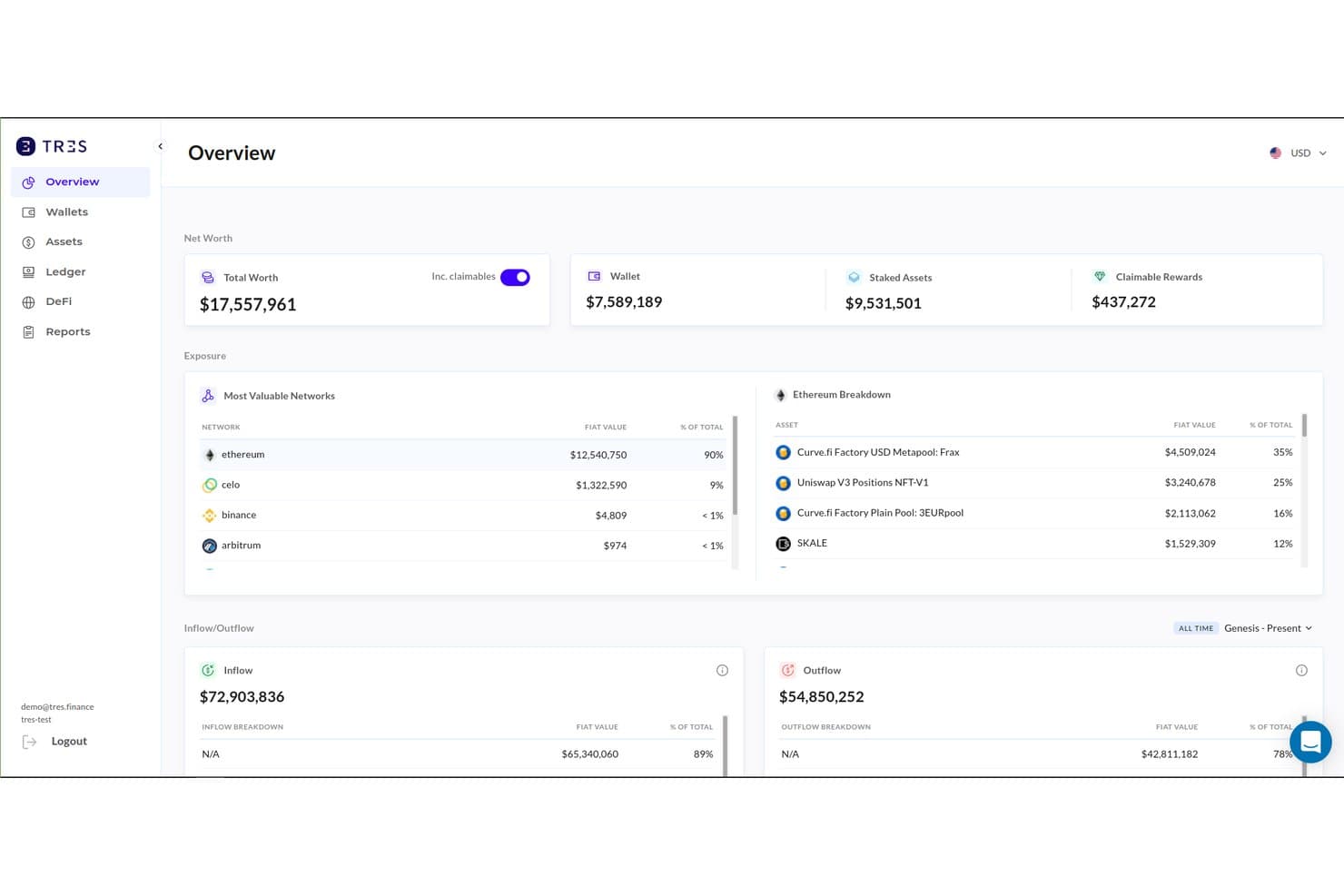
TRES Finance offre agli utenti una panoramica completa del patrimonio netto e del portafoglio. TRES FinOS è una piattaforma di contabilità per criptovalute che automatizza la gestione dei libri mastri secondari, la riconciliazione multichain, il monitoraggio della base di costo e la sincronizzazione con gli ERP su oltre 220 reti blockchain.
Per chi è più adatto TRES FinOS?
TRES FinOS è progettato per i team finanziari istituzionali, come piattaforme di scambio di criptovalute, depositari e fondi di attività digitali, che devono riconciliare migliaia di portafogli su centinaia di blockchain su larga scala.
Perché ho scelto TRES FinOS
TRES FinOS si è guadagnato un posto nella mia lista ristretta perché è realmente progettato per la scala richiesta dalle operazioni istituzionali sulle attività digitali. Parliamo di oltre 220 reti blockchain, più di 100 milioni di transazioni elaborate e un motore di riconciliazione a cinque dimensioni che confronta in un'unica operazione gli importi dei token, i valori in valuta fiat, il numero di transazioni, la base di costo e i saldi finali. Apprezzo anche il report di controllo della pre-sincronizzazione ERP, che rileva le voci del piano dei conti non mappate e i dati mancanti sulla base di costo prima che qualsiasi elemento venga registrato nel libro mastro generale: è il tipo di livello di governance che conta quando si gestiscono migliaia di portafogli distribuiti tra depositari, posizioni DeFi e piattaforme di scambio.
Funzionalità principali di TRES FinOS
- Attestazione della prova dei fondi: Riconcilia i saldi di milioni di portafogli dei clienti per generare report di attestazione pronti per revisori e autorità di regolamentazione.
- Report di controllo della pre-sincronizzazione ERP: Segnala le voci del piano dei conti non mappate, i valori in valuta fiat mancanti e i dati mancanti sulla base di costo prima che le registrazioni contabili vengano inserite nel libro mastro generale.
- Assistente IA TRES Analyst: Risponde a domande in linguaggio naturale sui saldi storici, sull'esposizione ai token e sulla spesa per le commissioni del gas, e può classificare le transazioni o attivare direttamente le sincronizzazioni ERP.
- Centro avvisi: Fornisce avvisi in tempo reale su anomalie ed eccezioni, inviandoli direttamente ai flussi di lavoro finanziari esistenti.
Integrazioni di TRES FinOS
TRES FinOS dispone di tre integrazioni native documentate: QuickBooks, NetSuite e Xero. Il collegamento ERP universale supporta connessioni personalizzate a SAP, Oracle, Workday e Microsoft Dynamics, con API disponibili per integrazioni dati personalizzate.
Pros and Cons
Pros:
- Supporta oltre 220 reti, incluse le reti di livello 2 e Cosmos
- Riconciliazione a cinque dimensioni con tracce pronte per la revisione
- Supporto completo per la rivalutazione della base di costo
Cons:
- Nessun prezzo pubblico né registrazione autonoma
- Presenza limitata di recensioni indipendenti online
Learn more about TRES Finos:
Altri software di contabilità blockchain
Ecco alcune ulteriori opzioni di software di contabilità blockchain che non sono state incluse nella mia selezione, ma che vale comunque la pena prendere in considerazione:
Come valuto i software di contabilità blockchain
Divido la mia valutazione in due livelli: i requisiti di base che uno strumento deve soddisfare—come l'importazione di wallet multi-chain e la sincronizzazione con il libro mastro generale (GL)—e i fattori differenzianti che distinguono una piattaforma dall'altra.
Funzionalità di base (Requisiti indispensabili per questa lista)
Quando seleziono gli strumenti per la mia lista, li valuto ciascuno su una scala da 0 (la funzionalità non è presente) a 5 (eccelle in quest'area) per ogni funzionalità di base elencata di seguito. In seguito, calcolo il punteggio totale dello strumento in percentuale. Ogni strumento deve raggiungere un punteggio minimo totale del 55% per essere preso in considerazione per l'inclusione.
- Integrazione wallet multi-chain: Verifico il numero di chain e tipi di wallet supportati nativamente da uno strumento, da Ethereum e Solana fino a L2 come Arbitrum e Base.
- Sotto-libro criptovalute: Ogni piattaforma dovrebbe mantenere dati di costo per lotto, fair value e svalutazione per ogni token invece di limitarsi ai soli saldi dei wallet.
- Motore per costo base e plusvalenze/minusvalenze: Valuto quali metodi contabili sono supportati—FIFO, LIFO, WAC, ID specifico—e se le plus/minusvalenze non realizzate sono tracciate insieme a quelle realizzate.
- Sincronizzazione GL/ERP: La possibilità di inviare scritture contabili a sistemi come NetSuite, QuickBooks o Xero è importante, quindi cerco una sincronizzazione bidirezionale nativa invece delle sole esportazioni CSV.
- Reportistica e conformità specifica per le crypto: Lo strumento dovrebbe generare report conformi a GAAP e IFRS con tracciabilità per audit e output di moduli fiscali come l'IRS Form 8949.
- Classificazione e riconciliazione delle transazioni: Analizzo come la piattaforma categorizza automaticamente swap, ricompense di staking, rendimenti DeFi e attività di bridge rispetto ai saldi dei wallet.
Dopo aver raccolto una lista di strumenti che soddisfano tali criteri, considero ciò che distingue ciascuna piattaforma.
Fattori differenzianti (Cosa distingue i fornitori)
Ecco come confronto e metto in contrasto diversi fornitori:
Funzionalità distintive
Le attività DeFi e di staking creano alcuni dei casi contabili più complessi—posizioni in liquidity pool, ricompense di yield farming, token con rebasing—quindi valuto quanto bene ogni strumento gestisce il riconoscimento dei proventi e il costo base per queste transazioni. L'automazione della valutazione al fair value e delle svalutazioni è altrettanto importante, soprattutto da quando il FASB ASU 2023-08 ha cambiato il modo in cui le organizzazioni misurano gli asset crypto. Per i team che gestiscono wallet su più società, la consolidazione multi-entità con il tracciamento dei trasferimenti intercompany può far risparmiare ore durante la chiusura.
Oltre le funzionalità
La sicurezza è un aspetto fondamentale: verifico se le piattaforme utilizzano connessioni di sola lettura ai wallet in modo che le chiavi private non escano mai dalla tua custodia. Anche la scalabilità conta più di quanto si pensi; un fondo che elabora milioni di transazioni on-chain ogni mese ha bisogno di una piattaforma affidabile durante la chiusura mensile. Valuto anche il supporto all'implementazione, in particolare se il fornitore offre il recupero di dati storici e il mapping del piano dei conti, poiché la migrazione di anni di attività crypto in un nuovo sistema rappresenta uno degli ostacoli maggiori che riscontro nell'adozione.
Come scegliere il software di contabilità blockchain
È facile perdersi in lunghi elenchi di funzionalità e strutture di prezzo complesse. Per aiutarti a rimanere concentrato mentre affronti il tuo specifico processo di selezione del software, ecco una lista di controllo dei fattori da tenere a mente:
| Fattore | Cosa considerare |
| Scalabilità | Il software può crescere insieme alla tua azienda? Considera i limiti relativi al volume delle transazioni e se lo strumento è in grado di gestire una maggiore quantità di dati con l'espansione delle tue attività. |
| Integrazioni | Il software si integra con i tuoi sistemi esistenti, come ERP o CRM? Verifica la compatibilità con gli strumenti più diffusi e la disponibilità di API per integrazioni personalizzate. |
| Personalizzazione | Puoi adattare il software ai tuoi flussi di lavoro? Cerca opzioni per modificare report, dashboard e autorizzazioni degli utenti in base alle tue esigenze specifiche. |
| Facilità d'uso | Lo strumento è intuitivo per il tuo team? Valuta l'interfaccia utente e la navigazione. Considera l'accesso a una versione di prova per valutare l'esperienza utente prima di impegnarti. |
| Implementazione e onboarding | Quanto velocemente puoi iniziare a utilizzarlo? Valuta la disponibilità di risorse formative, dell'assistenza durante la configurazione e la facilità di migrazione dei dati dal sistema attuale. |
| Costo | Qual è il costo totale di proprietà? Confronta i canoni di abbonamento, i costi aggiuntivi per integrazioni o utenti e l'eventuale disponibilità di sconti per la fatturazione annuale. |
| Misure di sicurezza | I tuoi dati e le tue transazioni sono al sicuro? Valuta gli standard di crittografia, i controlli degli accessi e la conformità alle normative di settore come il GDPR o l'HIPAA. |
| Requisiti di conformità | Lo strumento soddisfa le tue esigenze normative? Assicurati che supporti i moduli fiscali e gli standard di rendicontazione necessari e specifici per il tuo settore e la tua area geografica. |
Che cos'è il software di contabilità blockchain?
Il software di contabilità blockchain è una soluzione digitale progettata per gestire e monitorare le transazioni in criptovalute e i registri finanziari. Questi strumenti sono generalmente utilizzati da commercialisti, team finanziari e aziende che operano con asset digitali, offrendo trasparenza e conformità alle normative finanziarie.
In genere, il software di contabilità blockchain include funzionalità chiave come il monitoraggio delle transazioni, la rendicontazione fiscale e i registri di audit, per contribuire a una gestione finanziaria accurata e alla conformità normativa. Nel complesso, questi strumenti consentono agli utenti di gestire in modo efficiente transazioni e rendicontazioni complesse relative alle criptovalute.
Funzionalità del software di contabilità blockchain
Quando scegli un software di contabilità blockchain, presta attenzione alle seguenti funzionalità chiave:
- Monitoraggio delle transazioni: Registra e monitora automaticamente tutte le transazioni in criptovalute per garantire accuratezza e trasparenza nei registri finanziari.
- Rendicontazione fiscale: Genera i moduli e i report fiscali necessari, semplificando la conformità ai requisiti normativi e agevolando il processo di dichiarazione dei redditi.
- Registri di audit: Fornisce una cronologia dettagliata di tutte le transazioni finanziarie, migliorando la responsabilità e facilitando le verifiche.
- Supporto per più valute: Gestisce transazioni in diverse criptovalute, risultando adatto alle aziende che operano con più valute digitali.
- Analisi dei dati in tempo reale: Offre informazioni sulle prestazioni finanziarie basate su dati aggiornati, favorendo decisioni consapevoli.
- Riconciliazione automatizzata: Riduce gli errori manuali abbinando automaticamente le transazioni e garantendo la coerenza dei registri finanziari.
- Dashboard personalizzabili: Consente agli utenti di personalizzare la propria interfaccia, facilitando la concentrazione sui dati e sulle metriche più rilevanti.
- Funzionalità di integrazione: Si collega ai sistemi esistenti, come ERP o CRM, garantendo un flusso di dati uniforme tra le piattaforme.
- Misure di sicurezza: Implementa la crittografia e i controlli degli accessi per proteggere i dati finanziari sensibili e garantire la conformità agli standard di settore.
- Sistema di fatturazione: Facilita l'invio e la ricezione di pagamenti in criptovalute, ottimizzando le operazioni finanziarie delle aziende che operano con asset digitali.
Vantaggi del software di contabilità blockchain
L'implementazione di un software di contabilità blockchain offre diversi vantaggi al tuo team e alla tua azienda. Ecco alcuni dei vantaggi di cui puoi usufruire:
- Trasparenza avanzata: Grazie a registri di controllo dettagliati, ottieni una visibilità chiara su tutte le transazioni, migliorando fiducia e responsabilità.
- Conformità migliorata: La rendicontazione fiscale automatizzata e le funzionalità normative garantiscono che la tua attività rispetti facilmente le normative finanziarie.
- Risparmio di tempo: La riconciliazione automatizzata e il monitoraggio delle transazioni riducono il lavoro manuale, liberando tempo per consentire al tuo team di concentrarsi sulle attività strategiche.
- Migliore processo decisionale: L'analisi dei dati in tempo reale fornisce informazioni aggiornate sul flusso di cassa, aiutandoti a prendere decisioni finanziarie consapevoli.
- Garanzia di sicurezza: Le avanzate misure di sicurezza proteggono i tuoi dati finanziari, offrendoti tranquillità riguardo all'integrità dei dati.
- Portata globale: Il supporto per più valute consente alla tua attività di gestire transazioni in diverse criptovalute, ampliando le opportunità del tuo mercato.
- Pagamenti semplificati: Un sistema di fatturazione efficiente facilita transazioni rapide e semplici in criptovaluta, migliorando l'efficienza operativa.
Costi e prezzi del software di contabilità blockchain
La scelta di un software di contabilità blockchain richiede la comprensione dei vari modelli e piani tariffari disponibili. I costi variano in base alle funzionalità, alle dimensioni del team, ai componenti aggiuntivi e ad altri fattori. La tabella seguente riassume i piani più comuni, i relativi prezzi medi e le funzionalità tipicamente incluse nelle soluzioni software di contabilità blockchain:
Tabella comparativa dei piani per il software di contabilità blockchain
| Tipo di piano | Prezzo medio | Funzionalità comuni |
| Piano gratuito | $0 | Monitoraggio di base delle transazioni, rendicontazione fiscale limitata e gestione di base del portafoglio. |
| Piano personale | $10-$30/utente/mese | Rendicontazione fiscale ampliata, supporto per più valute e integrazioni di base. |
| Piano aziendale | $50-$100/utente/mese | Analisi avanzate, riconciliazione automatizzata e pannelli di controllo personalizzabili. |
| Piano per grandi aziende | $200-$500/utente/mese | Funzionalità di sicurezza complete, assistenza dedicata e piena capacità di integrazione. |
Domande frequenti sul software di contabilità blockchain
Ecco alcune risposte alle domande comuni sul software di contabilità blockchain:
Quali sono le difficoltà della blockchain nella contabilità?
La blockchain nella contabilità presenta difficoltà come l’integrazione complessa con i sistemi attuali e gli elevati costi di implementazione. Molti team potrebbero non comprendere appieno i vantaggi della tecnologia, il che può ostacolarne l’adozione. È importante valutare se il team dispone delle risorse e delle conoscenze necessarie per implementare efficacemente le soluzioni blockchain.
Come funziona la blockchain nella contabilità?
La blockchain opera come un registro decentralizzato, registrando le transazioni in modo da renderle resistenti alle manomissioni. Questo garantisce trasparenza e accuratezza nei registri finanziari. La tecnologia collega blocchi di dati in ordine cronologico, mantenendo un registro chiaro e inalterabile di tutte le transazioni nel tempo.
Quali sono gli svantaggi della contabilità basata sulla blockchain?
Gli svantaggi includono gli elevati costi di implementazione e potenziali problemi di sicurezza della rete. La tecnologia può inoltre comportare preoccupazioni ambientali a causa del consumo energetico. Inoltre, l’anonimato e l’immutabilità della blockchain possono creare difficoltà nella gestione dei dati e nella conformità normativa.
Quali sono le implicazioni della tecnologia blockchain nella contabilità?
La tecnologia blockchain semplifica la revisione contabile e la riconciliazione fornendo un registro delle transazioni in tempo reale e immutabile. Questo riduce il tempo e l’impegno necessari per le verifiche finanziarie. Tuttavia, le aziende devono essere pronte a gestire l’integrazione della blockchain con i sistemi contabili esistenti.
In che modo la blockchain garantisce la sicurezza dei dati nella contabilità?
La blockchain garantisce la sicurezza dei dati grazie alla sua natura decentralizzata e crittografata. Le transazioni vengono registrate in modo da impedire modifiche non autorizzate. Ogni voce viene verificata da più nodi, garantendo che i dati rimangano sicuri e affidabili durante tutto il processo contabile.
Il software di contabilità blockchain può integrarsi con i sistemi contabili tradizionali?
Sì, molte soluzioni software di contabilità blockchain offrono funzionalità di integrazione con sistemi tradizionali come ERP e CRM. Ciò consente una transizione fluida e il trasferimento dei dati tra i sistemi. Prima di scegliere un software, verifica che supporti le integrazioni necessarie per l’infrastruttura esistente.