
AI-native founder shares how he’s using AI in his finance organization
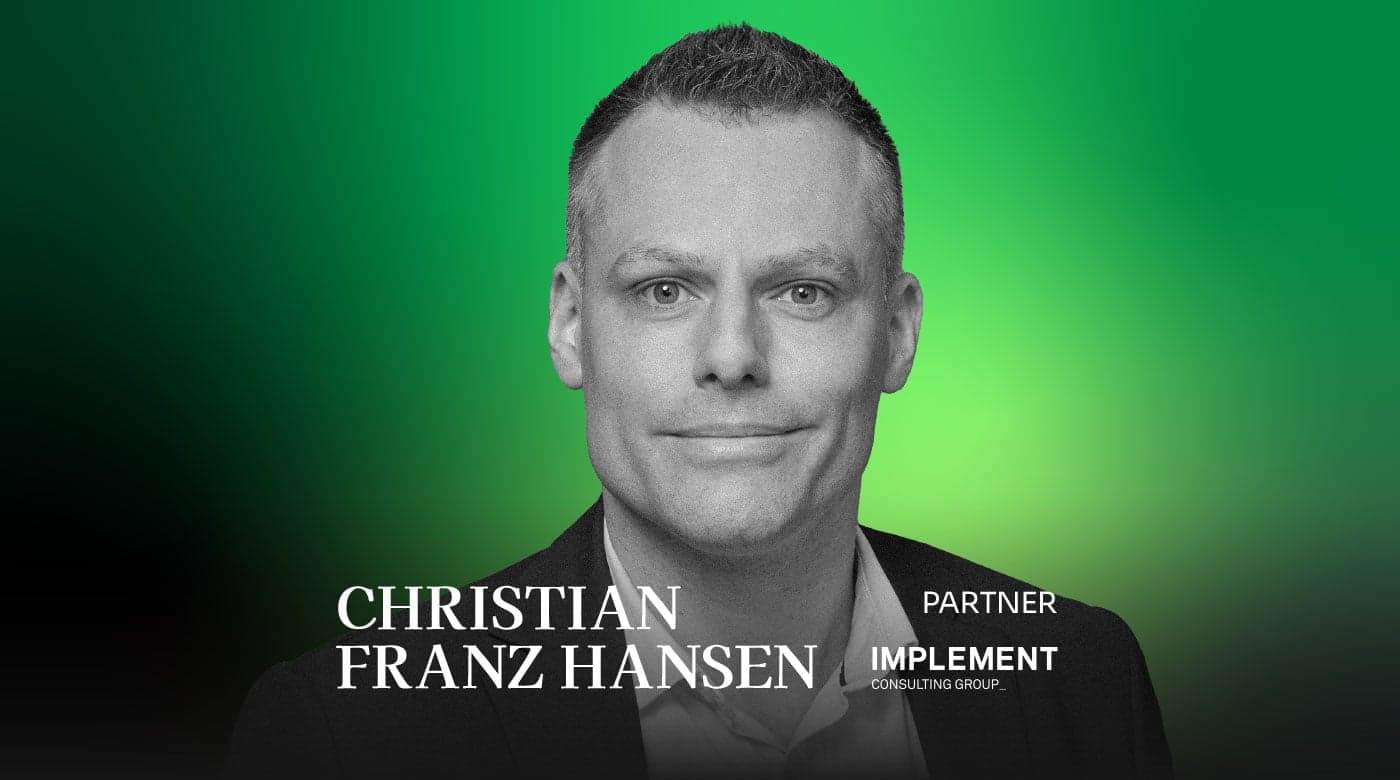
Nicholas Rudder
Founder and CEO of Sphere

Nicholas Rudder explains how AI helps lean finance teams manage spending, automate tax compliance, and handle more work with fewer specialists while retaining human oversight.
Key Takeaways
AI-Native Finance: Sphere runs a global finance function with one person by embedding AI across tax, reporting, and compliance.
Spend Analysis: Feeding bank and card statements into Claude quickly reveals cost-saving opportunities and shortens month-end reporting.
Tax Automation: AI-powered tax workflows research laws, submit filings, monitor notices, and forecast liabilities across international jurisdictions.
Human Judgment: AI improves scale, but experts still oversee tax research and make final decisions on risk-sensitive finance matters.
Generalist Teams: CFOs can expand capacity by automating low-risk workflows first and hiring adaptable generalists instead of narrow specialists.
Nicholas Rudder started his career in finance at PwC and Macquarie Bank. Today, he's the founder and CEO of Sphere, an AI-native tax advisory company.
We caught up with Nicholas to learn what an AI-native finance organization looks like. Here's what he shared.
Building a tool to solve cross-border compliance problems
My name is Nick Rudder. I'm the founder and CEO of Sphere.
I started my career in finance at PwC and Macquarie Bank. I soon left that world because I felt that working in finance only scratched the surface of how companies actually operate. You don't feel the heat of competition, experience shipping a feature under a deadline, or see thousands of people use something you've built.
My first startup got into Y Combinator. We did well in the YC batch — got to a few million in GMV — but after slogging away for 18 months post-batch, we knew the business would never scale as we wanted. Luckily, it surfaced many cross-border compliance issues, and when I shut it down, I became infatuated with helping companies expand internationally while removing cross-border compliance admin from the equation.
Born in the post-AI era, we rethought how to make sense of global trade law using AI. This incepted the idea for our AI-native tax engine, TRAM, which ingests, codifies, and monitors the world’s trade law.
That prompted me to start Sphere, which was frankly far more aligned with my background than my EdTech business!
Born in the post-AI era, we rethought how to make sense of global trade law using AI. This incepted the idea for our AI-native tax engine, TRAM, which ingests, codifies, and monitors the world's trade law. This piece of proprietary tech — trained on thousands of hours of input from expert tax researchers and millions of pages of indexed global tax law — allows us to apply the right tax treatment to any product, regardless of where it is sold. More broadly, we think TRAM will collapse the cost of transacting internationally and make it as easy as selling locally, fueling our vision of making the world one market.
Sphere is a Series A company — we raised $21M in a round led by a16z in September last year — and today, we're growing 30% MoM. We have a global footprint, selling to customers worldwide. Consequently, our team operates across North America, EMEA, and APAC, with about 50 people in total. I am the only person in the finance function. We practice what we preach here at Sphere, so we are inherently AI-native and can effectively manage our finance function with our current systems.
More Articles
How AI streamlines financial analysis

The biggest change AI brought to how finance operates at Sphere in the last year is quite boring: We analyze spend across all our bank accounts and credit cards each month by feeding our statements into Claude.
This analysis demonstrates the huge benefits AI now offers. Identifying our largest spend buckets and opportunities to cut down on costs in a couple of clicks has many far-reaching effects on the business. And it has significantly reduced the time we spend on month-end reporting.
This really plays into the Pareto Principle that 80% of gains are often achieved with 20% of the effort.

Nicholas Notes
AI and tax have long been a controversial combination — many people strongly believe you need human intervention to make sense of the gray area.
Why liability is becoming less of a concern with AI-enabled tax workflows
AI and tax have long been a controversial combination — many people strongly believe you need human intervention to make sense of the gray area. But when models can be trained on the corpus of trade law and process more of it than any individual advisor ever could, it seems inevitable that these models will far outperform even the best tax advisors.
The only reason companies still resort to the Big Four is liability. After all, if something goes wrong, who do you turn to? But you can package insurance into these AI-powered offerings to alleviate those concerns.
How AI streamlines tax research

We also leverage AI agents across numerous other workflows to improve efficiency:
- Our proprietary AI system performs our tax research.
- AI agents submit filings and registrations in government tax portals.
- AI ingests digitized snail mail from tax authorities to flag filing frequency changes or audit notices.
- Classic machine learning forecasts liabilities over time, suggesting when companies may breach nexus in various jurisdictions.
- AI ingests company data to help us advise customers on cross-border compliance considerations when entering new jurisdictions.
And we find countless more use cases daily as the team experiments with which workflows AI can automate.
However, as we say internally, good enough is not good enough, so a seasoned in-house expert always remains involved — particularly with our tax research.
Where AI is underdelivering in finance workflows
With the current pace of AI development, it's difficult to say what will still need a human tomorrow. But risk assessment will likely always require a human as the final decision-maker.
And today, AI is still not delivering the expected impact on more mission-critical finance flows like revenue recognition. These benefits seem more incremental than the step-change improvements we're seeing elsewhere.
An AI finance stack

As far as AI tooling in finance, I suggest the following stack:
- Ramp for AP
- Deel for payroll
- And of course, Sphere for indirect tax compliance
At a cross-functional level, I recommend using Claude to analyze how these layers work together. I've found it incredibly effective.
Why CFOs must rethink their limitations
My advice? Rethink your limitations.
Many of our customers' finance teams do far more with much less. For example, when empowered by the right agents, they can operate as a team of generalists — one finance person can manage work that previously required five specialist roles. So, hire generalists, not specialists.
For automation, examine your stack and begin with low-hanging opportunities or less mission-critical workflows. Automate them — via outsourced vendors or internally — and work your way up the stack.
Follow along
You can follow Nicholas Rudder's work on LinkedIn. And check out Sphere.
More expert interviews to come on The CFO Club!