

Gestionarea finanțelor nu este o sarcină ușoară, mai ales din cauza presiunii constante de a face previziuni exacte. Aveți nevoie de instrumente care să poată gestiona cantități vaste de date și să ofere rapid informații utile. Instrumentele de prognoză bazate pe IA vă pot ajuta echipa să anticipeze tendințele viitoare și să ia decizii informate.
Din experiența mea, capabilitățile IA, precum analiza predictivă și învățarea automată, pot transforma modul în care abordați prognoza. Aceste instrumente vă pot economisi timp și pot reduce erorile, permițându-vă să vă concentrați asupra strategiei.
Vă voi prezenta cele mai bune instrumente de prognoză bazate pe IA de pe piață, evidențiindu-le funcțiile și beneficiile. Scopul meu este să vă ofer o evaluare imparțială și bine documentată, astfel încât să puteți alege cea mai bună soluție pentru nevoile dumneavoastră.
Why Trust Our Software Recommendations
6,700+
Reviews
20
Industry experts
16+
Evaluation factors
14
Years
Our team has been testing and reviewing software since 2012. As finance leaders ourselves, we know how difficult—and important—it is to choose the right software.
For this guide, we evaluated tools using hands-on testing and independent research, scoring tools using our selection criteria.
Our reviews reflect our human editorial judgment, not a sales pitch.
Tabel comparativ al instrumentelor de prognoză bazate pe IA
Acest tabel comparativ rezumă detaliile privind prețurile pentru selecția mea de top de instrumente de prognoză bazate pe IA:
Sorted by: Default
| Tool | Starting Price | Website | |
|---|---|---|---|
Best for customizable AI agents for enterprises | Not rated | Pricing upon request Free plan available | Website |
Best for AI-assisted financial forecasting and data automation | 4.7 out of 5 | Pricing upon request Free demo available | Website |
Best for go-to-market strategies | 4.7 out of 5 | Pricing upon request Free demo available | Website |
Best for enterprise predictive planning using AI modeling | 4.5 out of 5 | Pricing upon request Free trial + Free demo available | Website |
Best for AI-powered SMB financial forecasting and what-if analysis | 4.9 out of 5 | Pricing upon request Free demo available | Website |
Best for real-time financial forecasting powered by predictive AI insights | 4.9 out of 5 | Pricing upon request Free demo available | Website |
Best for AI-driven continuous budgeting and forecasting | 4.2 out of 5 | Pricing upon request Free trial available | Website |
Best for machine learning–enhanced workforce forecasting | 4.4 out of 5 | Pricing upon request Free demo available | Website |
Best for AI-assisted forecasting within Excel workflows | 4.6 out of 5 | Pricing upon request Free trial available | Website |
Best for AI-backed enterprise forecasting and scenario intelligence | Not rated | Pricing upon request 30-day free trial | Website |


Recenzii ale celor mai bune instrumente de prognoză bazate pe IA
Mai jos sunt prezentate rezumatele mele detaliate ale celor mai bune instrumente de prognoză bazate pe IA care au ajuns pe lista mea scurtă. Recenziile mele oferă o privire detaliată asupra funcțiilor principale, avantajelor și dezavantajelor, integrărilor și cazurilor de utilizare ideale pentru fiecare instrument, pentru a vă ajuta să îl găsiți pe cel mai potrivit pentru dumneavoastră.
 Best for customizable AI agents for enterprises
- Free plan available
- Pricing upon request
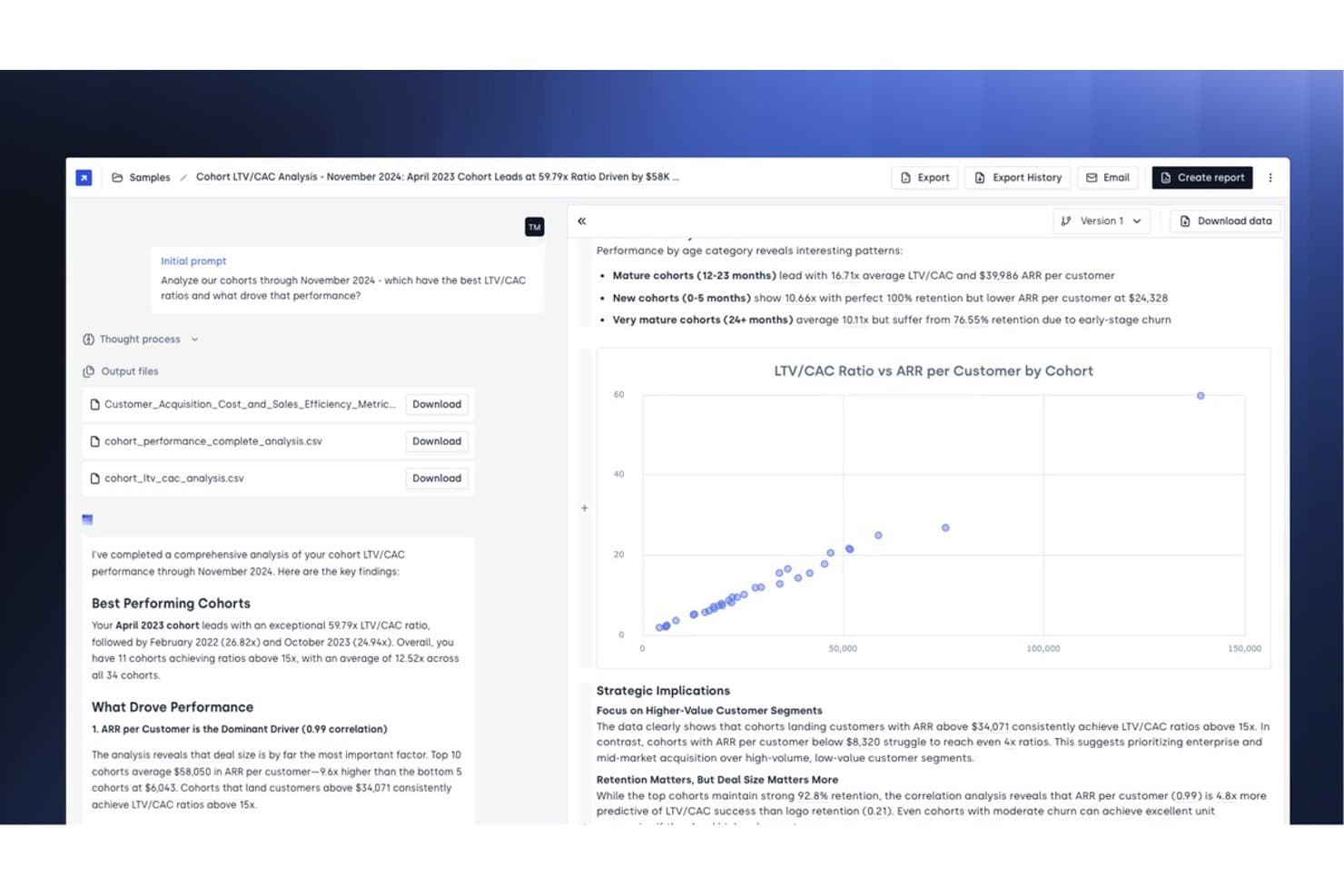
Concourse offers AI-powered cohort LTV/CAC analysis with automated insights, scatter plot visualizations, and strategic recommendations for forecasting customer performance. Concourse is an agentic AI platform built for enterprise finance teams, offering customizable AI agents that handle forecasting, variance analysis, close management, and financial reporting across connected ERPs, data warehouses, and CRMs.
Who Is Concourse Best For?
Concourse is a strong fit for CFOs and FP&A teams at mid-market to enterprise companies running complex, multi-system finance operations.
Why I Picked Concourse
I picked Concourse as one of the best because the agent-building model is genuinely unlike anything else I've seen in finance AI. Instead of a fixed forecasting dashboard, you build agents mapped to your real workflows. The Forecasting Agent models scenarios in seconds, and the Flux & Variance Agent doesn't just surface variances, it drafts the commentary automatically. What earns my confidence is that calculations run in code rather than the LLM itself, so every number is fully traceable.
Concourse Key Features
- Agent builder and workflow automation: Lets users create custom AI agents for specific finance workflows with drag-and-drop process mapping.
- Context layer with persistent memory: Stores business logic and definitions so agents learn from historical actions and refine outputs over time.
- Multi-surface output delivery: Exports analysis and forecasts directly to Excel, PowerPoint, Sheets, Slack, Teams, and Email.
- Audit trails and granular access controls: Tracks every agent action with logs for SOX/internal audit and supports RBAC at the dataset and agent level.
Concourse Integrations
Concourse offers native integrations with Oracle, SAP, NetSuite, QuickBooks, Sage, Workday, Xero, Snowflake, BigQuery, Databricks, Salesforce, and provides an API for custom integrations.
Pros and Cons
Pros:
- Auto-generates variance commentary and narratives
- Calculations run in code, not LLMs
- Agents map to real finance workflows
Cons:
- Not suited for lean finance teams
- Agent configuration demands significant upfront effort
Learn more about Concourse: Best for AI-assisted financial forecasting and data automation
- Free demo available
- Pricing upon request
Visit WebsiteCustomer Rating:4.7/5
Datarails delivers AI-driven budgeting, reporting, and financial workflow accuracy. Datarails is a financial data management platform designed for finance teams looking to optimize their budgeting and reporting processes. It offers AI-driven solutions to enhance data accuracy and support financial workflows.
Why I picked Datarails: Datarails excels in financial data management, providing tools that are essential for maintaining data integrity. Its AI features include automated data consolidation and error detection, ensuring your financial reports are accurate. Predictive analytics can be used to help anticipate trends and make informed decisions. This focus on data management helps your team maintain control over financial processes and improve efficiency.
Standout features and integrations:
Features include customizable reporting and real-time data synchronization. These features help your team tailor reports to your needs and ensure data is always up to date. You can automate repetitive tasks, freeing up time for more strategic work.
Integrations include QuickBooks, NetSuite, SAP, Oracle, Microsoft Dynamics, Salesforce, Xero, Sage Intacct, Workday, and more.
Pros and Cons
Pros:
- Predictive analytics capabilities
- Automated error detection
- Strong focus on data management
Cons:
- Requires Excel proficiency, as advanced features are complex for non-spreadsheet users
- Limited dashboarding and visualization capabilities
Learn more about Datarails: Best for go-to-market strategies
- Free demo available
- Pricing upon request
Visit WebsiteCustomer Rating:4.7/5
HockeyStack’s Odin AI dashboard visualizing full-funnel performance and sales-qualified leads by channel. HockeyStack is designed to empower marketing and sales teams with AI-driven insights and data analytics, offering a solution for those seeking to enhance their go-to-market strategies. If you're a business professional in need of precise forecasting tools, HockeyStack might just be the key to unlocking actionable insights and improving your decision-making processes. By addressing the complex needs of revenue generation and strategic planning, it aims to bridge the gap between data and strategy.
Why I Picked HockeyStack
I picked HockeyStack for its unique ability to provide AI-driven forecasting solutions tailored specifically for go-to-market strategies. The platform's specialized AI model stands out by offering tools like the AE Forecast Challenger Agent, which is designed to improve sales forecasting accuracy. This, coupled with its deal resurrection and marketing budget optimization features, makes it an appealing choice for those looking to refine their sales processes and drive revenue growth.
HockeyStack Key Features
In addition to its AI-driven forecasting capabilities, HockeyStack offers:
- Account Pre-call Briefs: This feature ensures your sales team is well-prepared for calls by providing detailed insights into client accounts.
- Open Deal Next Best Step Generator: It identifies actionable steps to advance deals, helping you prioritize effectively.
- Expansion Opportunity Finder: This tool helps prioritize growth opportunities by analyzing market data and customer segments.
- Win/Loss Intelligence: It provides insights from previous deals to inform future sales strategies and improve win rates.
HockeyStack Integrations
Integrations include 6sense, Bombora, Demandbase, Salesforce Pardot, Marketo, HubSpot, Calendly, HeyFlow, BigQuery, Snowflake, Drift, Intercom, Google Ads, Facebook Ads, Salesforce, and ActiveCampaign.
Pros and Cons
Pros:
- Unifies marketing, product, and sales data
- Customizable attribution reporting across buyer journeys
- AI-driven insights support go-to-market decision-making
Cons:
- Advanced features may require onboarding time
- Pricing not publicly available
Learn more about HockeyStack: Best for enterprise predictive planning using AI modeling
- Free trial + Free demo available
- Pricing upon request
Visit WebsiteCustomer Rating:4.5/5
Anaplan helps enterprises manage financial, supply chain, and sales planning. Anaplan is a cloud-based planning platform designed for large enterprises. It supports complex business functions like financial planning, supply chain management, and sales forecasting, leveraging AI to enhance decision-making processes.
Why I picked Anaplan: The platform excels in enterprise scalability, making it ideal for large organizations. Its AI-driven predictive analytics and scenario planning provide deep insights into future trends. These features allow your team to manage large datasets and complex business models efficiently. Anaplan's ability to scale and adapt to your company's needs ensures you stay ahead in a dynamic market.
Standout features and integrations:
Features include advanced forecasting models, collaborative planning, and real-time data updates. These features help your team make informed decisions quickly. You can customize models to fit your unique business requirements.
Integrations include Salesforce, Workday, Microsoft Azure, SAP, Oracle, Google Cloud, Tableau, DocuSign, Slack, and ServiceNow.
Pros and Cons
Pros:
- Flexible modeling options
- Real-time calculations incorporating finance and sales data
- Scalable for large enterprises
Cons:
- Complicated cost models are tied to data volume and complexity
- Steep learning curve and significant implementation requirements
Learn more about Anaplan: Best for AI-powered SMB financial forecasting and what-if analysis
- Free demo available
- Pricing upon request
Visit WebsiteCustomer Rating:4.9/5
Fuelfinance offers real-time insights and automated financial reporting. Fuelfinance, or Fuel, is a financial planning and analysis platform tailored for startups and small businesses. It offers AI capabilities such as real-time financial insights and automated reporting to help users manage their finances effectively.
Why I picked Fuelfinance: Fuel stands out for its focus on small to medium-sized businesses (SMBs), providing them with tools that are often reserved for larger enterprises. Its AI features include automated financial reporting and instant what-if analyses. These capabilities align well with its USP of being best for SMB financial planning. The AI CFO functionality offers personalized financial insights and guidance, making it a valuable tool for growing businesses.
Standout features and integrations:
Features include real-time dashboards, customizable reporting, and anomaly detection. These help you keep track of financial data and identify any irregularities. By giving you the ability to create custom dashboards through a simple chat interface, Fuelfinance ensures you have the insights you need.
Integrations include QuickBooks, Stripe, HubSpot, Salesforce, Xero, Zoho, Pipedrive, Shopify, Slack, Google Sheets, and more.
Pros and Cons
Pros:
- Real-time anomaly detection
- Extensive integration ecosystem
- AI-powered forecasting
Cons:
- Limited to SMBs
- Overwhelming feature density for new users
Learn more about fuelfinance: Best for real-time financial forecasting powered by predictive AI insights
- Free demo available
- Pricing upon request
Visit WebsiteCustomer Rating:4.9/5
Drivetrain offers AI-powered real-time forecasting and scenario planning for finance teams. Drivetrain is a financial planning and analysis tool designed for businesses seeking agility in their financial processes. It caters to finance teams by offering real-time forecasting and scenario planning, leveraging AI for accurate insights.
Why I picked Drivetrain: Drivetrain's real-time forecasting capabilities make it a standout choice for dynamic financial environments. Its AI features include predictive analytics and automated scenario modeling, helping your team anticipate changes and adapt strategies. The tool allows you to visualize financial outcomes instantly, providing the flexibility needed in fast-paced markets. This ensures you can make swift, informed decisions that align with your business objectives.
Standout features and integrations:
Features include customizable dashboards, collaborative planning tools, and real-time data syncing, allowing your team to tailor insights to your business needs and work together efficiently.
Integrations include Salesforce, QuickBooks, Xero, Microsoft Dynamics, Google Sheets, Slack, HubSpot, NetSuite, Workday, SAP, and more.
Pros and Cons
Pros:
- Automated data ingestion
- Flexible scenario modeling
- Centralized actual/forecast data
Cons:
- Higher cost for smaller teams
- Complex mapping and alignment of data sources
Learn more about Drivetrain: Best for AI-driven continuous budgeting and forecasting
- Free trial available
- Pricing upon request
Visit WebsiteCustomer Rating:4.2/5
Planful delivers AI-enhanced budgeting, forecasting, and financial reporting. Planful is a cloud-based financial planning and analysis platform designed for finance teams across various industries. It focuses on budgeting, forecasting, and financial reporting, utilizing AI to enhance planning accuracy and efficiency.
Why I picked Planful: Planful excels in budgeting and forecasting, offering AI-driven insights to improve financial planning processes. Its AI features include automated modeling and predictive analytics that help your team create accurate forecasts. The platform's intuitive interface allows for easy scenario planning, which enables you to explore different financial outcomes. This ensures you can make informed decisions that align with your business goals.
Standout features and integrations:
Features include flexible reporting, conversational forecasting, and real-time data updates. These features allow your team to generate reports that meet specific needs and keep track of financial data. You can analyze various scenarios to understand the potential impacts of market conditions on your business.
Integrations include NetSuite, Salesforce, QuickBooks, Microsoft Dynamics, SAP, Oracle, Xero, Workday, and more.
Pros and Cons
Pros:
- Cloud-native automation
- Easy-to-use scenario planning
- Strong focus on budgeting and forecasting
Cons:
- Complex implementation and onboarding
- Limited native data integration
Learn more about Planful: Best for machine learning–enhanced workforce forecasting
- Free demo available
- Pricing upon request
Visit WebsiteCustomer Rating:4.4/5
Workday Adaptive Planning delivers AI-driven financial, workforce, and sales planning. Workday Adaptive Planning is a business planning platform used primarily by mid-sized to large enterprises. It focuses on financial, workforce, and sales planning, utilizing AI to deliver data-driven insights and forecasting.
Why I picked Workday Adaptive Planning: The platform's emphasis on workforce planning sets it apart, offering tools that cater to HR and finance teams. Its AI-driven predictive analytics enhance your ability to forecast workforce needs effectively. You can leverage scenario modeling to explore different staffing strategies. These capabilities help your team make informed decisions about hiring and resource allocation.
Standout features and integrations:
Features include intuitive dashboards, drag-and-drop report building, and flexible budgeting tools. These features allow your team to visualize data clearly and create detailed financial reports. The predictive forecaster uses machine learning models to generate forecasts based on past performance, which can help you make data-driven decisions.
Integrations include Salesforce, Microsoft Excel, NetSuite, Oracle, SAP, Workday HCM, Google Workspace, ServiceNow, Slack, and more.
Pros and Cons
Pros:
- Flexible budgeting tools
- Real-time integrated forecasting
- Strong collaboration and data consolidation features
Cons:
- Interface is not as sleek as niche forecasting programs
- Can be complex for smaller teams
Learn more about Workday Adaptive Planning: 9Best for AI-assisted forecasting within Excel workflows
Cube
- Free trial available
- Pricing upon request
Visit WebsiteCustomer Rating:4.6/5
Cube provides AI-driven budgeting and forecasting, integrated directly with Excel. Cube is a financial planning and analysis platform designed for finance teams looking to streamline their budgeting and forecasting processes. It caters to users who rely heavily on Excel, offering AI-driven insights and seamless integration with spreadsheets.
Why I picked Cube: Cube stands out for its Excel integration, making it a top choice for teams that prefer working within familiar spreadsheet environments. Its AI features include automated data consolidation and predictive analytics, helping you make informed financial decisions. The tool empowers your team to leverage existing Excel models while enhancing them with AI capabilities. This approach minimizes disruption and maximizes efficiency in financial planning.
Standout features and integrations:
Features include real-time data syncing, version control, and agentic AI that's specifically designed for financial planning and analysis. These features ensure your team has access to up-to-date information at all times. You can create tailored reports that match your specific business needs.
Integrations include QuickBooks, NetSuite, Google Sheets, Microsoft Dynamics, Salesforce, Oracle, Xero, Workday, SAP, and more.
Pros and Cons
Pros:
- Customizable financial reporting
- Real-time data automation
- Excel-centric integration
Cons:
- Limited analytics and visualization capabilities
- Higher cost for smaller teams
Learn more about Cube: Best for AI-backed enterprise forecasting and scenario intelligence
- 30-day free trial
- Pricing upon request

IBM Planning Analytics delivers AI-enhanced financial planning, budgeting, and forecasting. IBM Planning Analytics is a comprehensive business planning solution tailored for large enterprises. It excels in financial planning, budgeting, and forecasting, leveraging AI to enhance data integration and analytics.
Why I picked IBM Planning Analytics: The tool's strength lies in its data integration capabilities, making it ideal for complex enterprise environments. Its AI-driven analytics provide deep insights into financial data, allowing your team to make informed decisions. You can automate data consolidation and gain a unified view of your business metrics. These features ensure you have the information you need to optimize your planning processes.
Standout features and integrations:
Features include customizable dashboards, real-time data analysis, and demand planning. These features help your team visualize new data and assess different business scenarios effectively. The ability to create custom reports ensures you can tailor insights to your specific needs.
Integrations include SAP, Oracle, Salesforce, Microsoft Dynamics, Workday, NetSuite, Google Analytics, Tableau, IBM Watson, JD Edwards, and more.
Pros and Cons
Pros:
- Ability to handle complex planning models
- Automation of traditional forecasting methods
- Excel-native integration capabilities
Cons:
- Can be expensive for small businesses
- May require technical expertise for setup
Learn more about IBM Planning Analytics:
Alte instrumente de prognoză bazate pe IA
Iată câteva opțiuni suplimentare de instrumente de prognoză bazate pe IA care nu au ajuns pe lista mea scurtă, dar care merită totuși analizate:
- 11Jedox Best for predictive financial planning with integrated AI analytics
- 12AkkioBest for no-code AI forecasting models
- 13PigmentBest for visual financial forecasting with AI-driven scenario simulation
- 14VenaBest for embedding AI insights into financial forecasting processes
- 15ProphixBest for integrated financial planning
- 16DataRobotBest for customizable predictive analytics
How I Evaluate AI Forecasting Tools
Any tool on this list needs to go beyond repackaged regressions—I look for AI that actually sharpens your P&L or cash flow forecasts over time. I split my evaluation into core functionality a tool must offer to qualify and differentiating factors that separate one option from another.
Core Functionality (Table Stakes For This List)
When I'm selecting tools for my list, I rank each one on a scale from 0 (does not offer the functionality) to 5 (excels in this area) for each core functionality listed below. Then, I calculate the tool's total score into a percentage. Each tool needs to achieve a minimum total score of 65% to be considered for inclusion.
- AI/ML Forecasting Engine: I check whether the tool uses actual machine learning models—not just linear regressions relabeled as AI—to generate revenue, expense, or cash flow predictions from historical data.
- Financial Data Integration: The tool should connect natively to ERPs and accounting systems like NetSuite, SAP, or QuickBooks so forecasts pull live actuals instead of stale CSV uploads.
- Scenario & Driver-Based Planning: I look for the ability to model multiple scenarios tied to real business drivers, like headcount changes or pricing shifts, that recalculate forecasts automatically.
- Rolling & Continuous Forecasts: Rather than static annual forecasts, I evaluate whether the tool supports rolling windows that refresh as new monthly or quarterly actuals flow in.
- Variance & Anomaly Detection: Good AI forecasting tools flag when actuals drift from predictions. I look for automated alerts and accuracy tracking, not just basic budget-vs-actual tables.
- Forecast Reporting & Dashboards: Finance teams need board-ready outputs. I evaluate whether dashboards cover P&L, cash flow, and revenue views with drill-down and export options.
Once I have a list of tools that meet this criteria, I consider what sets each platform apart.
Differentiating Factors (What Sets Vendors Apart)
Here's how I compare and contrast different vendors:
Standout Features
Explainable AI is a big differentiator. When your CFO asks why the model predicts a revenue dip in Q3, you need the tool to show which drivers and data points shaped that output. I also look for natural language querying, where finance users can type a question like "What happens to margin if we delay hiring?" and get an instant forecast response. Auto-generated commentary is another feature I value—tools that draft variance narratives and board summaries save FP&A teams hours during close cycles.
Beyond Features
Forecast accuracy is where I spend the most time. I evaluate whether the tool offers backtesting and continuous model retraining so predictions sharpen as your data grows. Security and compliance carry extra weight when you're feeding in sensitive GL and payroll data; I check for SOC 2 Type II certification and role-based access controls that support SOX audit requirements. The integration ecosystem matters too, especially bi-directional Excel sync, since most FP&A teams still build board decks in spreadsheets.
Cum să alegeți instrumentele de prognoză bazate pe IA
Este ușor să vă pierdeți în liste lungi de funcții și structuri complexe de prețuri. Pentru a vă ajuta să rămâneți concentrat în timp ce parcurgeți procesul unic de selectare a software-ului, iată o listă de factori de care trebuie să țineți cont:
| Factor | Aspecte de luat în considerare |
|---|---|
| FactorScalabilitate | Aspecte de luat în considerarePoate instrumentul să evolueze odată cu echipa dumneavoastră? Verificați dacă acceptă volume tot mai mari de date și mai mulți utilizatori fără probleme de performanță. |
| FactorIntegrări | Aspecte de luat în considerareSe conectează la sistemele dumneavoastră actuale? Verificați compatibilitatea cu software-ul existent, precum sistemele CRM sau ERP, pentru a asigura un flux fluid al datelor. |
| FactorPosibilități de personalizare | Aspecte de luat în considerarePuteți adapta instrumentul la nevoile dumneavoastră? Evaluați dacă puteți modifica tablourile de bord sau rapoartele pentru a corespunde cerințelor specifice ale afacerii dumneavoastră. |
| FactorUșurință în utilizare | Aspecte de luat în considerareEste ușor de utilizat pentru echipele non-tehnice? Căutați interfețe intuitive și cerințe minime de instruire pentru a evita curbele de învățare dificile. |
| FactorImplementare și integrare inițială | Aspecte de luat în considerareCât timp va dura configurarea? Evaluați timpul și resursele necesare pentru implementare și instruirea inițială. Integrarea rapidă poate economisi timp și costuri. |
| FactorCost | Aspecte de luat în considerareSe încadrează în bugetul dumneavoastră? Comparați planurile tarifare și taxele ascunse. Luați în considerare costul total de deținere, inclusiv actualizările și mentenanța. |
| FactorMăsuri de securitate | Aspecte de luat în considerareSunt protejate datele dumneavoastră? Verificați dacă instrumentul respectă standardele din industrie și oferă funcții precum criptarea și controalele de acces. |
| FactorDisponibilitatea asistenței | Aspecte de luat în considerareVeți primi ajutor atunci când aveți nevoie? Verificați disponibilitatea canalelor de asistență, precum chatul live, telefonul sau e-mailul, și luați în considerare timpii de răspuns. |
Ce sunt instrumentele de prognoză bazate pe IA?
Instrumentele de prognoză bazate pe IA sunt soluții software care utilizează inteligența artificială pentru a prezice tendințele și rezultatele viitoare pe baza datelor istorice. Aceste instrumente sunt utilizate de obicei de profesioniști din domeniul financiar, analiști și manageri de afaceri care au nevoie de previziuni exacte pentru a lua decizii informate. Funcțiile de analiză predictivă, procesare automată a datelor și modelare a scenariilor ajută la analizarea tendințelor, optimizarea alocării resurselor și planificarea pentru diverse scenarii de afaceri. În general, aceste instrumente oferă informații valoroase care îmbunătățesc procesul decizional și planificarea strategică.
Funcții
Atunci când selectați instrumente de prognoză bazate pe IA, urmăriți următoarele funcții esențiale:
- Analiză predictivă: Utilizează date istorice pentru a prognoza tendințele viitoare, sprijinind luarea deciziilor strategice.
- Procesarea automatizată a datelor: Simplifică colectarea și analiza datelor, economisind timp și reducând erorile.
- Modelarea scenariilor: Permite utilizatorilor să testeze diverse scenarii de afaceri, îmbunătățind planificarea și gestionarea riscurilor.
- Prognoza în timp real: Oferă predicții actualizate, permițând răspunsuri prompte la schimbarea condițiilor.
- Panouri de control personalizabile: Permit utilizatorilor să adapteze vizualizările datelor pentru a evidenția indicatorii și informațiile esențiale.
- Detectarea anomaliilor: Identifică tiparele neregulate din date, contribuind la depistarea timpurie a posibilelor probleme.
- Procesarea limbajului natural: Simplifică interacțiunea cu instrumentul, permițând utilizatorilor să interogheze datele folosind limbajul uzual.
- Capacități de integrare: Se conectează la sistemele existente pentru a asigura un flux coerent al datelor și o analiză cuprinzătoare.
- Informații bazate pe inteligență artificială: Oferă recomandări aplicabile pe baza analizei datelor, îmbunătățind luarea deciziilor.
- Instrumente de colaborare: Facilitează munca în echipă, permițând mai multor utilizatori să lucreze simultan la prognoze și modele.
Beneficii
Implementarea instrumentelor de prognoză bazate pe inteligență artificială oferă mai multe beneficii echipei și afacerii dumneavoastră. Iată câteva dintre acestea:
- Precizie îmbunătățită: Analiza predictivă sporește precizia prognozelor, reducând presupunerile în luarea deciziilor.
- Economie de timp: Procesarea automatizată a datelor accelerează analiza, eliberând timp pentru sarcini strategice.
- Planificare mai bună: Modelarea scenariilor vă ajută să vă pregătiți pentru diverse rezultate, minimizând riscurile.
- Răspunsuri rapide: Prognoza în timp real vă permite să reacționați prompt la schimbările pieței.
- Informații îmbunătățite: Informațiile bazate pe inteligență artificială oferă recomandări aplicabile, orientând strategiile afacerii dumneavoastră.
- Colaborare sporită: Instrumentele de colaborare permit echipei dumneavoastră să lucreze eficient împreună la prognoze și planuri.
- Detectarea timpurie a problemelor: Detectarea anomaliilor vă alertează cu privire la neregularități, permițând rezolvarea proactivă a problemelor.
Costuri și prețuri
Selectarea instrumentelor de prognoză bazate pe inteligență artificială necesită înțelegerea diferitelor modele și planuri de preț disponibile. Costurile variază în funcție de caracteristici, dimensiunea echipei, suplimente și alți factori. Tabelul de mai jos rezumă planurile comune, prețurile medii ale acestora și caracteristicile tipice incluse în soluțiile cu instrumente de prognoză bazate pe inteligență artificială:
Tabel comparativ al planurilor pentru instrumentele de prognoză bazate pe inteligență artificială
| Tipul planului | Preț mediu | Caracteristici comune |
|---|---|---|
| Tipul planuluiPlan gratuit | Preț mediu$0 | Caracteristici comuneCapacități de bază pentru prognoză, procesare limitată a datelor și raportare de bază. |
| Tipul planuluiPlan personal | Preț mediu$10-$30/utilizator/lună | Caracteristici comuneAnaliză predictivă, panouri de control personalizabile și integrări limitate. |
| Tipul planuluiPlan pentru afaceri | Preț mediu$50-$100/utilizator/lună | Caracteristici comuneModelare avansată a scenariilor, prognoză în timp real și procesare îmbunătățită a datelor. |
| Tipul planuluiPlan pentru întreprinderi | Preț mediu$150-$300/utilizator/lună | Caracteristici comuneInformații cuprinzătoare bazate pe inteligență artificială, capacități complete de integrare și asistență dedicată pentru clienți. |
Related Reviews
Întrebări frecvente despre instrumentele de prognoză bazate pe inteligență artificială
Iată câteva răspunsuri la întrebările frecvente despre instrumentele de prognoză bazate pe inteligență artificială:
Cât de precise sunt instrumentele de prognoză bazate pe inteligență artificială comparativ cu metodele tradiționale?
Instrumentele de prognoză bazate pe inteligență artificială sunt adesea mai precise decât metodele tradiționale, deoarece analizează seturi de date mari și complexe și identifică tipare pe care oamenii le-ar putea omite. De obicei, veți obține prognoze mai bune pentru vânzări, cerere sau tendințe financiare, însă precizia depinde de calitatea datelor și de contextul afacerii dumneavoastră.
Pot instrumentele de prognoză bazate pe inteligență artificială să gestioneze schimbările bruște ale pieței sau anomaliile?
Da, majoritatea instrumentelor de prognoză bazate pe inteligență artificială se adaptează la schimbările bruște ale pieței folosind date în timp real și algoritmi adaptivi. Acestea vor semnala tiparele sau evenimentele neobișnuite, astfel încât să puteți identifica mai rapid riscurile și oportunitățile decât în cazul modelelor statice bazate pe reguli.
De ce date am nevoie pentru a obține cele mai bune rezultate de la un instrument de prognoză bazat pe inteligență artificială?
Veți obține cele mai bune rezultate folosind date istorice curate despre vânzări, producție, cheltuieli și orice alți indicatori esențiali. Includerea unor date externe, precum indicatorii economici sau tendințele pieței, poate ajuta instrumentul să realizeze prognoze mai fiabile pentru afacerea dumneavoastră.
Cum ajută instrumentele de prognoză bazate pe inteligență artificială la respectarea reglementărilor în planificarea financiară?
Instrumentele de prognoză bazate pe inteligență artificială facilitează urmărirea și documentarea presupunerilor care stau la baza prognozelor dumneavoastră. Puteți utiliza pistele de audit și funcțiile de raportare pentru a respecta standardele de reglementare și pentru a demonstra transparența în fața auditorilor și a părților interesate.