

Planful Review: Pros, Cons, Features & Pricing

We review tools independently, and commissions help fund our testing. See our transparency policy, our methodology, or suggest a tool.
Planful is a budgeting and planning software built for finance teams that need a single platform for financial close, consolidation, and continuous planning. I'd consider it if your team manages multi-entity reporting or wants tighter ownership over the full planning cycle—from budgeting through variance analysis. Compared to Workday Adaptive Planning, Planful gives finance teams more direct control over the platform without relying as heavily on IT or outside implementation partners to configure and maintain it.
Planful Evaluation Summary
4.2/5
- Pricing upon request
- Free demo available
Why Trust Our Software Recommendations
6,700+
Reviews
20
Industry experts
16+
Evaluation factors
14
Years
Our team has been testing and reviewing software since 2012. As finance leaders ourselves, we know how difficult—and important—it is to choose the right software.
For this guide, we evaluated tools using hands-on testing and independent research, scoring tools using our selection criteria.
Our reviews reflect our human editorial judgment, not a sales pitch.
Planful Overview
In my opinion, Planful is a solid choice for businesses looking for reliable budgeting and dynamic planning software. It excels in providing a user-friendly interface and comprehensive features that cater to mid-sized and large enterprises. The onboarding process is smooth, though it could be more robust in terms of tutorials. Compared to competitors, Planful stands out with its intuitive design and effective forecasting tools.
However, its customer support could be more responsive. It's best suited for finance teams aiming to improve efficiency and accuracy in financial planning. If you're choosing a tool that balances functionality with ease of use, Planful should be on your list.
Pros
- Planful's interface is intuitive, making it easy for your team to navigate and use.
- It offers powerful forecasting tools that enhance your financial planning accuracy.
- The automation features save your team time by reducing manual data entry.
Cons
- Customer support can be slow to respond when you need help.
- Some users find the reporting tool less customizable than they'd like.
- Your team might need more in-depth tutorials during onboarding to fully grasp all features.
Is Planful Right For Your Needs?
Who Would be a Good Fit for Planful?
Planful is a great fit for mid-sized businesses and large enterprises, especially in industries like SaaS and manufacturing. Your finance teams will appreciate its powerful forecasting tools and user-friendly interface, which simplify complex budgeting tasks. Departments like accounting, workforce planning, and financial planning benefit from its automation features, reducing manual data entry and improving efficiency. If your team needs real-time insights and a tool that enhances decision-making, Planful's capabilities make it an excellent choice.
- SaaS CompaniesPlanful's forecasting tools help you predict revenue changes and manage subscriptions effectively.
- Manufacturing FirmsIts automation features reduce data entry, helping your team focus on production planning.
- Finance DepartmentsYou can streamline budgeting with Planful's intuitive interface and real-time insights.
- Mid-Sized BusinessesPlanful is scalable, meeting the growing needs of your expanding team.
- Enterprise-Level CompaniesIts comprehensive feature set supports complex financial planning processes across your organization.
- Accounting TeamsThe automation capabilities reduce errors and save your team time on routine tasks.
Who Would be a Bad Fit for Planful?
Planful might not suit small businesses or startups with tight budgets or limited financial planning needs. If your team doesn’t require advanced forecasting tools or if you find the onboarding process overwhelming, Planful's extensive modules could be more than you need. Additionally, companies looking for highly customizable reporting might find Planful lacking in flexibility. If your support expectations are high, the response time might not meet your needs.
- Small BusinessesPlanful's extensive features may be too complex if your team only needs basic budgeting tools.
- StartupsThe cost and capabilities might exceed what your lean team requires for simple financial planning.
- FreelancersYou probably don't need Planful's advanced forecasting tools for managing personal finances.
- Non-Profit OrganizationsIf you're looking for customizable reporting, Planful might not meet your specific needs.
- Retail StoresYou might find the onboarding process overwhelming for your straightforward budgeting needs.
- Teams Needing Fast SupportPlanful's customer support response time might not be quick enough for your urgent inquiries.
How We Test & Score Tools
We’ve spent years building, refining, and improving our software testing and scoring system. The rubric is designed to capture the nuances of software selection and what makes a tool effective, focusing on critical aspects of the decision-making process.
Below, you can see exactly how our testing and scoring works across seven criteria. It allows us to provide an unbiased evaluation of the software based on core functionality, standout features, ease of use, onboarding, customer support, integrations, customer reviews, and value for money.
Core Functionality (25% of final scoring)
The starting point of our evaluation is always the core functionality of the tool. Does it have the basic features and functions that a user would expect to see? Are any of those core features locked to higher-tiered pricing plans? At its core, we expect a tool to stand up against the baseline capabilities of its competitors.
Standout Features (25% of final scoring)
Next, we evaluate uncommon standout features that go above and beyond the core functionality typically found in tools of its kind. A high score reflects specialized or unique features that make the product faster, more efficient, or offer additional value to the user.
We also evaluate how easy it is to integrate with other tools typically found in the tech stack to expand the functionality and utility of the software. Tools offering plentiful native integrations, 3rd party connections, and API access to build custom integrations score best.
Ease of Use (10% of final scoring)
We consider how quick and easy it is to execute the tasks defined in the core functionality using the tool. High scoring software is well designed, intuitive to use, offers mobile apps, provides templates, and makes relatively complex tasks seem simple.
Onboarding (10% of final scoring)
We know how important rapid team adoption is for a new platform, so we evaluate how easy it is to learn and use a tool with minimal training. We evaluate how quickly a team member can get set up and start using the tool with no experience. High scoring solutions indicate little or no support is required.
Customer Support (10% of final scoring)
We review how quick and easy it is to get unstuck and find help by phone, live chat, or knowledge base. Tools and companies that provide real-time support score best, while chatbots score worst.
Customer Reviews (10% of final scoring)
Beyond our own testing and evaluation, we consider the net promoter score from current and past customers. We review their likelihood, given the option, to choose the tool again for the core functionality. A high scoring software reflects a high net promoter score from current or past customers.
Value for Money (10% of final scoring)
Lastly, in consideration of all the other criteria, we review the average price of entry level plans against the core features and consider the value of the other evaluation criteria. Software that delivers more, for less, will score higher.
Core Features
Budgeting
Planful lets you create and manage detailed budgets with ease. Your team can adjust figures in real-time, enhancing accuracy and tracking cash flow efficiently.
Forecasting
This tool provides powerful forecasting capabilities, helping you predict financial outcomes. You’ll make informed decisions with its scenario planning.
Reporting
Generate standard financial reports quickly and customize them to fit your team's needs. It helps you gain insights into your financial data with visualization features.
Dashboards
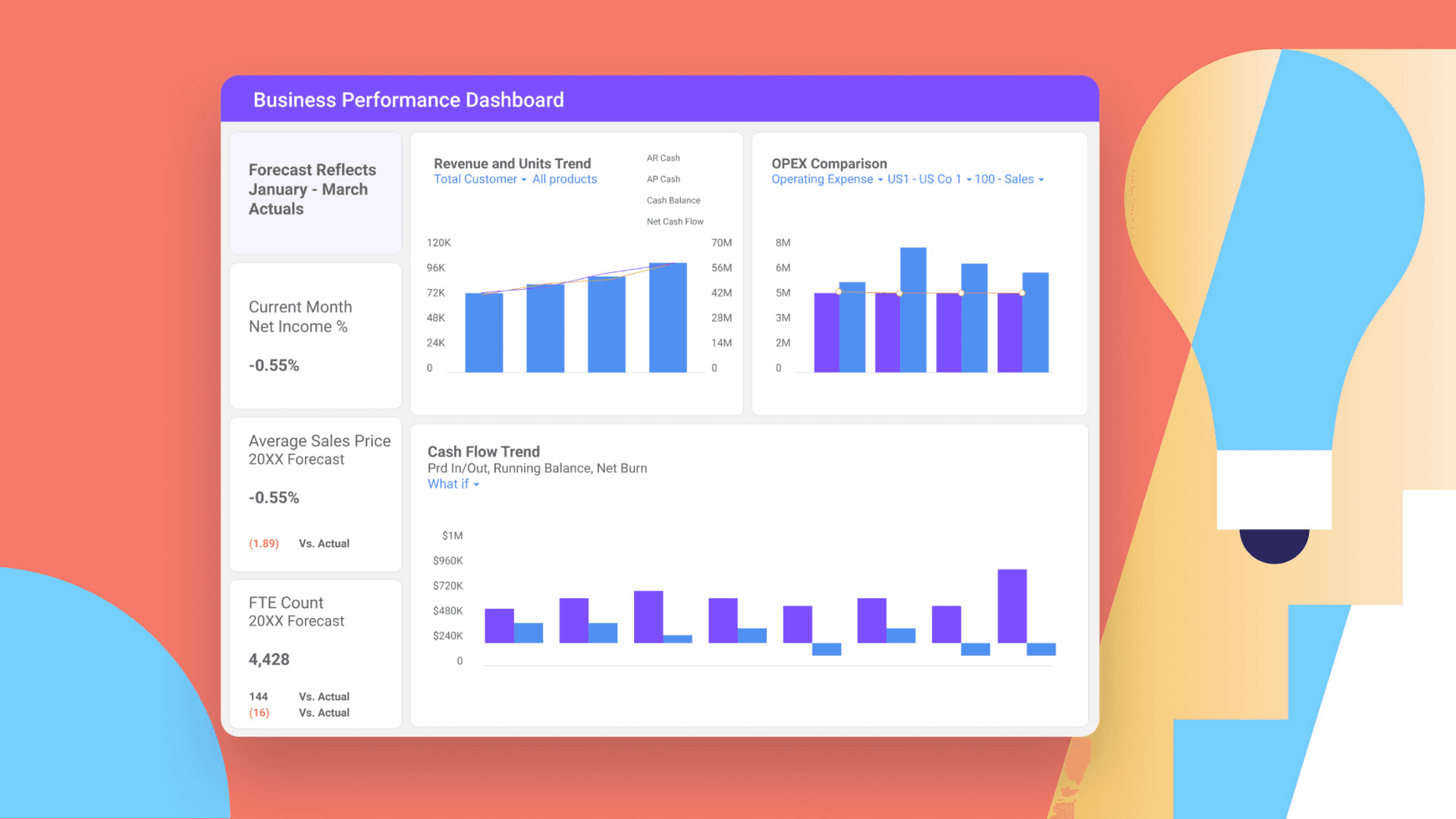
Planful offers interactive dashboards that display key financial metrics. You can visualize data trends and make decisions at a glance.
Collaboration
Your team can collaborate seamlessly within Planful, improving communication and workflow. It centralizes your financial data, keeping everyone aligned.
Automation
Reduce manual tasks with Planful's automation features. It saves your team time and minimizes errors in data entry.
Ease of Use
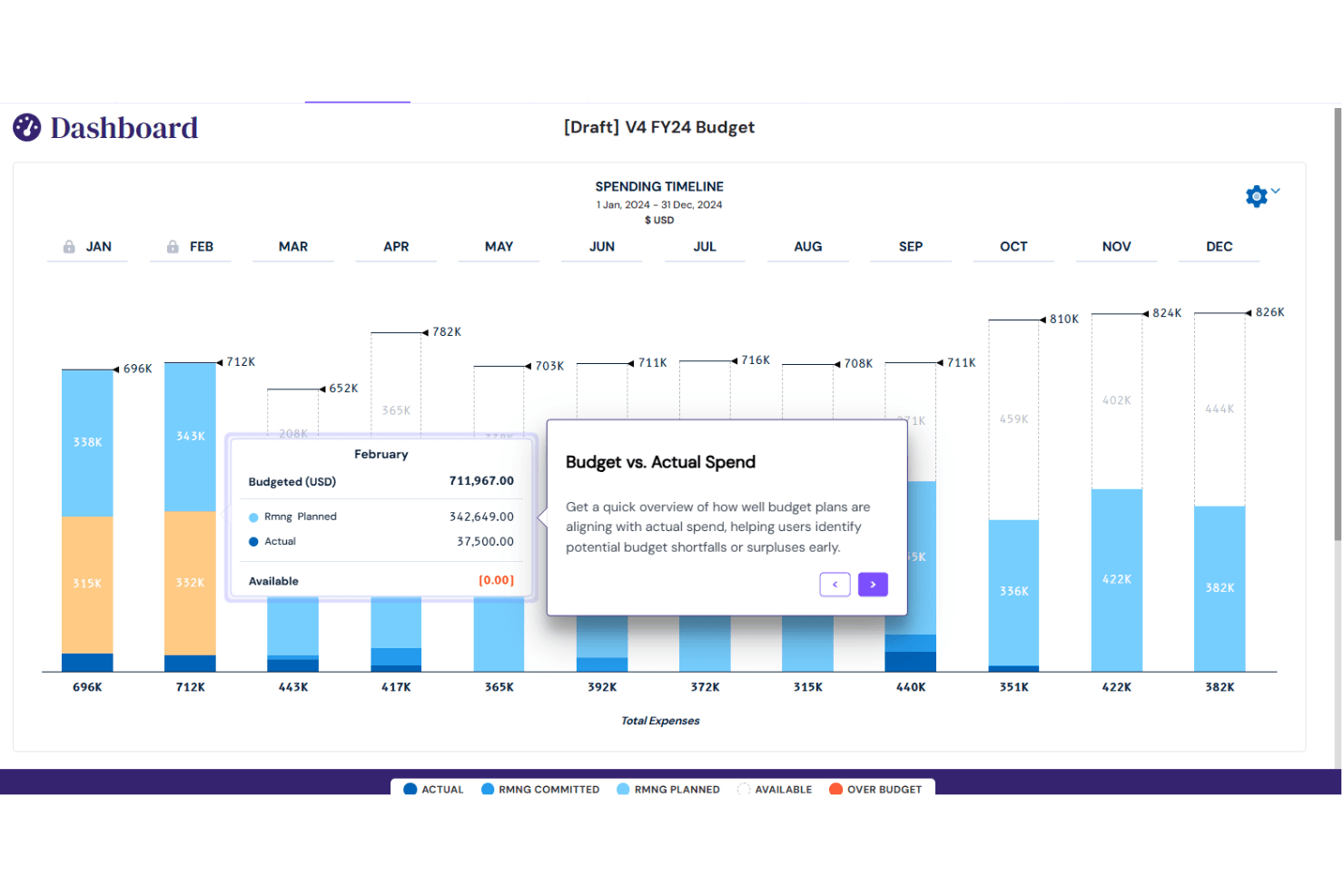
Planful is easy to use, with an intuitive user interface that helps your team navigate without hassle. The layout is clean, making the budgeting and forecasting process simple. Users appreciate its straightforward design, which reduces the learning curve and allows your team to get up and running quickly. Compared to other software, the Planful platform stands out for its user-friendly experience, making it accessible even if you’re not tech-savvy.
Integrations
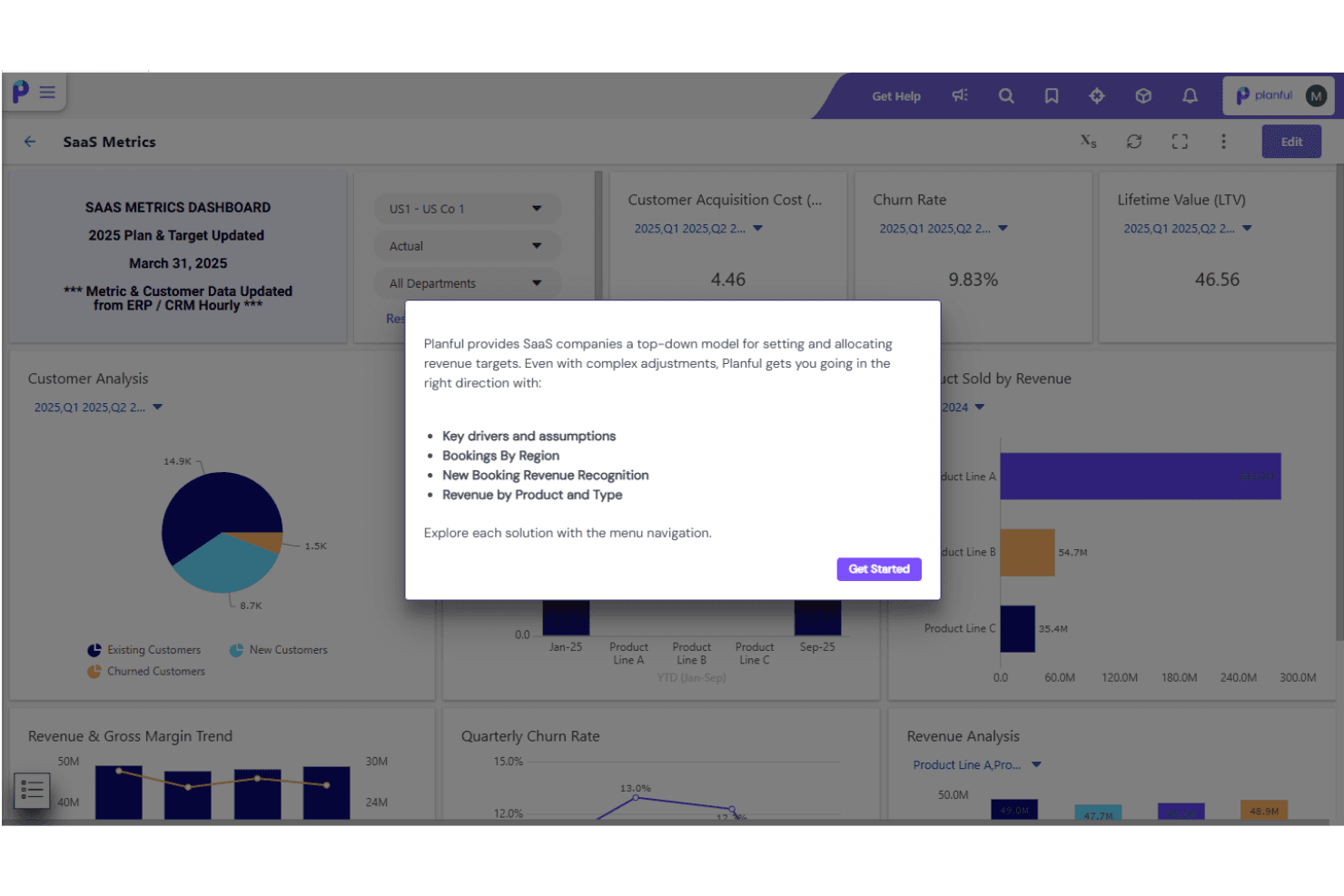
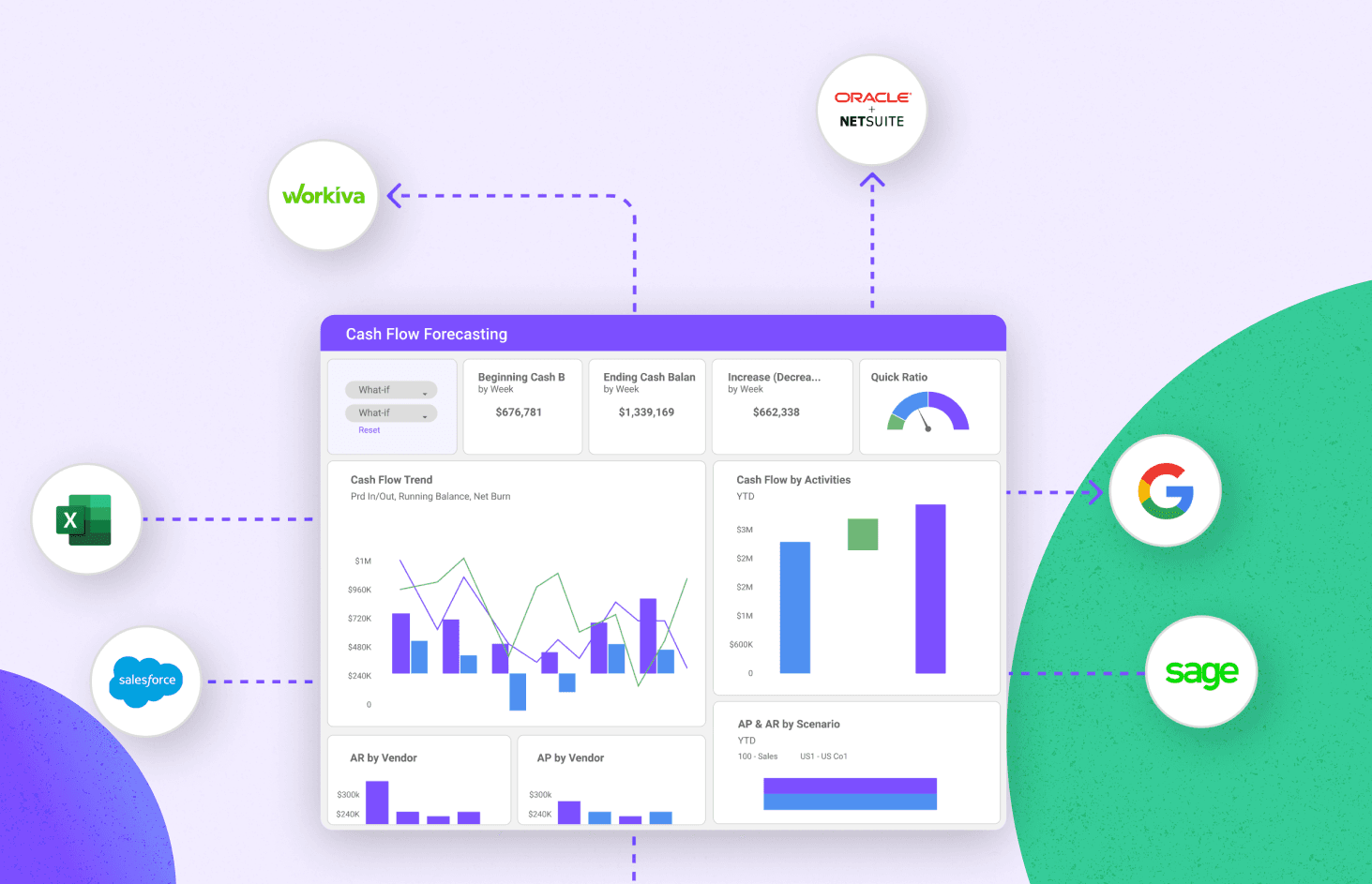
Planful offers extensive integration capabilities through its RESTful APIs, file-based data uploads, and a wide range of prebuilt connectors. The platform provides native integration with Microsoft Excel and Google Sheets through its Spotlight add-ins, and it supports direct connections with systems such as NetSuite, Salesforce, and Microsoft Dynamics.
Planful also connects with other major ERP, CRM, and HCM platforms including Oracle, SAP, and Workday via connector packs or third-party integration tools.
Planful Specs
- 2-Factor Authentication: No
- Accounts Payable: No
- Accounts Receivable: No
- API: No
- Approval Workflows: No
- Balance Sheet: No
- Billing/Invoicing: No
- Budgeting: Yes
- Calendar Management: No
- Comparative Reporting: Yes
- CRM Integration: No
- Custom Reports: No
- Customer Management: No
- Dashboard: No
- Data Export: No
- Data Import: No
- Data Visualization: No
- Expense Tracking: No
- External Integrations: No
- Forecasting: Yes
- General Account Ledger: No
- Historical Data Analysis: No
- Inventory Tracking: No
- Multi-Currency: No
- Multi-User: No
- Notifications: No
- P&L: No
- Payroll: No
- Scenario Planning: No
- Scheduling: No
- Supplier Management: No
- Tax Management: No
- Time Management: No


