

10 Best Enterprise Contract Management Softwares in 2026

Best Enterprise Contract Management Software Shortlist


Enterprise contract management software is designed to help businesses create, negotiate, execute, and monitor complex contracts at scale. If you’re evaluating these tools, you’re probably wrestling with fragmented processes, compliance risks, and the headache of coordinating between teams. Choosing the right solution matters—your organization’s exposure, audit readiness, and cycle speeds all hang in the balance. This guide zeroes in on what leading options offer and what to look for, so you can confidently match a solution to your needs and minimize risk.
Why Trust Our Software Recommendations
Our team has been testing and reviewing software since 2012. As finance leaders ourselves, we know how difficult—and important—it is to choose the right software.
For this guide, we evaluated tools using hands-on testing and independent research, scoring tools using our selection criteria.
Our reviews reflect our human editorial judgment, not a sales pitch.
Enterprise Contract Management Software Comparison Table
This comparison table summarizes pricing details for my top enterprise contract management software selections.
| Tool | Best For | Trial Info | Price | ||
|---|---|---|---|---|---|
| 1 | Best for portfolio-wide contract reporting | Free demo available | Pricing upon request | Website | |
| 2 | Best for AI discovery across contract repositories | Free demo available | Pricing upon request | Website | |
| 3 | Best for AI contract performance management | Free demo available | Pricing upon request | Website | |
| 4 | Best for cross-functional contract collaboration | Free demo available | Pricing upon request | Website | |
| 5 | Best for playbook-driven contract redlining | Free demo available | Pricing upon request | Website | |
| 6 | Best for CLM with integrated e-signatures | Free demo available | Pricing upon request | Website | |
| 7 | Best for highly configurable contract processes | Free plan available | Pricing upon request | Website | |
| 8 | Best for workflow automation with self-serve tools | Free demo available | Pricing upon request | Website | |
| 9 | Best for enterprise-wide obligation intelligence | Free demo available | Pricing upon request | Website | |
| 10 | Best for revenue-focused contract management | Free demo available | Pricing upon request | Website |
Best Enterprise Contract Management Software Reviews
Below are my detailed summaries of the best enterprise contract management software that made it onto my shortlist. My reviews offer a detailed look at the features, integrations, and best use cases of each platform to help you find the best one for you.

Best for portfolio-wide contract reporting
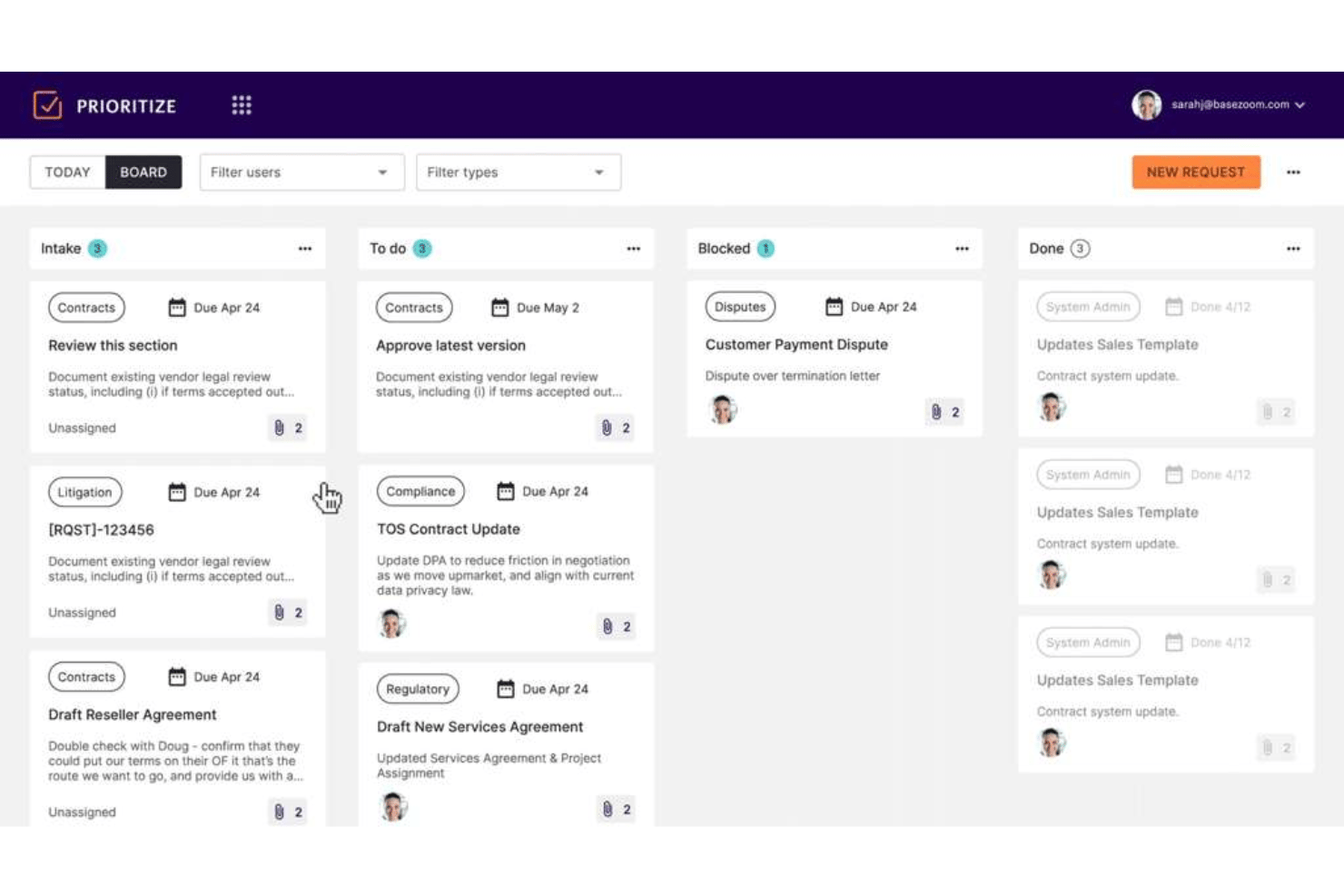
LinkSquares is an AI-powered contract lifecycle management platform that covers pre- and post-signature workflows, including drafting, clause management, approval routing, obligation tracking, and portfolio-wide contract analytics.
Who Is LinkSquares Best For?
LinkSquares is a strong fit for mid-market to enterprise organizations with high contract volumes that need legal and finance teams working from a single source of contract data.
Why I Picked LinkSquares
LinkSquares earns its spot on my shortlist because of how it turns contracts into structured, reportable data. Its LinkAI engine auto-extracts 75+ data points from every agreement, including financial obligations, key dates, and renewal terms. I like that you can query and report across an entire contract portfolio at once, and the data export feature makes it straightforward to pipe that output directly into finance reporting workflows.
LinkSquares Key Features
- Contract playbooks and clause library: Store and manage pre-approved language, fallback clauses, and negotiation guidance in one workspace.
- Centralized legal project management: Track, assign, and prioritize internal contract-related requests across legal and finance teams.
- Microsoft Word add-in for AI redlining: Edit, redline, and apply company playbook rules directly within Word using AI suggestions.
- Automated renewal notification system: Schedule and customize alerts for upcoming contract expirations, auto-renewals, and key milestone dates.
LinkSquares Integrations
Native integrations include Salesforce, DocuSign, Adobe Sign, Microsoft Word, SharePoint, Slack, and Ramp Procurement. An open API is available for custom integrations.
Pros and Cons
Pros:
- Covers both pre- and post-signature workflows
- Portfolio-wide contract analytics with exportable dashboards
- AI extracts 75+ data points automatically
Cons:
- Customizing reports requires help from support teams
- Long enterprise implementation and onboarding timeline
Best for AI discovery across contract repositories
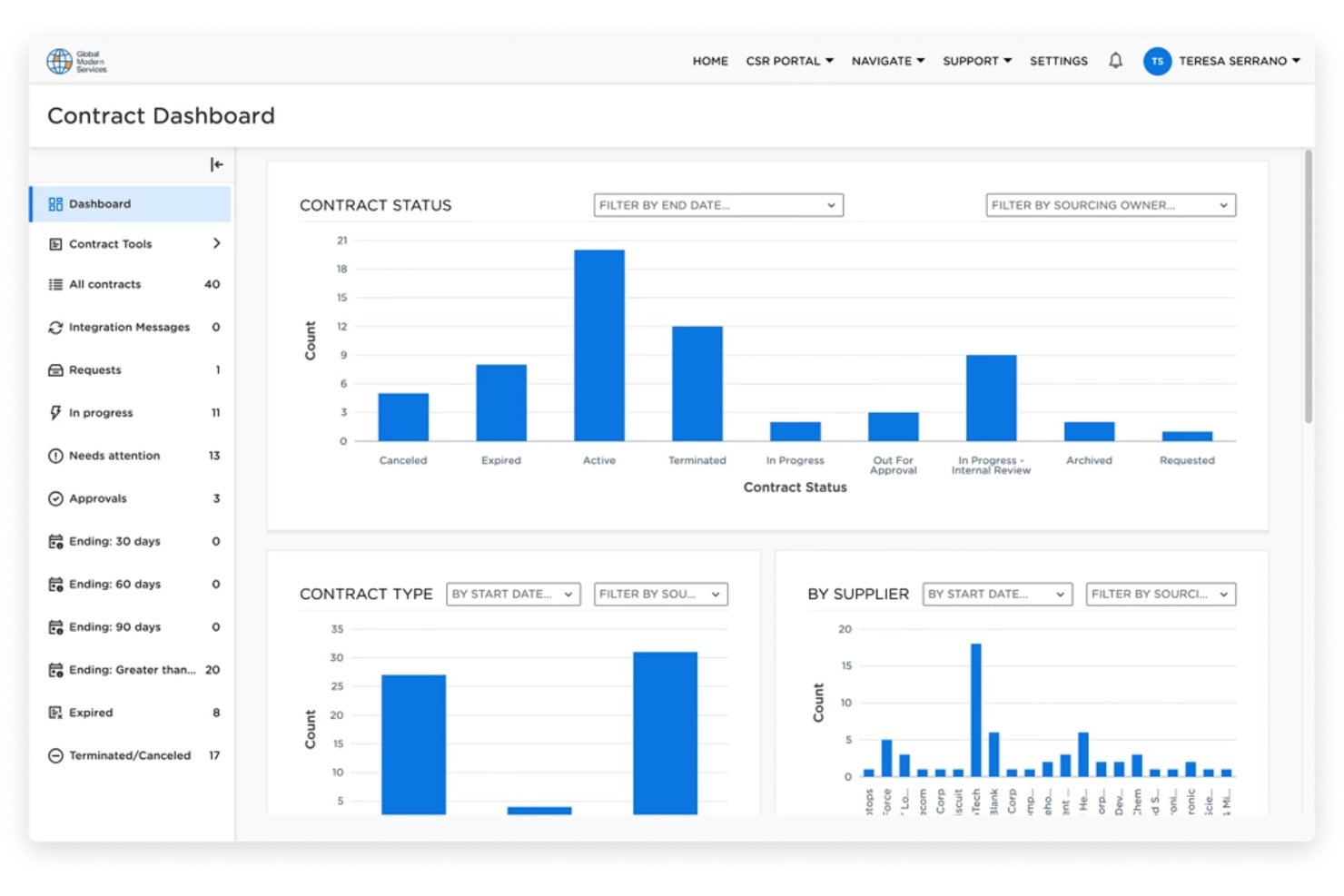
Workday Contract Management is an AI-native CLM platform that combines a unified contract repository, end-to-end lifecycle automation, financial obligation tracking, and AI-powered clause extraction across enterprise contract portfolios.
Who Is Workday Contract Management Best For?
It's a strong fit for large enterprises that already run Workday Financials and need CLM capabilities managed within the same finance ecosystem.
Why I Picked Workday Contract Management
Workday Contract Management earns its spot on my shortlist because of how it handles AI discovery across existing contract repositories. I love that it syncs with SharePoint, Box, Salesforce, and even other CLM platforms, then applies OCR+AI to ingest and analyze up to 450,000 documents in 24 hours. The natural-language "Ask AI" search lets my team query the entire contract portfolio in plain English and get sourced, cited answers instantly, without rebuilding the repository from scratch.
Workday Contract Management Key Features
- Custom AI model library: Build and reuse department-specific AI models for tracking complex data points across contracts.
- No-code workflow automation: Configure approval processes, routing, and dashboards without technical skills required.
- Financial obligation extraction: Automatically capture payment schedules, pricing, and milestones from new and legacy contracts.
- Role-based permissions: Manage granular access controls across business units, subsidiaries, and user roles for enterprise governance.
Workday Contract Management Integrations
Workday Contract Management offers native integrations with Workday Financial Management, DocuSign, Adobe Sign, Salesforce, Box, SharePoint, and Google Drive. An API is available for custom integrations.
Pros and Cons
Pros:
- Built-in SOX and ASC 606 compliance controls
- Natural language contract search across entire portfolio
- OCR-powered mass ingestion of legacy contract portfolios
Cons:
- Implementation can take months for large enterprises
- Requires Workday ecosystem for full functionality

Sirion
Best for AI contract performance management
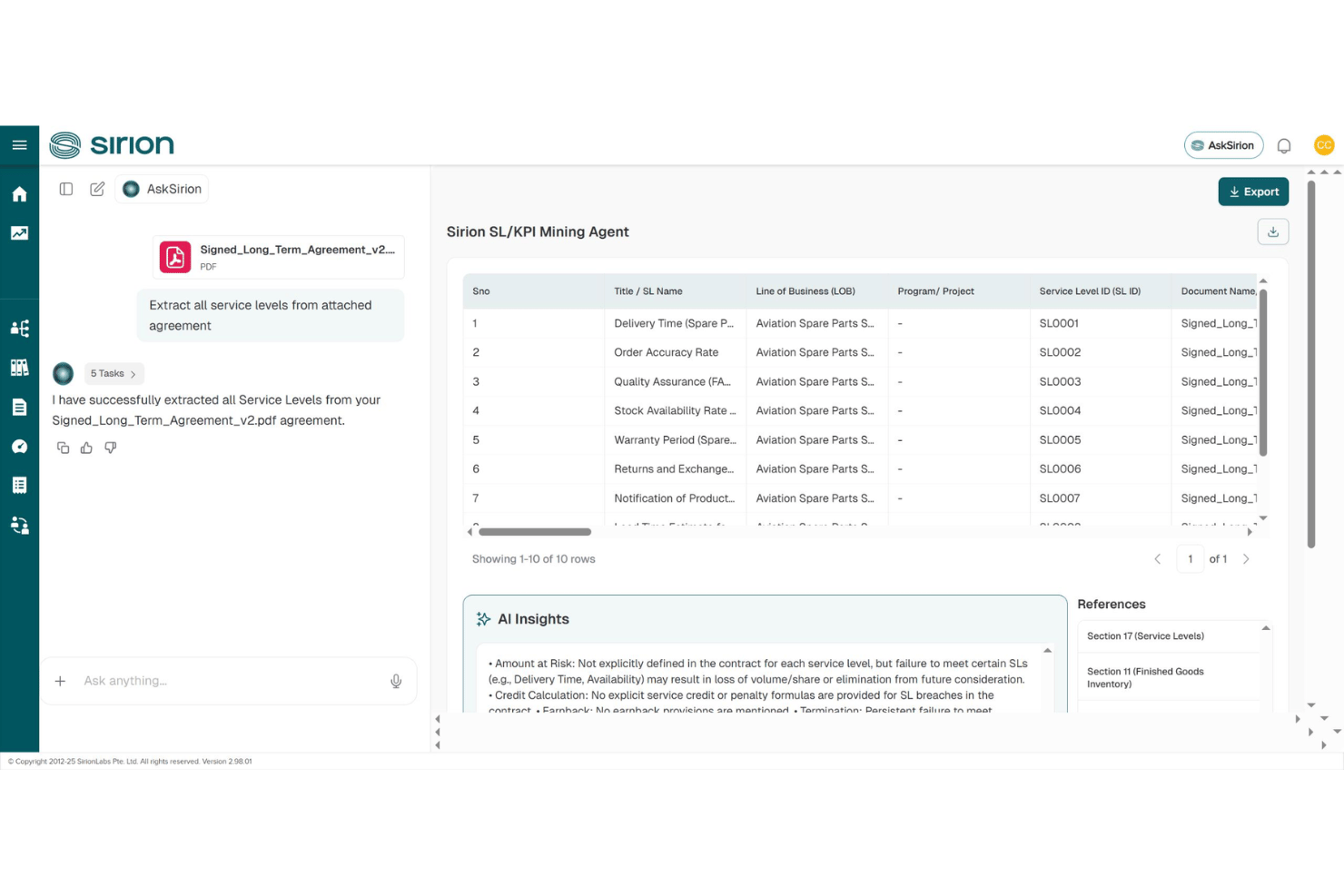
Sirion is an AI-native contract lifecycle management platform that uses purpose-built AI agents to handle contract storage, drafting, negotiation, obligation tracking, and invoice reconciliation across enterprise-scale portfolios.
Who Is Sirion Best For?
Sirion is built for large enterprises managing high-volume, complex contract portfolios across legal, procurement, finance, and supplier management functions.
Why I Picked Sirion
Sirion earns its spot on my shortlist because of how its AI agents handle post-signature contract performance. The Obligations Agent automatically tracks contractual commitments, flags at-risk obligations in real time, and triggers escalations before performance gaps become costly. Paired with the Invoice Agent, which reconciles invoices directly against contract terms, I can identify value leakage at the line level rather than discovering it in a quarterly review.
Sirion Key Features
- Centralized contract repository: Collects and organizes executed contracts with metadata, versioning, and granular access controls.
- Configurable workflow automation: Lets you set up customizable drafting, approval, and routing workflows for different contract types.
- Integration studio: Offers no-code connectors for syncing contract data with ERP, CRM, and procurement systems.
- Clause library and playbook agent: Stores pre-approved clauses and transforms internal policies into smart templates for contract drafting.
Sirion Integrations
Sirion offers native integrations with Salesforce, SAP, Oracle, Workday, Microsoft 365, and Slack. An open API and the Sirion Integration Studio let you build custom connections to over 1,000 applications.
Pros and Cons
Pros:
- Scales to millions of contracts natively
- Contract analytics give portfolio-wide performance visibility
- AI agents automate post-execution obligation tracking
Cons:
- Workflow configuration requires substantial upfront effort
- Implementation typically takes several months

Malbek
Best for cross-functional contract collaboration
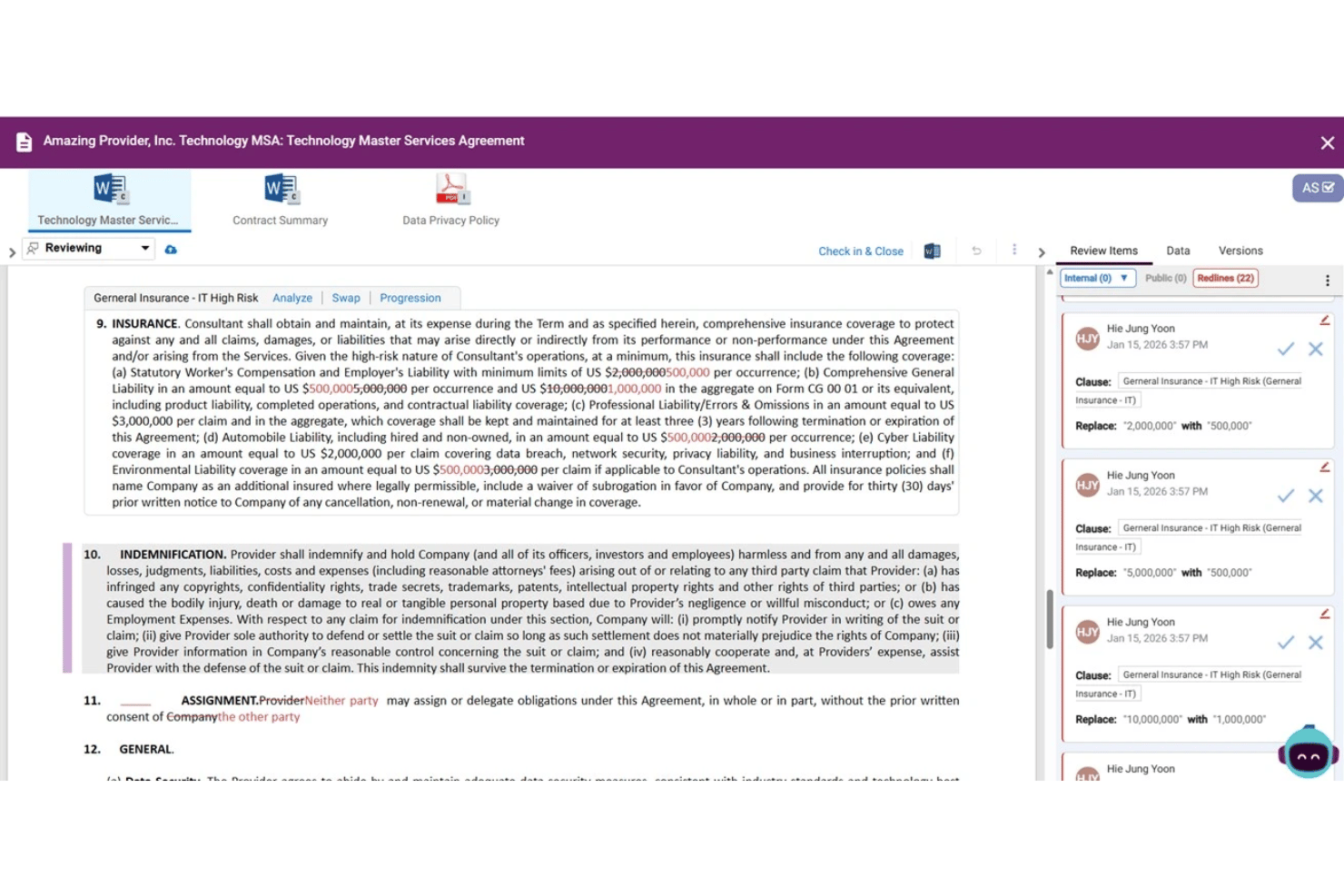
Malbek is an AI-native contract lifecycle management platform that combines contract authoring, workflow automation, clause analysis, obligation tracking, and cross-functional commercial intelligence for legal, finance, sales, and procurement teams.
Who Is Malbek Best For?
Malbek is a strong fit for enterprise organizations where legal, finance, and procurement teams need a shared contracting process with centralized visibility.
Why I Picked Malbek
I picked Malbek as one of the best because its no-code workflow engine lets legal, finance, sales, and procurement teams move through creation, approval, and negotiation in one shared environment. I also rely on BusinessIQ to pull revenue, risk, and renewal exposure from the contract repository into dashboards the CFO and CPO can act on. On top of that, Bek, the conversational AI assistant, lets any stakeholder query contract data mid-cycle without pulling in a legal analyst.
Malbek Key Features
- Centralized contract repository: Store, search, and control access to all executed contracts with full metadata and version history.
- Advanced workflow automation: Build conditional, multi-step contract approval processes without IT involvement.
- ERP and CRM integrations: Connect natively with Salesforce, SAP, NetSuite, Coupa, and other core enterprise systems.
- Configurable clause library: Maintain a library of pre-approved clauses with version control for consistent legal language.
Malbek Integrations
Malbek offers native integrations with Salesforce, SAP, NetSuite, Oracle, Microsoft Dynamics 365, Coupa, DocuSign, Adobe Sign, OneTrust, and Slack. An API is available for custom integrations.
Pros and Cons
Pros:
- Fast implementation timeline, often live within weeks
- MS Word add-in is cumbersome and disrupts document authoring
- Negotiation cycle time tracking across all contract stages
Cons:
- Amendment workflow supports only one draft at a time
- Native reporting requires external BI tools for deeper analysis
Leah
Best for playbook-driven contract redlining
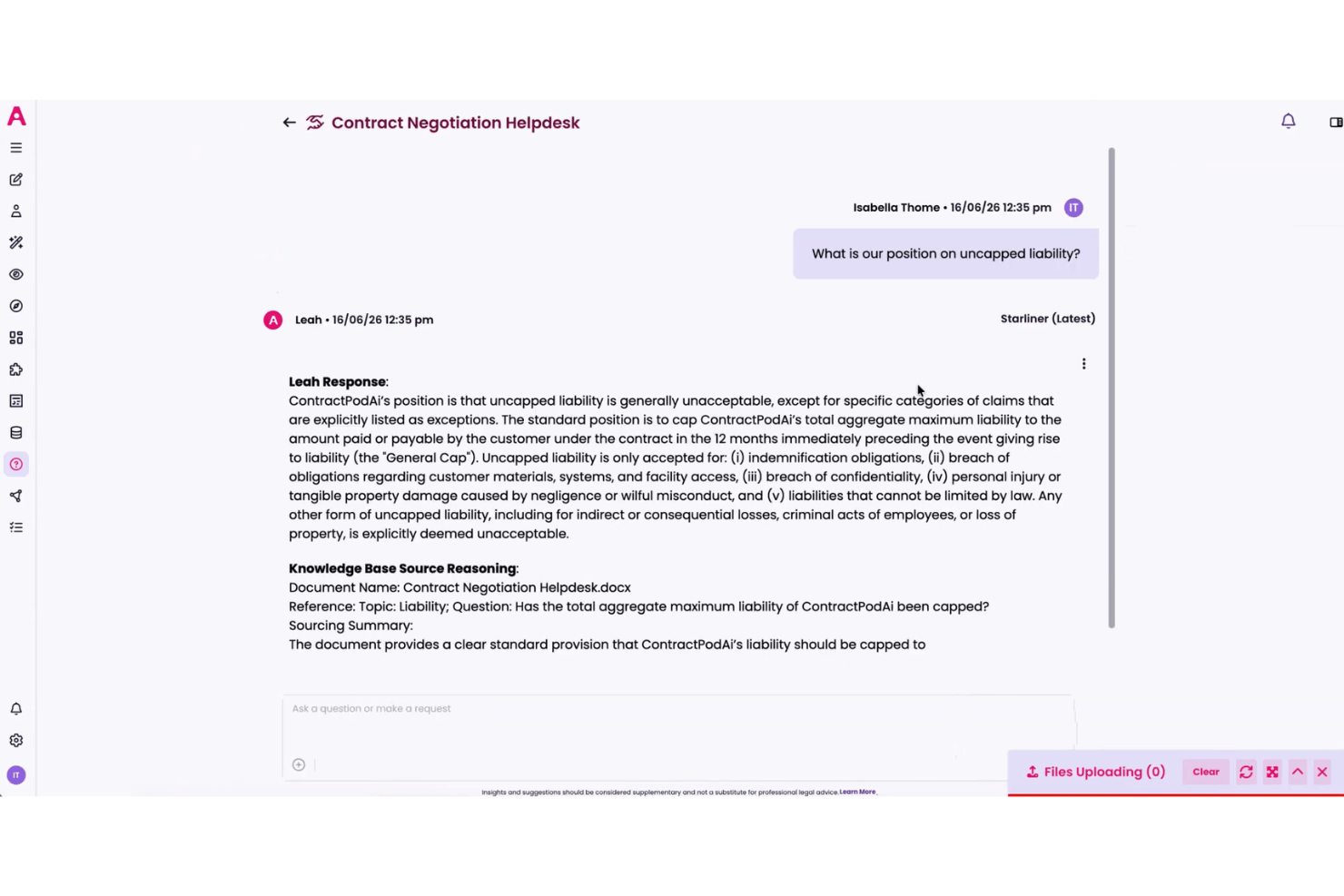
Leah is an agentic enterprise CLM platform that combines contract creation, playbook-driven review and negotiation, conditional approval routing, obligation tracking, and CFO-specific financial dashboards in a single system.
Who Is Leah Best For?
Leah is a strong fit for Fortune 500 legal, finance, and procurement teams that manage high volumes of complex contracts across regulated industries.
Why I Picked Leah
Leah earns its spot on my shortlist because of how it handles contract redlining at enterprise scale. I particularly like how the Word Add-in applies your negotiating playbooks directly inside Microsoft Word, keeping reviewers anchored to preferred positions on every deal. The "Ask Leah" feature layers in-document AI guidance on top of that, and prior deal intelligence lets my team reference how similar clauses were resolved in past contracts.
Leah Key Features
- Smart repository: Stores all contracts with advanced search, metadata tagging, and granular role-based access controls.
- Obligation tracking dashboards: Surfaces milestones, renewal dates, and payment schedules in customizable executive dashboards.
- ERP and financial integrations: Connects directly with SAP, NetSuite, Oracle, Coupa, and other core enterprise systems.
- Configurable clause library: Centralizes pre-approved legal language for consistent use across all agreements.
Leah Integrations
Leah offers native integrations with SAP, NetSuite, Oracle, Workday, Coupa, iValua, Salesforce, Microsoft 365, DocuSign, Adobe Sign, and ServiceNow. An open API is also available for custom integrations.
Pros and Cons
Pros:
- AI obligation extraction across large contract volumes
- Highly configurable workflows and admin controls
- Playbook enforcement anchors reviewers on every deal
Cons:
- Misconfigured workflows can't be overridden without backend access
- Implementation process requires heavy customer involvement
Best for CLM with integrated e-signatures
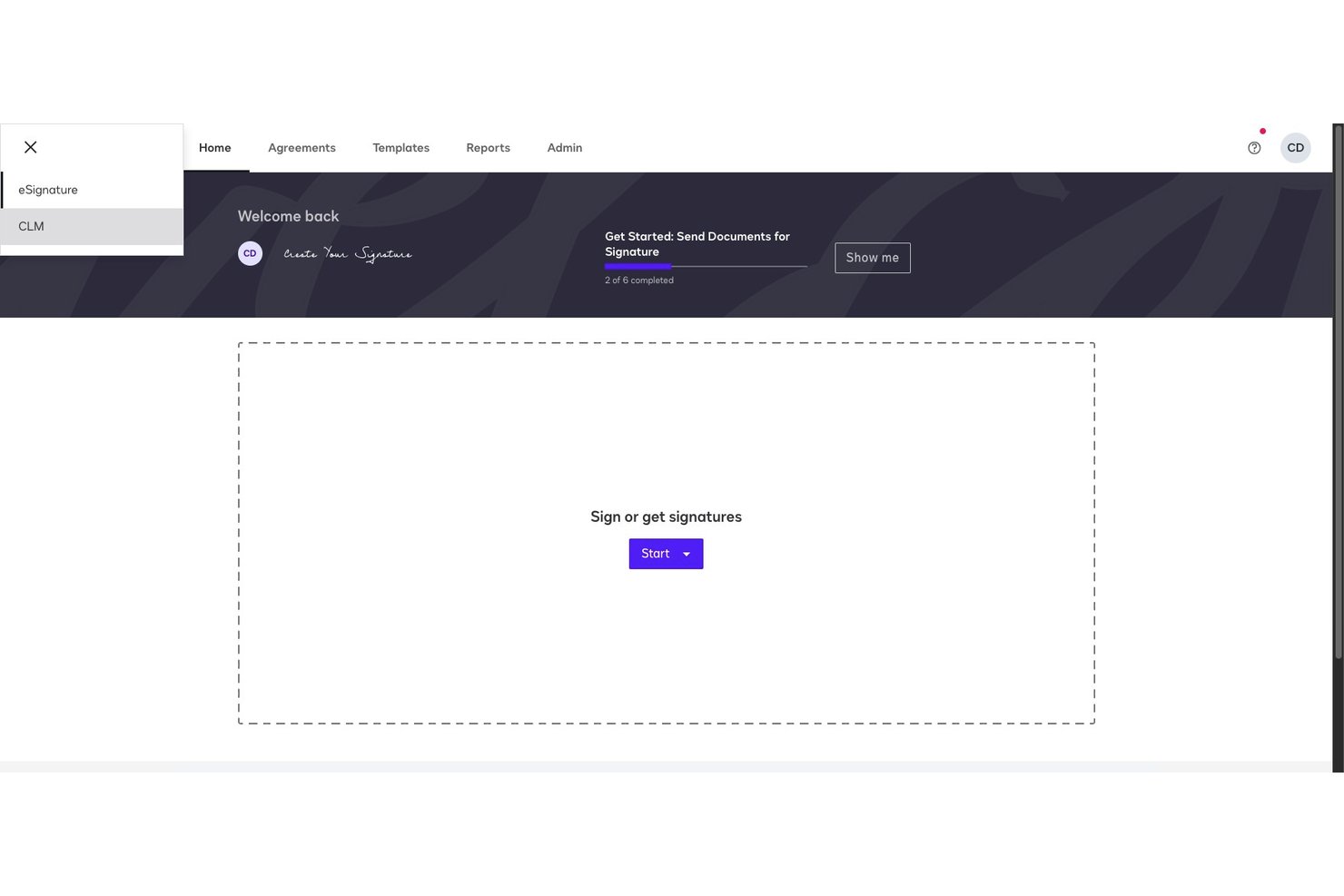
Docusign CLM is an enterprise contract lifecycle management platform that combines AI-powered contract creation, automated approval workflows, clause library management, obligation tracking, and a centralized repository with native e-signature execution.
Who Is Docusign CLM Best For?
It's a strong fit for large enterprises that already operate within the Docusign ecosystem and need full contract lifecycle control beyond e-signature.
Why I Picked Docusign CLM
Docusign CLM earns its spot on my shortlist because the e-signature step isn't an integration — it's native to the platform. I like that approval workflows can be configured to route contracts directly into signature execution based on deal value thresholds, so there's no handoff between systems at the most critical stage. The Iris AI engine also adds real value here, extracting clause-level data and risk scores before a contract ever reaches the signing stage.
Docusign CLM Key Features
- Centralized contract repository: Store, organize, and search executed contracts with metadata, version history, and granular role-based access.
- Obligation management: Track contract commitments, milestones, renewal dates, and SLA deadlines with built-in alerts for stakeholders.
- Advanced workflow automation: Build automated, no-code workflows with conditional logic for contract creation, negotiation, and renewals.
- ERP and procurement integrations: Connect natively with SAP Ariba, Coupa, and Salesforce to sync contract data with critical financial systems.
Docusign CLM Integrations
Docusign CLM offers native integrations with Salesforce, SAP Ariba, Coupa, Microsoft 365, and Oracle. An API is available for custom integrations.
Pros and Cons
Pros:
- Audit trails support SOX compliance requirements
- AI clause extraction across large contract portfolios
- Native e-signature execution within the same platform
Cons:
- Workflow configuration requires significant admin time
- Implementation complexity for non-Docusign environments

Agiloft
Best for highly configurable contract processes
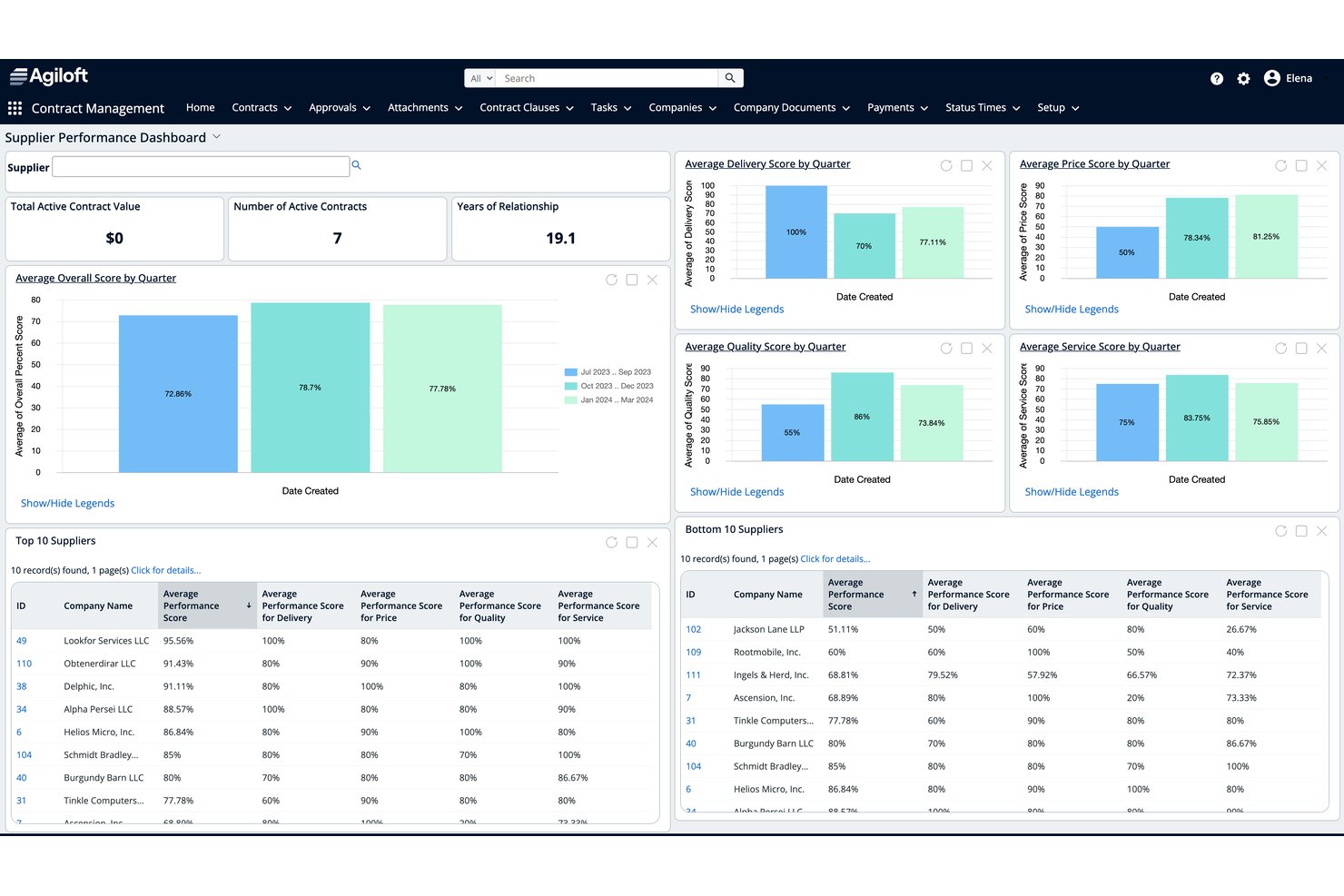
Agiloft is a no-code contract lifecycle management platform built for enterprise teams, offering a centralized contract repository, AI-powered clause extraction, configurable approval workflows, and integrations with ERP, procurement, and e-signature systems.
Who Is Agiloft Best For?
Agiloft is a strong fit for large enterprises with complex, cross-functional contract processes spanning legal, finance, and procurement teams.
Why I Picked Agiloft
I picked Agiloft as one of the best because its no-code workflow builder lets me configure contract routing logic that mirrors exactly how my organization operates. I can set a rule that automatically escalates any contract above $50,000 to the CFO for approval, without writing a single line of code. Agiloft's ConvoAI also lets me query the entire contract repository using plain-language questions, so surfacing specific obligation terms or clause language takes seconds, not hours.
Agiloft Key Features
- Centralized contract repository: Store and organize all executed contracts with metadata, version control, and secure, role-based access.
- Financial obligation tracking: Extract and monitor payment schedules, milestones, and renewal dates directly from contract data.
- Enterprise-grade audit controls: Maintain detailed audit trails, e-signature records, and compliance-ready logging for regulated environments.
- ERP and procurement integrations: Connect natively to SAP, Oracle, NetSuite, Coupa, and other major enterprise systems for synchronized contract data.
Agiloft Integrations
Agiloft offers native integrations with SAP, Oracle, NetSuite, Coupa, Tradeshift, Salesforce, DocuSign, and Adobe Sign, and provides an API for custom integrations.
Pros and Cons
Pros:
- Granular role-based permissions suit enterprise governance
- AI extracts clauses across large contract portfolios
- No-code workflow builder is highly configurable
Cons:
- Reporting dashboards feel dated compared to competitors
- Initial deployment requires significant IT involvement

Ironclad
Best for workflow automation with self-serve tools
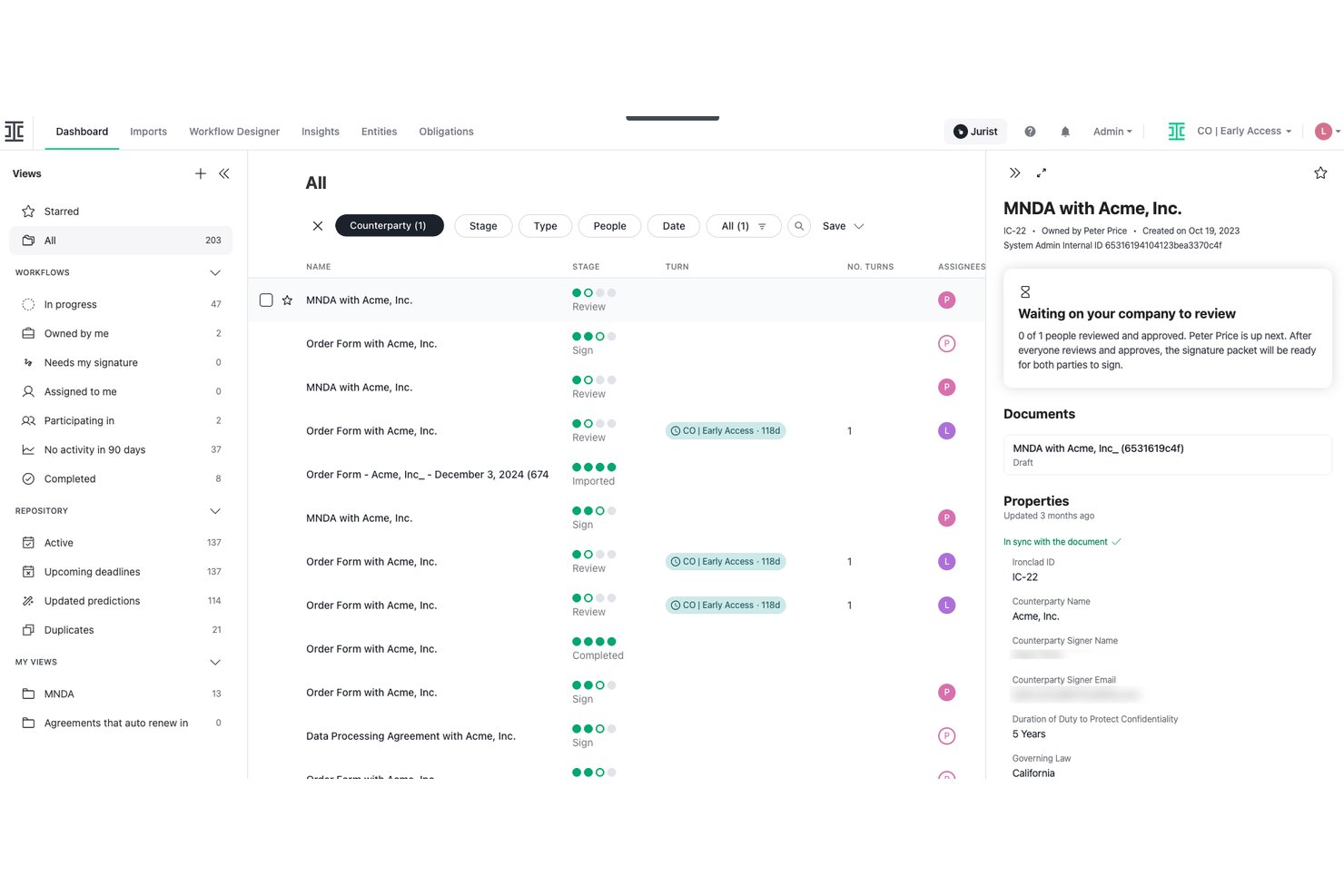
Ironclad is an AI-powered contract lifecycle management platform that handles contract creation, negotiation, approval routing, execution, and renewal management across legal, finance, procurement, and sales teams.
Who Is Ironclad Best For?
Ironclad suits mid-market to enterprise legal and finance teams that manage high contract volumes across multiple departments and need cross-functional approval workflows.
Why I Picked Ironclad
I've included Ironclad in my top picks because its no-code Workflow Designer genuinely sets it apart. I can build conditional approval paths, automated routing, and renewal alerts without touching code, which means finance and procurement teams can trigger and manage their own contracts without routing every request through legal. The Renewals Dashboard is another feature I rely on, tracking opt-out windows and surfacing upcoming renewal dates before they become costly auto-renewals.
Ironclad Key Features
- Centralized contract repository: Store executed contracts with metadata, version control, and role-based access for large volumes.
- AI-powered clause extraction: Identify and extract critical clauses, obligations, and risks across all contract documents.
- ERP and procurement system integrations: Sync contract data with leading ERPs, accounting tools, and procurement platforms through native connectors and APIs.
- Audit trails and compliance controls: Maintain detailed audit logs, electronic signature integrity, and governance for SOX and global regulatory standards.
Ironclad Integrations
Ironclad offers native integrations with Salesforce, SAP, Coupa, Ramp, HubSpot, Box, Slack, and Microsoft Teams, and provides an API for custom integrations.
Pros and Cons
Pros:
- Self-serve contracting for non-legal stakeholders
- AI clause extraction across large contract portfolios
- No-code workflow builder with conditional logic
Cons:
- Reporting customization limited without additional configuration
- Admin configuration requires significant upfront setup time

Icertis
Best for enterprise-wide obligation intelligence
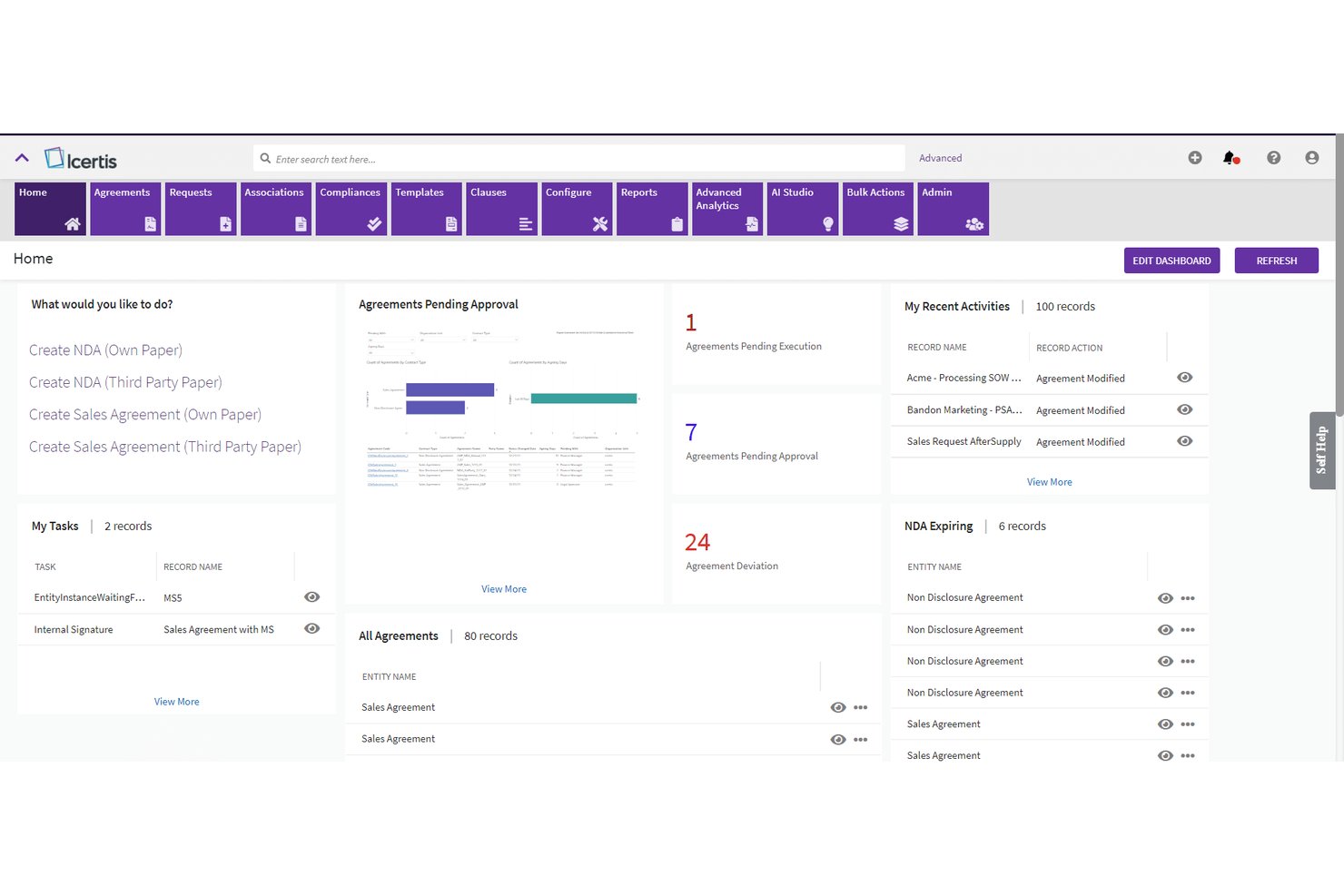
Icertis is an AI-powered contract lifecycle management platform that centralizes contract repositories, automates end-to-end contract workflows, and extracts structured obligation and financial data from enterprise-scale contract portfolios.
Who Is Icertis Best For?
Icertis is a strong fit for large enterprises in regulated industries — financial services, healthcare, and manufacturing — managing high volumes of complex contracts across global operations.
Why I Picked Icertis
Icertis earns its spot on my shortlist because of how it handles obligation tracking at scale. The dedicated Vera Obligations and Vera Fulfillment Agent modules extract financial terms directly from contracts and monitor fulfillment status across the entire portfolio. I particularly like Vera Copilot, which lets me query contracts in plain language to surface payment schedules, pricing milestones, and risk triggers without digging through individual documents.
Icertis Key Features
- Centralized contract repository: Maintain all executed contracts in a searchable, versioned, and access-controlled enterprise repository.
- Configurable clause library: Store, manage, and update pre-approved clauses for use in new contracts across business units.
- Advanced workflow automation: Design no-code workflows for dynamic contract approval routing, negotiation, and renewal management.
- Contract analytics dashboards: Visualize contract risk, cycle times, contract value, and performance with customizable reporting tools.
Icertis Integrations
Icertis offers native integrations with SAP, Microsoft Dynamics, Salesforce, Workday, and DocuSign. An API is available for custom integrations.
Pros and Cons
Pros:
- Built-in SOX and ASC 606 compliance controls
- AI clause extraction from legacy contract portfolios
- Deep obligation tracking across complex contract portfolios
Cons:
- Requires significant IT resources for initial configuration
- Long implementation timelines for enterprise deployments
Conga CLM
Best for revenue-focused contract management
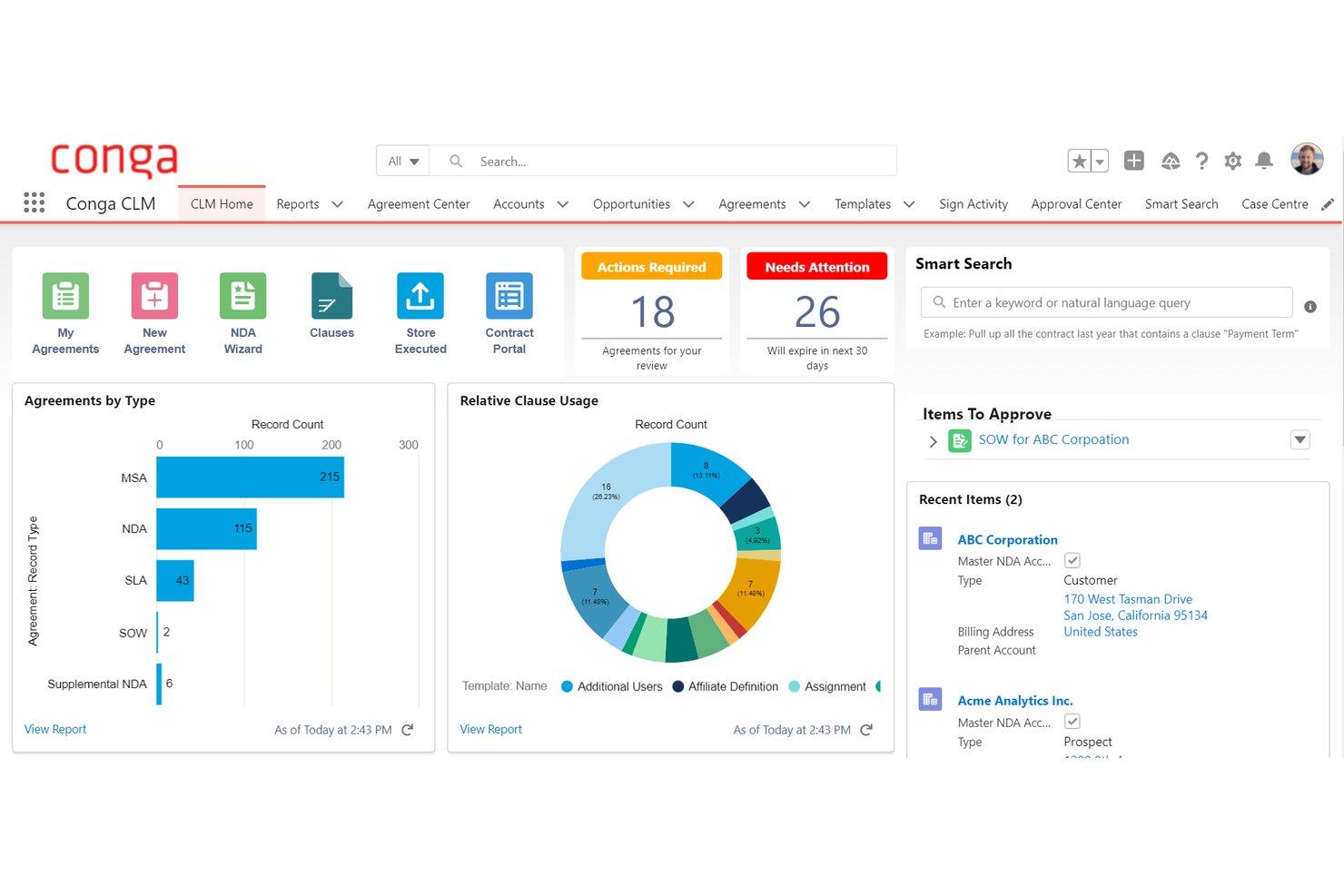
Conga CLM is an AI-powered contract lifecycle management platform built for enterprise teams, covering contract creation, negotiation, approval workflows, obligation tracking, and renewal management across sales, legal, and procurement functions.
Who Is Conga CLM Best For?
Conga CLM is a strong fit for large enterprises running Salesforce-based revenue operations that need contract management connected to their CPQ, billing, and procurement workflows.
Why I Picked Conga CLM
I've included Conga CLM in my top picks because its revenue lifecycle positioning sets it apart from purely legal-focused CLM tools. What I find most compelling is the AI's ability to flag upsell and cross-sell opportunities directly from contract data, something most CLM platforms simply don't do. I also like how obligation extraction connects directly to billing schedules when paired with Conga Billing, so my team isn't manually chasing payment triggers after contracts close.
Conga CLM Key Features
- Centralized contract repository: Stores all contracts with metadata, version control, and enterprise-grade access permissions.
- Configurable clause library: Provides legal-approved standard and fallback language with usage tracking across the portfolio.
- Advanced workflow automation: Enables no-code workflows with conditional routing, parallel approvals, and flexible stakeholder assignments.
- Contract analytics dashboards: Offers customizable reporting on contract value, risk metrics, cycle times, and portfolio performance.
Conga CLM Integrations
Conga CLM offers native integrations with Salesforce, SAP, Oracle, Microsoft 365, Coupa, Ariba, DocuSign, and Adobe Sign. An API is available for custom integrations.
Pros and Cons
Pros:
- Strong audit trail supporting SOX and revenue recognition compliance
- Deep Salesforce-native workflow and approval automation
- AI-powered clause extraction across large contract portfolios
Cons:
- Advanced modules and configurations carry significant added costs
- Heavy Salesforce dependency limits value outside that ecosystem
Other Enterprise Contract Management Software
Here are some additional enterprise contract management software options that didn’t make it onto my shortlist, but are still worth checking out:
- Coupa Contract Lifecycle Management
For connecting contracts with spend data
- SAP Ariba Contracts
For source-to-pay contract compliance
- GEP SMART
For AI-led procurement contract management
- Juro
For browser-based contract collaboration
- SpotDraft
For fast deployment with native e-signing
- Gatekeeper
For unified vendor and contract oversight
- Jaggaer
For CLM within source-to-pay operations
- Onit
For contract governance at enterprise scale


How I Evaluate Enterprise Contract Management Software
I split my evaluation into two layers: the core functionality every enterprise CLM must deliver—like obligation extraction and SOX-ready audit trails—and what separates the best options from the rest.
Core Functionality (Table Stakes For This List)
When I'm selecting tools for my list, I rank each one on a scale from 0 (does not offer the functionality) to 5 (excels in this area) for each core functionality listed below. Then, I calculate the tool's total score into a percentage. Each tool needs to achieve a minimum total score of 65% to be considered for inclusion.
- Centralized Contract Repository: I look for full-text search, metadata tagging, version history, and role-based permissions that scale cleanly across multiple business entities.
- Contract Lifecycle Automation: Each platform's workflow engine should handle drafting from templates, conditional approval routing, e-signatures, and automated renewal alerts.
- Financial Obligation Tracking: I evaluate whether the tool surfaces payment milestones, pricing terms, and revenue recognition triggers tied to specific contract clauses.
- Compliance & Audit Controls: SOX-ready audit trails, e-signature integrity, and built-in support for standards like ASC 606 and IFRS 15 are what I check for here.
- ERP & Financial Integrations: Bi-directional sync with platforms like SAP, Oracle, or NetSuite matters—contract data needs to flow into your financial workflows.
- AI Clause & Risk Analysis: Strong tools here can extract obligations, flag risk clauses, and compare language across a portfolio of thousands of contracts.
Once I have a list of tools that meet the criteria, I consider what sets each platform apart.
Differentiating Factors (What Sets Vendors Apart)
Here's how I compare and contrast different vendors:
Standout Features
AI-powered clause extraction is where I see the biggest gap between vendors. The best implementations scan a legacy portfolio and surface hidden commitments—like auto-renewal terms or embedded price escalation clauses—without manual review. Contract analytics dashboards matter just as much, since CFOs need real-time visibility into cycle times, contract value, and risk exposure across business units. Obligation management rounds this out by tracking post-execution milestones and SLA deadlines with automated alerts.
Beyond Features
Integration depth is a major differentiator. I check whether a platform offers bi-directional sync with ERPs and procurement systems—not just one-way data pushes. Cross-departmental usability also matters; if procurement or sales teams can't self-serve within legal-approved guardrails, adoption stalls fast. I also evaluate total cost of ownership, including how pricing scales with user counts and whether AI features or premium connectors carry hidden fees.
How to Choose Enterprise Contract Management Software
It’s easy to get bogged down in long feature lists and complex pricing structures. To help you stay focused as you work through your unique software selection process, here’s a checklist of factors to keep in mind:
| Factor | What to Consider |
|---|---|
| Scalability | Will it support your volume of contracts, entities, and users as your business grows? Watch for caps or added costs. |
| Integrations | Does it natively connect with your ERPs, CRMs, and e-signature tools? Ask about real-time vs. batch sync and maintenance. |
| Customizability | Can you tailor workflows, data fields, and reporting to fit your company’s approval chains and finance processes? |
| Ease of use | Will finance, legal, and procurement teams actually use it without extra training? Look for clean interfaces and frictionless navigation. |
| Implementation and onboarding | What resources are required on your end? Check for migration support, realistic go-live timelines, and change management resources. |
| Cost | Beyond licenses, factor in fees for integrations, user tiers, premium support, and future contract volume growth. |
| Security safeguards | Do controls match your enterprise’s requirements for sensitive data, regulatory compliance, and access policies? |
| Compliance requirements | Can it help you meet standards like SOX, ASC 606, IFRS 15, or region-specific mandates out of the box? |
What are Enterprise Contract Management Software?
Enterprise contract management software is a specialized system that helps organizations create, store, track, and analyze large volumes of contracts. These platforms centralize all contract data, automate approval workflows, and ensure your financial commitments meet regulatory, audit, and revenue recognition requirements. Teams use them to reduce risk, improve compliance, and gain visibility into contract obligations across departments.
Features of Enterprise Contract Management Software
When selecting enterprise contract management software, keep an eye out for the following key features:
- Centralized contract repository: A single, searchable database that houses all contract documents, supports metadata tagging, and enforces granular access controls for different business units.
- Automated workflow management: Tools to route contracts through drafting, approval, negotiation, signing, and renewal using configurable, rule-based workflows.
- Financial obligation tracking: Automated extraction and monitoring of payment terms, milestones, pricing arrangements, and renewal dates to help teams manage commitments.
- Audit and compliance controls: Detailed audit trails, e-signature integrity, and support for regulatory frameworks like SOX, ASC 606, and IFRS 15.
- Clause and template library: Central storage of pre-approved clauses and templates, allowing users to standardize language and accelerate contract creation with version control.
- ERP and system integrations: APIs and pre-built connectors for syncing contract data with ERPs, CRMs, procurement tools, and accounting platforms.
- AI-powered analytics and extraction: Machine learning tools that identify key clauses, surface obligations, score risk, and analyze trends across contract portfolios.
- Custom reporting dashboards: Visual dashboards that deliver insights into contract cycle times, risk exposure, bottlenecks, and contract values for leadership review.
- Role-based permissions: Controls that restrict contract access and actions based on user, department, or entity to help maintain security and compliance.
- Bulk import and migration support: Tools to onboard legacy contracts at scale, including OCR, mass uploads, and data mapping.
Benefits of Enterprise Contract Management Software
Implementing enterprise contract management software provides several benefits for your team and your business. Here are a few you can look forward to:
- Better risk management: Automated clause extraction and risk analytics flag exposures in your contract language, renewal terms, and financial commitments before they escalate.
- Improved compliance: Built-in audit trails, e-signature verification, and controls designed for standards like SOX and ASC 606 lower the burden of regulatory reporting.
- Enhanced financial visibility: Real-time dashboards and obligation tracking reveal contract-driven revenue, spending, and key renewal dates to finance leaders.
- Faster contract cycles: Automated workflows, template libraries, and self-service tools let teams route, negotiate, and sign contracts without delays or bottlenecks.
- Cross-team collaboration: Role-based permissions and intuitive interfaces make it easy for legal, procurement, finance, and sales to work within the same platform.
- Scalability for growth: Centralized repositories and enterprise-grade infrastructure accommodate expanding contract volumes and complex organizational structures.
- Audit-ready recordkeeping: Version control and comprehensive metadata ensure every contract change and approval is tracked for both internal and external audits.
Costs and Pricing of Enterprise Contract Management Software
Selecting enterprise contract management software requires an understanding of the various pricing models and plans available. Costs vary based on features, team size, add-ons, and more. The table below summarizes common plans, their average prices, and typical features included in enterprise contract management software solutions:
Plan Comparison Table for Enterprise Contract Management Software
| Plan Type | Average Price | Common Features |
|---|---|---|
| Free Plan | $0 | Basic contract storage, limited users, minimal workflow capabilities, and basic search tools. |
| Personal Plan | $30–$50/user/month | Expanded storage, e-signatures, simple workflow automation, basic obligation tracking, and email alerts. |
| Business Plan | $60–$120/user/month | Advanced workflow automation, role-based permissions, ERP/CRM integrations, analytics dashboards, and obligation management. |
| Enterprise Plan | $150+/user/month | Custom integrations, AI-powered clause extraction, advanced security, unlimited contracts, and enterprise support. |
Enterprise Contract Management Software FAQs
Here are some answers to common questions about enterprise contract management software:
How does an enterprise contract management software support compliance?
Enterprise contract management software provides audit trails, user access controls, and automated reminders for key deadlines, helping you meet requirements for standards like SOX, ASC 606, and GDPR.
Can different departments work together in the same contract management platform?
Yes, these platforms are designed for cross-department collaboration, offering configurable permissions, customizable workspaces, and workflows that reflect different team processes.
How long does implementation usually take?
Implementation can take anywhere from a few weeks to several months, depending on data migration, integration complexity, and how much you customize workflows for your business structure.
What integrations should I expect?
Most solutions offer native or API integrations with ERPs, CRMs, e-signature tools, and procurement systems, allowing contract data to flow into your organization’s financial operations.
Is AI-powered clause extraction worth considering?
Yes, AI-powered clause extraction helps legal and finance teams find obligations, risks, and critical terms in large portfolios, reducing manual review time and surfacing hidden exposures.
What should I know about storage limits?
Some plans cap contract volume or storage, so always check whether the plan you choose can accommodate your expected contract growth and archiving needs.