

El software de gestión de deducciones ayuda a los equipos de cuentas por cobrar a identificar, validar, disputar y recuperar deducciones y contracargos de clientes. Las mejores herramientas automatizan la captura de reclamaciones, la comparación de documentos, la codificación de deducciones, los flujos de trabajo de disputas y el seguimiento de recuperaciones. También pueden conectarse con sistemas ERP y portales de minoristas. Evalué varios de los principales software de gestión de deducciones de cuentas por cobrar para diferentes sectores, flujos de trabajo y volúmenes de deducciones.
Por qué confiar en nuestras recomendaciones de software
6,700+
Reviews
20
Industry experts
16+
Evaluation factors
14
Years
Nuestras reseñas reflejan nuestro criterio independiente, no un discurso de ventas. Descubra cómo mantenemos la transparencia.
Para esta guía, evaluamos las herramientas mediante pruebas prácticas e investigación independiente, puntuando las herramientas según nuestros criterios de selección.
Nuestras reseñas reflejan nuestro criterio editorial humano, no un discurso de ventas.
Tabla comparativa de software de gestión de deducciones
Esta tabla comparativa resume los detalles de precios de mis principales selecciones de software de gestión de deducciones:
| Tool | Best For | Trial Info | Price | ||
|---|---|---|---|---|---|
| 1 | La mejor opción para flujos de trabajo de disputas de factura a cobro | Demostración gratuita disponible | Precios disponibles previa solicitud | Website | |
| 2 | Ideal para la gestión de contracargos en SAP | Demostración gratuita disponible | Precios bajo consulta | Website | |
| 3 | La mejor opción para deducciones de CPG con asistencia experta | Demostración gratuita disponible | Precios disponibles previa solicitud | Website | |
| 4 | La mejor para detectar pagos incompletos durante la aplicación de cobros | Demostración gratuita disponible | Precios disponibles previa solicitud | Website | |
| 5 | Ideal para la automatización de flujos de trabajo de deducciones de CPG | Demostración gratuita disponible | Precios disponibles previa solicitud | Website | |
| 6 | La mejor opción para flujos de trabajo de deducciones impulsados por IA | Demostración gratuita disponible | Precio bajo solicitud | Website | |
| 7 | La mejor opción para la validación de deducciones impulsada por IA | Demostración gratuita disponible | Precio disponible previa solicitud | Website | |
| 8 | La mejor opción para la resolución autónoma de deducciones | Demostración gratuita disponible | Precio bajo solicitud | Website | |
| 9 | La mejor opción para automatizar las reclamaciones en portales de minoristas | Demostración gratuita disponible | Precio disponible previa solicitud | Website | |
| 10 | Ideal para la recuperación externalizada de ingresos minoristas | Demostración gratuita disponible | Precios disponibles previa solicitud | Website |


Análisis del mejor software de gestión de deducciones
A continuación encontrarás mis resúmenes detallados del mejor software de gestión de deducciones que incluí en mi lista de preseleccionados. Mis análisis ofrecen una visión detallada de las funciones, capacidades e integraciones de cada plataforma para ayudarte a encontrar la más adecuada para ti.
 La mejor opción para flujos de trabajo de disputas de factura a cobro
- Demostración gratuita disponible
- Precios disponibles previa solicitud
Visit WebsiteCustomer Rating:4.5/5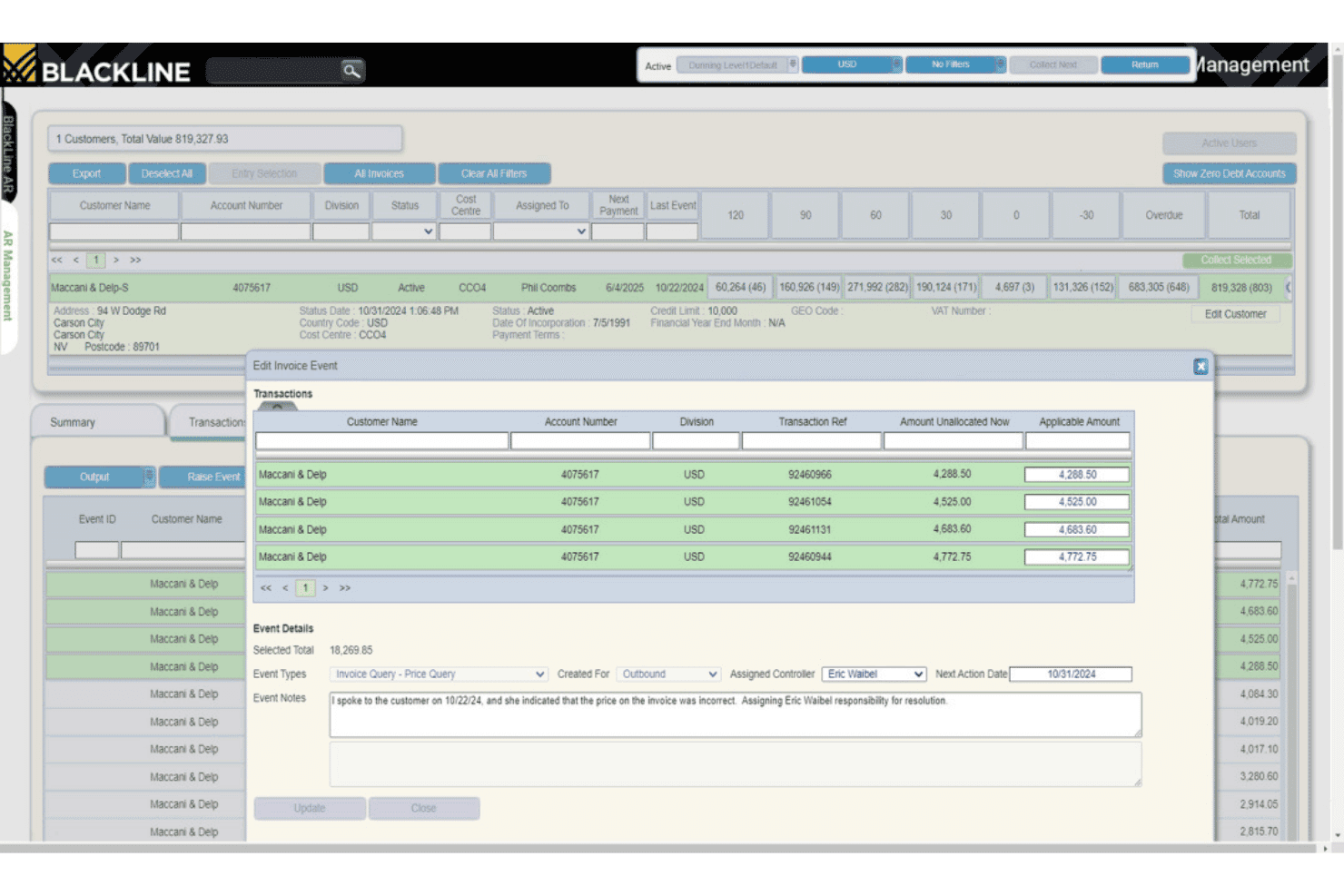
BlackLine permite a los usuarios registrar disputas de facturas y asignarlas para su resolución. La Gestión de disputas & deducciones de BlackLine es un módulo empresarial de AR que combina flujos de trabajo automatizados para disputas, resúmenes de reclamaciones asistidos por IA, seguimiento de SLA y gestión de documentación integrada con ERP dentro de una plataforma más amplia de factura a cobro.
¿Para quién es más adecuado BlackLine?
BlackLine es adecuado para equipos financieros de empresas medianas y grandes que gestionan disputas de facturas en gran volumen dentro de un entorno ERP existente y necesitan flujos de trabajo basados en SLA con registros de auditoría completos.
Por qué elegí BlackLine
Elegí BlackLine como una de las mejores opciones porque su motor de flujos de trabajo para disputas se basa en ciclos de resolución medibles, no solo en el seguimiento de tareas. Me encanta cómo Verity Summarize utiliza IA para desglosar al instante las disputas complejas y mostrar los siguientes pasos recomendados, reduciendo el tiempo que dedicaría a revisar manualmente los historiales de facturas. La capa de medición de SLA se conecta directamente con los informes de deuda vencida y provisiones, por lo que puedo ver exactamente dónde se estancan las disputas y cuáles ponen en riesgo el efectivo.
Características principales de BlackLine
- Integración con ERP y CRM: Sincroniza los datos de deducciones y disputas directamente con las plataformas ERP y CRM compatibles.
- Gestión de documentación preparada para auditorías: Centraliza y adjunta todos los documentos justificativos a cada disputa para facilitar el cumplimiento normativo.
- Supervisión de KPI y SLA: Realiza un seguimiento de los tiempos de los ciclos de disputa y las tasas de resolución en relación con los acuerdos de nivel de servicio.
- Controles de flujo de trabajo basados en roles: Asigna, restringe y gestiona el acceso de los usuarios y la autoridad de aprobación entre los equipos de cuentas por cobrar, ventas y finanzas.
Integraciones de BlackLine
BlackLine ofrece integraciones nativas con SAP, Oracle, NetSuite, Microsoft Dynamics 365, Salesforce y Workday. También hay disponible una API para integraciones personalizadas.
Pros and Cons
Pros:
- Seguimiento de disputas basado en SLA con ciclos de resolución medibles
- Los resúmenes mediante IA reducen el tiempo de revisión manual de facturas
- Un registro de auditoría sólido respalda los requisitos de cumplimiento de SOX
Cons:
- No está diseñado específicamente para los flujos de trabajo de deducciones de CPG
- La implementación suele requerir una participación considerable de los recursos de TI
Learn more about BlackLine: Ideal para la gestión de contracargos en SAP
- Demostración gratuita disponible
- Precios bajo consulta
Visit WebsiteCustomer Rating:4.3/5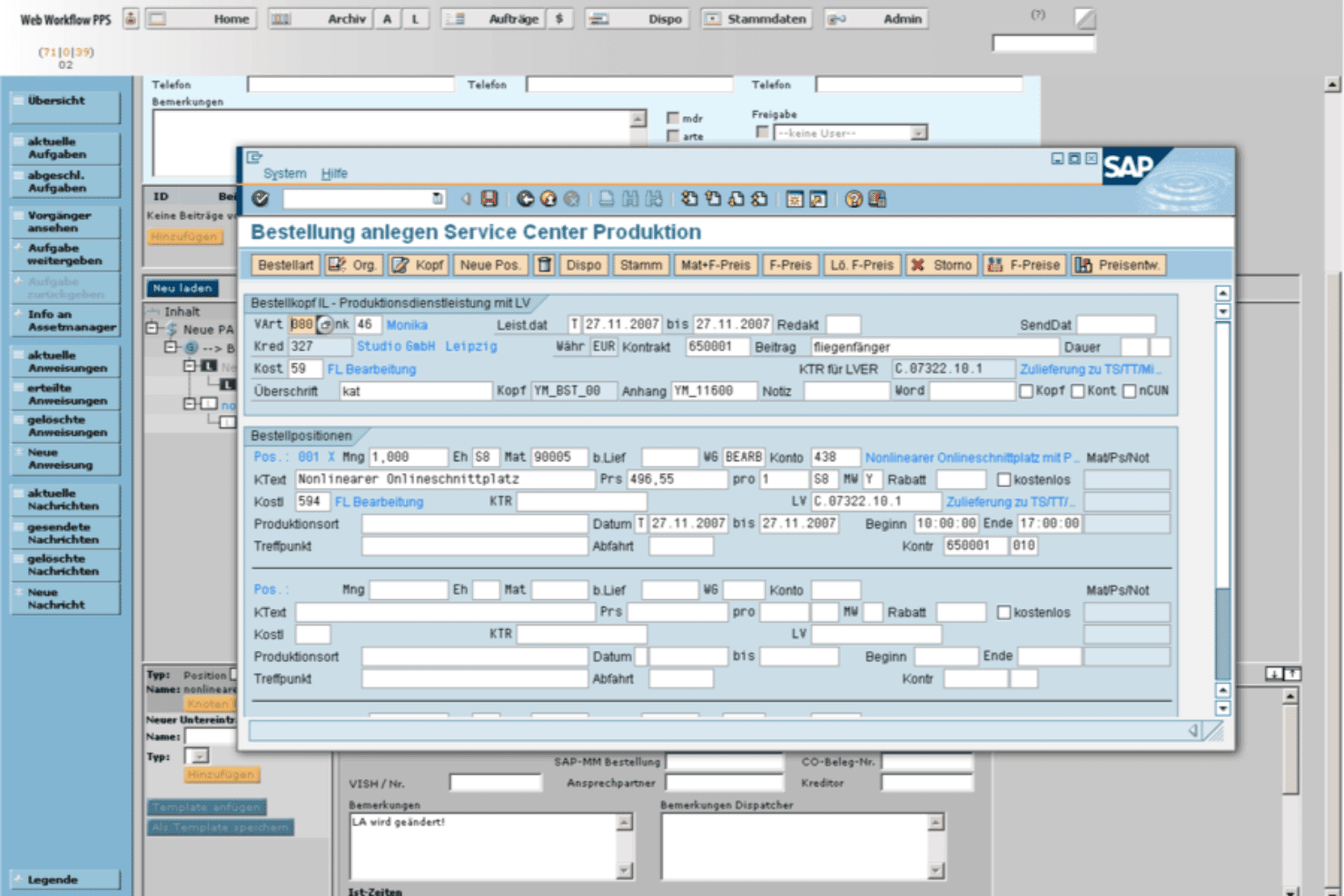
Vistex permite crear órdenes de servicio estructuradas dentro de los flujos de trabajo de SAP. Vistex es una plataforma nativa de SAP para la gestión de contracargos y reclamaciones que gestiona la iniciación de reclamaciones, la clasificación por códigos de motivo, la conciliación, las acumulaciones y la liquidación, integrada directamente en entornos SAP S/4HANA y ECC.
¿Para quién es más adecuado Vistex?
Vistex encaja muy bien con grandes empresas de bienes de consumo envasados, fabricación o distribución que ya utilizan SAP S/4HANA o ECC y gestionan grandes volúmenes de contracargos.
Por qué elegí Vistex
Vistex ocupa un lugar en mi lista de opciones gracias a su profundo nivel de integración en SAP S/4HANA para la gestión de contracargos. Me gusta que gestione todo el ciclo de vida de las reclamaciones, desde la iniciación hasta la conciliación y la liquidación, sin requerir una capa de integración de datos independiente. Las herramientas automatizadas de acumulación y simulación también permiten a mi equipo prever la recuperación de costes antes de presentar las reclamaciones, un nivel de visibilidad previa a la reclamación realmente difícil de encontrar en una herramienta integrada de forma nativa en SAP.
Características principales de Vistex
- Flujos de liquidación nativos de SAP: Integrados directamente en SAP S/4HANA y ECC para el procesamiento integral de reclamaciones y la conciliación financiera.
- Categorización de deducciones basada en reglas: Clasifica cargos y deducciones mediante reglas empresariales personalizables vinculadas a los términos contractuales y las estructuras de acuerdos.
- Herramientas de acumulación y previsión: Permite gestionar acumulaciones en tiempo real y realizar modelos predictivos para las próximas recuperaciones de costes.
- Registro de auditoría detallado: Registra información detallada sobre el historial de reclamaciones, liquidaciones y ajustes con fines de cumplimiento y control financiero.
Integraciones de Vistex
Vistex está integrado en entornos SAP S/4HANA y ECC y ofrece integración nativa con los módulos principales de SAP. Hay disponible una API para integraciones personalizadas.
Pros and Cons
Pros:
- Liquidación nativa de SAP sin middleware de terceros
- Seguimiento de todo el ciclo de vida de las reclamaciones dentro de SAP
- Gestión sólida de acumulaciones para la recuperación de costes
Cons:
- No es adecuado para entornos que no utilizan SAP
- Plazos de implementación prolongados para despliegues empresariales
Learn more about Vistex: La mejor opción para deducciones de CPG con asistencia experta
- Demostración gratuita disponible
- Precios disponibles previa solicitud
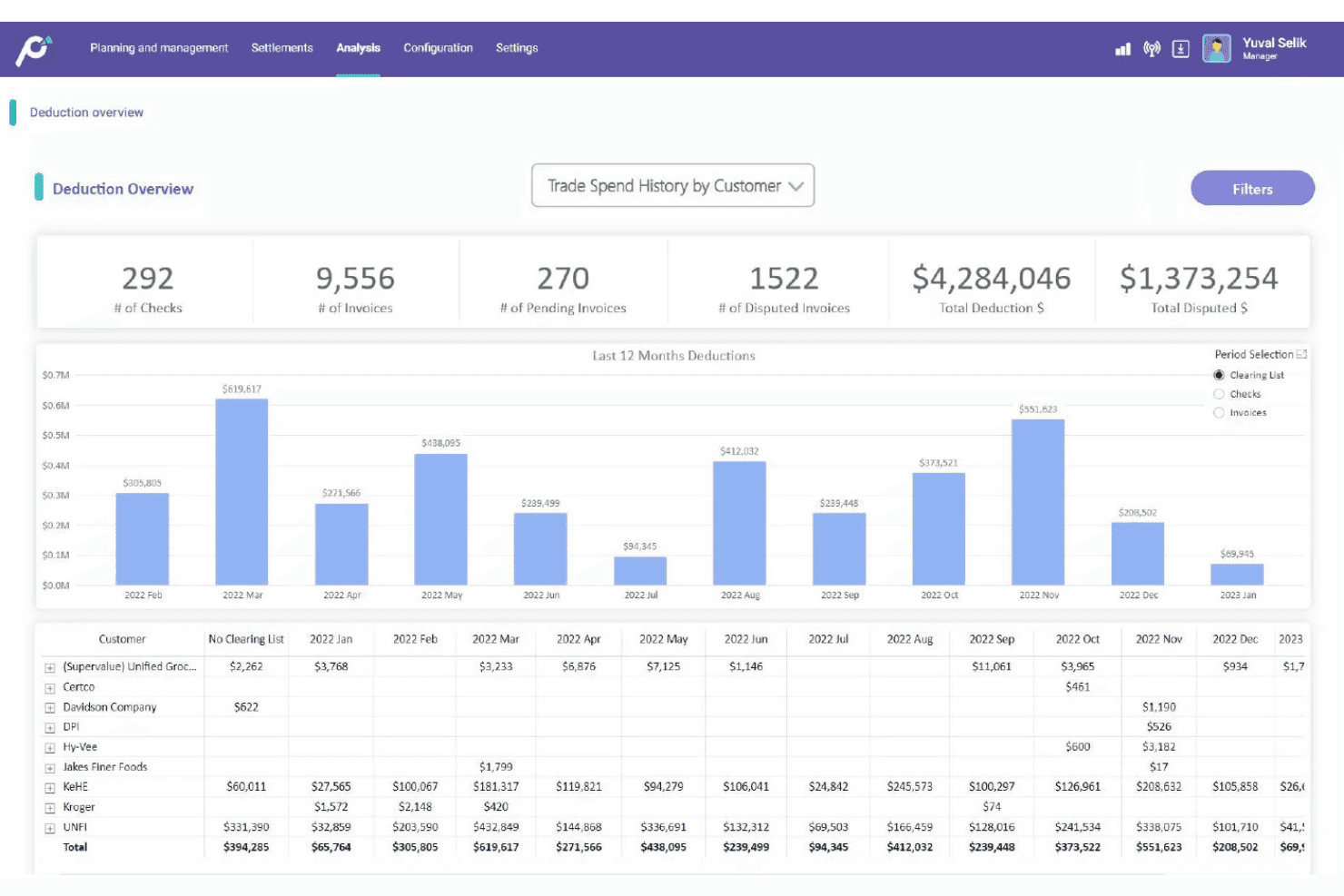
Promomash realiza un seguimiento de las deducciones del gasto promocional por cliente a lo largo del tiempo. Promomash es una plataforma de gestión de deducciones enfocada en CPG que combina la captura, codificación, validación y recuperación de deducciones asistidas por IA con un equipo de especialistas dedicados que gestiona todo el ciclo de vida de las deducciones en tu nombre.
¿Para quién es más adecuado Promomash?
Promomash es una opción excelente para marcas de CPG en crecimiento que venden a través de grandes minoristas y distribuidores, pero que no cuentan con un equipo interno dedicado a la gestión de deducciones.
Por qué elegí Promomash
Promomash ocupa un lugar en mi lista de favoritos por la forma en que gestiona las dos partes que más tiempo consumen de la gestión de deducciones: la codificación y las disputas. Me gusta que la plataforma utilice un catálogo propio de códigos de motivo creado para minoristas y distribuidores de CPG, de modo que las deducciones de Walmart, KEHE y UNFI se categoricen con precisión sin intervención manual. Cuando es necesario disputar una deducción no válida, el equipo de CPGenius interviene para preparar el caso y presentarlo en tu nombre.
Características principales de Promomash
- Integraciones con minoristas y distribuidores: Se conecta directamente con portales líderes como Walmart, Target, Amazon, UNFI y KEHE para agregar datos de deducciones.
- Complemento de aplicación de pagos: Relaciona los pagos bancarios con las facturas abiertas y sincroniza la actividad de pagos con tu ERP.
- Panel de análisis de deducciones: Ofrece paneles en tiempo real para supervisar el estado de las deducciones, las tendencias y los desgloses de las causas raíz.
- Correspondencia entre promociones y deducciones: Vincula automáticamente las deducciones con promociones comerciales específicas para su validación y cierre adecuados.
Integraciones de Promomash
Promomash ofrece integraciones nativas con NetSuite, QuickBooks, Sage Intacct, Microsoft Dynamics 365, Walmart Retail Link, Target Partners Online, Amazon Vendor Central, UNFI y KEHE. Hay una API disponible para integraciones personalizadas.
Pros and Cons
Pros:
- Los servicios de gestión de disputas reducen la carga de trabajo interna de cuentas por cobrar
- La biblioteca de códigos de motivo específica para CPG mejora la precisión de la codificación
- Cubre tanto los tipos de deducciones comerciales como los no comerciales
Cons:
- Compatibilidad limitada con sectores distintos de CPG y alimentación
- La personalización de informes requiere la participación del equipo de soporte
Learn more about Promomash: La mejor para detectar pagos incompletos durante la aplicación de cobros
- Demostración gratuita disponible
- Precios disponibles previa solicitud
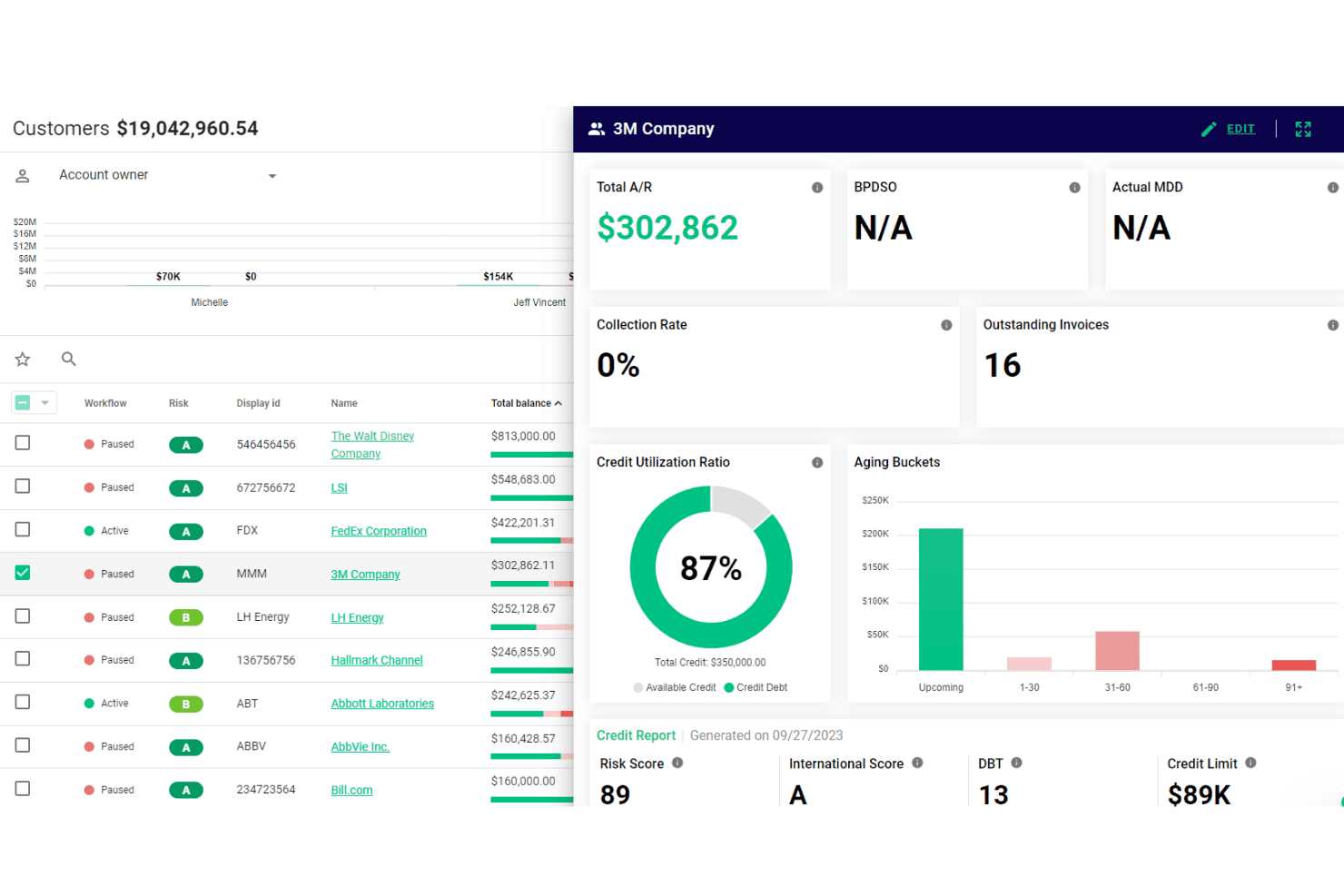
Cforia muestra las puntuaciones de riesgo de los clientes y la antigüedad de las cuentas por cobrar en una sola vista. Cforia es una plataforma de automatización de cuentas por cobrar (AR) del proceso de pedido a cobro, con módulos para la aplicación de cobros, la gestión de cobranzas, la resolución integrada de disputas y el seguimiento de deducciones basado en la detección de pagos incompletos.
¿Para quién es más adecuada Cforia?
Cforia es una buena opción para los equipos empresariales de AR y cobranzas que procesan grandes volúmenes de pagos de clientes y necesitan integrar la detección automatizada de pagos incompletos en su flujo de trabajo de aplicación de cobros.
Por qué elegí Cforia
Elegí Cforia como una de las mejores opciones porque su módulo de aplicación de cobros detecta los pagos incompletos en el momento de conciliarlos con los pagos, no como un paso de seguimiento manual. Cuando una remesa llega con un importe inferior al esperado, Cforia la marca automáticamente y crea un registro de deducción y disputa en el mismo proceso. También me gusta la función de vinculación automática de clientes, que concilia los pagos entre jerarquías de cuentas principales y secundarias para que las cuentas con varias entidades no generen falsas alertas de deducción.
Funciones principales de Cforia
- Gestión integrada de disputas: Permite a los equipos registrar, hacer seguimiento y resolver disputas por deducciones directamente dentro de la plataforma.
- Conciliación automática de clientes: Conecta los pagos y las facturas pendientes entre estructuras de cuentas principales y secundarias para capturar las deducciones con precisión.
- Paneles de AR en tiempo real: Proporciona a los equipos de AR paneles configurables para supervisar el estado de las deducciones, el historial de actividad y los indicadores clave de rendimiento.
- Ingesta de datos de múltiples fuentes: Admite la importación de datos de remesas, pagos y pagos incompletos desde bancos, archivos de cajas de seguridad y sistemas ERP.
Integraciones de Cforia
Las integraciones nativas no están documentadas claramente. Cforia ofrece una API para integraciones personalizadas y puede conectarse a sistemas ERP mediante una configuración personalizada.
Pros and Cons
Pros:
- La detección de pagos incompletos está integrada en la aplicación de cobros
- Gestiona estructuras complejas de cuentas principales y secundarias
- Registros de disputas creados automáticamente al marcar una incidencia
Cons:
- Los plazos de implementación pueden prolongarse varios meses
- La personalización de informes requiere la intervención del proveedor
Learn more about Cforia: Ideal para la automatización de flujos de trabajo de deducciones de CPG
- Demostración gratuita disponible
- Precios disponibles previa solicitud
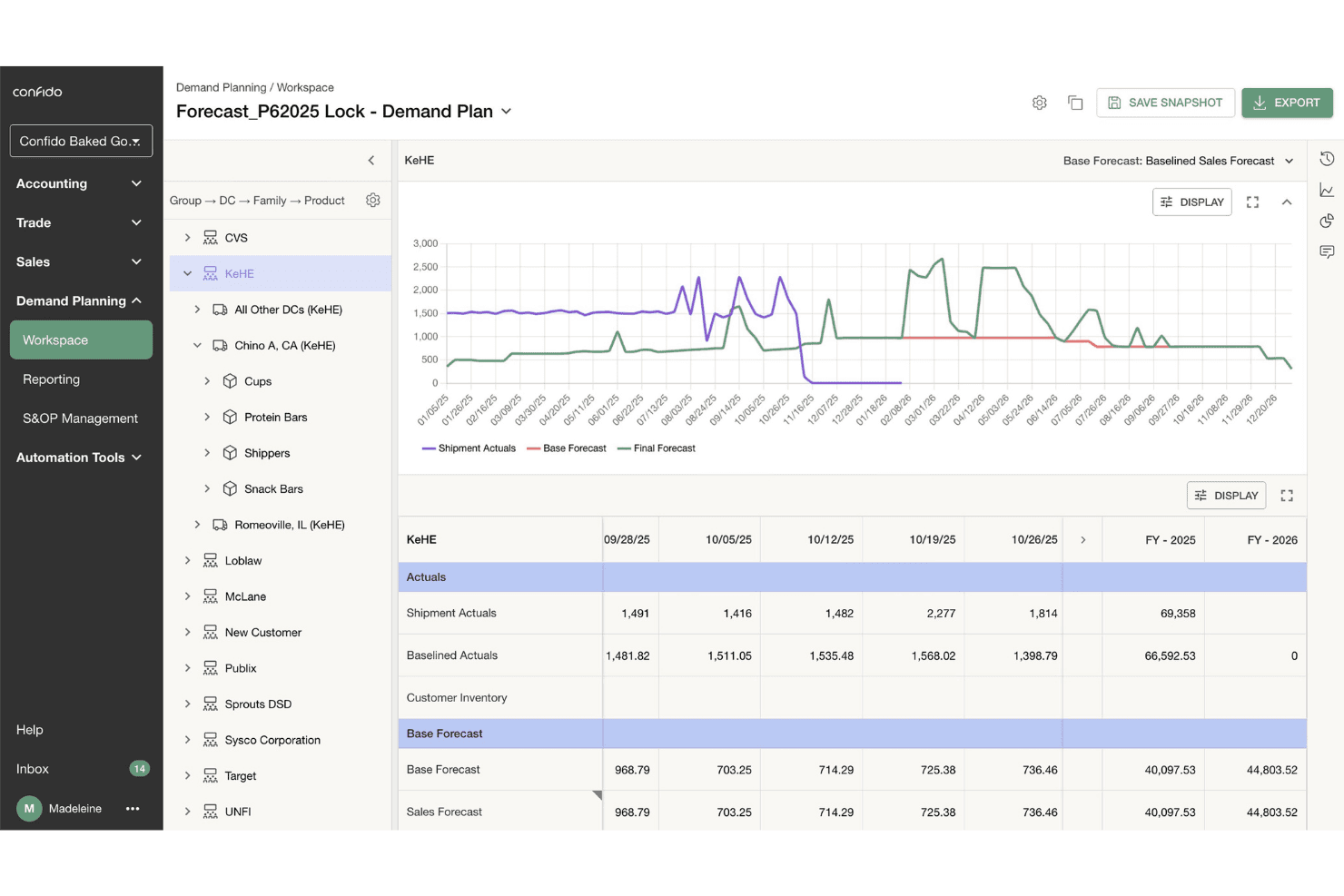
Confido permite a los usuarios pronosticar la demanda mediante gráficos visuales y datos semanales. Confido es una plataforma de gestión de deducciones creada específicamente para marcas de CPG, que combina la captura automatizada de deducciones, la clasificación basada en IA, los flujos de trabajo para el envío de disputas y las integraciones directas con los principales minoristas, distribuidores y sistemas ERP.
¿Para quién es más adecuado Confido?
Confido es una opción especialmente adecuada para los equipos de cuentas por cobrar y finanzas de marcas de CPG que venden a través de establecimientos minoristas físicos y gestionan regularmente grandes volúmenes de deducciones de los principales minoristas y distribuidores.
Por qué elegí Confido
Elegí Confido como una de las mejores opciones porque su flujo de trabajo automatizado de deducciones está diseñado específicamente en torno a la forma en que las marcas de CPG interactúan con los principales minoristas. Me gusta que marque automáticamente las deducciones que quedan fuera de los acuerdos aprobados, para que mi equipo pueda priorizar las disputas sin revisar manualmente cada línea. El flujo de aprobación dirige las deducciones directamente a las partes interesadas adecuadas de los equipos de finanzas, ventas y corredores, reduciendo las idas y vueltas que ralentizan la resolución.
Características principales de Confido
- Extracción automatizada de documentos de respaldo: Confido extrae automáticamente facturas, deducciones y detalles de remesas de los correos electrónicos y portales de los minoristas.
- Conciliación de deducciones de promociones comerciales: Asocia las deducciones con promociones o acuerdos específicos mediante conectores de datos comerciales integrados.
- Integraciones con ERP y minoristas multicanal: La plataforma se conecta con NetSuite, QuickBooks, SAP, Sage, Microsoft Dynamics 365 y más de 40 portales de minoristas.
- Flujos de trabajo de aprobación basados en roles: Asigna, escala y realiza el seguimiento de las partidas de deducciones con permisos configurables específicos para cada equipo y hilos de conversación centralizados.
Integraciones de Confido
Confido ofrece integraciones nativas con NetSuite, QuickBooks, SAP, Sage, Microsoft Dynamics 365, Walmart, Kroger, Target, KeHE, UNFI y Meijer. Hay una API disponible para integraciones personalizadas.
Pros and Cons
Pros:
- Asocia automáticamente las deducciones directamente con promociones y códigos de motivo
- Escala desde equipos pequeños y eficientes hasta marcas más grandes
- Certificado SOC 2 para datos financieros y de minoristas
Cons:
- Diseñado específicamente para CPG, no para otras industrias
- Los precios y los parámetros de referencia del ROI no están disponibles públicamente
Learn more about Confido: La mejor opción para flujos de trabajo de deducciones impulsados por IA
- Demostración gratuita disponible
- Precio bajo solicitud
Visit WebsiteCustomer Rating:4.5/5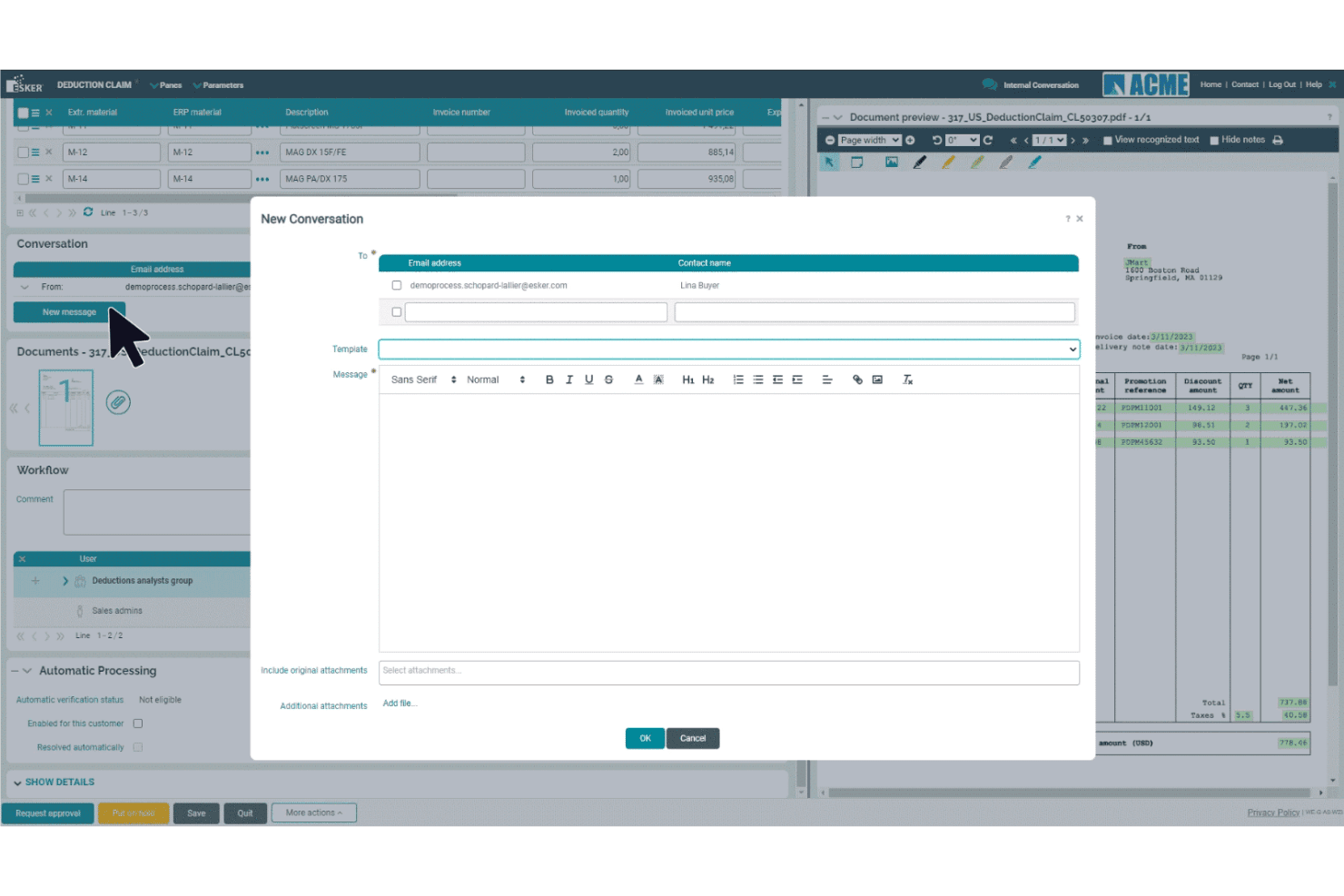
Esker permite a los usuarios enviar conversaciones internas directamente desde una reclamación de deducción. Esker es una plataforma de automatización de cuentas por cobrar basada en la nube, con un módulo de gestión de deducciones que utiliza captura de datos mediante IA, recuperación de documentos mediante RPA y flujos de trabajo configurables para gestionar reclamaciones de deducciones de clientes tanto comerciales como no comerciales.
¿Para quién es más adecuada Esker?
Esker es una opción muy adecuada para fabricantes del mercado medio y empresas, compañías de bienes de consumo envasados y empresas de alimentos y bebidas que gestionan grandes volúmenes de deducciones de clientes comerciales y no comerciales.
Por qué elegí Esker
Esker merece estar entre las mejores opciones de mi lista debido a la forma en que Esker Synergy AI gestiona la parte más pesada del trabajo relacionado con las deducciones. Me gusta que extraiga y clasifique automáticamente las deducciones de comprobantes de pago, notas de débito y facturas promocionales en categorías comerciales o no comerciales. Los bots de RPA recuperan documentos justificativos, como POD y BOL, directamente de los portales de los minoristas. La IA también aprende de las correcciones de los analistas con el tiempo, lo que mejora la precisión de la codificación automática cuanto más la utilizo.
Características principales de Esker
- Configuración de flujos de trabajo multinivel: Configura procesos de aprobación personalizados según el tipo y el valor de la deducción, con la participación de los equipos de cuentas por cobrar, ventas y cadena de suministro.
- Recuperación de documentos mediante RPA: Automatiza la obtención de documentos justificativos directamente desde los portales de minoristas y transportistas.
- Panel integrado de análisis de cuentas por cobrar: Supervisa en una sola vista KPI en tiempo real, como DDO, la antigüedad de las deducciones y los desgloses de las causas raíz.
- Integración con Salesforce: Sincroniza los datos de los casos de deducción y colabora con los equipos de ventas mediante una conexión API directa.
Integraciones de Esker
Esker ofrece integraciones nativas con SAP, Oracle, Microsoft Dynamics 365, NetSuite, Sage, Salesforce y QuickBooks, además de una API para integraciones personalizadas.
Pros and Cons
Pros:
- La precisión de la codificación automática mejora con las correcciones de los analistas
- Gestiona reclamaciones tanto comerciales como no comerciales
- Visibilidad en tiempo real de DDO y de la antigüedad de las deducciones
Cons:
- Los plazos de implementación pueden prolongarse varios meses
- La configuración completa requiere asistencia dedicada de un administrador
Learn more about Esker: La mejor opción para la validación de deducciones impulsada por IA
- Demostración gratuita disponible
- Precio disponible previa solicitud
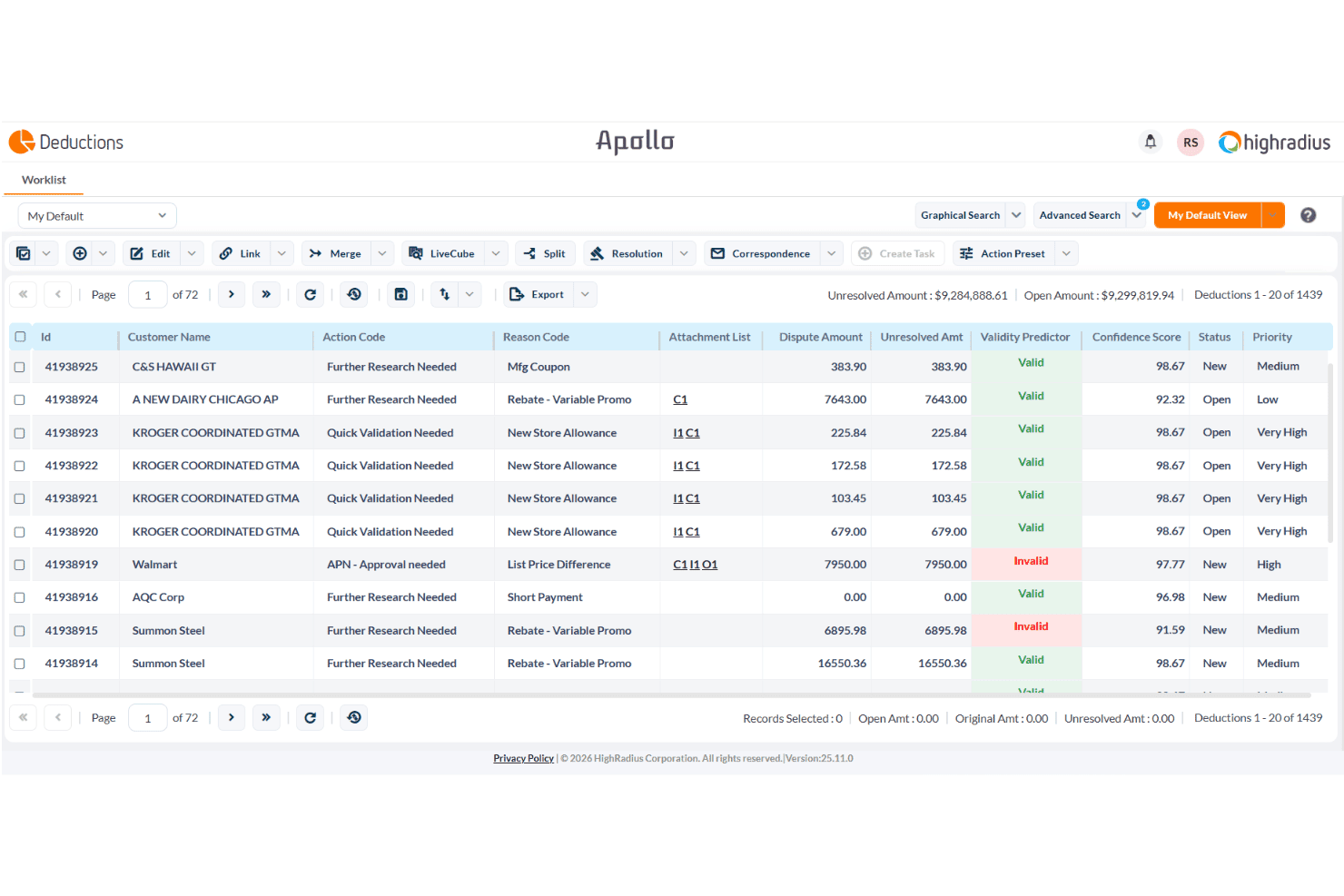
HighRadius ayuda a los usuarios a gestionar y priorizar las deducciones mediante predicciones de validez basadas en IA. HighRadius es una plataforma de gestión de deducciones impulsada por IA que automatiza la captura de reclamaciones desde portales de minoristas, la comparación con documentos de respaldo, la codificación de deducciones y los flujos de trabajo de resolución de disputas en los equipos de cuentas por cobrar.
¿Para quién es más adecuado HighRadius?
HighRadius es una opción ideal para equipos empresariales de cuentas por cobrar en los sectores de bienes de consumo envasados, alimentos y bebidas, y manufactura que gestionan grandes volúmenes de deducciones procedentes de portales de minoristas.
Por qué elegí HighRadius
HighRadius se ha ganado un lugar como una de las mejores opciones de mi lista porque cuenta con el Predictor de validez de deducciones, que utiliza una puntuación de confianza basada en IA para señalar si una deducción es válida o no antes de que alguien la revise manualmente. Me gusta que el agente de descarga de reclamaciones del portal navega automáticamente por los principales portales de minoristas, como Amazon y Kroger, para obtener directamente los documentos de las reclamaciones, eliminando los accesos repetitivos a los portales. A continuación, el agente de comparación de promociones comerciales contrasta esas reclamaciones con los datos de TPM de SAP y los registros de POS para realizar una validación multivía.
Características principales de HighRadius
- Análisis de variaciones por faltantes: Agrega comprobantes de entrega y documentación del transportista para vincular las reclamaciones con los faltantes y validarlas.
- Priorización de listas de trabajo: Crea listas dinámicas impulsadas por IA para organizar y delegar las tareas de investigación de deducciones entre los equipos de cuentas por cobrar.
- Carga de reclamaciones no válidas y gestión de disputas: Prepara automáticamente expedientes de disputa con archivos adjuntos y los envía a los portales de minoristas.
- Vinculación de documentos de respaldo de deducciones: Busca coincidencias y adjunta automáticamente toda la documentación de respaldo pertinente a cada registro de deducción abierto.
Integraciones de HighRadius
HighRadius ofrece integraciones nativas con los sistemas ERP SAP, Oracle, NetSuite, Microsoft Dynamics 365, QuickBooks y Sage, además de una API para integraciones personalizadas.
Pros and Cons
Pros:
- Puntuación de validez basada en IA antes de comenzar la revisión manual
- Navega automáticamente por los portales de minoristas para obtener documentos de reclamaciones
- Comparación multivía de promociones comerciales con datos de TPM
Cons:
- Plazos de implementación prolongados para despliegues empresariales
- La personalización de informes requiere asistencia del departamento de TI o del proveedor
Learn more about HighRadius: La mejor opción para la resolución autónoma de deducciones
- Demostración gratuita disponible
- Precio bajo solicitud
Visit WebsiteCustomer Rating:3.5/5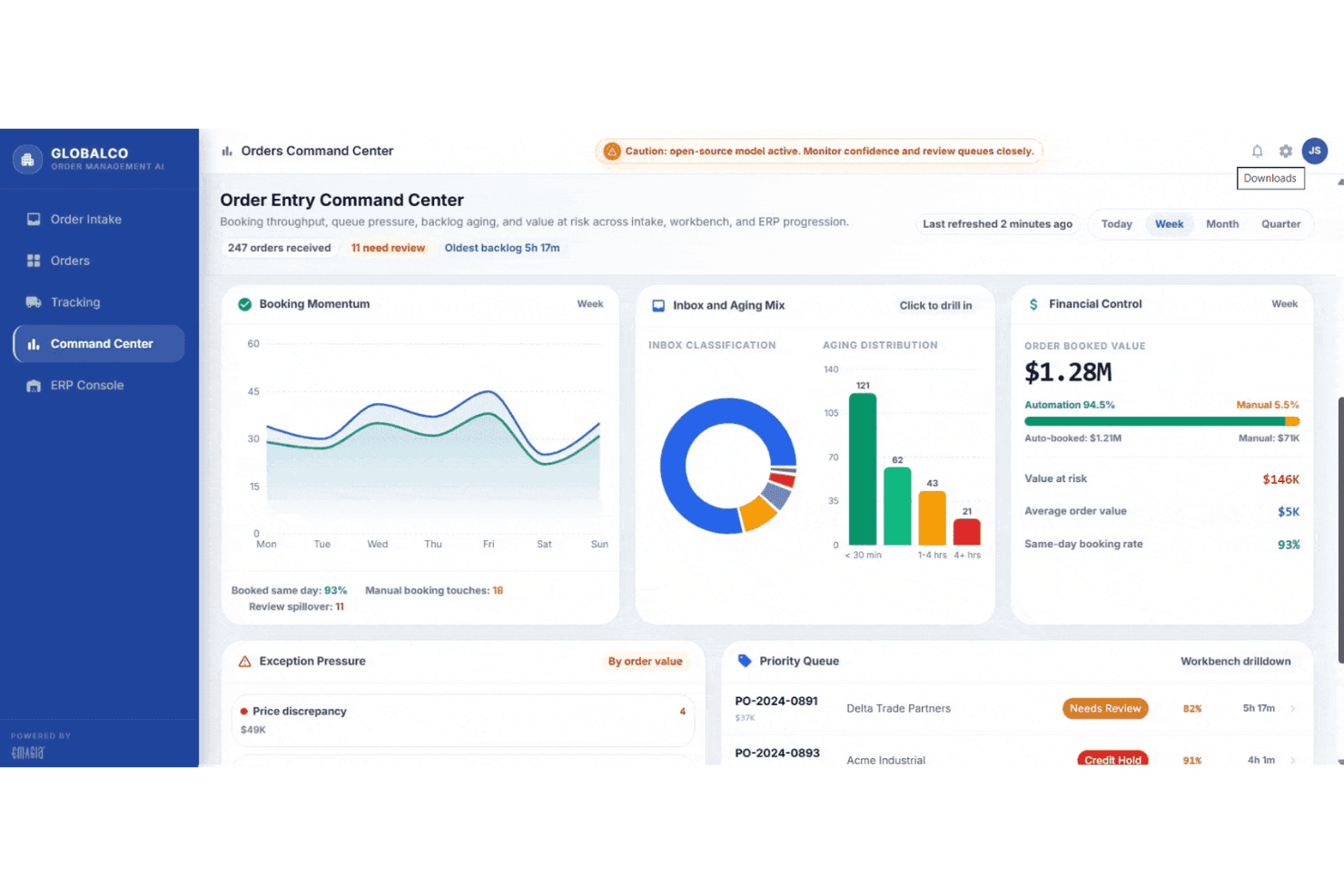
Emagia centraliza la gestión de pedidos con reservas impulsadas por IA y seguimiento de excepciones. Emagia es una plataforma de gestión de deducciones basada en IA que automatiza la identificación de pagos insuficientes, la clasificación mediante códigos de motivo, el enrutamiento del flujo de trabajo de disputas y el seguimiento de resoluciones en toda la función de cuentas por cobrar.
¿Para quién es más adecuada Emagia?
Emagia es una opción excelente para equipos financieros empresariales y centros de servicios compartidos que gestionan grandes volúmenes de deducciones en varios ERP y unidades de negocio.
Por qué elegí Emagia
Elegí Emagia como una de las mejores opciones por el alcance de su resolución autónoma en la práctica. El procesamiento masivo de reclamaciones basado en reglas aprueba automáticamente las deducciones según decisiones empresariales predefinidas, sin necesidad de intervención de los analistas. Además, Gia AI identifica automáticamente los pagos insuficientes y excesivos, asigna códigos de motivo y enruta cada elemento por el flujo de trabajo correcto de inmediato, lo que significa que mi equipo no tiene que clasificar manualmente una acumulación de casos antes de que pueda comenzar el trabajo de resolución.
Características principales de Emagia
- Biblioteca configurable de códigos de motivo: Crea y gestiona códigos de motivo de deducción personalizados adaptados a las necesidades del negocio.
- Integración con ERP y sistemas financieros: Se conecta con SAP, Oracle, Microsoft Dynamics, NetSuite, Sage y otras plataformas ERP líderes.
- Agregación y vinculación de documentos: Agrega y adjunta documentos justificativos, como facturas, PODs y BOLs, a los casos de deducción para facilitar su consulta.
- Panel de análisis: Realiza un seguimiento de la antigüedad de las deducciones, las tasas de resolución y las tendencias por cliente o causa raíz para la revisión de la dirección.
Integraciones de Emagia
Emagia ofrece integraciones nativas con SAP, Oracle, NetSuite, PeopleSoft, Workday, Microsoft Dynamics y Sage. Hay una API disponible para integraciones personalizadas.
Pros and Cons
Pros:
- La IA resuelve automáticamente hasta el 80 % de las deducciones
- Granularidad de partidas a nivel de disputa para disputas de facturas
- Matriz de delegación de autoridad para flujos de trabajo de aprobación
Cons:
- Sin precios ni acceso de prueba de autoservicio
- Complejidad de implementación en entornos con varios ERP
Learn more about Emagia: La mejor opción para automatizar las reclamaciones en portales de minoristas
- Demostración gratuita disponible
- Precio disponible previa solicitud
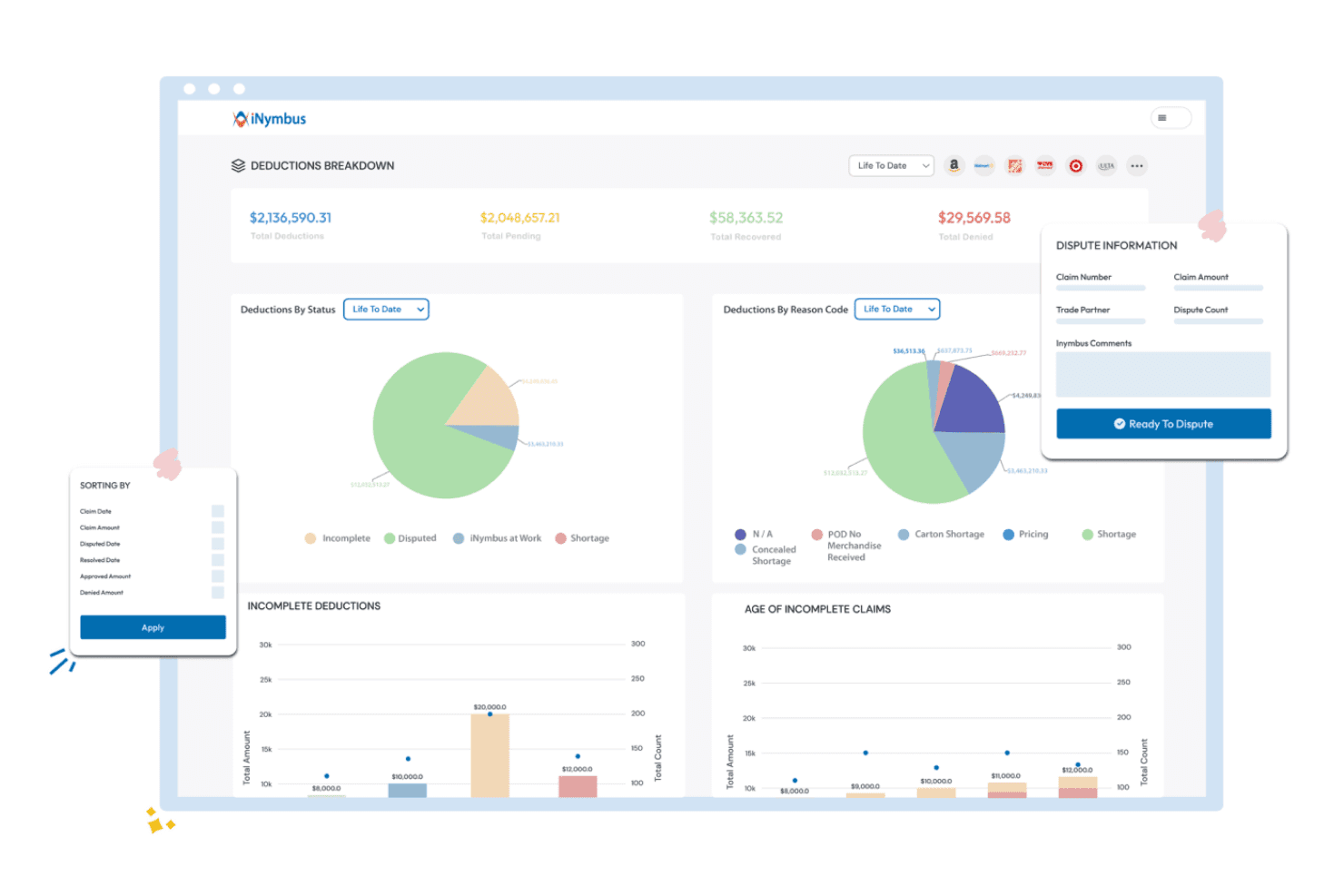
iNymbus DeductionXchange realiza el seguimiento y visualiza las deducciones por estado y código de motivo. iNymbus DeductionXchange es una plataforma de gestión de deducciones basada en la nube que utiliza la automatización robótica de procesos para capturar, cotejar y disputar contracargos y reclamaciones de minoristas en más de 50 portales de minoristas, transacciones EDI y canales basados en correo electrónico.
¿Para quién es más adecuado iNymbus DeductionXchange?
Es una opción especialmente adecuada para fabricantes, distribuidores y proveedores de productos de consumo envasados que gestionan grandes volúmenes de deducciones de minoristas de grandes cuentas como Walmart, Amazon o Target.
Por qué elegí iNymbus DeductionXchange
Elegí iNymbus DeductionXchange como una de las mejores opciones por la forma en que gestiona de principio a fin el envío a los portales de minoristas. Los robots de RPA recuperan los documentos de las reclamaciones, recopilan los paquetes de disputa y completan automáticamente los campos obligatorios de los portales de Walmart Retail Link, Amazon Vendor Central y más de 50 portales adicionales, sin necesidad de iniciar sesión manualmente. También valoro la conciliación con precisión de centavos de Walmart SQEP, que detecta discrepancias en los importes antes del envío y reduce las disputas rechazadas.
Características principales de iNymbus DeductionXchange
- Panel centralizado de deducciones: Consulta y gestiona todas las deducciones de varios minoristas desde un único lugar.
- Agregación automatizada de documentos: Extrae documentos de respaldo de fuentes EDI, ERP, correo electrónico y portales.
- Compatibilidad flexible con formatos de archivo: Integra formatos de archivo personalizados para procesar datos sin problemas entre distintas fuentes.
- Herramientas de análisis de causas raíz: Visualiza los patrones y las causas raíz de las deducciones mediante paneles de análisis detallados.
Integraciones de iNymbus DeductionXchange
iNymbus DeductionXchange ofrece integraciones nativas con SAP, Oracle, NetSuite, Microsoft Dynamics y QuickBooks, y se conecta con plataformas de minoristas como Walmart Retail Link y Amazon Vendor Central. También dispone de una API para integraciones personalizadas.
Pros and Cons
Pros:
- Gestiona automáticamente los envíos a más de 50 portales de minoristas
- Concilia las deducciones de Walmart hasta el último centavo
- Reduce significativamente el tiempo de preparación manual de disputas
Cons:
- Las opciones de personalización de informes son limitadas de forma predeterminada
- La implementación requiere una configuración exhaustiva de las credenciales de los portales de minoristas
Learn more about iNymbus DeductionXchange: Ideal para la recuperación externalizada de ingresos minoristas
- Demostración gratuita disponible
- Precios disponibles previa solicitud
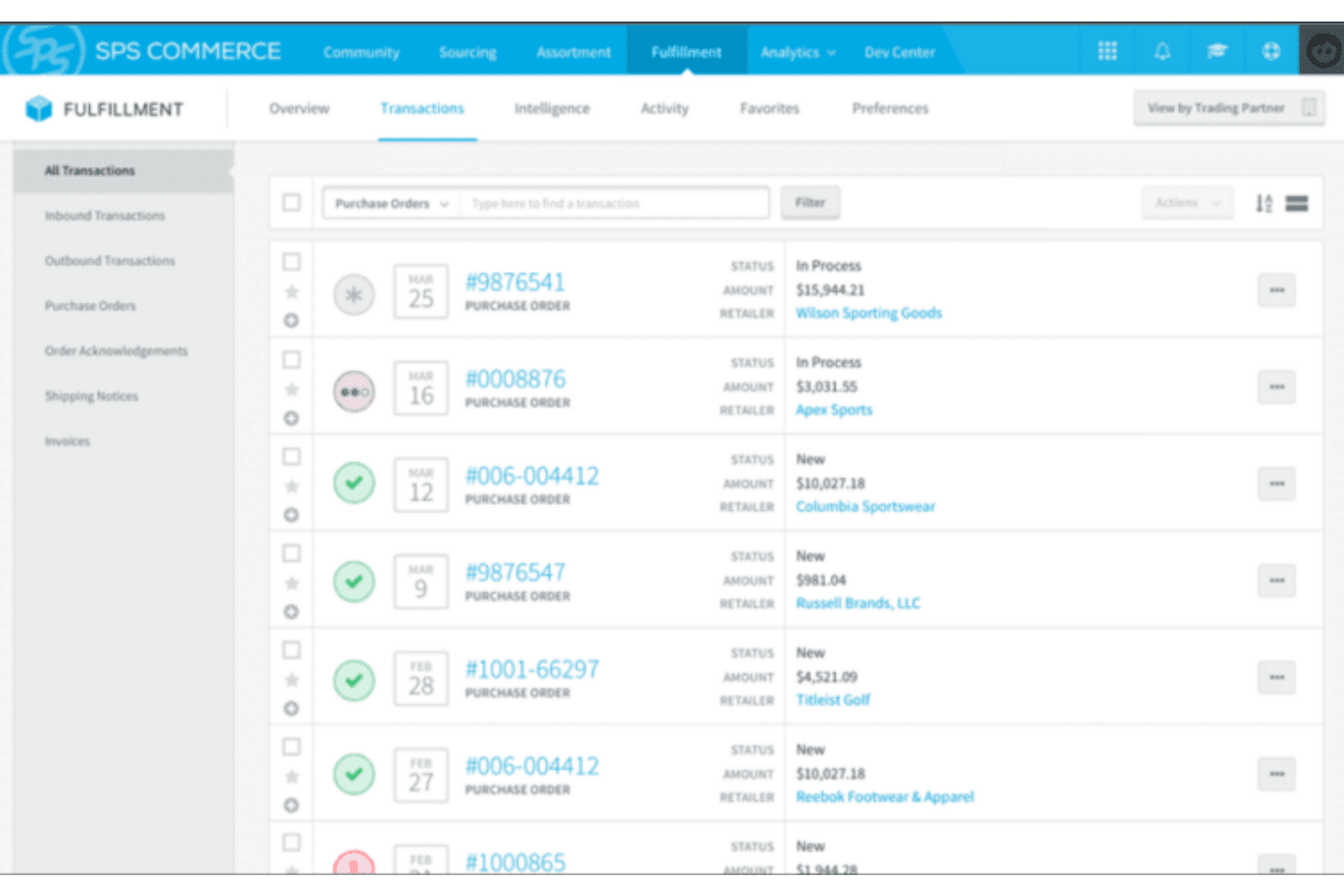
SPS Commerce centraliza el seguimiento de las órdenes de compra para detectar brechas de ingresos. SPS Commerce Revenue Recovery es una plataforma de gestión de deducciones minoristas que automatiza la captura de deducciones, la recuperación de documentos de respaldo, el envío de disputas y los informes sobre las causas raíz en los principales minoristas, distribuidores y canales de mercados digitales.
¿Para quién es más adecuado SPS Commerce Revenue Recovery?
Marcas de bienes de consumo envasados y proveedores de bienes de consumo que venden a través de grandes cadenas minoristas y desean un enfoque gestionado y dirigido por expertos para recuperar deducciones.
Por qué elegí SPS Commerce Revenue Recovery
He incluido SPS Commerce Revenue Recovery entre mis principales opciones porque es la única plataforma que conozco que ofrece un modelo de recuperación verdaderamente externalizado, en el que los expertos de SPS gestionan todo el ciclo de disputa en tu nombre. Me gusta que la plataforma recupere automáticamente los documentos de respaldo específicos de cada minorista y los adjunte a las deducciones abiertas antes de enviarlas. Los flujos de trabajo preconfigurados para socios como Walmart, Amazon y Kroger garantizan que los paquetes de disputa se elaboren conforme a las especificaciones exactas de cada minorista.
Características principales de SPS Commerce Revenue Recovery
- Panel centralizado de deducciones: Consulta, supervisa y gestiona cada deducción, disputa y resolución en una sola interfaz.
- Mapeo de cumplimiento específico para cada minorista: La lógica integrada aborda los requisitos de contracargos de Walmart, Amazon, Kroger, CVS y otros.
- Análisis automatizado de las causas raíz: Detecta tendencias y patrones de deducciones entre clientes, códigos de motivo y periodos para aplicar mejoras específicas en los procesos.
- Seguridad de datos SOC 2 Tipo II: Protege los datos financieros mediante copias de seguridad cada hora, cifrado y gestión del acceso basada en roles.
Integraciones de SPS Commerce Revenue Recovery
SPS Commerce Revenue Recovery ofrece integraciones nativas con los principales portales de minoristas, como Walmart Retail Link, Amazon Vendor Central, Target Partners Online, Kroger Partners Portal y CVS Supplier Portal. También hay una API disponible para integraciones personalizadas.
Pros and Cons
Pros:
- El ciclo de disputa totalmente gestionado reduce la carga interna del equipo de cuentas por cobrar
- Tasa de recuperación de hasta el 99 % en reclamaciones válidas
- La información sobre las causas raíz evita que se repitan determinados tipos de deducciones
Cons:
- No ofrece precios de autoservicio; requiere una conversación con el equipo de ventas
- Menos adecuado para canales no minoristas o de venta directa al consumidor
Learn more about SPS Commerce Revenue Recovery:
Otros software de gestión de deducciones
Estas son algunas opciones adicionales de software de gestión de deducciones que no incluí en mi lista de preseleccionados, pero que aún merece la pena revisar:
- 11UpClear BluePlannerLa mejor opción para relacionar deducciones con promociones comerciales
- 12VividlyLa mejor opción para el seguimiento de deducciones en CPG
- 13BilltrustIdeal para casos centralizados de disputas de AR
- 14VersapayIdeal para disputas de facturas con clientes
- 15GavitiIdeal para deducciones en los flujos de trabajo de cuentas por cobrar
How I Evaluate Deduction Management Software
I split my evaluation into baseline requirements—like automated deduction capture and dispute workflows—and the differentiators, like retailer coverage and ERP fit, that separate good from great.
Core Functionality (Table Stakes For This List)
When I'm selecting tools for my list, I rank each one on a scale from 0 (does not offer the functionality) to 5 (excels in this area) for every core functionality below. I then calculate the total score as a percentage. I use 65% as a benchmark to assess overall fit for the list.
- Deduction Capture: I check whether the tool pulls deduction data from ERP systems, bank remittances, EDI 812/820 feeds, and retailer portals without manual uploads.
- Document Matching: Automatic retrieval and matching of PODs, BOLs, and invoices to open claims saves hours of portal-hopping across retailer systems.
- Deduction Coding: I evaluate how the tool classifies deductions by reason code—shortages, pricing errors, promotional claims—to support root-cause analysis.
- Dispute Workflows: Multi-role workflows with audit trails matter here, especially when AR, sales, and trade teams all need to collaborate on approvals and escalations.
- Recovery Management: I look for automated chargeback packet assembly and submission, plus tracking through to repayment—manual packet building doesn't scale.
- Analytics & Reporting: Dashboards should track deduction aging, recovery rates, and root causes by customer or reason code to surface trends worth acting on.
Next, once I have a list of tools that meet the criteria, I consider what sets each platform apart.
Differentiating Factors (What Sets Vendors Apart)
Here's how I compare and contrast different vendors:
Standout Features
AI-powered deduction coding can automatically classify claims by reason code using historical patterns. This can cut triage time on high-volume accounts. Automated backup document retrieval is another key differentiator. Native retailer portal connectors can pull PODs and claim documents without manual downloads. For CPG brands, I also evaluate trade promotion matching. This helps validate deductions against TPM systems or promotional calendars.
Beyond Features
ERP integration depth also matters. I check whether a platform syncs with AR aging and cash application data in systems like SAP, NetSuite, or Oracle. Similarly, retailer coverage is important for companies selling through major retail or foodservice channels. Pricing models also vary across this space. Some vendors use SaaS subscriptions, while others charge contingency-based recovery fees.
Cómo elegir un software de gestión de deducciones
Al comparar software de gestión de deducciones, céntrate en qué medida cada plataforma se adapta a tu flujo de trabajo de cuentas por cobrar, volumen de deducciones, entorno ERP y fuentes de reclamaciones.
| Si tu prioridad es | Busca |
| Comparación rápida de documentos | Conectores prediseñados para portales de minoristas |
| Información sobre la causa raíz de las deducciones | Codificación basada en IA y análisis detallados |
| Gestionar una combinación de EDI/portales de minoristas | Captura automática desde EDI 812 y portales que no usan EDI |
| Recuperación simplificada de contracargos | Envío automatizado de expedientes con seguimiento de reembolsos |
| Integración con ERP y TPM | Sincronización bidireccional con tu conjunto central de sistemas financieros |
Cómo evaluar tu lista de preseleccionados
- Prueba la ingestión automática con liquidaciones de muestra: Sube al menos 3 archivos variados de deducciones de minoristas y compara las capturas automáticas en un plazo de 48 horas.
- Solicita un informe de documentos adjuntos de una reclamación de muestra: Obtén una demostración en directo en la que se muestre cómo el POD, la factura y el BOL se emparejan automáticamente con las reclamaciones de un minorista para un cliente actual.
- Compara los pasos del flujo de trabajo con tus procedimientos normalizados de trabajo: Solicita cartas de disputa prediseñadas, roles de usuario y vías de escalado, y compáralos con tu propio proceso de cuentas por cobrar.
- Exige un registro de auditoría: Solicita un registro de auditoría de muestra que incluya todas las acciones relacionadas con las deducciones, los identificadores de usuario y las marcas de tiempo para validar el cumplimiento.
- Compromiso entre automatización mediante IA y personalización: Decide si necesitas una automatización integral o una mayor personalización. Las herramientas más configurables pueden requerir supervisión adicional.
¿Qué es el software de gestión de deducciones?
El software de gestión de deducciones es una herramienta especializada para la gestión de cuentas por cobrar. Automatiza la captura, codificación, comparación de documentos y resolución de las reclamaciones por deducciones de clientes. Estas plataformas pueden conectarse con tu ERP, tus canales EDI y los portales de minoristas. Esto ayuda a reducir el trabajo manual, mejorar los plazos de resolución de disputas y descubrir las causas de los pagos incompletos o los cargos por penalización. Como resultado, los equipos financieros pueden utilizar estas herramientas para acelerar la recuperación y supervisar las tendencias de las deducciones.
Funciones del software de gestión de deducciones
Al comparar software de gestión de reclamaciones y deducciones, busca funciones que respalden todo el proceso, desde la captura y validación de reclamaciones hasta la resolución de disputas y la recuperación:
- Captura y agregación de deducciones: Recopila automáticamente los datos de las deducciones de los sistemas ERP, los canales EDI, las remesas y los portales de minoristas para eliminar la recopilación manual.
- Comparación de reclamaciones y documentos justificativos: Recupera, compara y adjunta comprobantes de entrega, conocimientos de embarque y facturas a las reclamaciones por deducciones relacionadas para facilitar la validación.
- Categorización por código de motivo: Asigna cada deducción a códigos de motivo específicos, como faltantes, precios o cumplimiento, ayudando a los equipos de cuentas por cobrar a analizar y abordar las causas subyacentes.
- Flujo de trabajo de disputas y aprobaciones: Gestiona cada paso para validar, escalar, disputar o cancelar deducciones mediante registros de auditoría y vías de aprobación claramente definidas.
- Generador de paquetes de cargos por penalización y recuperación: Reúne la documentación y los formularios pertinentes en paquetes de cargos por penalización. Después, los equipos pueden enviarlos a los clientes para recuperar las deducciones no válidas.
- Integración con minoristas y EDI: Se conecta de forma nativa con los principales portales de minoristas y admite los formatos EDI 812/820. Esto ayuda a los equipos a gestionar tanto los formatos de reclamación electrónicos como los manuales.
- Paneles e informes configurables: Ofrece paneles que visualizan las tendencias de las deducciones, su antigüedad y las tasas de recuperación, ayudando a los equipos a supervisar los KPI e identificar patrones.
- Permisos y roles de usuario: Permite configurar distintos niveles de acceso, garantizando la auditabilidad y el cumplimiento mientras colaboran los equipos de cuentas por cobrar, ventas y finanzas.
- Seguimiento del registro de auditoría: Registra todas las acciones y modificaciones de los usuarios dentro de la plataforma, lo que facilita el seguimiento del historial de decisiones y el respaldo de los controles financieros.
- Notificaciones automatizadas: Envía alertas sobre nuevas reclamaciones, plazos de aprobación o escalados del flujo de trabajo para que nada quede desatendido.
Funciones de IA en el software de gestión de deducciones
Las funciones de IA del software de gestión de deducciones pueden ayudar a los equipos de cuentas por cobrar a clasificar las deducciones, validar las reclamaciones, comparar los documentos justificativos, priorizar las disputas e identificar patrones que pueden contribuir a deducciones recurrentes. Echa un vistazo a continuación:
- Codificación de deducciones mediante IA: Utiliza el aprendizaje automático para clasificar automáticamente las deducciones por código de motivo basándose en patrones históricos de reclamaciones, reduciendo el tiempo de revisión manual.
- Resolución predictiva de disputas: Analiza los resultados anteriores para sugerir las estrategias de disputa más eficaces y prever la probabilidad de recuperación satisfactoria de cada reclamación.
- Comparación automatizada de documentos: Utiliza la IA para identificar, extraer y vincular documentos justificativos —como los POD y las facturas— con la deducción correcta, incluso cuando varían los formatos o las convenciones de nomenclatura.
- Análisis de tendencias de las causas raíz: Utiliza la IA para detectar patrones y anomalías emergentes en los datos de deducciones. Esto ayuda a los equipos a abordar problemas recurrentes y prevenir futuras reclamaciones.
- Enrutamiento inteligente de flujos de trabajo: Asigna dinámicamente los casos de deducciones a los miembros adecuados del equipo o a las vías de escalamiento correspondientes según la complejidad de la reclamación, el historial del cliente y el equilibrio de la carga de trabajo.
- Procesamiento del lenguaje natural para la revisión de reclamaciones: Utiliza la IA para interpretar y resumir narrativas de reclamaciones no estructuradas o documentación justificativa. Esto puede facilitar la validación y resolución de deducciones complejas.
Ventajas del software de gestión de deducciones
El software de gestión de deducciones ayuda a los equipos de cuentas por cobrar a reducir el trabajo manual, resolver las deducciones más rápidamente, mejorar las tasas de recuperación y obtener una mayor visibilidad sobre las causas de las deducciones de los clientes. Estas son algunas de las ventajas que puede esperar:
- Resolución más rápida de las reclamaciones: La captura automatizada de datos, la correspondencia de documentos y el seguimiento de flujos de trabajo ayudan a los equipos a procesar las reclamaciones por deducciones más rápidamente.
- Mejores tasas de recuperación: La generación de paquetes de contracargos y la automatización de disputas ayudan a identificar y recuperar más deducciones no válidas.
- Análisis más exhaustivo de las causas raíz: La categorización, los análisis y los conocimientos basados en IA facilitan la detección de tendencias y el abordaje de problemas recurrentes relacionados con las deducciones.
- Menor esfuerzo manual: Las integraciones con ERP, EDI y los portales de minoristas minimizan las tediosas descargas, cargas y entradas de datos repetitivas.
- Mejor colaboración entre equipos: Los flujos de trabajo basados en roles y los registros de auditoría conectan a los equipos de cuentas por cobrar, ventas y comercio para que no se pase nada por alto ni se duplique.
- Mayor confianza en el cumplimiento: Los registros de auditoría y los controles de permisos facilitan la aplicación de las políticas internas y el cumplimiento de SOX u otras normativas financieras similares.
- Mayor visibilidad financiera: Los paneles personalizados y los informes en tiempo real aportan claridad sobre la actividad de las deducciones, las tasas de recuperación y los riesgos pendientes para la dirección financiera.
Costes y precios
El precio del software de gestión de deducciones suele basarse en un presupuesto personalizado. Los costes pueden variar según el volumen de deducciones, el número de usuarios, las integraciones con ERP, la cobertura de minoristas y los requisitos de implementación. Muchos proveedores orientados a empresas no publican precios estándar. Normalmente tendrá que ponerse en contacto con el proveedor para solicitar un presupuesto personalizado. Consulte a continuación algunas opciones de precios habituales:
Tabla comparativa de planes para software de gestión de deducciones
| Tipo de plan | Precio medio | Funciones habituales |
|---|---|---|
| Tipo de planPlan gratuito | Precio medio$0 | Funciones habitualesSeguimiento básico de deducciones, cargas limitadas de documentos, acceso para un solo usuario y asistencia por correo electrónico. |
| Tipo de planPlan personal | Precio medio$50-$150/usuario/mes | Funciones habitualesCaptura estándar de reclamaciones, correspondencia automatizada de documentos, plantillas de flujos de trabajo y paneles básicos de análisis. |
| Tipo de planPlan empresarial | Precio medio$200-$700/usuario/mes | Funciones habitualesColaboración multiusuario, integración con ERP y EDI, informes personalizados, flujos de trabajo de aprobación configurables y registros de auditoría. |
| Tipo de planPlan para empresas | Precio medio$1,000+/mes | Funciones habitualesFunciones avanzadas de IA, integraciones ilimitadas con portales de minoristas, asistencia prémium, herramientas completas de cumplimiento e integración con sistemas TPM. |
Preguntas frecuentes sobre el software de gestión de deducciones
Estas son algunas respuestas a preguntas frecuentes sobre el software de gestión de deducciones:
¿Cómo gestiona el software de gestión de deducciones la documentación de las reclamaciones de los minoristas?
El software de gestión de deducciones se conecta a los portales de los minoristas y obtiene automáticamente los paquetes de reclamaciones, las facturas y los documentos justificativos, por lo que su equipo no tiene que descargar y ordenar los archivos manualmente.
¿Puede el software de gestión de deducciones integrarse con nuestro ERP o sistema contable?
Sí, la mayoría de las soluciones ofrecen conectores nativos para ERP como NetSuite, SAP, Microsoft Dynamics y QuickBooks, lo que permite sincronizar los datos de las deducciones con sus sistemas de cuentas por cobrar, aplicación de efectivo y libro mayor.
¿Cómo se validan las deducciones de promociones comerciales en estas plataformas?
Estas herramientas suelen comparar las reclamaciones de los minoristas con su sistema de gestión de promociones comerciales (TPM) o calendario promocional, lo que le ayuda a confirmar si las deducciones coinciden con las promociones aprobadas o deben impugnarse.
¿Cuál es el primer paso para automatizar los flujos de trabajo de deducciones?
Empiece probando el sistema con sus propios datos de reclamaciones: cargue archivos de muestra y revise cómo se asignan los códigos de deducción, cómo se emparejan automáticamente los documentos y cómo pasan las impugnaciones por el proceso de aprobación.
¿Se dispone de un registro de auditoría y seguimiento del cumplimiento de SOX?
Sí, el software líder de gestión de deducciones proporciona registros de auditoría detallados de todas las acciones de los usuarios, los cambios en los documentos y los eventos del sistema para respaldar el cumplimiento de SOX y los controles financieros internos.
¿Qué es el software de gestión de deducciones de cuentas por cobrar?
El software de gestión de deducciones de cuentas por cobrar ayuda a los equipos de cuentas por cobrar a identificar, validar, realizar el seguimiento, impugnar y recuperar las deducciones de los clientes. Puede automatizar tareas como la codificación de deducciones, la comparación de documentos, la validación de reclamaciones, la gestión de impugnaciones y el seguimiento de recuperaciones, al tiempo que conecta los flujos de trabajo de deducciones con los sistemas ERP y de cuentas por cobrar.