

I 10 migliori gateway di pagamento internazionali recensiti nel 2026

10 Elenco dei migliori gateway di pagamento internazionali


La gestione delle transazioni internazionali richiede ai CFO di supervisionare le conversioni valutarie, la conformità normativa e le commissioni sulle transazioni. Gestire questi elementi in più regioni aumenta la complessità operativa. Serve una soluzione semplice che renda queste attività più facili ed efficienti.
Secondo la mia esperienza, i gateway di pagamento internazionali sono progettati per supportare i pagamenti transfrontalieri e centralizzare questi processi. Utilizzando questi strumenti, i team finanziari possono ridurre il lavoro manuale e mantenere operazioni di pagamento più coerenti.
In questo articolo condividerò le mie migliori scelte tra i gateway di pagamento internazionali. Ho testato e analizzato indipendentemente ogni opzione per offrirti una prospettiva imparziale. Troverai informazioni su funzionalità, vantaggi e potenziali svantaggi, che ti aiuteranno a scegliere la soluzione migliore per la tua organizzazione.
Perché fidarsi dei nostri consigli sui software
Le nostre recensioni riflettono il nostro giudizio indipendente, non un discorso di vendita. Scopri come manteniamo la trasparenza.
Per questa guida, abbiamo valutato gli strumenti attraverso test pratici e ricerche indipendenti, assegnando un punteggio agli strumenti in base ai nostri criteri di selezione.
Le nostre recensioni riflettono il nostro giudizio editoriale umano, non un discorso di vendita.
Riepilogo dei migliori gateway di pagamento internazionali
Questa tabella comparativa riassume i dettagli dei prezzi delle mie migliori selezioni di gateway di pagamento internazionali, per aiutarti a trovare quello più adatto al tuo budget e alle esigenze della tua attività.
| Tool | Best For | Trial Info | Price | ||
|---|---|---|---|---|---|
| 1 | Best for global reach | Not available | From $620/month | Website | |
| 2 | Best for digital products | Free trial available | Pricing upon request | Website | |
| 3 | Best for small businesses | Free plan + free demo available | From $0.30/transaction | Website | |
| 4 | Best for SaaS businesses | Not available | Pricing upon request | Website | |
| 5 | Best for recurring payments | Free demo available | From 0.5% + $0.05/transaction | Website | |
| 6 | Best for Amazon shoppers | Free demo available | From 2.9% domestic processing fee + $0.30 authorization fee | Website | |
| 7 | Best for education payments | Free demo available | Pricing upon request | Website | |
| 8 | Best for fraud protection | Not available | From $25/month | Website | |
| 9 | Best for trade compliance | Free demo available | Pricing upon request | Website | |
| 10 | Best for enterprise solutions | Not available | Pricing upon request | Website |
Recensioni dei migliori gateway di pagamento internazionali
Di seguito trovi i miei riepiloghi dettagliati dei migliori gateway di pagamento internazionali che sono entrati nella mia selezione. Le mie recensioni offrono un’analisi approfondita delle funzionalità principali, dei pro e dei contro, delle integrazioni e dei casi d’uso ideali di ogni strumento, per aiutarti a trovare quello più adatto a te.

Stripe
Best for global reach

Stripe is a payment processing platform popular among businesses of all sizes, from startups to large enterprises. It enables online payments and financial transactions, making it a go-to choice for companies needing to handle international payments.
Why I picked Stripe: It offers extensive global reach with support for multiple currencies and countries, making it an ideal choice for businesses looking to expand internationally. Stripe's features include payment processing, billing, and fraud prevention, all designed to facilitate global transactions. It also provides a customizable checkout experience, allowing you to tailor the payment process to your brand. With its powerful API, your team can easily integrate Stripe into your existing systems.
Standout features and integrations:
Features include custom billing solutions that adjust to your business needs, a fraud prevention system that helps protect your transactions, and the ability to manage subscriptions and recurring billing with ease.
Integrations include Shopify, WooCommerce, Xero, QuickBooks, Salesforce, NetSuite, Zapier, FreshBooks, Adobe Commerce, Squarespace, and more.
Pros and Cons
Pros:
- Strong developer tools
- Customizable checkout options
- Supports multiple currencies
Cons:
- Limited direct customer support on lower tiers
- Complex pricing structure

Best for digital products

FastSpring is an e-commerce platform designed for businesses selling digital products, such as software and online services. It provides tools for global payments, subscription management, and digital storefront creation, catering mainly to digital content creators and software developers.
Why I picked FastSpring: It specializes in digital products, offering features that make it easy for your team to manage online sales and subscriptions. FastSpring handles global transactions with built-in tax compliance, ensuring you can sell your products internationally without hassle. The platform provides customizable storefronts, allowing you to create a branded shopping experience. Additionally, its subscription management tools help you retain customers and manage recurring revenue effectively.
Standout features and integrations:
Features include advanced reporting tools that give you insights into sales performance, automated tax calculation to simplify compliance, and promotional tools that help you drive sales with discounts and offers.
Integrations include Shopify, WordPress, WooCommerce, Zapier, Mailchimp, Google Analytics, Salesforce, HubSpot, Slack, PayPal, and more.
Pros and Cons
Pros:
- Automated tax compliance
- Offers customizable storefronts
- Supports global transactions
Cons:
- Requires technical setup for advanced features
- Limited suitability for physical goods

PayPal
Best for small businesses

PayPal is a versatile online payment platform widely used by small businesses for its ease of setup and global reach. It facilitates secure transactions, allowing businesses to accept payments from customers worldwide.
Why I picked PayPal: It's particularly beneficial for small businesses due to its straightforward setup and wide acceptance. You can use features like invoicing and payment tracking to manage your transactions efficiently. In my experience, these capabilities help businesses maintain smooth operations with minimal effort. PayPal's buyer and seller protection also adds an extra layer of security, making it a reliable choice for small enterprises.
Standout features & integrations:
Features include invoicing tools that let you create and send professional invoices quickly. Payment tracking helps you monitor your transactions with ease. You also get buyer and seller protection, which supports security for your team and customers.
Integrations include QuickBooks, Shopify, WooCommerce, BigCommerce, Adobe Commerce, Salesforce, Xero, FreshBooks, Squarespace, and Etsy.
Pros and Cons
Pros:
- Supports multiple currencies
- Widely accepted globally
- Easy to set up
Cons:
- Can be difficult for dispute resolution
- Occasional account verification delays

Paddle
Best for SaaS businesses

Paddle is a subscription billing and revenue delivery platform tailored for SaaS companies. It helps businesses manage billing, payments, and tax compliance, helping software companies simplify their financial operations.
Why I picked Paddle: It caters specifically to SaaS businesses, providing tools to manage subscriptions and recurring billing with ease. Paddle handles all aspects of payment processing, including global tax compliance, so you can focus on your product. It supports multiple currencies and payment methods, making it easy for your business to operate internationally. Additionally, Paddle’s analytics and reporting tools give you an understanding of your revenue and growth.
Standout features and integrations:
Features include a built-in fraud detection system that protects your transactions, customizable checkout pages that support your brand, and detailed revenue reporting that helps you track business performance.
Integrations include Salesforce, HubSpot, Xero, QuickBooks, Zapier, Slack, Mailchimp, Google Analytics, Stripe, and PayPal.
Pros and Cons
Pros:
- Provides built-in fraud protection
- Offers detailed revenue reports
- Supports global tax compliance
Cons:
- Limited customization options
- No monthly or hidden fees


GoCardless is an online payment solution designed for businesses of all sizes, focusing on automating recurring payments. It serves industries that rely on subscriptions and membership fees, offering an easy way to handle Direct Debit payments.
Why I picked GoCardless: It specializes in recurring payments, providing a reliable option for businesses with subscription models. GoCardless allows you to easily collect payments through its automated Direct Debit system. It offers features such as flexible payment scheduling, making it easy for you to manage recurring billing. The platform's global reach allows you to collect customer payments from multiple countries, ensuring you can expand your business without payment barriers.
Standout features and integrations:
Features include a user-friendly dashboard that gives you a clear view of your transactions, automated payment retries to reduce failed payments, and real-time notifications to keep you informed of payment statuses.
Integrations include Xero, QuickBooks, Salesforce, Zuora, Sage, KashFlow, and more.
Pros and Cons
Pros:
- Simple payment tracking
- Supports multiple currencies
- Reliable payment collection
Cons:
- Geographic coverage depends on Direct Debit systems
- Limited payment method support


Amazon Pay is an online payment service tailored for businesses of all sizes, focusing on enhancing the shopping experience. It primarily serves merchants looking to offer convenient payment options to their customers, such as buy now, pay later and quick transactions.
Why I picked Amazon Pay: This tool is particularly beneficial for Amazon shoppers, as it integrates with their existing Amazon accounts. You can leverage features like Express Payout and invoice payment capabilities to provide your customers with flexible payment options. These features can enhance customer satisfaction by offering convenience and speed. The integration with major e-commerce platforms makes it easy for your team to implement and use Amazon Pay effectively.
Standout features & integrations:
Features include buy now, pay later with Affirm, Express Payout for quick transactions, and invoice payment capabilities. These features provide you and your customers with flexible payment options, augmenting their shopping experience.
Integrations include Shopify, Stripe, BigCommerce, WooCommerce, PrestaShop, and Adobe Commerce.
Pros and Cons
Pros:
- Recognized branding and trust
- Supports buy now, pay later
- Easy integration for Amazon users
Cons:
- Higher fees compared to some peers
- Limited to Amazon customers


Flywire is a global payment platform that specializes in processing international payments for educational institutions. It caters primarily to universities and students, facilitating tuition payments and other educational fees across borders.
Why I picked Flywire: It excels in managing education payments, offering tailored solutions for institutions and students. Flywire simplifies the payment process with multiple payment options, including card payments and bank transfers, as well as currency support, making it easier for your team to handle international transactions. The platform provides real-time tracking and transparent fee structures, so both students and institutions know what to expect. Additionally, Flywire offers customer support in multiple languages, supporting the customer experience for international students.
Standout features and integrations:
Features include a customizable payment portal that aligns with your institution's branding, automated reconciliation processes that reduce manual effort, and detailed reporting tools that reveal payment trends.
Integrations include Ellucian, Oracle, SAP, Workday, PeopleSoft, Technolutions Slate, Salesforce, and more.
Pros and Cons
Pros:
- Transparent fee structures
- Specialized solutions for education
- Provides real-time tracking
Cons:
- Limited relevance outside education
- Slower settlement for certain payment methods


Authorize.net is a payment gateway solution that caters to small and medium-sized businesses, providing tools for processing payments securely. Its primary function is to facilitate online and in-person transactions while offering fraud prevention features to protect your business and customers.
Why I picked Authorize.net: It excels in fraud protection, offering advanced security measures to safeguard transactions. The platform includes features such as fraud detection tools, which help you minimize risk and protect your revenue. Authorize.net supports multiple payment methods, giving your team flexibility in how you accept payments. Additionally, the platform offers customizable checkout options, allowing you to tailor the purchase experience to your business needs.
Standout features and integrations:
Features include recurring billing options that help you manage subscriptions easily, a virtual terminal for manually processing credit card and ACH payments, and detailed reporting tools that provide awareness of your transactions and financial health.
Integrations include QuickBooks, Shopify, Adobe Commerce, Xero, Zoho Books, WooCommerce, BigCommerce, FreshBooks, Squarespace, PrestaShop, and more.
Pros and Cons
Pros:
- Offers a virtual terminal
- Highly customizable checkout options
- Strong AI fraud detection tools
Cons:
- Requires a separate merchant account
- Initial setup can be complex
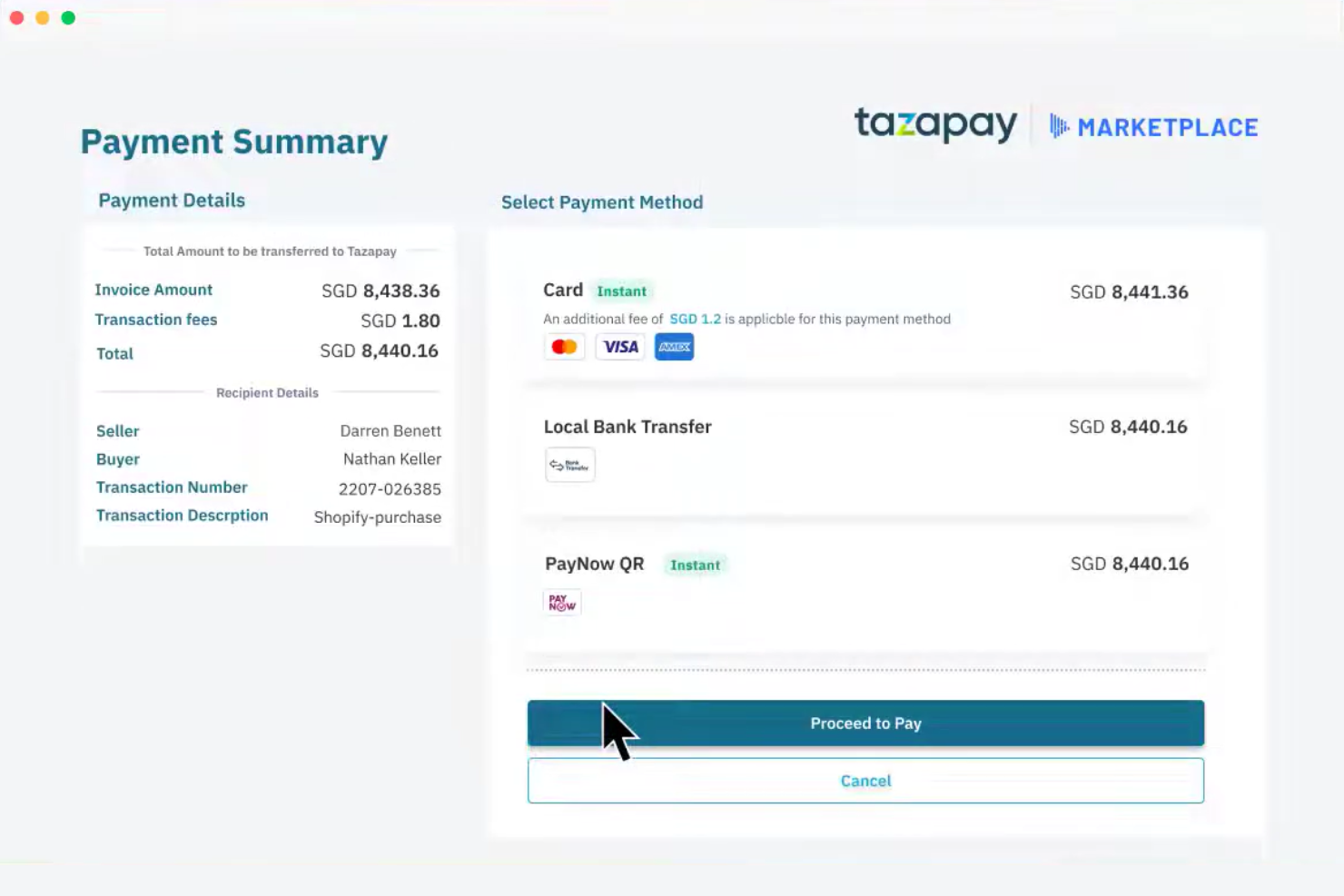
Tazapay is a cross-border payment platform designed for businesses needing secure international transactions. It serves industries such as e-commerce and fintech, providing solutions for accepting payments from over 173 countries.
Why I picked Tazapay: Tazapay excels in trade compliance, offering features such as buyer protection and compliance with international regulations. Its global collection accounts allow you to hold and disburse funds in multiple currencies. The platform supports same-day payouts in numerous markets, providing quick access to funds. With tailored solutions for various industries, Tazapay meets the specific needs of most businesses engaging in international trade.
Standout features and integrations:
Features include secure transaction management across multiple countries, instant bank settlements, and strong foreign exchange management. You can also benefit from simplified global compliance and risk management features.
Integrations include Shopify, WooCommerce, Adobe Commerce, BigCommerce, and more.
Pros and Cons
Pros:
- High compliance standards
- Offers local payment methods
- Supports multi-currency transactions
Cons:
- Smaller integration ecosystem Limited public documentation
- Smaller integration ecosystem


Nium is a global payment platform designed for enterprises that facilitate cross-border transactions and financial management. It serves large businesses by providing tools for international payments, card issuance, and currency conversion.
Why I picked Nium: It's tailored for enterprise solutions, providing all-in-one services for managing global payments. Nium offers multi-currency accounts, helping your team easily handle transactions in different currencies. The platform supports instant money transfers across numerous countries, supporting your business’s ability to operate internationally. Additionally, Nium provides a secure environment for transactions and compliance with international regulations.
Standout features and integrations:
Features include real-time currency conversion that helps you manage foreign exchange risks, a unified platform for managing multiple financial services, and advanced security measures to protect your transactions.
Integrations include SAP, Oracle, Microsoft Dynamics, Salesforce, Xero, QuickBooks, NetSuite, Stripe, PayPal, Shopify, and more.
Pros and Cons
Pros:
- Real-time currency conversion
- Compliance with international regulations
- Provides a secure transaction environment
Cons:
- Limited self-serve configuration
- Primarily suited for large enterprises


How I Evaluate International Payment Gateways
When a global AR team needs to settle invoices in 30 currencies without a tangle of FX fees, I split my evaluation into baseline must-haves and the differentiators that separate good from great.
Core Functionality (Table Stakes For This List)
When I'm selecting tools for my list, I rank each one on a scale from 0 (does not offer the functionality) to 5 (excels in this area) for each core functionality listed below. Then, I calculate the tool's total score into a percentage. Each tool needs to achieve a minimum total score of 65% to be considered for inclusion.
- Multi-Currency Processing: I check how many currencies a gateway can accept and settle in, and whether a merchant needs separate accounts per region or can manage everything from one.
- Local Payment Method Support: Coverage of region-specific options like iDEAL, SEPA, Alipay, or Boleto matters because card-only gateways lose conversions in markets where wallets dominate.
- Cross-Border FX Handling: I evaluate whether conversion happens at checkout or settlement, how transparent the markup is, and whether options like dynamic currency conversion are available.
- Global Compliance & Security: PCI DSS Level 1 is the baseline, but I also look for SCA and 3D Secure 2.0 support plus adherence to regional frameworks like PSD2.
- Multi-Region Payout & Settlement: The ability to settle funds into bank accounts across multiple countries in local currencies saves teams from costly intermediary bank fees.
- Fraud Prevention & Risk Tools: I evaluate whether fraud screening accounts for cross-border patterns, such as mismatched billing and IP geolocation, beyond basic rule-based filters.
Once I have a list of tools that meet this criteria, I consider what sets each platform apart.
Differentiating Factors (What Sets Vendors Apart)
Here's how I compare and contrast different vendors:
Standout Features
Smart payment routing is a big one. Gateways that automatically direct transactions to the best-performing acquirer based on currency, region, or card type can meaningfully lift authorization rates. I also look for a unified global dashboard that consolidates multi-currency transaction data into one view, which makes month-end reconciliation far less painful. Merchant of record services are worth evaluating too, since they shift the burden of tax collection, remittance, and regional compliance off your team entirely.
Beyond Features
ERP and accounting integrations matter a lot here. A gateway with native connectors to systems like NetSuite, SAP, or Xero saves your team hours of manual reconciliation across currencies. I also evaluate pricing transparency, specifically whether the vendor clearly breaks out interchange, cross-border, and FX markup fees or buries them. Geographic licensing is another factor I check. Gateways that hold direct acquiring licenses in your target markets tend to deliver better approval rates and faster settlements than those relying on third-party processors.
Come scegliere i gateway di pagamento internazionali
È facile perdersi in lunghi elenchi di funzionalità e strutture tariffarie complesse. Per aiutarti a rimanere concentrato mentre affronti il tuo processo di selezione del software, ecco una lista di fattori da tenere a mente:
| Fattore | Elementi da considerare |
|---|---|
| Scalabilità | Il gateway può crescere insieme alla tua attività? Considera i limiti sul volume delle transazioni e se lo strumento è in grado di gestire esigenze crescenti senza costi aggiuntivi o problemi di prestazioni. |
| Integrazioni | Funziona con i sistemi che già utilizzi? Cerca la compatibilità con il tuo CRM, il software di contabilità e gli altri strumenti aziendali che usi quotidianamente. |
| Personalizzazione | Puoi adattare il gateway alle tue esigenze? Valuta quanto puoi modificare le interfacce utente, i flussi di lavoro e le opzioni di pagamento per adattarli ai processi della tua attività. |
| Semplicità d'uso | Il gateway è intuitivo per la tua squadra? Prova l'interfaccia utente e cerca una navigazione semplice per ridurre al minimo i tempi di formazione e gli errori. |
| Implementazione e avvio | Quanto tempo sarà necessario per iniziare? Valuta il processo di configurazione, la disponibilità dell'assistenza e le eventuali risorse formative per favorire una transizione fluida. |
| Costo | Quali sono i costi totali? Oltre al prezzo iniziale, considera le commissioni sulle transazioni, i costi di configurazione e gli eventuali addebiti nascosti che potrebbero incidere sul tuo budget. |
| Misure di sicurezza | In che modo protegge i tuoi dati? Verifica la presenza di crittografia, rilevamento delle frodi e conformità agli standard di sicurezza per mantenere sicure le transazioni. |
| Requisiti di conformità | È in grado di soddisfare le tue esigenze normative? Verifica che il gateway sia conforme alle normative locali e internazionali pertinenti per la tua attività, come il GDPR o il PCI DSS. |
Che cos'è un gateway di pagamento internazionale?
Un gateway di pagamento internazionale è un servizio che autorizza ed elabora i pagamenti per le attività commerciali oltre i confini nazionali. Questi strumenti sono comunemente utilizzati da professionisti del settore finanziario e titolari di attività per facilitare transazioni internazionali sicure ed efficienti. Funzionalità come la conversione valutaria, il monitoraggio delle transazioni e il supporto multivaluta aiutano le attività a gestire efficacemente i pagamenti transfrontalieri. Nel complesso, questi strumenti semplificano il commercio globale garantendo un'elaborazione dei pagamenti sicura e fluida.
Funzionalità
Quando selezioni un gateway di pagamento internazionale, presta attenzione alle seguenti funzionalità principali:
- Conversione valutaria: converte automaticamente le valute per semplificare le transazioni internazionali e ridurre i calcoli manuali.
- Supporto multivaluta: consente alle attività di accettare pagamenti in diverse valute, ampliando la propria presenza globale.
- Monitoraggio delle transazioni: fornisce aggiornamenti in tempo reale sullo stato dei pagamenti, aiutando le attività a gestire il flusso di cassa e la riconciliazione.
- Rilevamento delle frodi: include misure di sicurezza per identificare e prevenire le transazioni fraudolente, proteggendo la tua attività e i tuoi clienti.
- Pagamento personalizzabile: offre opzioni per adattare l'esperienza di pagamento al tuo marchio, favorendo la soddisfazione dei clienti.
- Fatturazione ricorrente: facilita la gestione degli abbonamenti e dei pagamenti ripetuti, sostenendo flussi di entrate costanti.
- Notifiche istantanee dei pagamenti: ti avvisa delle transazioni completate, mantenendo la tua squadra informata e reattiva.
- Conformità agli standard di sicurezza: rispetta gli standard di sicurezza internazionali, proteggendo i dati finanziari sensibili.
- Analisi avanzate: fornisce informazioni sulle tendenze dei pagamenti e sulle prestazioni dell'attività, agevolando le decisioni strategiche.
Vantaggi
L'implementazione di un gateway di pagamento internazionale offre diversi vantaggi alla tua squadra e alla tua attività. Ecco alcuni dei vantaggi che puoi aspettarti:
- Presenza globale: accetta pagamenti da clienti di tutto il mondo grazie al supporto multivaluta e alla portata internazionale.
- Migliore flusso di cassa: il monitoraggio delle transazioni in tempo reale e le notifiche istantanee dei pagamenti ti aiutano a gestire il flusso di cassa in modo efficiente.
- Elevata sicurezza: le funzionalità di rilevamento delle frodi e di conformità agli standard di sicurezza proteggono la tua attività dalle transazioni fraudolente.
- Soddisfazione dei clienti: le opzioni di pagamento personalizzabili offrono un'esperienza di pagamento personalizzata, aumentando la soddisfazione dei clienti.
- Entrate costanti: le funzionalità di fatturazione ricorrente favoriscono entrate regolari derivanti da abbonamenti e clienti abituali.
- Decisioni consapevoli: le analisi avanzate offrono informazioni sulle tendenze dei pagamenti, supportando la pianificazione strategica dell'attività.
- Riduzione del lavoro manuale: i processi automatizzati di conversione valutaria e riconciliazione fanno risparmiare tempo e riducono al minimo gli errori.
Costi & prezzi
La scelta di un gateway di pagamento internazionale richiede la comprensione dei diversi modelli di prezzo e dei piani disponibili. I costi variano in base alle funzionalità, alle dimensioni della squadra, ai componenti aggiuntivi e ad altri fattori. La tabella seguente riassume i piani più comuni, i relativi prezzi medi e le funzionalità tipicamente incluse nelle soluzioni di gateway di pagamento internazionale:
Tabella di confronto dei piani per i gateway di pagamento internazionali
| Tipo di piano | Prezzo medio | Funzionalità comuni |
|---|---|---|
| Piano gratuito | $0 | Elaborazione di base delle transazioni, supporto limitato alle valute e reportistica semplice. |
| Piano personale | $5-$25/utente/mese | Supporto multivaluta, rilevamento di base delle frodi e opzioni di pagamento personalizzabili. |
| Piano aziendale | $50-$150/utente/mese | Analisi avanzate, funzionalità di fatturazione ricorrente e misure di sicurezza. |
| Piano per grandi imprese | $200-$500/utente/mese | Opzioni di integrazione complete, assistenza clienti dedicata e strumenti avanzati di prevenzione delle frodi. |
Domande frequenti sui gateway di pagamento internazionali
Ecco alcune risposte alle domande comuni sui gateway di pagamento internazionali:
Come posso essere certo che un gateway di pagamento internazionale sia sicuro e conforme?
Cerca la conformità allo standard PCI DSS, la crittografia dei dati in transito e a riposo, efficaci strumenti antifrode e politiche chiare sulla gestione delle contestazioni e dei riaddebiti. I gateway che operano a livello globale dovrebbero inoltre supportare le normative regionali, come PSD2/SCA in Europa, e le norme sulla privacy dei dati, come il GDPR.
I gateway di pagamento internazionali sono solo per le grandi imprese?
No. Molte opzioni di questa selezione si rivolgono specificamente a PMI e startup, con barriere di ingresso ridotte e un avvio semplice. La chiave è adeguare la complessità e il costo alla fase in cui si trova la tua azienda. Le piccole imprese possono iniziare con un singolo gateway facile da implementare e aggiungere strumenti più avanzati, come la conformità commerciale o i conti virtuali, man mano che aumenta il volume delle loro operazioni transfrontaliere.
Posso utilizzare più gateway di pagamento internazionali contemporaneamente?
Sì, è possibile, e molti CFO lo fanno. Una strategia con più gateway può migliorare i tassi di autorizzazione nei mercati chiave, fornire ridondanza in caso di interruzioni del servizio di un gateway e consentire di instradare le transazioni in base all’area geografica, al tipo di carta o alle commissioni. Aggiunge però complessità operativa, quindi è necessario disporre di una strategia chiara per l’instradamento, la riconciliazione e la reportistica.
Quanto tempo occorre per configurare un gateway di pagamento internazionale?
Le tempistiche variano. I gateway semplici in stile SaaS, con profili di rischio standard, possono spesso essere operativi nel giro di pochi giorni. Le soluzioni che prevedono finanziamenti commerciali, conti di incasso locali o requisiti di conformità aziendale, ad esempio per settori regolamentati o volumi molto elevati, possono richiedere procedure KYC, valutazioni del merito creditizio e integrazioni tecniche più approfondite.
E adesso?
Se stai cercando informazioni sui gateway di pagamento internazionali, contatta gratuitamente un consulente SoftwareSelect per ricevere consigli.
Compili un modulo e partecipi a una breve conversazione in cui vengono approfondite le tue esigenze specifiche. In seguito riceverai una selezione di software da valutare. Ti assisteranno inoltre durante l'intero processo di acquisto, comprese le negoziazioni sul prezzo.