

Deduction management software helps accounts receivable teams identify, validate, dispute, and recover customer deductions and chargebacks. The best tools automate claim capture, document matching, deduction coding, dispute workflows, and recovery tracking. They can also connect with ERP systems and retailer portals. I evaluated leading AR deduction management software for different industries, workflows, and deduction volumes.
Why Trust Our Software Recommendations
6,700+
Reviews
20
Industry experts
16+
Evaluation factors
14
Years
Our team has been testing and reviewing software since 2012. As finance leaders ourselves, we know how difficult—and important—it is to choose the right software.
For this guide, we evaluated tools using hands-on testing and independent research, scoring tools using our selection criteria.
Our reviews reflect our human editorial judgment, not a sales pitch.
Deduction Management Software Comparison Table
This comparison table summarizes pricing details for my top deduction management software selections:
| Tool | Best For | Trial Info | Price | ||
|---|---|---|---|---|---|
| 1 | Best for invoice-to-cash dispute workflows | Free demo available | Pricing upon request | Website | |
| 2 | Best for SAP chargeback management | Free demo available | Pricing upon request | Website | |
| 3 | Best for CPG deductions with expert support | Free demo available | Pricing upon request | Website | |
| 4 | Best for short-pay detection in cash application | Free demo available | Pricing upon request | Website | |
| 5 | Best for CPG deduction workflow automation | Free demo available | Pricing upon request | Website | |
| 6 | Best for AI-driven deduction workflows | Free demo available | Pricing upon request | Website | |
| 7 | Best for AI-powered deduction validation | Free demo available | Pricing upon request | Website | |
| 8 | Best for autonomous deduction resolution | Free demo available | Pricing upon request | Website | |
| 9 | Best for retailer portal claim automation | Free demo available | Pricing upon request | Website | |
| 10 | Best for outsourced retail revenue recovery | Free demo available | Pricing upon request | Website |


Best Deduction Management Software Reviews
Below are my detailed summaries of the best deduction management software that made it onto my shortlist. My reviews offer a detailed look at the features, capabilities, and integrations of each platform to help you find the best one for you.
 Best for invoice-to-cash dispute workflows
- Free demo available
- Pricing upon request
Visit WebsiteCustomer Rating:4.5/5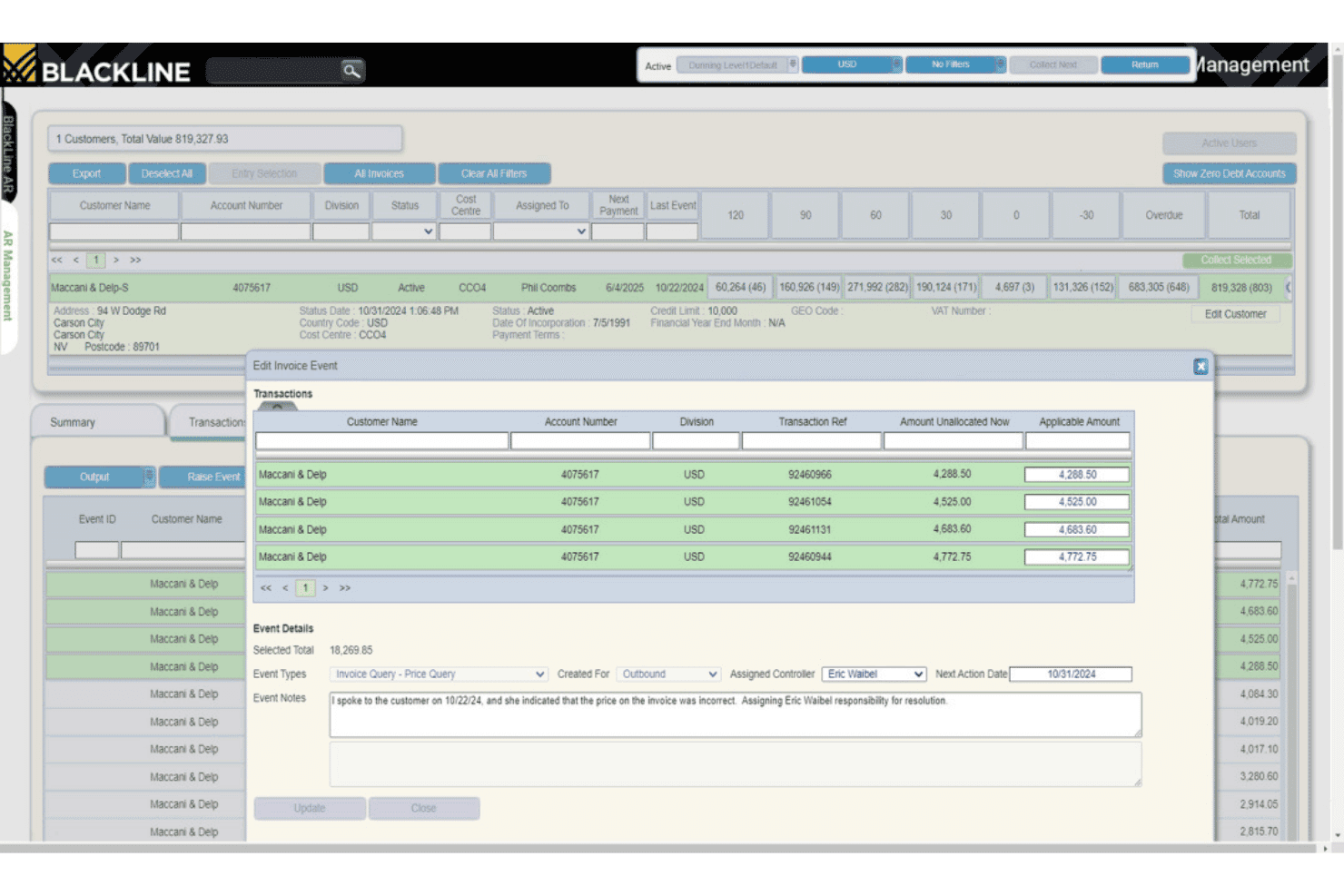
BlackLine lets users log invoice disputes and assign them for resolution. BlackLine Disputes & Deductions Management is an enterprise AR module that combines automated dispute workflows, AI-assisted claim summarization, SLA tracking, and ERP-integrated documentation management within a broader Invoice-to-Cash platform.
Who Is BlackLine Best For?
BlackLine suits mid-market to enterprise finance teams that manage high-volume invoice disputes within an existing ERP environment and need SLA-driven workflows with full audit trails.
Why I Picked BlackLine
I picked BlackLine as one of the best because its dispute workflow engine is built around measurable resolution cycles, not just task tracking. I love how Verity Summarize uses AI to instantly break down complex disputes and surface guided next steps, cutting the time I'd spend manually reviewing invoice histories. The SLA measurement layer ties directly into aged debt and provisioning reporting, so I can see exactly where disputes are stalling and which are putting cash at risk.
BlackLine Key Features
- ERP and CRM integration: Syncs deduction and dispute data directly with supported ERP and CRM platforms.
- Audit-ready documentation management: Centralizes and attaches all supporting documents to each dispute for compliance.
- KPI and SLA monitoring: Tracks dispute cycle times and resolution rates against service level agreements.
- Role-based workflow controls: Assigns, restricts, and manages user access and approval authority across AR, sales, and finance teams.
BlackLine Integrations
BlackLine offers native integrations with SAP, Oracle, NetSuite, Microsoft Dynamics 365, Salesforce, and Workday. An API is also available for custom integrations.
Pros and Cons
Pros:
- Strong audit trail supports SOX compliance requirements
- AI summarization cuts manual invoice review time
- SLA-driven dispute tracking with measurable resolution cycles
Cons:
- Implementation typically requires significant IT resource involvement
- Not purpose-built for CPG deduction workflows
Learn more about BlackLine: Best for SAP chargeback management
- Free demo available
- Pricing upon request
Visit WebsiteCustomer Rating:4.3/5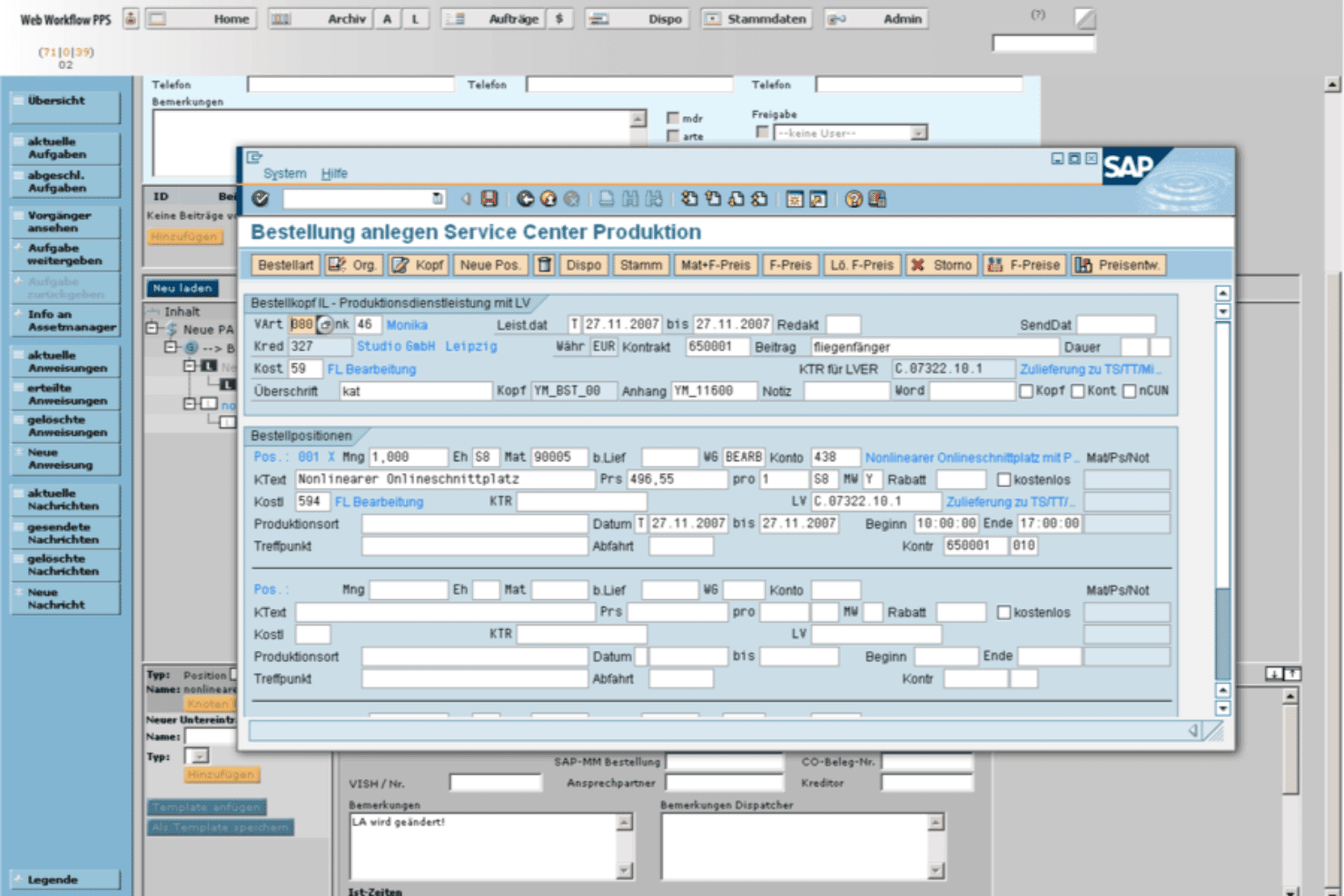
Vistex enables structured service order creation within SAP workflows. Vistex is an SAP-native chargeback and claims management platform that handles claim initiation, reason-code classification, reconciliation, accruals, and settlement—embedded directly within SAP S/4HANA and ECC environments.
Who Is Vistex Best For?
Vistex is a strong fit for large enterprise companies in CPG, manufacturing, or distribution that are already running SAP S/4HANA or ECC and managing high volumes of chargebacks.
Why I Picked Vistex
Vistex earns its spot on my shortlist because of how deeply it's embedded in SAP S/4HANA for chargeback management. I like that it handles the full claim lifecycle, from initiation through reconciliation and settlement, without requiring a separate data integration layer. The automated accrual and simulation tools also let my team forecast cost recovery before claims are submitted, which is a level of pre-claim visibility that's genuinely hard to find in a natively SAP-embedded tool.
Vistex Key Features
- SAP-native settlement workflows: Embedded directly in SAP S/4HANA and ECC for end-to-end claims processing and financial reconciliation.
- Rule-based deduction categorization: Classifies charges and deductions using customizable business rules tied to contract terms and agreement structures.
- Accruals and forecasting tools: Supports real-time accrual management and predictive modeling for upcoming cost recoveries.
- Granular audit trail: Captures detailed claim, settlement, and adjustment history for compliance and financial control purposes.
Vistex Integrations
Vistex is embedded in SAP S/4HANA and ECC environments and offers native integration with core SAP modules. An API is available for custom integrations.
Pros and Cons
Pros:
- Strong accrual management for cost recovery
- Full claim lifecycle tracking within SAP
- Native SAP settlement without third-party middleware
Cons:
- Long implementation timelines for enterprise deployments
- Not suited for non-SAP environments
Learn more about Vistex: Best for CPG deductions with expert support
- Free demo available
- Pricing upon request
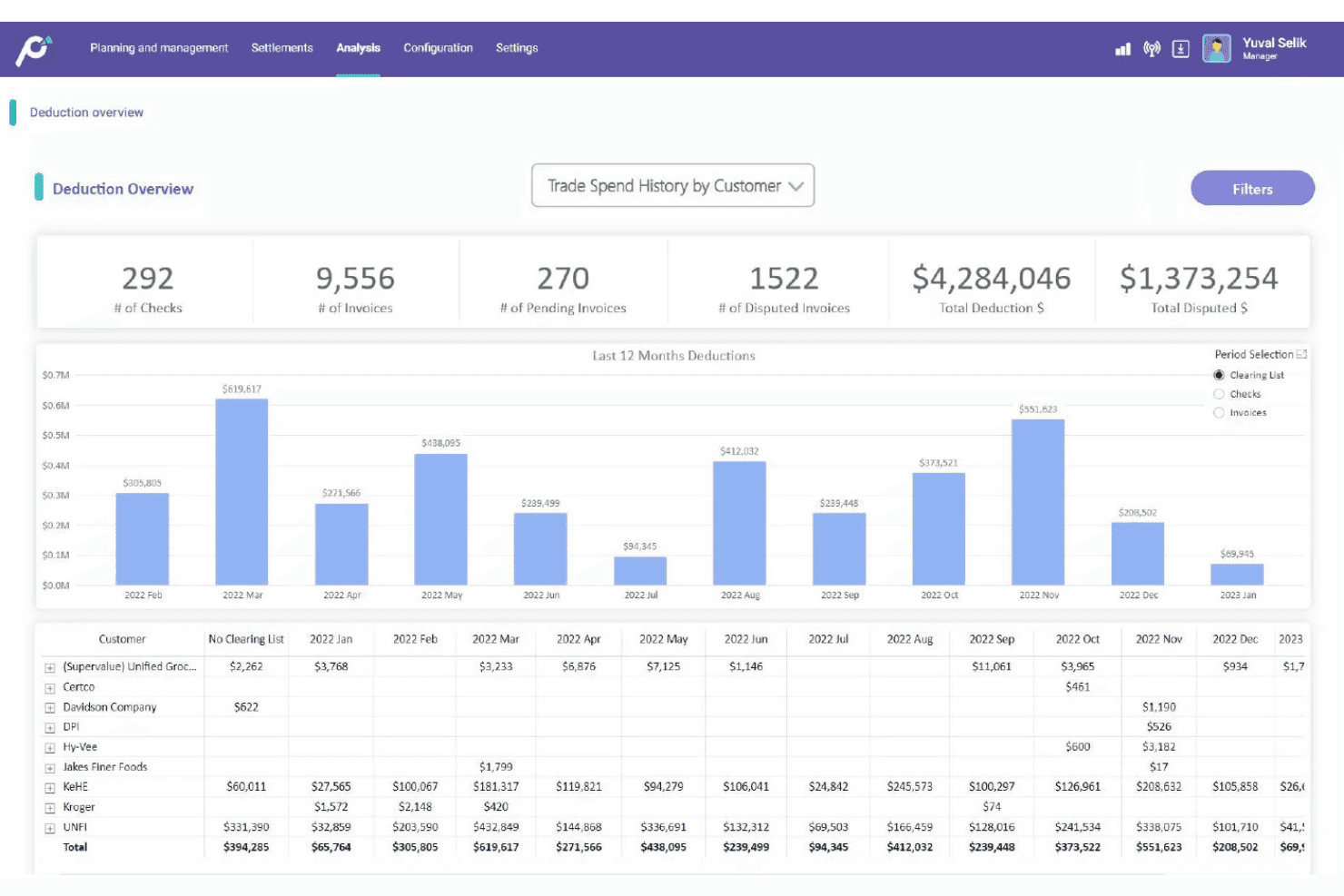
Promomash tracks trade spend deductions by customer over time. Promomash is a CPG-focused deduction management platform that combines AI-assisted deduction capture, coding, validation, and dispute recovery with a team of dedicated specialists who manage the full deduction lifecycle on your behalf.
Who Is Promomash Best For?
Promomash is a strong fit for growing CPG brands that sell through major retailers and distributors but don't have a dedicated in-house deduction management team.
Why I Picked Promomash
Promomash earns its spot on my shortlist because of how it handles the two most time-consuming parts of deduction management: coding and disputing. I love that the platform uses a proprietary catalog of reason codes built for CPG retailers and distributors, so deductions from Walmart, KEHE, and UNFI get categorized accurately without manual intervention. When an invalid deduction needs to be disputed, the CPGenius team steps in to build the case and submit it on your behalf.
Promomash Key Features
- Retailer and distributor integrations: Connects directly with leading portals like Walmart, Target, Amazon, UNFI, and KEHE for deduction data aggregation.
- Cash application add-on: Matches bank payments to open invoices and syncs payment activity with your ERP.
- Deduction analytics dashboard: Provides real-time dashboards to monitor deduction status, trends, and root cause breakdowns.
- Promotion-to-deduction matching: Automatically links deductions to specific trade promotions for proper validation and close-out.
Promomash Integrations
Promomash offers native integrations with NetSuite, QuickBooks, Sage Intacct, Microsoft Dynamics 365, Walmart Retail Link, Target Partners Online, Amazon Vendor Central, UNFI, and KEHE. An API is available for custom integrations.
Pros and Cons
Pros:
- Covers both trade and non-trade deduction types
- CPG-specific reason code library improves coding accuracy
- Managed dispute services reduce internal AR workload
Cons:
- Reporting customization requires support team involvement
- Limited fit for industries outside CPG and grocery
Learn more about Promomash: Best for short-pay detection in cash application
- Free demo available
- Pricing upon request
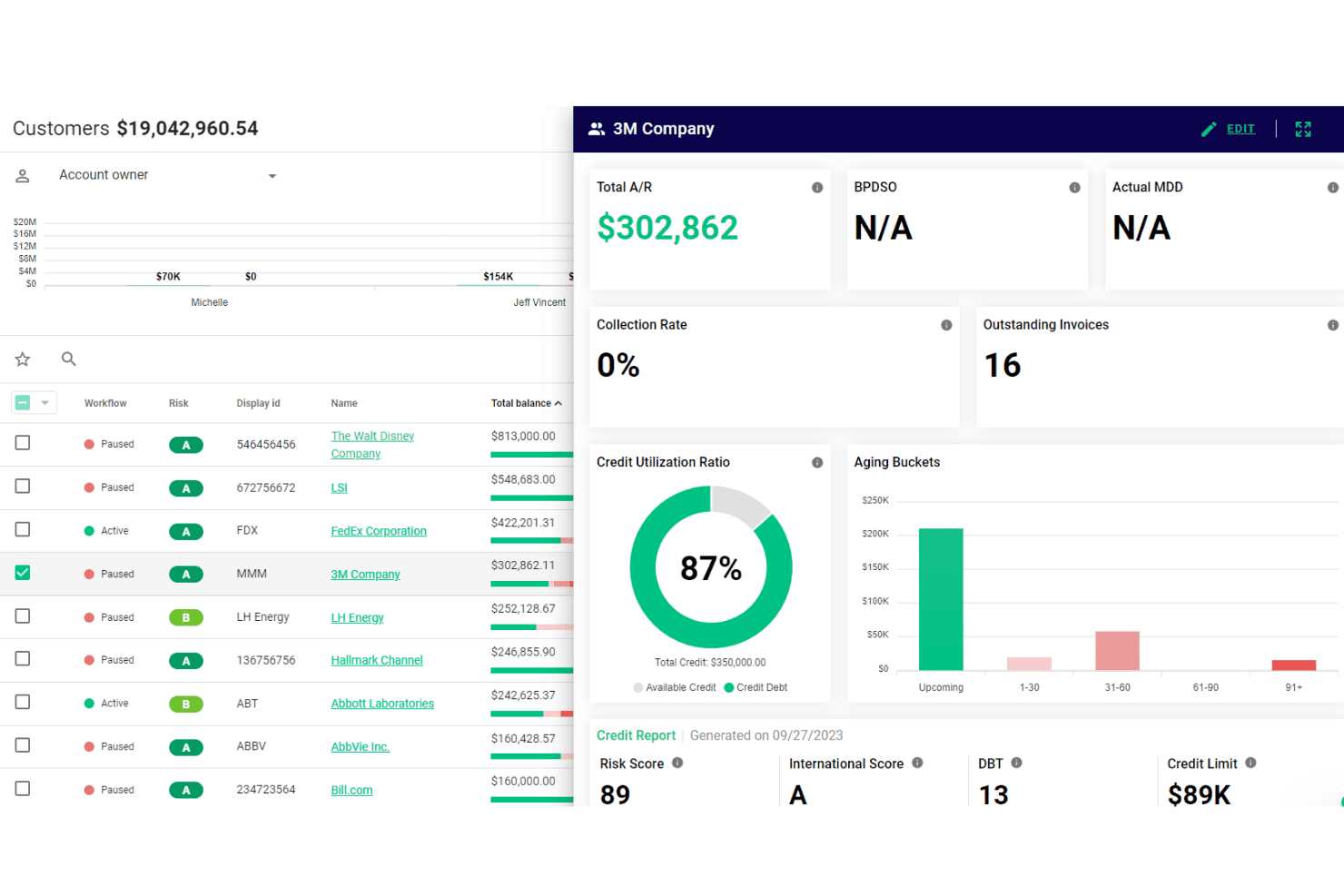
Cforia surfaces customer risk scores and A/R aging in one view. Cforia is an order-to-cash AR automation platform with modules for cash application, collections management, integrated dispute resolution, and deduction tracking built around short-pay detection.
Who Is Cforia Best For?
Cforia is a good fit for enterprise AR and collections teams that process high volumes of customer payments and need automated short-pay detection built into their cash application workflow.
Why I Picked Cforia
I picked Cforia as one of the best because its cash application module catches short-pays at the point of payment matching, not as a manual follow-up step. When a remittance comes in short, Cforia automatically flags it and creates a deduction and dispute record in the same motion. I also like the Customer Auto-Link feature, which matches payments across parent/child account hierarchies so multi-entity accounts don't generate false deduction flags.
Cforia Key Features
- Integrated dispute management: Lets teams log, track, and resolve deduction disputes directly within the platform.
- Customer auto-link matching: Connects payments and open invoices across parent and child account structures for accurate deduction capture.
- Real-time AR dashboards: Provides AR teams with configurable dashboards to monitor deduction status, activity history, and KPIs.
- Multi-source data ingestion: Supports the import of remittance, payment, and short-pay data from banks, lockbox files, and ERP systems.
Cforia Integrations
Native integrations are not clearly documented. Cforia offers an API for custom integrations and can connect to ERP systems through custom setup.
Pros and Cons
Pros:
- Dispute records created automatically at flagging
- Handles complex parent/child account structures
- Short-pay detection is built into cash application
Cons:
- Reporting customization requires vendor involvement
- Implementation timelines can run several months
Learn more about Cforia: Best for CPG deduction workflow automation
- Free demo available
- Pricing upon request
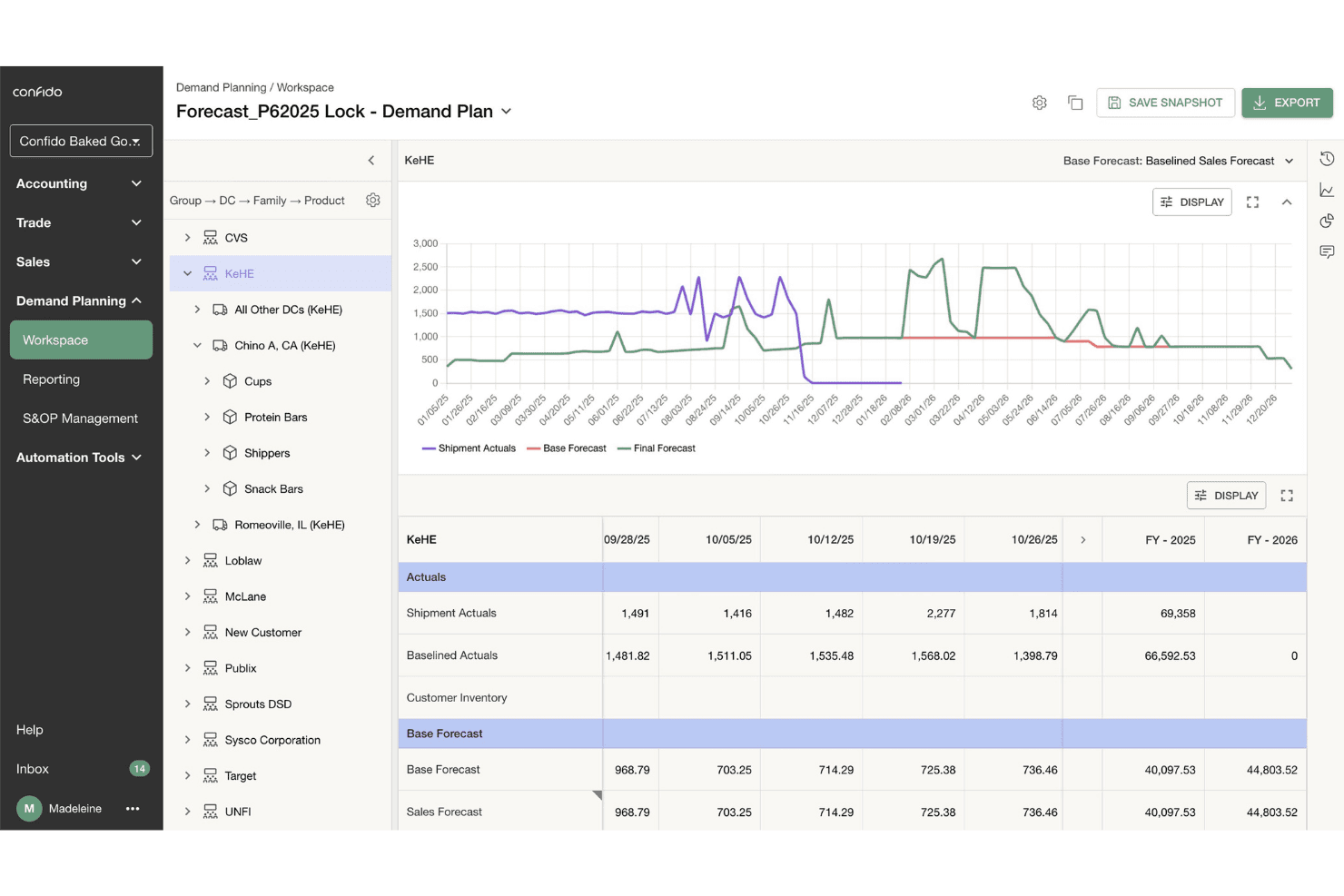
Confido lets users forecast demand with visual charts and weekly data. Confido is a deduction management platform built specifically for CPG brands, combining automated deduction capture, AI-driven classification, dispute submission workflows, and direct integrations with major retailers, distributors, and ERP systems.
Who Is Confido Best For?
Confido is a strong fit for AR and finance teams at CPG brands that sell through brick-and-mortar retail and regularly manage high deduction volumes from major retailers and distributors.
Why I Picked Confido
I picked Confido as one of the best because its automated deduction workflow is built specifically around how CPG brands interact with major retailers. I like how it automatically flags deductions that fall outside approved deals, so my team can prioritize disputes without manually reviewing every line. The approval workflow routes deductions directly to the right stakeholders across finance, sales, and broker teams, cutting the back-and-forth that slows down resolution.
Confido Key Features
- Automated backup document extraction: Confido auto-extracts invoices, deductions, and remittance details from retailer emails and portals.
- Trade promotion deduction matching: It matches deductions to specific promotions or deals using built-in trade data connectors.
- Multi-channel ERP and retailer integrations: The platform connects with NetSuite, QuickBooks, SAP, Sage, Microsoft Dynamics 365, and over 40 retailer portals.
- Role-based approval workflows: Assigns, escalates, and tracks deduction items with configurable team-specific permissions and centralized discussion threads.
Confido Integrations
Confido offers native integrations with NetSuite, QuickBooks, SAP, Sage, Microsoft Dynamics 365, Walmart, Kroger, Target, KeHE, UNFI, and Meijer. An API is available for custom integrations.
Pros and Cons
Pros:
- SOC 2 certified for financial and retailer data
- Scales from small lean teams to larger brands
- Auto-matches deductions directly to promotions and reason codes
Cons:
- Pricing and ROI benchmarks not publicly available
- Purpose-built for CPG only, not other industries
Learn more about Confido: Best for AI-driven deduction workflows
- Free demo available
- Pricing upon request
Visit WebsiteCustomer Rating:4.5/5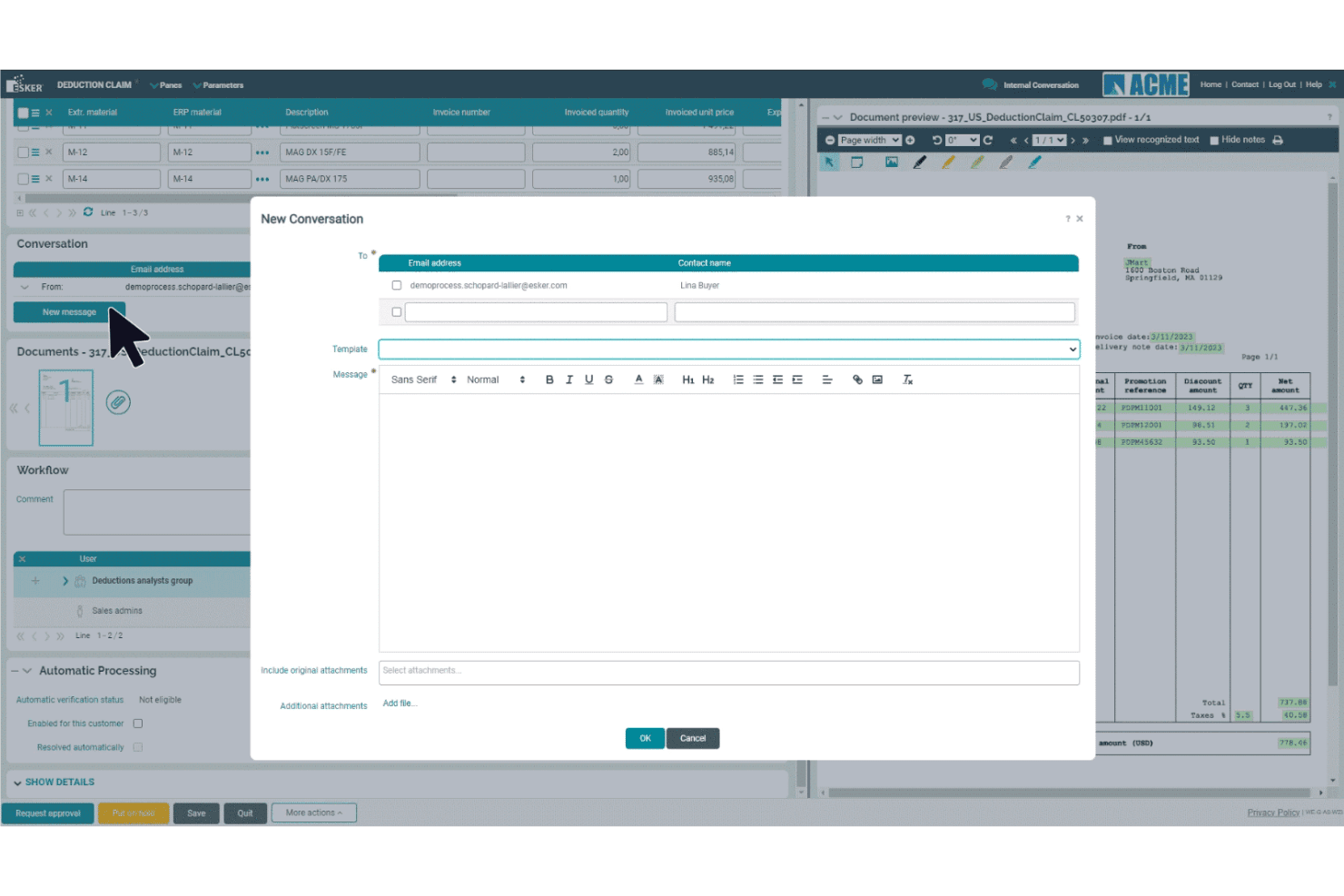
Esker lets users send internal conversations directly from a deduction claim. Esker is a cloud-based AR automation platform with a deductions management module that uses AI data capture, RPA document retrieval, and configurable workflows to handle both trade and non-trade customer deduction claims.
Who Is Esker Best For?
Esker is a strong fit for mid-market and enterprise manufacturers, CPG, and food and beverage companies that deal with high volumes of trade and non-trade customer deductions.
Why I Picked Esker
Esker earns its spot as one of the best on my shortlist because of how Esker Synergy AI handles the heaviest part of deductions work. I like that it automatically extracts and classifies deductions from remittances, debit notes, and promotional invoices into trade or non-trade categories. RPA bots retrieve supporting documents like PODs and BOLs directly from retailer portals. The AI also learns from analyst corrections over time, which sharpens auto-coding accuracy the more I use it.
Esker Key Features
- Multi-level workflow configuration: Set up custom approval processes by deduction type and value, involving AR, sales, and supply chain teams.
- RPA-driven document retrieval: Automate the sourcing of supporting documents directly from retailer and carrier portals.
- Integrated AR analytics dashboard: Monitor real-time KPIs such as DDO, deduction aging, and root cause breakdowns in a single view.
- Salesforce integration: Sync deduction case data and collaborate with sales teams through a direct API connection.
Esker Integrations
Esker offers native integrations with SAP, Oracle, Microsoft Dynamics 365, NetSuite, Sage, Salesforce, and QuickBooks, and provides an API for custom integrations.
Pros and Cons
Pros:
- Real-time DDO and deduction aging visibility
- Handles both trade and non-trade claims
- Auto-coding accuracy improves with analyst corrections
Cons:
- Full configuration requires dedicated admin support
- Implementation timelines can extend several months
Learn more about Esker: Best for AI-powered deduction validation
- Free demo available
- Pricing upon request
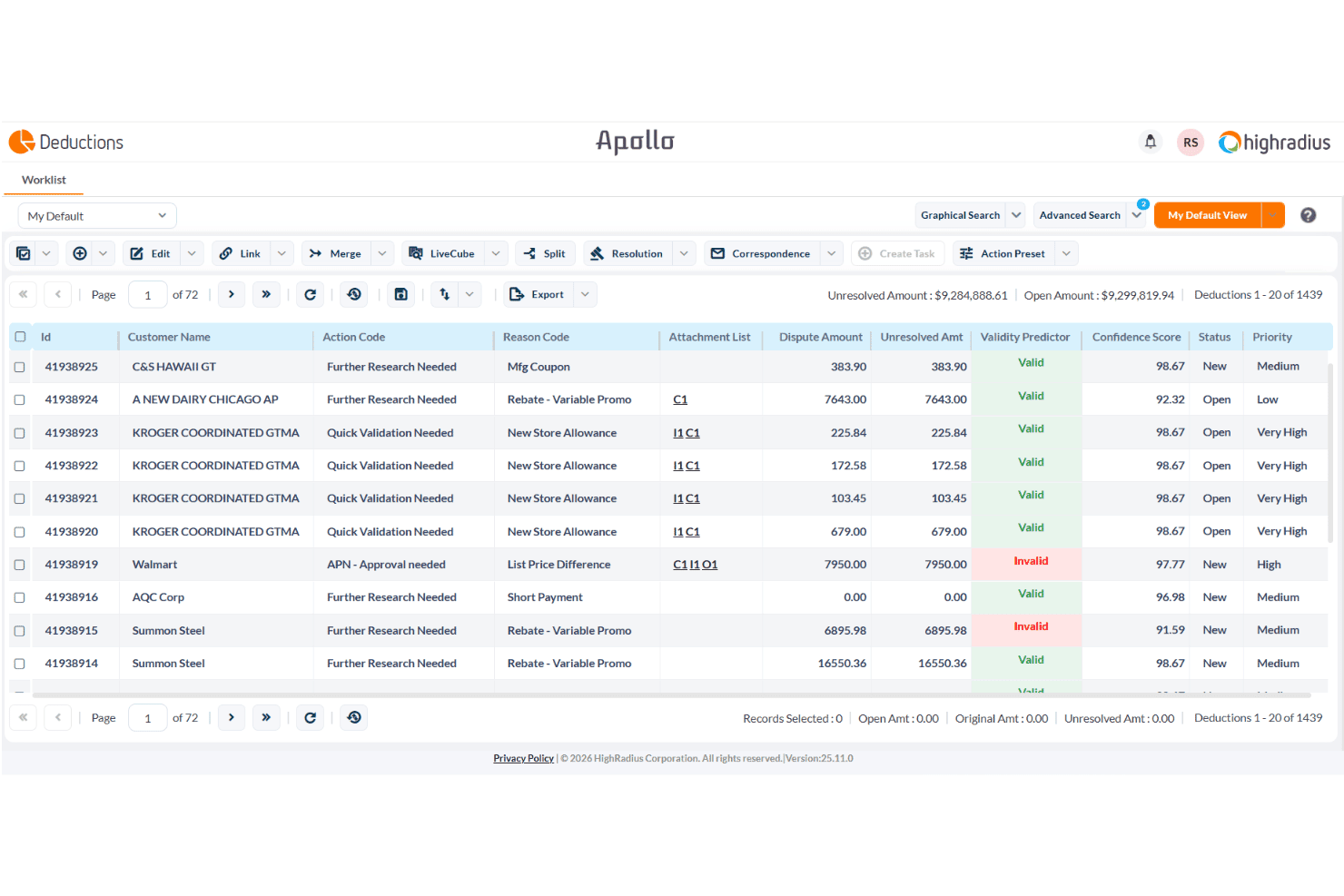
HighRadius helps users manage and prioritize deductions with AI validity predictions. HighRadius is an AI-powered deduction management platform that automates claim capture from retailer portals, backup document matching, deduction coding, and dispute resolution workflows across AR teams.
Who Is HighRadius Best For?
HighRadius is a strong fit for enterprise AR teams in CPG, food and beverage, and manufacturing dealing with high volumes of retailer-portal deductions.
Why I Picked HighRadius
HighRadius earns its spot as one of the best on my shortlist because of the Deductions Validity Predictor, which uses AI confidence scoring to flag whether a deduction is valid or invalid before anyone manually reviews it. I like that the Portal Claim Download agent auto-navigates major retailer portals like Amazon and Kroger to pull claim documents directly, cutting out the repetitive portal logins. The Trade Promotion Matching agent then cross-references those claims against SAP TPM data and POS records for multi-way validation.
HighRadius Key Features
- Shortage variance analysis: Aggregates proof-of-delivery and carrier documentation to link claims to shortages for validation.
- Worklist prioritization: Creates AI-driven, dynamic lists to organize and delegate deduction research tasks across AR teams.
- Invalid claim upload and dispute management: Auto-prepares dispute packets with attachments and submits them to retailer portals.
- Deductions backup linking: Automatically matches and attaches all relevant backup documentation to each open deduction record.
HighRadius Integrations
HighRadius provides native integrations with SAP, Oracle, NetSuite, Microsoft Dynamics 365, QuickBooks, and Sage ERP systems, and offers an API for custom integrations.
Pros and Cons
Pros:
- Multi-way trade promotion matching against TPM data
- Auto-navigates retailer portals for claim documents
- AI validity scoring before manual review begins
Cons:
- Reporting customization requires IT or vendor support
- Long implementation timelines for enterprise deployments
Learn more about HighRadius: Best for autonomous deduction resolution
- Free demo available
- Pricing upon request
Visit WebsiteCustomer Rating:3.5/5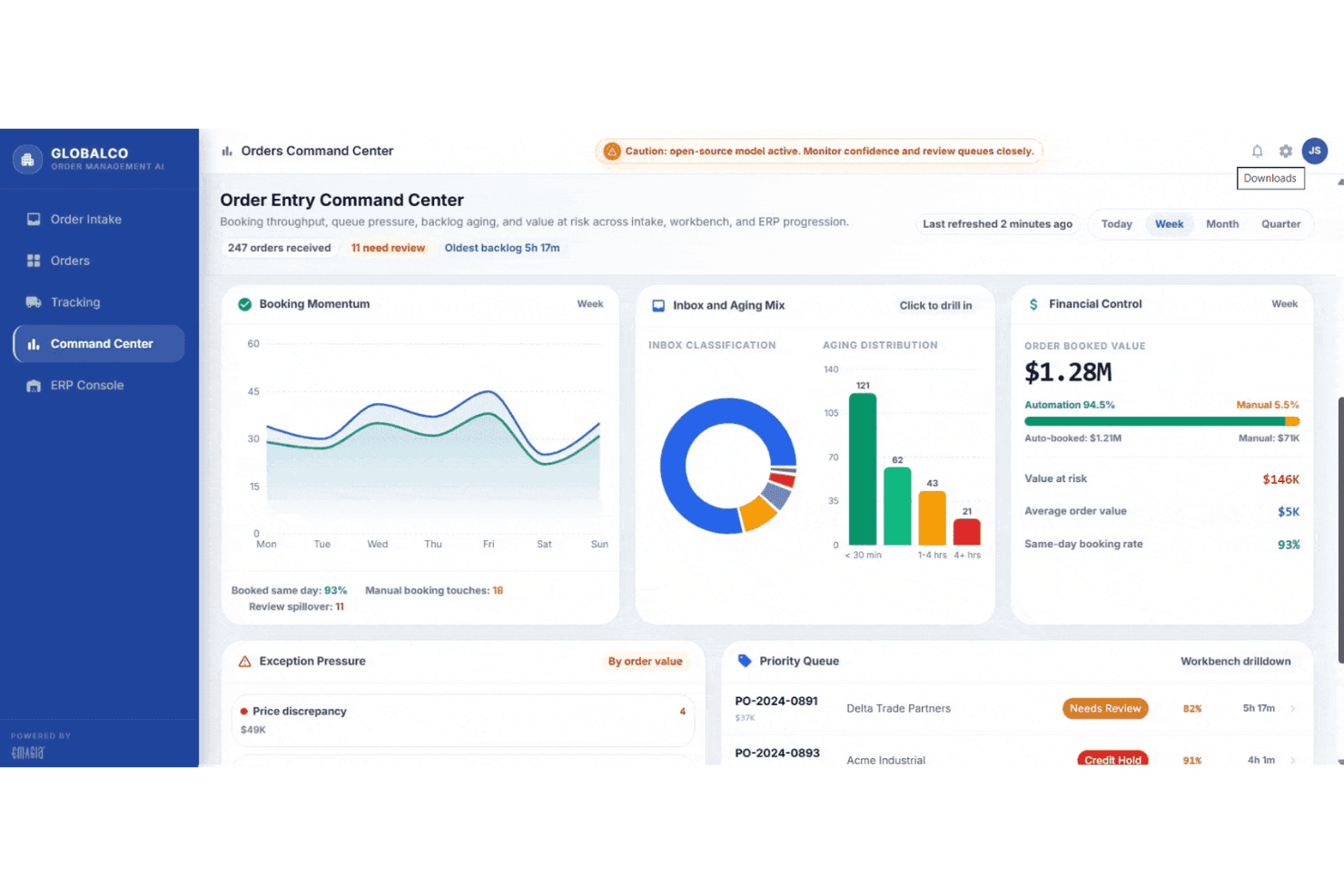
Emagia centralizes order management with AI-driven booking and exception tracking. Emagia is an AI-powered deduction management platform that automates short-pay identification, reason-code classification, dispute workflow routing, and resolution tracking across the accounts receivable function.
Who Is Emagia Best For?
Emagia is a strong fit for enterprise finance teams and shared service centers managing high volumes of deductions across multiple ERPs and business units.
Why I Picked Emagia
I picked Emagia as one of the best because of how far it pushes autonomous resolution in practice. The rules-based bulk claims processing auto-approves deductions based on predefined business decisions, with no analyst touch required. On top of that, Gia AI auto-identifies short pays and over pays, assigns reason codes, and routes each item through the correct workflow immediately, which means my team isn't manually triaging a backlog before resolution work can even begin.
Emagia Key Features
- Configurable reason code library: Build and manage custom deduction reason codes tailored to business needs.
- ERP and financial system integration: Connects with SAP, Oracle, Microsoft Dynamics, NetSuite, Sage, and other leading ERP platforms.
- Document aggregation and linking: Aggregates and attaches supporting documents like invoices, PODs, and BOLs to deduction cases for easy reference.
- Analytics dashboard: Tracks deduction aging, resolution rates, and trends by customer or root cause for management review.
Emagia Integrations
Emagia offers native integrations with SAP, Oracle, NetSuite, PeopleSoft, Workday, Microsoft Dynamics, and Sage. An API is available for custom integrations.
Pros and Cons
Pros:
- Delegation of authority matrix for approval workflows
- Dispute-level line item granularity for invoice disputes
- AI auto-resolves up to 80% of deductions
Cons:
- Implementation complexity for multi-ERP environments
- No self-serve pricing or trial access
Learn more about Emagia: Best for retailer portal claim automation
- Free demo available
- Pricing upon request
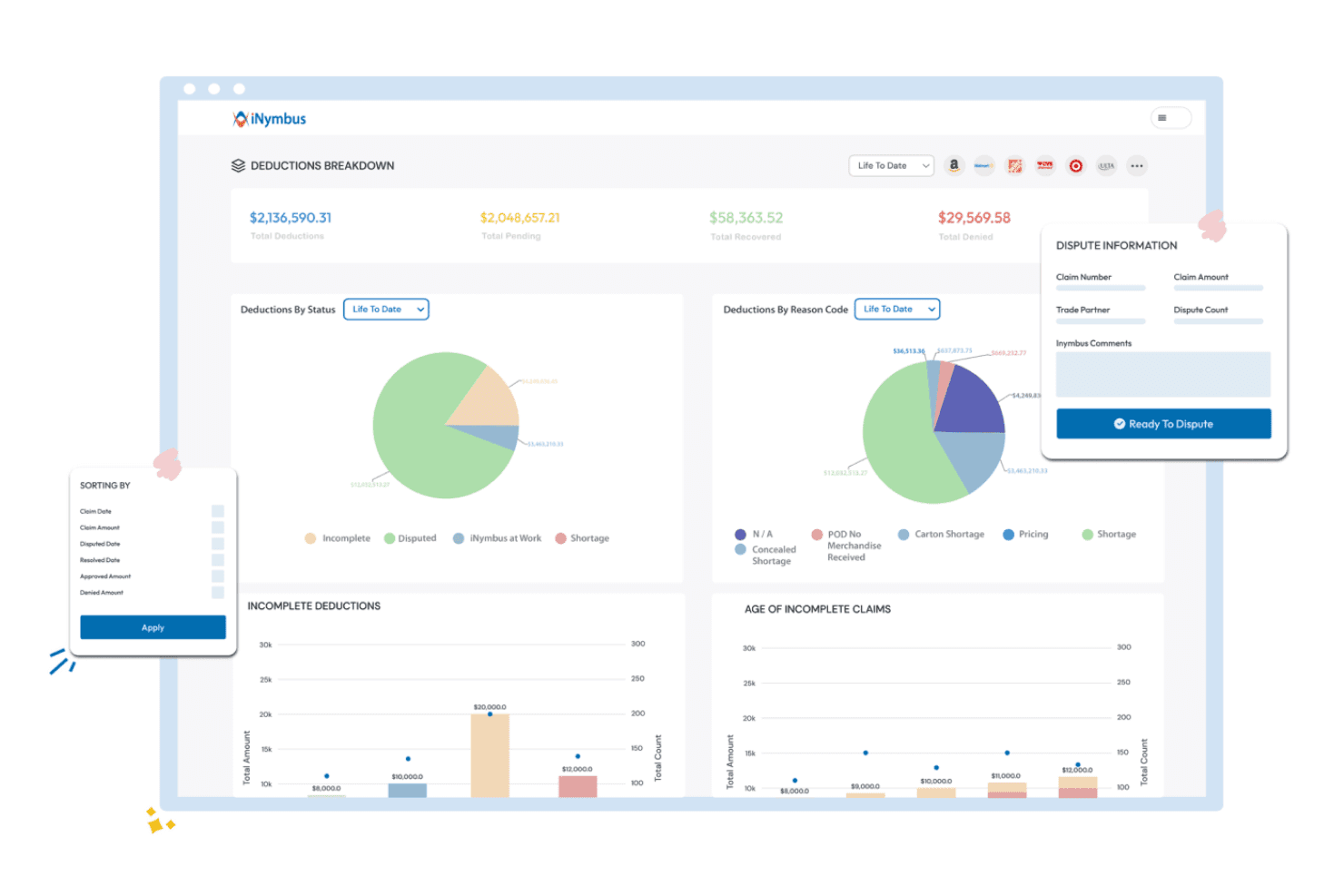
iNymbus DeductionXchange tracks and visualizes deductions by status and reason code. iNymbus DeductionXchange is a cloud-based deduction management platform that uses robotic process automation to capture, match, and dispute retailer chargebacks and claims across 50+ retailer portals, EDI transactions, and email-based channels.
Who Is iNymbus DeductionXchange Best For?
It's a strong fit for CPG manufacturers, distributors, and suppliers that deal with high volumes of retailer deductions from major accounts like Walmart, Amazon, or Target.
Why I Picked iNymbus DeductionXchange
I picked iNymbus DeductionXchange as one of the best because of how it handles retailer portal submission end to end. The RPA robots retrieve claim documents, assemble dispute packets, and auto-fill required portal fields across Walmart Retail Link, Amazon Vendor Central, and 50+ other portals without any manual login. I also appreciate the Walmart SQEP penny-perfect matching, which catches amount discrepancies before submission and reduces rejected disputes.
iNymbus DeductionXchange Key Features
- Centralized deduction dashboard: View and manage all deductions from multiple retailers in one place.
- Automated document aggregation: Pull supporting documents from EDI, ERP, email, and portal sources.
- Flexible file format support: Integrate customized file formats for seamless data processing across sources.
- Root cause analysis tools: Visualize deduction patterns and root causes with detailed analytics dashboards.
iNymbus DeductionXchange Integrations
iNymbus DeductionXchange offers native integrations with SAP, Oracle, NetSuite, Microsoft Dynamics, and QuickBooks, and connects to retailer platforms including Walmart Retail Link and Amazon Vendor Central. An API is available for custom integrations.
Pros and Cons
Pros:
- Cuts manual dispute prep time significantly
- Matches Walmart deductions to the penny
- Handles 50+ retailer portal submissions automatically
Cons:
- Implementation requires heavy retailer portal credential setup
- Reporting customization options are limited out of the box
Learn more about iNymbus DeductionXchange: Best for outsourced retail revenue recovery
- Free demo available
- Pricing upon request
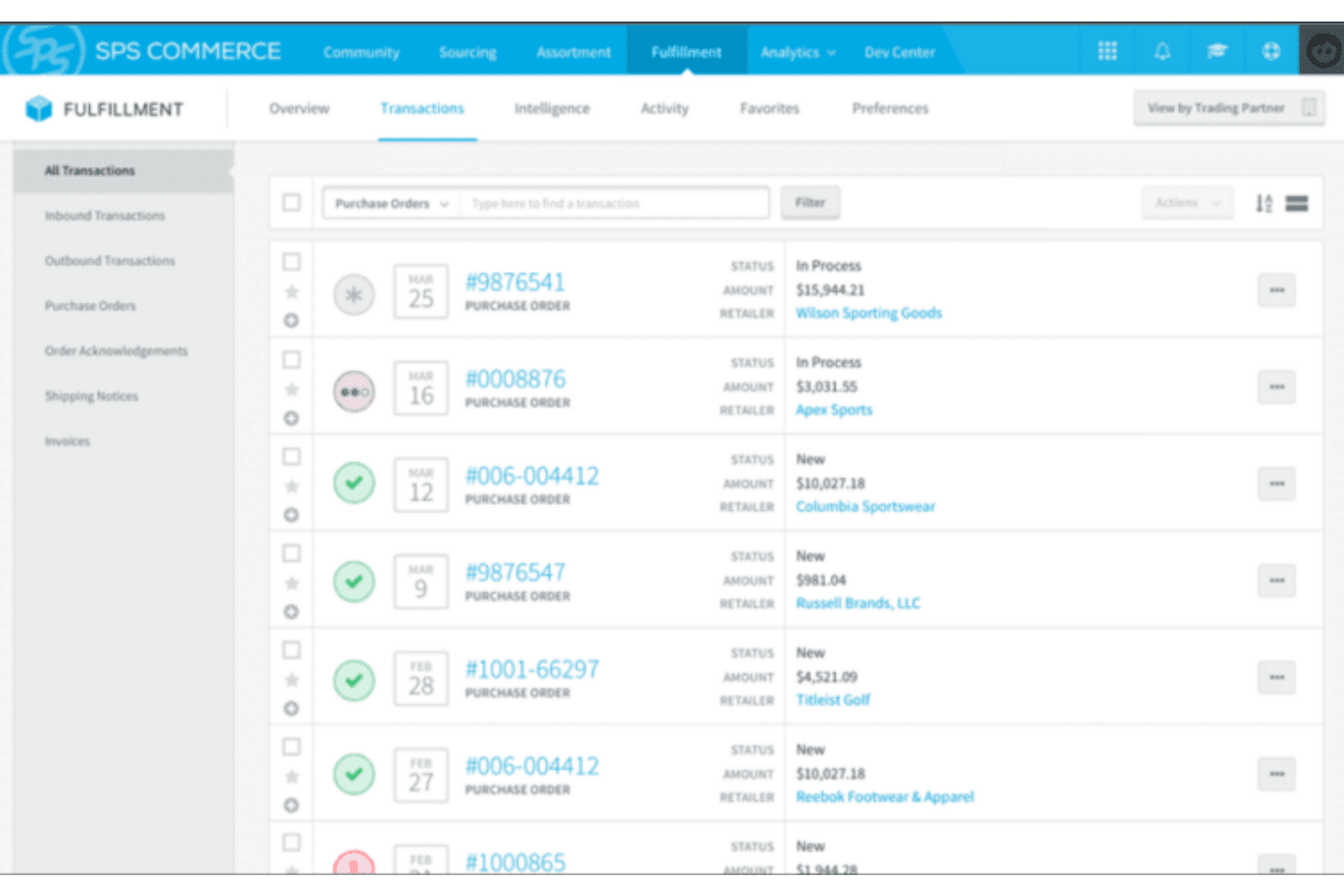
SPS Commerce centralizes purchase order tracking to catch revenue gaps. SPS Commerce Revenue Recovery is a retail deduction management platform that automates deduction capture, backup document retrieval, dispute submission, and root-cause reporting across major retailers, distributors, and marketplace channels.
Who Is SPS Commerce Revenue Recovery Best For?
CPG brands and consumer goods suppliers that sell through major retail chains and want a managed, expert-led approach to deduction recovery.
Why I Picked SPS Commerce Revenue Recovery
I've included SPS Commerce Revenue Recovery in my top picks because it's the only platform I know that offers a genuinely outsourced recovery model, where SPS experts handle the full dispute cycle on your behalf. I like that the platform automatically retrieves retailer-specific backup documents and attaches them to open deductions before submission. The prebuilt partner workflows for retailers like Walmart, Amazon, and Kroger ensure dispute packets are built to each retailer's exact specifications.
SPS Commerce Revenue Recovery Key Features
- Centralized deduction dashboard: View, track, and manage every deduction, dispute, and resolution in a single interface.
- Retailer-specific compliance mapping: Built-in logic addresses chargeback requirements for Walmart, Amazon, Kroger, CVS, and more.
- Automated root cause analysis: Surface deduction trends and patterns across customers, reason codes, and periods for targeted process fixes.
- SOC 2 Type II data security: Protect financial data with hourly backups, encryption, and role-based access management.
SPS Commerce Revenue Recovery Integrations
SPS Commerce Revenue Recovery offers native integrations with major retailer portals such as Walmart Retail Link, Amazon Vendor Central, Target Partners Online, Kroger Partners Portal, and CVS Supplier Portal. An API is available for custom integrations.
Pros and Cons
Pros:
- Root cause insights prevent recurring deduction types
- Up to 99% recovery rate on valid claims
- Fully managed dispute cycle reduces internal AR lift
Cons:
- Less suitable for non-retail or direct-to-consumer channels
- No self-serve pricing; requires a sales conversation
Learn more about SPS Commerce Revenue Recovery:
Other Deduction Management Software
Here are some additional deduction management software options that didn’t make it onto my shortlist, but are still worth checking out:
- 11UpClear BluePlannerBest for trade promotion deduction matching
- 12VividlyBest for CPG deduction tracking
- 13BilltrustBest for centralized AR dispute cases
- 14VersapayBest for customer-facing invoice disputes
- 15GavitiBest for deductions in AR workflows
Related Reviews
How I Evaluate Deduction Management Software
I split my evaluation into baseline requirements—like automated deduction capture and dispute workflows—and the differentiators, like retailer coverage and ERP fit, that separate good from great.
Core Functionality (Table Stakes For This List)
When I'm selecting tools for my list, I rank each one on a scale from 0 (does not offer the functionality) to 5 (excels in this area) for every core functionality below. I then calculate the total score as a percentage. I use 65% as a benchmark to assess overall fit for the list.
- Deduction Capture: I check whether the tool pulls deduction data from ERP systems, bank remittances, EDI 812/820 feeds, and retailer portals without manual uploads.
- Document Matching: Automatic retrieval and matching of PODs, BOLs, and invoices to open claims saves hours of portal-hopping across retailer systems.
- Deduction Coding: I evaluate how the tool classifies deductions by reason code—shortages, pricing errors, promotional claims—to support root-cause analysis.
- Dispute Workflows: Multi-role workflows with audit trails matter here, especially when AR, sales, and trade teams all need to collaborate on approvals and escalations.
- Recovery Management: I look for automated chargeback packet assembly and submission, plus tracking through to repayment—manual packet building doesn't scale.
- Analytics & Reporting: Dashboards should track deduction aging, recovery rates, and root causes by customer or reason code to surface trends worth acting on.
Next, once I have a list of tools that meet the criteria, I consider what sets each platform apart.
Differentiating Factors (What Sets Vendors Apart)
Here's how I compare and contrast different vendors:
Standout Features
AI-powered deduction coding can automatically classify claims by reason code using historical patterns. This can cut triage time on high-volume accounts. Automated backup document retrieval is another key differentiator. Native retailer portal connectors can pull PODs and claim documents without manual downloads. For CPG brands, I also evaluate trade promotion matching. This helps validate deductions against TPM systems or promotional calendars.
Beyond Features
ERP integration depth also matters. I check whether a platform syncs with AR aging and cash application data in systems like SAP, NetSuite, or Oracle. Similarly, retailer coverage is important for companies selling through major retail or foodservice channels. Pricing models also vary across this space. Some vendors use SaaS subscriptions, while others charge contingency-based recovery fees.
How to Choose Deduction Management Software
When comparing deduction management software, focus on how well each platform fits your accounts receivable workflow, deduction volume, ERP environment, and claim sources.
| If your priority is | Look for |
| Fast document matching | Pre-built retailer portal connectors |
| Root-cause deduction insight | AI-driven coding and granular analytics |
| Handling retailer EDI/portal mix | Auto-capture from EDI 812 and non-EDI portals |
| Streamlined chargeback recovery | Automated packet submission with repayment tracking |
| ERP and TPM integration | Bi-directional sync with your core financial stack |
How to Vet Your Shortlist
- Test auto-ingestion with sample remits: Upload at least 3 varied retailer deduction files and compare auto-captures within 48 hours.
- Request a sample claim attachment report: Get a live demo showing POD, invoice, and BOL auto-matched to retailer claims for a current customer.
- Map workflow steps against your SOP: Ask for templated dispute letters, user roles, and escalation paths, then match them to your own AR process.
- Insist on an audit trail: Ask for a sample audit log that includes all deduction actions, user identifiers, and time stamps for compliance validation.
- Tradeoff—AI automation vs. customization: Decide whether you need end-to-end automation or greater customization. More configurable tools may require additional oversight.
What Is Deduction Management Software?
Deduction management software is a specialized accounts receivable tool. It automates the capture, coding, document matching, and resolution of customer deduction claims. These platforms can connect with your ERP, EDI feeds, and retailer portals. This helps reduce manual work, improve dispute turnaround, and uncover the causes of short payments or chargebacks. As a result, finance teams can use these tools to speed up recovery and monitor deduction trends.
Features of Deduction Management Software
When comparing claims and deduction management software, look for features that support the full process from claim capture and validation through dispute resolution and recovery:
- Deduction capture and aggregation: Collects deduction data automatically from ERP systems, EDI feeds, remittances, and retailer portals to eliminate manual gathering.
- Claim and backup document matching: Retrieves, matches, and attaches proof-of-delivery, bills of lading, and invoices to related deduction claims for easier validation.
- Categorization by reason code: Assigns each deduction to specific reason codes like shortages, pricing, or compliance, helping AR teams analyze and address root causes.
- Dispute and approval workflow: Manages each step for validating, escalating, disputing, or writing off deductions using audit trails and clearly defined approval paths.
- Chargeback and recovery package builder: Assembles relevant documentation and forms into chargeback packets. Teams can then submit them to customers to recover invalid deductions.
- Retailer and EDI integration: Connects natively with major retailer portals and supports EDI 812/820 formats. This helps teams manage both electronic and manual claim formats.
- Configurable dashboards and reports: Offers dashboards that visualize deduction trends, aging, and recovery rates, helping teams monitor KPIs and identify patterns.
- User permissions and roles: Allows you to set up different access levels, ensuring auditability and compliance as teams across AR, sales, and finance collaborate.
- Audit log tracking: Records every user action and change within the platform, making it easier to track decision history and support financial controls.
- Automated notifications: Sends alerts for new claims, approval deadlines, or workflow escalations so nothing slips through the cracks.
AI Features in Deduction Management Software
AI features in deduction management software can help accounts receivable teams classify deductions, validate claims, match supporting documents, prioritize disputes, and identify patterns that may contribute to recurring deductions. Take a look below:
- AI-powered deduction coding: Uses machine learning to automatically classify deductions by reason code based on historical claim patterns, reducing manual review time.
- Predictive dispute resolution: Analyzes past outcomes to suggest the most effective dispute strategies and forecast the likelihood of successful recovery for each claim.
- Automated document matching: Leverages AI to identify, extract, and link supporting documents—like PODs and invoices—to the correct deduction, even when formats or naming conventions vary.
- Root cause trend analysis: Uses AI to surface emerging patterns and anomalies in deduction data. This helps teams address recurring issues and prevent future claims.
- Smart workflow routing: Dynamically assigns deduction cases to the right team members or escalation paths based on claim complexity, customer history, and workload balancing.
- Natural language processing for claim review: Uses AI to interpret and summarize unstructured claim narratives or backup documentation. This can make complex deductions easier to validate and resolve.
Benefits of Deduction Management Software
Deduction management software helps accounts receivable teams reduce manual work, resolve deductions faster, improve recovery rates, and gain better visibility into the causes of customer deductions. Here are some benefits to expect:
- Faster claim resolution: Automated data capture, document matching, and workflow tracking help teams process deduction claims faster.
- Improved recovery rates: Chargeback package generation and dispute automation help you identify and recover more invalid deductions.
- Deeper root cause analysis: Categorization, analytics, and AI-powered insights make it easier to spot trends and address recurring deduction issues.
- Less manual effort: Integrations with ERP, EDI, and retailer portals minimize tedious downloads, uploads, and repetitive data entry.
- Better cross-team collaboration: Role-based workflows and audit trails connect AR, sales, and trade teams so nothing gets missed or duplicated.
- Increased compliance confidence: Audit logs and permission controls make it easier to enforce internal policies and comply with SOX or similar financial regulations.
- Greater financial visibility: Custom dashboards and real-time reporting clarify deduction activity, recovery rates, and outstanding risks for finance leadership.
Costs & Pricing
Deduction management software pricing is typically quote-based. Costs can vary based on deduction volume, number of users, ERP integrations, retailer coverage, and implementation requirements. Many enterprise-focused vendors don't publish standard pricing. You'll usually need to contact the provider for a customized quote. Take a look at some typical pricing options below:
Plan Comparison Table for Deduction Management Software
| Plan Type | Average Price | Common Features |
|---|---|---|
| Plan TypeFree Plan | Average Price$0 | Common FeaturesBasic deduction tracking, limited document uploads, single user access, and email support. |
| Plan TypePersonal Plan | Average Price$50-$150/user/month | Common FeaturesStandard claim capture, automated document matching, workflow templates, and basic analytics dashboards. |
| Plan TypeBusiness Plan | Average Price$200-$700/user/month | Common FeaturesMulti-user collaboration, ERP and EDI integration, custom reporting, configurable approval workflows, and audit logs. |
| Plan TypeEnterprise Plan | Average Price$1,000+/month | Common FeaturesAdvanced AI features, unlimited retailer portal integrations, premium support, full compliance tools, and integration with TPM systems. |
Deduction Management Software FAQs
Here are some answers to common questions about deduction management software:
How does deduction management software handle retailer claim documentation?
Deduction management software connects to retailer portals and pulls claim packets, invoices, and supporting documents automatically, so your team doesn’t have to download and sort files by hand.
Can deduction management software integrate with our ERP or accounting system?
Yes, most solutions offer native connectors for ERPs like NetSuite, SAP, Microsoft Dynamics, and QuickBooks, allowing deduction data to sync with your AR, cash application, and general ledger.
How are trade promotion deductions validated in these platforms?
These tools often match retailer claims against your trade promotion management (TPM) system or promotional calendar, helping you confirm whether deductions align with approved promotional deals or need to be disputed.
What’s the first step in automating deduction workflows?
Start by testing the system with your own claim data—upload sample files and review how deduction codes are assigned, documents are auto-matched, and disputes flow through the approval path.
Is audit trail and SOX compliance tracking available?
Yes, leading deduction management software provides detailed audit logs of all user actions, document changes, and system events to support SOX compliance and internal financial controls.
What is AR deduction management software?
AR deduction management software helps accounts receivable teams identify, validate, track, dispute, and recover customer deductions. It can automate tasks such as deduction coding, document matching, claim validation, dispute management, and recovery tracking while connecting deduction workflows with ERP and accounts receivable systems.