

10 Best Employer of Record Services in the Netherlands in 2026

Best Employer of Record Services in the Netherlands Shortlist


Employer of Record services in the Netherlands let you hire and pay staff compliantly in the Netherlands—without setting up your own local entity or navigating Dutch employment law alone. If you’re a CFO or finance leader, you know every misstep in Dutch payroll, tax, or IND compliance could expose your business to risk.
This guide zeroes in on the best Employer of Record Netherlands solutions for 2026, focusing on options with Dutch payroll integration, transparent cost models, benefits like ESOPs and holiday pay, scalable entity setups, and real expertise in Dutch regulations. Get local hiring right and control your costs—here’s what you need to know to pick the smartest fit.
Why Trust Our Software Recommendations
Our team has been testing and reviewing software since 2012. As finance leaders ourselves, we know how difficult—and important—it is to choose the right software.
For this guide, we evaluated tools using hands-on testing and independent research, scoring tools using our selection criteria.
Our reviews reflect our human editorial judgment, not a sales pitch.
Compare the Best Employer of Record Services in the Netherlands
Compare pricing and specs, side by side, for the employer of record services in the Netherlands that made it onto my shortlist.
| Tool | Best For | Trial Info | Price | ||
|---|---|---|---|---|---|
| 1 | Best for NetSuite and Xero Dutch payroll sync | Free demo available | From $699/user/month | Website | |
| 2 | Best for Dutch-founded EOR with expat tax handling | Free demo available | From $319/user/month | Website | |
| 3 | Best for Dutch IND sponsorship and permit renewals | Free demo available | From $199/employee/month | Website | |
| 4 | Best for Dutch-native EOR with 30% ruling expertise | Not available | From €649/employee/month | Website | |
| 5 | Best for Dutch NEN 4400-1 compliant fixed-fee EOR | Free demo available | From €1500 + $750/month | Website | |
| 6 | Best for owned Dutch entity with no deposit | Free demo available | From $699/user/month | Website | |
| 7 | Best for Dutch vakantiegeld reserve tracking | Free demo available | From $399/user/month | Website | |
| 8 | Best for direct-entity Dutch EOR at scale | Free demo available | From $599/user/month | Website | |
| 9 | Best for owned Dutch BV with zero-aggregator payroll | Free demo available | Pricing upon request | Website | |
| 10 | Best for Dutch ESOP and payroll in one contract | Free demo available | From $459/user/month (billed annually) | Website |

Best Employer of Record Services in the Netherlands Reviews
Below are my detailed summaries of the best employer of record services in the Netherlands that made it onto my shortlist. My reviews offer a detailed look at the features, best use cases, and pricing of each platform to help you find the best one for you.

Best for NetSuite and Xero Dutch payroll sync
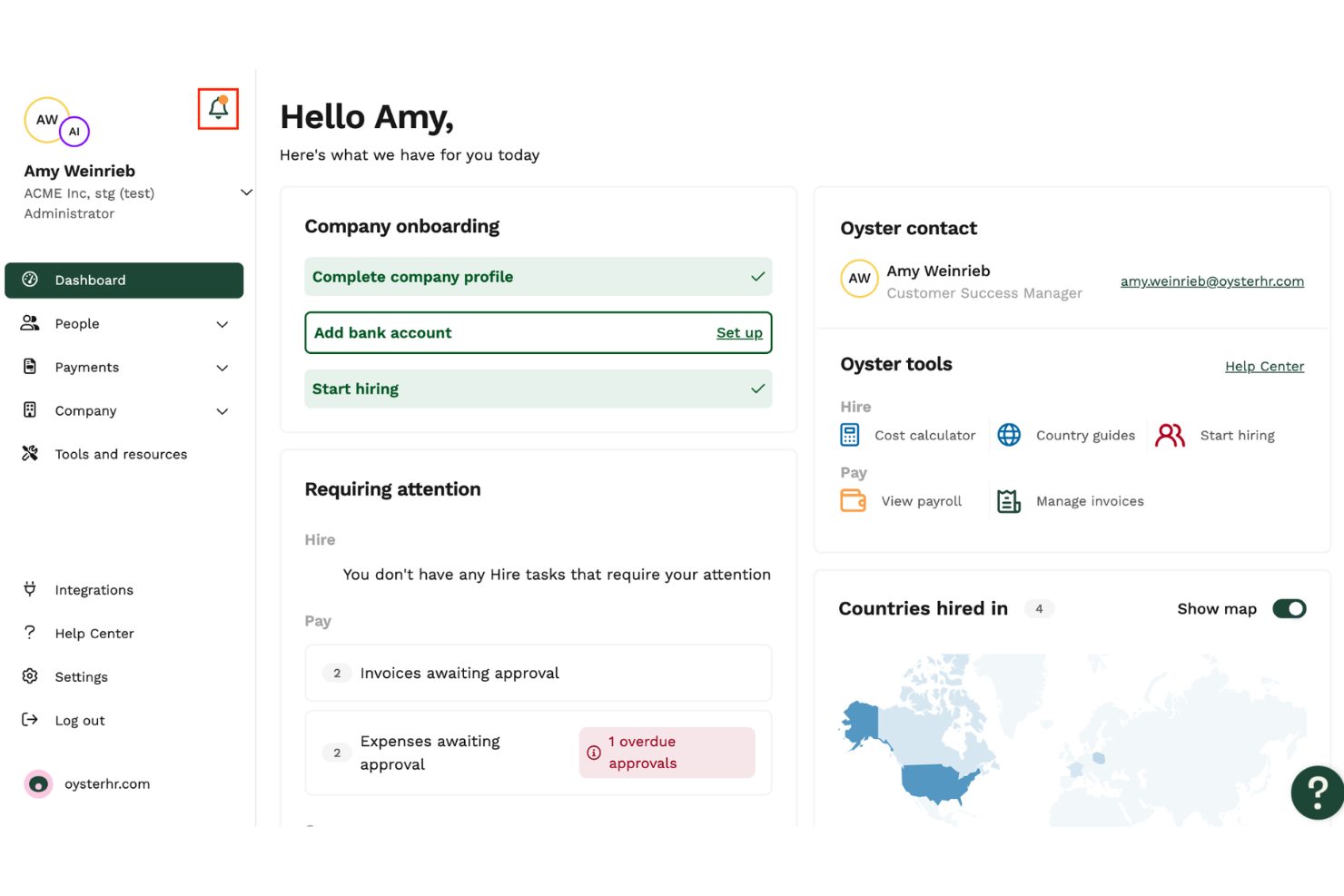
Oyster HR is a global employer of record platform that handles Dutch payroll, statutory benefits administration, compliance, and workforce onboarding through its wholly-owned Dutch legal entity, Oyster HR Netherlands BV.
Who Is Oyster HR Best For?
Oyster HR is a strong fit for finance teams that need Dutch payroll costs to flow directly into NetSuite or Xero without manual reconciliation work.
Why I Picked Oyster HR
I've included Oyster HR in my top picks because it's the only tool on this list with native NetSuite and Xero invoice sync, meaning Dutch payroll costs, employer contributions, and vakantiegeld accruals post directly to your GL accounts the moment you approve an invoice. I also like that it auto-enrolls Dutch employees in a Nationale Nederlanden pension scheme at 15.4% and handles the full 8% holiday allowance accrual automatically, so there's no manual calculation work at month-end close.
Oyster HR Key Features
- Pearl AI compliance assistant: An AI tool that delivers country-specific hiring guidance and benchmarks your Dutch employment contracts against local compensation norms.
- Wholly-owned Dutch entity: Oyster HR Netherlands BV acts as the legal employer under Dutch Civil Code Book 7, without relying on a third-party partner network for standard EOR engagements.
- Transitievergoeding calculation engine: Oyster calculates statutory transition payments automatically based on tenure and gross monthly salary when offboarding Dutch employees.
- CAO-compliant contract generation: Oyster produces employment agreements that meet or exceed sector-specific collective labour agreement minimums for wages, hours, and benefits.
Oyster HR Integrations
Oyster HR offers 15+ marketplace integrations, including NetSuite, Xero, QuickBooks, BambooHR, HiBob, Workday, Greenhouse, and Concur. It also provides a developer API and Zapier.
Pros and Cons
Pros:
- CAO-compliant contracts auto-generated for hires
- Automatic Dutch pension and holiday accrual
- Native NetSuite and Xero Dutch payroll sync
Cons:
- Delayed payroll and support response reported
- Kennismigrant visas routed through third party

Best for Dutch-founded EOR with expat tax handling
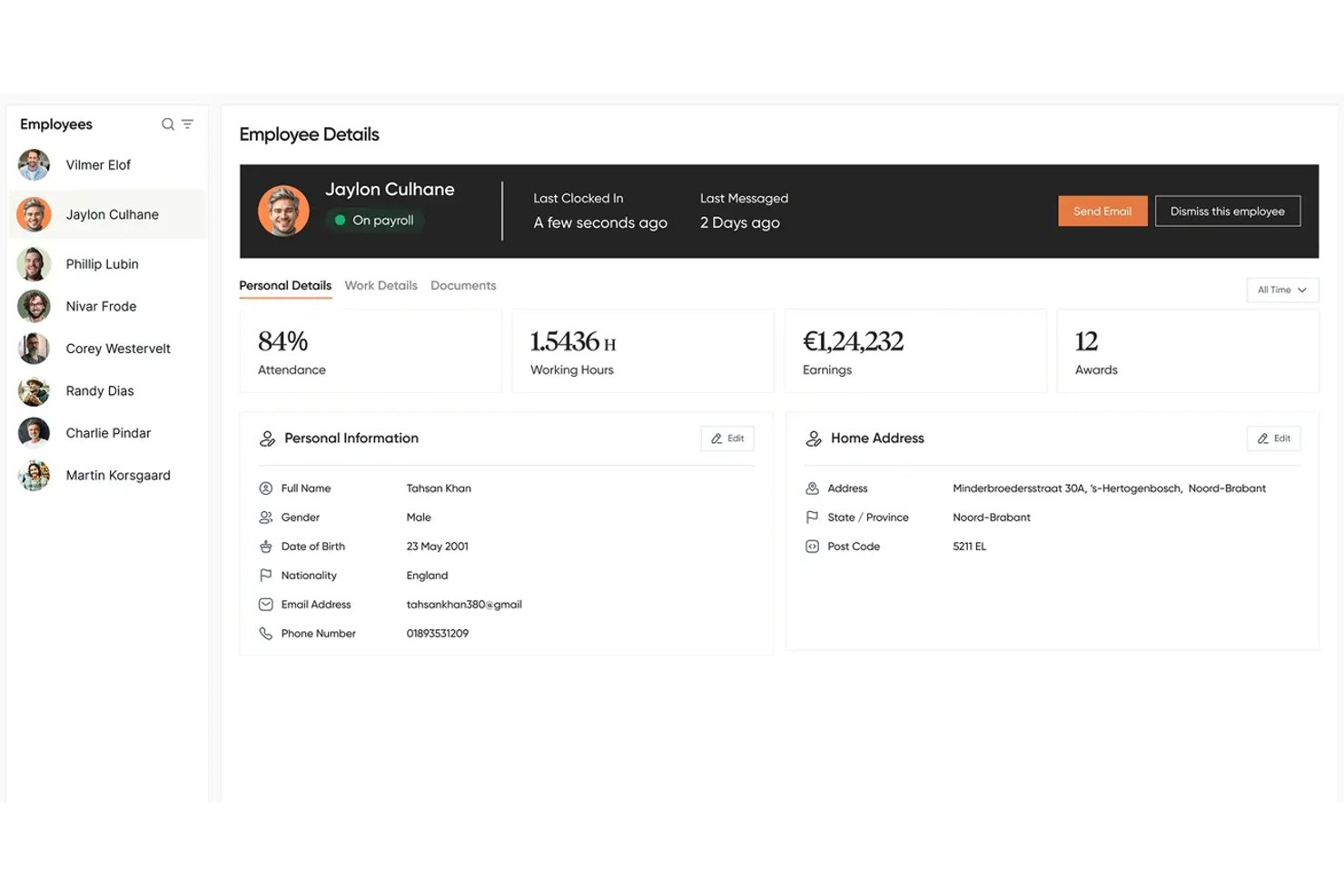
Rivermate is an employer of record service founded and headquartered in Amsterdam, operating a wholly owned Dutch legal entity to manage employment contracts, payroll, tax filings, work permit sponsorship, and statutory benefits for companies hiring in the Netherlands.
Who Is Rivermate Best For?
Rivermate is a strong fit for companies hiring expats and international talent into the Netherlands who need hands-on 30% ruling support and IND-recognized work permit sponsorship.
Why I Picked Rivermate
Rivermate earns its spot on my shortlist because it was literally founded in Amsterdam and operates a wholly owned Dutch entity, which gives it a level of in-country compliance authority that most global EOR providers simply can't match. I particularly like its hands-on 30% ruling support: the team handles the joint employer-employee application to the Belastingdienst and integrates the ruling directly into monthly payroll calculations, including the phased 30/20/10% structure. Rivermate is also a recognized IND sponsor, so it can sponsor Highly Skilled Migrant visas directly without your company needing its own Dutch IND status.
Rivermate Key Services
- Dutch employment contract management: Rivermate drafts and manages both indefinite and fixed-term contracts, enforcing the 3-contract/36-month rule before automatic conversion to permanent status.
- Vakantiegeld accrual and payment: The platform accrues the mandatory 8% holiday allowance monthly and handles payment distribution each May.
- Termination and severance calculation: Rivermate calculates statutory severance (transitievergoeding) based on tenure and manages notice periods of one to four months.
- Multi-currency payroll funding: Clients can fund payroll in their preferred currency, with support for local bank transfers across eight or more currencies.
Rivermate Integrations
Native integrations are not publicly listed.
Pros and Cons
Pros:
- Offers direct IND visa sponsorship services
- Handles Dutch 30% ruling for expats
- Amsterdam-founded with owned Dutch legal entity
Cons:
- CAO auto-mapping feature not documented
- No native ERP or accounting integrations

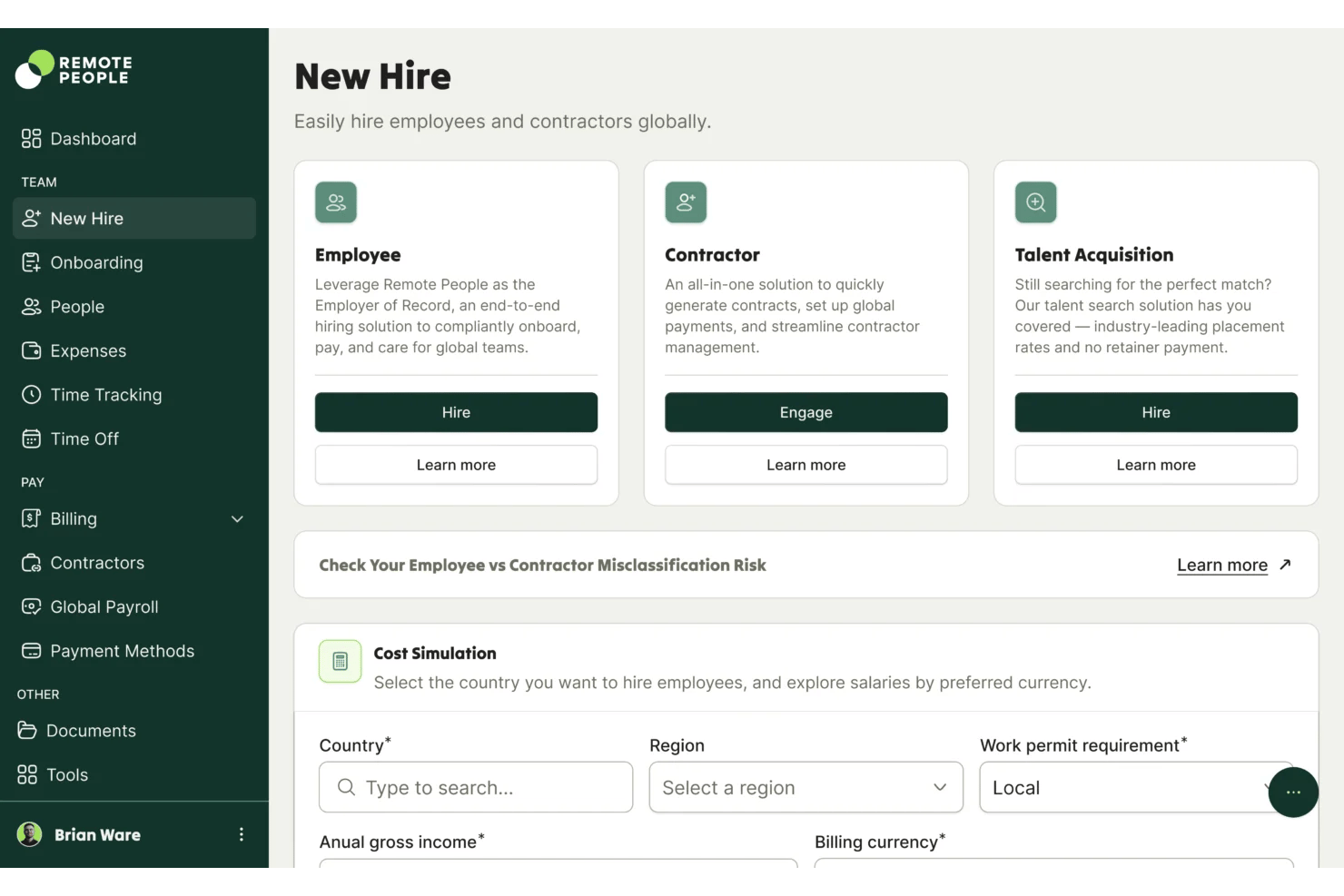
Remote People is a Dutch employer of record that handles local payroll processing, statutory benefits administration, CAO-compliant contracting, and IND-recognized work permit sponsorship for non-EU hires.
Who Is Remote People Best For?
Remote People is a strong fit for companies hiring non-EU talent in the Netherlands who need end-to-end IND-recognized sponsorship, permit filing, and renewal handled under one contract.
Why I Picked Remote People
I picked Remote People as one of the best because its IND-recognized sponsor status is something most Dutch employer of record providers simply don't hold. That status lets it file Highly Skilled Migrant permits directly with the Dutch Immigration and Naturalisation Service (IND), handling renewals end-to-end without routing through a separate immigration firm. I also like that it tracks regulatory changes, like the proposed 2025 Dutch legislation that would cap EOR-sponsored permits at two years, and publishes guidance so clients aren't caught off guard.
Remote People Key Services
- CAO-compliant contract drafting: Remote People drafts employment contracts aligned with the applicable sector-specific collective labour agreement (Collectieve Arbeidsovereenkomst) and Dutch Civil Code Book 7 requirements for each hire.
- Vakantiegeld accrual tracking: The platform accrues the mandatory 8% holiday allowance monthly and surfaces it as a line item on client invoices, giving finance teams real-time visibility into that liability.
- AI Command Center: A plain-language interface lets you trigger payroll changes, onboarding steps, and offboarding actions, with human expert review required before any high-impact change is executed.
- Consolidated multi-country invoicing: All Dutch employer costs—gross salary, social contributions, pension, and EOR fee—appear on a single invoice that can span 150+ countries and 120+ currencies.
Remote People Integrations
Remote People offers 70+ integrations, including NetSuite, SAP SuccessFactors, Workday, QuickBooks, Xero, BambooHR, and HiBob. An open API supports custom integrations for Dutch payroll and finance workflows.
Pros and Cons
Pros:
- Immediate vakantiegeld accrual on invoices
- Full compliance with CAO and labor law
- IND sponsor status for Dutch work permits
Cons:
- Reporting lacks cost center granularity
- No mobile app for payroll access

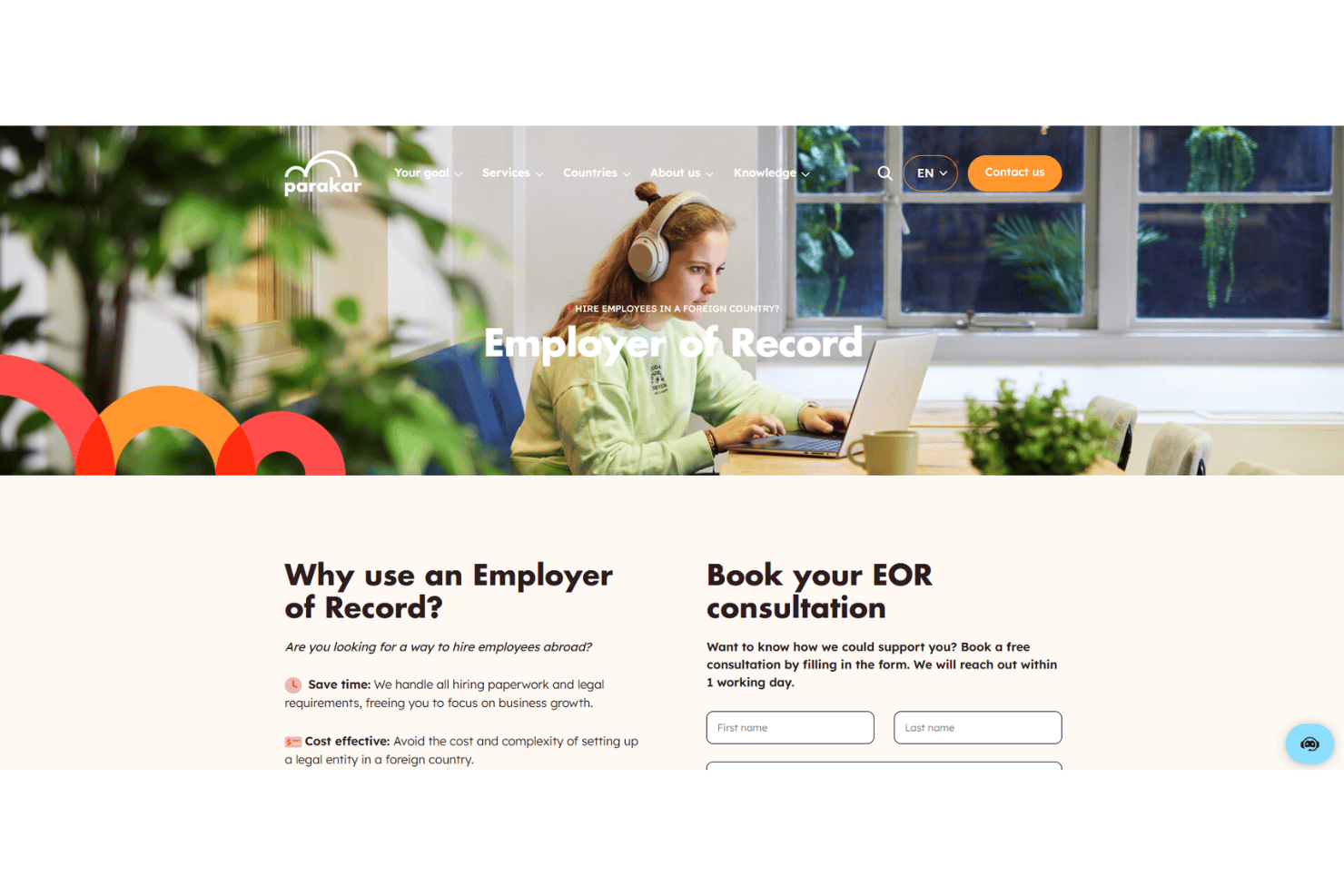
Parakar is a Netherlands-based employer of record that handles Dutch payroll, employment contracts, statutory benefits, work permit sponsorship, and tax compliance—including 30% ruling support—for companies hiring in the Netherlands without a local entity.
Who Is Parakar Best For?
Parakar is a strong fit for companies hiring expat or internationally mobile talent in the Netherlands who need hands-on 30% ruling support and IND-certified work permit sponsorship.
Why I Picked Parakar
Parakar earns its spot on my shortlist because it's a genuinely Dutch-native EOR, founded and headquartered in Breda with over 20 years of in-country experience. I especially value its hands-on 30% ruling support, which matters when you're hiring expat talent and need someone who knows the application process inside out. Parakar is also a certified IND Recognized Sponsor, so it can handle Highly Skilled Migrant visa and EU Blue Card processing directly, without routing through a third-party immigration firm.
Parakar Key Services
- NEN 4400-1 certification: Parakar holds the Dutch SNA–NEN 4400-1 certification, validating its payroll and tax practices against the Dutch labor leasing compliance standard.
- Full gross-to-net Dutch payroll: Parakar calculates and files wage tax (loonheffing) and social security contributions, and generates monthly payslips and year-end reconciliation statements.
- Entity set-up and conversion support: Parakar can help you transition from EOR to your own Dutch entity (BV), handling KVK registration, tax ID acquisition, and employment contract migration.
- Parakar Portal: A secure client portal giving you real-time access to payslips, payroll reports, invoices, and employment contracts across all countries where Parakar operates.
Parakar Integrations
Native integrations are not publicly listed.
Pros and Cons
Pros:
- IND sponsor for fast-track work permits
- Direct 30% ruling support for expats
- Native Dutch legal and HR expertise
Cons:
- Limited finance reporting for accrued liabilities
- No ERP system integrations available
Employor is a Netherlands-only employer of record built on three owned Dutch legal entities, offering EOR services with and without work permits, Dutch payroll administration, statutory benefits management, and IND-recognised immigration sponsorship for non-EU hires.
Who Is Employor Best For?
Employor is a strong fit for companies hiring non-EU nationals into the Netherlands, where IND-recognised sponsorship and NEN 4400-1 certification make compliance straightforward.
Why I Picked Employor
I picked Employor as one of the best because it's the only Netherlands-focused EOR I've found that holds three separately registered IND-recognised BVs, which cuts work permit approvals for non-EU hires down to 2–3 weeks. Its NEN 4400-1 certification satisfies a real procurement requirement many Dutch corporate clients enforce. I also appreciate that its fixed monthly fee doesn't scale with salary, so hiring a senior Dutch engineer won't quietly double your EOR costs mid-year.
Employor Key Services
- 30% ruling administration: Employor manages the Belastingdienst application process for the 30% ruling (expatregeling) and applies it directly to employee payroll calculations.
- Six-step onboarding workflow: A structured onboarding process covers contract drafting, IND permit submission, BSN registration guidance, visa support, and HR platform activation.
- Employee HR portal: Employees access payslips, employment contracts, leave requests, and personal documents through a dedicated online HR platform.
- PEO Light and PEO Full tiers: Two distinct payroll administration options let companies with an existing Dutch entity choose between full-service payroll handling or calculation-only support.
Employor Integrations
Native integrations are not publicly listed.
Pros and Cons
Pros:
- Handles 30% ruling and payroll compliance
- NEN 4400-1 certification satisfies Dutch clients
- Processes Dutch work permits in 2–3 weeks
Cons:
- Lacks integrations with ERP and HRIS systems
- No multi-country or global EOR coverage

Remote
Best for owned Dutch entity with no deposit
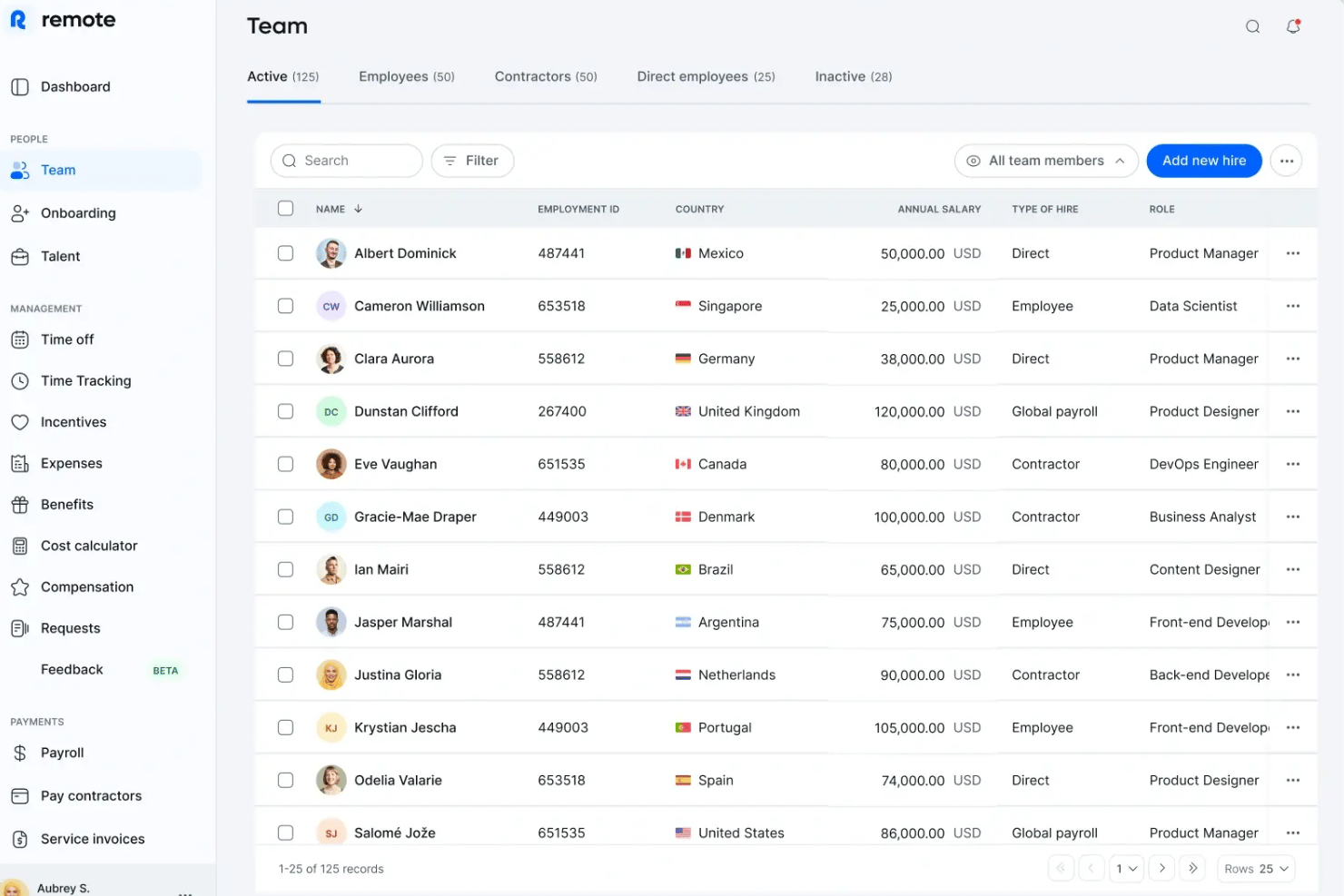
Remote is a global employer of record platform that lets you hire, onboard, and pay employees in the Netherlands—and 80+ other countries—through its own legal entities, handling Dutch payroll, statutory benefits, and local compliance in one place.
Who Is Remote Best For?
Remote is a strong fit for companies hiring across multiple countries who want a single, owned-entity EOR to consolidate Dutch and global payroll under one contract.
Why I Picked Remote
I've included Remote in my top picks because it owns its Dutch legal entity outright, which means it acts as the legal employer (werkgever) on Dutch soil with no third-party partners absorbing liability behind the scenes. I also like that Remote requires no deposit to get started, a real advantage when you're managing working capital across a global headcount. Its IND-recognized sponsor status lets you hire non-EU highly skilled migrants (kennismigranten) in the Netherlands without needing a separate sponsor arrangement.
Remote Key Services
- Compliance Watchtower: Monitors changes to Dutch labor law and local employment regulations, flagging updates that affect your workforce contracts and obligations.
- Remote IP Guard: Embeds intellectual property assignment clauses into every Dutch employment contract, keeping IP rights with your company.
- Aegon pension administration: Manages employer and employee pension contributions through a defined contribution scheme, including WIA-excedent and ANW shortfall insurance options.
- 50+ HRIS integrations: Connects with platforms like BambooHR, HiBob, Personio, and Workday to sync employee data across your existing HR and finance stack.
Remote Integrations
Remote offers native integrations with BambooHR, Greenhouse, HiBob, Personio, Workday, QuickBooks, Xero, NetSuite, Gusto, Slack, and more. It also connects with Zapier, and an API is available for custom integrations.
Pros and Cons
Pros:
- Proactive compliance monitoring for Dutch law
- Full statutory benefits administration for NL
- Owns Dutch entity with IND sponsor status
Cons:
- Payroll reporting lacks advanced analytics
- No 30% ruling application or advisory

Playroll
Best for Dutch vakantiegeld reserve tracking
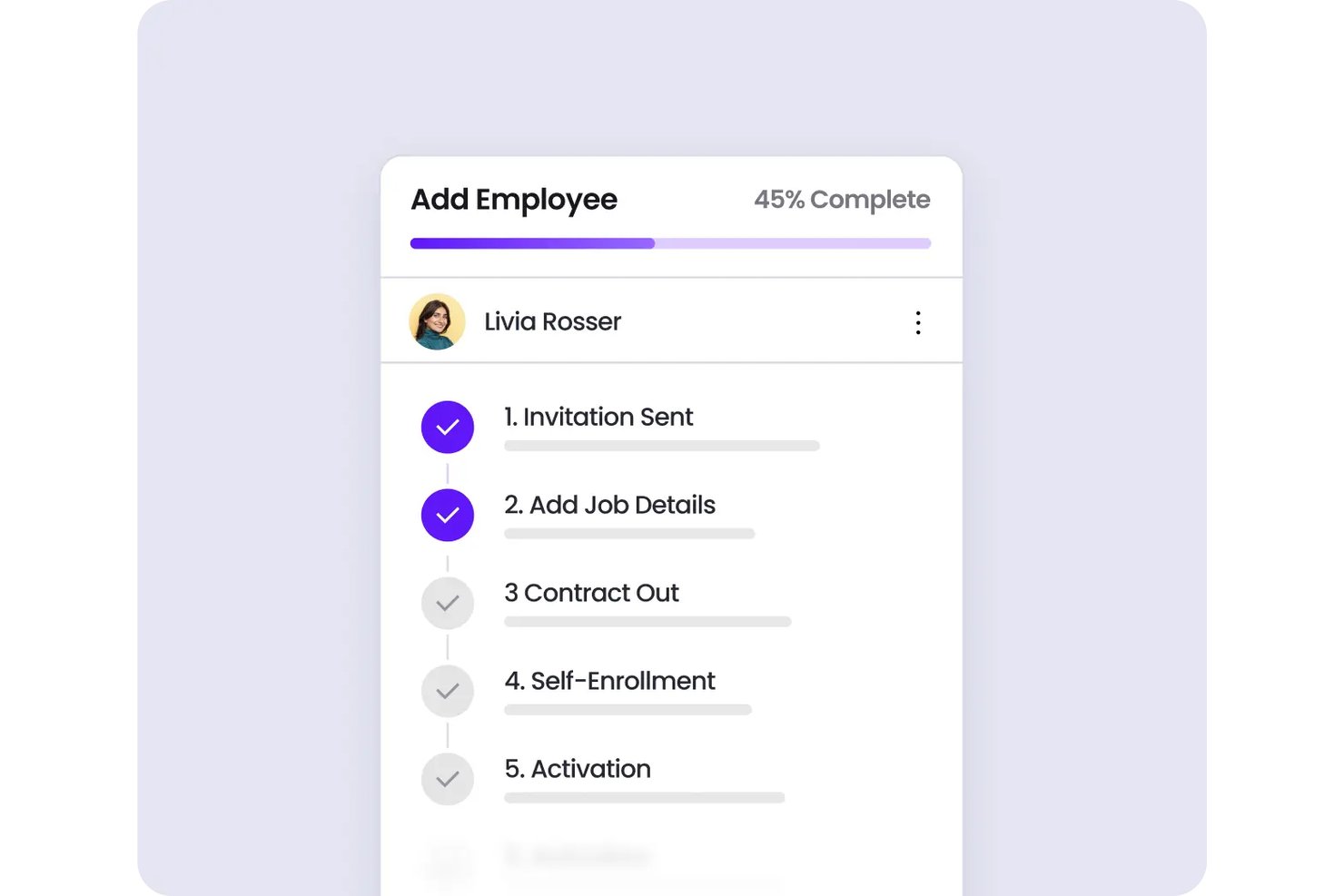
Playroll is an employer of record platform built on owned legal entities—including a Dutch entity with a physical Amsterdam office—that handles local payroll, statutory benefits, compliance monitoring, and employee onboarding across 26 countries.
Who Is Playroll Best For?
Playroll is a strong fit for finance teams hiring in the Netherlands who need clear, auditable visibility into statutory cost accruals like holiday allowance (vakantiegeld) on every payroll invoice.
Why I Picked Playroll
I picked Playroll as one of the best because it's the only EOR on my shortlist that gives finance teams line-item visibility into holiday allowance (vakantiegeld) accruals directly on every payroll invoice. That 8% statutory accrual is tracked and billed separately from the platform fee, so your month-end reconciliation reflects the true cost of each Dutch hire without manual adjustments. Playroll's owned Dutch entity and Amsterdam office back this up with real in-country compliance ownership.
Playroll Key Services
- Orbit HR GPT compliance agent: An AI tool trained on Dutch labor law that answers real-time questions on wage tax (loonheffing), termination rules, and regulatory changes.
- 30% ruling administration: Playroll's Dutch entity handles the 30% ruling application and payroll processing for eligible expat employees hired in the Netherlands.
- Self-service employee onboarding portal: Employees complete document collection, contract signing, and progress tracking through a dedicated portal, with onboarding completed in 2–5 days.
- Sector pension fund enrollment: Playroll administers statutory pension contributions aligned with Dutch sector pension fund (Bedrijfstakpensioenfonds) frameworks as part of the base EOR service.
Playroll Integrations
Playroll offers native integrations with Expensify, BambooHR, and HiBob. It also offers an open API for custom HRIS or ERP connections.
Pros and Cons
Pros:
- Fast onboarding with dedicated CSM and ESM
- Dedicated holiday allowance accrual line-item
- Owned Dutch entity and Amsterdam office
Cons:
- Short 7-day invoice payment terms
- Limited native integrations

Best for direct-entity Dutch EOR at scale
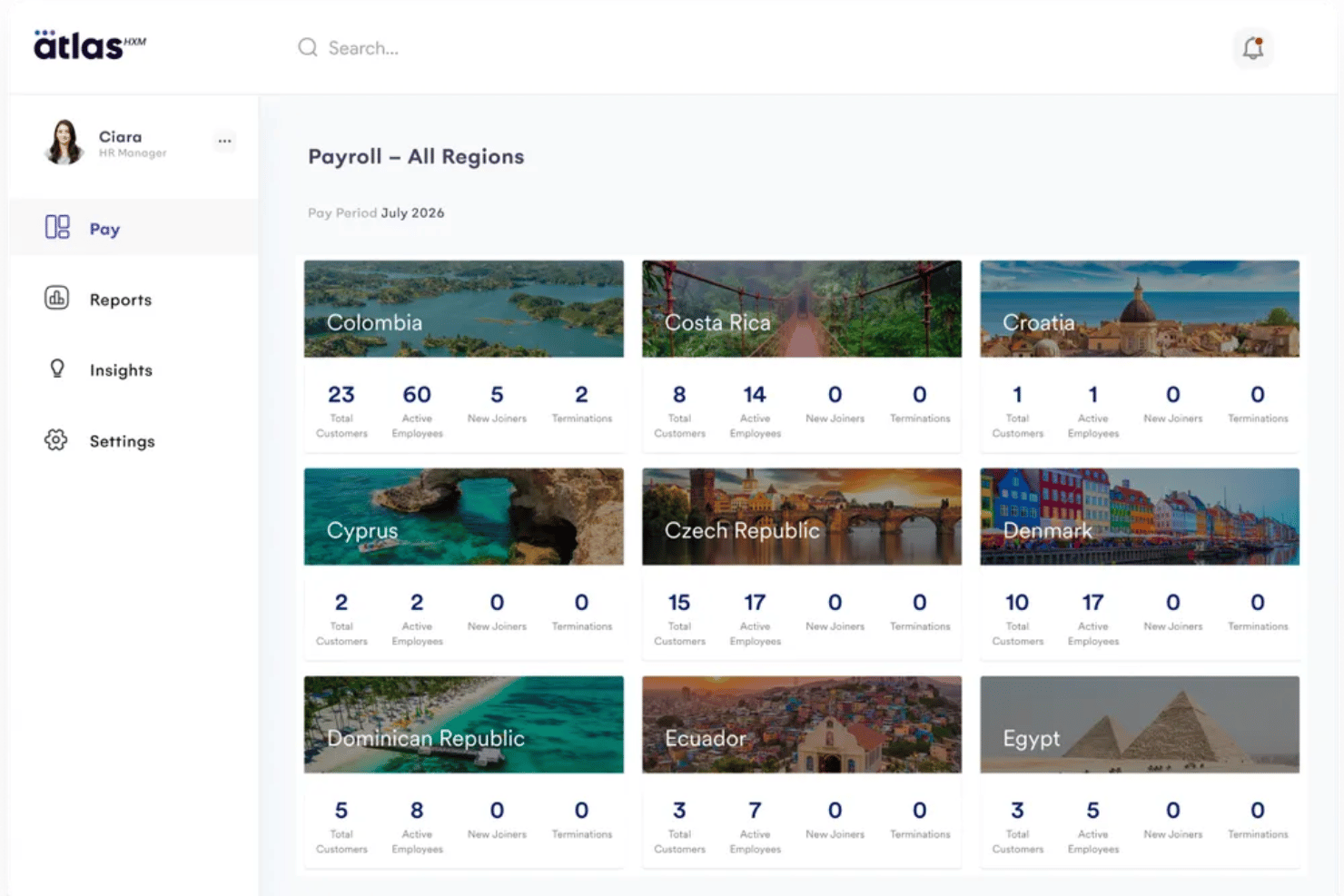
Atlas HXM is a direct-entity employer of record platform that handles Dutch employment contracts, EUR payroll, wage tax, statutory benefits, work permits, and IND visa sponsorship across the Netherlands and 160+ countries.
Who Is Atlas HXM Best For?
Atlas HXM is a strong fit for multinational companies hiring non-EU talent in the Netherlands who need IND visa sponsorship alongside a single-contract global EOR.
Why I Picked Atlas HXM
Atlas HXM earns its spot on my shortlist because it owns and operates its legal entities in 160+ countries, including the Netherlands, which means you're not dealing with a third-party partner when payroll or compliance issues arise. I particularly like its IND liaison capability for highly skilled migrant visas, where Atlas handles pre-assessment, consular support, and quota facilitation directly. It also manages the Dutch 30% ruling, transitievergoeding calculations, and CAO-aligned contracts from a single platform and contract.
Atlas HXM Key Services
- 99%+ payroll accuracy engine: Atlas HXM runs multi-layer anomaly detection on every payroll cycle to catch errors before disbursement.
- Employee Relationship Consultant assignment: Each employee gets a dedicated named consultant for ongoing HR and employment support.
- Atlas HXM Learning: Employees access a built-in learning platform with 9,000+ courses and certifications directly through the platform.
- Single-contract global invoicing: One contract and one monthly invoice cover all Atlas HXM-managed employees across 160+ countries.
Atlas HXM Integrations
Native integrations are not publicly listed.
Pros and Cons
Pros:
- Deep knowledge of Dutch labor compliance
- Single contract covers 160+ countries
- Supports IND visa sponsorship for non-EU talent
Cons:
- Limited Dutch automation documentation publicly available
- Does not offer standalone Dutch payroll
Mercans
Best for owned Dutch BV with zero-aggregator payroll
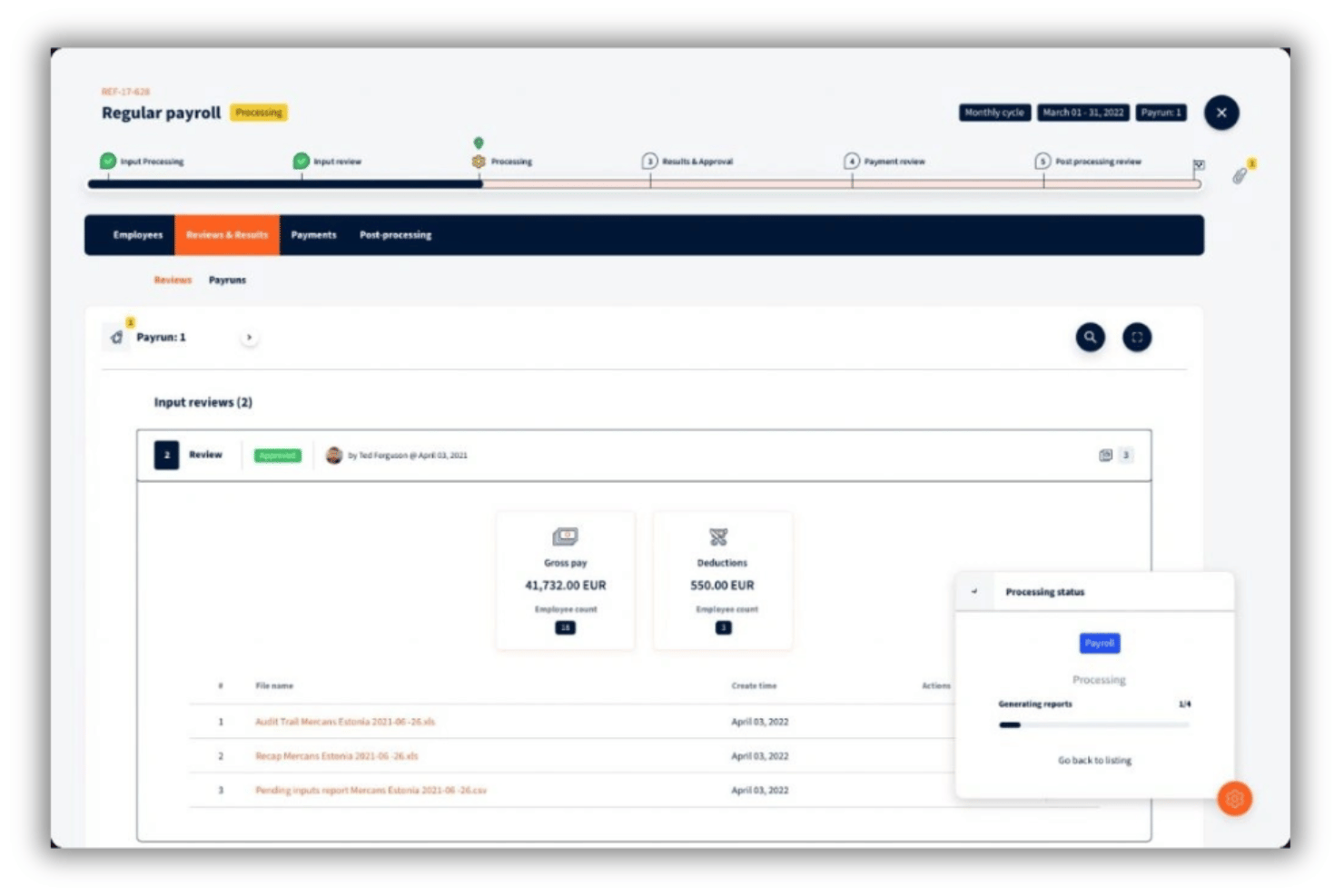
Mercans is an employer of record platform with an owned Dutch legal entity (BV) that handles Dutch payroll processing, statutory benefits administration, CAO compliance, and multi-currency invoicing across 160 countries through its proprietary HR Blizz™ platform.
Who Is Mercans Best For?
Mercans is a strong fit for multinational enterprises that need Dutch payroll handled through a directly owned legal entity, with no third-party aggregators in the chain.
Why I Picked Mercans
I've included Mercans in my top picks because it's one of the few EOR providers that operates its own Dutch BV entity with zero reliance on third-party aggregators, meaning your Dutch hires are employed directly by Mercans' in-country legal entity. I particularly like its G2N Nova payroll engine, which handles VCR loonheffing calculations, WKR allowances, and PAWW filings natively, alongside full CAO compliance configuration per sector.
Mercans Key Services
- WKR allowance tracking: The HR Blizz platform calculates and reports work-related costs scheme (Werkkostenregeling) allowances, applying the 2% threshold against total payroll for each period.
- SEPA payment file generation: Mercans generates SEPA Credit Transfer files automatically each payroll cycle, with the option to route payments through Mercans Gateway or your own bank.
- Statutory alert publishing: Mercans issues Netherlands-specific statutory alerts when Dutch tax rates, social security contributions, or minimum wage rules change, keeping payroll configuration current with Belastingdienst requirements.
- GL-compatible API exports: The platform outputs payroll data in GL-ready format via API, with native connectors to NetSuite, SAP, Oracle, and local Dutch ERP platforms including AFAS and Nmbrs.
Mercans Integrations
Mercans offers native integrations with UKG, Workday, Oracle, SAP SuccessFactors, Dayforce, and Darwinbox. Its open API supports custom HR and payroll system connections.
Pros and Cons
Pros:
- Publishes proactive Dutch statutory updates
- Explicit compliance for CAO and 30% ruling
- Runs payroll through its own Dutch BV
Cons:
- No explicit IND sponsor or BSN handling
- No public pricing

Multiplier
Best for Dutch ESOP and payroll in one contract
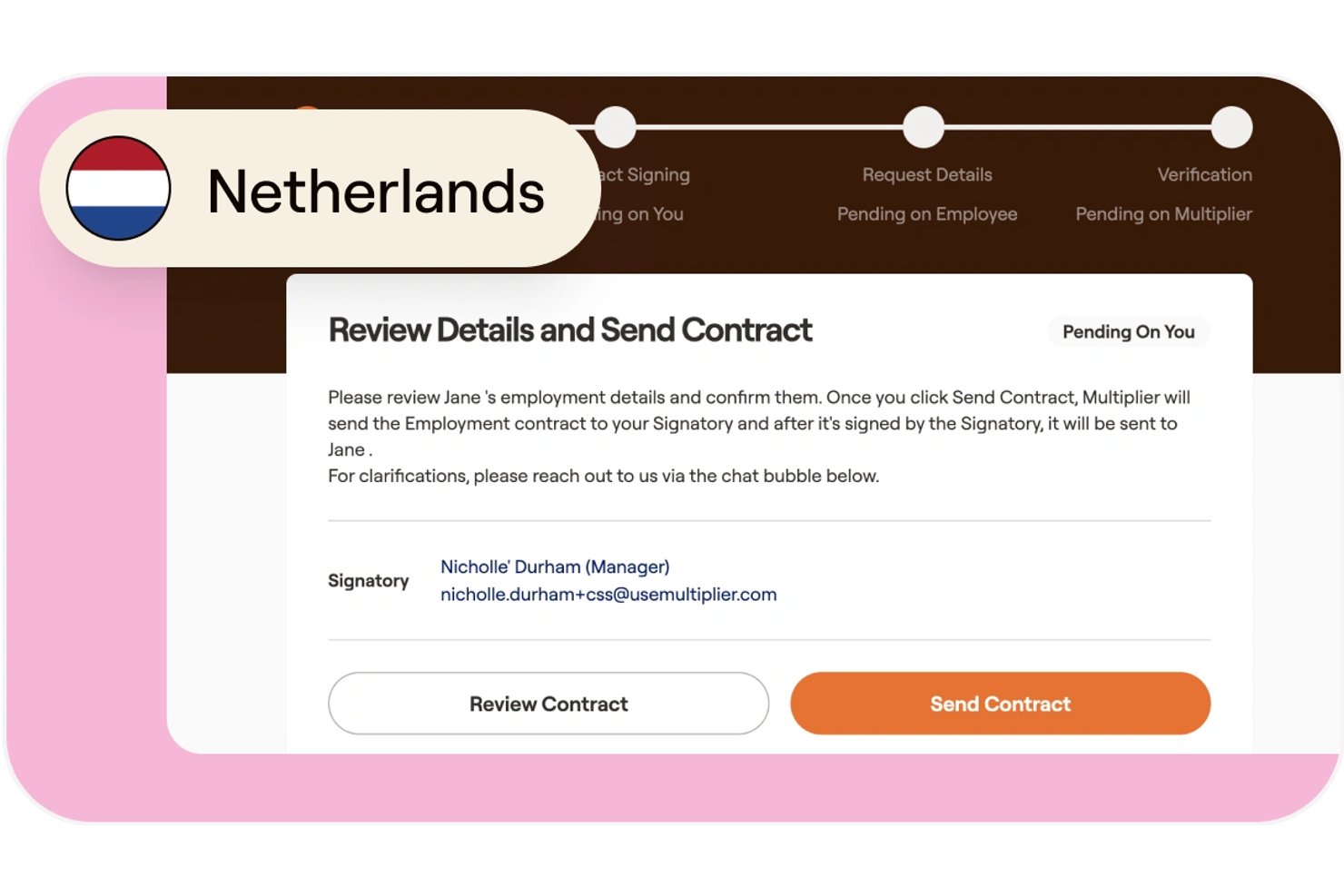
Multiplier is a global employer of record platform that handles Dutch payroll, tax withholding, statutory benefits, employment contracts, work permits, and ESOP administration across 150+ countries from a single dashboard.
Who Is Multiplier Best For?
Multiplier is a strong fit for finance and people ops teams that need to grant equity to Dutch employees and manage the associated payroll obligations under a single contract.
Why I Picked Multiplier
I've included Multiplier in my top picks because it's one of the few EOR platforms that handles Dutch ESOP administration alongside payroll under a single contract, which eliminates the messy coordination between your equity plan administrator and your EOR provider. I particularly like that vakantiegeld (holiday allowance) and pension contributions are calculated as native payroll components, not manual line-item adjustments. Multiplier also explicitly manages the 30% ruling for qualifying expat hires, handling the Belastingdienst application directly.
Multiplier Key Services
- Off-cycle payment processing: Run bonus, commission, and correction payments outside the main payroll cycle without disrupting scheduled runs.
- Employee Cost Calculator: Model the total cost of employment for Dutch hires across 120+ countries, including statutory employer contributions.
- Digital document collection: Gather tax IDs, bank details, and identity documents from new Dutch hires through an automated onboarding workflow.
- SOC 2 Type II and ISO 27001:2022 certification: Security and data protection standards that support GDPR compliance obligations for Dutch employee data.
Multiplier Integrations
Multiplier integrations include BambooHR, HiBob, Personio, and Workday. It also provides an API for custom integrations.
Pros and Cons
Pros:
- Fast onboarding with owned Dutch entity
- Handles 30% ruling applications for expats
- ESOP and payroll managed in one contract
Cons:
- Reviewers report occasional invoice and payroll errors
- Public documentation lacks Dutch automation details
Other Employer of Record Services in the Netherlands
Here are some additional employer of record services in the Netherlands that didn’t make it onto my shortlist, but are still worth checking out:
- Pebl
For AI-driven Dutch employment cost insights
- Papaya Global
For licensed-rail Dutch payroll and ERP sync
- Rippling
For ERP-connected Dutch workforce cost rollup
- Safeguard Global
For multi-country Dutch payroll cost analytics
- Oyster
For flat-fee Dutch EOR with B Corp ethics
- TopSource
For flat-fee Dutch EOR with IND visa support
- G-P
For owned-entity Dutch payroll at global scale
- GoGlobal
For M&A Dutch workforce consolidation
- ThisWorks
For SNA-certified Dutch EOR with flat-fee billing


How I Evaluate Employer of Record Services in the Netherlands
I split every EOR into two layers: the baseline Dutch payroll and compliance capabilities it must meet, and the differentiators—like 30% ruling automation or CAO mapping—that separate a truly Dutch-fluent provider from a generic global platform.
Core Functionality (Table Stakes For This List)
When I'm selecting tools for my list, I rank each one on a scale from 0 (does not offer the functionality) to 5 (excels in this area) for each core functionality listed below. I then calculate the tool's total score into a percentage, using 65% as a benchmark to help assess its overall fit for the list.
- Dutch legal entity: I check whether the provider owns its own entity in the Netherlands or relies on a third-party partner, and whether in-country legal and HR experts are accessible.
- Dutch payroll and tax: Each tool needs to handle wage tax (loonheffing), social security, holiday allowance, and payslip generation—I look for automated filings and audit trails over manual workarounds.
- Local compliance management: I evaluate how well each platform handles Dutch employment contracts, collective labor agreement (CAO) awareness, 30% ruling support, and termination guidance.
- Statutory benefits administration: Beyond basic vacation tracking, I look for pension enrollment, sick leave, parental leave, and any supplemental benefits like commuting allowances or health top-ups.
- Onboarding and work permits: The provider should support BSN registration and, for non-EU hires, visa sponsorship and IND liaison—not just a basic digital onboarding form.
- Multi-currency invoicing and reporting: I evaluate whether invoicing includes itemized cost breakdowns, GL-ready exports, and integrations with accounting or ERP systems for consolidated global reporting.
Once I have a list of tools that meet the criteria, I consider what sets each platform apart.
Differentiating Factors (What Sets Vendors Apart)
Here's how I compare and contrast different vendors:
Standout Features
I look for automated 30% ruling handling—whether a provider can assess expat eligibility, file with the Belastingdienst, and adjust payroll as the phased reduction kicks in. That alone can save hours of manual tax work each period. I also check how each vendor accrues the 8% holiday allowance (vakantiegeld) on invoices, since a clear monthly liability line makes month-end close far easier for finance teams. IND sponsorship depth matters too: some providers hold recognized sponsor status and manage visa renewals end-to-end, while others outsource that step entirely.
Beyond Features
I check whether each provider's contract includes clear indemnification for Dutch tax penalties and misclassification claims, since a single Belastingdienst dispute can dwarf a year of EOR fees. Pricing transparency matters just as much—I compare flat per-employee fees against percentage-of-salary models and look for itemized pass-through costs on invoices so holiday allowance and pension contributions aren't buried in markups. I also evaluate native integrations with systems like NetSuite or SAP, checking whether payroll journals support configurable cost center and project tagging for multi-entity consolidation at month-end close.
How to Choose an Employer of Record Service in the Netherlands
Deciding how to pick an employer of record service in the Netherlands comes down to matching your most urgent hiring, payroll, and compliance needs with what each vendor can actually prove they do well:
| If your priority is… | Look for… |
|---|---|
| Fast onboarding for non-EU hires | IND-recognized sponsor status and BSN setup |
| Dutch payroll accuracy | Automatic loonheffing filings with audit log |
| Managing ESOP and holiday pay on invoices | Itemized accrual lines and local cost calculations |
| Avoiding hidden costs | Transparent, fixed-fee Dutch entity invoices |
| Handling 30% ruling for expats | In-house expat tax support and Belastingdienst filings |
How to Vet Your Shortlist
- IND Sponsorship Proof: Request a copy of their latest IND-recognized sponsor confirmation, and verify recognition on the official IND register.
- Payroll Test Run: Ask for a sample Dutch payslip and end-to-end payroll journal export; check for loonheffing, vakantiegeld, and pension contributions.
- Holiday Pay Accrual: Request an invoice template with a separate line for 8% holiday allowance accrual and itemized employer taxes.
- 30% Ruling Handling: File a support ticket detailing a test case for 30% ruling eligibility assessment and review the proposed payroll adjustment.
- Entity Ownership vs. Aggregator: Decide if you want a provider with a directly owned Dutch BV (better control, lower risk) or a global aggregator (faster setup, less local expertise).
What are Employer of Record Services in the Netherlands?
Employer of record services in the Netherlands are specialized firms that officially employ staff on your behalf, handling payroll, contracts, tax, and compliance with Dutch law. These providers let businesses hire Dutch-based talent without registering a local entity. They manage legal risks, support payroll filings, and ensure benefits and statutory requirements are met, making Dutch hiring accessible for non-local and expanding teams.
Why Use an Employer of Record Service in the Netherlands?
Using an employer of record (EOR) in the Netherlands allows you to hire employees without setting up a local entity or managing the country’s employment requirements yourself. To hire directly, you typically need to establish a legal presence, register with the Dutch tax authorities, manage payroll taxes and social security contributions, and comply with Dutch employment law.
The Netherlands also has detailed rules around employment contracts, paid leave, sick pay, termination, working hours, and mandatory benefits. An EOR helps you manage these requirements, reduces administrative burden, and allows you to hire quickly—especially useful if you’re testing the Dutch market or building a small local team.
Deciding Between an EOR and a Legal Entity in the Netherlands
When deciding between an EOR and setting up a legal entity in the Netherlands, the main factor is speed versus long-term operational control.
Setting up a legal entity, such as a Dutch private limited company (BV), involves registration with the Dutch Chamber of Commerce (KVK), tax registration, payroll administration, and ongoing compliance. An EOR allows you to bypass much of this setup and start hiring employees more quickly.
| Feature | Employer of Record (EOR) | Legal Entity (Netherlands) |
|---|---|---|
| Setup Time | Fast (days to a few weeks) | Longer (typically several weeks, depending on setup) |
| Operational Readiness | Immediate hiring | Delayed; requires entity and payroll setup |
| Compliance Responsibility | Shared; EOR handles employment and payroll compliance | Fully on your company |
| Payroll and Tax Setup | Managed by EOR | Must register and manage payroll taxes |
| Administrative Burden | Low | Higher; accounting, payroll, reporting, and compliance |
| Flexibility | High | Lower; suited to a long-term presence |
| Cost Structure | Service-based fee | Setup + ongoing operational costs |
| Best For | Market entry, remote hiring | Long-term investment and scaling |
EOR vs Permanent Establishment in the Netherlands
When hiring in the Netherlands, one key risk is creating a Permanent Establishment (PE), which can trigger Dutch corporate tax obligations.
A PE may arise if your company has a fixed place of business in the Netherlands or operates through employees or agents who have authority to conduct business on your behalf. If a PE is established, your company may be subject to Dutch corporate income tax on profits attributable to its activities in the Netherlands.
Tax Overview for Employers in the Netherlands
The Netherlands has a structured payroll tax system with mandatory employer contributions and withholding obligations.
- Employers act as withholding agents. You generally withhold wage tax and national insurance contributions from employees’ wages and remit them to the Dutch Tax and Customs Administration (Belastingdienst).
- Wage tax rates are progressive. The amount withheld depends on the employee’s taxable wages and applicable tax bracket.
- Employee insurance contributions are mandatory. Employers generally pay contributions covering unemployment, sickness, and incapacity for work, including WW, WIA/WAO, and ZW schemes.
- Healthcare contributions also apply. Employers generally pay an income-related contribution under the Health Insurance Act (Zvw).
- Employer contribution costs vary. Rates depend on factors such as the employment arrangement, applicable insurance premiums, and the employer’s circumstances, so there is no single percentage comparable to Vietnam’s ~21.5%.
- Payroll tax returns are required. Employers must register with the Belastingdienst, maintain payroll records, file payroll tax returns, and remit the applicable taxes and contributions.
- Additional employment costs may apply. Employers must generally provide at least an 8% holiday allowance, while pension contributions may also be required depending on the applicable collective labour agreement (CAO) or pension scheme.
Key Breakdown of Dutch Employer Obligations
| Cost Category | Key Components & Schemes | Typical Cost Burden (on Gross Salary) |
|---|---|---|
| Mandatory Holiday Allowance | Vakantiegeld (Statutory minimum paid annually, usually in May) | 8.0% mandatory base |
| Employer Social Insurance | • WW (Unemployment benefit)• WIA/WAO (Disability benefits)• ZW (Sickness benefit) | ~10% to 20%(WW rate varies significantly between permanent contracts vs. temporary/flex contracts) |
| Health Insurance Contribution | Zvw (Zorgverzekeringswet – Employer contribution) | ~6.0% to 7.0% (Capped at maximum annual income threshold) |
| Pension & CAO Contributions | Sector-dependent Collective Labour Agreements (StiPP, ABP, etc.) | 8% to 15%+ (Industry-specific or agreement-dependent) |
Features
When selecting an employer of record service in the Netherlands, keep an eye out for the following key features:
- Dutch legal entity ownership: The provider should own a registered entity in the Netherlands or have direct control over its legal structure, which ensures accountability and in-country compliance expertise.
- Dutch payroll and tax compliance: Automatic calculation and withholding of wage tax (loonheffing), social security contributions, and other statutory deductions are essential to meet Dutch payroll regulations and reporting duties.
- Employment contract management: Localized employment contracts, aligned with Dutch labor law and sector-wide collective labor agreements (CAO), safeguard both the worker and your business against legal risks.
- Onboarding and work permit processing: Integrated support for employee onboarding, including BSN registration for Dutch hires and recognized IND sponsorship for non-EU workers, streamlines hiring and fulfills immigration requirements.
- Statutory benefits administration: Management and accrual of vacation days, 8% holiday allowance (vakantiegeld), pensions, and statutory leave ensures employees receive all entitlements required by Dutch law.
- 30% ruling support: The provider should offer guidance and filings for the 30% tax ruling, which grants tax relief to eligible expat employees, helping attract and retain international talent.
- Transparent, itemized invoicing: Clear breakdowns of employer costs, including holiday pay and pension contributions, promote financial visibility and simplify month-end reconciliation.
- Multi-currency invoicing and integrations: Invoices and payroll reports should be available in multiple currencies and support integration with accounting or ERP systems for accurate reporting and consolidation.
- Termination and compliance guidance: Access to local experts who guide you through Dutch dismissal processes, statutory notice, and severance requirements helps limit risk and unexpected payroll liabilities.
- Indemnification and risk mitigation: Contractual protection against tax penalties, employment misclassification, and payroll mistakes ensures your business is shielded from costly compliance issues.
Benefits
Implementing employer of record services in the Netherlands offers several benefits for your team and your business. Here are a few you can look forward to:
- Local payroll and tax compliance: Ensure Dutch wage tax, social security, and holiday allowance are handled automatically with accurate filings supported by local expertise.
- Direct access to Dutch legal entity: Hire talent and manage employment directly through a provider’s owned Dutch entity, reducing compliance risk and increasing accountability.
- Streamlined visa and work permit processes: Fast-track onboarding for non-EU hires with IND sponsorship and BSN registration from providers familiar with Dutch immigration procedures.
- Transparent and itemized invoicing: Receive detailed invoices that separate out costs like the 8% holiday allowance, pension, and employer taxes, giving you clear financial visibility.
- Accurate statutory benefits administration: Rely on providers to manage vacation days, pensions, sick leave, and parental leave in line with Dutch law and sector agreements.
- Automated 30% ruling support: Save time and reduce manual errors by using providers who can identify expat eligibility, file for the tax benefit, and adjust payroll accordingly.
- Contractual protection and risk mitigation: Limit exposure to tax penalties and misclassification claims through clear indemnification and local compliance guidance in provider contracts.
Costs and Pricing
Selecting an employer of record service in the Netherlands requires an understanding of the various pricing models and plans available. Costs vary based on features, team size, add-ons, and more. The table below summarizes common plans, their average prices, and typical features included in employer of record services in the Netherlands:
Plan Comparison Table for Employer of Record Services in the Netherlands
| Plan Type | Average Price | Common Features |
|---|---|---|
| Free Plan | $0 | Basic compliance guidance and limited contract templates. |
| Personal Plan | $200–$400/employee/month | Payroll setup, employment contract generation, basic Dutch payroll processing, and limited statutory benefits administration. |
| Business Plan | $400–$700/employee/month | Full Dutch payroll and tax filings, HR support, IND sponsorship for visa processing, and statutory benefits administration. |
| Enterprise Plan | $700–$1,200/employee/month | Owned Dutch legal entity, advanced compliance management, 30% ruling handling, CAO mapping, custom reporting, and indemnification against local penalties. |
Employer of Record Services in the Netherlands FAQs
Here are some answers to common questions about employer of record services in the Netherlands:
Can I hire employees in the Netherlands without setting up a local entity?
Yes. An Employer of Record can legally employ workers in the Netherlands on your behalf, allowing you to build a local team without establishing your own Dutch entity. The EOR handles employment contracts, payroll, taxes, and other employer responsibilities.
Is an Employer of Record legal in the Netherlands?
Yes, but EOR and payroll arrangements must comply with Dutch employment and labor-supply rules. Payroll employees are entitled to at least the same employment conditions as comparable employees working directly for the company.
How quickly can I hire an employee in the Netherlands through an EOR?
Hiring through an EOR can often be completed within days or a few weeks once the employee’s information and required documentation are available. This is generally faster than establishing and preparing your own Dutch entity for employment.
What employee benefits are mandatory in the Netherlands?
Dutch employees are entitled to statutory benefits including paid annual leave and generally at least 8% holiday allowance. Pension requirements and additional benefits can depend on the employee’s sector and applicable CAO.
Do employees in the Netherlands receive a 13th-month salary?
A 13th-month salary is not a universal statutory requirement in the Netherlands. It may be required under an applicable CAO, employment contract, or company policy.
Can an EOR hire both permanent and temporary employees in the Netherlands?
Yes. Dutch employment law recognizes both fixed-term and permanent employment contracts. However, specific rules govern successive temporary contracts and when an employee becomes entitled to a permanent contract.
How does an EOR handle payroll in the Netherlands?
The EOR typically handles salary administration, payroll tax withholding, social insurance contributions, payslips, and required payroll reporting. This reduces the administrative work involved in complying with Dutch payroll requirements.
Can an EOR terminate an employee in the Netherlands?
Yes, but termination must comply with Dutch dismissal law. Employers generally need a valid reason for dismissal, and depending on the circumstances, termination may require employee consent or approval from the UWV or a subdistrict court.
Does using an EOR prevent permanent establishment risk in the Netherlands?
Not automatically. An EOR can reduce the need to establish a local entity, but your company’s activities in the Netherlands can still create permanent establishment risk. Factors such as having a fixed place of business or employees with certain authority may affect your tax position, so companies should obtain tax advice based on their specific activities.
Are public holidays mandatory days off in the Netherlands?
No. Dutch law does not automatically give employees a day off on public holidays. Whether employees receive the day off and whether it is paid usually depends on the applicable CAO or employment contract.
This content is provided for general informational purposes only and does not constitute legal, tax, or other professional advice. It may not be complete, accurate, or current, and laws and practices may change without notice and vary by jurisdiction. You should not act on this information without obtaining advice from qualified legal or tax counsel in the relevant jurisdiction regarding your specific circumstances.