

10 mejores programas ERP para la industria aeroespacial analizados en 2026

Selección del mejor software ERP aeroespacial


Las empresas aeroespaciales necesitan soluciones sólidas que puedan gestionar requisitos normativos estrictos, procesos de fabricación complejos y operaciones globales. Sin embargo, encontrar el mejor software ERP para la industria aeroespacial puede ser complicado cuando hay tantas opciones disponibles.
Gracias a mi amplia experiencia con software ERP, probé y comparé varias de las principales soluciones del mercado para ayudar a los equipos a comenzar su búsqueda. Independientemente de los objetivos y requisitos de necesidades de tu empresa, podrás utilizar mis análisis exhaustivos para encontrar la solución ERP adecuada que te ayude a alcanzar el éxito mientras mantienes el cumplimiento normativo.
Por qué confiar en nuestras recomendaciones de software
Nuestras reseñas reflejan nuestro criterio independiente, no un discurso de ventas. Descubra cómo mantenemos la transparencia.
Para esta guía, evaluamos las herramientas mediante pruebas prácticas e investigación independiente, puntuando las herramientas según nuestros criterios de selección.
Nuestras reseñas reflejan nuestro criterio editorial humano, no un discurso de ventas.
Resumen del mejor software ERP aeroespacial
| Tool | Best For | Trial Info | Price | ||
|---|---|---|---|---|---|
| 1 | Ideal para trazabilidad de materiales de extremo a extremo | Prueba gratuita de 30 días disponible | Desde $49/usuario/mes | Website | |
| 2 | Mejor para seguimiento detallado de inventario | Prueba gratuita de 30 días | Desde $50/usuario/mes | Website | |
| 3 | Mejor para soluciones ERP basadas en proyectos y cumplimiento normativo | Demostración gratuita disponible | Precio a consultar | Website | |
| 4 | Mejor para el cumplimiento normativo y la seguridad en los sectores aeroespacial y de defensa | Demostración gratuita disponible | Precio a consultar | Website | |
| 5 | Mejor para una gestión integral del ciclo de vida de los activos | Demostración gratuita disponible | Precios bajo solicitud | Website | |
| 6 | Mejor opción para ERP integrado con trazabilidad y gestión documental | Not available | Precio a consultar | Website | |
| 7 | Mejor integración con Salesforce y gestión del ciclo de vida del proyecto | Demostración gratuita disponible | Desde $100/usuario/mes | Website | |
| 8 | Mejor para soluciones ERP personalizables para fabricantes aeroespaciales | Not available | Precio a solicitar | Website | |
| 9 | Mejor para gestionar desafíos de costos y cumplimiento regulatorio | Demostración gratuita disponible | Precios bajo solicitud | Website | |
| 10 | Mejor para un entorno de operaciones integrado para proveedores aeroespaciales | Not available | Precios a consultar | Website |
Análisis del mejor software ERP aeroespacial
Mi análisis exhaustivo ofrece una visión general de cada software ERP aeroespacial. A continuación, te explicaré las ventajas y desventajas, las funciones y los casos de uso más adecuados de cada herramienta.

MRPeasy
Ideal para trazabilidad de materiales de extremo a extremo
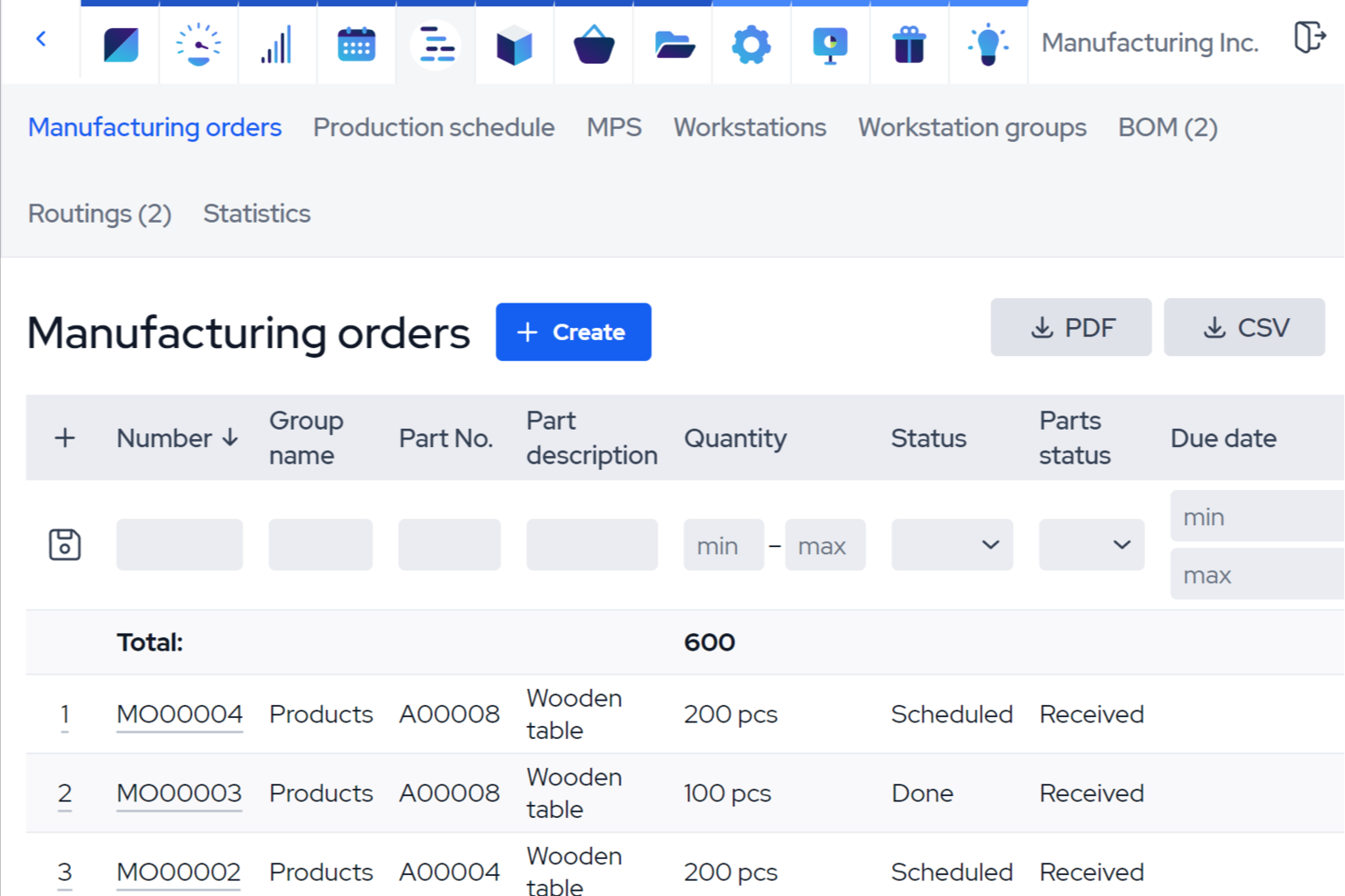
MRPeasy es una plataforma ERP y MRP basada en la nube diseñada para pequeños fabricantes, que cubre la planificación de la producción, control de inventario, compras, gestión de ventas y finanzas en un solo sistema.
¿Para quién es mejor MRPeasy?
MRPeasy es adecuado para pequeños fabricantes aeroespaciales y de defensa con entre 10 y 200 empleados que necesitan un control estructurado de la producción y el inventario.
Por qué elegí MRPeasy
MRPeasy se gana su lugar en mi lista porque su rastreo por lotes y números de serie cubre todas las etapas de la cadena de suministro. En el sector aeroespacial, donde un solo componente no conforme puede paralizar un programa, me gusta que se pueda rastrear un lote de materia prima desde la recepción del proveedor, pasando por la producción y hasta la unidad enviada. La funcionalidad de RMA y devoluciones permite aislar exactamente qué productos serializados están afectados sin tener que retirar inventario no relacionado. Las herramientas integradas de inspección de calidad, que identifican no conformidades en la recepción de materiales antes de que lleguen a la producción, completan un panorama de trazabilidad realmente exhaustivo.
Características clave de MRPeasy
- Lista de materiales multinivel: Cree y gestione listas de materiales complejas y anidadas que reflejan toda la jerarquía de componentes de los ensamblajes aeroespaciales.
- Programación de producción con diagramas de Gantt: Programe y reprograme órdenes de fabricación de manera visual usando una interfaz de Gantt de arrastrar y soltar.
- Control de revisión de lista de materiales: Rastree y gestione órdenes de cambio de ingeniería a través de versiones de la lista de materiales para mantener la producción alineada con las especificaciones más recientes.
- Escaneo de códigos de barras para reportes en planta: Los operarios escanean códigos de barras para registrar tiempo, materiales usados y el progreso de los trabajos directamente desde la planta de producción.
Pros and Cons
Pros:
- Ofrece seguimiento de costos de producción
- Programación de producción interactiva para la planificación
- Seguimiento de control de calidad para documentación de cumplimiento
Cons:
- Sin gestión documental nativa para certificaciones
- Los roles de usuario y permisos carecen de granularidad fina
New Product Updates from MRPeasy
MRPeasy Expands REST API v2 With New Data Endpoints
MRPeasy expands REST API v2 with new endpoints for reports, dashboard data, production resources, stock, and settings. This gives users broader programmatic access to operational data. For more information, visit MRPeasy’s official site.
 .
.
Mejor para seguimiento detallado de inventario
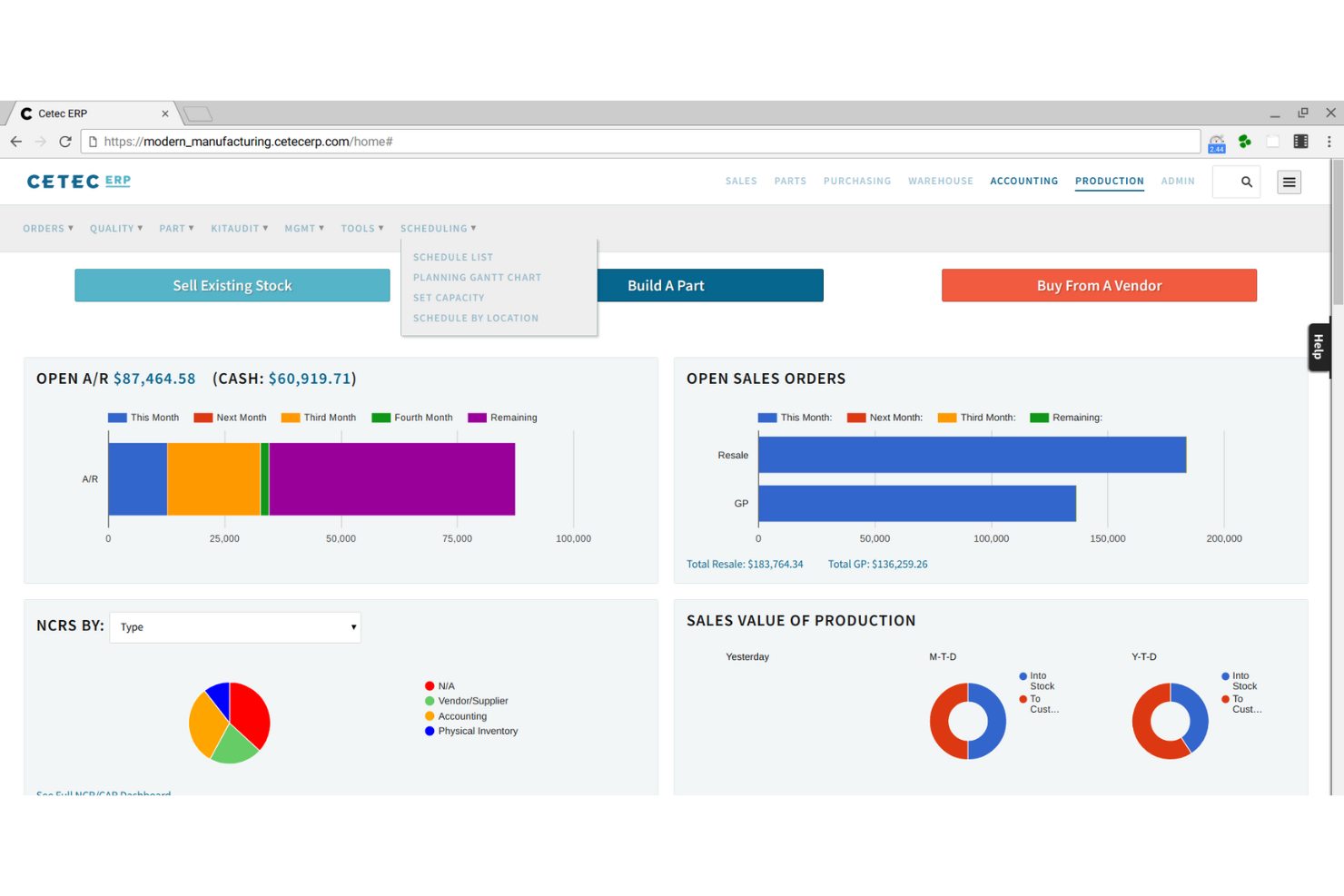
Cetec ERP es una plataforma ERP en la nube de suite completa diseñada para fabricantes aeroespaciales y de defensa, que cubre producción, cotizaciones, inventario, gestión de calidad y finanzas en un solo sistema integrado.
¿Para quién es mejor Cetec ERP?
Cetec ERP es ideal para fabricantes contratistas de los sectores aeroespacial y de defensa de tamaño pequeño a mediano que necesitan controles de calidad con cumplimiento AS9100 y trazabilidad integrados a sus operaciones principales.
Por qué elegí Cetec ERP
Elegí Cetec ERP como uno de los mejores porque su seguimiento de inventario va mucho más allá del conteo simple de existencias. En la industria aeroespacial, cada lote, número de serie, código de colada y certificado de conformidad debe estar vinculado a una pieza específica desde la recepción hasta el envío final—y Cetec gestiona todo eso de forma nativa. Me gusta especialmente el seguimiento FIFO/FEFO a nivel de contenedor, que es fundamental para controlar la vida útil de los materiales. Los informes de uso también me permiten rastrear exactamente qué material se utilizó en cada orden de trabajo, proporcionándome la documentación necesaria para una auditoría o una solicitud de CoC de cliente sin buscar en múltiples sistemas.
Funciones clave de Cetec ERP
- Informe de no conformidades (NCR): Registre, rastree y resuelva fallos de calidad directamente en la plataforma, con flujos de trabajo de disposición vinculados y asignación de códigos de fallo.
- Listas de materiales y rutas controladas por revisión: Gestione cambios de ingeniería con listas de materiales y rutas de producción controladas por versión, incluyendo flujos de aprobación enrutados.
- Herramientas de cumplimiento ITAR y DFARS: Los controles de acceso y el registro de auditorías integrados apoyan los requisitos regulatorios comunes en entornos de producción aeroespacial y de defensa.
- Seguimiento de calidad de proveedores: Registre y controle certificaciones de proveedores, resultados de inspección y rechazos de material directamente asociados a órdenes de compra y registros de recepción.
Pros and Cons
Pros:
- Cubre finanzas, inventario, producción, CRM y aseguramiento de calidad
- Gran adaptación a los sectores de manufactura y distribución
- Apoya empresas de diferentes tamaños con acceso en tiempo real a los datos
Cons:
- El alcance de las integraciones es limitado
- Las personalizaciones avanzadas pueden requerir conocimientos técnicos
New Product Updates from Cetec ERP
Cetec ERP Adds Boardera Integration for PCB Quoting
Cetec ERP adds a Boardera integration that connects PCB analysis, costing, and quoting with live inventory data. This helps EMS providers and contract manufacturers move from RFQ to production-ready quote with fewer manual lookups. For more information, visit Cetec ERP’s official site.
 .
.
Deltek
Mejor para soluciones ERP basadas en proyectos y cumplimiento normativo
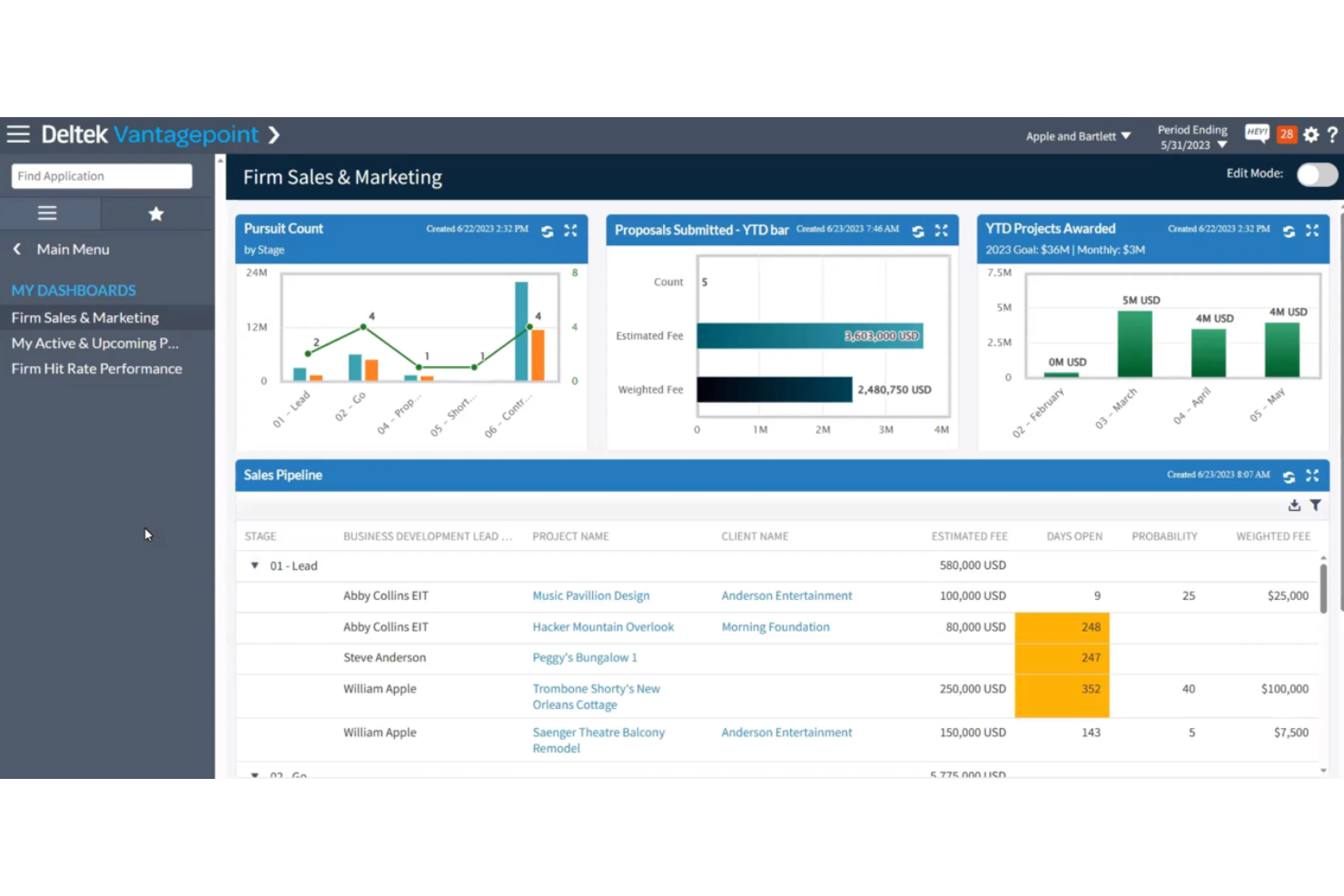
Deltek es una plataforma ERP basada en proyectos diseñada específicamente para contratistas de los sectores aeroespacial y de defensa, cubriendo todo el ciclo de vida del contrato con herramientas para la contabilidad de proyectos, gestión de calidad, cumplimiento normativo, cadena de suministro y precios de propuestas.
¿Para quién es mejor Deltek?
Deltek es una excelente opción para contratistas aeroespaciales y de defensa de todos los tamaños que gestionan contratos gubernamentales y necesitan cumplir con DCAA, DFARS y otras regulaciones federales.
Por qué elegí Deltek
Deltek se gana su lugar como uno de los mejores en mi lista porque su ERP Costpoint está construido en torno a estructuras de contratos gubernamentales, no adaptado desde una plataforma ERP genérica. Confío en su módulo de contabilidad de proyectos para rastrear los costos a nivel de contrato, CLIN y WBS en tiempo real, y la gestión del valor ganado integrada mantiene a mi equipo listo para auditorías de DCAA sin necesidad de conciliaciones manuales. El marco de cumplimiento no es un complemento, sino que está directamente integrado en los flujos de trabajo centrales del ERP.
Características clave de Deltek
- Sistema de gestión de calidad (QMS): Deltek TIPQA supervisa el cumplimiento de piezas y procesos con los requisitos AS9100 y FAA, e incorpora la Aprobación de Elementos de Seguridad FAA.
- Gestión de la cadena de suministro: Gestione calificaciones de proveedores, órdenes de compra y seguimiento de riesgos de piezas falsificadas en toda su cadena de suministro A&D.
- Precios de propuestas: Elabore y valide propuestas de costos frente a estándares de precios gubernamentales directamente dentro de la plataforma.
- Ejecución de manufactura: Supervise en tiempo real las operaciones de taller, órdenes de trabajo y mano de obra según los requisitos del contrato.
Pros and Cons
Pros:
- Potentes herramientas de cumplimiento
- ERP basado en proyectos
- Gestión financiera integral
Cons:
- Configuración compleja
- Opciones de personalización limitadas

Infor
Mejor para el cumplimiento normativo y la seguridad en los sectores aeroespacial y de defensa
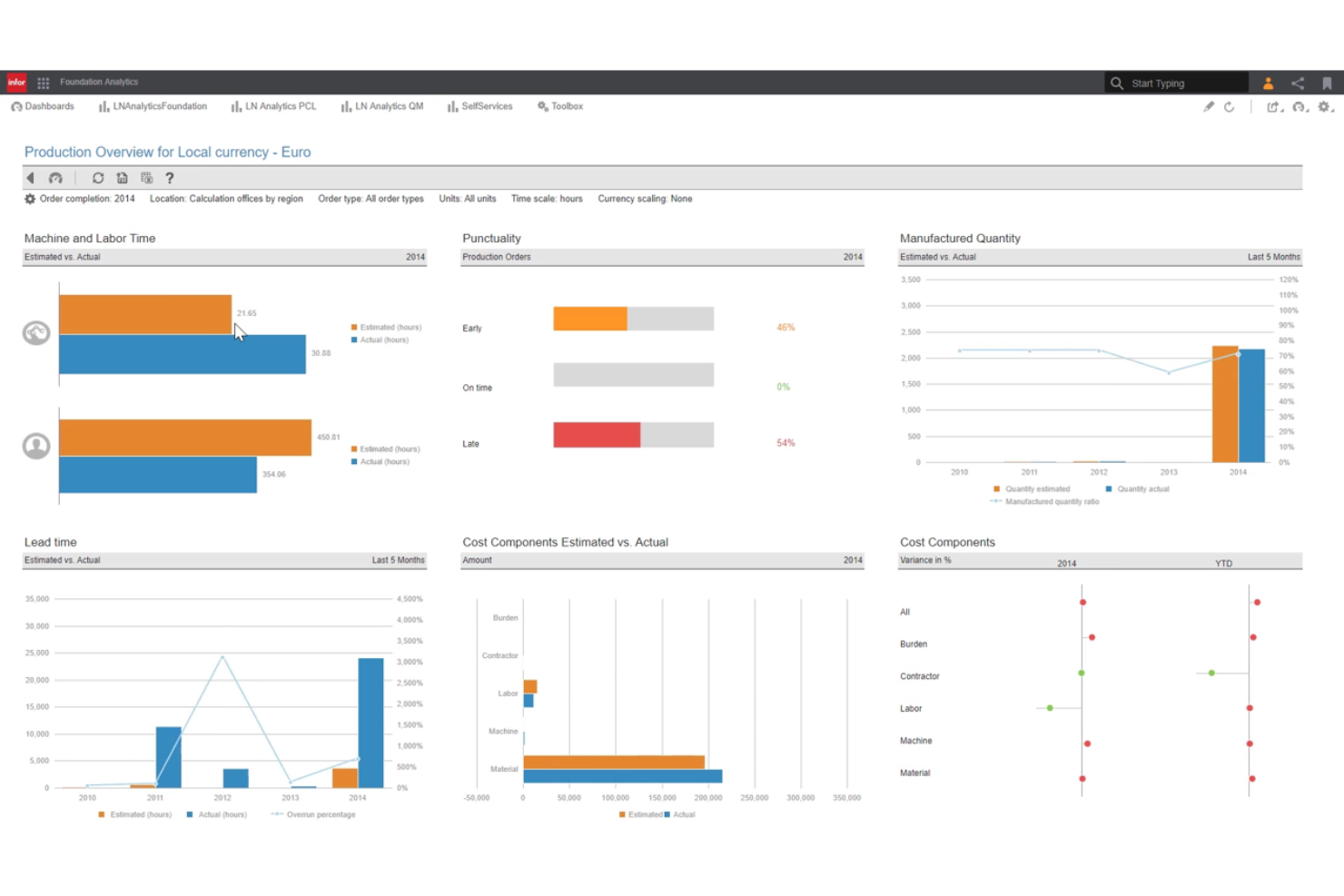
Infor CloudSuite Aerospace & Defense es una plataforma ERP diseñada específicamente para fabricantes, contratistas y proveedores de los sectores aeroespacial y de defensa, que abarca la gestión de contratos, la cadena de suministro, el seguimiento de costos, el cumplimiento normativo y la gestión de servicios de mantenimiento, reparación y revisión (MRO).
¿Para quién es mejor Infor?
Infor CloudSuite Aerospace & Defense es ideal para contratistas de defensa y fabricantes aeroespaciales medianos y grandes que operan bajo contratos gubernamentales con estrictos requisitos regulatorios y de seguridad.
Por qué elegí Infor
Infor destaca porque ningún otro ERP que he evaluado viene preconfigurado para los marcos de cumplimiento que deben seguir los contratistas de defensa. Los controles de exportación de ITAR y EAR están integrados en el sistema, por lo que mi equipo no tiene que gestionar el cumplimiento comercial por separado. Las opciones de implementación preparadas para CMMC 2.0 y FedRAMP me permiten mostrar la plataforma como parte de nuestra postura de seguridad en lugar de construir esa evidencia desde cero.
Características clave de Infor
- Gestión de contratos y flujo descendente: Permite administrar contratos gubernamentales y comerciales con flujo de cláusulas a subcontratistas integrado directamente en el sistema.
- Contabilidad de costos de proyectos: Realiza el seguimiento de los costos, presupuestos y datos reales a nivel de proyecto con indicadores clave (KPI) y asignación de costos específicos para A&D.
- Gestión de servicios MRO: Programa y administra órdenes de trabajo de mantenimiento, reparación y revisión junto a las operaciones centrales de fabricación.
- Planificación de producción multisede: Coordina materiales, capacidad y suministro entre varias instalaciones dentro de un solo entorno de planificación.
Pros and Cons
Pros:
- Plataforma robusta basada en la nube
- Análisis avanzados
- Gestión integral de proyectos
Cons:
- Desafíos en la personalización y actualización
- Atención al cliente limitada

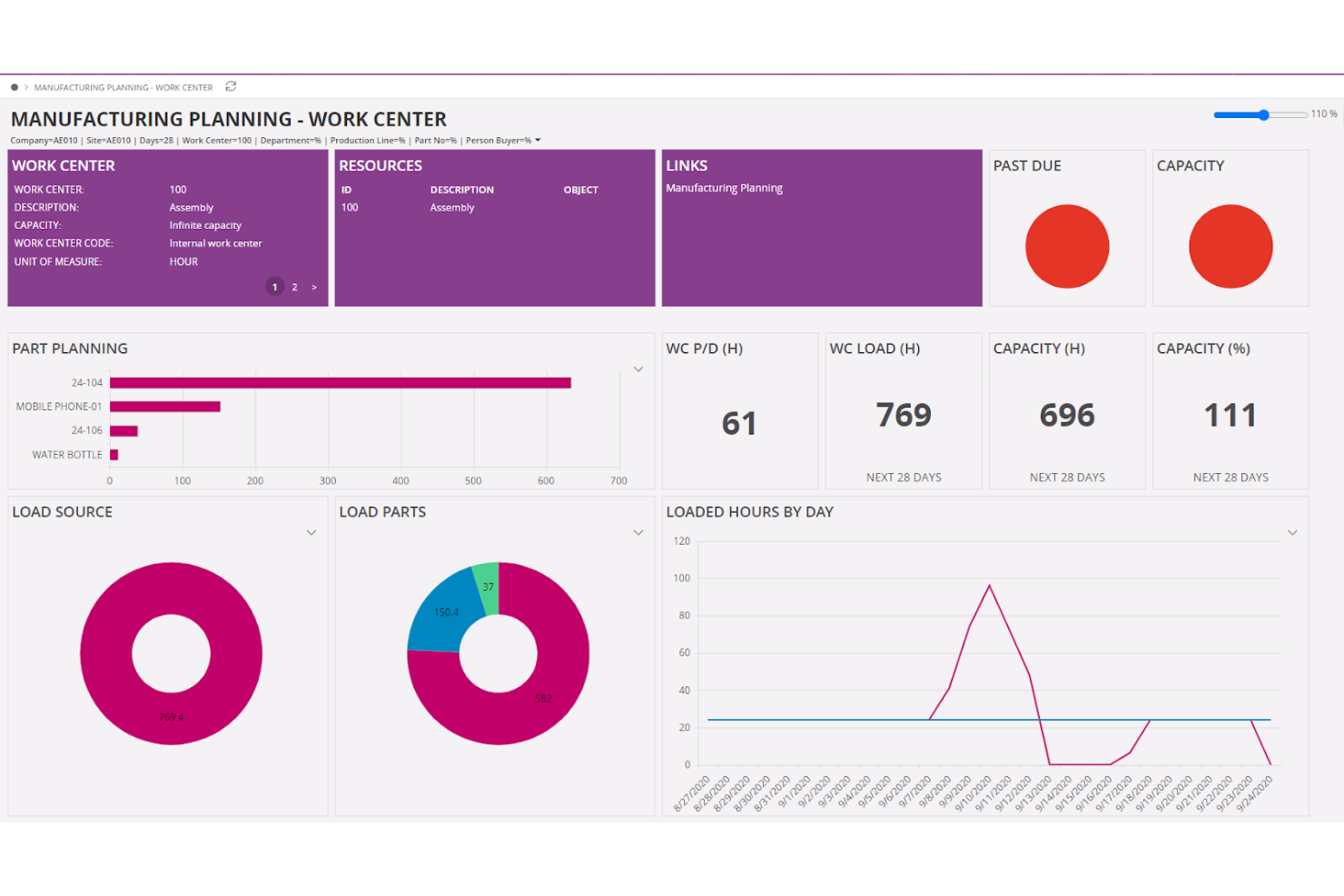
IFS Cloud es una plataforma ERP diseñada específicamente para organizaciones de aeroespacial y defensa, integrando ingeniería, manufactura, MRO, cadena de suministro y gestión de activos empresariales en un solo sistema.
¿Para quién es mejor IFS Cloud?
IFS Cloud es una excelente opción para fabricantes medianos y grandes del sector aeroespacial y de defensa, proveedores de MRO y contratistas de defensa que gestionan operaciones complejas en múltiples sitios.
Por qué elegí IFS Cloud
IFS Cloud gana su lugar en mi lista por su gestión integral del ciclo de vida de activos. El módulo EAM de IFS Cloud rastrea los activos desde el diseño hasta la baja, brindando una visión completa de la posición del activo en cualquier momento. La gestión del rendimiento de activos permite a los equipos monitorear la salud de los activos en tiempo real, facilitando una planificación de mantenimiento más inteligente y menos paradas no programadas. Las herramientas de mantenimiento aeronáutico conectan la planificación, programación y ejecución en un solo sistema, evitando que los equipos de MRO trabajen en plataformas desconectadas.
Características clave de IFS Cloud
- Gestión de la cadena de suministro: Planifica, abastece y rastrea materiales a lo largo de cadenas de suministro complejas de aeroespacial y defensa, con herramientas para optimización de inventario y gestión de proveedores.
- Sistema de ejecución de manufactura: Supervisa las operaciones en planta en tiempo real, rastreando el progreso de la producción, calidad y uso de recursos a nivel de línea.
- Gestión de cumplimiento regulatorio: Herramientas integradas para apoyar requisitos de certificación y auditoría según las normas AS9100, FAA y EASA.
- Trazabilidad de extremo a extremo: Rastrear componentes a nivel de número de serie desde la recepción inicial hasta el final del ciclo de vida del MRO.
Pros and Cons
Pros:
- Gestión integral de activos
- Características de cumplimiento robustas
- Extensas integraciones
Cons:
- Implementación compleja
- Requiere capacitación para su aprovechamiento total

WinMan
Mejor opción para ERP integrado con trazabilidad y gestión documental
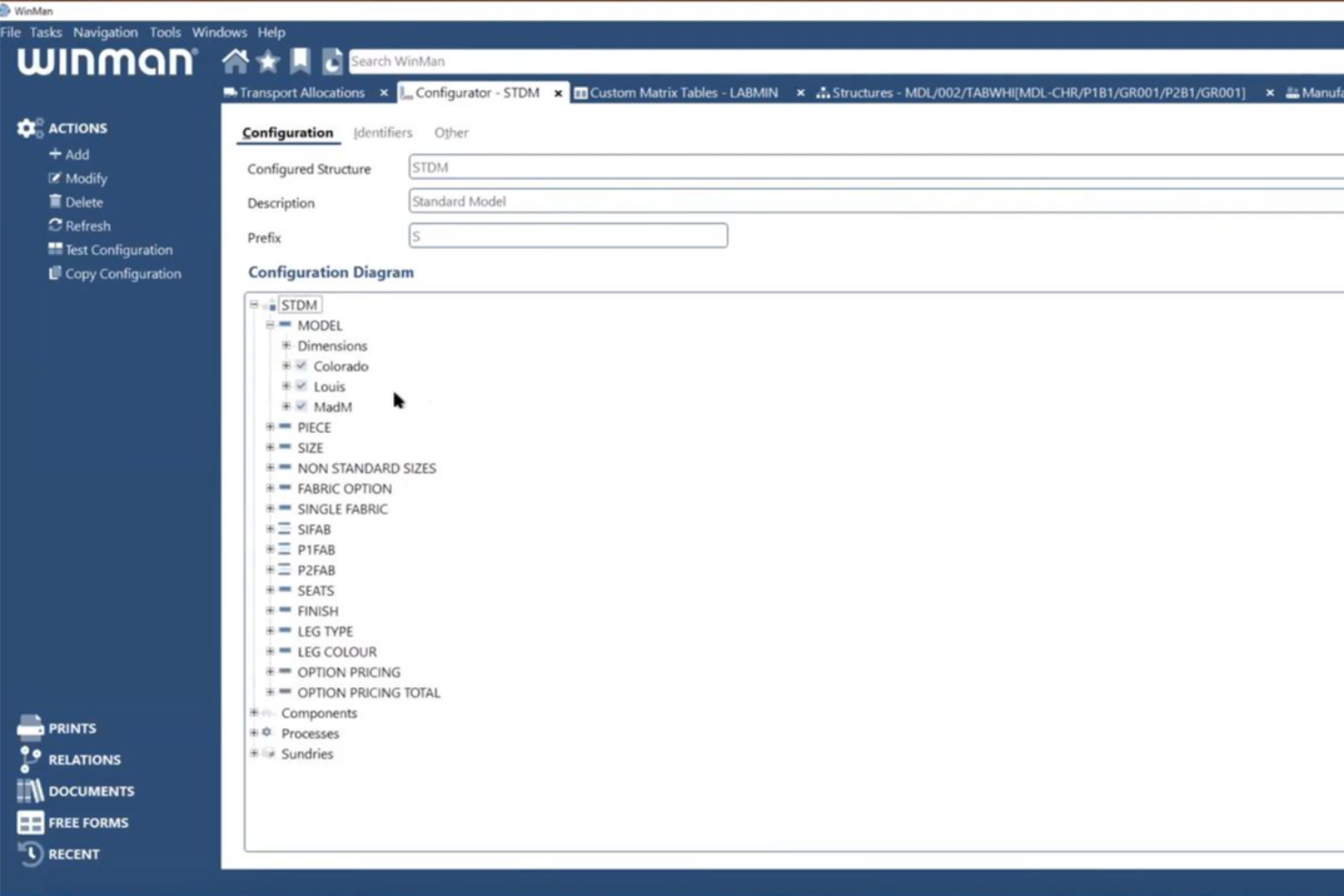
WinMan es una plataforma ERP de manufactura que abarca la gestión de producción, cadena de suministro, planificación y programación, gestión documental, finanzas, CRM y gestión de almacenes en un solo sistema integrado, diseñado específicamente para fabricantes.
¿Para quién es mejor WinMan?
WinMan es ideal para fabricantes pequeños y medianos de los sectores aeroespacial y de defensa que necesitan un solo sistema para gestionar la producción, la calidad y la cadena de suministro.
Por qué elegí WinMan
WinMan se gana su lugar en mi lista porque la trazabilidad y la gestión documental no son complementos aquí, sino que están integradas en el núcleo del funcionamiento del sistema. Me gusta que cada artículo pueda tener un número de serie o lote único, lo que da a mi equipo trazabilidad total desde la entrada de la mercancía hasta el producto terminado. En el aspecto documental, los planos técnicos, contratos y archivos de diseño se adjuntan directamente a los registros individuales, por lo que nada queda fuera del sistema.
Características principales de WinMan
- Registro de control de calidad: Registra defectos, asigna procesos de trabajo y establece hitos de calidad directamente en las órdenes de producción.
- Configurador de ingeniería bajo pedido: Crea listas de materiales precisas a partir de pedidos de venta y controla los costos de los proyectos de ingeniería en tiempo real.
- Captura de datos en planta: Registra la actividad de producción en vivo a nivel de máquina o estación de trabajo para monitorear el progreso de los trabajos.
- Planificación y programación: Gestiona la capacidad, los programas de producción y los requerimientos de materiales desde un solo espacio de trabajo de planificación.
Pros and Cons
Pros:
- Características de trazabilidad completas
- Gestión sólida del cumplimiento
- Programación avanzada de producción
Cons:
- Proceso de implementación ERP complejo
- Puede requerir una formación extensa

Mejor integración con Salesforce y gestión del ciclo de vida del proyecto
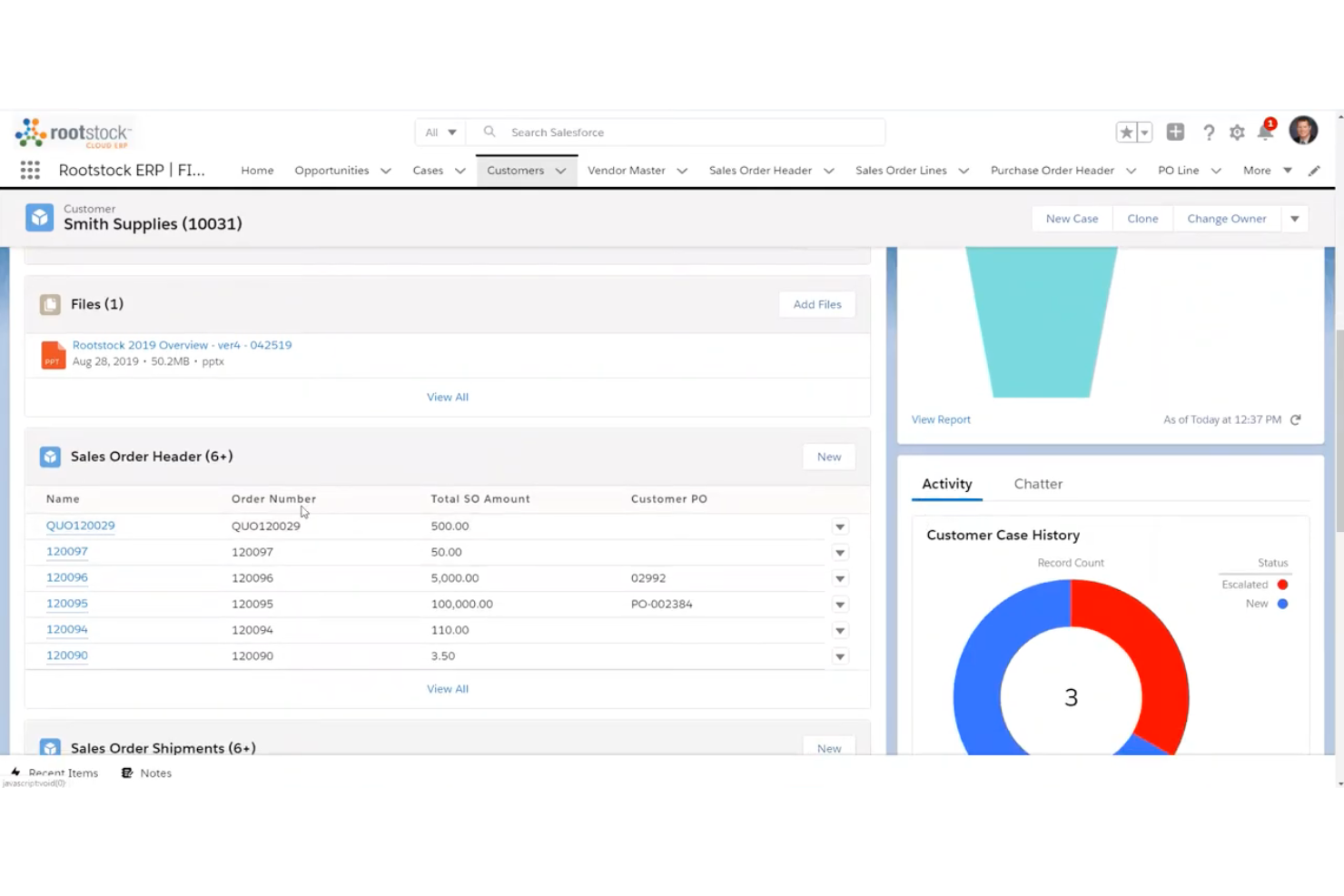
Rootstock es una plataforma ERP basada en la nube, construida de forma nativa en Salesforce, para que los fabricantes de la industria aeroespacial y de defensa gestionen los ciclos de vida de los proyectos, las operaciones de producción, la cadena de suministro, la trazabilidad y el control de costos.
¿Para quién es mejor Rootstock Aerospace ERP?
Rootstock es adecuado para fabricantes del sector aeroespacial y de defensa de tamaño medio que ya utilizan Salesforce y necesitan un ERP unificado construido sobre la misma plataforma.
Por qué elegí Rootstock Aerospace ERP
Rootstock se gana su lugar en mi lista porque es el único ERP aeroespacial que funciona de forma nativa sobre la plataforma Salesforce, lo que significa que los datos de CRM y ERP están en el mismo lugar. Me gusta que la gestión del ciclo de vida de los proyectos esté integrada directamente en las operaciones de producción: puedes planificar, seguir y calcular los costos por proyecto utilizando el control de proyectos incorporado, con visibilidad en tiempo real desde la estimación y la ingeniería hasta la programación en planta. También encuentro muy útil la acumulación de costos en tiempo real a través de múltiples proyectos, ya que puedes profundizar en cualquier elemento de costo específico sin tener que cambiar entre sistemas.
Características clave de Rootstock Aerospace ERP
- Trazabilidad total de la configuración: Rastrear lotes y números de serie en los registros históricos de los dispositivos desde ingeniería y producción hasta el servicio.
- Registros de auditoría automatizados: Registrar automáticamente todos los movimientos de materiales en inventario, revisiones y requisitos de ensamblaje o kits para documentación regulatoria.
- eQMS con ComplianceQuest: Gestionar la calidad y el cumplimiento normativo a través de una asociación nativa con ComplianceQuest, funcionando sobre la plataforma Salesforce.
- Herramientas de gestión de ingeniería: Gestionar componentes, listas de materiales (BOM) y cambios de ingeniería dentro del mismo entorno ERP que producción y cadena de suministro.
Pros and Cons
Pros:
- Fuerte integración con Salesforce
- Gestión integral del ciclo de vida de proyectos
- Visibilidad de datos en tiempo real
Cons:
- Puede requerir experiencia en Salesforce
- Proceso de configuración complejo

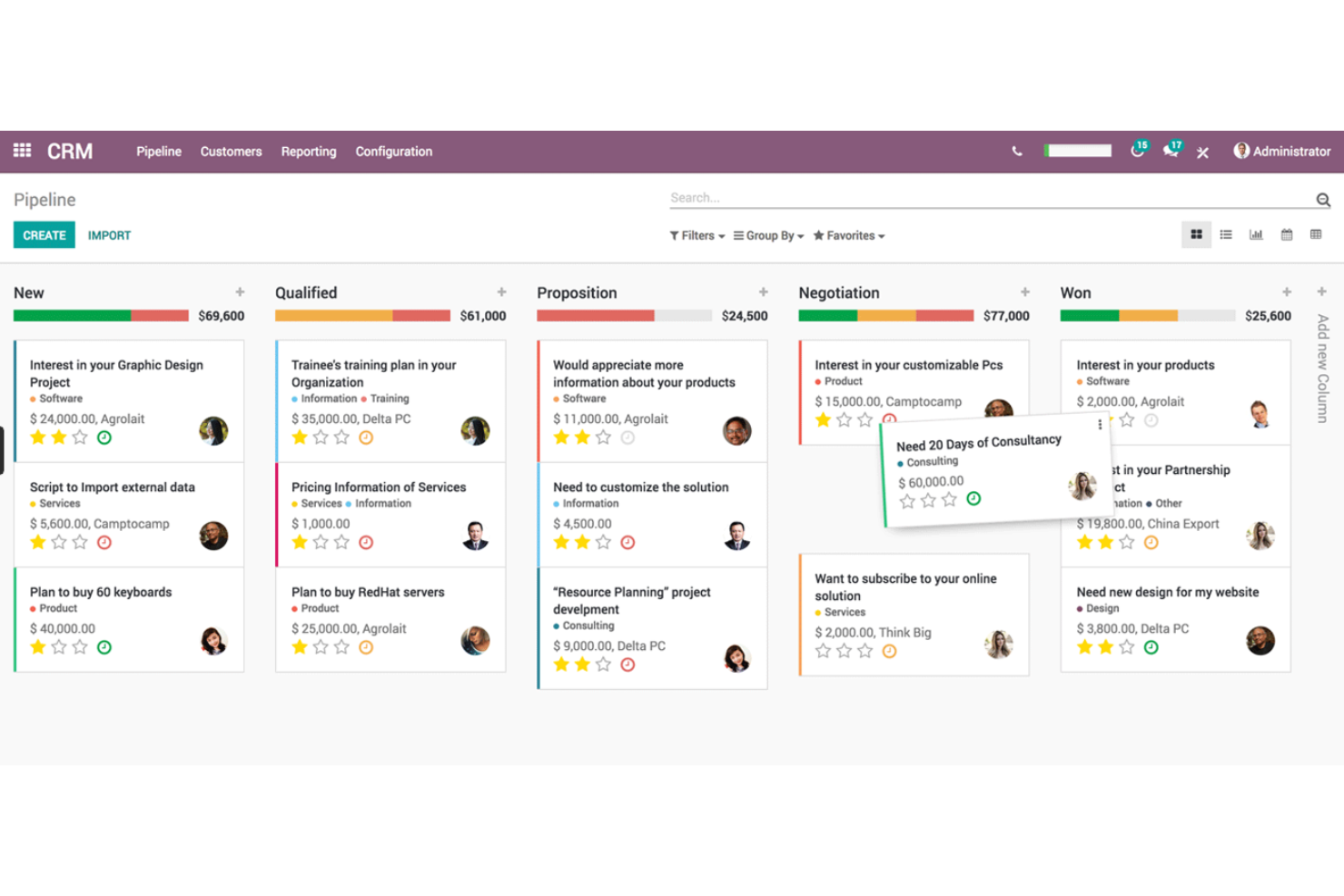
Captivea es un socio Gold de Odoo y consultora de implementación de ERP que despliega y personaliza Odoo ERP para fabricantes del sector aeroespacial y de defensa, abarcando la planificación de la producción, la gestión de la cadena de suministro, el control de calidad, el seguimiento del cumplimiento normativo y la gestión financiera.
¿Para quién es mejor Captivea?
Captivea es ideal para fabricantes pequeños y medianos del sector aeroespacial y de defensa que necesitan una implementación de Odoo ERP adaptada a sus flujos de trabajo específicos de producción y cumplimiento.
Por qué elegí Captivea
He incluido a Captivea entre mis principales opciones porque es uno de los pocos socios de Odoo con una especialización clara en la fabricación aeroespacial y de defensa. Me gusta especialmente que no solo instala una instancia genérica de Odoo: el equipo de Captivea adapta tus flujos de trabajo de producción específicos y requisitos regulatorios durante la implementación. El seguimiento de no conformidades y las auditorías de calidad están integrados en el sistema de gestión de calidad, lo cual es relevante cuando se opera bajo normas como AS9100 o similares.
Características clave de Captivea
- Programación MRP: Planifica lotes de producción usando listas de materiales, órdenes de trabajo y rutas configuradas para la complejidad de piezas aeroespaciales.
- Trazabilidad por lote y número de serie: Realiza el seguimiento de componentes individuales y ensamblajes durante todo el ciclo de vida de producción, con trazabilidad de extremo a extremo.
- Contabilidad de costos basada en proyectos: Controla costos de mano de obra, materiales y gastos generales a nivel de proyecto para un cálculo preciso de costes de cada trabajo.
- Pronóstico de demanda: Genera recomendaciones de reposición basadas en el uso histórico y pedidos de ventas abiertos.
Pros and Cons
Pros:
- Altamente personalizable
- Funcionalidades específicas del sector
- Potentes herramientas de cumplimiento
Cons:
- Soporte global limitado
- Proceso de implementación complejo

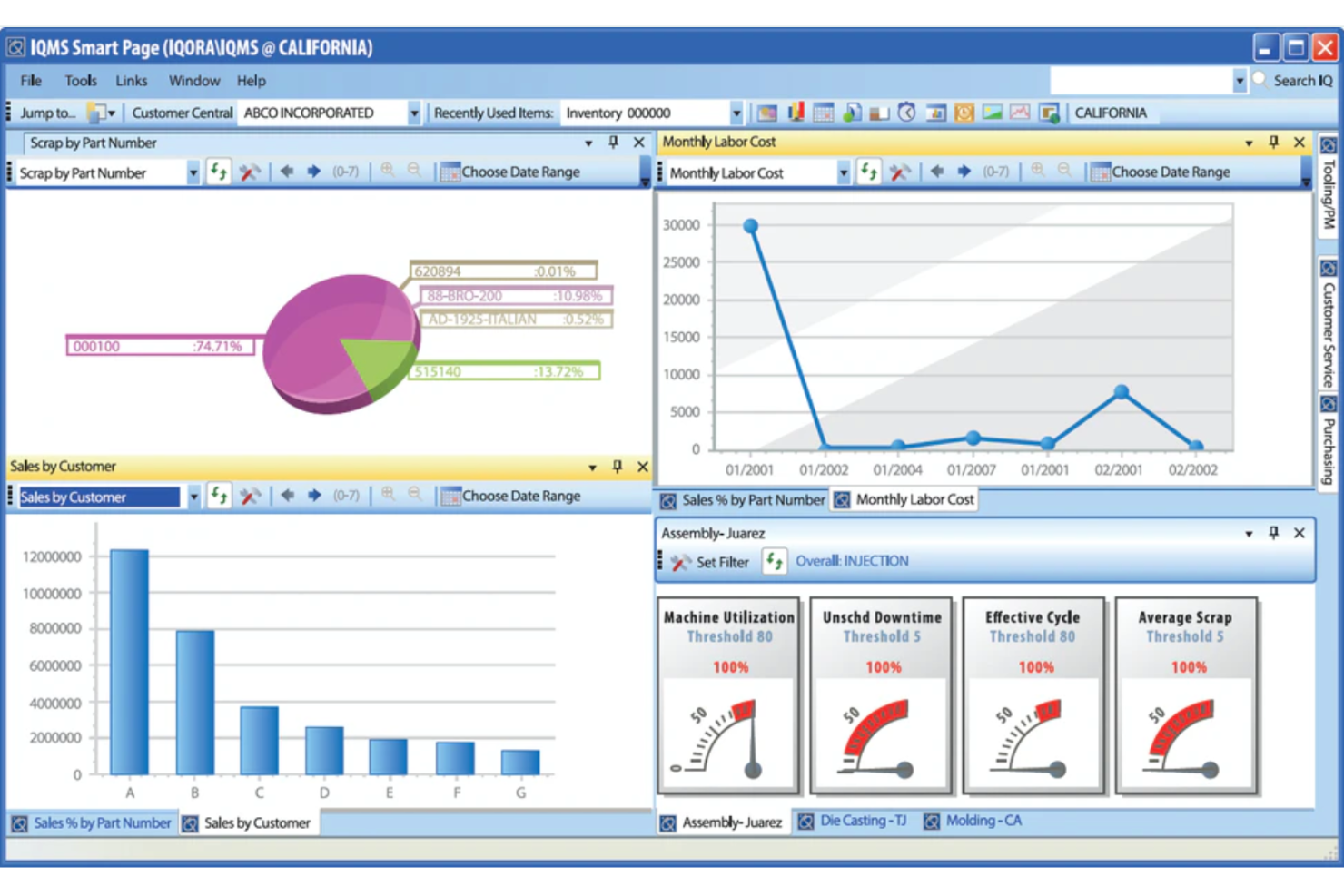
DELMIAWorks es una plataforma ERP y MES para manufactura diseñada para fabricantes medianos de procesos discretos, repetitivos y por lotes, e integra la gestión de calidad, monitoreo del piso de producción, control de la cadena de suministro y herramientas de cumplimiento en un solo sistema.
¿Para quién es mejor DELMIAWorks?
DELMIAWorks es ideal para empresas medianas de los sectores aeroespacial y de defensa que necesitan una integración estrecha entre las operaciones del piso de producción, el cumplimiento de calidad y los controles financieros en una sola plataforma ERP.
¿Por qué elegí DELMIAWorks?
He incluido DELMIAWorks en mis principales selecciones porque aborda directamente dos de los problemas más difíciles en la fabricación aeroespacial y de defensa: el control estricto de costos y el cumplimiento regulatorio. En particular, me gusta cómo la gestión de certificación ITAR para envíos de exportación está incorporada en el ERP, lo que evita tener que mantener un sistema aparte. DELMIAWorks también cuenta con cumplimiento integrado de AS9100 Rev. C y D en su suite de calidad, cubriendo el seguimiento de no conformidades, acciones correctivas y control documental desde una única base de datos, lo que facilita considerablemente la preparación para auditorías.
Características clave de DELMIAWorks
- Monitoreo en tiempo real del piso de producción: Supervisa el trabajo en proceso, el estado de las máquinas y el desempeño de la producción en el piso de planta a partir de un flujo de datos en vivo.
- Planificación de requerimientos de materiales (MRP): Ejecuta MRP para alinear la adquisición de materiales, los niveles de inventario y la programación de producción con la demanda real.
- Rastreo y trazabilidad de lotes: Rastrear materiales y componentes a lo largo de todo el ciclo productivo, desde la recepción de materias primas hasta el envío de la pieza terminada.
- Gestión de almacenes: Administra el manejo de inventario, ubicaciones de almacén y movimientos de materiales directamente en el ERP sin un sistema de almacén independiente.
Pros and Cons
Pros:
- Gestión integral de datos
- Planificación MRP detallada
- Gestión de certificación ITAR
Cons:
- Opciones de personalización complejas
- Actualizaciones que requieren muchos recursos

ERP.aero
Mejor para un entorno de operaciones integrado para proveedores aeroespaciales
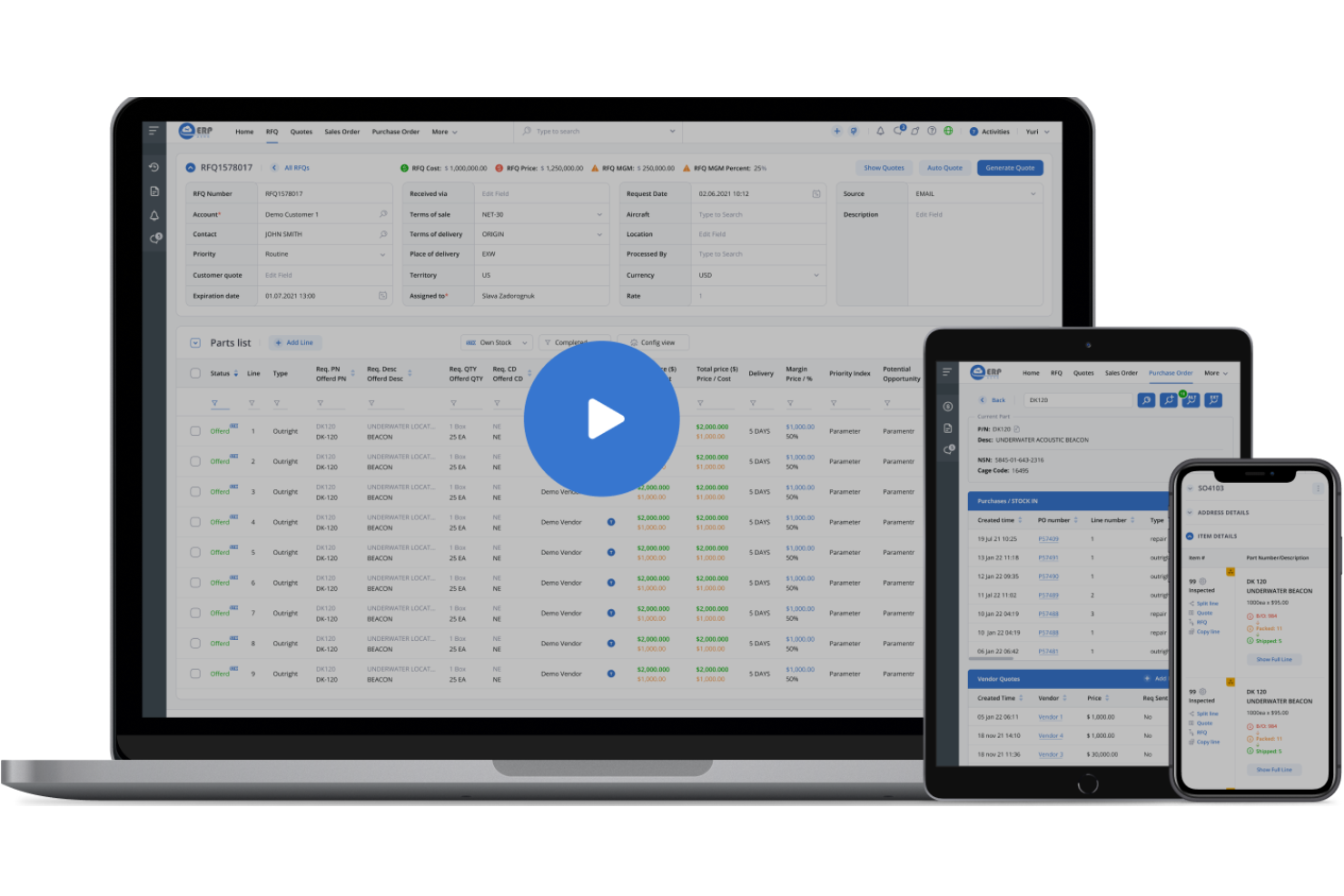
ERP.aero es una plataforma ERP y CRM basada en la nube creada exclusivamente para proveedores de repuestos aeroespaciales, fabricantes y organizaciones de MRO, cubriendo la gestión de inventario, procesamiento de pedidos, automatización de RFQ, integraciones con mercados de aviación y comercio electrónico incorporado.
¿Para quién es mejor ERP.aero?
ERP.aero es ideal para proveedores de repuestos aeroespaciales y empresas de MRO pequeñas a medianas que necesitan un sistema específico del sector para gestionar ventas, inventario y operaciones en los mercados desde un solo lugar.
Por qué elegí ERP.aero
ERP.aero merece estar en mi lista porque está construido en torno a un entorno operativo unificado diseñado específicamente para proveedores aeroespaciales. Me gusta que la gestión de RFQ, inventario, procesamiento de pedidos y facturación estén todos dentro de una sola plataforma, evitando que tu equipo deba manejar herramientas desconectadas. Las conexiones API integradas con ILS, PartsBase y Locatory te permiten publicar y sincronizar el inventario en los principales mercados de aviación directamente desde el ERP, sin necesidad de exportaciones manuales ni intermediarios de terceros. El portal de comercio electrónico Store.aero añade otra capa, permitiéndote gestionar los listados de productos, las relaciones con los clientes y los pagos sin salir del sistema.
Características clave de ERP.aero
- Gestión de órdenes de trabajo: Crea y rastrea órdenes de reparación y mantenimiento vinculadas directamente a repuestos y registros de clientes dentro de la plataforma.
- Constructor de listas de materiales (BOM): Crea y gestiona listas de materiales multinivel para la fabricación de piezas aeroespaciales, apoyando una estimación precisa de costos y planificación de la producción.
- Gestión de envíos y logística: Genera envíos y gestiona reservas de transportistas a través de integraciones integradas con EasyPost y FlyCovr.
- Módulo de capacitación de empleados: Asigna, realiza el seguimiento y gestiona cursos de formación y certificaciones del personal desde el ERP para cumplir con requisitos de cumplimiento.
Pros and Cons
Pros:
- ERP/CRM en la nube
- Equipos de almacén integrados
- Soporte multilingüe
Cons:
- Red limitada de soporte para proveedores
- Menos opciones de personalización
Otro software ERP aeroespacial
A continuación se incluye una lista de software ERP aeroespacial adicional que seleccioné. Aunque no llegaron a estar entre los 10 mejores, siguen siendo valiosos y merecen una investigación más detallada.
- OnRamp Solutions
Ideal para reportes en tiempo real y seguimiento de mano de obra
- Deskera
Mejor opción para contabilidad multimoneda y seguridad de datos
- DualEntry
Ideal para pistas de auditoría y detección de anomalías


So bewerte ich Luft- und Raumfahrt ERP-Software
Ich unterteile meine Bewertung in grundlegende Akzeptanzkriterien – wie DCAA-Konformität und Kostenverfolgung auf WBS-Ebene – und differenzierende Faktoren, die Anbieter je nach Programmtyp und Vertragsstruktur voneinander abheben.
Kernfunktionen (Unverzichtbare Grundlagen für diese Liste)
Wenn ich Werkzeuge für meine Liste auswähle, bewerte ich jedes einzelne auf einer Skala von 0 (bietet die Funktion nicht) bis 5 (hervorragend in diesem Bereich) für jede unten aufgeführte Kernfunktion. Anschließend rechne ich die Gesamtpunktzahl des Tools in einen Prozentsatz um. Jedes Tool muss eine Mindestgesamtpunktzahl von 55 % erreichen, um berücksichtigt zu werden.
- Luft- und Raumfahrt-konforme Buchhaltung: Ich prüfe, ob die Plattform DCAA-konforme Zeiterfassung, DFARS/FAR-Reporting und ITAR-Audit-Trails unterstützt – also die Strukturen, die bei einer staatlichen Vertragsprüfung nötig sind, um diese unbeschadet zu bestehen.
- Projekt- und Vertragskostenrechnung: Ich bewerte, wie gut jedes Tool die Kosten auf Programm-, Vertrags- und WBS-Ebene verfolgt, insbesondere bei mehrjährigen Programmen, bei denen die Allokation indirekter Sätze für die Marentransparenz entscheidend sein kann.
- Abrechnung staatlicher Aufträge: Anbieter in der Luft- und Raumfahrt haben es gleichzeitig mit Cost-Plus-, T&M-, Festpreis- und Meilensteinabrechnung zu tun. Ich suche nach Plattformen, die diese Abrechnungsarten unterstützen und mit Performance-basiertem Umsatzabgleich kombinieren.
- Integrierte Fertigungsbuchhaltung: Das Hauptbuch muss mit MRP, Stücklisten-Kalkulation und Ist-Werten der Fertigung verknüpft bleiben. Ich achte auf eine Echtzeitverknüpfung zwischen Produktionsdaten und Finanzdaten mit integrierter Chargen- und Seriennummernrückverfolgbarkeit.
- Earned Value Management: Für Verteidigungsprogramme bewerte ich, ob EVM-Berichte (CPI, SPI, BCWP, ACWP) integriert sind oder manuelle Workarounds erfordern und ob sie den ANSI/EIA-748-Standards für DoD-Reporting entsprechen.
- Konsolidierung mehrerer Unternehmen: Weltweite Luft- und Raumfahrtbetriebe bedeuten Mehrwährungs-, Mehrfirmen- und Intercompany-Eliminierungen. Ich prüfe, wie jede Plattform Währungsumwertung und Finanzabschluss auf Tochterebene umsetzt.
Wenn ich eine Liste von Tools habe, die diese Kriterien erfüllen, prüfe ich, was jede Plattform besonders macht.
Differenzierende Faktoren (Was Anbieter unterscheidet)
So vergleiche und kontrastiere ich verschiedene Anbieter:
Herausragende Funktionen
Konfigurierbare Modellierung indirekter Sätze ist entscheidend, wenn man vorläufige und reale Sätze über verschiedene Verträge hinweg verwalten muss. Ich suche Tools, die Szenarien für zukünftige Kalkulationen ermöglichen, ohne den Export in Tabellenkalkulationen zu benötigen. Schätzungs- und Angebotspreisfindung ist eng verwandt – Plattformen, die "Should Cost"-Analysen mit Ist-Daten aus der Vergangenheit verknüpfen, verschaffen dem Team bei Angebotsrunden einen echten Vorteil. Außerdem bewerte ich MRO- sowie Aftermarket-Buchhaltung, da Werkstätten mit Reparaturgeschäft eine Verfolgung nach Seriennummer und eine Abrechnung von Serviceverträgen mit Einnahmeplänen brauchen.
Mehr als nur Funktionen
Das Bereitstellungsmodell ist eine wichtige Überlegung – wer ITAR-regulierte Daten verarbeitet, muss prüfen, ob der Anbieter GovCloud-, On-Premise- oder FedRAMP-zertifiziertes Hosting anbietet. Ich prüfe auch das Integrationsökosystem, insbesondere vorgefertigte Schnittstellen zu PLM-Tools wie Siemens Teamcenter oder PTC Windchill, da getrennte Produkt- und Finanzdaten bei Abschlussarbeiten schwere Kopfzerbrechen verursachen können. Skalierbarkeit ist ebenfalls wichtig. Ein Zulieferer der Stufe 3, der zum Hauptauftragnehmer aufsteigt, braucht eine Plattform, die mit steigender Programmkomplexität wächst, ohne einen kompletten Systemwechsel zu erfordern.
Cómo elegir un software ERP aeroespacial
Mientras avanzas en tu propio proceso de selección de software, ten en cuenta los siguientes puntos:
- Funcionalidad específica del sector: Las industrias aeroespacial y de defensa tienen requisitos únicos, como la gestión de proyectos, la gestión de materias primas, los estándares de calidad y la automatización de la planta de producción. Por ello, los sistemas ERP adaptados a estas necesidades pueden agilizar considerablemente las operaciones y ayudar a las empresas que gestionan proyectos complejos y normativas estrictas.
- Escalabilidad y flexibilidad: La capacidad del sistema ERP para crecer junto con tu empresa y adaptarse a las necesidades cambiantes es fundamental. Busca una solución de software conocida por su flexibilidad y sus opciones de personalización, para que siempre sea adecuada para tus requisitos en evolución.
- Capacidades de integración: Las empresas aeroespaciales suelen utilizar diversos programas especializados para distintas funciones. Por lo tanto, un sistema ERP que se integre con las herramientas existentes puede ahorrar tiempo y reducir los errores.
- Coste y complejidad: El coste total de propiedad, incluida la implementación, la personalización y el mantenimiento continuo, debe evaluarse cuidadosamente al elegir un ERP. Es importante equilibrar las capacidades del sistema con tu presupuesto y la disponibilidad de recursos.
- Soporte del proveedor y ecosistema: La calidad del soporte del proveedor y la disponibilidad de un ecosistema sólido de implementación pueden influir considerablemente en el éxito del despliegue de tu ERP. Los programas avanzados de formación, la asistencia técnica continua y una sólida red de socios de implementación son factores importantes que garantizan una transición fluida y la sostenibilidad a largo plazo del sistema ERP.
Tendencias del software ERP aeroespacial
Estas son algunas tendencias que he observado en el software ERP aeroespacial y lo que podrían significar para el futuro. Consulté innumerables actualizaciones de productos, comunicados de prensa y registros de versiones para extraer las ideas más importantes.
- Integración de IA y aprendizaje automático: La IA y el aprendizaje automático se están integrando en los sistemas ERP. Estas tecnologías ayudan en el mantenimiento predictivo y la optimización de las cadenas de suministro. Esta tendencia es importante para reducir el tiempo de inactividad y aumentar la eficiencia.
- Soluciones basadas en la nube: Las soluciones ERP en la nube están ganando popularidad. En comparación con las soluciones locales, ofrecen escalabilidad y acceso remoto, aspectos esenciales para las operaciones globales. Esta tendencia responde a la necesidad de flexibilidad y acceso a los datos en tiempo real.
- Medidas reforzadas de ciberseguridad: La ciberseguridad se está convirtiendo en una prioridad principal. Las empresas aeroespaciales están invirtiendo en protocolos de seguridad avanzados para proteger los datos confidenciales. Esta tendencia es vital debido al número creciente de amenazas cibernéticas.
- Conectividad del IoT: Los dispositivos del IoT se están conectando a los sistemas ERP. Esto permite la supervisión en tiempo real y la recopilación de datos de diversos activos. Esta tendencia es importante para mejorar la eficiencia operativa y la gestión de activos.
- Interfaces de usuario personalizables: Las interfaces de usuario personalizables son cada vez más comunes. Permiten a los usuarios adaptar el sistema ERP a sus necesidades específicas. Esta tendencia es importante para mejorar la experiencia del usuario y la productividad.
¿Qué es el software ERP aeroespacial?
Un sistema de planificación de recursos empresariales (ERP) es una plataforma de software integrada que utilizan las organizaciones para gestionar y automatizar los procesos empresariales principales en diversos departamentos.
Cuando se diseñan para la industria aeroespacial, los sistemas ERP ayudan a los fabricantes, proveedores y organizaciones de mantenimiento aeroespaciales a mantener una alta calidad de los productos, aumentar la capacidad de producción y responder rápidamente a las interrupciones del mercado.
Características del software ERP aeroespacial
Al seleccionar un software ERP para la industria aeroespacial, es importante comprender las principales características que respaldarán sus operaciones empresariales. El sistema ERP adecuado puede ayudar a gestionar procesos complejos, garantizar el cumplimiento normativo y mejorar la eficiencia general. Estas son algunas de las características clave que debe tener su software ERP:
- Gestión del cumplimiento normativo: Garantiza el cumplimiento de las normativas y estándares del sector, lo cual es vital para mantener las certificaciones y evitar sanciones.
- Gestión de la cadena de suministro: Gestiona el flujo de materiales y componentes, garantizando las entregas puntuales y reduciendo el riesgo de retrasos en la producción.
- Control de calidad: Supervisa y mantiene la calidad de los productos, algo esencial para cumplir los estrictos estándares aeroespaciales y las expectativas de los clientes.
- Gestión del inventario: Realiza un seguimiento de los niveles y movimientos del inventario, lo que ayuda a reducir el exceso de existencias y evitar las faltas de stock.
- Planificación de la producción: Programa y supervisa las actividades de producción, garantizando un uso eficiente de los recursos y el cumplimiento de los plazos de entrega.
- Gestión financiera: Gestiona la contabilidad, los presupuestos y los informes financieros, proporcionando una visión clara de la situación financiera de la empresa.
- Gestión de proyectos: Gestiona los proyectos desde su inicio hasta su finalización, garantizando que se mantengan dentro del plazo y el presupuesto previstos.
- Gestión del mantenimiento: Programa y realiza un seguimiento de las actividades de mantenimiento, garantizando que los equipos y la maquinaria se encuentren en condiciones óptimas.
- Gestión de recursos humanos: Gestiona los registros de los empleados, las nóminas y las prestaciones, apoyando la planificación y el desarrollo de la plantilla.
- Gestión de relaciones con los clientes (CRM): Gestiona las interacciones y los datos de los clientes, ayudando a mejorar su satisfacción y fidelización.
Las características del software ERP aeroespacial están cuidadosamente diseñadas para abordar las complejas exigencias del sector, garantizando una integración fluida y una gestión eficiente de las operaciones críticas. Invertir en una buena solución ERP aeroespacial no solo mejora la eficiencia operativa, sino que también fomenta la innovación y el crecimiento a largo plazo dentro del sector.
Beneficios del software ERP aeroespacial
La implementación de un software ERP aeroespacial puede transformar sus operaciones empresariales al agilizar los procesos, garantizar el cumplimiento normativo y mejorar la eficiencia general. Estos son algunos de los principales beneficios que este software puede ofrecer a los usuarios y las organizaciones:
- Gestión mejorada del cumplimiento normativo: el software ERP aeroespacial garantiza el cumplimiento de las normativas del sector, reduciendo el riesgo de incumplimiento y las sanciones asociadas.
- Mayor eficiencia operativa: al integrar diversos procesos empresariales, el software minimiza las tareas manuales y los errores, lo que permite operaciones más eficientes.
- Análisis de datos en tiempo real: el acceso a datos en tiempo real permite tomar mejores decisiones y ayuda a las empresas a responder rápidamente a los cambios del mercado y a las demandas operativas.
- Gestión optimizada de la cadena de suministro: el software ERP aeroespacial optimiza la cadena de suministro, mejora la gestión del inventario y reduce los plazos de entrega, lo que aumenta la productividad general.
- Gestión integral de proyectos: el software proporciona herramientas para la planificación y ejecución detalladas de proyectos, garantizando que se completen a tiempo y dentro del presupuesto.
Elegir el software ERP aeroespacial adecuado puede beneficiar significativamente a su organización al mejorar el cumplimiento normativo y la eficiencia, además de proporcionar información valiosa mediante datos en tiempo real. Al optimizar la gestión de la cadena de suministro y de los proyectos, puede garantizar operaciones más fluidas y mejores resultados financieros.
Costes y precios del software ERP aeroespacial
Al evaluar un software ERP aeroespacial, es esencial comprender los distintos planes de precios y las funciones que ofrece cada uno. Esta información ayuda a los compradores de software a tomar decisiones informadas en función de sus necesidades específicas y presupuesto. A continuación, se desglosan los planes de precios habituales y sus funciones para guiarle durante el proceso de selección.
Tabla comparativa de planes para software ERP aeroespacial
| Tipo de plan | Precio medio | Funciones habituales |
| Gratuito | $0/usuario/mes | Funcionalidades básicas, asistencia limitada a los usuarios, almacenamiento de datos restringido y herramientas esenciales de generación de informes |
| Básico | $50/usuario/mes | Funciones principales de ERP, generación de informes estándar, asistencia por correo electrónico, análisis básicos e integraciones limitadas |
| Estándar | $100/usuario/mes | Análisis avanzados, gestión de la cadena de suministro, herramientas de cumplimiento normativo, gestión de proyectos y asistencia por chat |
| Premium | $200/usuario/mes | Todas las funciones del plan Estándar, análisis de datos en tiempo real, integraciones amplias, asistencia las 24 horas, los 7 días de la semana y acceso móvil |
| Empresarial | $500/usuario/mes | Paquete completo de funciones, integraciones personalizadas, gestor de cuenta dedicado, seguridad mejorada y almacenamiento ilimitado |
Elegir el plan de software ERP aeroespacial adecuado depende del tamaño, el presupuesto y las necesidades específicas de su organización. Asegúrese de evaluar detenidamente las funciones y la asistencia que ofrece cada plan para encontrar la opción más adecuada para su empresa.
Preguntas frecuentes sobre el software ERP aeroespacial
Estas son algunas de las preguntas más frecuentes que recibo sobre el software ERP aeroespacial.
¿Cómo mejora el cumplimiento normativo el software ERP aeroespacial?
El software ERP aeroespacial integra los requisitos normativos en sus flujos de trabajo, garantizando que todos los procesos cumplan las normas del sector. Automatiza la documentación y la generación de informes, reduciendo los errores humanos y facilitando los registros de auditoría.
¿Cuál es el tiempo habitual de implementación del software ERP aeroespacial?
El tiempo de implementación varía, pero generalmente oscila entre unos meses y un año. Entre los factores que influyen se incluyen el tamaño de la empresa, la complejidad de los procesos y el nivel de personalización.
¿Se ofrece formación con el software ERP aeroespacial?
La mayoría de los proveedores ofrecen programas de formación, que pueden incluir formación presencial, cursos en línea y manuales de usuario. La formación es fundamental para maximizar los beneficios del software y garantizar una adopción fluida.
¿Cómo gestiona la seguridad de los datos el software ERP aeroespacial?
El software ERP aeroespacial suele incluir sólidas medidas de seguridad, como cifrado, controles de acceso y auditorías periódicas. Estas funciones ayudan a proteger los datos confidenciales frente a filtraciones y garantizan el cumplimiento de las normativas de protección de datos.
¿Qué tipo de asistencia está disponible para el software ERP aeroespacial?
Las opciones de asistencia suelen incluir soporte por correo electrónico, teléfono y chat en directo. Los planes de nivel superior suelen incluir gestores de cuenta dedicados y asistencia las 24 horas, los 7 días de la semana.
¿Qué sigue?
¿Listo para ampliar tus capacidades como profesional de las finanzas? Suscríbete a nuestro boletín gratuito.