

Reseña de Invoice Ninja: Ventajas, Desventajas, Características y Precios
Invoice Ninja destaca por su asequibilidad, flexibilidad de código abierto y amplias funciones, lo que la convierte en una excelente opción para autónomos y pequeñas empresas.

Revisamos las herramientas de forma independiente, y las comisiones ayudan a financiar nuestras pruebas. Consulta nuestra política de transparencia, nuestra metodología o sugiere una herramienta.
Invoice Ninja is an invoicing software built for freelancers and small businesses that need to create invoices, track payments, and manage clients without a heavy feature overhead. I'd consider it over FreshBooks if you want a capable free tier with solid core invoicing rather than a broader accounting suite that charges you for features you may never touch.
Invoice Ninja Evaluation Summary
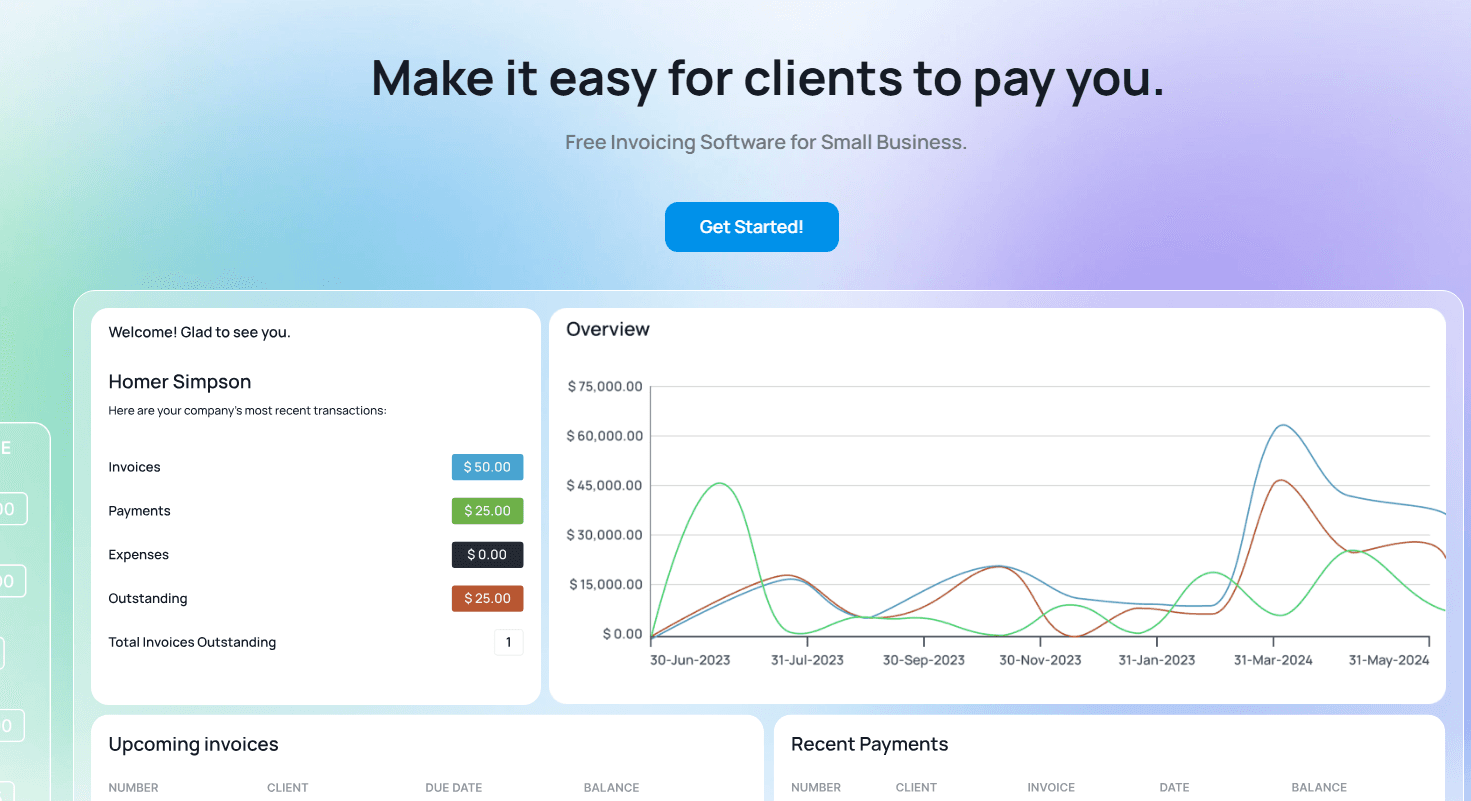
4.7/5
- From $11.67/month (billed annually)
- Free plan available
Por qué confiar en nuestras recomendaciones de software
6,700+
Reviews
20
Industry experts
16+
Evaluation factors
14
Years
Nuestras reseñas reflejan nuestro criterio independiente, no un discurso de ventas. Descubra cómo mantenemos la transparencia.
Para esta guía, evaluamos las herramientas mediante pruebas prácticas e investigación independiente, puntuando las herramientas según nuestros criterios de selección.
Nuestras reseñas reflejan nuestro criterio editorial humano, no un discurso de ventas.
Invoice Ninja Overview
In my opinion, Invoice Ninja is a solid choice for small businesses and freelancers who need customizable invoicing solutions. It offers a wide range of features, including time tracking, partial payments, and recurring billing, which are beneficial for service-oriented industries. Although it may not have the most intuitive user interface, its flexibility, custom fields, and customization options set it apart from competitors such as FreshBooks, QuickBooks, and Zoho. Based on user reviews, it delivers strong value, though it may not be the best fit for larger enterprises that require more integrations and advanced functionalities. For teams looking for cost-effective solutions with decent customer support, Invoice Ninja is worth considering.
Pros
- You can create professional invoices using custom fields to fit your brand.
- Built-in time tracking helps manage billable hours easily in real time.
- Recurring and auto-billing simplifies subscription-based services.
Cons
- The user interface isn't the most intuitive, which may slow down your workflow.
- Larger teams may find it lacks the advanced features they need.
- The lack of guided tutorials may make onboarding a bit challenging for new users.
Is Invoice Ninja Right For Your Needs?
Who Would be a Good Fit for Invoice Ninja?
Invoice Ninja is ideal for freelancers, small businesses, and creative agencies that require customization tools and need to track time and send invoices quickly. Its flexibility allows you to tailor invoices, making it perfect for branding your financial documents. The built-in time tracking helps manage billable hours, which suits service-based industries. If your work involves recurring billing or auto-billing, such as subscription services, Invoice Ninja simplifies the process and provides notifications to keep payments on track.
- FreelancersInvoice Ninja's customization options let you create branded invoices, enhancing your professional image.
- Creative AgenciesYou can manage projects efficiently with its time-tracking and billing features, which are ideal for project-based work.
- ConsultantsRecurring billing and partial payment features simplify the management of ongoing client retainers or subscription services.
- Small BusinessesIts affordability, free version, and functionality make it a solid choice for managing your invoicing without breaking the bank.
- Service ProvidersBuilt-in time tracking helps you accurately bill clients for the hours your team works and send invoices promptly.
- Finance DepartmentsInvoice Ninja's features streamline invoicing processes, making it easier to manage financial transactions.
Who Would be a Bad Fit for Invoice Ninja?
Invoice Ninja may not be suitable for large enterprises or corporations needing advanced integrations and complex financial management features. If your team relies heavily on extensive automation or requires a highly intuitive interface, you may find Invoice Ninja lacking. Additionally, its capabilities may be insufficient for providing comprehensive financial insights for companies needing deep analytics and reporting.
- Large EnterprisesInvoice Ninja lacks the advanced features and integrations required for complex, large-scale operations.
- Manufacturing CompaniesInvoice Ninja does not cater well to the specific needs of inventory and production tracking.
- Retail ChainsThe software doesn't support extensive POS integrations, limiting its usefulness in retail environments.
- Corporate Finance TeamsIts reporting and analytics may be too basic for detailed financial analysis.
- Tech StartupsFast-growing startups needing scalable invoicing solutions may quickly outgrow Invoice Ninja's capabilities.
- Healthcare ProvidersThe software doesn't offer the specialized billing features often required in the healthcare industry.
Cómo probamos y puntuamos las herramientas
Hemos dedicado años a construir, perfeccionar y mejorar nuestro sistema de evaluación y puntuación de software. La rúbrica está diseñada para capturar los matices de la selección de software y lo que hace que una herramienta sea efectiva, enfocándose en los aspectos críticos del proceso de toma de decisiones. A continuación, puedes ver exactamente cómo funcionan nuestras pruebas y puntuación en siete criterios. Esto nos permite proporcionar una evaluación imparcial del software basada en la funcionalidad principal, características destacadas, facilidad de uso, onboarding, atención al cliente, integraciones, opiniones de clientes y relación calidad-precio.
Funcionalidad principal (25% de la puntuación final)
Nuestro punto de partida siempre es la funcionalidad principal de la herramienta. ¿Tiene las funciones básicas que un usuario esperaría ver? ¿Alguna de estas características principales está limitada a planes de precios superiores? En esencia, esperamos que una herramienta esté a la altura de las capacidades básicas de sus competidores.
Características destacadas (25% de la puntuación final)
A continuación, evaluamos las características únicas y sobresalientes que van más allá de la funcionalidad principal normalmente encontrada en herramientas de este tipo. Una puntuación alta refleja funciones especializadas o únicas que hacen el producto más rápido, eficiente o que aportan valor adicional al usuario. También evaluamos lo fácil que es integrarse con otras herramientas que normalmente forman parte del stack tecnológico para ampliar la funcionalidad y utilidad del software. Las herramientas que ofrecen numerosas integraciones nativas, conexiones con terceros y acceso API para crear integraciones personalizadas obtienen la mejor puntuación.
Facilidad de uso (10% de la puntuación final)
Consideramos cuán rápido y fácil es ejecutar las tareas definidas en la funcionalidad principal usando la herramienta. El software que obtiene la puntuación más alta está bien diseñado, es intuitivo, ofrece aplicaciones móviles, proporciona plantillas y hace que tareas relativamente complejas parezcan simples.
Onboarding (10% de la puntuación final)
Sabemos lo importante que es una adopción rápida del equipo para una nueva plataforma, por lo que evaluamos cuán sencillo es aprender y utilizar una herramienta con una formación mínima. Analizamos lo rápido que un miembro del equipo puede configurarse y empezar a usar la herramienta sin experiencia previa. Las soluciones con alta puntuación indican que se requiere poco o ningún soporte.
Atención al cliente (10% de la puntuación final)
Revisamos cuán rápido y sencillo es salir de un atasco y encontrar ayuda por teléfono, chat en vivo o base de conocimiento. Las herramientas y empresas que proporcionan soporte en tiempo real obtienen la mejor puntuación, mientras que los chatbots obtienen la peor.
Opiniones de clientes (10% de la puntuación final)
Además de nuestras propias pruebas y evaluaciones, consideramos el net promoter score de clientes actuales y anteriores. Revisamos la probabilidad de que, de tener la opción, elijan nuevamente la herramienta por su funcionalidad principal. Un software con alta puntuación refleja un alto net promoter score de clientes presentes o pasados.
Relación calidad-precio (10% de la puntuación final)
Por último, considerando todos los demás criterios, revisamos el precio medio de los planes de entrada frente a las funciones principales y analizamos el valor de los demás criterios de evaluación. El software que ofrece más por menos obtiene una puntuación superior.
Core Features
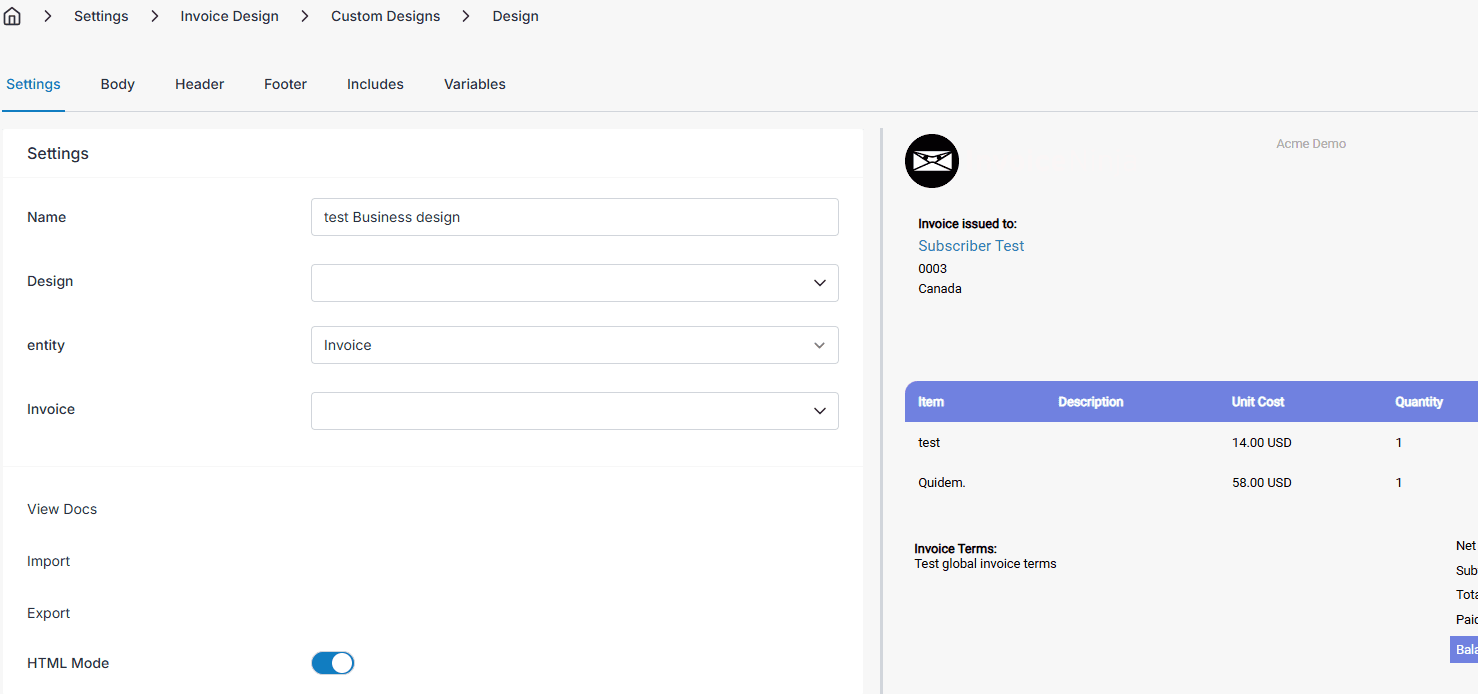
Customizable Invoices: You can create professional invoices with custom fields to match your brand's look. This feature helps you maintain a consistent brand image.
Time Tracking: You can easily keep track of billable hours, directly linking them to specific projects, ensuring accurate billing for your clients.
Recurring Billing: You can set up automatic billing for regular services, saving you time on repetitive tasks. It’s ideal for subscription-based businesses.
Expense Management: You can easily log and track expenses, connecting them to projects or clients. It simplifies financial management for your team.
Client Portal: You can provide your clients with access to their invoices and payment history. It enhances transparency and trust in your business relationships.
Payment Gateways: You can accept payments through multiple gateways, offering convenience to your clients. It speeds up the payment process and improves cash flow.
Ease of Use
Invoice Ninja offers a decent user experience, but its user interface feels a bit clunky compared to some other options. Navigating through its features can take some getting used to, especially for new users. However, once you get the hang of it, features such as invoice creation and time tracking become invaluable. If you’re patient with the learning curve, your team will find Invoice Ninja’s functionalities worth the initial effort.

Integrations
Invoice Ninja integrates with Stripe, PayPal, Authorize.Net, GoCardless, WePay, BitPay, Mollie, Checkout.com, Dwolla, and Alipay.
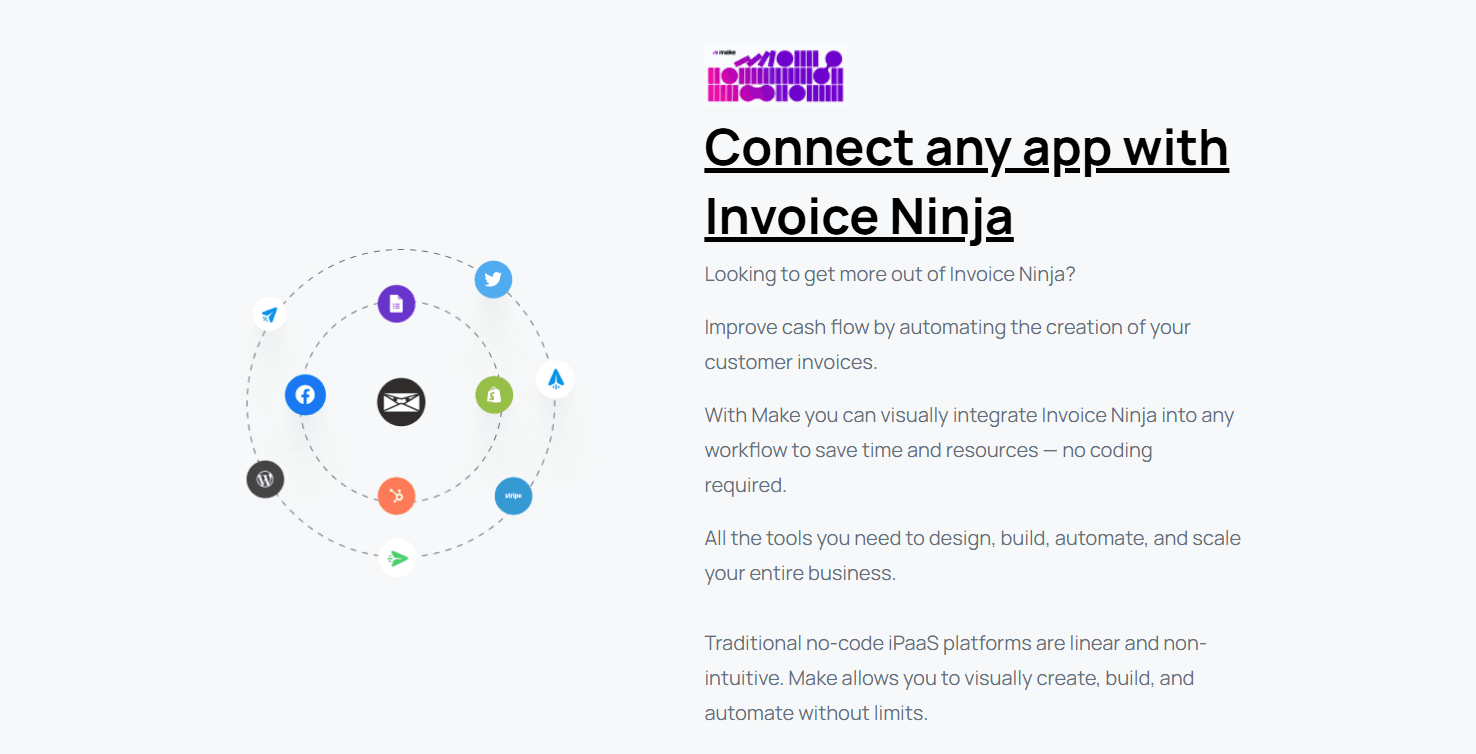
Invoice Ninja also offers an API and connects with third-party integration tools such as Zapier, n8n, and Make.
Invoice Ninja Specs
- 2-Factor Authentication: Yes
- Accounts Receivable: Yes
- API: Yes
- Balance Sheet: No
- Billing/Invoicing: Yes
- BitCoin: Yes
- Budgeting: No
- Calendar Management: No
- Contact Management: No
- CRM Integration: No
- Customer Management: No
- Dashboard: Yes
- Data Export: Yes
- Data Import: Yes
- Data Visualization: Yes
- Expense Tracking: Yes
- External Integrations: Yes
- Forecasting: No
- Inventory Tracking: No
- Multi-Currency: Yes
- Multi-User: Yes
- Notifications: Yes
- P&L: No
- Payment Gateway Integration: No
- Payment Processor: Yes
- PayPal: Yes
- Payroll: No
- SAP Integration: No
- Scheduling: No
- Stripe: Yes
- Supplier Management: No
- Tax Management: No


