

10 alternatives à Carta pour la gestion de la table de capitalisation en 2026

Sélection des meilleures alternatives à Carta


Carta est depuis longtemps la solution par défaut pour la gestion de la table de capitalisation, mais « par défaut » ne signifie pas toujours « optimal ». À mesure que votre entreprise se développe, les contraintes liées à des paliers tarifaires rigides ou à des flux de travail verrouillés deviennent un goulot d’étranglement opérationnel. Si votre environnement logiciel actuel n’est plus adapté à la complexité de votre table de capitalisation — ou à votre budget — il est peut-être temps d’évaluer les solutions alternatives à Carta.
D’après mon expérience, trouver le logiciel adapté peut faire une grande différence en matière d’efficacité et de précision. J’ai testé et évalué de manière indépendante différentes options afin de vous aider à trouver la solution la mieux adaptée à votre équipe.
Dans cet article, je vais vous présenter mes meilleurs choix d’alternatives à Carta, en mettant l’accent sur ce qui distingue chacune d’elles. Vous aurez une vision claire des fonctionnalités, des avantages et des inconvénients potentiels, afin de pouvoir prendre une décision éclairée pour votre entreprise.
Qu’est-ce que Carta ?
Carta est un logiciel de gestion de la structure du capital qui aide les entreprises à gérer leurs participations, leurs valorisations et leur conformité. Il est largement utilisé par les directeurs financiers, les comptables et les professionnels du droit qui doivent superviser des opérations financières complexes. Des fonctionnalités telles que la gestion des participations, le suivi de la table de capitalisation et les outils de conformité contribuent à maintenir la précision et l’efficacité de vos processus financiers. Dans l’ensemble, Carta offre une solution fiable pour gérer efficacement la structure financière de votre entreprise.
Tableau comparatif des alternatives à Carta
Ce tableau comparatif récapitule les informations tarifaires de mes meilleures alternatives à Carta.
| Tool | Best For | Trial Info | Price | ||
|---|---|---|---|---|---|
| 1 | Idéal pour les outils juridiques et financiers | Essai gratuit de 7 jours | À partir de 99 $/mois | Website | |
| 2 | Idéal pour des évaluations 409A illimitées | Offre gratuite disponible | À partir de $2/actionnaire/mois | Website | |
| 3 | Idéal pour l’automatisation des plans d’actions | Formule gratuite + démo gratuite disponibles | À partir de 3 000 €/an | Website | |
| 4 | Idéal pour les entreprises en phase avancée | Not available | Tarification sur demande | Website | |
| 5 | Idéal pour la gestion de l'actionnariat des startups | Formule gratuite + démo gratuite disponible | À partir de 42 $/30 parties prenantes/mois (facturé annuellement) | Website | |
| 6 | Idéal pour des évaluations prêtes à l’audit | Plan gratuit + démo gratuite disponible | À partir de 1 600 $/an | Website | |
| 7 | Idéal pour l'automatisation des opérations sur actions | Offre gratuite disponible | À partir de $11/partenaire/an | Website | |
| 8 | Idéal pour les tableaux de capitalisation de tokens et d'actions | Démo gratuite + essai gratuit de 14 jours disponible | À partir de $1,200/an | Website | |
| 9 | Idéal pour l'intégration ERP | Démo gratuite disponible | Tarification sur demande | Website | |
| 10 | Idéal pour les outils de conformité des startups | Essai gratuit de 30 jours + démo gratuite disponible | À partir de $1,200/an | Website |
Pourquoi faire confiance à nos recommandations de logiciels
Nos avis reflètent notre jugement indépendant — et non un argumentaire de vente. Découvrez comment nous restons transparents.
Pour ce guide, nous avons évalué les outils grâce à des tests pratiques et une recherche indépendante, en notant les outils selon nos critères de sélection.
Nos avis reflètent notre jugement éditorial humain, et non un argumentaire de vente.
Avis sur les meilleures alternatives à Carta
Vous trouverez ci-dessous mes résumés détaillés des meilleures alternatives à Carta qui figurent dans ma sélection. Mes avis présentent en détail les principales fonctionnalités, les avantages et les inconvénients, les intégrations ainsi que les cas d’utilisation idéaux de chaque outil, afin de vous aider à trouver celui qui vous convient le mieux.

Idéal pour les outils juridiques et financiers
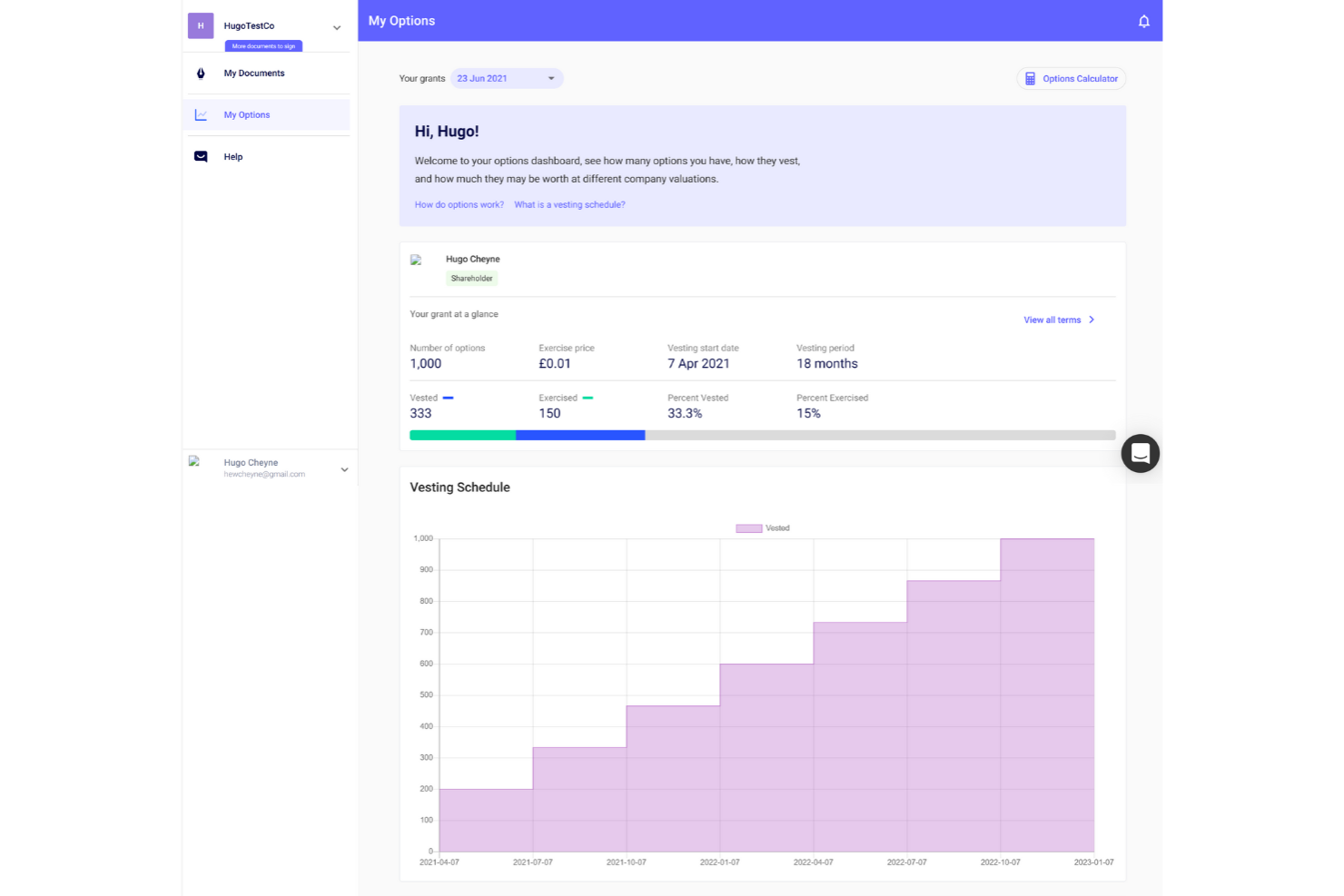
SeedLegals est une plateforme axée sur le juridique qui automatise la documentation et la gestion du capital pour les levées de fonds, les plans d'actionnariat et la gouvernance continue. Elle est conçue pour servir d'alternative numérique au conseil juridique traditionnel pour les transactions standardisées des startups en démarrage.
Pourquoi c'est une bonne alternative à Carta : SeedLegals unifie vos flux de travail juridiques avec la gestion de votre table de capitalisation. Alors que Carta fonctionne principalement comme un outil d'enregistrement et d'évaluation des données existantes, SeedLegals crée les données en générant les contrats juridiques sous-jacents, tels que les term sheets et les pactes d'actionnaires, directement sur la plateforme. Cela réduit la friction entre la clôture d'une levée de fonds et la mise à jour d'une cap table, car la plateforme synchronise automatiquement les deux en temps réel.
Fonctionnalités phares et intégrations :
Fonctionnalités : création automatique de documents, qui facilite la génération d'accords juridiques. SeedLegals propose des outils de gestion des levées de fonds pour aider votre équipe à naviguer dans les processus d'investissement. La plateforme propose également un suivi de conformité pour s'assurer que votre entreprise respecte les exigences légales.
Intégrations : Xero et plus encore.
Pros and Cons
Pros:
- Large gamme d'outils juridiques
- Création automatique de documents
- Gestion des levées de fonds
Cons:
- Peut nécessiter des connaissances juridiques
- Contraintes des modèles pour les structures juridiques complexes

Eqvista
Idéal pour des évaluations 409A illimitées
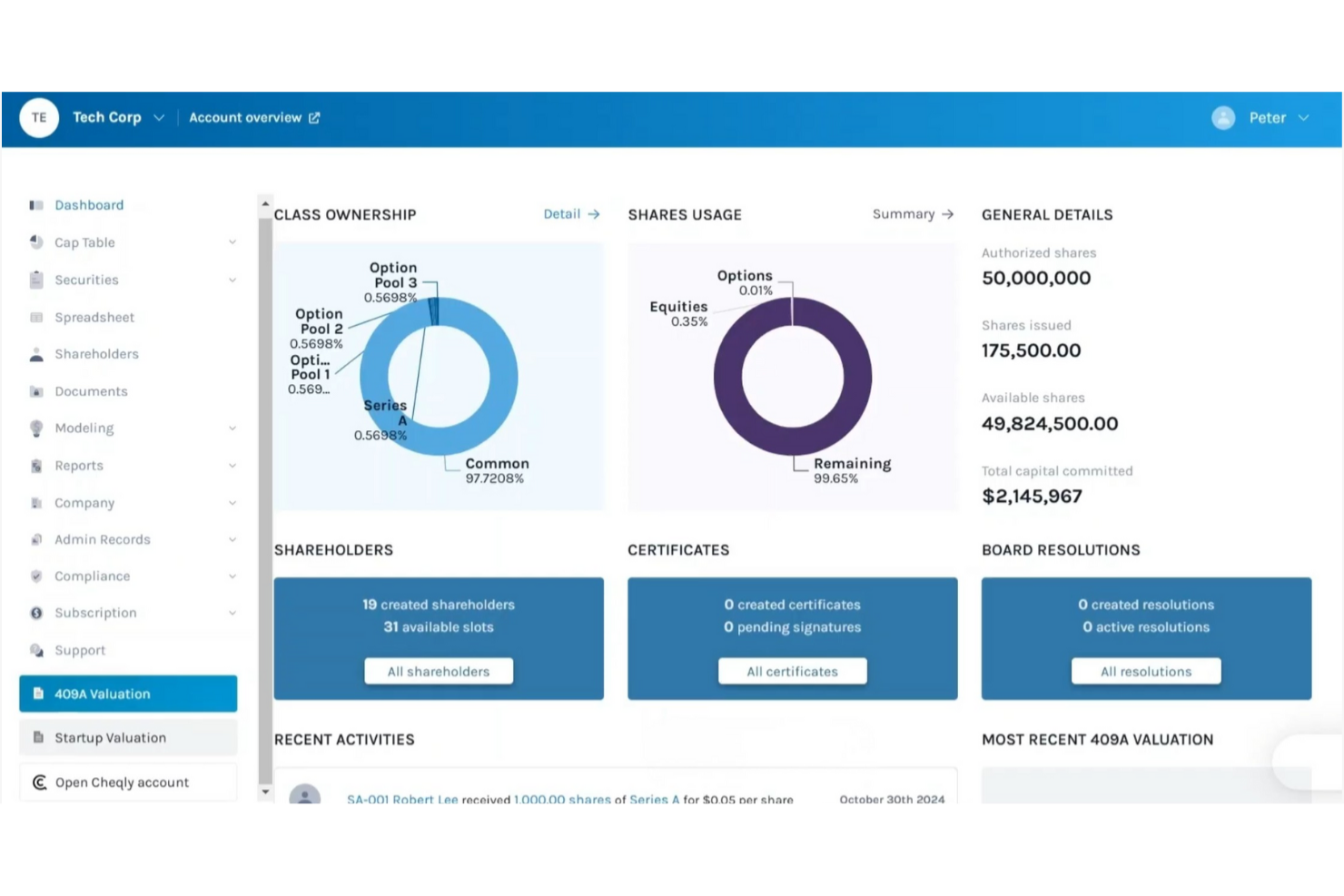
Eqvista est une plateforme de gestion de l'actionnariat conçue pour les startups et les entreprises en croissance. Elle aide les directeurs financiers et les fondateurs à gérer les tables de capitalisation, les évaluations et la conformité.
Pourquoi c'est une bonne alternative à Carta : Eqvista propose un nombre illimité d'évaluations 409A, ce qui est un avantage considérable si vous souhaitez rester conforme sans frais supplémentaires. La plateforme offre une gestion détaillée des tables de capitalisation et un suivi précis de l'actionnariat, ce qui vous donne une visibilité claire sur la structure de propriété. Grâce à son interface facile d'utilisation, vous pouvez gérer les options d'achat d'actions pour les employés, telles que les RSU, ainsi que les attributions. L'accent mis par Eqvista sur la fourniture de services d'évaluation détaillés, y compris les ASC, en fait un excellent choix pour les entreprises nécessitant des évaluations fréquentes.
Fonctionnalités et intégrations remarquables :
Fonctionnalités : gestion automatisée de la table de capitalisation, ce qui simplifie le suivi des évolutions de l'actionnariat et des détails de la propriété. Eqvista propose également des outils de reporting détaillés afin de fournir une vue d'ensemble sur la santé financière de votre entreprise. De plus, la plateforme prend en charge les plans d'options d'achat d'actions pour les employés, facilitant la gestion des attributions et des calendriers d'acquisition.
Intégrations non publiquement listées.
Pros and Cons
Pros:
- Évaluations 409A illimitées
- Gestion détaillée des tables de capitalisation
- Prise en charge des plans d'options sur actions
Cons:
- Un accompagnement à la prise en main peut être nécessaire
- Peu adapté aux secteurs non technologiques

Ledgy
Idéal pour l’automatisation des plans d’actions
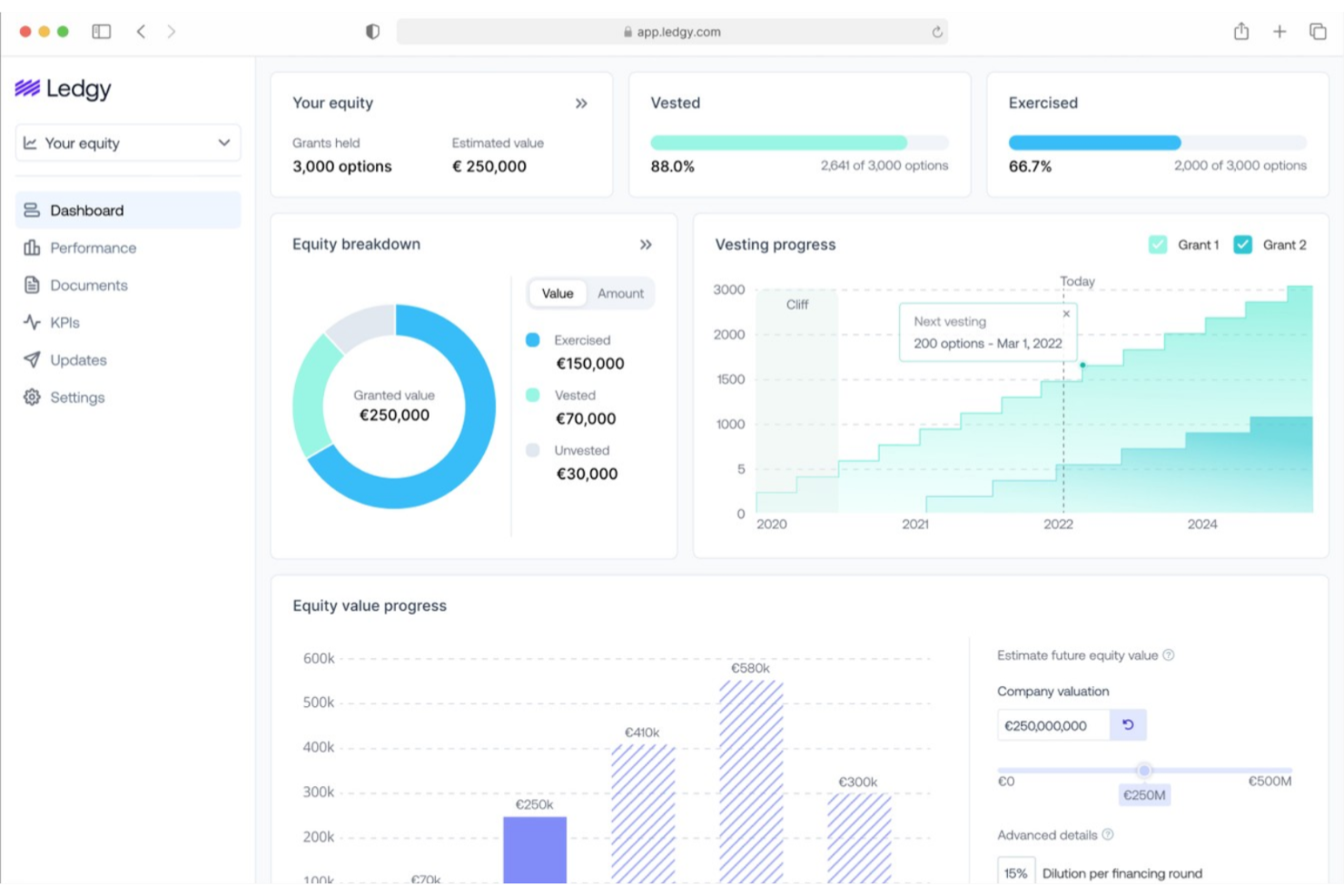
Ledgy est une plateforme de gestion du capital destinée aux startups et scale-ups, axée sur la gestion de la table de capitalisation, les plans de participation des employés et les relations avec les investisseurs. Elle est conçue pour aider les équipes financières et les fondateurs à gérer l’actionnariat.
Pourquoi c’est une bonne alternative à Carta : Ledgy propose une automatisation des plans d’actions, facilitant ainsi la gestion des stock-options et des attributions d’actions pour les employés. La plateforme fournit des mises à jour en temps réel sur l’actionnariat, afin que votre équipe connaisse toujours la structure de propriété actuelle. C’est un excellent choix pour les entreprises souhaitant automatiser et optimiser leurs processus liés à l’actionnariat. Ledgy s’est associée à JP Jenkins pour proposer également la gestion du capital privé et la liquidité.
Fonctionnalités et intégrations remarquables :
Les fonctionnalités incluent la modélisation de scénarios, qui vous permet de visualiser différents résultats financiers. Ledgy fournit une analyse en cascade (waterfall analysis) afin de vous aider à comprendre les structures de paiements dans divers scénarios. La plateforme propose aussi des tableaux de bord personnalisables, offrant une vue claire de vos données d’actionnariat.
Les intégrations incluent BambooHR, Personio, PayFit, Google Workspace, Microsoft Entra ID, Docusign, et d’autres.
Pros and Cons
Pros:
- Mises à jour en temps réel de l’actionnariat
- Analyse en cascade (waterfall analysis)
- Tableaux de bord personnalisables
Cons:
- Coût élevé pour les petites équipes
- Performance lente avec des fichiers volumineux

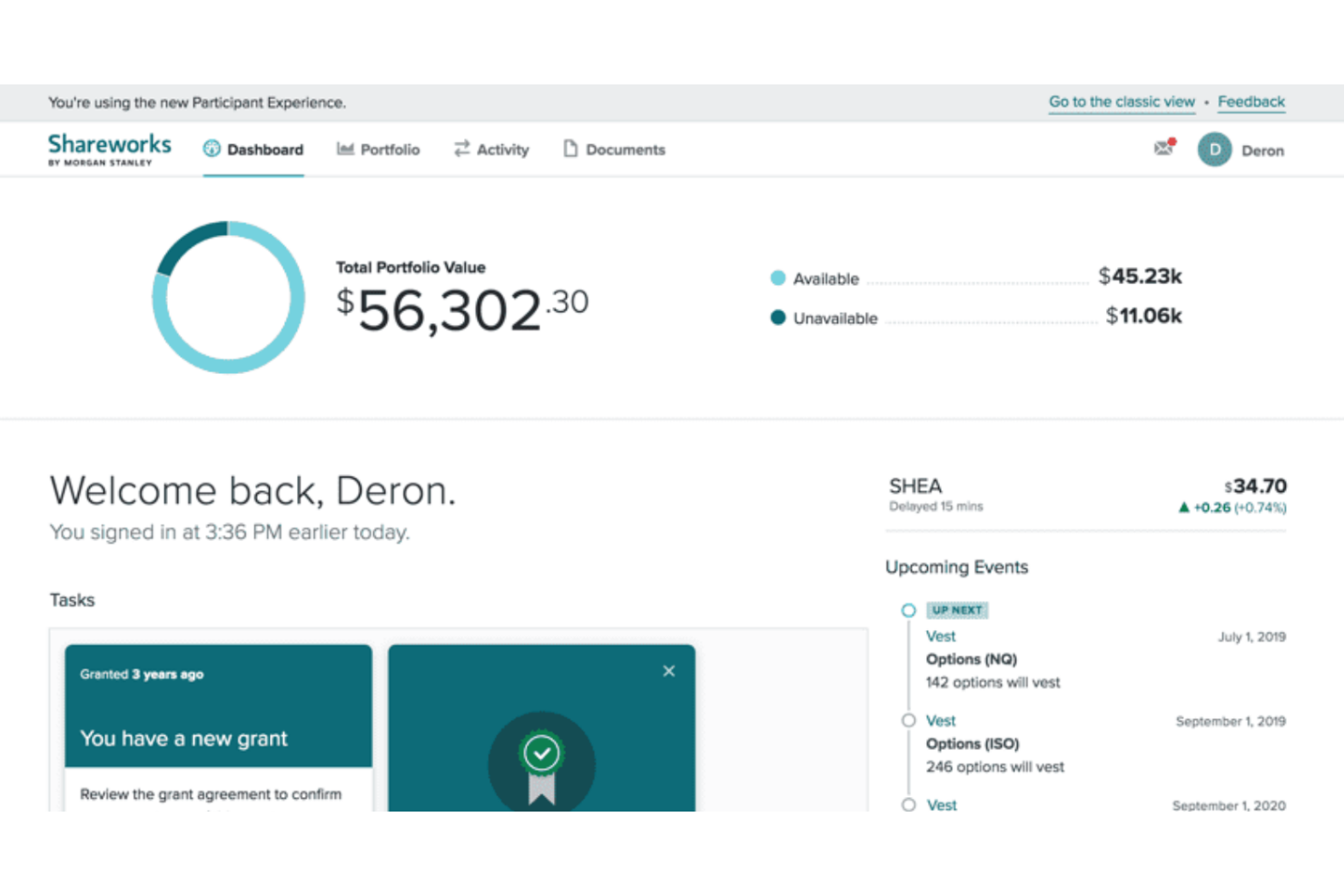
Shareworks par Morgan Stanley est une plateforme de gestion d'équité de niveau entreprise qui accompagne les entreprises de la phase de démarrage jusqu'à l'entrée en bourse au niveau mondial. Elle combine la gestion de capitalisation et les évaluations 409A avec une base de données 'Global Intelligence' qui automatise la conformité fiscale et juridique dans plus de 170 pays.
Pourquoi c'est une bonne alternative à Carta : Shareworks est une excellente alternative à Carta si vous souhaitez éviter le 'coût du changement' lié au fait de dépasser les capacités d'un fournisseur plus petit. Elle fournit la sécurité institutionnelle et l'infrastructure mondiale nécessaires pour se préparer à une introduction en bourse, tout en gérant nativement les obligations fiscales et juridiques locales. Cela vous permet de gérer vos filiales internationales à partir d'une seule source de vérité prête pour un audit, soutenue par une institution financière mondiale.
Principales fonctionnalités et intégrations :
Fonctionnalités : un guichet de transactions Private Markets pour exécuter des ventes secondaires et un environnement sandbox dédié pour tester l'impact financier de la dilution et de la rémunération basée sur des actions. Elle génère également des états financiers prêts pour l'audit.
Intégrations : Neuron, Workday, Pave, Okta, et bien d'autres.
Pros and Cons
Pros:
- Conformité mondiale de niveau IPO
- Gestion des liquidités secondaires complexes
- Sécurité institutionnelle réglementée
Cons:
- Délais de mise en œuvre allongés
- Courbe d'apprentissage administrative prononcée

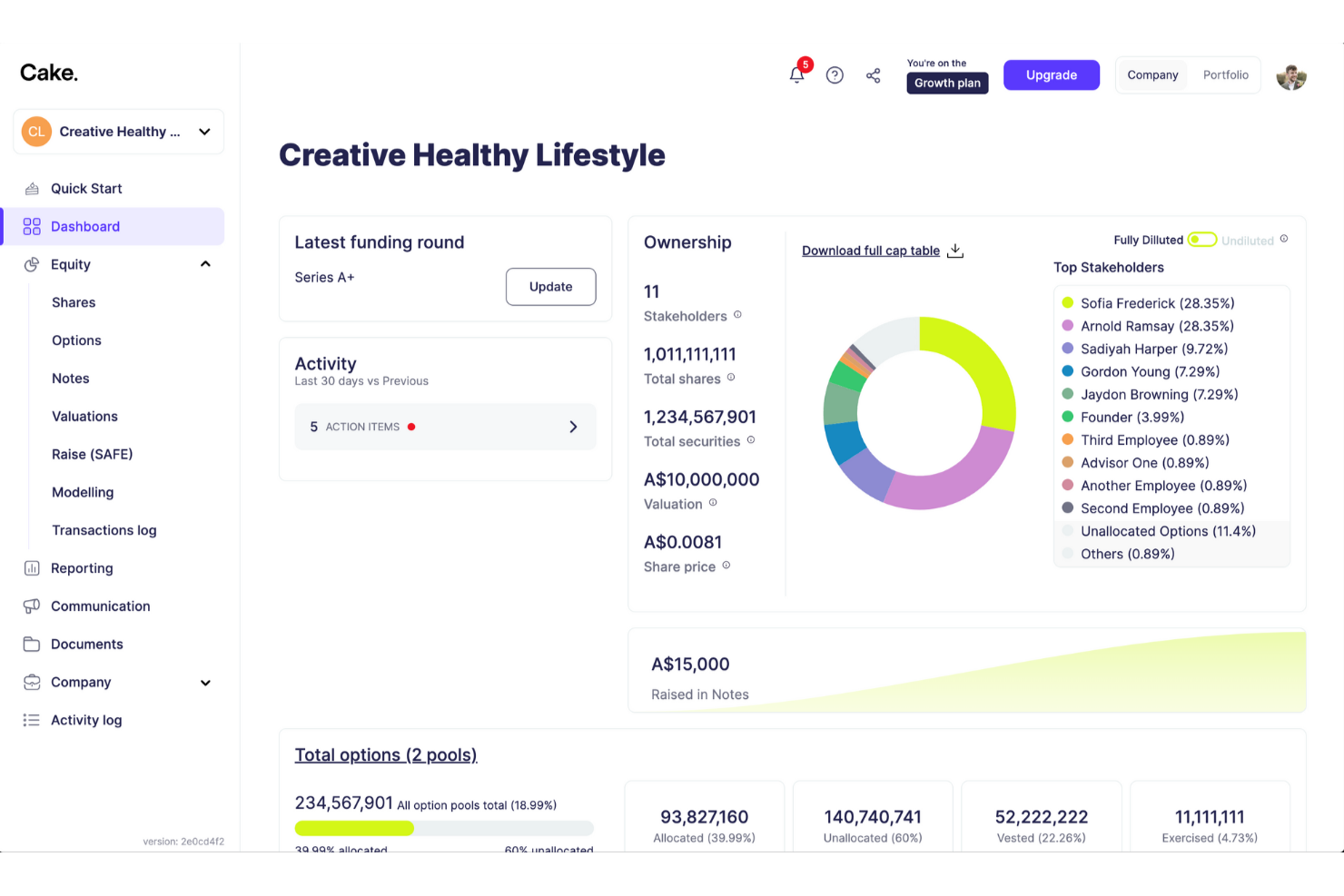
Cake Equity est un logiciel de gestion de structure de capital conçu pour les startups afin de gérer leur capital et leurs plans d'actions pour les employés. Il est principalement utilisé par les fondateurs et les équipes financières pour simplifier la gestion des capitaux propres et les tâches de conformité.
Pourquoi c'est une bonne alternative à Carta : Cake simplifie la gestion internationale de l'actionnariat en automatisant les lettres d'offre localisées et les règles d'acquisition dans de multiples juridictions, ce qui le rend considérablement plus efficace pour les entreprises disposant d'équipes à l'international. Ils proposent une migration clé en main gratuite qui transfère vos données en environ trois jours, assortie de rapports conformes aux normes ASC 718 et IFRS 2, intégrés directement à votre table de capitalisation. Son interface conviviale aide votre équipe à gérer les capitaux propres sans processus complexes.
Fonctionnalités phares et intégrations :
Fonctionnalités : allocations automatiques d'actions, gestion des plans d'actions salariés, et rapports prêts pour l'audit. Vous pouvez suivre les calendriers d'acquisition et gérer les tables de capitalisation en un seul endroit. La conception intuitive de la plateforme facilite la navigation pour vous et votre équipe dans les tâches liées à l'actionnariat.
Intégrations non communiquées publiquement.
Pros and Cons
Pros:
- Interface conviviale
- Conformité automatisée
- Attribution d'actions facile
Cons:
- Options de reporting basiques
- Plateforme moins stable que les concurrents

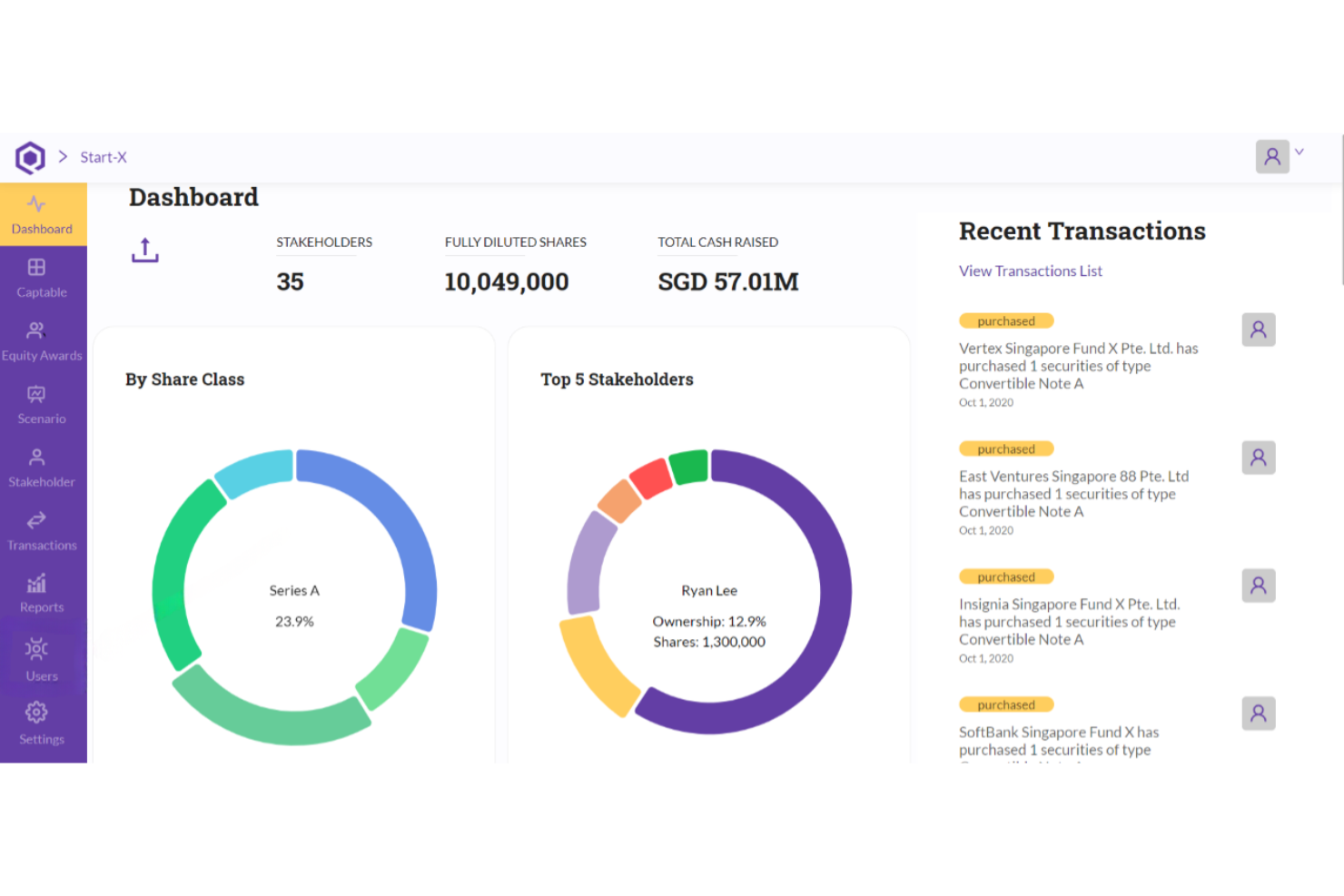
Qapita est spécialisée dans la gestion d’actions et les évaluations pour les entreprises privées, avec un accent particulier sur le marché de l’Asie du Sud-Est. Elle centralise l’administration du tableau de capitalisation et la gestion des fonds dans une seule plateforme pour évoluer en parallèle avec les startups financées par le capital-risque.
Pourquoi c’est une bonne alternative à Carta : Qapita fournit des évaluations prêtes pour l’audit, idéales si vous recherchez la précision dans vos rapports financiers. Ses outils de gestion du cap table offrent des informations en temps réel, aidant votre équipe à maintenir la conformité et la transparence. Avec des fonctionnalités telles que la gestion des plans d’actionnariat et le conseil en rémunération par actions, Qapita peut adapter les stratégies et processus d’actions à vos besoins.
Fonctionnalités et intégrations remarquables :
Fonctionnalités : gestion des BSPCE (ESOP) pour améliorer les plans d’actionnariat salarié. La gestion du cap table vous aide à superviser l’émission des actions et la modélisation de scénarios sans tableaux Excel. La plateforme propose aussi l’administration des fonds pour des appels de fonds et des reportings efficaces.
Intégrations : Workday, HiBob, Darwinbox, Docusign et plus encore.
Pros and Cons
Pros:
- Évaluations prêtes à l’audit
- Stratégies d’actions personnalisées
- Rapports financiers détaillés
Cons:
- Fonctionnalités limitées de modélisation de scénarios
- Forte orientation sur l’Inde et l’Asie du Sud-Est

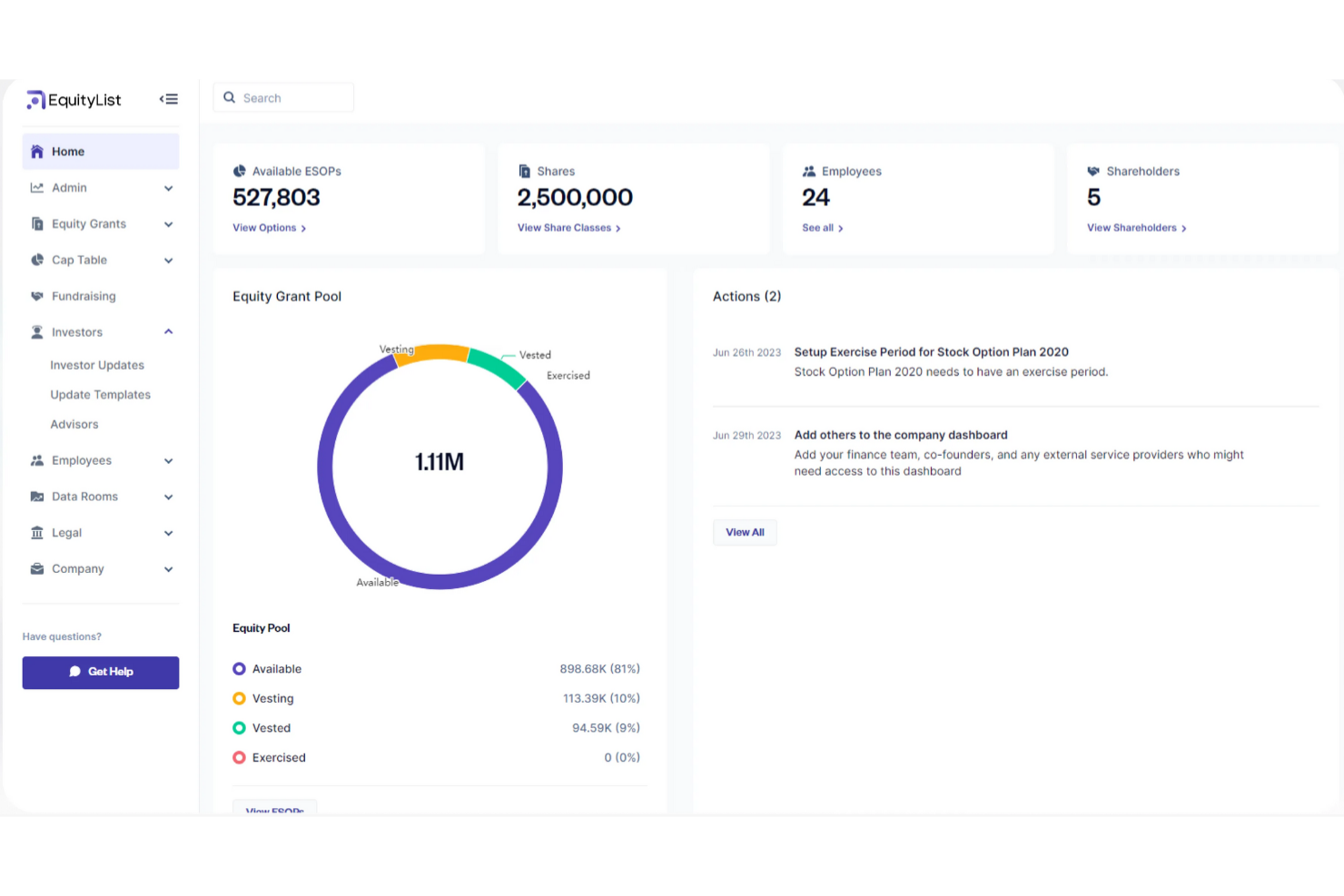
EquityList est un logiciel de gestion des actions qui offre une solution 'full-stack' rentable, combinant l'automatisation des registres de capitalisation et la gestion des plans d'options sur actions pour les employés (ESOP) avec des services spécialisés de conformité régionale et d'évaluation 409A/indienne.
Pourquoi c'est une bonne alternative à Carta : EquityList excelle dans la gestion de l'actionnariat transfrontalier pour les entreprises opérant aux États-Unis, en Inde et en Asie du Sud-Est, en proposant une conformité intégrée aux lois fiscales locales et aux déclarations régionales. Avec des fonctionnalités telles que les certificats d'actions numériques et les services de conformité, EquityList vous assure d'être toujours prêt pour un audit. C'est idéal pour les entreprises à la recherche d'une solution simple pour gérer leur capital.
Fonctionnalités et intégrations remarquables :
Fonctionnalités incluent la gestion transfrontalière de l'actionnariat, permettant à votre équipe de suivre l'actionnariat international. EquityList propose des tableaux de bord pour améliorer les relations avec les investisseurs, permettant transparence et communication efficace. La plateforme offre également des opportunités d'actionnariat salarié.
Intégrations : AngelList, Slack et plus encore.
Pros and Cons
Pros:
- Automatise les opérations sur actions
- Clarté de l'actionnariat en temps réel
- Émission d'actions simplifiée
Cons:
- Peu d'intégrations disponibles
- Tarification peu diffusée


Pulley est une plateforme d'equity à forte croissance conçue pour la rapidité et la modélisation stratégique, ce qui en fait un choix privilégié des startups Y Combinator et des entreprises soutenues par du capital-risque. Elle se distingue en fournissant des évaluations 409A en sept jours et des outils de simulation 'what-if' qui permettent de simuler en temps réel des scénarios de dilution et de levées de fonds.
Pourquoi c'est une bonne alternative à Carta : Pulley offre des fonctionnalités uniques pour gérer aussi bien les tableaux de capitalisation de tokens que d'actions, la rendant polyvalente pour les entreprises technologiques. Sa plateforme vous permet d'automatiser les plannings d'acquisition et de générer des rapports prêts pour l'audit. Avec des fonctionnalités telles que la modélisation de scénarios et le support pour les levées de fonds, Pulley aide votre équipe à prendre des décisions éclairées. Ces outils sont particulièrement utiles si vous devez gérer des structures de capital complexes.
Fonctionnalités et intégrations remarquables :
Fonctionnalités : modélisation de scénarios pour visualiser les différents résultats d'equity pour votre entreprise. La plateforme automatise la conformité réglementaire via le suivi de la règle 701, le dépôt du formulaire 3921 et la surveillance en temps réel de l'élection 83(b). Ses plannings d'acquisition automatiques garantissent l'exactitude et l'efficacité de vos plans d'equity.
Intégrations : QuickBooks, Gusto, BambooHR, Stripe, Salesforce, et plus encore.
Pros and Cons
Pros:
- Gère les tableaux de tokens et d'actions
- Automatise les plannings d'acquisition
- Propose la modélisation de scénarios
Cons:
- Peut être complexe pour les débutants
- La configuration est lente et difficile


Certent Equity Management est une plateforme conçue pour améliorer la gestion de la rémunération en actions et le reporting financier des entreprises. Elle s'adresse principalement aux équipes financières et RH, en fournissant des outils de gestion des plans d'actionnariat et de conformité.
Pourquoi c'est une bonne alternative à Carta : Certent Equity Management se distingue par son intégration avec les ERP, permettant à votre équipe de connecter les données sur les actions à vos systèmes existants. La plateforme propose de nombreux outils de reporting pour renforcer la transparence financière et la conformité. Vous pouvez gérer des plans d'actions complexes grâce à des fonctionnalités telles que le traitement automatisé des attributions et la mise à jour des données en temps réel. Cela en fait un choix solide pour les entreprises souhaitant intégrer la gestion des actions à leurs opérations financières globales.
Fonctionnalités et intégrations phares :
Les fonctionnalités incluent le traitement automatisé des attributions, qui simplifie l'administration des récompenses en actions. Certent Equity Management propose des mises à jour des données en temps réel pour garantir à votre équipe un accès constant aux dernières informations. La plateforme offre également des outils de reporting détaillés pour renforcer vos capacités d’analyse financière.
Les intégrations incluent SAP, Oracle, Microsoft Dynamics et bien d'autres.
Pros and Cons
Pros:
- Excellente intégration ERP
- Mises à jour des données en temps réel
- Traitement automatisé des attributions
Cons:
- Courbe d'apprentissage plus élevée
- Flexibilité limitée pour les mises à jour administratives

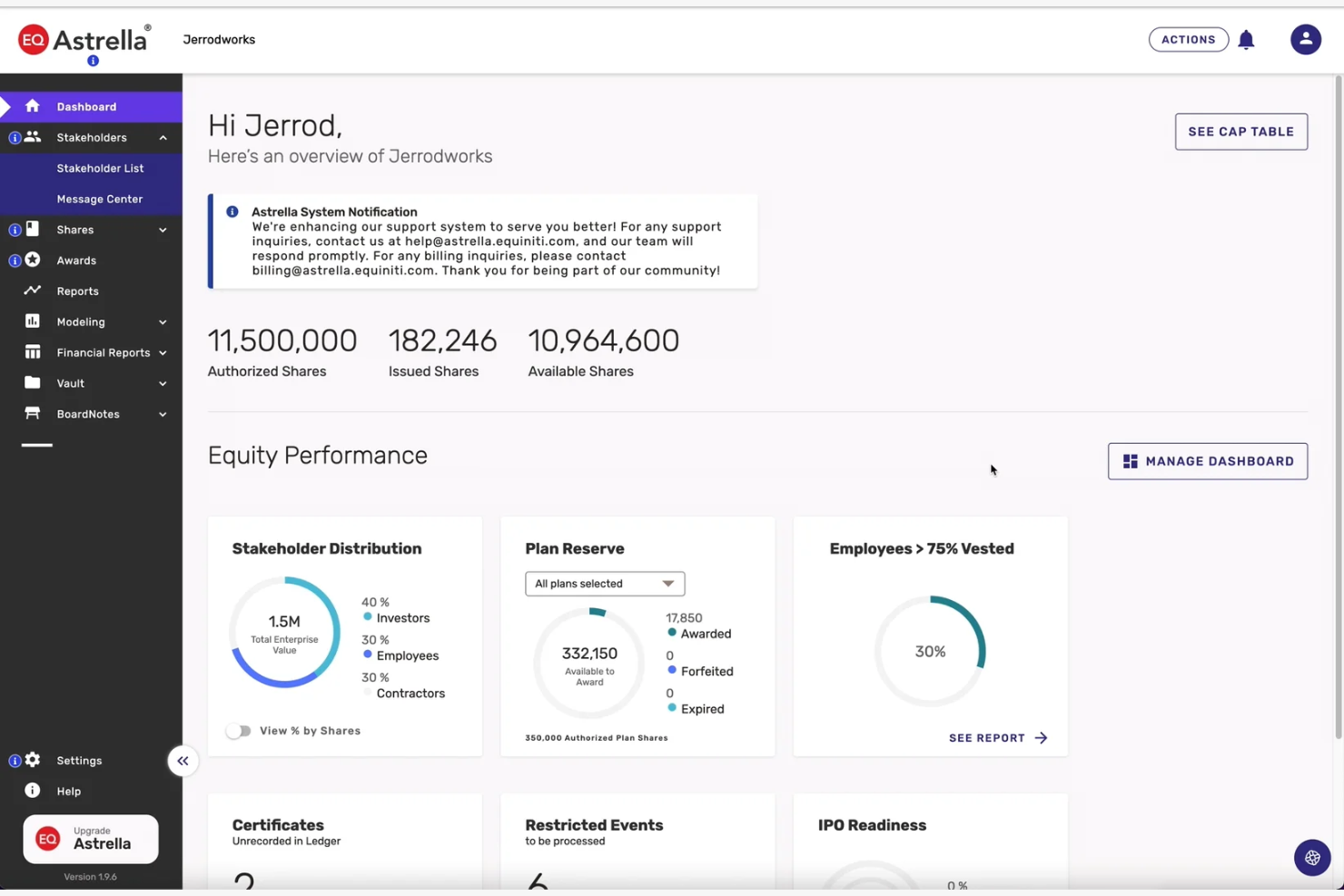

Astrella est une plateforme de gestion des capitaux propres destinée aux startups et aux entreprises en croissance, fournissant des outils pour la gestion du registre des actionnaires, la conformité réglementaire et l'engagement des actionnaires. Elle aide les équipes financières et les fondateurs à gérer efficacement les capitaux propres et la conformité réglementaire.
Pourquoi c'est une bonne alternative à Carta : Astrella propose un registre hautement sécurisé, basé sur la blockchain, qui garantit une traçabilité immuable de chaque transaction d’actions, réduisant ainsi le risque d'écarts de données lors d’une sortie ou d’une introduction en bourse (IPO). Contrairement au modèle souvent autonome de Carta, Astrella inclut une intégration personnalisée (« service sur-mesure ») et un support illimité dans son tarif forfaitaire. Elle constitue une passerelle idéale pour les entreprises envisageant une entrée en bourse, car elle appartient à Equiniti, leader mondial des services d’agent de transfert et de registre des actions.
Fonctionnalités et intégrations remarquables :
Fonctionnalités : alertes de conformité automatisées pour tenir votre équipe informée des évolutions réglementaires et des autorisations. Ses outils de communication avec les actionnaires facilitent l’engagement et la transparence.
Intégrations : non communiquées publiquement.
Pros and Cons
Pros:
- Outils de conformité spécialisés
- Mises à jour du registre des capitaux propres en temps réel
- Alertes de conformité automatisées
Cons:
- Fonctionnalités avancées limitées
- Ne convient pas aux grandes entreprises
Comment j'évalue les alternatives à Carta
Je divise mon évaluation en exigences de base — comme la gestion du tableau de capitalisation en temps réel et la prise en charge du 409A — et en éléments différenciateurs tels que l’administration de fonds, la gestion de l’actionnariat à l’international et la structure tarifaire.
Fonctionnalités de base (Critères incontournables pour cette liste)
Lorsque je sélectionne des outils pour ma liste, j’attribue à chacun une note de 0 (la fonctionnalité n’est pas offerte) à 5 (l’outil excelle dans ce domaine) pour chaque fonctionnalité clé ci-dessous. Ensuite, je calcule le score total de l’outil en pourcentage. Chaque outil doit obtenir un score total minimum de 65 % pour être pris en compte.
- Gestion du tableau de capitalisation : Je recherche un suivi en temps réel de la propriété sur différentes catégories d’actions, SAFEs et obligations convertibles, qui reste précis après chaque nouveau tour de financement.
- Administration des plans d’actionnariat : Chaque outil doit gérer les attributions de stock-options, les RSU et les calendriers d’acquisition, pour permettre aux administrateurs de gérer les exercices sans devoir jongler avec des tableurs.
- Soutien à l’évaluation 409A : Je vérifie si les évaluations sont intégrées, en partenariat, ou simplement par téléchargement manuel — ainsi que la rapidité d’obtention d’un rapport défendable lors d’un audit.
- Modélisation de scénarios et cascades (waterfall) : J’évalue dans quelle mesure un outil permet de modéliser une série B ou une sortie, et de visualiser précisément la répartition des produits entre les détenteurs d’actions privilégiées et ordinaires.
- Portail parties prenantes et investisseurs : Les employés et investisseurs doivent pouvoir consulter leurs titres, accéder aux formulaires fiscaux et signer des documents depuis un portail en self-service.
- Conformité et reporting réglementaire : Je regarde si la plateforme génère les disclosures ASC 718, les formulaires 3921 et autres rapports directement exploitables par votre équipe financière pour les audits.
Une fois que j’ai une liste d’outils répondant à ces critères, j’examine ce qui distingue chaque plateforme.
Facteurs de différenciation (Ce qui distingue les fournisseurs)
Voici comment je compare et distingue les différents acteurs :
Fonctionnalités remarquables
L’administration de fonds est un vrai différenciateur pour les sociétés de capital-risque et de private equity qui ont besoin du traitement des appels de fonds et de rapports pour les associés commanditaires, au sein de la même plateforme servant à gérer les tableaux de capitalisation. J’évalue aussi le support de l’actionnariat à l’international : si votre équipe couvre plusieurs pays, il vous faut un outil capable de gérer la fiscalité locale pour les exercices de stock-options. Les outils pour les transactions secondaires sont importants pour les entreprises en phase avancée, où employés et premiers investisseurs souhaitent obtenir de la liquidité avant une IPO. Le reporting automatisé des dépenses ASC 718 est également une fonctionnalité que je regarde, car elle évite à l’équipe comptable de calculer les disclosures de rémunération en actions à la main chaque trimestre.
Au-delà des fonctionnalités
La structure tarifaire est ici très importante : certaines plateformes facturent par partie prenante, ce qui devient vite coûteux à mesure que vous ajoutez employés et investisseurs après chaque tour de financement. Je regarde également l’accompagnement à la migration, car transférer un tableau de capitalisation depuis Carta ou un tableur implique que chaque classe d’actions, attribution et transaction soit répliquée avec précision. L’intégration aux systèmes de paie et de comptabilité type QuickBooks ou NetSuite mérite d’être vérifiée, surtout si votre équipe veut que les exercices d’options alimentent automatiquement les rapports de rémunération et de dépenses, sans ressaisie manuelle. La certification SOC 2 Type II est enfin un critère que je vérifie, compte tenu de la sensibilité des données sur l’actionnariat et les informations personnelles que ces plateformes traitent.
Pourquoi rechercher une alternative à Carta ?
Bien que Carta soit un bon choix de logiciel de gestion de la structure du capital, plusieurs raisons peuvent pousser certains utilisateurs à rechercher des solutions alternatives. Vous recherchez peut-être une alternative à Carta parce que…
- Vous avez besoin d’options de personnalisation plus avancées
- Votre équipe a besoin d’une meilleure assistance internationale
- Vous recherchez des forfaits d’abonnement moins coûteux
- Vous souhaitez bénéficier de meilleures fonctionnalités de sécurité des données
- Votre entreprise a besoin d’une assistance client plus rapide
- Vous gérez des structures de participation complexes
Si vous vous reconnaissez dans l’une de ces situations, vous êtes au bon endroit. Ma liste comprend plusieurs solutions logicielles de gestion de la structure du capital mieux adaptées aux équipes confrontées à ces difficultés avec Carta et à la recherche de solutions alternatives.
Principales fonctionnalités de Carta
Voici quelques-unes des principales fonctionnalités de Carta, afin de vous aider à mettre en regard et à comparer ce que proposent les solutions alternatives :
- Gestion de la table de capitalisation : Suivez en temps réel la structure du capital et les opérations sur les capitaux propres afin de tenir votre équipe informée.
- Évaluations 409A : Obtenez des évaluations de conformité pour les valorisations des actions de sociétés privées.
- Administration des plans d’intéressement en actions : Gérez les options d’achat d’actions et les calendriers d’acquisition.
- Gestion du conseil d’administration et des actionnaires : Simplifiez la communication et les approbations avec les parties prenantes.
- Modélisation de scénarios : Analysez les scénarios de financement et de sortie afin de prendre des décisions stratégiques éclairées.
- Solutions de liquidité : Facilitez les opérations secondaires sur des actions de sociétés privées, vous offrant ainsi une plus grande flexibilité dans la gestion des capitaux propres.
- Suivi de la détention du capital : Gérez les informations détaillées relatives aux investisseurs et aux employés, notamment les actions acquises et non acquises.
- Gestion des calendriers d’acquisition : Suivez les performances des calendriers d’acquisition afin de garantir leur alignement sur les objectifs de l’entreprise.
- Automatisation des documents : Automatisez la distribution des documents importants afin de réduire la charge de travail administratif.
- Rapports de valorisation : Générez des rapports d’analyse financière, y compris des scénarios de cascade, pour obtenir une meilleure visibilité.