

10 beste internationale Zahlungsschnittstellen im Test 2026

10 Auswahl der besten internationalen Zahlungs-Gateways


Die Verwaltung internationaler Transaktionen erfordert von CFOs, Währungsumrechnungen, die Einhaltung gesetzlicher Vorschriften und Transaktionsgebühren zu überwachen. Die Abwicklung dieser Elemente über mehrere Regionen hinweg erhöht die betriebliche Komplexität. Sie benötigen eine einfache Lösung, die diese Aufgaben leichter und effizienter macht.
Meiner Erfahrung nach sind internationale Zahlungs-Gateways darauf ausgelegt, grenzüberschreitende Zahlungen zu unterstützen und diese Prozesse zu zentralisieren. Durch den Einsatz dieser Tools können Finanzteams den manuellen Aufwand reduzieren und konsistentere Zahlungsabläufe aufrechterhalten.
In diesem Artikel stelle ich meine besten Empfehlungen für internationale Zahlungs-Gateways vor. Ich habe jede Option unabhängig getestet und bewertet, um Ihnen eine unvoreingenommene Einschätzung zu geben. Sie erhalten Einblicke in Funktionen, Vorteile und mögliche Nachteile, damit Sie die beste Wahl für Ihr Unternehmen treffen können.
Warum Sie unseren Software-Empfehlungen vertrauen können
Unsere Bewertungen spiegeln unser unabhängiges Urteilsvermögen wider – keine Verkaufsstrategie. Erfahren Sie, wie wir transparent bleiben.
Für diesen Leitfaden haben wir Tools mithilfe von praktischen Tests und unabhängiger Recherche bewertet und dabei unsere Bewertungskriterien angewendet.
Unsere Bewertungen spiegeln unser menschliches redaktionelles Urteilsvermögen wider, keine Verkaufsstrategie.
Zusammenfassung der besten internationalen Zahlungs-Gateways
Diese Vergleichstabelle fasst die Preisdetails meiner besten internationalen Zahlungs-Gateways zusammen, damit Sie das beste Gateway für Ihr Budget und Ihre geschäftlichen Anforderungen finden.
| Tool | Best For | Trial Info | Price | ||
|---|---|---|---|---|---|
| 1 | Best for global reach | Not available | From $620/month | Website | |
| 2 | Best for digital products | Free trial available | Pricing upon request | Website | |
| 3 | Best for small businesses | Free plan + free demo available | From $0.30/transaction | Website | |
| 4 | Best for SaaS businesses | Not available | Pricing upon request | Website | |
| 5 | Best for recurring payments | Free demo available | From 0.5% + $0.05/transaction | Website | |
| 6 | Best for Amazon shoppers | Free demo available | From 2.9% domestic processing fee + $0.30 authorization fee | Website | |
| 7 | Best for education payments | Free demo available | Pricing upon request | Website | |
| 8 | Best for fraud protection | Not available | From $25/month | Website | |
| 9 | Best for trade compliance | Free demo available | Pricing upon request | Website | |
| 10 | Best for enterprise solutions | Not available | Pricing upon request | Website |
Bewertungen der besten internationalen Zahlungs-Gateways
Nachfolgend finden Sie meine ausführlichen Zusammenfassungen der besten internationalen Zahlungs-Gateways, die es in meine Auswahl geschafft haben. Meine Bewertungen bieten einen detaillierten Überblick über die wichtigsten Funktionen, Vor- und Nachteile, Integrationen und idealen Anwendungsfälle jedes Tools, damit Sie das beste für Ihre Anforderungen finden.

Stripe
Best for global reach

Stripe is a payment processing platform popular among businesses of all sizes, from startups to large enterprises. It enables online payments and financial transactions, making it a go-to choice for companies needing to handle international payments.
Why I picked Stripe: It offers extensive global reach with support for multiple currencies and countries, making it an ideal choice for businesses looking to expand internationally. Stripe's features include payment processing, billing, and fraud prevention, all designed to facilitate global transactions. It also provides a customizable checkout experience, allowing you to tailor the payment process to your brand. With its powerful API, your team can easily integrate Stripe into your existing systems.
Standout features and integrations:
Features include custom billing solutions that adjust to your business needs, a fraud prevention system that helps protect your transactions, and the ability to manage subscriptions and recurring billing with ease.
Integrations include Shopify, WooCommerce, Xero, QuickBooks, Salesforce, NetSuite, Zapier, FreshBooks, Adobe Commerce, Squarespace, and more.
Pros and Cons
Pros:
- Strong developer tools
- Customizable checkout options
- Supports multiple currencies
Cons:
- Limited direct customer support on lower tiers
- Complex pricing structure

Best for digital products

FastSpring is an e-commerce platform designed for businesses selling digital products, such as software and online services. It provides tools for global payments, subscription management, and digital storefront creation, catering mainly to digital content creators and software developers.
Why I picked FastSpring: It specializes in digital products, offering features that make it easy for your team to manage online sales and subscriptions. FastSpring handles global transactions with built-in tax compliance, ensuring you can sell your products internationally without hassle. The platform provides customizable storefronts, allowing you to create a branded shopping experience. Additionally, its subscription management tools help you retain customers and manage recurring revenue effectively.
Standout features and integrations:
Features include advanced reporting tools that give you insights into sales performance, automated tax calculation to simplify compliance, and promotional tools that help you drive sales with discounts and offers.
Integrations include Shopify, WordPress, WooCommerce, Zapier, Mailchimp, Google Analytics, Salesforce, HubSpot, Slack, PayPal, and more.
Pros and Cons
Pros:
- Automated tax compliance
- Offers customizable storefronts
- Supports global transactions
Cons:
- Requires technical setup for advanced features
- Limited suitability for physical goods

PayPal
Best for small businesses

PayPal is a versatile online payment platform widely used by small businesses for its ease of setup and global reach. It facilitates secure transactions, allowing businesses to accept payments from customers worldwide.
Why I picked PayPal: It's particularly beneficial for small businesses due to its straightforward setup and wide acceptance. You can use features like invoicing and payment tracking to manage your transactions efficiently. In my experience, these capabilities help businesses maintain smooth operations with minimal effort. PayPal's buyer and seller protection also adds an extra layer of security, making it a reliable choice for small enterprises.
Standout features & integrations:
Features include invoicing tools that let you create and send professional invoices quickly. Payment tracking helps you monitor your transactions with ease. You also get buyer and seller protection, which supports security for your team and customers.
Integrations include QuickBooks, Shopify, WooCommerce, BigCommerce, Adobe Commerce, Salesforce, Xero, FreshBooks, Squarespace, and Etsy.
Pros and Cons
Pros:
- Supports multiple currencies
- Widely accepted globally
- Easy to set up
Cons:
- Can be difficult for dispute resolution
- Occasional account verification delays

Paddle
Best for SaaS businesses

Paddle is a subscription billing and revenue delivery platform tailored for SaaS companies. It helps businesses manage billing, payments, and tax compliance, helping software companies simplify their financial operations.
Why I picked Paddle: It caters specifically to SaaS businesses, providing tools to manage subscriptions and recurring billing with ease. Paddle handles all aspects of payment processing, including global tax compliance, so you can focus on your product. It supports multiple currencies and payment methods, making it easy for your business to operate internationally. Additionally, Paddle’s analytics and reporting tools give you an understanding of your revenue and growth.
Standout features and integrations:
Features include a built-in fraud detection system that protects your transactions, customizable checkout pages that support your brand, and detailed revenue reporting that helps you track business performance.
Integrations include Salesforce, HubSpot, Xero, QuickBooks, Zapier, Slack, Mailchimp, Google Analytics, Stripe, and PayPal.
Pros and Cons
Pros:
- Provides built-in fraud protection
- Offers detailed revenue reports
- Supports global tax compliance
Cons:
- Limited customization options
- No monthly or hidden fees


GoCardless is an online payment solution designed for businesses of all sizes, focusing on automating recurring payments. It serves industries that rely on subscriptions and membership fees, offering an easy way to handle Direct Debit payments.
Why I picked GoCardless: It specializes in recurring payments, providing a reliable option for businesses with subscription models. GoCardless allows you to easily collect payments through its automated Direct Debit system. It offers features such as flexible payment scheduling, making it easy for you to manage recurring billing. The platform's global reach allows you to collect customer payments from multiple countries, ensuring you can expand your business without payment barriers.
Standout features and integrations:
Features include a user-friendly dashboard that gives you a clear view of your transactions, automated payment retries to reduce failed payments, and real-time notifications to keep you informed of payment statuses.
Integrations include Xero, QuickBooks, Salesforce, Zuora, Sage, KashFlow, and more.
Pros and Cons
Pros:
- Simple payment tracking
- Supports multiple currencies
- Reliable payment collection
Cons:
- Geographic coverage depends on Direct Debit systems
- Limited payment method support


Amazon Pay is an online payment service tailored for businesses of all sizes, focusing on enhancing the shopping experience. It primarily serves merchants looking to offer convenient payment options to their customers, such as buy now, pay later and quick transactions.
Why I picked Amazon Pay: This tool is particularly beneficial for Amazon shoppers, as it integrates with their existing Amazon accounts. You can leverage features like Express Payout and invoice payment capabilities to provide your customers with flexible payment options. These features can enhance customer satisfaction by offering convenience and speed. The integration with major e-commerce platforms makes it easy for your team to implement and use Amazon Pay effectively.
Standout features & integrations:
Features include buy now, pay later with Affirm, Express Payout for quick transactions, and invoice payment capabilities. These features provide you and your customers with flexible payment options, augmenting their shopping experience.
Integrations include Shopify, Stripe, BigCommerce, WooCommerce, PrestaShop, and Adobe Commerce.
Pros and Cons
Pros:
- Recognized branding and trust
- Supports buy now, pay later
- Easy integration for Amazon users
Cons:
- Higher fees compared to some peers
- Limited to Amazon customers


Flywire is a global payment platform that specializes in processing international payments for educational institutions. It caters primarily to universities and students, facilitating tuition payments and other educational fees across borders.
Why I picked Flywire: It excels in managing education payments, offering tailored solutions for institutions and students. Flywire simplifies the payment process with multiple payment options, including card payments and bank transfers, as well as currency support, making it easier for your team to handle international transactions. The platform provides real-time tracking and transparent fee structures, so both students and institutions know what to expect. Additionally, Flywire offers customer support in multiple languages, supporting the customer experience for international students.
Standout features and integrations:
Features include a customizable payment portal that aligns with your institution's branding, automated reconciliation processes that reduce manual effort, and detailed reporting tools that reveal payment trends.
Integrations include Ellucian, Oracle, SAP, Workday, PeopleSoft, Technolutions Slate, Salesforce, and more.
Pros and Cons
Pros:
- Transparent fee structures
- Specialized solutions for education
- Provides real-time tracking
Cons:
- Limited relevance outside education
- Slower settlement for certain payment methods


Authorize.net is a payment gateway solution that caters to small and medium-sized businesses, providing tools for processing payments securely. Its primary function is to facilitate online and in-person transactions while offering fraud prevention features to protect your business and customers.
Why I picked Authorize.net: It excels in fraud protection, offering advanced security measures to safeguard transactions. The platform includes features such as fraud detection tools, which help you minimize risk and protect your revenue. Authorize.net supports multiple payment methods, giving your team flexibility in how you accept payments. Additionally, the platform offers customizable checkout options, allowing you to tailor the purchase experience to your business needs.
Standout features and integrations:
Features include recurring billing options that help you manage subscriptions easily, a virtual terminal for manually processing credit card and ACH payments, and detailed reporting tools that provide awareness of your transactions and financial health.
Integrations include QuickBooks, Shopify, Adobe Commerce, Xero, Zoho Books, WooCommerce, BigCommerce, FreshBooks, Squarespace, PrestaShop, and more.
Pros and Cons
Pros:
- Offers a virtual terminal
- Highly customizable checkout options
- Strong AI fraud detection tools
Cons:
- Requires a separate merchant account
- Initial setup can be complex
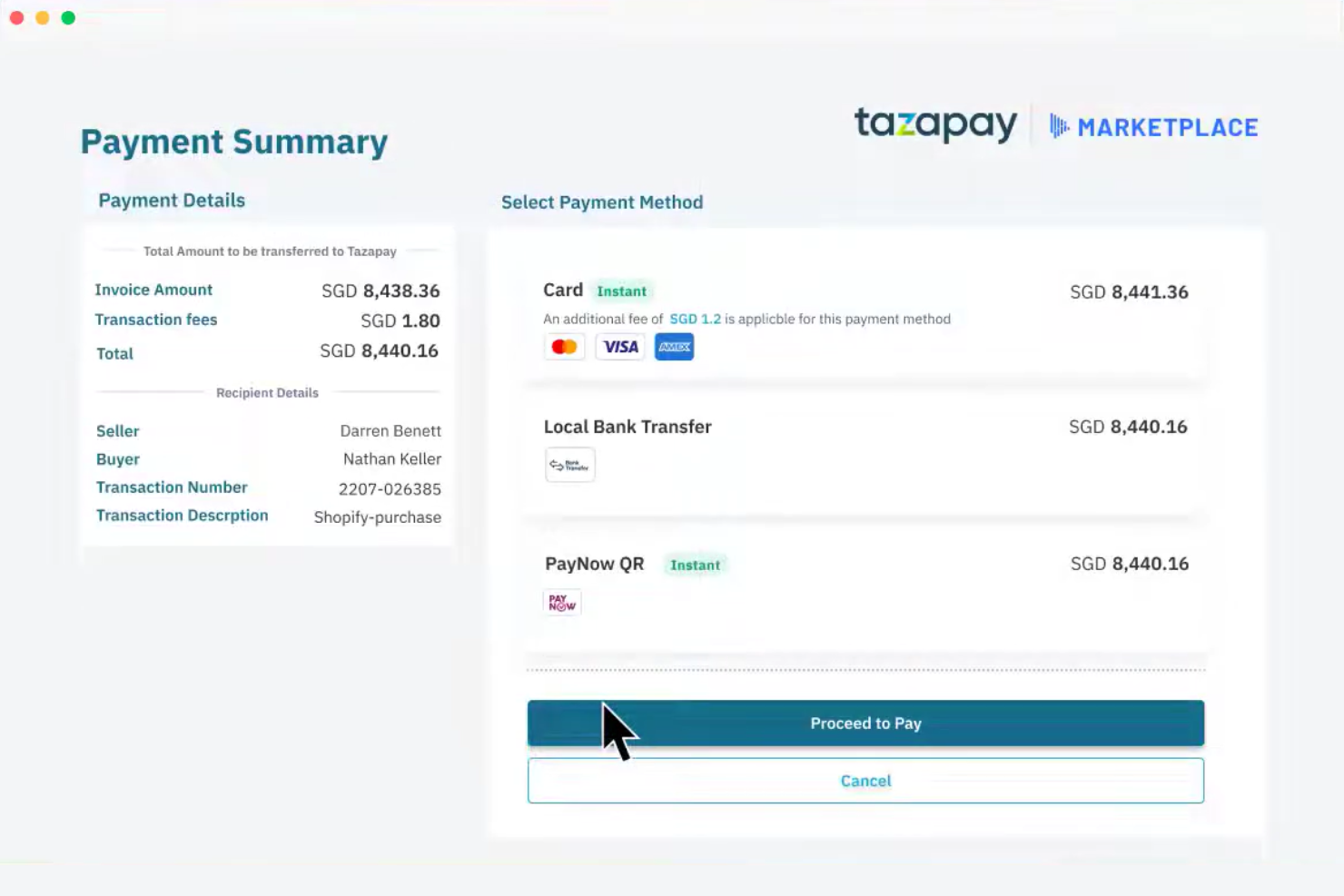
Tazapay is a cross-border payment platform designed for businesses needing secure international transactions. It serves industries such as e-commerce and fintech, providing solutions for accepting payments from over 173 countries.
Why I picked Tazapay: Tazapay excels in trade compliance, offering features such as buyer protection and compliance with international regulations. Its global collection accounts allow you to hold and disburse funds in multiple currencies. The platform supports same-day payouts in numerous markets, providing quick access to funds. With tailored solutions for various industries, Tazapay meets the specific needs of most businesses engaging in international trade.
Standout features and integrations:
Features include secure transaction management across multiple countries, instant bank settlements, and strong foreign exchange management. You can also benefit from simplified global compliance and risk management features.
Integrations include Shopify, WooCommerce, Adobe Commerce, BigCommerce, and more.
Pros and Cons
Pros:
- High compliance standards
- Offers local payment methods
- Supports multi-currency transactions
Cons:
- Smaller integration ecosystem Limited public documentation
- Smaller integration ecosystem


Nium is a global payment platform designed for enterprises that facilitate cross-border transactions and financial management. It serves large businesses by providing tools for international payments, card issuance, and currency conversion.
Why I picked Nium: It's tailored for enterprise solutions, providing all-in-one services for managing global payments. Nium offers multi-currency accounts, helping your team easily handle transactions in different currencies. The platform supports instant money transfers across numerous countries, supporting your business’s ability to operate internationally. Additionally, Nium provides a secure environment for transactions and compliance with international regulations.
Standout features and integrations:
Features include real-time currency conversion that helps you manage foreign exchange risks, a unified platform for managing multiple financial services, and advanced security measures to protect your transactions.
Integrations include SAP, Oracle, Microsoft Dynamics, Salesforce, Xero, QuickBooks, NetSuite, Stripe, PayPal, Shopify, and more.
Pros and Cons
Pros:
- Real-time currency conversion
- Compliance with international regulations
- Provides a secure transaction environment
Cons:
- Limited self-serve configuration
- Primarily suited for large enterprises
Weitere internationale Zahlungs-Gateways
Hier finden Sie einige weitere Optionen für internationale Zahlungs-Gateways, die es nicht in meine Auswahl geschafft haben, aber dennoch einen Blick wert sind:


How I Evaluate International Payment Gateways
When a global AR team needs to settle invoices in 30 currencies without a tangle of FX fees, I split my evaluation into baseline must-haves and the differentiators that separate good from great.
Core Functionality (Table Stakes For This List)
When I'm selecting tools for my list, I rank each one on a scale from 0 (does not offer the functionality) to 5 (excels in this area) for each core functionality listed below. Then, I calculate the tool's total score into a percentage. Each tool needs to achieve a minimum total score of 65% to be considered for inclusion.
- Multi-Currency Processing: I check how many currencies a gateway can accept and settle in, and whether a merchant needs separate accounts per region or can manage everything from one.
- Local Payment Method Support: Coverage of region-specific options like iDEAL, SEPA, Alipay, or Boleto matters because card-only gateways lose conversions in markets where wallets dominate.
- Cross-Border FX Handling: I evaluate whether conversion happens at checkout or settlement, how transparent the markup is, and whether options like dynamic currency conversion are available.
- Global Compliance & Security: PCI DSS Level 1 is the baseline, but I also look for SCA and 3D Secure 2.0 support plus adherence to regional frameworks like PSD2.
- Multi-Region Payout & Settlement: The ability to settle funds into bank accounts across multiple countries in local currencies saves teams from costly intermediary bank fees.
- Fraud Prevention & Risk Tools: I evaluate whether fraud screening accounts for cross-border patterns, such as mismatched billing and IP geolocation, beyond basic rule-based filters.
Once I have a list of tools that meet this criteria, I consider what sets each platform apart.
Differentiating Factors (What Sets Vendors Apart)
Here's how I compare and contrast different vendors:
Standout Features
Smart payment routing is a big one. Gateways that automatically direct transactions to the best-performing acquirer based on currency, region, or card type can meaningfully lift authorization rates. I also look for a unified global dashboard that consolidates multi-currency transaction data into one view, which makes month-end reconciliation far less painful. Merchant of record services are worth evaluating too, since they shift the burden of tax collection, remittance, and regional compliance off your team entirely.
Beyond Features
ERP and accounting integrations matter a lot here. A gateway with native connectors to systems like NetSuite, SAP, or Xero saves your team hours of manual reconciliation across currencies. I also evaluate pricing transparency, specifically whether the vendor clearly breaks out interchange, cross-border, and FX markup fees or buries them. Geographic licensing is another factor I check. Gateways that hold direct acquiring licenses in your target markets tend to deliver better approval rates and faster settlements than those relying on third-party processors.
So wählen Sie internationale Zahlungs-Gateways aus
Es ist leicht, sich in langen Funktionslisten und komplexen Preisstrukturen zu verlieren. Damit Sie sich bei der Arbeit an Ihrem individuellen Auswahlprozess für Software auf das Wesentliche konzentrieren können, finden Sie hier eine Checkliste mit Faktoren, die Sie berücksichtigen sollten:
| Faktor | Was zu beachten ist |
|---|---|
| Skalierbarkeit | Kann das Zahlungsgateway mit Ihrem Unternehmen wachsen? Berücksichtigen Sie die Grenzen des Transaktionsvolumens und ob das Tool steigende Anforderungen ohne zusätzliche Kosten oder Leistungseinbußen bewältigen kann. |
| Integrationen | Funktioniert es mit Ihren bestehenden Systemen? Achten Sie auf die Kompatibilität mit Ihrem CRM, Ihrer Buchhaltungssoftware und anderen Geschäftstools, die Sie täglich verwenden. |
| Anpassbarkeit | Können Sie das Zahlungsgateway an Ihre Bedürfnisse anpassen? Bewerten Sie, in welchem Umfang Sie Benutzeroberflächen, Arbeitsabläufe und Zahlungsoptionen an Ihre Geschäftsprozesse anpassen können. |
| Benutzerfreundlichkeit | Ist das Zahlungsgateway für Ihr Team intuitiv bedienbar? Testen Sie die Benutzeroberfläche und achten Sie auf eine einfache Navigation, um den Schulungsaufwand und Fehler zu minimieren. |
| Implementierung und Einführung | Wie lange dauert es, bis Sie starten können? Bewerten Sie den Einrichtungsprozess, die Verfügbarkeit von Support und vorhandene Schulungsressourcen, um einen reibungslosen Übergang zu gewährleisten. |
| Kosten | Wie hoch sind die Gesamtkosten? Betrachten Sie neben dem anfänglichen Preis auch Transaktionsgebühren, Einrichtungsgebühren und mögliche versteckte Kosten, die Ihr Budget beeinflussen können. |
| Sicherheitsvorkehrungen | Wie schützt es Ihre Daten? Achten Sie auf Verschlüsselung, Betrugserkennung und die Einhaltung von Sicherheitsstandards, um Transaktionen sicher zu halten. |
| Compliance-Anforderungen | Kann es Ihre regulatorischen Anforderungen erfüllen? Vergewissern Sie sich, dass das Zahlungsgateway die für Ihr Unternehmen relevanten lokalen und internationalen Vorschriften einhält, beispielsweise die DSGVO oder PCI DSS. |
Was ist ein internationales Zahlungsgateway?
Ein internationales Zahlungsgateway ist ein Dienst, der Zahlungen für Unternehmen über Ländergrenzen hinweg autorisiert und verarbeitet. Diese Tools werden häufig von Finanzfachleuten und Geschäftsinhabern eingesetzt, um sichere und effiziente internationale Transaktionen zu ermöglichen. Funktionen wie Währungsumrechnung, Transaktionsverfolgung und Unterstützung mehrerer Währungen helfen Unternehmen dabei, grenzüberschreitende Zahlungen effektiv zu verwalten. Insgesamt vereinfachen diese Tools den globalen Handel, indem sie eine sichere und reibungslose Zahlungsabwicklung gewährleisten.
Funktionen
Achten Sie bei der Auswahl eines internationalen Zahlungsgateways auf die folgenden wichtigen Funktionen:
- Währungsumrechnung: Rechnet Währungen automatisch um, um internationale Transaktionen zu vereinfachen und manuelle Berechnungen zu reduzieren.
- Unterstützung mehrerer Währungen: Ermöglicht Unternehmen, Zahlungen in verschiedenen Währungen zu akzeptieren und dadurch ihre globale Reichweite zu erweitern.
- Transaktionsverfolgung: Liefert Echtzeit-Updates zum Zahlungsstatus und hilft Unternehmen dabei, Cashflow und Abstimmungen zu verwalten.
- Betrugserkennung: Umfasst Sicherheitsmaßnahmen zur Erkennung und Verhinderung betrügerischer Transaktionen und schützt so Ihr Unternehmen und Ihre Kunden.
- Anpassbarer Zahlungsvorgang: Bietet Optionen, um das Zahlungserlebnis an Ihre Marke anzupassen und die Kundenzufriedenheit zu fördern.
- Wiederkehrende Abrechnung: Erleichtert die Verwaltung von Abonnements und wiederkehrenden Zahlungen und unterstützt konstante Einnahmequellen.
- Sofortige Zahlungsbenachrichtigungen: Benachrichtigt Sie über abgeschlossene Transaktionen, damit Ihr Team informiert bleibt und schnell reagieren kann.
- Sicherheitskonformität: Hält internationale Sicherheitsstandards ein und schützt sensible Finanzdaten.
- Erweiterte Analysen: Liefert Erkenntnisse zu Zahlungstrends und zur Unternehmensleistung und unterstützt so strategische Entscheidungen.
Vorteile
Die Implementierung eines internationalen Zahlungsgateways bietet Ihrem Team und Ihrem Unternehmen mehrere Vorteile. Hier sind einige davon:
- Globale Reichweite: Akzeptieren Sie dank der Unterstützung mehrerer Währungen und der internationalen Reichweite Zahlungen von Kunden weltweit.
- Verbesserter Cashflow: Die Echtzeit-Transaktionsverfolgung und sofortige Zahlungsbenachrichtigungen helfen Ihnen, Ihren Cashflow effizient zu verwalten.
- Hohe Sicherheit: Funktionen zur Betrugserkennung und Sicherheitskonformität schützen Ihr Unternehmen vor betrügerischen Transaktionen.
- Kundenzufriedenheit: Anpassbare Optionen für den Zahlungsvorgang ermöglichen ein personalisiertes Zahlungserlebnis und steigern die Kundenzufriedenheit.
- Konstante Einnahmen: Funktionen für wiederkehrende Abrechnungen unterstützen regelmäßige Einnahmen aus Abonnements und von wiederkehrenden Kunden.
- Fundierte Entscheidungen: Erweiterte Analysen liefern Erkenntnisse zu Zahlungstrends und unterstützen die strategische Unternehmensplanung.
- Weniger manuelle Arbeit: Automatisierte Währungsumrechnungen und Abstimmungsprozesse sparen Zeit und minimieren Fehler.
Kosten & Preisgestaltung
Die Auswahl eines internationalen Zahlungsgateways setzt ein Verständnis der verschiedenen verfügbaren Preismodelle und Tarife voraus. Die Kosten variieren je nach Funktionen, Teamgröße, Zusatzoptionen und weiteren Faktoren. Die folgende Tabelle fasst gängige Tarife, deren Durchschnittspreise und typische enthaltene Funktionen internationaler Zahlungsgateway-Lösungen zusammen:
Vergleichstabelle der Pläne für internationale Zahlungs-Gateways
| Plantyp | Durchschnittlicher Preis | Übliche Funktionen |
|---|---|---|
| Kostenloser Plan | $0 | Grundlegende Transaktionsverarbeitung, eingeschränkte Währungsunterstützung und einfache Berichterstattung. |
| Persönlicher Plan | $5-$25/Benutzer/Monat | Unterstützung mehrerer Währungen, grundlegende Betrugserkennung und anpassbare Checkout-Optionen. |
| Geschäftsplan | $50-$150/Benutzer/Monat | Erweiterte Analysen, Funktionen für wiederkehrende Abrechnungen und Sicherheitsmaßnahmen. |
| Unternehmensplan | $200-$500/Benutzer/Monat | Umfassende Integrationsoptionen, dedizierter Kundensupport und fortschrittliche Tools zur Betrugsprävention. |
Häufig gestellte Fragen zu internationalen Zahlungs-Gateways
Hier finden Sie Antworten auf einige häufige Fragen zu internationalen Zahlungs-Gateways:
Wie kann ich sicher sein, dass ein internationales Zahlungs-Gateway sicher ist und den Vorschriften entspricht?
Achten Sie auf die Einhaltung des PCI DSS, die Verschlüsselung von Daten während der Übertragung und im Ruhezustand, leistungsstarke Betrugsschutz-Tools sowie klare Richtlinien für den Umgang mit Streitfällen und Rückbuchungen. Gateways, die weltweit tätig sind, sollten außerdem regionale Vorschriften wie PSD2/SCA in Europa sowie Datenschutzbestimmungen wie die DSGVO unterstützen.
Sind internationale Zahlungs-Gateways nur für große Unternehmen geeignet?
Nein. Viele Optionen auf dieser Auswahlliste richten sich speziell an KMU und Start-ups und bieten niedrige Einstiegshürden sowie eine einfache Einrichtung. Entscheidend ist, Komplexität und Kosten an die Entwicklungsphase Ihres Unternehmens anzupassen. Kleine Unternehmen können mit einem einzigen, einfach zu implementierenden Gateway beginnen und fortschrittlichere Tools wie Handels-Compliance oder virtuelle Konten hinzufügen, wenn ihr grenzüberschreitendes Transaktionsvolumen wächst.
Kann ich mehrere internationale Zahlungs-Gateways gleichzeitig verwenden?
Ja, das können Sie, und viele Finanzvorstände tun dies. Eine Multi-Gateway-Strategie kann die Autorisierungsraten in wichtigen Märkten verbessern, Redundanz bieten, wenn ein Gateway ausfällt, und Ihnen ermöglichen, Transaktionen nach geografischer Region, Kartentyp oder Gebühren weiterzuleiten. Dies erhöht jedoch die betriebliche Komplexität. Sorgen Sie daher für eine klare Strategie für Weiterleitung, Abstimmung und Berichterstattung.
Wie lange dauert die Einrichtung eines internationalen Zahlungs-Gateways?
Die Zeitrahmen variieren. Einfache Gateways im SaaS-Stil mit standardmäßigen Risikoprofilen können häufig innerhalb weniger Tage betriebsbereit sein. Lösungen, die Handelsfinanzierung, lokale Inkassokonten oder Compliance-Anforderungen für Unternehmen umfassen (z. B. für regulierte Branchen oder sehr hohe Transaktionsvolumina), erfordern möglicherweise umfangreichere KYC-Prüfungen, Risikobewertungen und technische Integrationen.
Wie geht es weiter?
Wenn Sie gerade internationale Zahlungs-Gateways recherchieren, wenden Sie sich an einen SoftwareSelect-Berater und erhalten Sie kostenlos Empfehlungen.
Sie füllen ein Formular aus und führen ein kurzes Gespräch, in dem die spezifischen Anforderungen Ihres Unternehmens besprochen werden. Anschließend erhalten Sie eine Auswahlliste von Softwarelösungen zur Prüfung. Die Berater unterstützen Sie sogar während des gesamten Kaufprozesses, einschließlich der Preisverhandlungen.