

10 Best Real Estate ERP Software Reviewed in 2026

Best Real Estate ERP Software Shortlist


An enterprise resource planning (ERP) system can be invaluable to the real estate industry, helping teams to streamline operations and manage client relations. But with so many real estate ERP software options available, it can be challenging to find the right solution. To help you get started, I used my extensive experience in ERP software to test and compare several of the top solutions on the market.
Regardless of your company size or unique business needs, I’m sure that you’ll be able to use my in-depth reviews to help you find the ideal real estate ERP software for your team.
Why Trust Our Software Recommendations
Our team has been testing and reviewing software since 2012. As finance leaders ourselves, we know how difficult—and important—it is to choose the right software.
For this guide, we evaluated tools using hands-on testing and independent research, scoring tools using our selection criteria.
Our reviews reflect our human editorial judgment, not a sales pitch.
Best Real Estate ERP Software Summary
| Tool | Best For | Trial Info | Price | ||
|---|---|---|---|---|---|
| 1 | Best for multi-entity consolidation | Free demo available | Pricing upon request | Website | |
| 2 | Best for all-in-one property management | 14-day free trial | From $62/month | Website | |
| 3 | Best for consolidated back-office management | Not available | From $99/user/month (billed annually) | Website | |
| 4 | Best for business management with open-source flexibility | Free plan + free trial available | Pricing upon request | Website | |
| 5 | Best for hybrid workplace management | Not available | Pricing upon request | Website | |
| 6 | Best for enhancing building operations | Not available | Pricing upon request | Website | |
| 7 | Best for innovative AI and chatbot integration | Free demo available | Pricing upon request | Website | |
| 8 | Best for Microsoft Dynamics integration | Not available | Pricing upon request | Website | |
| 9 | Best for customizable ERP solutions | Free demo available | Pricing upon request | Website | |
| 10 | Best for cloud-based solutions | Not available | Pricing upon request | Website |
Best Real Estate ERP Software Reviews
This section provides an in-depth analysis and overview of each real estate ERP software. Below, I will walk you through the pros and cons of each tool, their features, and their best use cases.

Best for multi-entity consolidation

DualEntry is an AI-native ERP platform designed to help finance teams automate their accounting workflows. It offers a range of features to manage core financial operations, advanced accounting, and business scaling.
Why I picked DualEntry: DualEntry's multi-entity consolidation feature is particularly beneficial for real estate businesses managing multiple properties or subsidiaries. It allows you to handle unlimited entities, automate intercompany transactions, and consolidate financial data in real time. This means you can view and manage all your entities from a single dashboard, reducing the complexity of handling separate systems for each property or business unit.
Standout features & integrations:
Features include automated fixed asset management, which helps you track the entire lifecycle of your properties and assets without manual effort. DualEntry's AI can also handle depreciation calculations, lease accounting, and asset tracking, ensuring compliance with accounting standards.
Integrations include BambooHR, Bill.com, Brex, Deel, Google SSO, Gusto, HubSpot, Ramp, Rippling, Salesforce, Stripe Billing, and Stripe Invoicing.
Pros and Cons
Pros:
- Automates complex lease accounting tasks
- Supports compliance with multiple standards like ASC 842 and IFRS 16
- Allows for custom rules and workflows
Cons:
- Initial data migration could be complex depending on existing systems
- No option to try the system before buying

Buildium
Best for all-in-one property management

Buildium is an advanced property management software designed to streamline the administrative tasks associated with managing rental properties.
Why I picked Buildium: Buildium stands out for its all-in-one property management capabilities and strong accounting features. Its seamless integration of property management and accounting functions are uncommon among many real estate ERP solutions, making it ideal for property managers requiring a more advanced software.
Standout features & integrations:
Features include tenant and lease tracking, accounting, and maintenance management.
Integrations include Zillow, Zumper, PayNearMe, Stripe, PayLease, HappyCo, TransUnion, Experian, and Microsoft Outlook.
Pros and Cons
Pros:
- Affordable pricing
- Excellent tenant communication
- Comprehensive property management
Cons:
- Basic reporting tools
- Limited customization

Best for consolidated back-office management

BrokerMint provides consolidated back-office management solutions for real estate brokerages.
Why I picked BrokerMint: BrokerMint offers advanced back-office management tailored specifically for real estate brokerages. It stands out because of its unique combination of transaction management, commission tracking, and accounting integration, making it an ideal solution for brokerages looking to streamline operations.
Standout features & integrations:
Features include transaction management, commission tracking, and automated reporting.
Integrations include QuickBooks, Dotloop, SkySlope, Docusign, Dropbox, Google Drive, Rapattoni, MLS, Realtor.com, and Zillow.
Pros and Cons
Pros:
- Customizable workflow automation
- Team collaboration tools
- Strong transaction management
Cons:
- Lacks mobile app functionality
- Limited reporting capabilities


Odoo is a next-level ERP software that offers modules for various functions such as accounting, inventory management, human resources, and customer relationship management, all designed to streamline operations and enhance productivity.
Why I picked Odoo: Odoo allows businesses to customize and scale their operations easily, providing a unique level of adaptability compared to other ERP systems. Its customizable modules enable real estate businesses to efficiently handle tasks such as lease management, property listings, and client relations, all within a single platform. Additionally, Odoo's user-friendly interface and scalability make it suitable for both small agencies and large real estate enterprises.
Standout features & integrations:
Features include CRM, accounting and invoicing, project management, and inventory management.
Integrations include QuickBooks, PayPal, Stripe, Google Apps, Amazon, eBay, Magento, WooCommerce, Slack, and Microsoft 365.
Pros and Cons
Pros:
- User friendly
- Cost effective
- Modular approach
Cons:
- Slow updates
- Requires customization


Wisp provides hybrid workplace management solutions with the benefit of unlimited user licenses.
Why I picked Wisp: Wisp provides users with tailored solutions for managing hybrid workplaces and access to unlimited user licenses. This tool stands out for its specific focus on space management, wayfinding, and employee engagement features, which are vital for modern hybrid work environments.
Standout features & integrations:
Features include space management, wayfinding, and real-time occupancy tracking.
Integrations include Microsoft Office, Google Workspace, Slack, Microsoft Teams, Outlook, Zoom, Asana, Trello, monday.com, and Jira.
Pros and Cons
Pros:
- Real-time updates
- Strong space management tools
- Intuitive interface
Cons:
- No mobile app
- Limited feature set


Prism enhances building operations with advanced tenant experience features and comprehensive property management tools.
Why I picked Prism: Prism’s focus on improving tenant experience alongside robust building operations management makes it an ideal solution for most real estate developers. Its unique features, like tenant engagement and communication, are not commonly found in traditional real estate ERP systems, helping it stand out among other ERP software.
Standout features & integrations:
Features include advanced tenant engagement, comprehensive building operations management, and real-time data analytics.
Integrations include Yardi, MRI Software, RealPage, VTS, Angus Systems, iOffice, Corrigo, Microsoft Dynamics, Salesforce, and QuickBooks.
Pros and Cons
Pros:
- Excellent data analytics
- Customizable dashboards
- Integrated building management
Cons:
- Limited customer service hours
- Not user-friendly for beginners


Ramco is an ERP solution that provides modules for HR, payroll, finance, supply chain, and asset management, enabling organizations to improve efficiency, accuracy, and decision-making.
Why I picked Ramco: Ramco stands out because it leverages advanced technology to automate and enhance business operations, offering unique functionalities not commonly found in traditional ERP systems. Its robust features streamline operations, from property listings and lease management to financial reporting and analytics. Additionally, Ramco's cloud-based platform ensures accessibility and scalability, meeting the dynamic needs of real estate businesses.
Standout features & integrations:
Features include AI-driven automation, chatbot support, and comprehensive analytics.
Integrations include Microsoft Dynamics, Salesforce, SAP, Oracle, Google Workspace, Microsoft Office, QuickBooks, PayPal, Stripe, and Amazon Web Services (AWS).
Pros and Cons
Pros:
- Good scalability
- Strong HR features
- Comprehensive ERP solution
Cons:
- Limited industry-specific modules
- Complex to customize


Binary Stream is an ERP solution that provides multi-entity management solutions with integration into Microsoft Dynamics for the real estate industry.
Why I picked Binary Stream: Binary Stream provides seamless integration with Microsoft Dynamics, allowing businesses to efficiently manage complex organizational structures. Its strong features support intercompany transactions, consolidated reporting, and streamlined financial processes across multiple entities, enhancing overall operational efficiency. This makes it an invaluable tool for organizations seeking to optimize their multi-entity management systems within the Dynamics ecosystem.
Standout features & integrations:
Features include multi-entity management, sales management, centralized billing, and financial consolidation.
Integrations include Microsoft Dynamics 365, Power BI, Office 365, SharePoint, Outlook, Azure, QuickBooks, Salesforce, HubSpot, and Docusign.
Pros and Cons
Pros:
- Scalable for growth
- Strong financial management
- Industry-specific solutions
Cons:
- Limited mobile features
- Complex implementation

Focus
Best for customizable ERP solutions
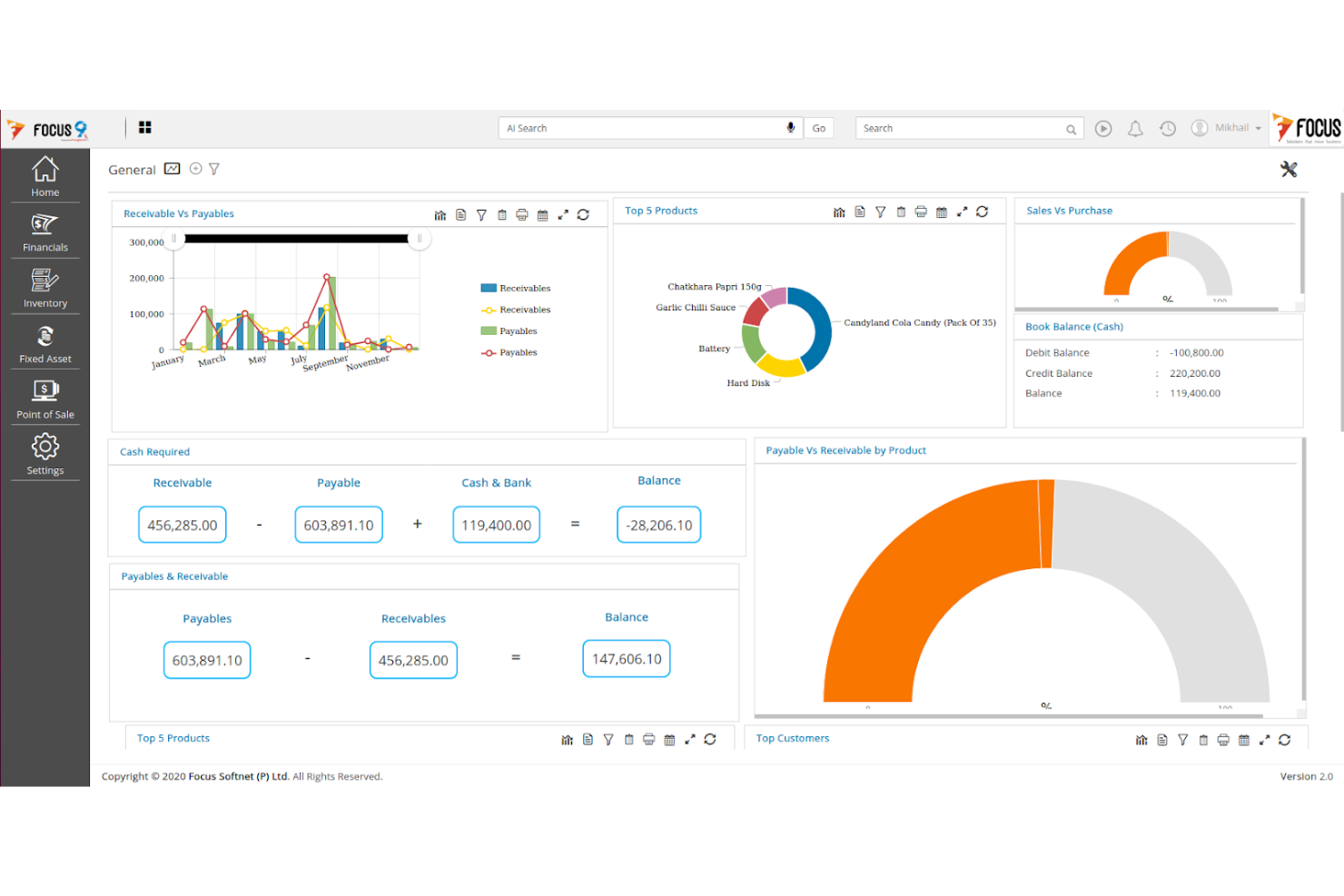
Focus provides ERP solutions tailored for real estate and construction industries. It’s designed to streamline and integrate various business functions, including financial management, manufacturing, sales, inventory, and human capital management.
Why I picked Focus: Focus offers customizable modules specifically designed for real estate companies, enabling efficient progression tracking of sales, leasing, and construction projects while ensuring seamless integration with other business functions. Additionally, its cloud-based and scalable nature ensures it can grow alongside the business, providing a flexible and robust solution for evolving needs.
Standout features & integrations:
Features include AI-driven applications, in-memory computing, industry-ready templates, customizable solutions, cloud hosting, mobile accessibility, advanced financial management, integrated CRM, human resource management, inventory and supply chain management, advanced business intelligence, and several reporting tools.
Integrations include QuickBooks, Tally, SAP, Oracle, Microsoft Dynamics, Salesforce, Zoho CRM, PayPal, Stripe, and Google Analytics.
Pros and Cons
Pros:
- Strong customer support
- User-friendly interface
- Comprehensive real estate management
Cons:
- Lacks advanced customization options
- Limited third-party integrations


NWAY provides cloud-based ERP solutions designed for integrated real estate management. It offers tools for managing property, finances, and other operational aspects, making it a comprehensive business management solution for construction and infrastructure businesses.
Why I picked NWAY: NWAY provides seamless accessibility and real-time data synchronization, enabling businesses to manage operations from any location. This tool stands out due to its unique combination of features that support project management, financial management, and CRM, offering a holistic approach to real estate ERP needs.
Standout features & integrations:
Features include project management, financial management, inventory management, procurement management, human resources management, CRM integration, real-time data synchronization, cloud accessibility, scalability, data security, reporting and analytics, user-friendly interface, mobile compatibility, and document management.
Integrations include Microsoft Office, Google Workspace, Zoho CRM, Salesforce, QuickBooks, Tally, Oracle, SAP, Stripe, and PayPal.
Pros and Cons
Pros:
- User-friendly interface
- Real-time data synchronization
- Industry-specific features
Cons:
- Slow customer support
- Limited mobile app functionality
Other Real Estate ERP Software
Below is a list of additional real estate ERP software that I shortlisted. While they didn’t make the top 10, they’re still valuable and worth further research.
- Openkoda
For rapid application development
- DoFort Real Estate ERP
For real estate management with advanced analytics
- Deskera
For advanced manufacturing features
- Pipedrive
For sales pipeline management
- Chetu
For tailored software development services
- Altrio
For investment management and analytics
- Yardi Investment Suite
For end-to-end investment lifecycle management
- Onyx
For customizable real estate solutions


How I Evaluate Real Estate ERP Software
I look at real estate ERP software in two layers: the baseline requirements—multi-entity GL, CAM reconciliation, and lease billing—and the differentiators that set one platform apart.
Core Functionality (Table Stakes For This List)
When I'm selecting tools for my list, I rank each one on a scale from 0 (does not offer the functionality) to 5 (excels in this area) for each core functionality listed below. Then, I calculate the tool's total score into a percentage. Each tool needs to achieve a minimum total score of 65% to be considered for inclusion.
- Property-Level General Ledger: I evaluate whether the GL supports multi-entity structures with property segmentation, intercompany eliminations, and consolidated reporting across a mixed portfolio.
- Lease & Rent Billing: Each tool should handle escalations, CPI adjustments, and recurring charge schedules that post directly to the GL without manual journal entries.
- AP & Procurement Workflows: I check for property-coded invoice processing, PO matching, and approval routing—especially for teams managing vendor payments across dozens of assets.
- Budgeting & Forecasting Tools: Strong platforms let you build property-level operating budgets, model NOI scenarios, and run variance analysis against actuals during monthly close.
- Investor & Fund Reporting: For fund accountants and portfolio finance teams, I look at capital call tracking, distribution waterfall logic, and investor statement generation.
- CAM & Recovery Calculations: Expense pool configuration, gross-up handling, and year-end true-ups are where real estate ERPs earn or lose trust with commercial property teams.
Once I have a list of tools that meet this criteria, I consider what sets each platform apart.
Differentiating Factors (What Sets Vendors Apart)
Here's how I compare and contrast different vendors:
Standout Features
Embedded BI dashboards matter here—I look for pre-built real estate KPIs like NOI, occupancy, and DSCR with drill-down from portfolio to individual lease without exporting to a separate tool. An investor portal is another key differentiator, especially for fund accountants who need LPs to pull K-1s, capital statements, and distribution notices on their own. For teams managing development or value-add projects, construction job costing with draw management and retainage tracking separates a full real estate ERP from a basic accounting system.
Beyond Features
Integration ecosystem is one of the first things I evaluate. A real estate ERP that connects natively to platforms like CoStar, Stripe, and Power BI saves weeks of reconciliation during quarterly close. Compliance and audit readiness also weigh heavily—I check for built-in ASC 842/IFRS 16 support, SOC reporting, and role-based permissions that satisfy investor due diligence. Scalability matters too. A platform that works for a 50-unit owner but buckles at 2,000 entities signals an architecture problem you'll outgrow fast as your portfolio scales.
How to Choose a Real Estate ERP Software
It’s easy to get bogged down in long feature lists and complex pricing structures. To help you stay focused as you work through your unique software selection process, here’s a checklist of factors to keep in mind:
| Factor | What to Consider |
|---|---|
| Scalability | Will the software grow with your business? Consider future expansion and whether the ERP can handle increased data and users. |
| Integrations | Does it work with your current systems? Look for compatibility with existing tools and ease of data transfer, such as property management software and real estate accounting solutions. |
| Customizability | Can you tailor it to your needs? Check if you can adapt workflows and reports without extensive coding. |
| Ease of use | Is it user-friendly for your team? Evaluate the learning curve and whether training is straightforward and accessible. |
| Implementation and onboarding | How long will it take to get up and running? Assess the time and resources required for setup and initial training. |
| Cost | Is it within your budget? Analyze not just the upfront costs but also ongoing fees and potential hidden charges. |
| Security safeguards | Does it protect your data? Ensure compliance with industry standards and look for features like encryption and regular security audits. |
| Support availability | Will you have help when you need it? Consider the availability and quality of customer support, including response times and support channels. |
Trends for Real Estate ERP Software
Here are some trends I’ve noticed for real estate ERP, plus what they might mean for the future. I sourced countless product updates, press releases, and release logs to tease out the most important insights.
- AI-Driven Communication: AI-driven communication is revolutionizing real estate ERP software by using advanced algorithms to streamline client conversations. This trend enhances professional relationships and ensures that clients are contacted across all touch points.
- Mobile-First Design: Mobile-first design ensures that real estate ERP systems are accessible and functional on smartphones and tablets. This trend is important as it allows real estate professionals to maintain communication and update listings on the go.
- Seamless Integration with Communication Tools: Integration with tools like Slack and Microsoft Teams is becoming standard. This trend simplifies real estate processes by embedding it into daily workflows. It’s significant as it makes buying and selling more seamless and encourages frequent use.
- Real-Time Analytics and Reporting: Real-time analytics provide immediate insights into the performance of a company's processes. This trend helps organizations quickly adjust strategies to maximize efficiency. It’s important for making data-driven decisions and improving overall effectiveness.
What is Real Estate ERP Software?
An enterprise resource planning (ERP) system is an integrated software tool designed to manage and streamline a company's core business processes, including finance, human resources, manufacturing, supply chain, and customer relationship management. When used by real estate professionals, ERPs integrate functions such as property management, lease administration, financial accounting, sales, and customer relationship management into a single platform.
Features of Real Estate ERP Software
When considering the right ERP software, it's important to understand the key features that can significantly improve your business operations. Here are some essential features to look for during your search.
- Property Management: This feature centralizes and streamlines all aspects of managing properties, from tenant communication to maintenance requests. It helps real estate professionals ensure smooth operations and improve tenant satisfaction.
- Financial Management: This feature handles accounting, budgeting, and financial reporting, enabling precise financial tracking and planning.
- Customer Relationship Management (CRM): This feature manages client interactions and tracks sales leads, enhancing client engagement and sales processes. It allows real estate professionals to build stronger relationships and close deals more efficiently.
- Lease Management: This feature tracks lease agreements and renewals, ensuring timely updates and compliance. It helps real estate professionals manage leases efficiently and avoid potential legal issues.
- Project Management: This feature plans, executes, and monitors real estate projects, keeping everything on schedule and within budget. This helps ensure project success and mitigate risks effectively.
- Reporting and Analytics: This feature provides real-time insights and detailed reports on various metrics, helping in data-driven decision-making. With data analytics, real estate professionals can analyze performance and make informed strategic decisions.
- Document Management: This feature organizes and stores important documents securely, ensuring easy access and retrieval. It helps real estate professionals maintain organized records and improve operational efficiency.
- Workflow Automation: This feature automates routine tasks to improve efficiency, reducing manual work and the chance of errors while increasing productivity.
- Integration Capabilities: This feature connects seamlessly with other software and tools, creating a unified system for better data flow and operational synergy. It helps real estate professionals streamline processes and enhance overall efficiency.
- Mobile Access: This feature allows management of operations from anywhere using mobile devices, providing flexibility and convenience.
Benefits of Real Estate ERP Software
Real estate ERP software solutions offer several advantages that can transform how businesses operate. Here are some of the benefits you may experience with real estate ERP software.
- Improved Efficiency: By streamlining and automating routine tasks, real estate professionals can free up valuable time for more strategic activities. This efficiency boost allows them to focus on growth and client relations rather than administrative duties.
- Enhanced Financial Management: Accurate financial tracking and reporting provided by ERP systems help real estate businesses maintain better control over their finances. This improved financial oversight ensures more effective budgeting and financial planning.
- Better Customer Relations: Managing customer interactions effectively through an ERP system leads to improved client satisfaction and retention. Enhanced customer service capabilities allow real estate professionals to build stronger, more loyal client relationships.
- Real-Time Insights: Real-time data analytics and reporting enable real estate professionals to make informed decisions quickly. Access to up-to-date information — from your ERP and other systems connected through the cloud — supports better strategic planning, asset management, and operational adjustments.
- Scalability: ERP systems support business growth by easily accommodating increased data and expanding operations. This scalability ensures that real estate businesses can grow seamlessly without outgrowing their management tools.
Costs & Pricing of Real Estate ERP Software
Selecting real estate ERP software requires an understanding of the various pricing models and plans available. Costs vary based on features, team size, add-ons, and more. The table below summarizes common plans, their average prices, and typical features included in real estate ERP software solutions:
Plan Comparison Table for Real Estate ERP Software
| Plan Type | Average Price | Common Features |
|---|---|---|
| Free Plan | $0 | Basic listing management, limited user support, and basic reporting. |
| Personal Plan | $10-$30/user/month | Property tracking, email integration, and basic customer management. |
| Business Plan | $50-$100/user/month | Advanced reporting, team collaboration tools, and third-party integrations. |
| Enterprise Plan | Custom pricing | Custom workflows, advanced security features, and dedicated account management. |
Real Estate ERP Software FAQs
Here are some frequently asked question I’ve received about real estate ERP software.
Is real estate ERP software customizable to my business needs?
Many real estate ERP solutions offer customization options to tailor functionalities like workflows, reporting formats, and user interfaces to specific business requirements. This flexibility ensures that the software can adapt as your business evolves.
How can real estate ERP software help with compliance and regulatory requirements?
Real estate ERP software often includes features that assist with compliance management, such as ensuring lease agreements meet regulatory standards, maintaining financial transparency for audits, and generating reports that comply with local and national regulations.
Can real estate ERP software integrate with other business applications?
Yes, most modern real estate ERP systems offer integration capabilities with other commonly used business applications such as accounting software, CRM systems, marketing tools, and even IoT devices for smart building management.
What are the typical challenges of implementing real estate ERP software?
Challenges may include data migration from legacy systems, training employees to use new software effectively, ensuring buy-in from stakeholders for the implementation process, and managing potential disruptions during the transition period.
How can real estate ERP software improve decision-making processes?
By providing real-time data and analytics, real estate ERP software enables informed decision-making regarding property investments, tenant management, financial forecasting, and resource allocation. This capability helps businesses optimize their operations and seize opportunities swiftly.
What’s Next?
If you're in the process of researching real estate ERP software, connect with a SoftwareSelect advisor for free recommendations.
You fill out a form and have a quick chat where they get into the specifics of your needs. Then you'll get a shortlist of software to review. They'll even support you through the entire buying process, including price negotiations.