

Cloudbeds Review: Pros, Cons, Features, and Pricing


Cloudbeds is an accounting software that streamlines operations, bookings, and financial management for the hospitality industry. It's ideal for hotel managers and property owners who need to manage bookings, generate financial reports, and optimize owner statements across independent properties, boutique hotels, hostels, and vacation rentals.
Cloudbeds addresses common pain points such as fragmented booking data, overbookings, manual processes, and disconnected hotel tech stacks, benefiting hotel management teams and property owners. In this article, I'll cover Cloudbeds's features, pros and cons, use cases, pricing, and more, so you can decide if this cloud-based property management system aligns with your financial management goals.
Cloudbeds Evaluation Summary

- Pricing upon request
- Free demo available
Why Trust Our Software Reviews
Cloudbeds Overview
From my perspective, Cloudbeds is a high-quality accounting software, especially suited for hospitality businesses that use hotel management systems. It offers a strong set of core features and integrates well with other systems, which can be a significant benefit for streamlining operations through automation and real-time functionality. Users report that it excels in ease of use and offers great value for money. Cloudbeds stands out with its specialized hotel management modules and property management system tools, but it might not be the best fit for businesses outside the hospitality sector. If your team values user-friendly interfaces and robust support, Cloudbeds deserves consideration.
pros
-
Extensive reporting features help you analyze your property's performance.
-
Track guest interactions and preferences effectively.
-
Easily manage reservations and bookings from a single dashboard.
cons
-
Customer support response time could be slower than expected.
-
Occasional syncing issues with third-party tools.
-
Setup can be a bit complex and time-consuming.
Is Cloudbeds Right For Your Needs?
Who Would be a Good Fit for Cloudbeds?
Cloudbeds suits small to medium-sized hospitality businesses like hotels, hostels, and vacation rentals. If you're managing multiple properties, Cloudbeds' centralized platform makes it easy to track reservations, finances, inventory management, and guest information. Its user-friendly interface and integration with booking engines like Expedia save you time and effort. For your team, this means less manual data entry and more focus on improving guest experiences like the all-important check-in process.
-
Small Hotels
Cloudbeds simplifies operations by integrating reservations, guest management, housekeeping, payment processing, direct bookings, and accounting, acting as a virtual front desk.
-
Hostels
Manage dorms, private rooms, and different room types effortlessly with Cloudbeds' flexible setup and booking management.
-
Vacation Rentals
Easily sync bookings from multiple booking channels using the channel manager, reducing double bookings and enhancing guest communication.
-
Bed and Breakfasts
Use Cloudbeds to handle direct bookings and payments through its booking engine and payment gateway, making it a game-changer for your guest experience and operational efficiency.
-
Boutique Hotels
Streamline your unique offerings with Cloudbeds' customizable modules, automation features, and excellent booking integrations.
-
Multi-Property Management
Cloudbeds allows you to manage several independent properties from a single dashboard, saving you time and reducing errors with real-time updates.
Who Would be a Bad Fit for Cloudbeds?
Cloudbeds might not be ideal for large corporations, whether in the hospitality industry or not, that need extensive financial features or detailed budgeting capabilities. If your work requires complex integrations with existing systems or a high degree of customization, Cloudbeds may fall short. Its lack of advanced financial-related features like detailed budgets and expenses can be a significant drawback for those in industries that demand deeper financial tracking.
-
Large Corporations
Cloudbeds might lack the advanced functionality large corporations require for detailed budgeting.
-
Financial Services
If your team needs thorough financial tracking and reporting, Cloudbeds may not meet your needs.
-
Manufacturing
Without robust expense tracking, the Cloudbeds system isn't suited for industries like manufacturing that require detailed cost analysis.
-
Retail Chains
Retail businesses needing complex inventory and financial management might find Cloudbeds lacking.
-
Construction Firms
For firms requiring job costing and detailed budget management, Cloudbeds will not provide the necessary tools, as it is a hotel management software.
-
Global Enterprises
If your company operates internationally, Cloudbeds's limited financial features will need to show more in terms of supporting multi-currency requirements and detailed compliance needs.
How We Test & Score Tools
We’ve spent years building, refining, and improving our software testing and scoring system. The rubric is designed to capture the nuances of software selection and what makes a tool effective, focusing on critical aspects of the decision-making process.
Below, you can see exactly how our testing and scoring works across seven criteria. It allows us to provide an unbiased evaluation of the software based on core functionality, standout features, ease of use, onboarding, customer support, integrations, customer reviews, and value for money.
Core Functionality (25% of final scoring)
The starting point of our evaluation is always the core functionality of the tool. Does it have the basic features and functions that a user would expect to see? Are any of those core features locked to higher-tiered pricing plans? At its core, we expect a tool to stand up against the baseline capabilities of its competitors.
Standout Features (25% of final scoring)
Next, we evaluate uncommon standout features that go above and beyond the core functionality typically found in tools of its kind. A high score reflects specialized or unique features that make the product faster, more efficient, or offer additional value to the user.
We also evaluate how easy it is to integrate with other tools typically found in the tech stack to expand the functionality and utility of the software. Tools offering plentiful native integrations, 3rd party connections, and API access to build custom integrations score best.
Ease of Use (10% of final scoring)
We consider how quick and easy it is to execute the tasks defined in the core functionality using the tool. High scoring software is well designed, intuitive to use, offers mobile apps, provides templates, and makes relatively complex tasks seem simple.
Onboarding (10% of final scoring)
We know how important rapid team adoption is for a new platform, so we evaluate how easy it is to learn and use a tool with minimal training. We evaluate how quickly a team member can get set up and start using the tool with no experience. High scoring solutions indicate little or no support is required.
Customer Support (10% of final scoring)
We review how quick and easy it is to get unstuck and find help by phone, live chat, or knowledge base. Tools and companies that provide real-time support score best, while chatbots score worst.
Customer Reviews (10% of final scoring)
Beyond our own testing and evaluation, we consider the net promoter score from current and past customers. We review their likelihood, given the option, to choose the tool again for the core functionality. A high scoring software reflects a high net promoter score from current or past customers.
Value for Money (10% of final scoring)
Lastly, in consideration of all the other criteria, we review the average price of entry level plans against the core features and consider the value of the other evaluation criteria. Software that delivers more, for less, will score higher.
Core Features
Invoicing: Cloudbeds allows you to generate invoices quickly and send them directly to your clients. You can customize the templates to fit your brand, making it easy for your team to maintain a professional image across all modules.
Expense Tracking: This feature lets you record and categorize expenses, helping you keep tabs on your spending. It simplifies reconciling your accounts and supports hotel management processes.
Financial Reporting: On Cloudbeds.com, you can create detailed financial reports to optimize your hotel operations.
Bank Reconciliation: This tool matches your bank statements with internal Cloudbeds PMS records.
Multi-Currency Support: Cloudbeds supports transactions in multiple currencies and works with most payment processors.
Tax Management: Cloudbeds automates tax calculations and helps maintain compliance in running your hospitality platform.

Standout Features
Reservation Management: Cloudbeds excels in managing reservations with its intuitive calendar interface. This feature allows you to view and manage bookings in real time, ensuring you never double-book or miss a reservation.
Revenue Management: The platform offers tools to optimize your pricing strategy based on demand and occupancy trends. This helps you maximize revenue by adjusting rates dynamically, ensuring your business remains competitive.
Ease of Use
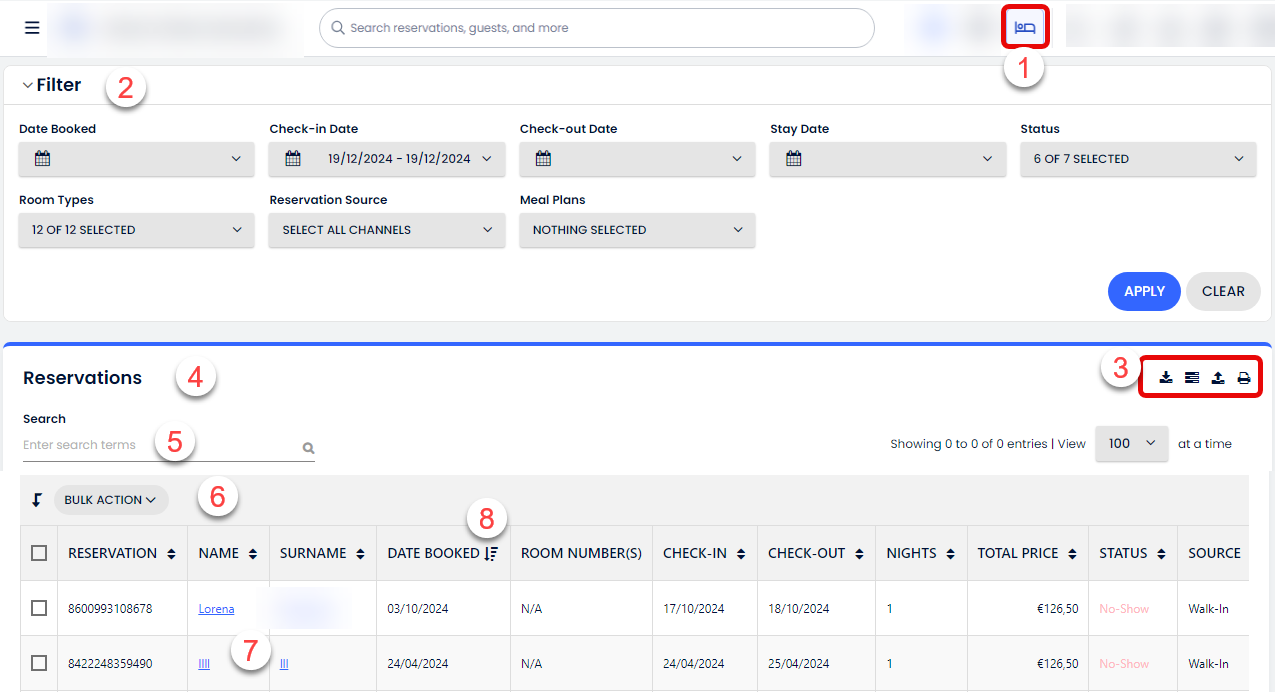
Cloudbeds is user-friendly, offering a straightforward interface that minimizes the size of the learning curve. Users appreciate the intuitive navigation, which makes it easy to manage accounting tasks without needing extensive training. However, some users find the abundance of features slightly overwhelming at first. Despite this, once you get familiar with its layout, your team can efficiently handle financial operations. The platform's design facilitates quick access to key functionalities, making it a reliable tool for your hospitality accounting needs.

Onboarding
Cloudbeds offers a user-friendly onboarding experience that quickly helps you get up to speed. The platform provides clear, step-by-step guidance and accessible support resources. User reviews indicate that customers appreciate the interactive tutorials and prompt customer support, which make it easy to navigate the system and find answers to questions. Compared to other software, Cloudbeds ensures you can start managing tasks efficiently without unnecessary delays, making it a preferred choice for many users looking for straightforward onboarding.

Customer Support
Cloudbeds offers prompt customer support, with user reviews reporting typically good response times. Users appreciate the thorough troubleshooting assistance provided via chat, email, and a contactable phone number. The support team is accommodating and effective, which can be a relief when you encounter issues. If your team values quick and reliable help, Cloudbeds' customer service should meet your expectations.
Integrations
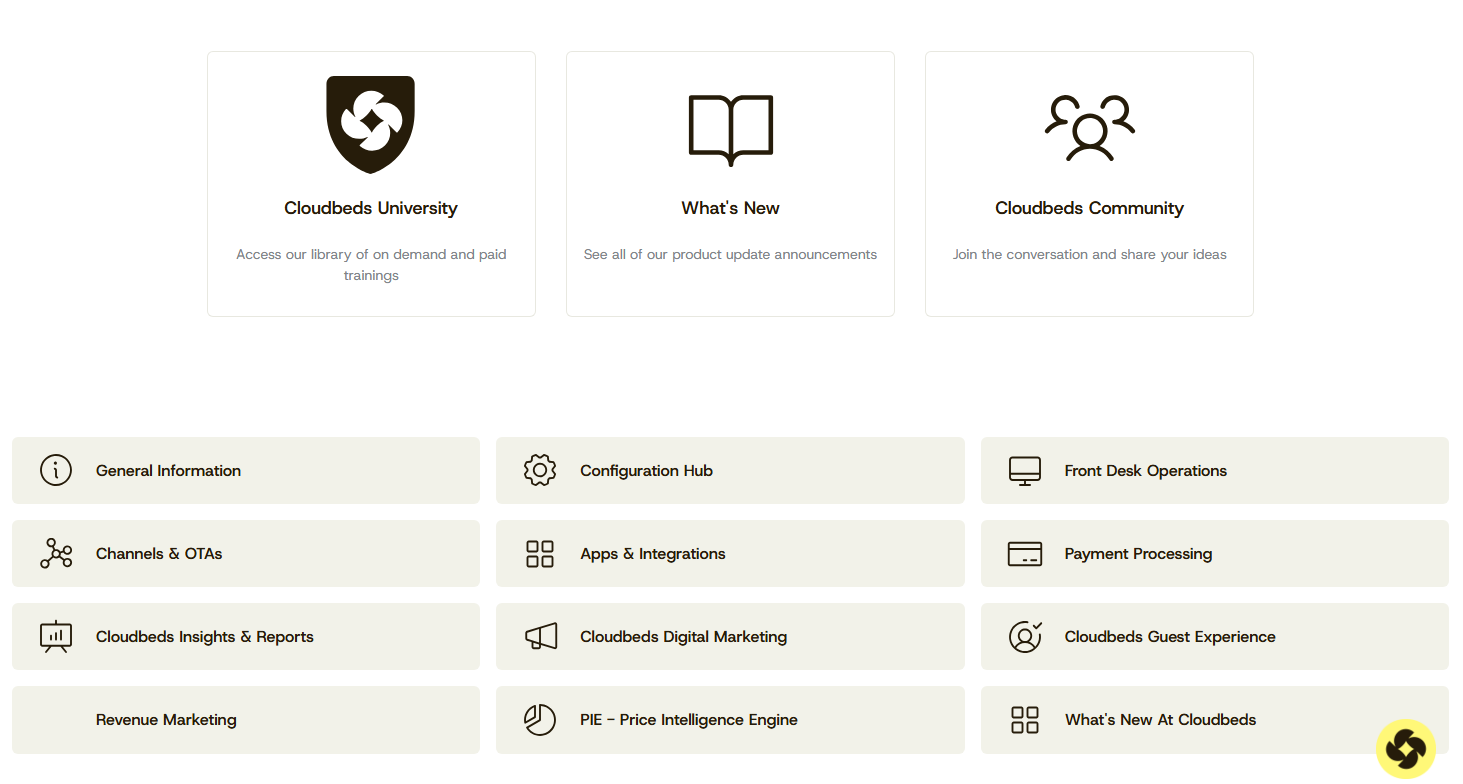
Cloudbeds supports integrations with booking channels and payment processing providers, helping hoteliers streamline workflows and improve the guest experience. The software integrates with popular tools such as Stripe, Oracle NetSuite, Sabre, Operto, Lighthouse, Amadeus, and SiteMinder.
Cloudbeds also offers an API for custom integrations and connects with third-party integration tools.

Value for Money
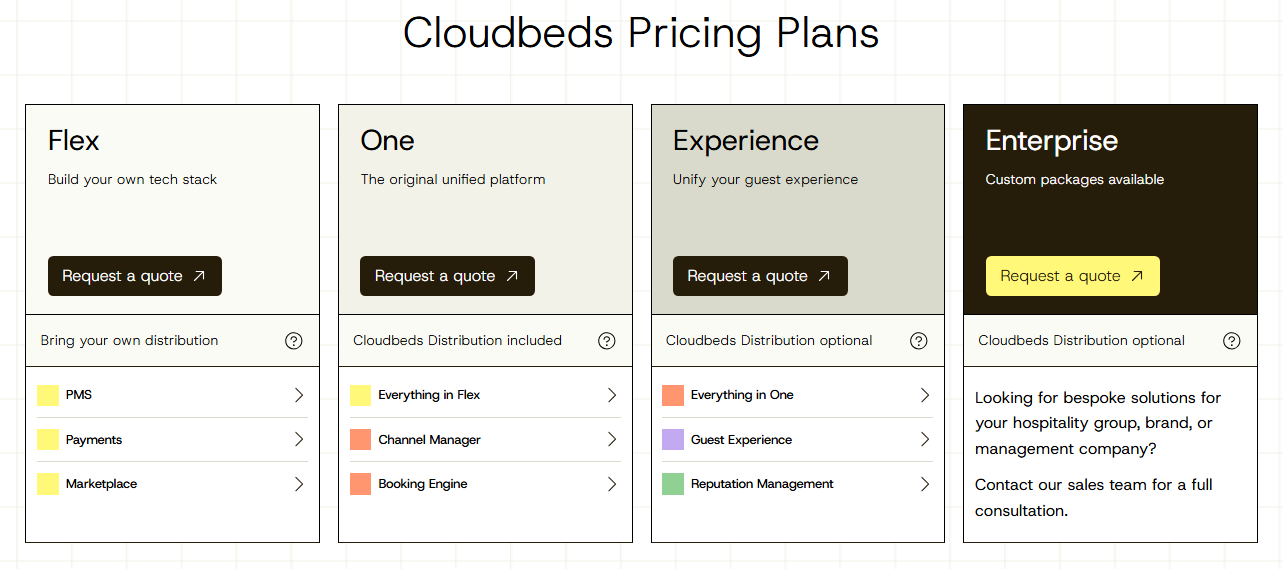
Cloudbeds offers a fair pricing model, aligning well with its features and user needs. Users appreciate its tiered pricing structure, which reflects the level of service and support provided. The plans cater to different business sizes, ensuring flexibility and scalability. A free trial is available, which is beneficial for teams wanting to test the platform before committing. The company does not publicize its pricing and invites would-be customers to contact them for a quote.
Cloudbeds Specs
- API
- Budgeting
- Calendar Management
- Compliance Tracking
- Contact Management
- Customer Management
- Dashboard
- Data Export
- Data Import
- Data Visualization
- Document Management
- Expense Tracking
- External Integrations
- Forecasting
- Inventory Tracking
- Multi-Currency
- Multi-User
- Notifications
- Organization Management
- Payment Processor
- Payroll
- Scheduling
- Supplier Management
- Tax Management
- Workflow Management
Cloudbeds FAQs
How secure is Cloudbeds with data protection?
Can Cloudbeds handle multiple currencies?
Does Cloudbeds offer automated reporting?
How does Cloudbeds support tax compliance?
Is Cloudbeds suitable for small businesses?
What support options are available with Cloudbeds?
Can Cloudbeds integrate with existing systems?
How customizable is Cloudbeds for unique business needs?
Cloudbeds Company Overview & History
Cloudbeds, founded in 2012, is headquartered in San Diego, California. The company has grown to employ over 700 people, including a substantial team of engineers and sales representatives. Known for its cloud-based hospitality management platform, Cloudbeds serves over 27,000 customers across over 150 countries. The company reported revenue of $84.8 million in 2024.
Cloudbeds Major Milestones
- 2012: Founded by Adam Harris and Richard Castle, and began operations.
- 2018: Reportedly reached $10 million in revenue.
- 2022: Acquired Whistle, a leading guest messaging solution
- 2024: Reportedly achieved revenue of $84.8 million, marking a significant year-over-year growth.