

The best TriNet alternatives give you a reliable accounting software solution with built-in payroll, easy reporting, and strong compliance for small businesses. If you’re searching for solutions that do more than TriNet—or want better integration, friendlier pricing, or improved support—this guide is for you. You need a system that keeps your books accurate, comes through during close, and handles payroll no matter how fast your business grows. Below, you’ll find expert-vetted platforms that go beyond TriNet’s basics, so you can confidently choose a smarter way to manage both payroll and accounting.
What Is TriNet?
TriNet is an all-in-one human resources, payroll, and benefits platform designed for small and midsize businesses. It centralizes HR management, automates payroll, and simplifies compliance tasks. TriNet also provides access to employee benefits and HR expertise, making it easier for businesses to manage their workforce. Companies use TriNet to reduce manual HR work, stay compliant with labor laws, and offer competitive benefits packages without needing large in-house HR teams.
TriNet Alternatives Comparison Table
This comparison table highlights pricing details for my top TriNet alternatives.
| Tool | Best For | Trial Info | Price | ||
|---|---|---|---|---|---|
| 1 | Best for US and global payroll under one plan | Free demo available | From $599/user/month | Website | |
| 2 | Best for hands-on HR outsourcing services | Not available | Pricing upon request | Website | |
| 3 | Best for intuitive payroll setup | Free demo available | From $49/month + $6/month/user | Website | |
| 4 | Best for benefits administration | Not available | From $599/employee/month | Website | |
| 5 | Best for collaborative payroll and HR tools | Free demo available | Pricing upon request | Website | |
| 6 | Best for automated workforce management | Free demo available | Pricing upon request | Website | |
| 7 | Best for hiring international employees | Free demo available | From $699/user/month | Website | |
| 8 | Best for integrated HR and tax support | Free demo available | Pricing upon request | Website | |
| 9 | Best for scalable HR support for small teams | Free demo available | Pricing upon request | Website | |
| 10 | Best for multi-country payroll in one platform | Free demo available | From $499/user/month | Website |


Why Trust Our Software Recommendations
6,700+
Reviews
20
Industry experts
16+
Evaluation factors
14
Years
Our team has been testing and reviewing software since 2012. As finance leaders ourselves, we know how difficult—and important—it is to choose the right software.
For this guide, we evaluated tools using hands-on testing and independent research, scoring tools using our selection criteria.
Our reviews reflect our human editorial judgment, not a sales pitch.
Best TriNet Alternatives Reviews
Below are my detailed summaries of the best TriNet alternatives that made it onto my shortlist. My reviews offer a detailed look at the features, pricing, and best use cases of each platform to help you find the best one for you.
 Best for US and global payroll under one plan
- Free demo available
- From $599/user/month
Visit WebsiteCustomer Rating:4.9/5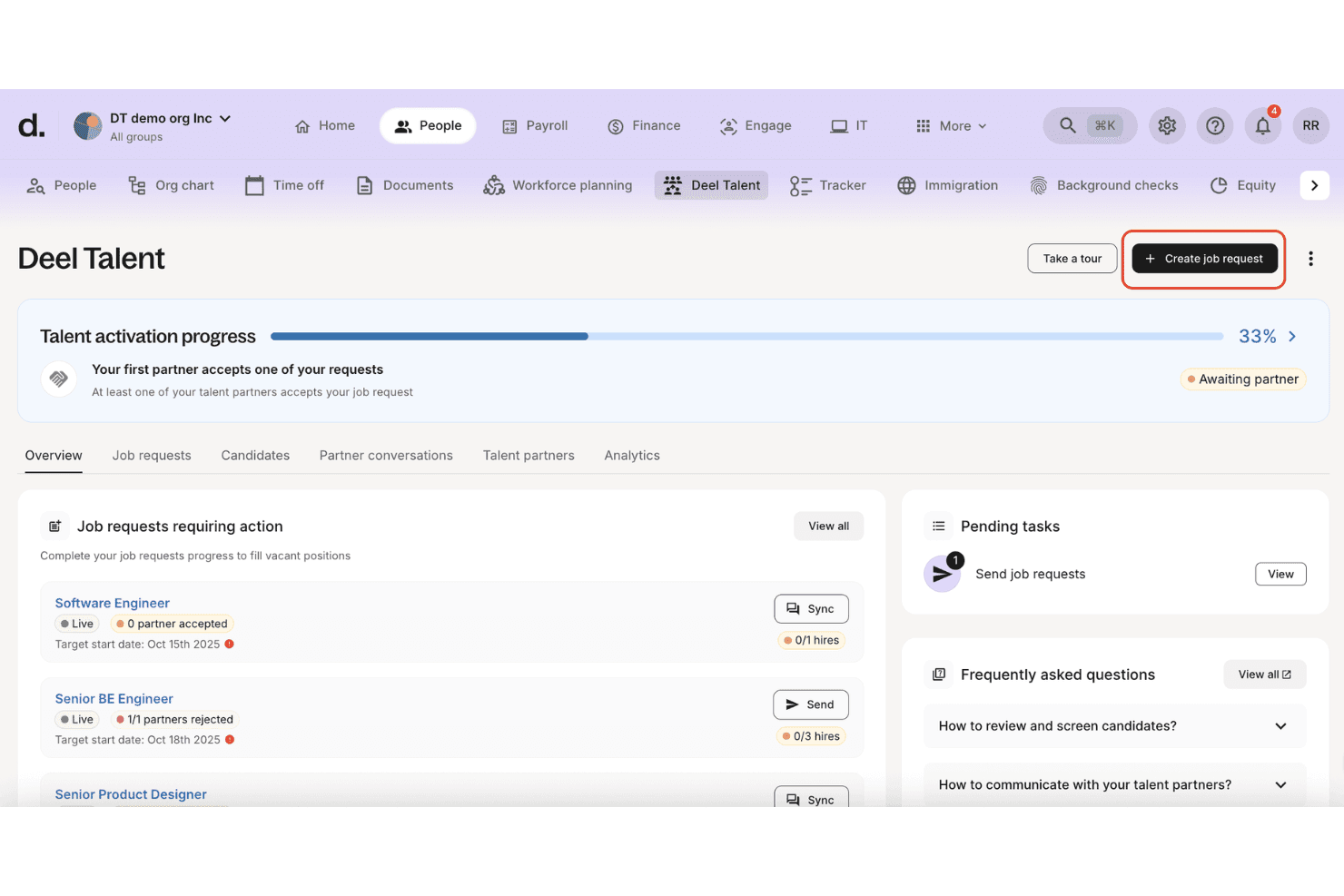
Deel Hire lets users manage job requests and track hiring progress in one place. Deel Hire is a global hiring and payroll platform for finance and HR teams that need to onboard workers, manage payments, and support compliant employment across multiple countries.
Who Is Deel Hire Best For?
Deel Hire suits finance and HR teams managing US and international payroll through one platform.
Why Deel Hire Is a Good Best Trinet Alternatives
I picked Deel Hire because my team can manage US and international payroll under one plan. We use its employee onboarding, payroll processing, and worker payment tools when expanding across countries. Its compliance support also helps coordinate country-specific employment requirements and payroll obligations.
Deel Hire Key Features
- Automated tax filings: Calculates and files payroll taxes for eligible employees.
- Payslip generation: Creates digital payslips employees can access online.
- Expense reimbursements: Lets employees submit and track reimbursable business expenses.
- Time-off tracking: Records employee leave requests and available balances.
Deel Hire Integrations
Deel offers marketplace integrations with QuickBooks, Xero, NetSuite, BambooHR, HiBob, Personio, Greenhouse, Slack, Google Workspace, and Hubstaff, and connects with Zapier. Deel also provides an API for custom integrations.
Pros and Cons
Pros:
- Provides compliant employment support internationally
- Automates employee onboarding and tax filings
- Supports payroll across multiple countries
Cons:
- Payment corrections may require manual follow-up
- Customer support responses can take time
Learn more about Deel Hire: Best for hands-on HR outsourcing services
- Not available
- Pricing upon request
Visit WebsiteCustomer Rating:3.8/5
Insperity offers a dashboard with hiring metric, job status, and client insight. Insperity is a professional employer organization (PEO) that gives small and mid-sized businesses access to dedicated HR support, payroll processing, and employee benefits administration without building an in-house HR team.
Who Is Insperity Best For?
Insperity is a strong fit for small to mid-sized businesses that want to offload day-to-day HR responsibilities to a dedicated team of specialists.
Why Insperity Is a Good TriNet Alternative
I've included Insperity on this list because of how genuinely hands-on its HR support model is. Unlike platforms where HR help means a chatbot or a ticketing queue, Insperity assigns you a dedicated HR specialist who works directly with your team. I also appreciate that Insperity bundles employment practices liability insurance (EPLI) into its PEO service, which is a real differentiator for small businesses managing compliance exposure without a legal team on staff.
Insperity Key Features
- Payroll processing: Runs payroll and handles direct deposits, tax withholdings, and pay stub delivery through the Insperity platform.
- Talent management and acquisition support: Provides recruiting assistance, including job posting, candidate screening, and offer letter management.
- Employee self-service portal: Lets employees access pay history, benefits elections, and personal information directly, without routing requests through your HR team.
- Performance management tools: Supports goal setting, performance reviews, and employee development tracking across your workforce.
Insperity Integrations
Insperity offers native integrations with platforms like NetSuite, QuickBooks, and SAP, as well as Workday, ConnectWise, and Finch. An API is available for custom integrations, along with pre-built connectors and SFTP-based file feeds for teams that need flexible data exchange without custom development.
Pros and Cons
Pros:
- Offers both PEO and HRO models
- Local offices offer in-person customer support
- Negotiates group benefits rates for small teams
Cons:
- Platform technology lags behind competitors
- No support for international payroll
Learn more about Insperity: Best for intuitive payroll setup
- Free demo available
- From $49/month + $6/month/user
Visit WebsiteCustomer Rating:4.6/5
Gusto offers an employee scheduling interface with weekly shift planning. Gusto is a US-focused payroll and HR platform built for small businesses that need to run payroll, file taxes, and manage employee benefits without a dedicated HR or finance team.
Who Is Gusto Best For?
Gusto is a strong fit for US-based small business owners who manage payroll and benefits themselves without a dedicated HR or finance team.
Why Gusto Is a Good TriNet Alternative
I've included Gusto in my top picks because its guided payroll setup walks you through each configuration step, from pay schedules to state tax registrations, without requiring prior payroll knowledge. I appreciate how Gusto auto-populates federal and state tax forms and files them on your behalf each pay period. Its employee self-onboarding tool lets new hires enter their own W-4 and direct deposit details directly, which cuts setup time on the admin side considerably.
Gusto Key Features
- Benefits administration: Manage health insurance, dental, vision, and 401(k) enrollment directly within Gusto, with carrier connections handled on your behalf.
- Time and attendance tracking: Employees clock in and out through Gusto's built-in time tools, with hours syncing automatically to payroll.
- Contractor payments: Pay domestic and international contractors through Gusto and generate 1099s at year-end.
- PTO tracking: Set custom PTO, sick, and vacation policies that accrue automatically and reflect on employee pay stubs.
Gusto Integrations
Gusto offers 150+ integrations through its App Directory, including QuickBooks, Xero, FreshBooks, Slack, Asana, 7shifts, 15Five, Checkr, Guideline, and Box. It's available on Zapier.
Pros and Cons
Pros:
- Built-in employee self-onboarding portal
- Automated federal, state, and local tax filing
- Unlimited payroll runs on every plan
Cons:
- Primarily US-focused
- Costs grow with each extra feature
 Best for benefits administration
- Not available
- From $599/employee/month
Visit WebsiteCustomer Rating:4.6/5
Justworks offers an HR dashboard with payments, requests, and employee insights. Justworks is a small business HR software that handles payroll, benefits, compliance, and international hiring in one place—a practical fit for growing teams that need enterprise-level benefits access without the overhead of a large HR department.
Who Is Justworks Best For?
Justworks is a strong fit for small businesses and startups that want access to large-group benefits without the complexity of managing HR in-house.
Why Justworks Is a Good TriNet Alternative
I've included Justworks in my top picks because of how it handles benefits administration for small businesses. Through its PEO Plus plan, your team gets access to medical, dental, vision, 401(k), and wellness perks like One Medical and Talkspace, which are typically reserved for larger companies. I also appreciate that Justworks passes payroll tax savings back to you when employees pay pre-tax health premiums, rather than keeping that margin. On top of that, it handles COBRA, ACA, HIPAA, and state compliance behind the scenes.
Justworks Key Features
- Automated payroll processing: Run scheduled payroll or one-off payments like bonuses and commissions, with direct deposits and tax filings handled across all 50 states.
- Online employee onboarding and offboarding: Manage the full employee lifecycle digitally, from collecting new hire documents to processing departures.
- Time tracking: Track hours across your team with timesheets that sync directly to payroll data.
- Integrated platform reporting: Pull HR and payroll data into built-in reports to make informed decisions about headcount and compensation.
Justworks Integrations
Justworks offers native integrations with QuickBooks, Xero, NetSuite, Sage Intacct, Greenhouse Recruiting, JazzHR, Lever, Carta, Brex, and Ramp, along with additional integrations for tools like 15Five, Culture Amp, Leapsome, Trainual, Vanta, Electric AI, and allwhere. Justworks also has a Partner API available for custom integrations.
Pros and Cons
Pros:
- Wellness perks like Peloton and mental health
- Contractor payments included in all plans
- Low employee minimum for benefits eligibility
Cons:
- Reporting lacks depth for detailed analysis
- No built-in performance management tools
Learn more about Justworks: Best for collaborative payroll and HR tools
- Free demo available
- Pricing upon request
Visit WebsiteCustomer Rating:4.3/5
Paylocity offers a compensation dashboard with analysis and employee insights. Paylocity is a cloud-based HR and payroll platform built for growing businesses that want to move beyond basic compliance tools and give employees a more connected, self-service experience across payroll, benefits, and performance.
Who Is Paylocity Best For?
Paylocity suits HR and payroll teams at mid-market companies who need built-in collaboration and communication tools alongside core HR functions.
Why Paylocity Is a Good TriNet Alternative
I've included Paylocity in my top picks because I love how it approaches payroll as a collaborative, team-driven process rather than a back-office task handled by one person. The Payroll Readiness Dashboard lets the whole payroll team see outstanding tasks before processing day, while 40+ built-in audits flag issues like unexpected pay spikes so errors get caught early. I also appreciate that hours and labor allocations flow directly from Time & Labor into payroll, which cuts out the manual data handoffs that tend to create problems when your team is spread across multiple states or locations.
Paylocity Key Features
- Benefits administration: Manage open enrollment, life events, and carrier connections directly within the platform.
- Employee self-service portal: Employees can view pay stubs, update personal info, and manage benefits without HR involvement.
- Performance review tools: Build and run structured review cycles with goal tracking and peer feedback built in.
- Learning management system: Assign, track, and report on employee training courses from within the Paylocity platform.
Paylocity Integrations
Paylocity offers hundreds of integrations across HR, payroll, benefits, accounting, time tracking, and other systems through its Integrations Marketplace, including Microsoft 365, Sage Intacct, 15Five, and more.
Pros and Cons
Pros:
- Geofencing and automated accruals for time tracking
- Recruiting, HR, payroll, and reporting in one platform
- Automated tax filing and configurable pay rules
Cons:
- Report builder trails category averages
- Frequent unannounced platform changes
Learn more about Paylocity: Best for automated workforce management
- Free demo available
- Pricing upon request
Visit WebsiteCustomer Rating:4.9/5
Rippling offers an HR analytics dashboard with workforce and hiring insights. Rippling is a workforce management platform that unifies HR, payroll, IT, and finance in one system, making it a strong fit for growing businesses that need to automate how employee data flows across departments.
Who Is Rippling Best For?
Rippling is a strong fit for mid-sized businesses that manage employees across multiple states or countries and need HR, payroll, and IT to stay in sync automatically.
Why Rippling Is a Good TriNet Alternative
I've included Rippling on this list because its trigger-based workflow automation is genuinely unlike what most HR platforms offer. When you onboard a new hire, Rippling can automatically run payroll updates, provision software access, and enroll the employee in benefits without any manual steps in between. I also appreciate that Rippling handles global payroll natively, so teams with employees in multiple countries don't need a separate system to manage it.
Rippling Key Features
- PEO services: Rippling offers a co-employment model that lets small businesses access enterprise-level benefits and offload employer tax filings.
- Time and attendance tracking: Employees can clock in and out through the Rippling app, with hours syncing directly to payroll.
- Expense management: Submit, approve, and reimburse employee expenses within the same platform used for payroll and HR.
- Headcount planning: Build org charts and model hiring scenarios with real-time employee data tied to your current workforce structure.
Rippling Integrations
Rippling offers 600+ integrations through its App Shop, including QuickBooks Online, Xero, NetSuite, Sage Intacct, Slack, Google Workspace, Microsoft 365, Salesforce, Zoom, and Carta. An API is available for custom integrations, and Rippling also supports SSO and automated user provisioning across connected apps.
Pros and Cons
Pros:
- Supports global payroll in 185+ countries
- Automates onboarding across departments
- Unifies HR, payroll, IT, and finance data
Cons:
- Payroll tax filing errors reported by users
- Modular pricing adds up quickly
 Best for hiring international employees
- Free demo available
- From $699/user/month
Visit WebsiteCustomer Rating:4.6/5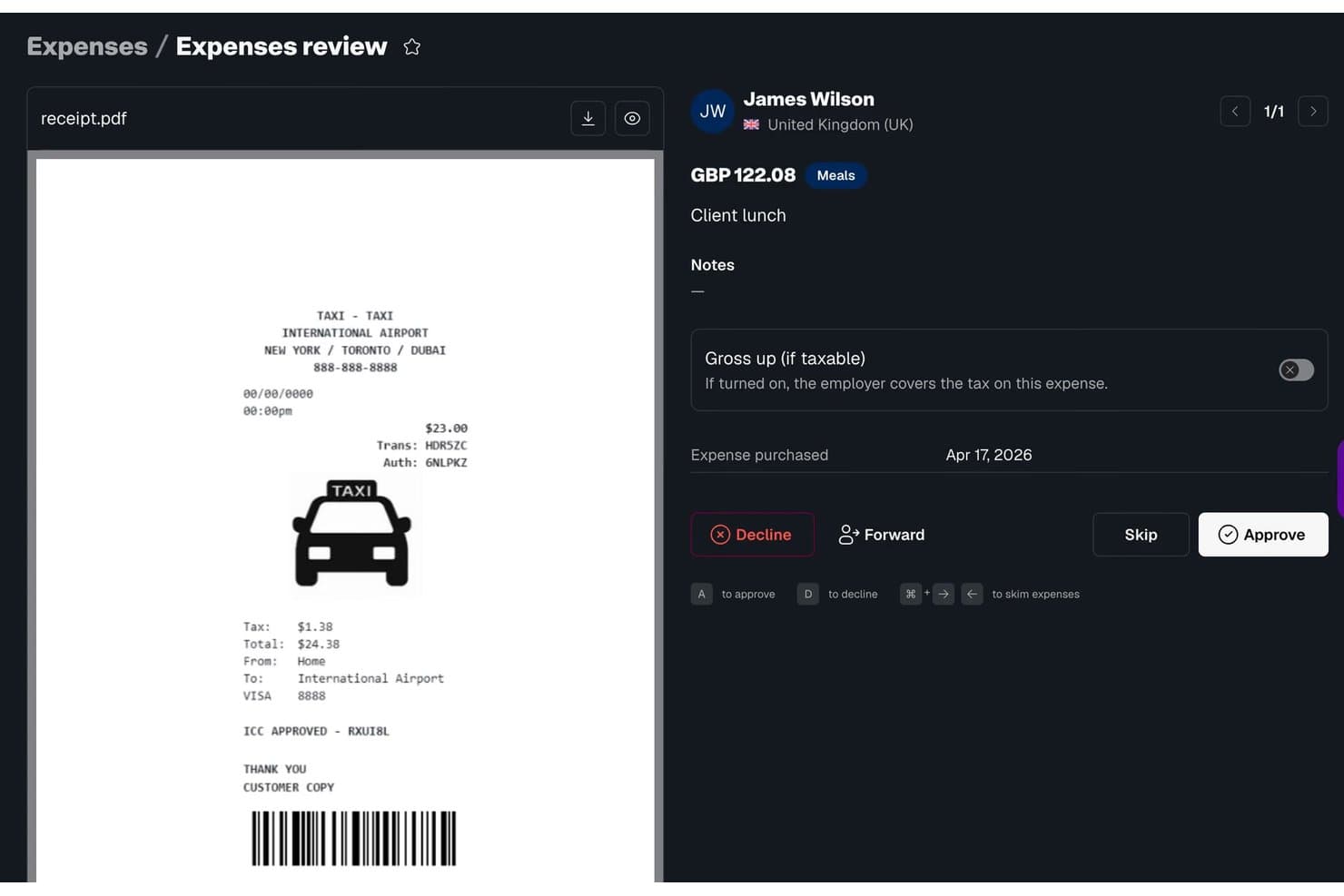
Remote lets managers review and approve employee expense submissions. Remote is an employer of record platform that lets businesses hire, pay, and manage full-time employees and contractors across international markets without setting up local legal entities.
Who Is Remote Best For?
Remote is a strong fit for growing companies that are expanding their workforce across multiple countries and need compliant employment infrastructure in place.
Why Remote Is a Good TriNet Alternative
I've included Remote in my top picks because it owns its legal entities in every country it operates in, which means your international hires are covered by locally compliant employment contracts without involving a third-party intermediary. I appreciate how Remote generates country-specific contracts, handles local tax withholding, and manages statutory benefits automatically. Its global payroll runs in local currencies, so your team members abroad get paid correctly without manual currency conversion on your end.
Remote Key Features
- Contractor management: Onboard, pay, and generate compliant contracts for international contractors from a single dashboard.
- Time off management: Set and enforce local leave policies for each country, with employee requests and approvals tracked in the platform.
- Expense management: Employees can submit expense claims directly in Remote, with approvals and reimbursements processed through payroll.
- HR document management: Store employment contracts, tax forms, and compliance documents for each employee in a centralized, country-specific record.
Remote Integrations
Remote offers native integrations with BambooHR, HiBob, Greenhouse, Slack, and Personio. An API is available for custom integrations.
Pros and Cons
Pros:
- Pays employees in local currencies automatically
- Built-in contractor misclassification risk tools
- Owns legal entities in 80+ countries
Cons:
- Support quality can vary across country teams
- Reporting lacks depth for finance teams
Learn more about Remote: Best for integrated HR and tax support
- Free demo available
- Pricing upon request
Visit WebsiteCustomer Rating:4.2/5
Paychex offers a payroll dashboard with HR, reporting, and employee insights. Paychex Flex is a cloud-based platform that brings payroll, HR, and benefits administration together, making it a practical fit for businesses that need to manage tax compliance, employee onboarding, and workforce reporting without juggling separate tools.
Who Is Paychex Best For?
Paychex Flex is a strong fit for small to mid-sized businesses that need payroll, HR, and tax compliance managed under one roof.
Why Paychex Is a Good TriNet Alternative
I've included Paychex on this list because of how tightly it connects payroll and HR tasks inside a single platform. What I appreciate most is Paychex Pre-check, which lets employees review their own paychecks before payday, catching errors before they hit your accounts. I also like the automated compliance alerts in Paychex Flex, which monitor federal and state employment law changes and send you notifications directly, so you're not scrambling to stay current. For businesses managing HR without a dedicated team, the option to add a dedicated HR Business Partner for guidance on compliance and employee relations is a genuine differentiator.
Paychex Key Features
- Garnishment payment services: Automatically calculates and processes court-ordered wage garnishments on your behalf.
- Benefits administration: Manages health insurance, retirement plan enrollment, and employee benefits elections in one place.
- Time and attendance tracking: Captures employee hours through multiple input methods and feeds data directly into payroll.
- New hire state reporting: Automatically submits required new hire information to the appropriate state agencies upon onboarding.
Paychex Integrations
Paychex Flex offers dozens of integrations through the Paychex Marketplace, including QuickBooks, Sage Intacct, Xero, Oracle NetSuite, Jirav, Connecteam, When I Work, 7shifts, BambooHR, and Clover. An API and developer center are also available for building custom integrations.
Pros and Cons
Pros:
- Covers payroll during cash shortfalls
- Built-in time tracking feeds directly into payroll
- Handles federal, state, and local tax filing
Cons:
- Report extraction can take extra effort
- Benefits require paid add-ons
Learn more about Paychex: Best for scalable HR support for small teams
- Free demo available
- Pricing upon request

CoAdvantage offers an HR dashboard with payroll, hiring, and workforce insights. Small businesses that need payroll, HR compliance, and benefits administration handled by an external partner will find CoAdvantage—a PEO service—covers those functions without requiring dedicated in-house HR staff.
Who Is CoAdvantage Best For?
CoAdvantage is particularly well-suited to US-based businesses in service, retail, or light industrial sectors that are growing headcount but don't yet have formal HR infrastructure.
Why CoAdvantage Is a Good TriNet Alternative
I've included CoAdvantage in my top picks because its scalable PEO model is purpose-built for small teams that outgrow basic payroll tools but aren't ready for a full HR department. I like that it gives smaller businesses access to pooled buying power for benefits packages that would normally only be available to much larger employers. Its all-in-one human capital management (HCM) platform also covers time tracking, onboarding, and employee data management, so your team isn't piecing together separate systems as headcount grows.
CoAdvantage Key Features
- Applicant tracking system: Automates job postings, candidate screening, and hiring pipeline management in one place
- Learning management system: Gives employees on-demand access to compliance, leadership, and skills development courses
- Workers' compensation coverage: Includes claims management and return-to-work programs to control costs and downtime
- 401(k) plan management: Handles retirement plan design, compliance, and employee support without the administrative overhead
CoAdvantage Integrations
Native integrations are not clearly documented on CoAdvantage's website. Its CoAdQuantum platform is a self-contained HCM system that manages payroll, benefits, time tracking, and onboarding internally rather than connecting to a wide ecosystem of third-party tools.
Pros and Cons
Pros:
- Consolidates payroll, ATS, and workers' comp
- Access to major carrier benefits for small teams
- Handles multi-state payroll and tax withholdings
Cons:
- Reporting tools lack flexibility and customization
- Lacks industry-specific service packages
Learn more about CoAdvantage: Best for multi-country payroll in one platform
- Free demo available
- From $499/user/month
Visit WebsiteCustomer Rating:4.4/5
Papaya Global offers a workforce dashboard with payroll and HR insights. Papaya Global is a workforce payments platform that centralizes payroll processing, contractor payments, and employer of record services across 160+ countries from a single system.
Who Is Papaya Global Best For?
Papaya Global is a strong fit for finance and HR teams at mid-size to enterprise companies running payroll across multiple countries simultaneously.
Why Papaya Global Is a Good TriNet Alternative
I picked Papaya Global because it consolidates multi-country payroll into one standardized platform instead of forcing your finance team to reconcile data from dozens of regional providers. What I appreciate most is its gross-to-net reporting across every country and entity in a single format, so your close cycle doesn't stall on translation or formatting inconsistencies. Its AI-powered payroll validation flags anomalies before each run is finalized, which adds a layer of control that's genuinely useful when you're processing payroll across multiple time zones and currencies at once.
Papaya Global Key Features
- Worker classification management: Categorize and manage employees, contractors, and EOR workers under one workforce record.
- Payroll wallet: Fund and distribute payroll through Papaya Global's owned payments infrastructure, supporting 160+ currencies.
- Compliance monitoring: Automatically applies local tax rules, labor laws, and statutory deductions for each country.
- Workforce analytics dashboard: View headcount, payroll costs, and workforce trends across entities in a single reporting view.
Papaya Global Integrations
Papaya offers native integrations with Workday, NetSuite, BambooHR, and HiBob, and provides an API for custom integrations.
Pros and Cons
Pros:
- Handles payroll in 160+ countries
- Owns native payments infrastructure
- Combines EOR, payroll, and contractor management
Cons:
- Platform configuration takes time to learn
- Reporting standardization varies
Learn more about Papaya Global:
Other TriNet Alternatives
Here are some additional TriNet alternative options that didn’t make it onto my shortlist, but are still worth checking out:
- 11PaycorBest for advanced reporting capabilities
- 12RUN Powered by ADP®Best for customizable payroll workflows
- 13NamelyBest for custom policy payroll configuration
- 14WorkdayBest for unified financial and payroll insights
- 15PersonioBest for HR and payroll process automation
- 16MultiplierBest for contractor payroll management
- 17Oyster HRBest for remote team payroll scalability
- 18Payoneer Workforce ManagementBest for cross-border payouts and tax handling
- 19OnPayBest for nonprofit payroll solutions
- 20WorkstreamBest for high-volume hiring payroll needs
How I Evaluate TriNet Alternatives
To select the best alternatives, I look for the same baseline TriNet delivers—multi-state payroll filing, co-employment options, and pooled benefits access. Then I evaluate differentiators like compliance automation, GL sync depth, and advisory support tiers.
Core Functionality (Table Stakes For This List)
When I'm selecting tools for my list, I rank each one on a scale from 0 (does not offer the functionality) to 5 (excels in this area) for each core functionality listed below. Then, I calculate the tool's total score into a percentage. Each tool needs to achieve a minimum total score of 65% to be considered for inclusion.
- Full-service payroll: I check whether the platform handles multi-state tax calculations, automated filings, and year-end W-2/1099 generation without manual workarounds.
- PEO/co-employment option: A true co-employment model where the provider shares compliance liability and pools benefits is what separates PEO platforms from standard payroll software.
- Benefits administration: I evaluate carrier connections, self-service enrollment, and whether employees can compare health and retirement plans without going through a separate broker.
- HR compliance management: Platforms should surface labor law updates, handle ACA reporting, and manage workers' comp across multiple jurisdictions automatically.
- Employee onboarding and HRIS: I look for digital onboarding workflows with e-signatures, I-9 collection, and a centralized employee database that tracks the full employee lifecycle.
- Accounting system integration: GL sync with platforms like QuickBooks, Xero, or NetSuite tells me whether payroll data can flow into your financials without CSV exports or manual journal entries.
Once I have a list of tools that meet this criteria, I consider what sets each platform apart.
Differentiating Factors (What Sets Vendors Apart)
Here's how I compare and contrast different TriNet competitors:
Standout Features
Global payroll coverage is a major differentiator for teams hiring across borders. I look for native multi-country payroll and EOR capabilities rather than third-party partnerships that add complexity. Configurable workflows also matter because rigid onboarding or PTO templates rarely match how your company actually operates. A no-code builder that adapts to your policies saves real setup time. I also evaluate whether a platform includes a dedicated HR advisor who offers strategic guidance, not just reactive ticket support.
Beyond Features
Implementation timelines vary widely—some vendors go live in two weeks while others take months, which matters if you're migrating from a legacy system mid-cycle. I also evaluate company size fit, since a platform built for startups with five employees may lack the modules a 300-person team needs later. Pricing transparency is another factor I check closely, comparing published per-employee rates against quote-only models where bundled fees can be hard to predict.
Why Look For A TriNet Alternative?
While TriNet is a good choice of accounting software with payroll for small business, there are a number of reasons why some users seek out alternative solutions. You might be looking for a TriNet alternative because…
- You want more transparent or predictable pricing
- You need payroll support for international employees
- Your team prefers to retain full employer control
- You require stronger integrations with your accounting software
- You want a wider choice of benefits plans and brokers
- Your business needs faster implementation or onboarding
If any of these sound like you, you’ve come to the right place. My list contains several accounting software with payroll for small business options that are better suited for teams facing these challenges with TriNet and looking for alternative solutions.
TriNet Key Features
To help you contrast and compare alternative solutions, here are some of the key features that TriNet offers:
- Full-service payroll: Handles multi-state payroll processing, taxes, and automated year-end W-2/1099 filings so your team can stay compliant across jurisdictions.
- PEO/co-employment model: Lets your business pool employee benefits, manage compliance risk, and access large-group health plans through a shared-employer structure.
- Benefits administration: Centralizes the setup, enrollment, and management of health insurance, retirement, and auxiliary benefits with a self-service portal for employees.
- HR compliance management: Monitors labor law changes, oversees ACA filing and workers' comp, and keeps your organization up-to-date on federal, state, and local requirements.
- Employee onboarding and HRIS: Provides tools for digital onboarding, I-9 and E-Verify checks, document storage, and a unified HR information system for all personnel data.
- Time and attendance tracking: Enables clock-in/clock-out, overtime calculation, and PTO tracking, syncing records directly with payroll.
- Learning and development: Offers online training modules, compliance courses, and performance review tools to support ongoing workforce growth and development.
- Analytics and reporting: Supplies customizable reports and dashboards for payroll, benefits, compliance, and HR data to give finance and HR leaders actionable insights.
- Integrations: Connects natively to accounting platforms like QuickBooks and NetSuite, plus ATS, ERP, and benefits carriers, to support data flow across your business systems.
- Mobile access: Lets employees and admins access pay stubs, request time off, or manage benefits from a mobile app, supporting distributed and remote teams.