

Maxio Review: Pros, Cons, Features, and Pricing Explained for 2026


Maxio is a billing and financial operations software designed to help finance leaders automate complex subscription management, revenue recognition, and invoicing workflows. For CFOs navigating recurring revenue models, compliance demands, and the need for real-time financial visibility, Maxio offers a specialized platform built for SaaS and subscription-based businesses. This review covers Maxio’s features, best and worst use cases, pros and cons, and pricing—helping you decide if it’s the right fit for your organization’s billing and revenue operations.
Maxio Evaluation Summary
- From $599/month
- 30-day free trial + free demo available
Why Trust Our Software Reviews
Maxio Overview
Maxio offers advanced billing automation, granular revenue recognition, and strong SaaS integrations, making it a top choice for finance teams managing complex subscription models. Its interface is intuitive, and onboarding is straightforward for users familiar with SaaS finance. Pricing is competitive for mid-market and growth-stage companies, though smaller businesses may find it more than they need. Support is responsive, and API options enable custom workflows. Compared to others, Maxio excels in handling multi-entity billing and compliance, but may feel overwhelming for simple invoicing needs. It’s best for organizations prioritizing scalability and detailed financial controls.
pros
-
Offers multi-entity support for global or multi-brand businesses.
-
Automates revenue recognition for GAAP and IFRS compliance.
-
Handles complex subscription and usage-based billing scenarios.
cons
-
Pricing may be high for small or early-stage companies.
-
API documentation can be difficult for developers to navigate.
-
Reporting customization is limited compared to some competitors.
-

LiveFlow
Visit WebsiteThis is an aggregated rating for this tool including ratings from Crozdesk users and ratings from other sites.4.9 -
Float Financial
Visit WebsiteThis is an aggregated rating for this tool including ratings from Crozdesk users and ratings from other sites.4.1 -
Rippling Spend
Visit WebsiteThis is an aggregated rating for this tool including ratings from Crozdesk users and ratings from other sites.4.8


How We Test & Score Tools
We’ve spent years building, refining, and improving our software testing and scoring system. The rubric is designed to capture the nuances of software selection and what makes a tool effective, focusing on critical aspects of the decision-making process.
Below, you can see exactly how our testing and scoring works across seven criteria. It allows us to provide an unbiased evaluation of the software based on core functionality, standout features, ease of use, onboarding, customer support, integrations, customer reviews, and value for money.
Core Functionality (25% of final scoring)
The starting point of our evaluation is always the core functionality of the tool. Does it have the basic features and functions that a user would expect to see? Are any of those core features locked to higher-tiered pricing plans? At its core, we expect a tool to stand up against the baseline capabilities of its competitors.
Standout Features (25% of final scoring)
Next, we evaluate uncommon standout features that go above and beyond the core functionality typically found in tools of its kind. A high score reflects specialized or unique features that make the product faster, more efficient, or offer additional value to the user.
We also evaluate how easy it is to integrate with other tools typically found in the tech stack to expand the functionality and utility of the software. Tools offering plentiful native integrations, 3rd party connections, and API access to build custom integrations score best.
Ease of Use (10% of final scoring)
We consider how quick and easy it is to execute the tasks defined in the core functionality using the tool. High scoring software is well designed, intuitive to use, offers mobile apps, provides templates, and makes relatively complex tasks seem simple.
Onboarding (10% of final scoring)
We know how important rapid team adoption is for a new platform, so we evaluate how easy it is to learn and use a tool with minimal training. We evaluate how quickly a team member can get set up and start using the tool with no experience. High scoring solutions indicate little or no support is required.
Customer Support (10% of final scoring)
We review how quick and easy it is to get unstuck and find help by phone, live chat, or knowledge base. Tools and companies that provide real-time support score best, while chatbots score worst.
Customer Reviews (10% of final scoring)
Beyond our own testing and evaluation, we consider the net promoter score from current and past customers. We review their likelihood, given the option, to choose the tool again for the core functionality. A high scoring software reflects a high net promoter score from current or past customers.
Value for Money (10% of final scoring)
Lastly, in consideration of all the other criteria, we review the average price of entry level plans against the core features and consider the value of the other evaluation criteria. Software that delivers more, for less, will score higher.
Core Features
Usage-Based Billing
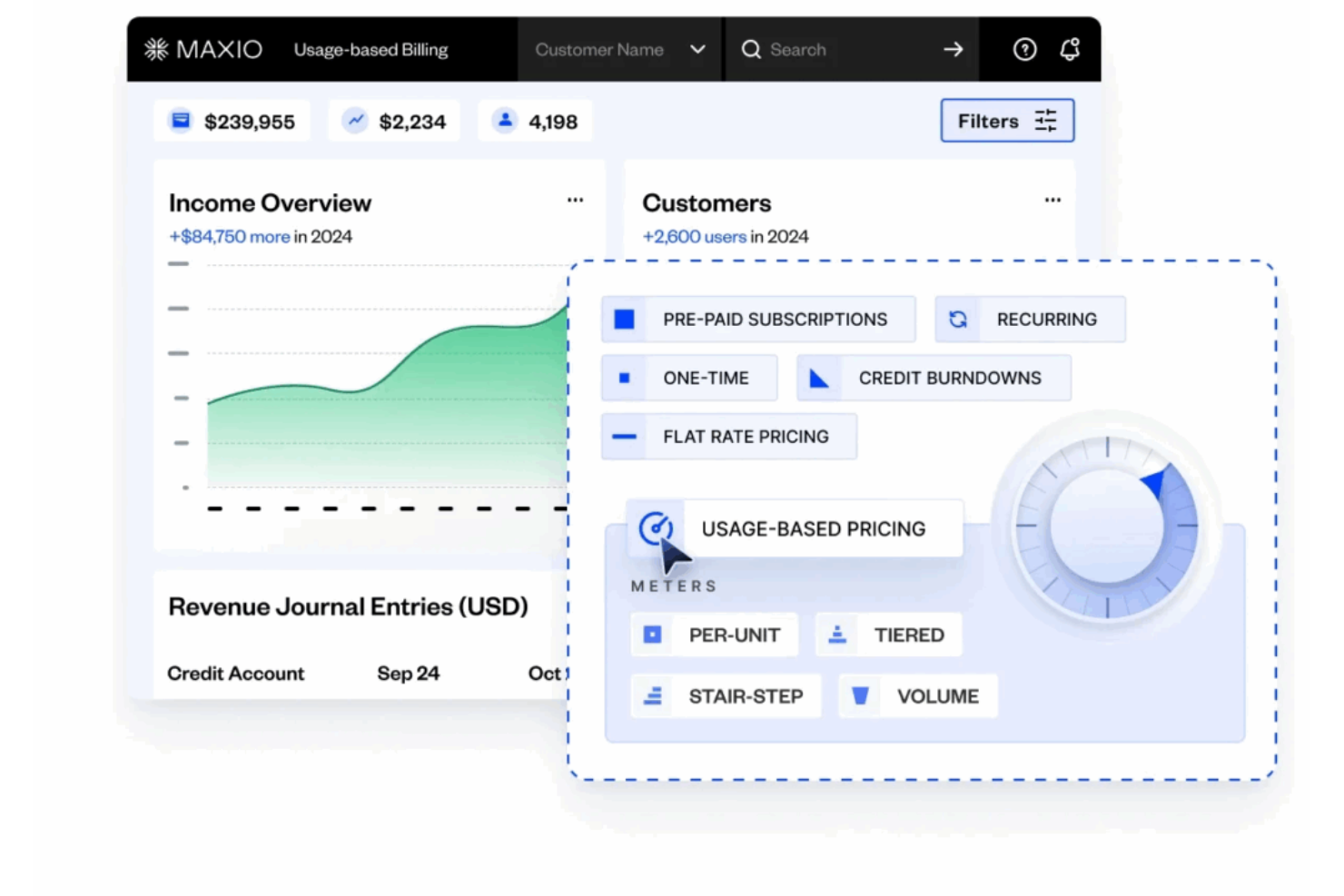
Supports metering, rating, and multiple pricing models for accurate, automated invoicing. Handles per unit, volume, tiered, and stairstep pricing without manual reconciliation.
Subscription Management
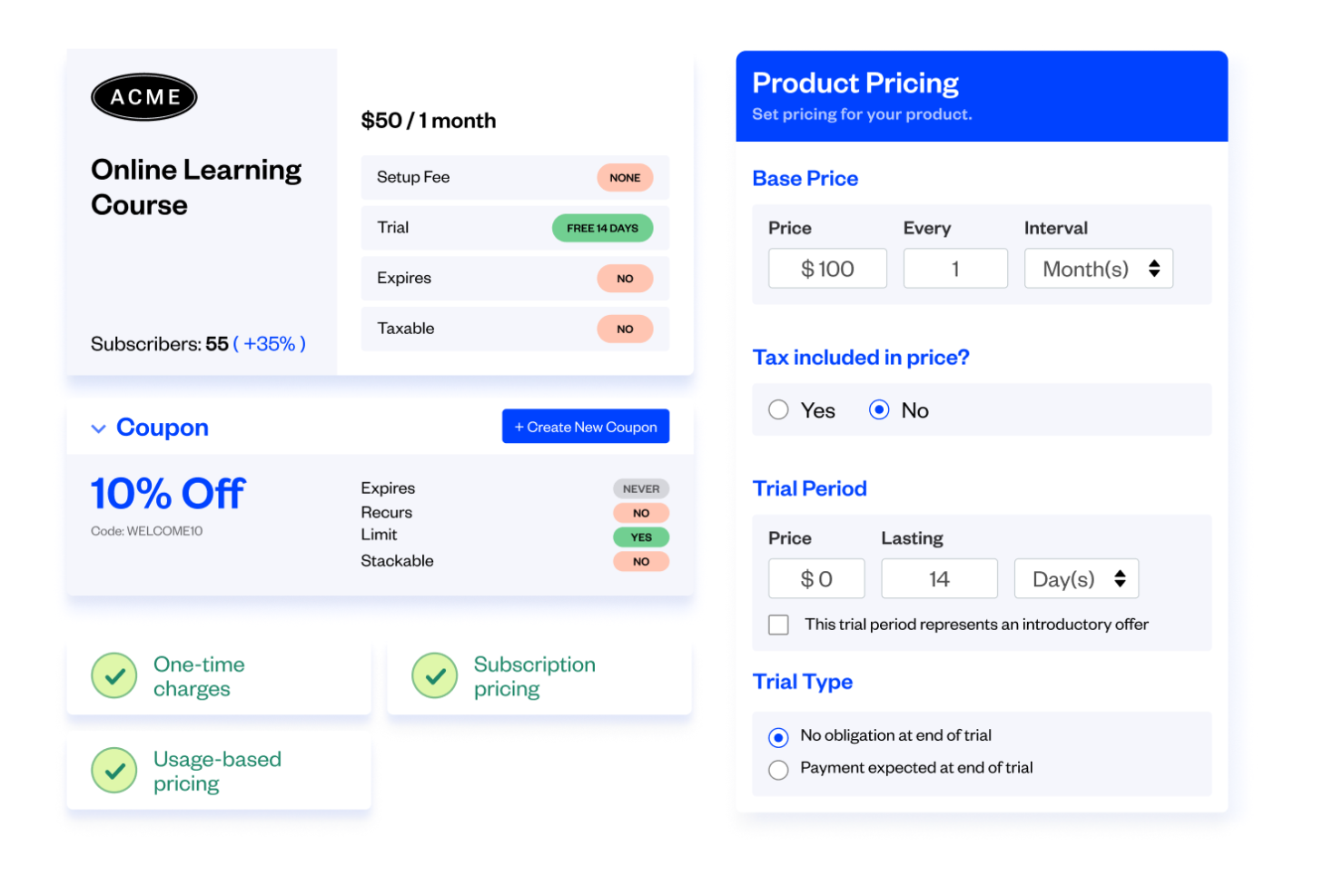
Lets you create, modify, and manage subscription plans and contracts in minutes. Enables setup fees, coupons, add-ons, and upsells for flexible billing.
Revenue Recognition
Automates revenue recognition schedules and calculations for GAAP and IFRS compliance. Offers custom rules and premade methods to fit your policies.
Financial Reporting
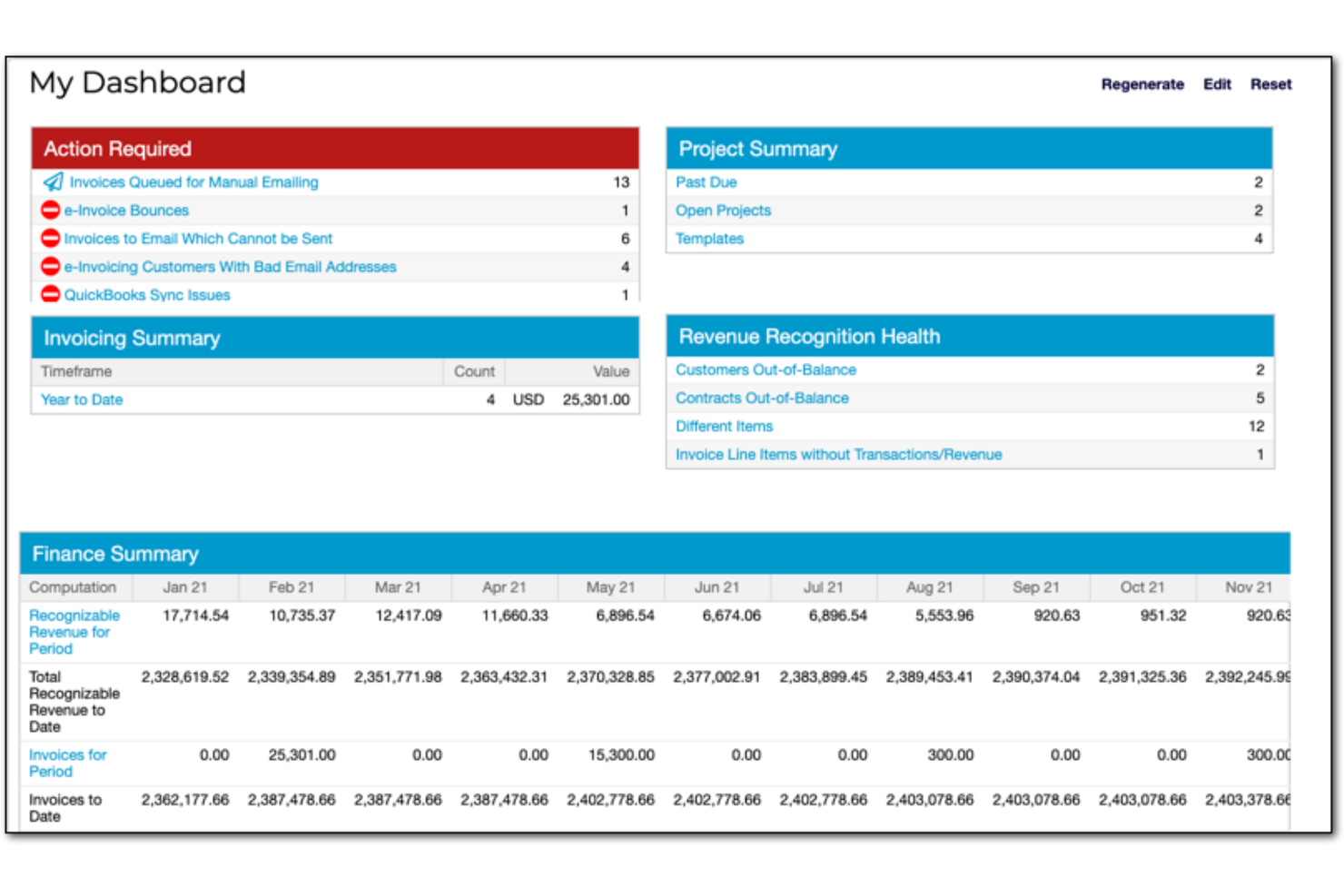
Provides custom dashboards and drill-down reports for real-time financial insights. Includes 30+ prebuilt reports like ARR summary and DSO.
Multi-Entity Support
Allows management of multiple business entities with unique catalogs and settings. Consolidates billing and reporting across global or multi-brand operations.
Self-Service Portals
Enables customers to manage subscriptions, pay invoices, and update billing details online. Reduces manual intervention and improves customer experience.
Ease of Use
Maxio’s interface is user-friendly, clean, and logically organized, making it approachable for finance professionals familiar with SaaS billing concepts. Users report that onboarding is straightforward, especially for teams with experience in subscription management. However, some find the depth of features and reporting options can be overwhelming at first. The platform’s guided setup, in-app help, and responsive support team help users navigate and optimize complex billing scenarios with confidence.
Integrations
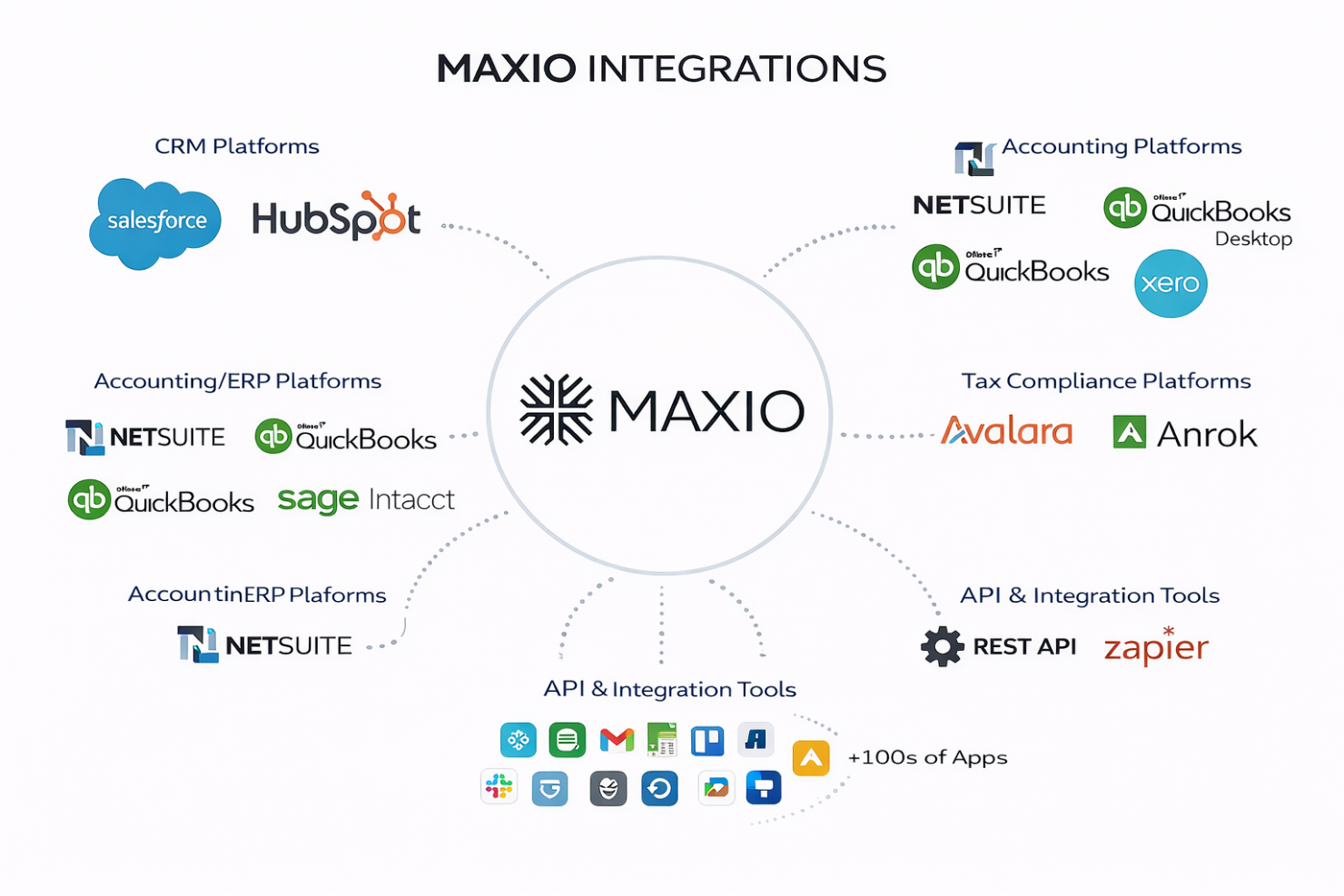
Maxio integrates with Salesforce, HubSpot, NetSuite, QuickBooks Online, QuickBooks Desktop, Xero, Sage Intacct, Avalara, Anrok, and Pipedrive, among others.
Maxio also offers a robust API and connects with third-party integration tools to extend its functionality.
Maxio Specs
- 2-Factor Authentication
- A/B Testing
- API
- Batch Permissions & Access
- BitCoin
- Budgeting
- Calendar Management
- Conversion Tracking
- Customer Management
- Dashboard
- Data Export
- Data Import
- Data Visualization
- External Integrations
- Forecasting
- Lead Management
- Lead Scoring
- Marketing Automation
- Multi-Currency
- Multi-User
- Notifications
- Password & Access Management
- PayPal
- Scheduling
- Stripe
- Third-Party Plugins/Add-Ons


