

Quadient Review: Pros, Cons, Features, and Pricing



Quadient is an accounts receivable management software that helps automate and simplify the invoicing and payment process. It serves finance teams in large enterprises, as well as some small business users, looking for efficient cash flow management. Quadient offers seamless integration with existing systems, including ERP and QuickBooks environments, to improve your accounts receivable processes.
Quadient addresses delayed payments, late fees, and time-consuming manual processing issues for finance and accounting departments. In this article, I'll cover Quadient's features, pros and cons, use cases, and pricing so you can decide whether this software aligns with your accounts receivable management needs.
Quadient Evaluation Summary
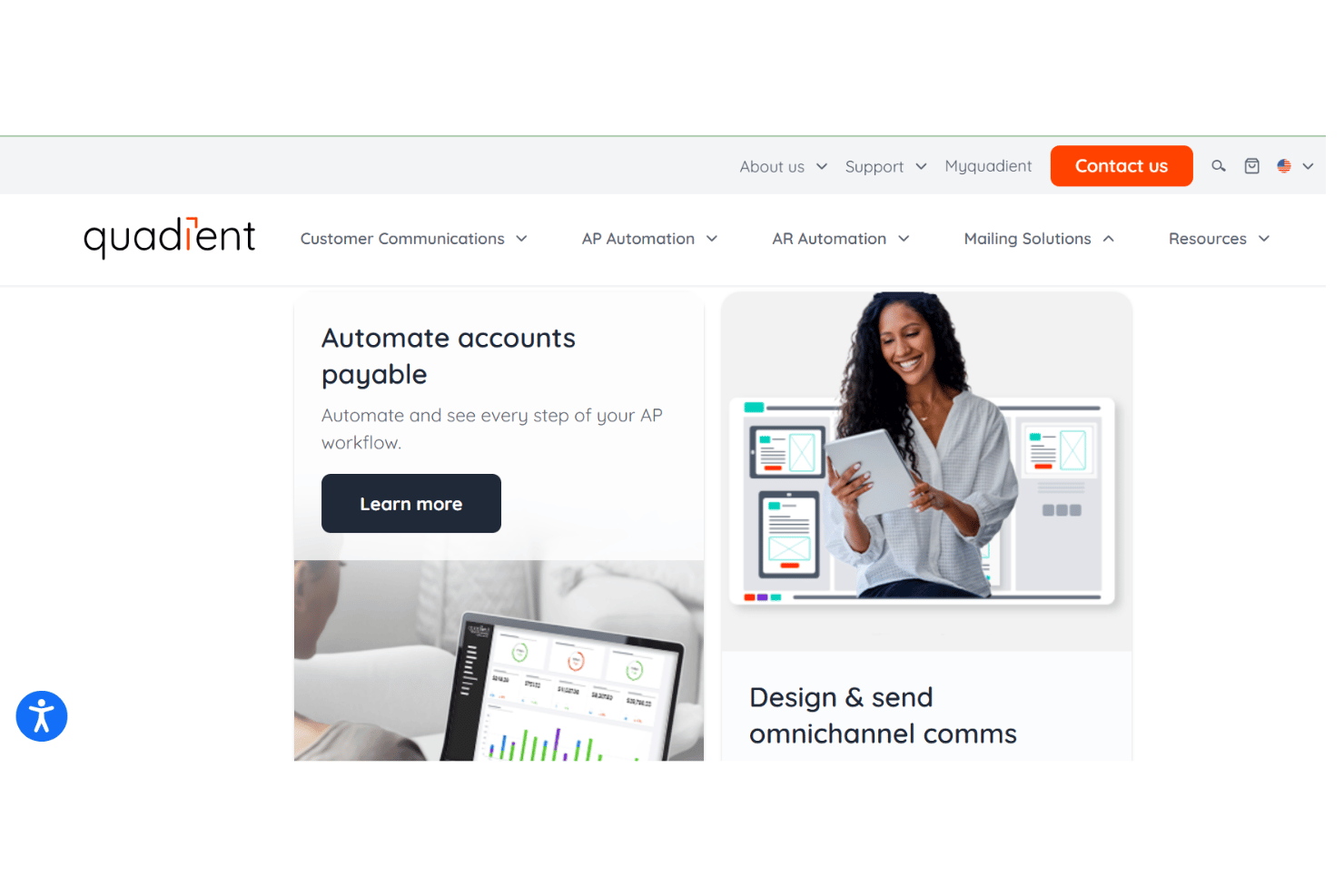
- Pricing upon request
- Free demo available
Why Trust Our Software Reviews
We’ve been testing and reviewing financial software since 2023. As finance specialists ourselves, we know how critical and difficult it is to make the right decision when selecting software.
We invest in deep research to help our audience make better software purchasing decisions. We’ve tested more than 2,000 tools for different finance use cases and written over 1,000 comprehensive software reviews. Learn how we stay transparent & our software review methodology.
Quadient Overview
In my opinion, Quadient is a strong contender among accounts receivable management software. It excels in customer support and offers solid core features, making it suitable for large enterprises with complex invoicing needs. However, its onboarding could be smoother, and the pricing might seem steep for smaller businesses. Quadient's integration options aren't as extensive as some Pitney Bowes or Neopost legacy systems, but its user-friendly design and responsive support make it a reliable choice for teams prioritizing efficiency and support. If your team values strong user support and intuitive features, Quadient is regarded as a great company in the CCM space.
pros
-
Customer support is highly responsive and helpful.
-
The user interface is intuitive and easy to navigate.
-
Automation features save you time on repetitive tasks.
cons
-
The onboarding process could be more streamlined for new users.
-
Integration options are limited compared to competitors.
-
System updates can cause minor disruptions to your workflow.
Is Quadient Right For Your Needs?
Who Would be a Good Fit for Quadient?
Quadient is a great fit for large enterprises in the manufacturing and retail sectors needing efficient accounts receivable processes and CCM. Its automation features reduce manual work, helping finance teams focus on strategic tasks rather than repetitive invoicing. If your team values responsive customer support, professional services, and an easy-to-use interface, Quadient can enhance your invoicing and payment workflows. Its ability to handle complex invoicing scenarios makes it ideal for businesses with high transaction volumes.
-
Large Enterprises
Quadient's automation features efficiently handle high transaction volumes common in large businesses with distributed finance teams.
-
Manufacturing Companies
Manufacturers benefit from Quadient's ability to manage complex invoicing, accounts payable coordination, and payment processes across multiple systems.
-
Retail Sectors
Retailers appreciate Quadient's user-friendly interface for managing frequent customer transactions, return labels, and customer communications.
-
Finance Teams
Finance departments find that Quadient's automation reduces manual tasks, allowing teams to focus on strategic planning rather than chasing late fees or resolving invoicing issues.
-
Accounts Receivable Managers
Managers use Quadient to streamline invoicing and improve cash flow management.
-
Customer Support-Driven Teams
Teams needing responsive support choose Quadient for its quick and helpful customer service model and strong customer success focus.
How We Test & Score Tools
We’ve spent years building, refining, and improving our software testing and scoring system. The rubric is designed to capture the nuances of software selection and what makes a tool effective, focusing on critical aspects of the decision-making process.
Below, you can see exactly how our testing and scoring works across seven criteria. It allows us to provide an unbiased evaluation of the software based on core functionality, standout features, ease of use, onboarding, customer support, integrations, customer reviews, and value for money.
Core Functionality (25% of final scoring)
The starting point of our evaluation is always the core functionality of the tool. Does it have the basic features and functions that a user would expect to see? Are any of those core features locked to higher-tiered pricing plans? At its core, we expect a tool to stand up against the baseline capabilities of its competitors.
Standout Features (25% of final scoring)
Next, we evaluate uncommon standout features that go above and beyond the core functionality typically found in tools of its kind. A high score reflects specialized or unique features that make the product faster, more efficient, or offer additional value to the user.
We also evaluate how easy it is to integrate with other tools typically found in the tech stack to expand the functionality and utility of the software. Tools offering plentiful native integrations, 3rd party connections, and API access to build custom integrations score best.
Ease of Use (10% of final scoring)
We consider how quick and easy it is to execute the tasks defined in the core functionality using the tool. High scoring software is well designed, intuitive to use, offers mobile apps, provides templates, and makes relatively complex tasks seem simple.
Onboarding (10% of final scoring)
We know how important rapid team adoption is for a new platform, so we evaluate how easy it is to learn and use a tool with minimal training. We evaluate how quickly a team member can get set up and start using the tool with no experience. High scoring solutions indicate little or no support is required.
Customer Support (10% of final scoring)
We review how quick and easy it is to get unstuck and find help by phone, live chat, or knowledge base. Tools and companies that provide real-time support score best, while chatbots score worst.
Customer Reviews (10% of final scoring)
Beyond our own testing and evaluation, we consider the net promoter score from current and past customers. We review their likelihood, given the option, to choose the tool again for the core functionality. A high scoring software reflects a high net promoter score from current or past customers.
Value for Money (10% of final scoring)
Lastly, in consideration of all the other criteria, we review the average price of entry level plans against the core features and consider the value of the other evaluation criteria. Software that delivers more, for less, will score higher.
Core Features
Automated Invoicing: Quadient automates the invoicing process, reducing manual errors and saving your team time. You can set recurring invoices and let the system handle the rest, minimizing the risk of invoicing-related scams.
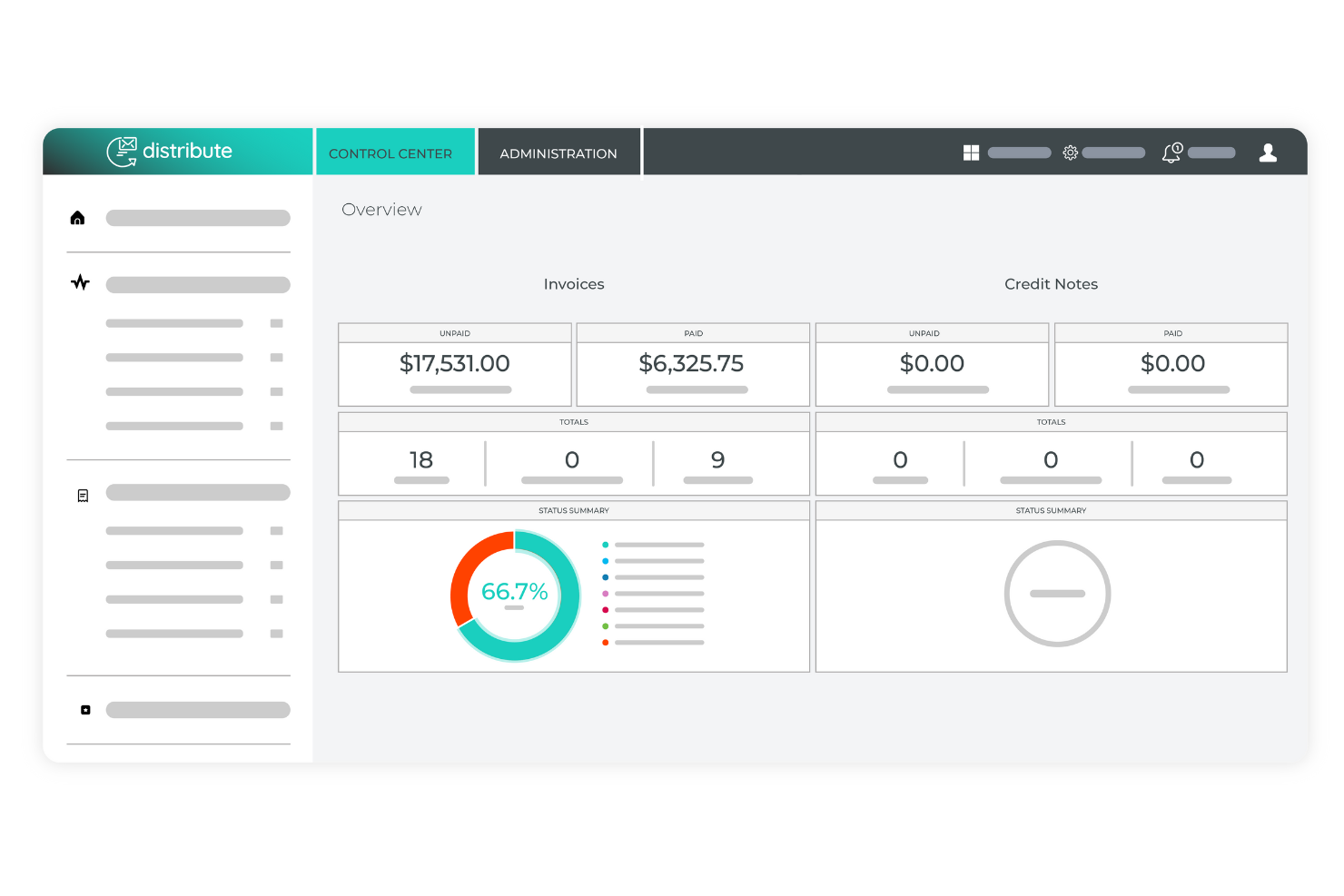
Payment Tracking: Keep tabs on all your incoming payments with real-time tracking. This feature helps your team ensure timely payments and manage cash flow effectively across accounts receivable and payable.
Customer Portal: Clients can access a self-service portal, where they can view and pay invoices. This boosts transparency and speeds up payment collection while supporting modern customer communications.
Reminder Notifications: Quadient automatically sends reminders to clients about upcoming or overdue payments. This helps reduce late payments and improve your cash flow.
Reporting Tools: Generate detailed reports on your accounts receivable status to help you make informed financial decisions. Customize reports to focus on what matters most to your finance team.
Credit Management: Assess and manage customer credit limits efficiently with Quadient's credit management tools. This feature helps you mitigate financial risks.
Standout Features
Responsive Customer Support: Quadient's support team is known to be quick and reliable, ensuring you get the assistance you need when you need it.
User-Friendly Interface: Quadient's intuitive design makes it easy for your team to navigate and use the software effectively. This reduces the learning curve and increases productivity.
Ease of Use
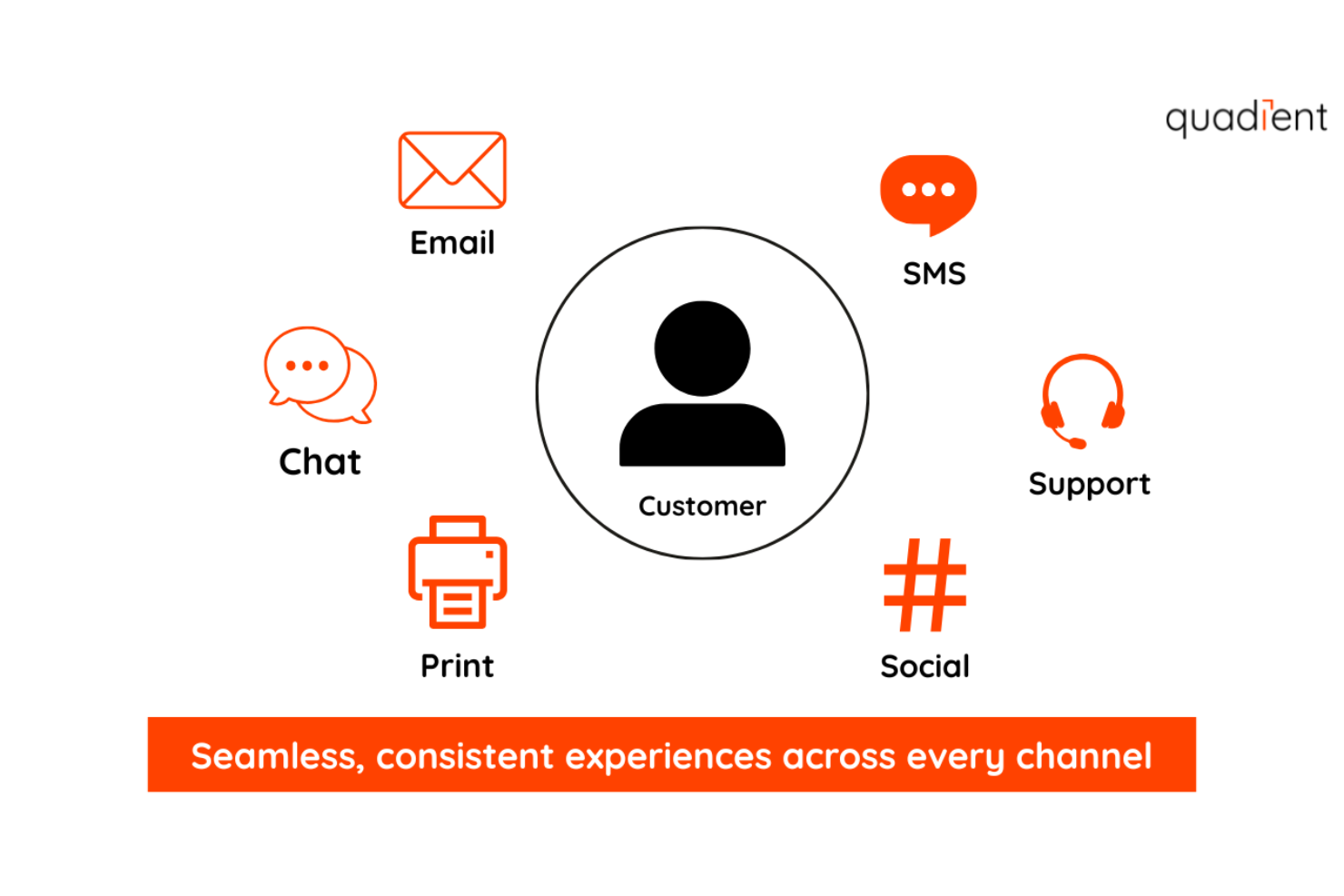
Quadient offers a user-friendly experience with its intuitive interface, making it easy for your team to navigate and manage tasks. Users appreciate the straightforward design that minimizes the learning curve, allowing you to quickly get up to speed. Its automation features further enhance usability by reducing manual tasks, allowing you to focus on more strategic activities. Compared to similar software, Quadient stands out for its simplicity and efficiency, ensuring your team can work effectively without unnecessary complexity.
Onboarding
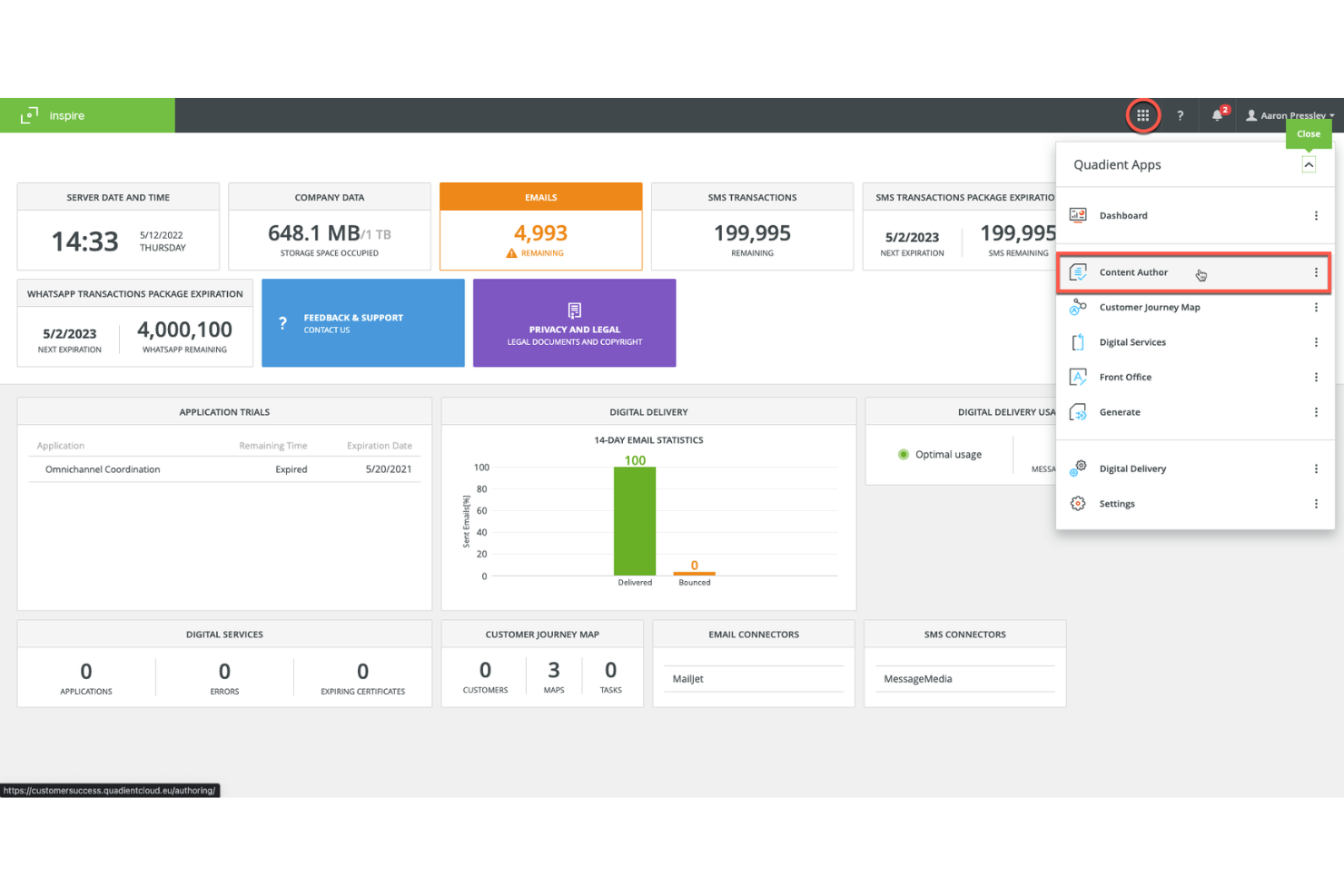
Quadient's onboarding process could be more streamlined, as some users find it takes longer to get fully set up, particularly when migrating from legacy Neopost or Pitney Bowes systems. However, Quadient offers helpful support and resources to guide your team through the process. Their responsive customer service can assist you in overcoming onboarding challenges, ensuring you can start using the software effectively.
Customer Support
Quadient excels in customer support, offering responsive and helpful assistance that users consistently praise. Your team can easily reach support through multiple channels, ensuring you get the help you need when challenges arise. The support team is knowledgeable and quick to resolve issues, making your experience smooth and stress-free.
Integrations
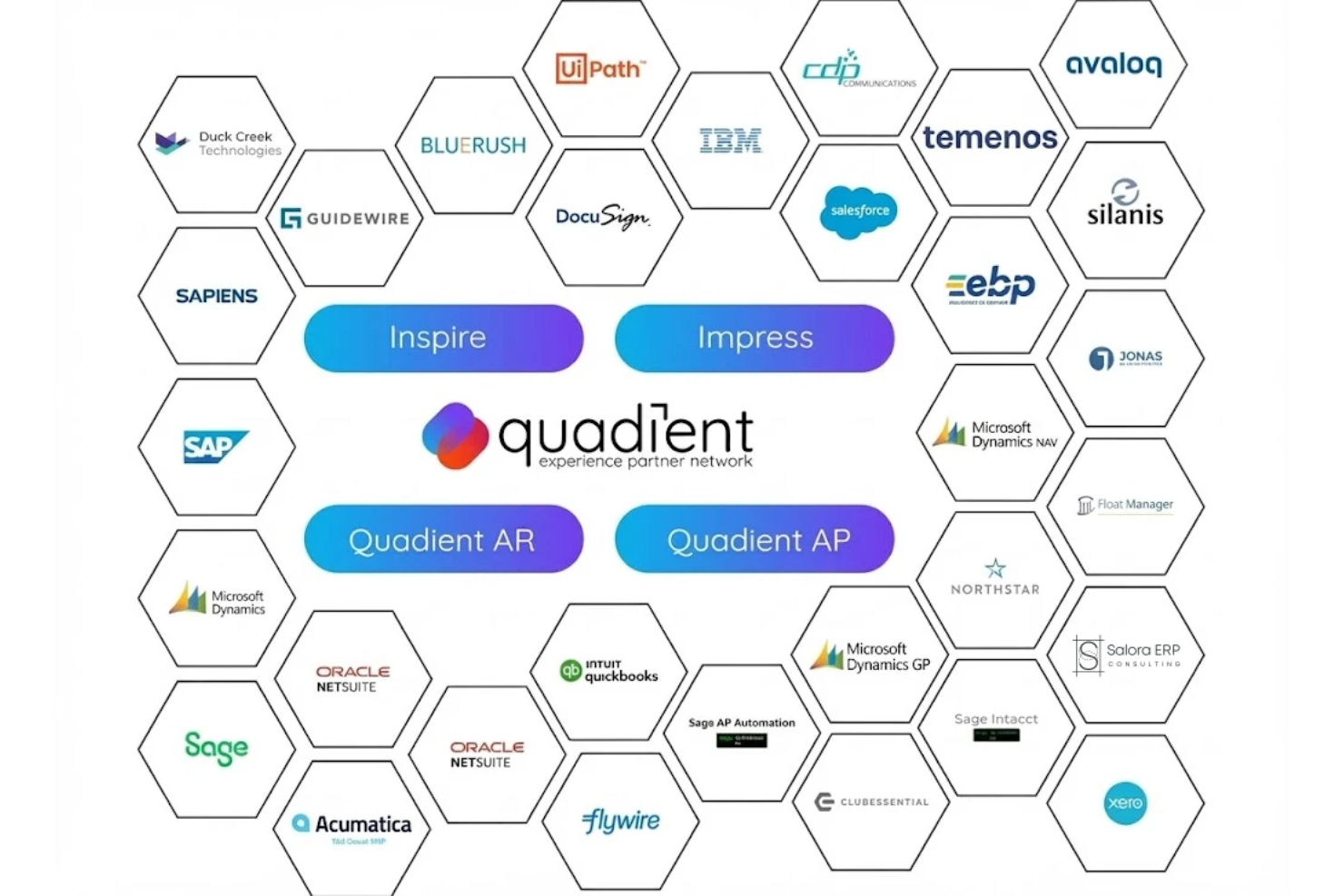
Quadient integrates with Salesforce, Oracle, SAP, Microsoft Dynamics, QuickBooks, Sage, NetSuite, ERP, and Acumatica. Quadient also offers an API for custom integrations and connects with third-party integration tools.
Value for Money
Quadient pricing can seem steep for smaller businesses, but its features and support justify the cost for larger enterprises. Users value the comprehensive automation and customer support that come with the investment. Although pricing is only available on request, Quadient prices its AR offering based on the number of monthly invoices you process and the integrations you require.
Quadient Specs
- Approval Workflows
- Compliance Tracking
- Document Management
- Environmental Management
- HIPAA Compliance
- Inspection Management
- Policy Management
- Regulatory Alerts
Quadient FAQs
How does Quadient handle data security and compliance?
Can Quadient be customized to fit our specific workflow?
What kind of support is available if we encounter issues?
How long does it typically take to implement Quadient?
Is training available for our team to get up to speed?
How does Quadient improve our accounts receivable processes?
Can Quadient scale with our growing business needs?
What types of businesses benefit most from using Quadient?
Quadient Company Overview & History
Quadient, headquartered in France, is a global leader in customer communications and business process automation, focusing on accounts receivable and mailing services. Originally founded as Neopost in 1924, Quadient has evolved through strategic acquisitions such as GMC Software and Parcel Pending. The company is known for its innovation in customer communications management and its commitment to corporate social responsibility. Quadient serves a diverse clientele across industries such as financial services, healthcare, and telecommunications.
Quadient Major Milestones
1924: Founded as Neopost.
2012: Acquired GMC Software to enhance customer communication solutions.
2019: Acquired Parcel Pending, expanding parcel locker solutions.
2019: Rebranded from Neopost to Quadient.
2020: Listed by Celent as a global CCM leader