

Buxfer Review: Pros, Cons, Features, and Pricing
Buxfer excels with its user-friendly interface and robust forecasting, ideal for personal finance enthusiasts seeking comprehensive budgeting insights.

We review tools independently, and commissions help fund our testing. See our transparency policy, our methodology, or suggest a tool.
Buxfer is a budgeting and planning software for individuals and households who need to track spending, forecast cash flow, and manage budgets across multiple linked accounts. I'd consider it if you want automated transaction categorization and multi-account visibility without the hands-on budgeting discipline that YNAB requires—Buxfer takes a more passive, tracking-first approach that suits people who want financial awareness without constant manual input.
Buxfer Evaluation Summary
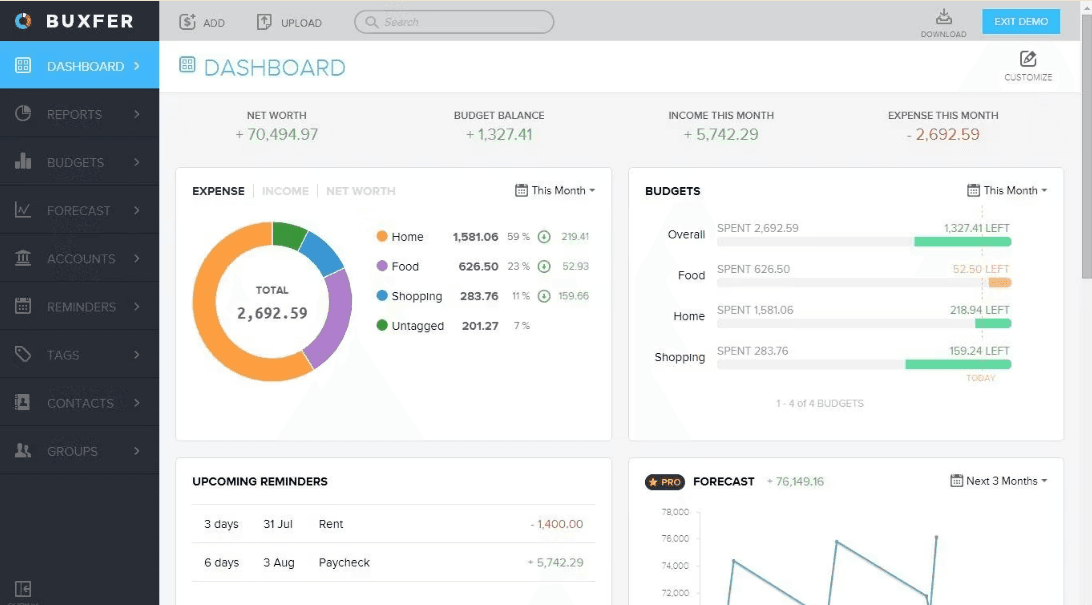
4.5/5
- From $7.99/user/month (billed annually)
- Free app available
Why Trust Our Software Recommendations
6,700+
Reviews
20
Industry experts
16+
Evaluation factors
14
Years
Our team has been testing and reviewing software since 2012. As finance leaders ourselves, we know how difficult—and important—it is to choose the right software.
For this guide, we evaluated tools using hands-on testing and independent research, scoring tools using our selection criteria.
Our reviews reflect our human editorial judgment, not a sales pitch.
Buxfer Overview
In my opinion, Buxfer is a solid choice for those seeking a user-friendly budgeting solution and one of the best personal finance software options for individuals wanting real-time visibility across credit cards, investment accounts, and bank accounts. Its standout features, like financial forecasting, set it apart, though it might not match the extensive integration options of competitors like Intuit Quickbooks or YNAB. It is excellent for small businesses and individuals who need straightforward budgeting and bookkeeping without overwhelming complexity. While its onboarding process is smooth, it could improve in customer support and integration flexibility. If your team prioritizes ease of use, clean user experience, and effective financial tracking, Buxfer is worth considering for both financial planning and net worth monitoring.
Pros
- You’ll appreciate the intuitive interface that makes budgeting simple.
- Its detailed financial forecasting helps your team plan effectively.
- You can track expenses with ease, keeping your finances organized.
Cons
- You might find customer support response times lacking.
- Advanced users may feel limited by its customization shortfalls.
- It could offer more flexibility in report generation for your work.
Is Buxfer Right For Your Needs?
Who Would be a Good Fit for Buxfer?
Buxfer is perfect for small businesses, freelancers, and finance teams that need straightforward budgeting tools with solid money management functions. Its intuitive interface makes it easy for you to track expenses and manage finances without hassle. If your team values detailed financial forecasting and effective budget tracking, Buxfer’s features will support your financial goals well. It’s especially useful for those who prefer simple financial software over complex systems.
- FreelancersYou’ll find Buxfer’s expense tracking invaluable for managing your finances with ease, especially through the mobile app and web app.
- Small BusinessesBuxfer offers financial forecasting that helps your team plan budgets effectively and monitor net worth and cash flow.
- Finance DepartmentsYour team can use Buxfer for straightforward budget management, bookkeeping, and financial planning.
- Personal FinanceBuxfer’s user-friendly interface is perfect for individuals managing their own budgets and reviewing their financial app dashboards.
- Non-ProfitsYou can rely on Buxfer for cost-effective financial tracking and reporting across multi-currency accounts.
- StartupsBuxfer supports your need for clear budgeting, syncing of bank accounts, and expense management as you grow.
Who Would be a Bad Fit for Buxfer?
Buxfer might not suit large enterprises or tech-heavy industries that need complex integrations, advanced aggregator tools, or sophisticated accounting software automation. If your team relies on extensive reporting and tailored financial solutions, Buxfer’s limited customization options could be a drawback. Companies needing robust customer support might also find it lacking. It’s best for straightforward budgeting rather than intricate financial systems requiring industry-standard ERP integrations.
- Large CorporationsYour team may find Buxfer’s limited customization inadequate for complex financial needs.
- Tech StartupsBuxfer doesn’t offer the integrations tech-heavy environments often require for seamless operation, even with its API.
- Enterprise Finance TeamsYou need more advanced reporting features than Buxfer provides for detailed financial analysis.
- Manufacturing IndustriesBuxfer lacks the specific functionalities needed for managing large-scale production budgets.
- Retail ChainsYour complex inventory and sales tracking might not align with Buxfer’s simpler budgeting tools.
- Healthcare OrganizationsBuxfer’s limited customer support may not meet the demands of personalized healthcare environments.
How We Test & Score Tools
We’ve spent years building, refining, and improving our software testing and scoring system. The rubric is designed to capture the nuances of software selection and what makes a tool effective, focusing on critical aspects of the decision-making process.
Below, you can see exactly how our testing and scoring works across seven criteria. It allows us to provide an unbiased evaluation of the software based on core functionality, standout features, ease of use, onboarding, customer support, integrations, customer reviews, and value for money.
Core Functionality (25% of final scoring)
The starting point of our evaluation is always the core functionality of the tool. Does it have the basic features and functions that a user would expect to see? Are any of those core features locked to higher-tiered pricing plans? At its core, we expect a tool to stand up against the baseline capabilities of its competitors.
Standout Features (25% of final scoring)
Next, we evaluate uncommon standout features that go above and beyond the core functionality typically found in tools of its kind. A high score reflects specialized or unique features that make the product faster, more efficient, or offer additional value to the user.
We also evaluate how easy it is to integrate with other tools typically found in the tech stack to expand the functionality and utility of the software. Tools offering plentiful native integrations, 3rd party connections, and API access to build custom integrations score best.
Ease of Use (10% of final scoring)
We consider how quick and easy it is to execute the tasks defined in the core functionality using the tool. High scoring software is well designed, intuitive to use, offers mobile apps, provides templates, and makes relatively complex tasks seem simple.
Onboarding (10% of final scoring)
We know how important rapid team adoption is for a new platform, so we evaluate how easy it is to learn and use a tool with minimal training. We evaluate how quickly a team member can get set up and start using the tool with no experience. High scoring solutions indicate little or no support is required.
Customer Support (10% of final scoring)
We review how quick and easy it is to get unstuck and find help by phone, live chat, or knowledge base. Tools and companies that provide real-time support score best, while chatbots score worst.
Customer Reviews (10% of final scoring)
Beyond our own testing and evaluation, we consider the net promoter score from current and past customers. We review their likelihood, given the option, to choose the tool again for the core functionality. A high scoring software reflects a high net promoter score from current or past customers.
Value for Money (10% of final scoring)
Lastly, in consideration of all the other criteria, we review the average price of entry level plans against the core features and consider the value of the other evaluation criteria. Software that delivers more, for less, will score higher.
Core Features
Expense Tracking: Buxfer lets you track your expenses easily, helping you see where your money goes. You can categorize expenses to get a clear picture of spending habits, supporting better money management.
Budget Planning: Set up budgets for different categories and watch your spending against them. This helps your team stick to financial goals and avoid overspending, making it a suitable lightweight budgeting software alternative.
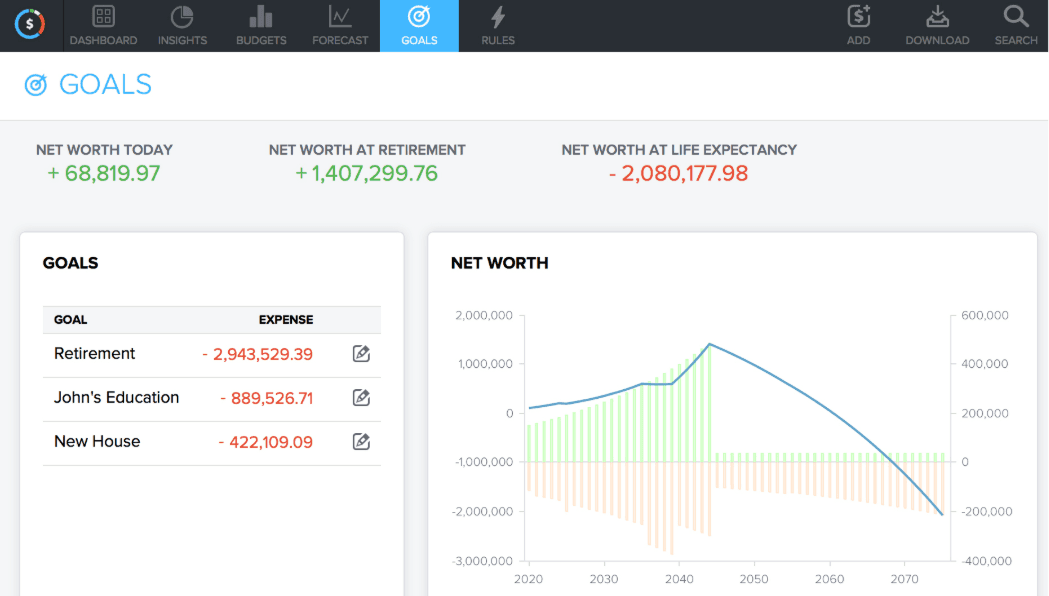
Financial Forecasting: Buxfer provides tools to predict future financial scenarios and forecast cash flow. You can plan better for upcoming expenses and financial commitments.
Bill Reminders: Never miss a payment with Buxfer’s timely bill reminders for credit cards, utilities, and bank accounts.
Account Syncing: Connect all your bank accounts to Buxfer for a unified financial view with real-time bank sync. This feature keeps your data up to date and accurate through cloud-based syncing.
Custom Reports: Generate reports that suit your specific needs with Buxfer. You can analyze your financial data in a way that makes sense for your work.
Ease of Use
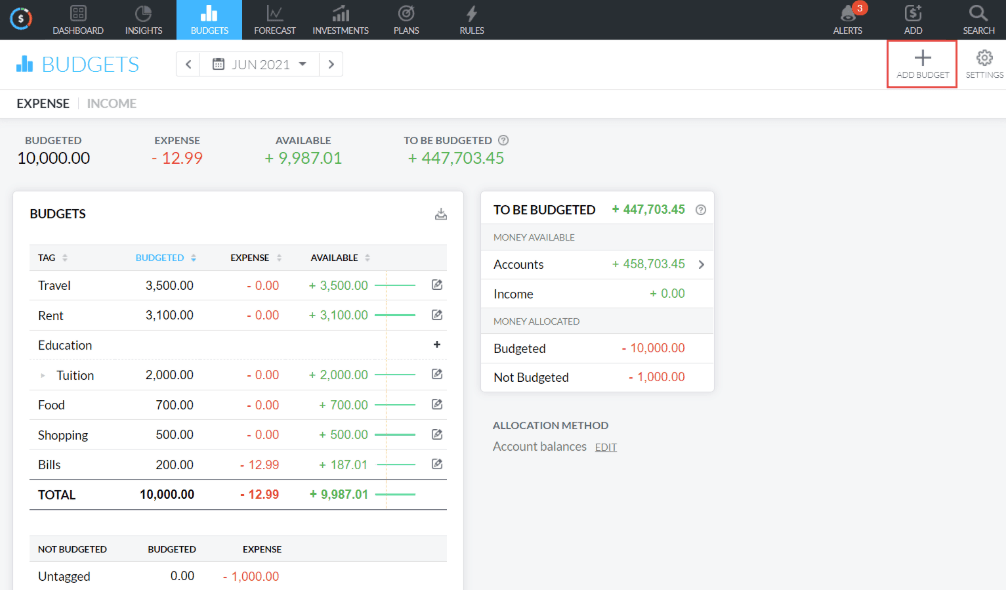
Buxfer is user-friendly, making budgeting easy for you and your team. Its intuitive interface simplifies tasks like tracking expenses and setting budgets. Users often praise its simple setup and the ease of accessing financial information quickly across the mobile app and web app. Buxfer’s layout is clean and organized, which helps you focus on managing finances without unnecessary complications.
Integrations
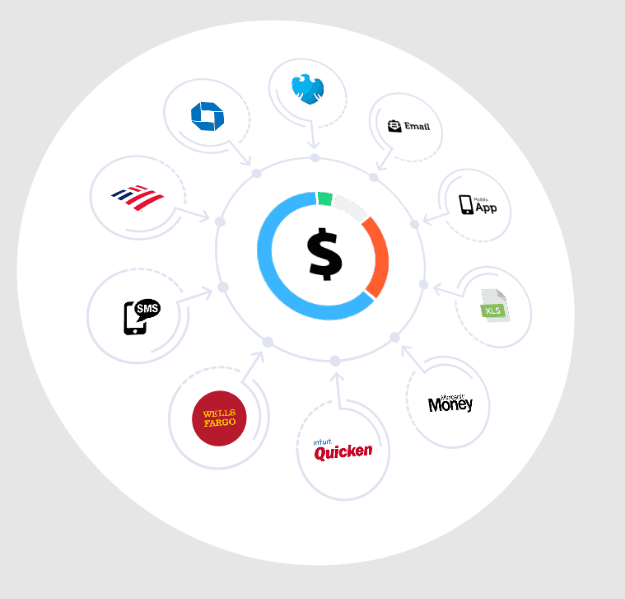
Buxfer integrates with Bank of America, Chase, Citibank, Barclays, Capital One, Discover Card, American Express, and TD Bank. The software supports over 20,000 banks for syncing.
Buxfer also offers an API, allowing for further customization and integration with third-party tools.
Buxfer Specs
- 2-Factor Authentication: No
- Accounts Payable: No
- Accounts Receivable: No
- API: Yes
- Approval Workflows: No
- Balance Sheet: No
- Billing/Invoicing: No
- Budgeting: Yes
- Calendar Management: No
- Comparative Reporting: No
- CRM Integration: No
- Custom Reports: No
- Customer Management: No
- Dashboard: Yes
- Data Export: Yes
- Data Import: Yes
- Data Visualization: No
- Expense Tracking: Yes
- External Integrations: No
- Forecasting: Yes
- General Account Ledger: No
- Historical Data Analysis: No
- Inventory Tracking: No
- Multi-Currency: Yes
- Multi-User: Yes
- Notifications: Yes
- P&L: No
- Payroll: No
- Scenario Planning: No
- Scheduling: No
- Supplier Management: No
- Tax Management: No
- Time Management: No


