

Express Accounts Review: Pros, Cons, Features, and Pricing
Express Accounts offers a straightforward approach to accounting, excelling in ease of use and affordability, making it ideal for small businesses.

We review tools independently, and commissions help fund our testing. See our transparency policy, our methodology, or suggest a tool.
Express Accounts is an accounting software for small businesses that need to track sales, expenses, receipts, and basic financial reporting without a lot of setup or overhead. I'd consider it if you're running a lean operation and find something like QuickBooks more than you actually need—Express Accounts covers core bookkeeping at a much lower cost and with a noticeably shorter learning curve.
Express Accounts Evaluation Summary

3.9/5
- From $295
Why Trust Our Software Recommendations
6,700+
Reviews
20
Industry experts
16+
Evaluation factors
14
Years
Our team has been testing and reviewing software since 2012. As finance leaders ourselves, we know how difficult—and important—it is to choose the right software.
For this guide, we evaluated tools using hands-on testing and independent research, scoring tools using our selection criteria.
Our reviews reflect our human editorial judgment, not a sales pitch.
Express Accounts Overview
In my opinion, Express Accounts is a solid choice for small businesses seeking affordable accounting software. It provides essential features like invoicing, accounts receivable, purchase orders, general ledger tasks, and balance sheet reporting. Its biggest strengths are its affordability and straightforward workflows. But onboarding is not the smoothest, the interface feels largely dated, and its lack of a mobile app or deep add-ons limits the experience compared to cloud tools like QuickBooks Online, Zoho, Xero, or FreshBooks.
If you're looking for advanced integrations or a highly intuitive interface, you might find it lacking. However, for those prioritizing budget over bells and whistles, Express Accounts is worth considering.
Pros
- It offers easy-to-use invoicing and billing tools.
- You can track expenses and payments efficiently.
- It's great for small business financial management.
- For the services it offers, Express Accounts is very affordable.
- Customized invoice templates.
Cons
- The user interface isn't very intuitive.
- Onboarding can be a bit challenging for new users.
- Customer support isn't always responsive or helpful.
- Limited add-ons and very few third-party integrations.
- No mobile app (Android or iOS).
Is Express Accounts Right For Your Needs?
Who Would be a Good Fit for Express Accounts?
Express Accounts is a great choice for small businesses, freelancers, and sole proprietors who need basic accounting tools without unnecessary complexity. Its simple invoicing and expense tracking make it ideal for those who need to manage finances efficiently without a steep learning curve. If you're running a small retail shop or providing services independently, this software helps you keep track of your finances in an organized manner. Its straightforward approach suits those who prefer a no-frills accounting solution.
- Small Retail ShopsExpress Accounts helps you manage sales and track daily expenses effortlessly without expensive subscriptions.
- FreelancersSend customized invoices, track payments, and stay ready for tax returns without expensive subscriptions.
- Sole ProprietorsKeep your business finances organized with simple expense and payment tracking.
- Service ProvidersYou can easily manage your billing and customer accounts with Express Accounts's straightforward features.
- NonprofitsTrack donations and expenses efficiently, making financial management less of a burden.
- Local BusinessesGreat fit for teams who want offline management software without cloud dependency.
Who Would be a Bad Fit for Express Accounts?
Express Accounts isn’t a good choice for large corporations or businesses that need advanced accounting features and integrations. Companies in need of extensive data analysis, multi-currency support, or detailed financial forecasting might find the software lacking. If your work involves complex financial operations or requires seamless integration with other business tools, Express Accounts may not meet your needs. Its limited customer support and basic interface can also be a drawback for larger teams requiring more robust functionality. It also doesn’t provide a mobile app.
- Large CorporationsExpress Accounts lacks the advanced features, enterprise-grade modules, and scalability needed for extensive corporate accounting.
- Manufacturing CompaniesThe software doesn't support complex inventory management or production cost tracking.
- International BusinessesExpress Accounts doesn't handle multi-currency transactions well, which is crucial for global operations.
- Financial AnalystsThe lack of advanced data analysis and reporting tools limits its usefulness for in-depth financial analysis.
- Tech StartupsStartups needing seamless integration with other tech tools will find Express Accounts insufficient.
- Enterprise-Level TeamsThe software's basic features and limited support don't meet the demands of large, diverse teams.
How We Test & Score Tools
We’ve spent years building, refining, and improving our software testing and scoring system. The rubric is designed to capture the nuances of software selection and what makes a tool effective, focusing on critical aspects of the decision-making process.
Below, you can see exactly how our testing and scoring works across seven criteria. It allows us to provide an unbiased evaluation of the software based on core functionality, standout features, ease of use, onboarding, customer support, integrations, customer reviews, and value for money.
Core Functionality (25% of final scoring)
The starting point of our evaluation is always the core functionality of the tool. Does it have the basic features and functions that a user would expect to see? Are any of those core features locked to higher-tiered pricing plans? At its core, we expect a tool to stand up against the baseline capabilities of its competitors.
Standout Features (25% of final scoring)
Next, we evaluate uncommon standout features that go above and beyond the core functionality typically found in tools of its kind. A high score reflects specialized or unique features that make the product faster, more efficient, or offer additional value to the user.
We also evaluate how easy it is to integrate with other tools typically found in the tech stack to expand the functionality and utility of the software. Tools offering plentiful native integrations, 3rd party connections, and API access to build custom integrations score best.
Ease of Use (10% of final scoring)
We consider how quick and easy it is to execute the tasks defined in the core functionality using the tool. High scoring software is well designed, intuitive to use, offers mobile apps, provides templates, and makes relatively complex tasks seem simple.
Onboarding (10% of final scoring)
We know how important rapid team adoption is for a new platform, so we evaluate how easy it is to learn and use a tool with minimal training. We evaluate how quickly a team member can get set up and start using the tool with no experience. High scoring solutions indicate little or no support is required.
Customer Support (10% of final scoring)
We review how quick and easy it is to get unstuck and find help by phone, live chat, or knowledge base. Tools and companies that provide real-time support score best, while chatbots score worst.
Customer Reviews (10% of final scoring)
Beyond our own testing and evaluation, we consider the net promoter score from current and past customers. We review their likelihood, given the option, to choose the tool again for the core functionality. A high scoring software reflects a high net promoter score from current or past customers.
Value for Money (10% of final scoring)
Lastly, in consideration of all the other criteria, we review the average price of entry level plans against the core features and consider the value of the other evaluation criteria. Software that delivers more, for less, will score higher.
Core Features
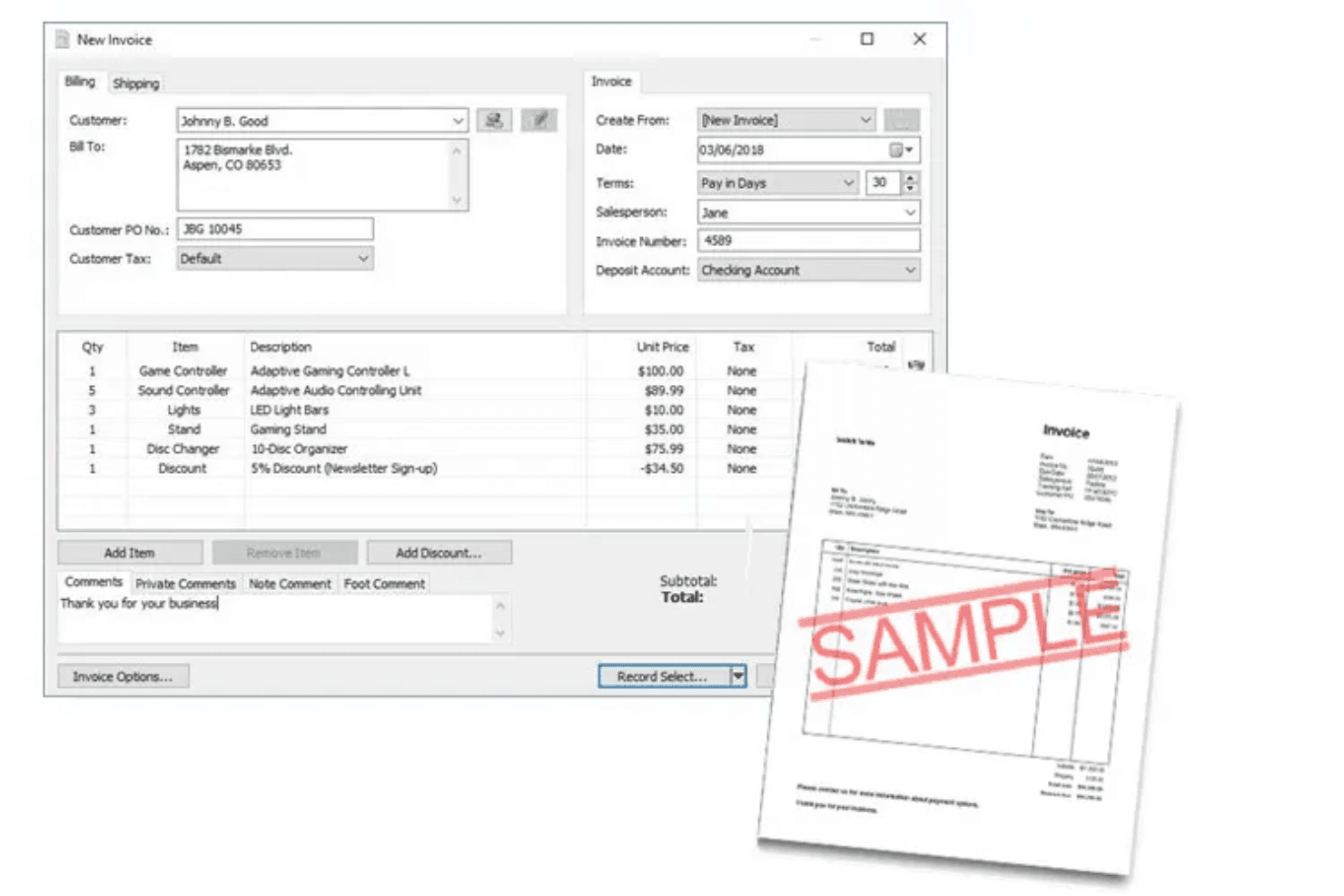
Invoicing and Billing: Create and send professional invoices easily with Express Accounts. It simplifies tracking payments and outstanding invoices for your work.
Expense Tracking: Keep an eye on your business expenses with straightforward tracking tools. You can categorize and manage costs efficiently.
Financial Reporting: Helps you generate essential financial reports, including your balance sheet, profit or loss, and cash flow statement, to enable you understand your business's health and make informed decisions.
Accounts Payable and Receivable: Manage incoming and outgoing payments with ease. This feature ensures you stay on top of what’s owed to you and what you owe.
Bank Reconciliation: Match your accounting records with bank statements quickly. This helps you catch discrepancies and maintain accurate records.
Multi-User Access: Web access allows multiple team members to securely log in and work on financial tasks simultaneously. This feature supports collaboration without sacrificing control over your data.
Ease of Use
Express Accounts is generally considered user-friendly and easy to use, especially for those new to accounting software and small business owners who want a fairly straightforward tool. Its simple interface makes navigation straightforward, though some users might find the design a bit dated. While it covers essential tasks like invoicing and expense tracking well, onboarding can be tricky without prior experience, and more advanced accounting tasks may feel less intuitive. Express Accounts is a desktop program available for Windows and Mac, with some users noting that the Mac version is slightly harder to learn. Compared to more complex solutions, it stands out for its simplicity but might not satisfy those needing advanced features. If you and your team prefer straightforward tools, Express Accounts could be a fit.
Integrations
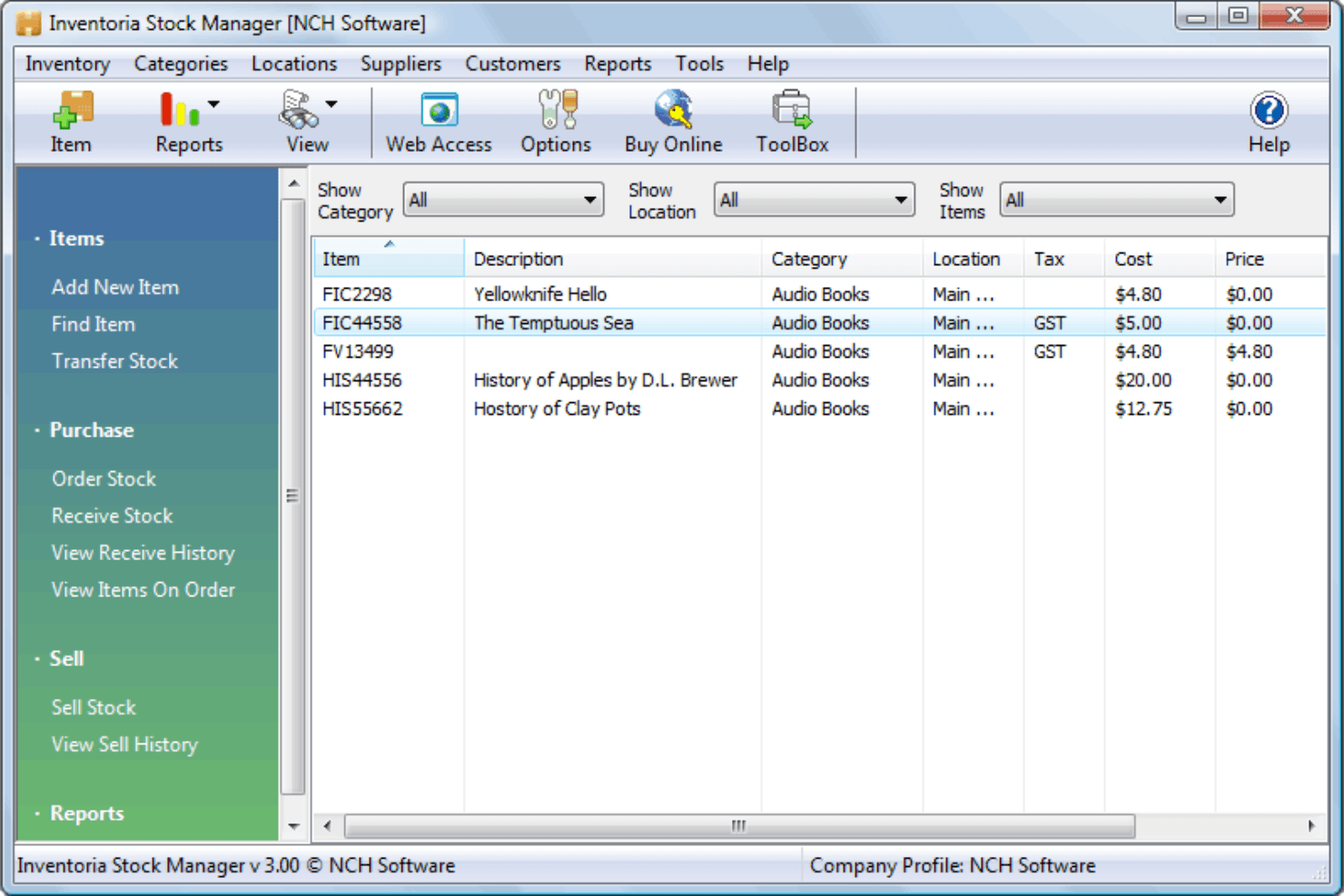
Express Accounts integrates with Inventoria, Express Invoice, and Ramp's Universal CSV. It does not have a wide array of native integrations beyond these. Express Accounts does not offer an API or connect with third-party integration tools.

Express Accounts Specs
- 2-Factor Authentication: Yes
- Accounts Payable: Yes
- Accounts Receivable: No
- API: Yes
- Balance Sheet: Yes
- Billing/Invoicing: Yes
- BitCoin: Yes
- Budgeting: Yes
- Calendar Management: Yes
- Contact Management: Yes
- CRM Integration: Yes
- Customer Management: Yes
- Dashboard: Yes
- Data Export: Yes
- Data Import: Yes
- Data Visualization: Yes
- Expense Tracking: Yes
- External Integrations: Yes
- Forecasting: Yes
- General Account Ledger: Yes
- Inventory Tracking: Yes
- Multi-Currency: Yes
- Multi-User: Yes
- Notifications: Yes
- P&L: Yes
- PayPal: Yes
- Payroll: Yes
- SAP Integration: Yes
- Stripe: Yes
- Supplier Management: Yes
- Tax Management: Yes


