


Intuit Enterprise Suite vs NetSuite ERP: 2026 Comparison and Expert Reviews


Running a modern business shouldn’t mean constantly jumping between tools to find the information you need. Yet many companies still deal with scattered data, duplicated work, and endless manual updates just to keep operations moving. The more your company grows, the more those disconnected systems start costing you time, accuracy, and visibility.
That’s why more teams are turning to ERP software to bring everything together. But when you’re comparing major platforms like Intuit Enterprise Suite and NetSuite, the decision can feel overwhelming. In this article, you’ll get a side-by-side look at both ERP solutions, expert insights, and practical advice to help you make the right call for your finance team’s future.
Intuit Enterprise Suite vs. Oracle NetSuite ERP: An Overview
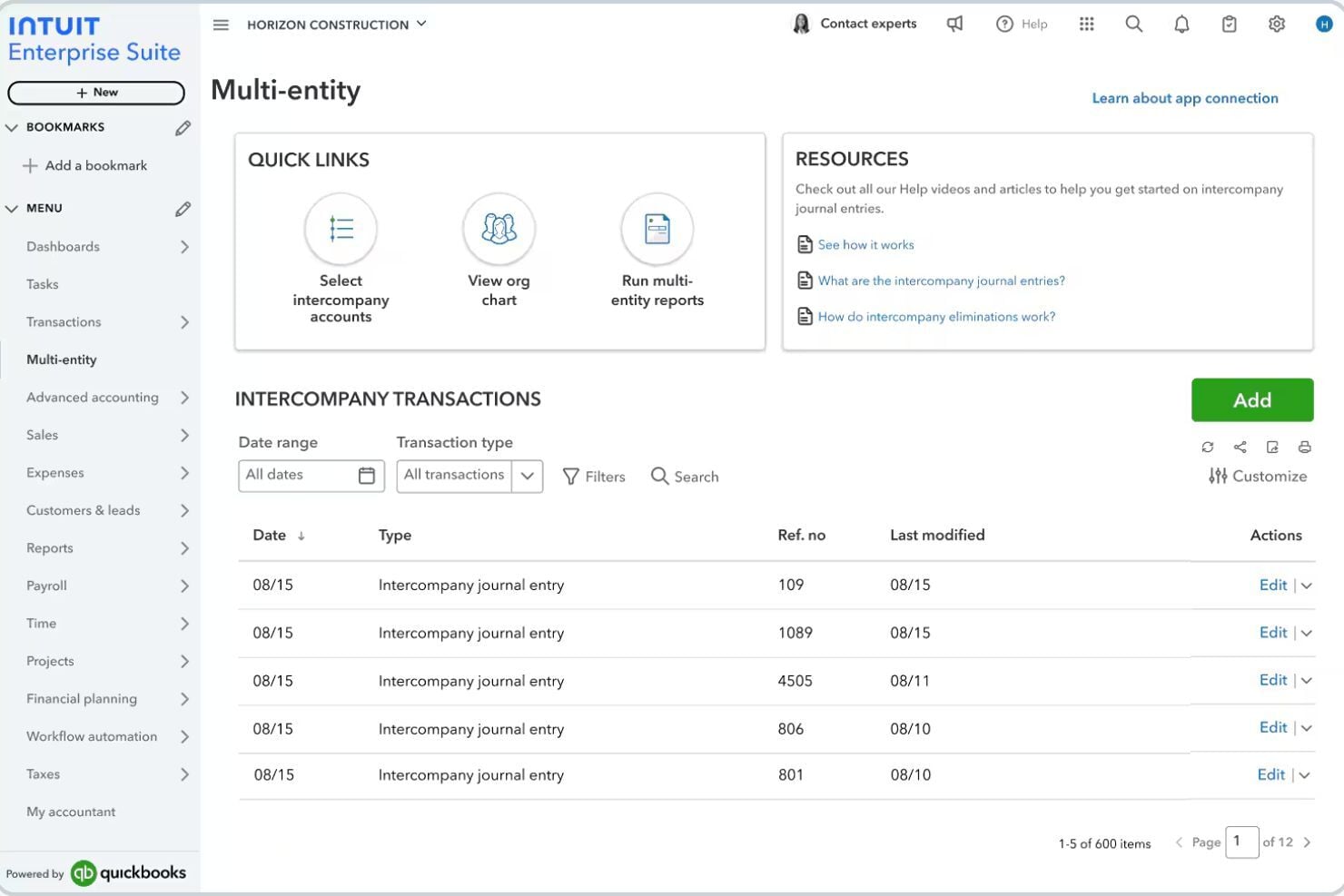
Intuit Enterprise Suite
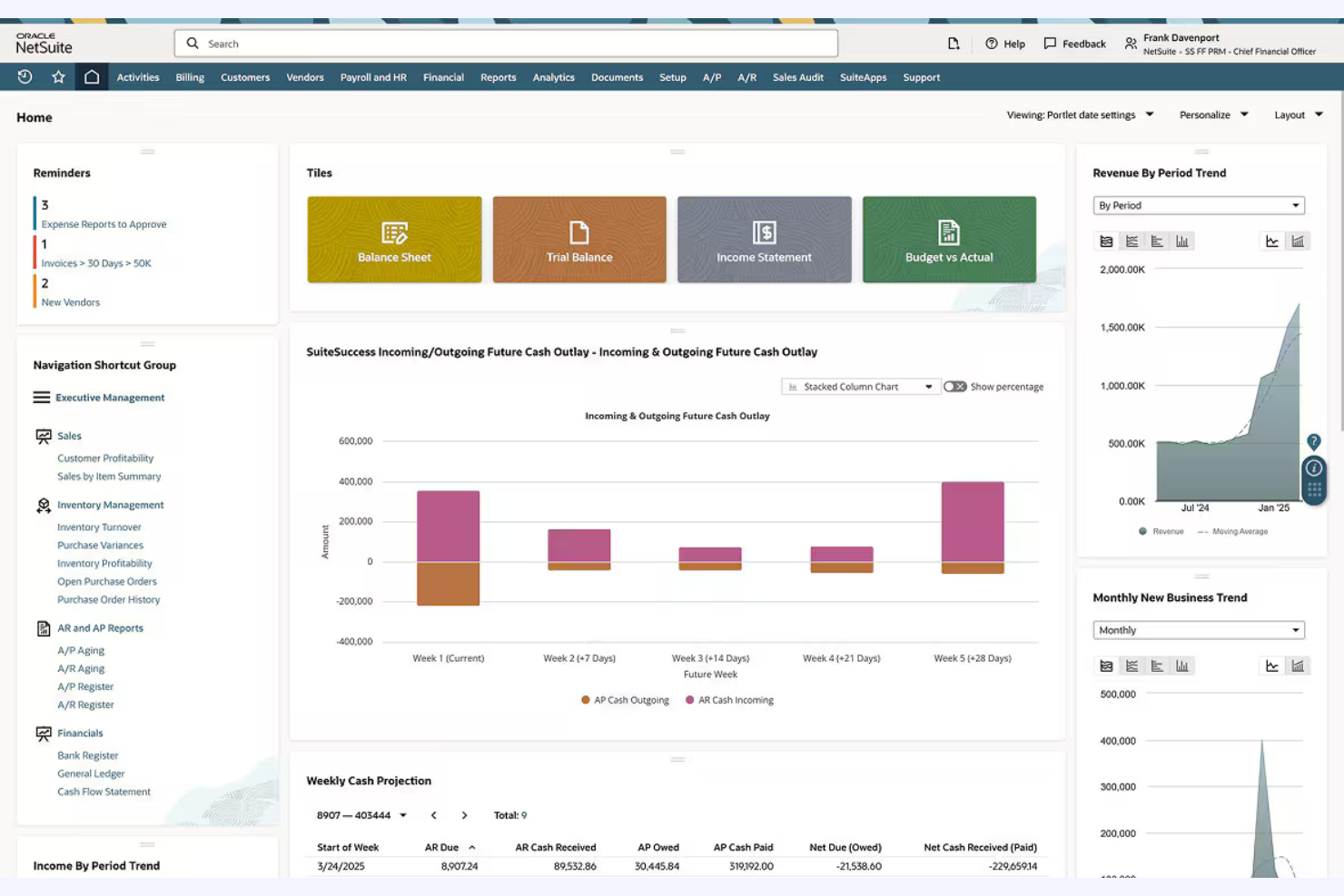
Oracle NetSuite ERP
Why Trust Our Software Reviews
Intuit Enterprise Suite vs. Oracle NetSuite ERP Pricing Comparison
| Intuit Enterprise Suite | Oracle NetSuite ERP | |
|---|---|---|
| Free Trial | Free demo available | Free demo available |
| Pricing | Pricing upon request | Pricing upon request |
Intuit Enterprise Suite vs. NetSuite ERP Pricing & Hidden Costs
Intuit Enterprise Suite uses a contract-based subscription model with pricing customized for each business. Costs typically vary based on factors such as the number of entities, users, and required capabilities. While the base platform includes financial management and other core tools, additional functionality—such as payroll, advanced automation, or third-party integrations—may increase the overall cost.
NetSuite ERP follows a modular subscription pricing structure built around a base platform license, user licenses, and optional add-on modules. Businesses pay for the specific functionality they need—such as advanced financials, inventory management, or CRM—but costs can grow as more modules and users are added. Implementation, customization, integrations, and ongoing support can also significantly increase the total cost of ownership, and final pricing typically depends on business requirements and negotiated contract terms.
Intuit Enterprise Suite vs. Oracle NetSuite ERP Feature Comparison
One key difference between Intuit Enterprise Suite and NetSuite ERP is the scope of functionality each platform targets. Intuit Enterprise Suite focuses heavily on financial operations for growing companies, with built-in tools for multi-entity accounting, payroll, HR, and consolidated reporting within the broader Intuit ecosystem. This makes it especially appealing for organizations already using QuickBooks that want a more scalable financial management platform.
NetSuite ERP, by contrast, is designed as a much broader operational platform. It offers extensive modules for supply chain management, inventory, procurement, manufacturing, CRM, and ecommerce in addition to financial management. However, the two tools still overlap in many core ERP capabilities, including general accounting, reporting dashboards, workflow automation, and tools for managing orders, projects, and financial data across the business.
| Intuit Enterprise Suite | Oracle NetSuite ERP | |
|---|---|---|
| API | ||
| Accounts Payable | ||
| Accounts Receivable | ||
| Budgeting | ||
| Calendar Management | ||
| Customer Management | ||
| Dashboard | ||
| Data Export | ||
| Data Import | ||
| Data Visualization | ||
| Expense Tracking | ||
| External Integrations | ||
| Forecasting | ||
| General Account Ledger | ||
| Inventory Tracking | ||
| Multi-User | ||
| Notifications | ||
| Payroll | ||
| Supplier Management | ||
| Tax Management |
Intuit Enterprise Suite vs. NetSuite ERP Integrations
| Integration | Intuit Enterprise Suite | NetSuite ERP |
| Salesforce | ❌ | ✅ |
| Shopify | ✅ | ✅ |
| Avalara | ✅ | ✅ |
| Bill.com | ✅ | ✅ |
| Expensify | ✅ | ✅ |
| HubSpot | ✅ | ✅ |
| ADP | ✅ | ✅ |
| PayPal | ✅ | ✅ |
| API | ✅ | ✅ |
| Zapier | ✅ | ✅ |
Both platforms support integrations with common finance and business tools, including payment processors, expense management systems, tax software, and CRM platforms. Many integrations for both systems are delivered through APIs, middleware platforms, or marketplace connectors rather than purely native connections. This means businesses often rely on integration platforms or third-party connectors to synchronize data across systems.
Intuit Enterprise Suite vs. NetSuite ERP Security, Compliance & Reliability
| Factor | Intuit Enterprise Suite | NetSuite ERP |
| Data Encryption | Uses 256-bit encryption for data at rest and in transit. | Provides end-to-end encryption and advanced access controls for all data. |
| Regulatory Compliance | Supported by Intuit’s broader compliance framework, including standards such as SOC 1, SOC 2, ISO 27001, and PCI DSS across its cloud infrastructure. | Provides extensive compliance support, including SOC 1 Type II, SOC 2 Type II, ISO 27001/27018, and PCI DSS, helping organizations meet regulatory and financial reporting requirements. |
| Uptime & Reliability | Reliability depends on cloud infrastructure and hosting environment, with backup and disaster-recovery safeguards typical of cloud financial platforms. | Designed with global cloud infrastructure, continuous monitoring, disaster-recovery processes, and operational security controls to maintain high availability. |
| User Access Controls | Provides customizable user roles and permissions for sensitive financial data. | Features granular role-based access and audit trails for all user activity. |
| Audit Trails | Tracks changes to transactions and user activity for basic audit support. | Maintains comprehensive audit logs and automated compliance reporting. |
NetSuite ERP generally offers a more extensive compliance and governance framework, including multiple international certifications and advanced tools for audit readiness, internal controls, and regulatory reporting. Intuit Enterprise Suite, meanwhile, provides strong security features built on Intuit’s cloud infrastructure, including encryption, role-based permissions, and audit tracking designed for growing businesses.
While both systems prioritize data protection and access control, NetSuite’s broader compliance ecosystem and enterprise-grade governance capabilities typically make it a stronger fit for organizations operating in complex regulatory environments.
Intuit Enterprise Suite vs. NetSuite ERP Ease of Use
| Factor | Intuit Enterprise Suite | NetSuite ERP |
| User Interface | Uses an interface influenced by the QuickBooks ecosystem, with a familiar layout and dashboards designed for finance teams transitioning from smaller accounting tools. | Provides customizable dashboards and role-based views, but the interface can feel complex due to the platform’s broad functionality. |
| Onboarding | Provides guided setup and in-app tips for a quick start. | Requires formal training and a longer learning curve for full adoption. |
| Customization | Supports configurable workflows, dashboards, and financial reporting but focuses on usability over deep system-level customization. | Offers extensive customization through SuiteScript, custom fields, workflows, and dashboards. |
| Support Resources | Includes live chat, phone support, and a large knowledge base. | Provides support plans, extensive documentation, training programs, and a partner ecosystem for implementation and ongoing support. |
| Mobile Access | Mobile app covers core features for on-the-go tasks. | Mobile app offers full platform access but may require extra configuration. |
Intuit Enterprise Suite is generally easier for finance teams to adopt quickly, particularly for organizations already familiar with QuickBooks-style workflows. Its interface and setup process are designed to reduce complexity and help businesses transition from smaller accounting systems with minimal disruption.
NetSuite ERP typically requires more time to implement and learn because of its broader feature set and customization capabilities. However, that complexity also allows organizations to tailor workflows, dashboards, and data structures to fit more sophisticated operational requirements.
Intuit Enterprise Suite vs Oracle NetSuite ERP: Pros & Cons
Intuit Enterprise Suite
- Built-in migration tools support transitions from QuickBooks Desktop and Advanced.
- AI-powered forecasting and insights help businesses analyze financial data.
- Multi-entity management supports complex organizational structures.
- Reports take longer than expected to load.
- Features can feel overwhelming.
- The platform lacks sufficient training for new releases.
Oracle NetSuite ERP
- Provides real-time dashboards and customizable reporting
- Offers strong automation for recurring accounting processes
- Handles multi-entity and global financial consolidation well
- Some users report slow customer support response times
- Implementation and onboarding can be lengthy and complex
- Pricing is higher than many other ERP options
Best Use Cases for Intuit Enterprise Suite and Oracle NetSuite ERP
Intuit Enterprise Suite
- Construction Firms Construction companies tracking job costing, project budgets, and multi-entity structures gain stronger operational visibility.
- Product-Based Businesses Companies that manage inventory and sales orders and need accounting, inventory, and order workflows connected in one system.
- Growing Service Businesses Service businesses needing project profitability tracking, workforce management, and consolidated financial planning across departments benefit significantly.
- Businesses With Structured Financial Workflows Companies with complex approval processes that want to automate financial workflows and improve internal controls.
- Finance Teams Focused on Forecasting Organizations that rely on financial planning and projections to guide budgeting, expansion, and strategic decisions.
- Multi-Entity Businesses Companies managing multiple subsidiaries, brands, or locations that need consolidated financial visibility while maintaining separate books.
Oracle NetSuite ERP
- Healthcare Organizations Supports HIPAA compliance and complex billing structures.
- Finance Departments Automates consolidations, intercompany eliminations, and advanced reporting.
- Retail Chains Handles multi-location inventory, POS integration, and omnichannel sales.
- SaaS Businesses Manages recurring revenue, subscription billing, and deferred revenue.
- Manufacturing Companies Tracks inventory, production, and supply chain in real time.
- Global Enterprises Supports multi-currency, multi-subsidiary, and international compliance requirements.
Who Should Use Intuit Enterprise Suite, and Who Should Use NetSuite ERP?
Intuit Enterprise Suite is a smart pick for mid-market and growing organizations, accounting teams, and organizations that want a familiar, straightforward ERP without a steep learning curve or heavy IT lift. It’s especially well-suited for companies already using QuickBooks and those with simpler workflows or limited budgets.
NetSuite ERP, on the other hand, is built for larger, fast-growing, or global organizations that need advanced customization, multi-entity support, and robust compliance features. If your team manages complex operations, multiple subsidiaries, or rapid scaling, NetSuite ERP may be better for you—just be aware that you will need to invest more time upfront for implementation and learning.
Differences Between Intuit Enterprise Suite and Oracle NetSuite ERP
| Intuit Enterprise Suite | Oracle NetSuite ERP | |
|---|---|---|
| Automation | Automates financial workflows such as budgeting, payroll, approvals, and reporting. | Automation extends across finance, inventory, procurement, supply chain, and operations. |
| Core Strength | Multi-entity financial management and consolidated reporting. | End-to-end ERP capabilities across finance, supply chain, CRM, and commerce. |
| Customization | Supports configurable dashboards, workflows, and reporting dimensions. | Extensive customization with SuiteScript, custom fields, and workflow automation. |
| Pricing Model | Custom subscription pricing based on configuration, number of entities, and features. | Modular pricing based on activated features and negotiated contracts. |
| User Interface | Familiar QuickBooks-style interface designed for ease-of-use. | Highly customizable dashboards with a steeper learning curve. |
| Visit Intuit Enterprise SuiteOpens new window | Read Oracle NetSuite ERP ReviewOpens new window |
Similarities Between Intuit Enterprise Suite and Oracle NetSuite ERP
| Audit Trails | Each system maintains audit logs that track changes to transactions and user activity for financial transparency. |
|---|---|
| Cloud-Based Access | Both are cloud-based platforms that allow teams to access financial and operational data from anywhere through a web browser. |
| Core Accounting | Each platform includes essential accounting capabilities such as general ledger, accounts payable, accounts receivable, and financial reporting. |
| Financial Reporting | Both offer customizable financial reports and dashboards that help businesses track performance and key financial metrics. |
| Role-Based Permissions | Both provide role-based user permissions so administrators can control access to financial data and system functions. |
| Visit Intuit Enterprise SuiteOpens new window Read Oracle NetSuite ERP ReviewOpens new window | |