

Oracle NetSuite ERP Review: Key Features, Pros, Cons, and Pricing Explained
Oracle Netsuite ERP is one of the most prolific in the market. Here’s my evaluation of this tool’s pricing, usability, and standout features.

We review tools independently, and commissions help fund our testing. See our transparency policy, our methodology, or suggest a tool.
Oracle NetSuite ERP is a cloud-based ERP software designed to help finance leaders manage accounting, operations, and compliance in one unified platform. For CFOs navigating complex reporting, rapid growth, and evolving regulatory demands, it offers real-time visibility, automation, and scalability. This Oracle NetSuite ERP review covers its core features, best and worst use cases, pros and cons, and pricing to help you decide if it fits your organization’s needs.
Oracle NetSuite ERP Evaluation Summary

4.2/5
- Pricing upon request
- Free demo available
Why Trust Our Software Recommendations
6,700+
Reviews
20
Industry experts
16+
Evaluation factors
14
Years
Our team has been testing and reviewing software since 2012. As finance leaders ourselves, we know how difficult—and important—it is to choose the right software.
For this guide, we evaluated tools using hands-on testing and independent research, scoring tools using our selection criteria.
Our reviews reflect our human editorial judgment, not a sales pitch.
Oracle NetSuite ERP Overview
Oracle NetSuite ERP offers deep financial management, strong automation, and broad integration options, making it a top choice for organizations prioritizing scalability and real-time data. Its pricing can be higher and onboarding more complex than some alternatives, but the platform’s customizable dashboards and global compliance tools set it apart. Support is responsive, though the interface may feel overwhelming for smaller teams.
If you’re judging ERP options for multi-entity, fast-growing, or internationally operating businesses, Oracle NetSuite ERP consistently delivers the flexibility and control needed to manage complexity.
Pros
- Handles multi-entity and global financial consolidation well
- Offers strong automation for recurring accounting processes
- Provides real-time dashboards and customizable reporting
Cons
- Pricing is higher than many other ERP options
- Implementation and onboarding can be lengthy and complex
- Some users report slow customer support response times
Is Oracle NetSuite ERP Right For Your Needs?
Who Would be a Good Fit for Oracle NetSuite ERP?
Oracle NetSuite ERP is best suited for organizations that need advanced financial controls, multi-entity management, and real-time visibility across complex operations. It’s a strong choice for industries with global operations, high transaction volumes, or strict compliance requirements. Teams that benefit most often require deep automation, consolidated reporting, and scalable workflows to support growth and regulatory demands.
- Global EnterprisesSupports multi-currency, multi-subsidiary, and international compliance requirements.
- Manufacturing CompaniesTracks inventory, production, and supply chain in real time.
- SaaS BusinessesManages recurring revenue, subscription billing, and deferred revenue.
- Retail ChainsHandles multi-location inventory, POS integration, and omnichannel sales.
- Finance DepartmentsAutomates consolidations, intercompany eliminations, and advanced reporting.
- Healthcare OrganizationsSupports HIPAA compliance and complex billing structures.
Who Would be a Bad Fit for Oracle NetSuite ERP?
Oracle NetSuite ERP may not be the best choice for smaller businesses, teams with simple needs, or organizations with limited budgets. Its complexity, higher pricing, and resource-intensive implementation can outweigh the benefits for companies that don’t require advanced features or global capabilities.
- Small StartupsSetup and cost are excessive for basic accounting needs.
- Local NonprofitsFeatures and complexity exceed typical nonprofit requirements.
- Single-Entity BusinessesMulti-entity tools add unnecessary complexity and cost.
- Construction FirmsLacks industry-specific project management and job costing tools.
- FreelancersOverly complex for solo operations and simple invoicing.
- Small RetailersImplementation and licensing costs are prohibitive for small stores.
How We Test & Score Tools
We’ve spent years building, refining, and improving our software testing and scoring system. The rubric is designed to capture the nuances of software selection and what makes a tool effective, focusing on critical aspects of the decision-making process.
Below, you can see exactly how our testing and scoring works across seven criteria. It allows us to provide an unbiased evaluation of the software based on core functionality, standout features, ease of use, onboarding, customer support, integrations, customer reviews, and value for money.
Core Functionality (25% of final scoring)
The starting point of our evaluation is always the core functionality of the tool. Does it have the basic features and functions that a user would expect to see? Are any of those core features locked to higher-tiered pricing plans? At its core, we expect a tool to stand up against the baseline capabilities of its competitors.
Standout Features (25% of final scoring)
Next, we evaluate uncommon standout features that go above and beyond the core functionality typically found in tools of its kind. A high score reflects specialized or unique features that make the product faster, more efficient, or offer additional value to the user.
We also evaluate how easy it is to integrate with other tools typically found in the tech stack to expand the functionality and utility of the software. Tools offering plentiful native integrations, 3rd party connections, and API access to build custom integrations score best.
Ease of Use (10% of final scoring)
We consider how quick and easy it is to execute the tasks defined in the core functionality using the tool. High scoring software is well designed, intuitive to use, offers mobile apps, provides templates, and makes relatively complex tasks seem simple.
Onboarding (10% of final scoring)
We know how important rapid team adoption is for a new platform, so we evaluate how easy it is to learn and use a tool with minimal training. We evaluate how quickly a team member can get set up and start using the tool with no experience. High scoring solutions indicate little or no support is required.
Customer Support (10% of final scoring)
We review how quick and easy it is to get unstuck and find help by phone, live chat, or knowledge base. Tools and companies that provide real-time support score best, while chatbots score worst.
Customer Reviews (10% of final scoring)
Beyond our own testing and evaluation, we consider the net promoter score from current and past customers. We review their likelihood, given the option, to choose the tool again for the core functionality. A high scoring software reflects a high net promoter score from current or past customers.
Value for Money (10% of final scoring)
Lastly, in consideration of all the other criteria, we review the average price of entry level plans against the core features and consider the value of the other evaluation criteria. Software that delivers more, for less, will score higher.
Core Features
Financial Management
Automates accounting, general ledger, and financial close processes with real-time visibility. Users can manage multi-currency transactions and global consolidations from a single dashboard.
Order Management
Tracks sales orders, fulfillment, and returns across multiple channels. Automates order-to-cash workflows to reduce manual entry and errors.
Inventory Management
Monitors inventory levels, locations, and movements in real time. Supports demand planning and automated reordering to prevent stockouts.
Procurement
Streamlines purchasing, vendor management, and approvals with built-in controls. Users can track spend and manage supplier relationships from requisition to payment.
Revenue Recognition
Automates complex revenue recognition schedules for compliance with ASC 606 and IFRS 15. Handles multi-element arrangements and deferred revenue with audit-ready records.
Reporting and Analytics
Provides customizable dashboards, real-time KPIs, and financial reports. Users can drill down into transactions and trends for deeper insights.

Standout Features
SuiteCloud Platform
SuiteCloud Platform lets users customize workflows, build new applications, and automate processes without heavy IT involvement. This flexibility supports unique business requirements and enables rapid adaptation as needs change.
Global Compliance Management
Global Compliance Management automates tax calculation, regulatory reporting, and audit trails across multiple countries. This feature helps multinational organizations stay current with evolving tax laws and compliance standards.
Ease of Use
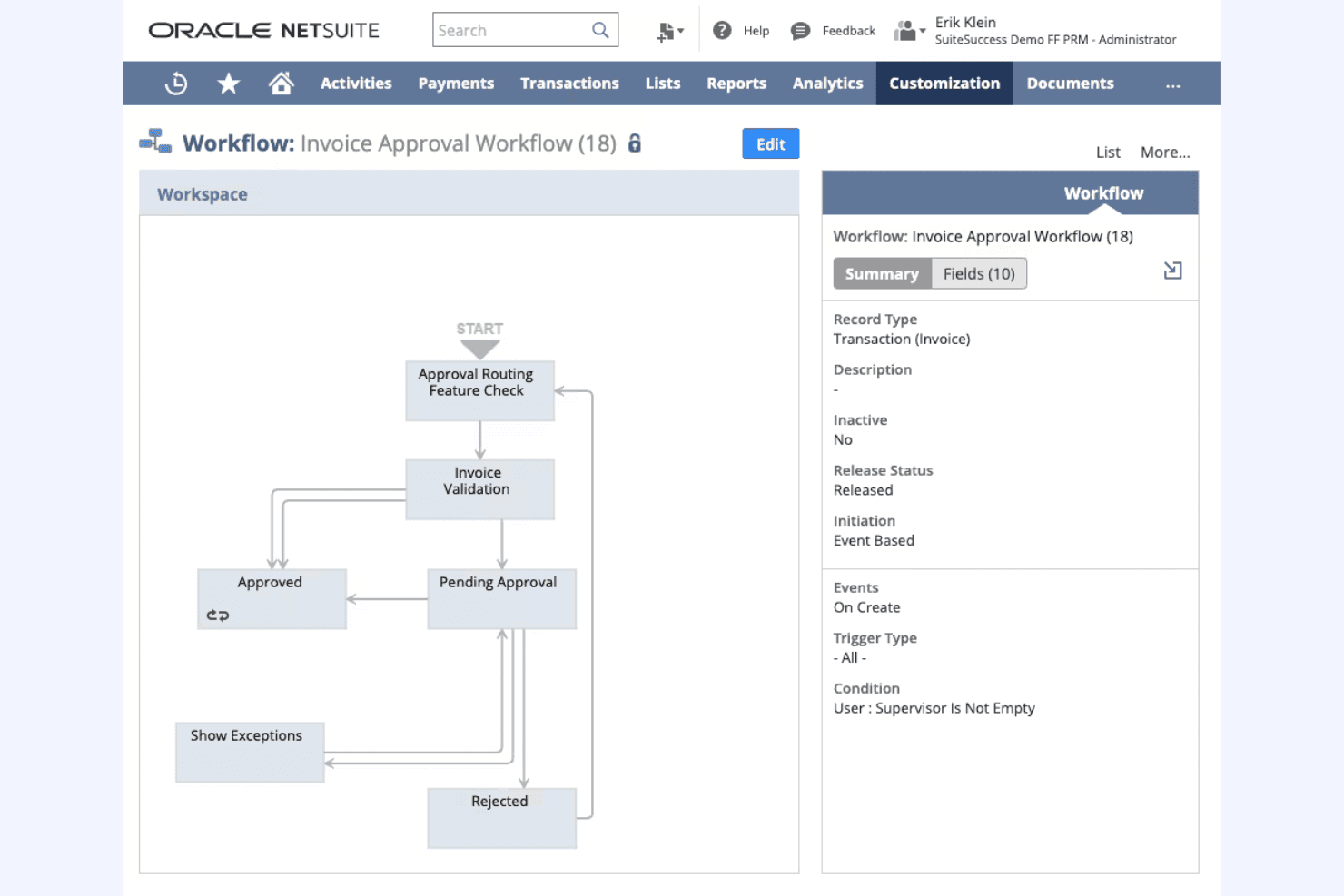
Oracle NetSuite ERP offers extensive functionality, but its interface can feel overwhelming for new users or smaller teams. Many users report that navigation and setup require significant training, especially given the depth of configuration options. However, once implemented, the customizable dashboards and workflow automations help experienced users manage complex processes efficiently. The platform’s flexibility is a strength, but it comes at the cost of a steeper initial learning curve.

Onboarding
Onboarding with Oracle NetSuite ERP is often described as lengthy and resource-intensive, with many users noting the need for dedicated implementation partners or consultants. The platform provides extensive documentation, training modules, and customer support, but the complexity of setup—especially for multi-entity or global organizations—can delay time to value. While support is generally responsive, the initial configuration and data migration process can be challenging for teams without prior ERP experience.

Customer Support
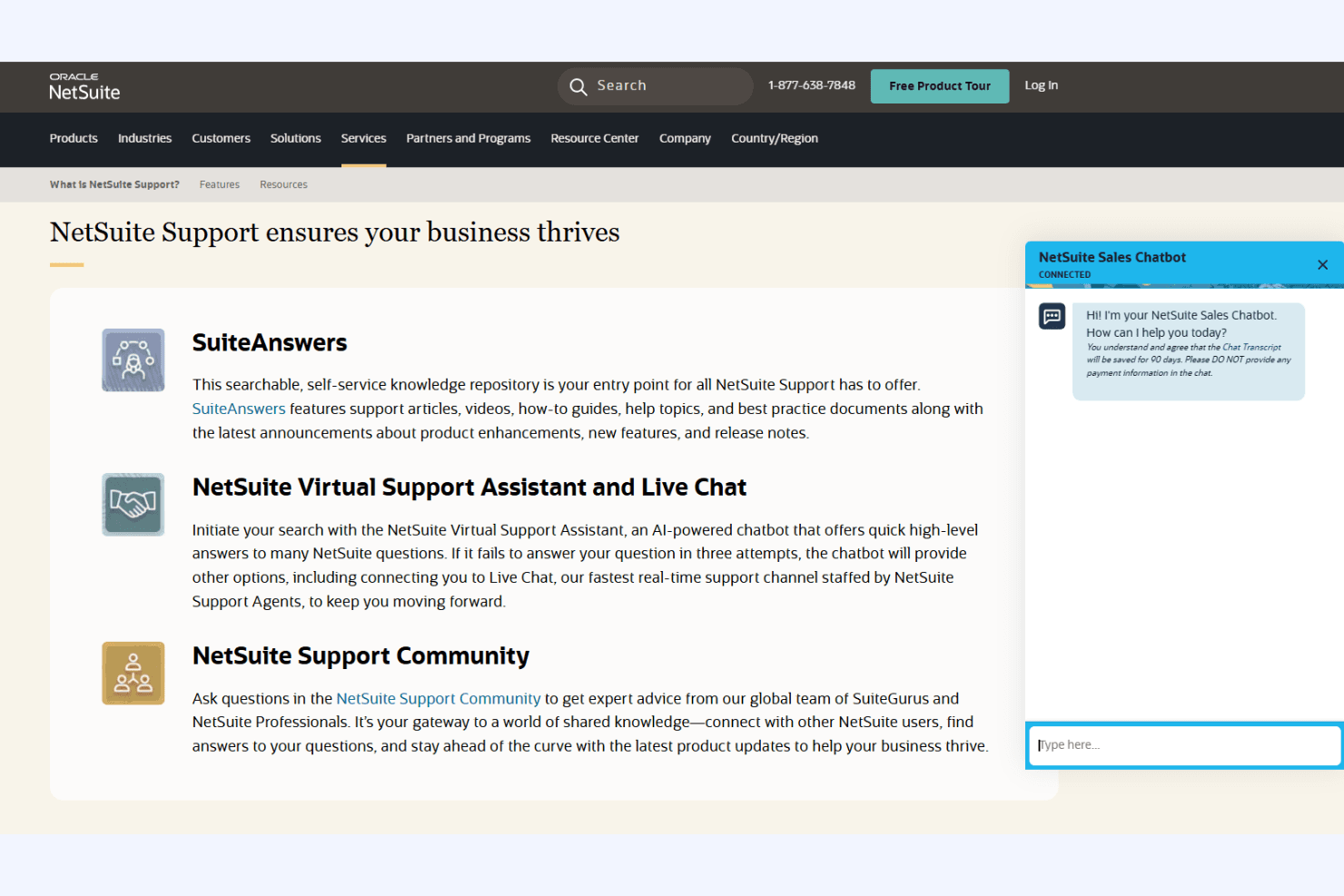
Oracle NetSuite ERP offers multiple support channels, including phone, email, and a knowledge base, but user reviews are mixed on response times and issue resolution. Some users praise the expertise of support staff, while others report delays and the need for escalation to resolve complex problems. Premium support tiers and dedicated account managers are available, but these often come at an additional cost, making consistent support quality dependent on your service level agreement.
Integrations
Oracle NetSuite ERP integrates with Salesforce, Shopify, Amazon, Avalara, ADP, HubSpot, Magento, PayPal, Dell Boomi, and Celigo, among others.
The platform also offers a robust API and connects with third-party integration tools for custom workflows and additional connectivity.

Value for Money
Oracle NetSuite ERP is often seen as a significant investment, with pricing that reflects its advanced features and scalability. Many users feel the cost is justified for larger or growing organizations needing multi-entity management and automation, but smaller businesses may find the entry price and add-on fees high for their needs.
- Custom subscription pricing: Core ERP platform pricing depends on the number of users, selected modules, and implementation scope.
- User licensing: Additional user licenses expand access to financial management, reporting, and operational workflows.
- Optional modules: Add capabilities such as advanced financials, inventory, or global management features beyond the base system.
Oracle NetSuite ERP Specs
- 2-Factor Authentication: Yes
- Accounts Payable: Yes
- Accounts Receivable: Yes
- API: Yes
- Balance Sheet: Yes
- Billing/Invoicing: Yes
- BitCoin: Yes
- Budgeting: Yes
- Calendar Management: Yes
- Contact Management: Yes
- CRM Integration: Yes
- Customer Management: Yes
- Dashboard: Yes
- Data Export: Yes
- Data Import: Yes
- Data Visualization: Yes
- Expense Tracking: Yes
- External Integrations: Yes
- Forecasting: Yes
- General Account Ledger: Yes
- Inventory Tracking: Yes
- Multi-Currency: Yes
- Multi-User: Yes
- Notifications: Yes
- P&L: Yes
- PayPal: Yes
- Payroll: Yes
- SAP Integration: Yes
- Stripe: Yes
- Supplier Management: Yes
- Tax Management: Yes
Oracle NetSuite ERP FAQs
Oracle NetSuite ERP Company Overview & History
Oracle NetSuite ERP is a cloud-based enterprise resource planning platform founded in 1998 by Evan Goldberg, with early funding from Larry Ellison. Headquartered in Austin, Texas, NetSuite became one of the first cloud software companies and now operates as a subsidiary of Oracle Corporation following its acquisition in 2016. The platform is used by over 43,000 organizations worldwide, spanning industries from retail to manufacturing. NetSuite is known for its innovation in cloud ERP and its ability to support complex, global business operations.
Oracle NetSuite ERP Major Milestones
- 1998: NetSuite founded by Evan Goldberg with funding from Larry Ellison.
- 2007: NetSuite goes public on the New York Stock Exchange.
- 2016: Oracle acquires NetSuite for $9.3 billion.
- 2023: NetSuite’s annual revenue estimated at $2.8 billion, with continued global expansion.
- 2026: Serves over 43,000 organizations worldwide as a leading cloud ERP provider.