
20 Best AML Compliance Software Reviewed in 2026

Best AML Compliance Software Shortlist
Here’s my shortlist of the best AML compliance software:


Navigating the complexities of financial regulations can be tough. As a CFO, you're tasked with keeping your company compliant while managing risks and costs. That's where AML compliance software comes in. These tools can help you detect suspicious activity and efficiently meet regulatory requirements.
In my experience testing and reviewing software, I've found some standout solutions that can make a real difference. I'll share my top picks, focusing on what each offers to address your specific challenges.
My goal is to provide you with an unbiased, well-researched review to help you make an informed decision. Stay tuned to discover the features, pros, and cons of the best AML compliance software on the market.
Why Trust Our Software Reviews
Best AML Compliance Software Summary
This comparison chart summarizes pricing details for my top AML compliance software selections to help you find the best one for your budget and business needs.
| Tool | Best For | Trial Info | Price | ||
|---|---|---|---|---|---|
| 1 | Best for identity verification | Free demo available | From $712.20/month | Website | |
| 2 | Best for startups and SMEs | Free demo available | Pricing upon request | Website | |
| 3 | Best for transaction monitoring | Not available | Pricing upon request | Website | |
| 4 | Best for AI-driven real-time risk insights | Free demo available | From $99.99/month (billed annually) | Website | |
| 5 | Best for client lifecycle management | Free demo available | Pricing upon request | Website | |
| 6 | Best for AI-driven solutions | Free demo available | Pricing upon request | Website | |
| 7 | Best for community banks | Free demo available | Pricing upon request | Website | |
| 8 | Best for scalable compliance screening | Free demo available | Pricing upon request | Website | |
| 9 | Best for AI-powered fraud prevention | Free demo available | Pricing upon request | Website | |
| 10 | Best for regulatory compliance | Free demo available | Pricing upon request | Website |
-

Rippling Spend
Visit WebsiteThis is an aggregated rating for this tool including ratings from Crozdesk users and ratings from other sites.4.8 -
LiveFlow
Visit WebsiteThis is an aggregated rating for this tool including ratings from Crozdesk users and ratings from other sites.4.9 -
Float Financial
Visit WebsiteThis is an aggregated rating for this tool including ratings from Crozdesk users and ratings from other sites.4.1


Best AML Compliance Software Reviews
Below are my detailed summaries of the best AML programs that made it onto my shortlist. My reviews offer a detailed look at the key features, pros and cons, integrations, and ideal use cases for each tool to help you find the best one for you.

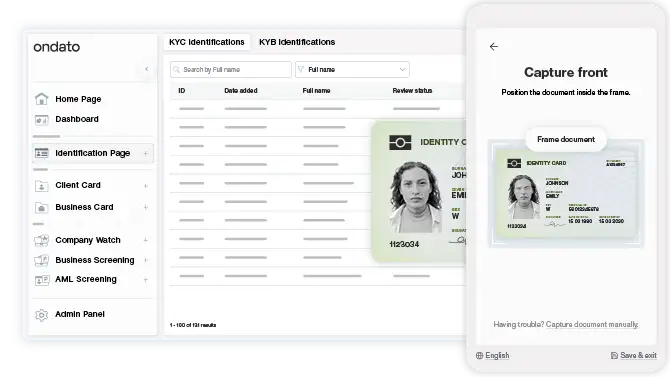
Ondato is a compliance platform specializing in identity verification for businesses across various sectors. It helps your team simplify KYC processes, making sure that customer identities are verified accurately and efficiently.
Why I picked Ondato: Its focus on identity verification makes it invaluable for businesses needing reliable KYC solutions. The platform offers real-time verification, reducing delays in customer onboarding. The biometric authentication adds an extra layer of security, allowing your team to trust the identities being verified. Ondato's user-friendly interface simplifies the verification process, making it accessible to businesses of all sizes.
Standout features and integrations:
Features include real-time identity verification that speeds up your onboarding process. Biometric authentication provides an additional security layer, improving trust in your customer base.The platform's user-friendly interface enables your team to efficiently manage and verify identities without extensive training.
Integrations include REST API, Static URL, Salesforce, Microsoft Dynamics, SAP, Oracle, Zoho, HubSpot, QuickBooks, Xero, FreshBooks, NetSuite, and more.
Pros and Cons
Pros:
- User-friendly interface
- Biometric authentication increases security
- Real-time identity verification reduces delays
Cons:
- Limited advanced AML features
- Dependence on document quality

Best for startups and SMEs

Flagright is a financial crime compliance tool designed for startups and small to medium-sized enterprises (SMEs). It focuses on providing transaction monitoring, fraud prevention, and regulatory compliance to help your business efficiently meet its compliance needs.
Why I picked Flagright: Its suitability for startups and SMEs differentiates it from other solutions. Its user-friendly interface and quick setup make it accessible for smaller teams with limited resources. The tool's flexible API allows excellent integration with existing systems, supporting your team's operational needs. Its cost-effective pricing structure allows even growing businesses to afford vital compliance tools.
Standout features and integrations:
Features include real-time transaction monitoring that helps you detect fraud and suspicious activity quickly. The tool offers customizable rules that allow you to tailor the system to your specific needs. The dashboard provides clear insights into your compliance status, helping you make informed decisions.
Integrations include Salesforce, Zendesk, HubSpot, Integrated Finance, AiPrise, Ondato, Transaction Link, and more.
Pros and Cons
Pros:
- Cost-effective for small businesses
- Flexible API integration
- Quick and easy setup
Cons:
- Rigid dashboard customization
- API-centric learning curve

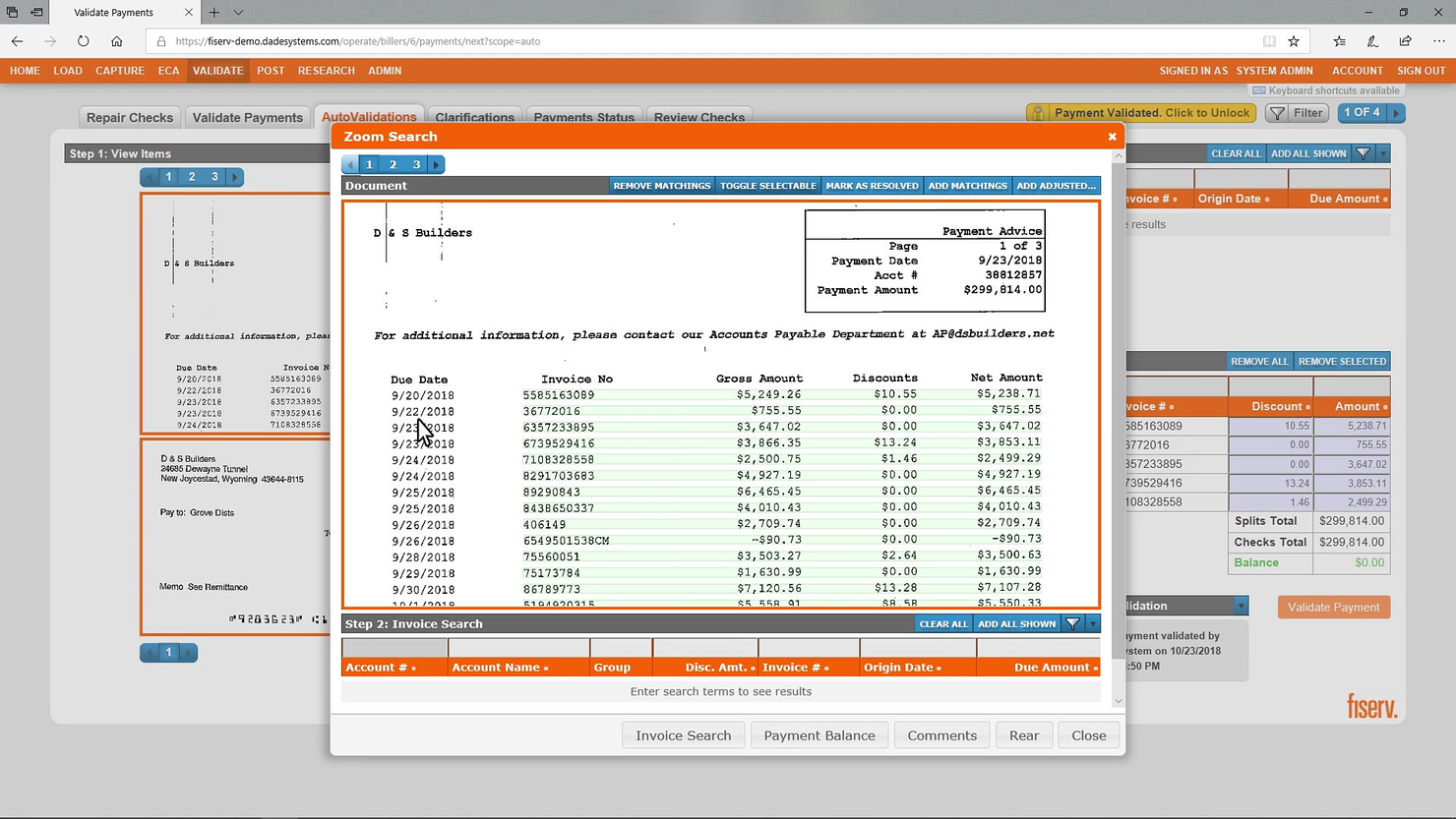
Fiserv provides financial services technology solutions primarily for banks, credit unions, and other financial institutions. It focuses on transaction monitoring, fraud detection, and compliance management to help your team maintain regulatory standards and improve security.
Why I picked Fiserv: Its transaction monitoring capabilities are key for financial institutions needing to detect and manage suspicious activity. The platform offers real-time alerts that keep your team informed of potential risks. The fraud detection tools integrate flawlessly with your existing systems, causing minimal disruption. Fiserv's compliance management features help simplify processes, making it easier for your team to meet regulatory requirements.
Standout features and integrations:
Features include real-time alerts that notify you of suspicious transactions immediately. Fraud detection tools are designed to integrate smoothly with your current systems, minimizing disruption. The compliance management feature simplifies regulatory processes and helps your team stay compliant.
Integrations include Salesforce, HubSpot, and more.
Pros and Cons
Pros:
- Excellent fraud detection
- Real-time alert notifications
- Thorough compliance management
Cons:
- Resource-intensive for small businesses
- Ongoing maintenance required


ComplyAdvantage is an AI-driven AML compliance program designed for financial institutions and enterprises. It focuses on improving compliance processes with functions, including customer and company screening, transaction monitoring, and payment screening.
Why I picked ComplyAdvantage: Its real-time risk insights set it apart, offering wide-ranging financial crime risk intelligence. It features extensive sanctions and watchlists, as well as a global database of politically exposed persons (PEPs). Continuous adverse media monitoring helps your team stay informed on relevant risks. The platform's AI-driven accuracy reduces false positives, making it efficient for complex regulatory environments.
Standout features and integrations:
Features include customer and company screening, which help you identify potential risks early. Ongoing monitoring keeps you continually updated with the latest compliance information. Transaction monitoring and payment screening improve your SAR detection.
Integrations include Salesforce, Oracle, Microsoft Dynamics 365, SAP, Fenergo, LexisNexis, and more.
Pros and Cons
Pros:
- AI-driven accuracy
- Vast watchlists and global PEP coverage
- Real-time risk insights
Cons:
- Cluttered alert interface
- Persistent false positive volume

Fenergo is a client lifecycle management solution tailored for financial institutions, focusing on onboarding, compliance, and data management. It helps your team refine regulatory processes and improve customer experiences through efficient data handling and compliance checks.
Why I picked Fenergo: Its focus on client lifecycle management makes it ideal for financial institutions needing in-depth onboarding solutions. The platform automates regulatory processes, reducing manual effort and improving accuracy. Its data management features help your team maintain compliance while improving customer service. Fenergo's integration with existing systems helps you manage client data efficiently.
Standout features and integrations:
Features include automated regulatory processes that reduce manual workload and improve compliance accuracy. Data management tools help you maintain compliance while improving customer service. The platform's flawless integration with existing systems allows efficient client data management.
Integrations include Oracle, SAP, Microsoft Dynamics, IBM, Google Cloud, Adobe, QuickBooks, Xero, and more.
Pros and Cons
Pros:
- Efficient data management
- Automated regulatory processes
- Extensive client lifecycle management
Cons:
- Performance lag with large datasets
- Optimized primarily for financial institutions

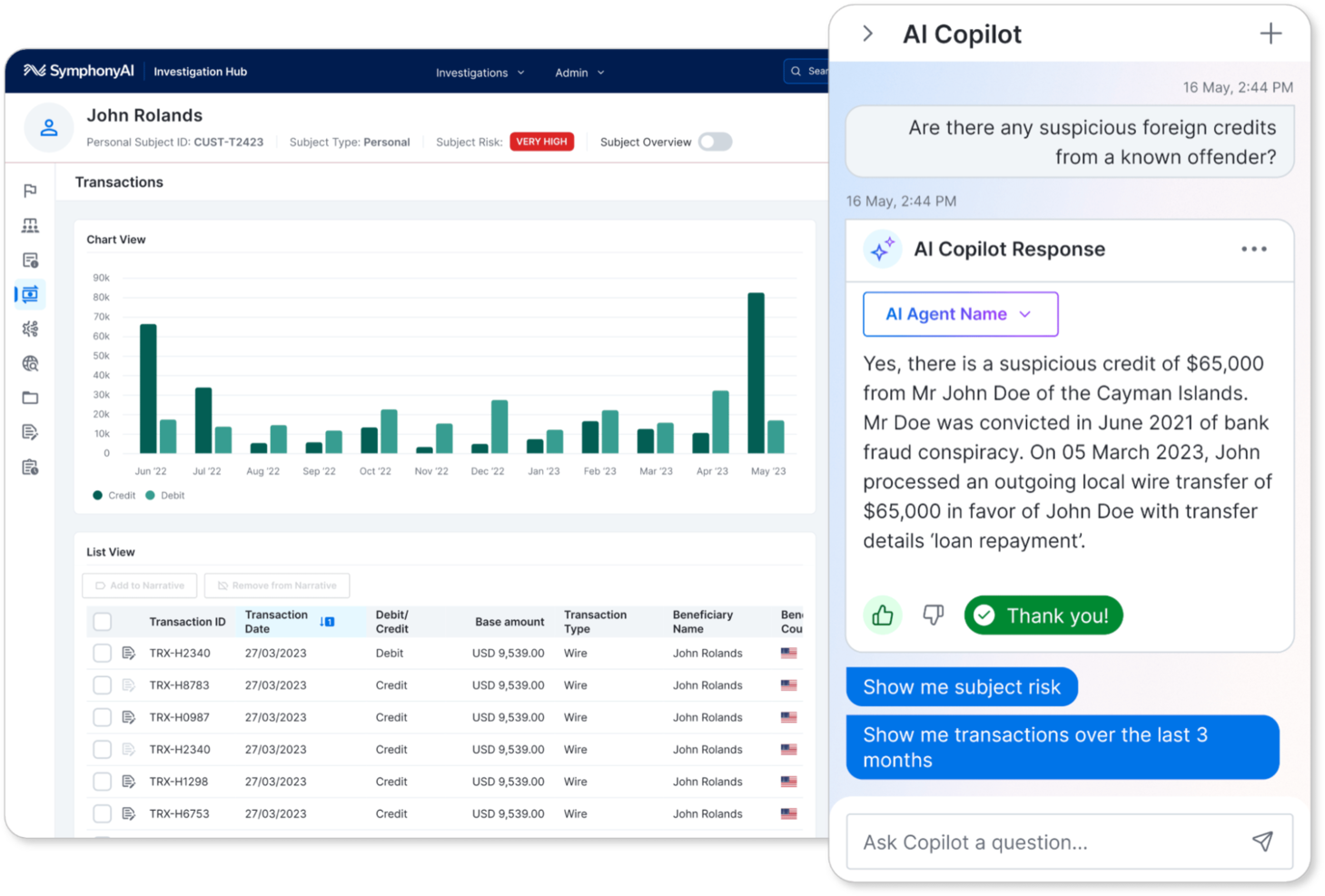
SymphonyAI is a financial compliance platform tailored for large enterprises seeking AI-driven solutions to manage risk and compliance. It focuses on improving efficiency in financial crime detection and regulatory compliance processes, providing your team with advanced tools for effective oversight.
Why I picked SymphonyAI: The AI-driven approach allows it to offer predictive analytics and automated workflows, improving accuracy and reducing manual effort. Its configurable dashboards provide real-time insights, enabling your team to respond swiftly to potential risks. The tool's scalability makes it suitable for large enterprises with complex compliance needs. SymphonyAI also supports multichannel communication, keeping your team connected across platforms.
Standout features and integrations:
Features include predictive analytics that help identify potential risks before they escalate. Automated workflows reduce manual tasks, allowing your team to focus on strategic activities. The platform's configurable dashboards provide real-time insights, enabling you to make informed decisions.
Integrations include Microsoft Azure Marketplace, Salesforce, Oracle, Microsoft Dynamics, SAP, IBM, Slack, Zoom, Microsoft Teams, and more.
Pros and Cons
Pros:
- Automated workflows and case management
- Scalable for large enterprises
- AI-driven risk detection and predictive analytics
Cons:
- Complex reporting setup
- Complex implementation for new users

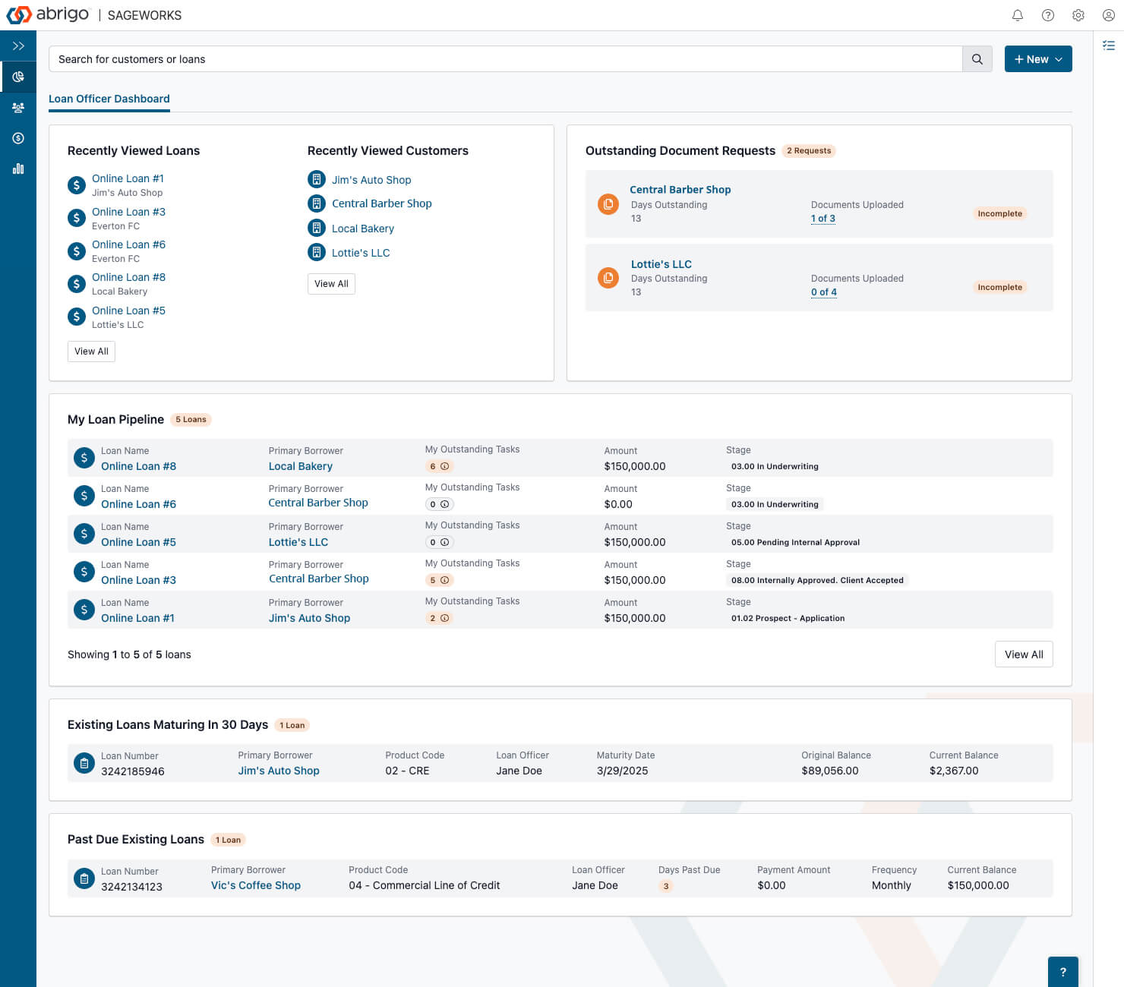
Abrigo is a compliance and risk management tool designed primarily for community banks and credit unions. It assists in managing AML compliance, fraud detection, and lending processes, making it easier for your institution to meet regulatory requirements.
Why I picked Abrigo: Its focus on community banks and credit unions makes it a tailored solution for smaller financial institutions. The software features automated processes that reduce the burden of manual compliance tasks, saving your team time and effort. Its risk management tools help you identify and mitigate potential threats efficiently. Additionally, Abrigo offers lending solutions that integrate flawlessly with your existing workflows, providing a thorough approach to your banking needs.
Standout features and integrations:
Features include automated compliance processes that minimize manual work for your team. Risk management tools are designed to help you quickly identify and address potential threats. The lending solutions integrate smoothly with your existing systems, improving your overall banking operations.
Integrations include Salesforce, Finastra, PortX, Factual Data, Prelim, RouteOne, Encapture, and more.
Pros and Cons
Pros:
- Integrated lending and risk management tools
- Automated compliance processes
- Tailored for community banks and credit unions
Cons:
- Strict US-centric focus
- Siloed reporting modules

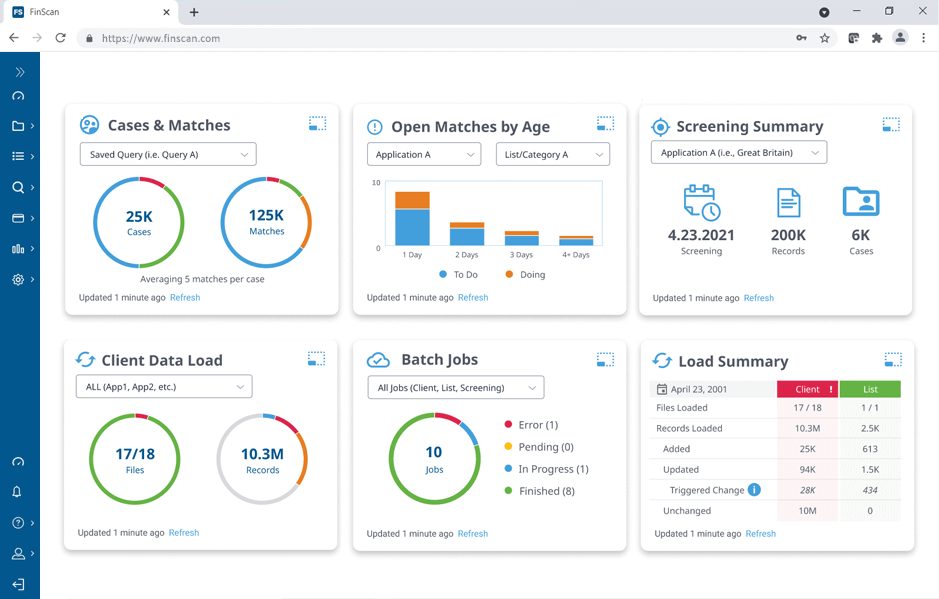
FinScan is an AML software designed primarily for financial institutions, fintech companies, and other industries requiring thorough compliance checks. It focuses on overall solutions for AML and know your customer compliance, including payment screening, sanctions and watchlist screening, and risk scoring.
Why I picked FinScan: It excels in scalable screening, which is critical for large organizations and those in highly regulated sectors. It’s proven that configurable matching algorithms significantly reduce false positives, improving data integrity and efficiency. The software's ability to manage complex regulatory landscapes makes it ideal for businesses with extensive compliance needs. Its wide-ranging features cater to various sectors, helping you meet regulatory requirements effectively.
Standout features and integrations:
Features include payment and transaction screening that help you manage transactions securely. Sanctions and watchlist screening keep you compliant with global regulations. Risk scoring and match prioritization provide a detailed assessment of potential threats to your organization.
Integrations include Salesforce, Oracle, Microsoft Dynamics, SAP, and more.
Pros and Cons
Pros:
- Effective risk management
- Extensive compliance features
- Increases data integrity
Cons:
- Training required to interpret screening results and reports
- Requires specialized knowledge

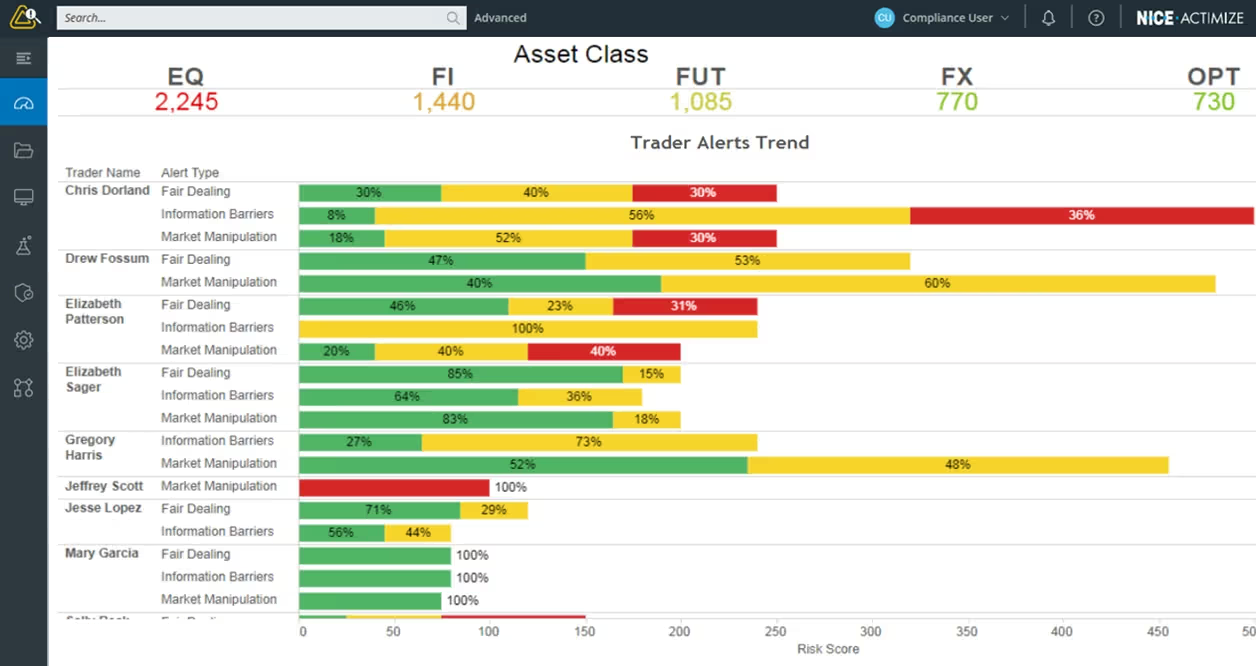
Nice Actimize offers an artificial intelligence-driven solution tailored for financial institutions to address fraud prevention and AML compliance. It primarily serves financial institutions by providing a unified defense system against financial crime.
Why I picked Nice Actimize: The integration of fraud prevention and AML compliance into a single platform differentiates it from others. It features AI-powered precision and machine learning to help institutions prevent financial crime. Automation of routine tasks improves operational efficiency, while real-time threat detection provides proactive protection. These features align with its suitability for financial institutions.
Standout features and integrations:
Features include a unified defense system that improves workflows for thorough crime prevention. AI-powered precision utilizes machine learning for end-to-end financial crime and compliance solutions. Automation of routine tasks improves operational efficiency, and real-time threat detection enables proactive protection.
Integrations include Microsoft, Oracle, SAP, IBM, Salesforce, Accenture, Deloitte, EY, PwC, and more.
Pros and Cons
Pros:
- AI-powered precision
- Real-time threat detection
- Unified fraud and AML solution
Cons:
- Protracted implementation timelines
- Cloud-compatibility concerns

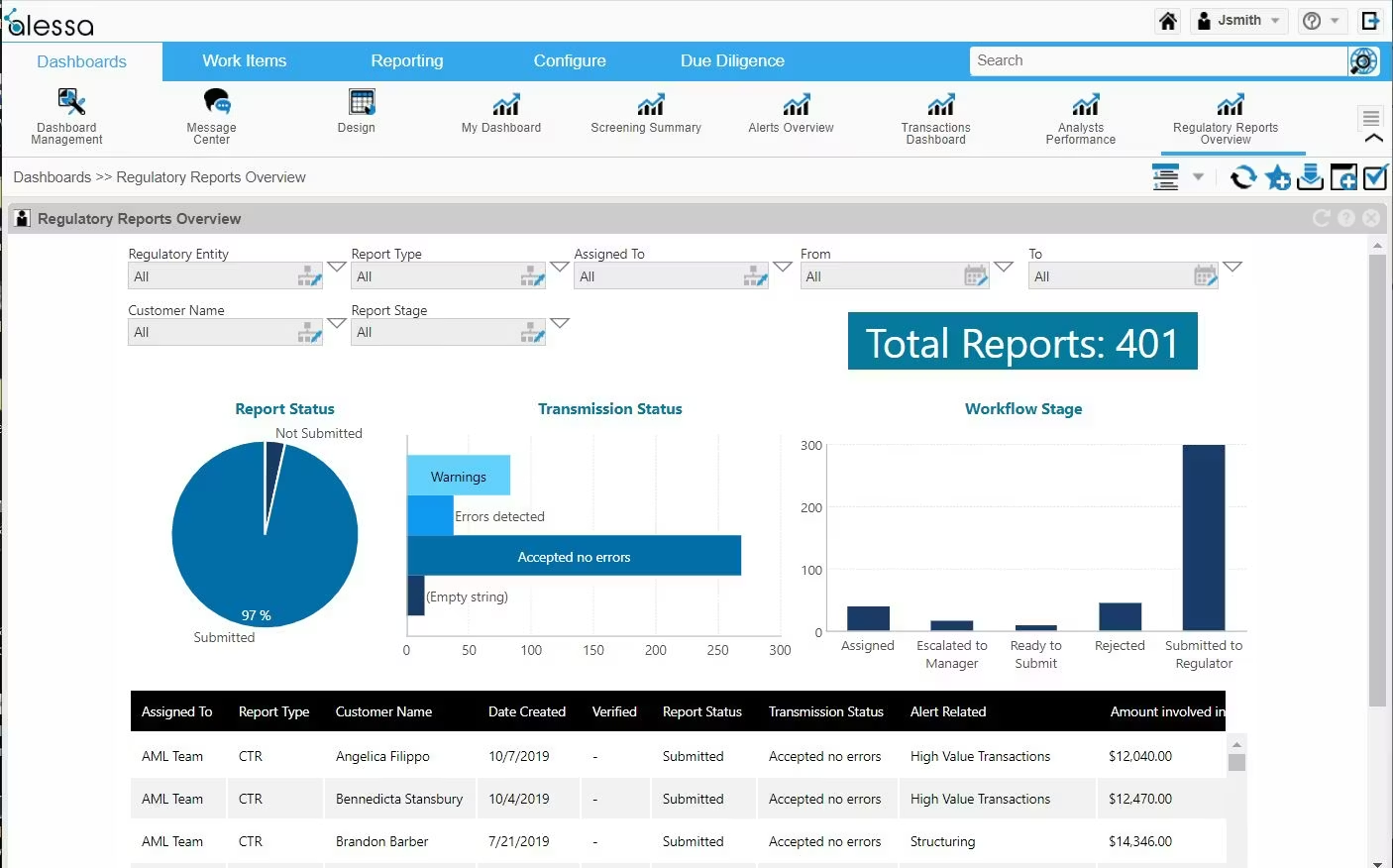
Alessa is a compliance and fraud-prevention tool designed for financial institutions and businesses across various sectors. It focuses on AML compliance, transaction monitoring, and fraud detection to help your team maintain regulatory standards effectively.
Why I picked Alessa: Its strong emphasis on regulatory compliance makes it stand out. It offers transaction monitoring that identifies suspicious activity in real time, keeping you ahead of potential risks. The tool's case management system allows your team to track and resolve issues efficiently. Additionally, its audit trail feature and suspicious activity reporting improve transparency and accountability in compliance processes.
Standout features and integrations:
Features include real-time transaction monitoring to help you quickly detect and respond to suspicious activity, as well as risk profile scoring. The case management system organizes and tracks compliance issues in your team's workflow. An audit trail feature records all actions, providing transparency and accountability.
Integrations include Dow Jones Risk and Compliance, Refinitiv, Thomson Reuters CLEAR, Microsoft Azure, and more.
Pros and Cons
Pros:
- Customizable workflows
- Extensive audit trail
- Strong regulatory compliance focus
Cons:
- Tech support required for connecting and maintaining integrations
- Limited scalability for large enterprises
Other AML Compliance Software
Here are some additional AML compliance software options that didn’t make it onto my shortlist, but are still worth checking out:
- LexisNexis Risk Solutions
For global data access
- Unit21
For AI-powered customizable workflows
- SAS
For advanced analytics
- Napier AI
For intelligent automation
- Quantexa
For contextual decisioning
- Lucinity
For human–AI collaboration
- Salv
For flexible integrations
- Palantir Foundry
For data integration
- Dow Jones Risk & Compliance
For global risk intelligence
- INFORM Software
For real-time decision support


AML Compliance Software Selection Criteria
When selecting the best AML compliance software to include in this list, I considered common buyer needs and pain points such as regulatory adherence and risk mitigation. I also used the following framework to keep my evaluation structured and fair:
Core Functionality (25% of total score)
To be considered for inclusion in this list, each solution had to fulfill these common use cases:
- Transaction monitoring
- Customer due diligence
- Risk assessment
- Regulatory reporting
- Suspicious activity detection
Additional Standout Features (25% of total score)
To help further narrow down the competition, I also looked for unique features, such as:
- Real-time fraud detection
- Customizable workflows
- Advanced analytics and reporting
- AI-driven insights
- Integration capabilities
Usability (10% of total score)
To get a sense of the usability of each system, I considered the following:
- Intuitive interface design
- Ease of navigation
- Learning curve for new users
- Availability of user guides
- Customization options
Onboarding (10% of total score)
To evaluate the onboarding experience for each platform, I considered the following:
- Availability of training videos
- Interactive product tours
- Access to webinars
- Comprehensive help documentation
- Availability of chatbots for assistance
Customer Support (10% of total score)
To assess each software provider's customer support services, I considered the following:
- Availability of 24/7 support
- Response time to queries
- Access to a dedicated support team
- Availability of a knowledge base
- Community forums for user interaction
Value for Money (10% of total score)
To evaluate the value for money of each platform, I considered the following:
- Pricing transparency
- Comparison with competitors
- Availability of different pricing tiers
- Flexibility in payment options
- Return on investment potential
Customer Reviews (10% of total score)
To get a sense of overall customer satisfaction, I considered the following when reading customer reviews:
- Overall satisfaction ratings
- Feedback on core functionality
- Comments on customer support
- User testimonials about ease of use
- Insights into value for money
How To Choose AML Compliance Software
It's easy to get bogged down in long feature lists and complex pricing structures. To help you stay focused as you work through your unique software selection process, here's a checklist of factors to keep in mind:
| Factor | What to Consider |
|---|---|
| Scalability | Will the software grow with your business? Consider future transaction volumes and user numbers. Avoid solutions that may limit growth or require costly upgrades. |
| Integrations | Does it work with your existing systems? Verify that it connects with your CRM, ERP, and other essential platforms without extensive custom development. |
| Customizability | Can you tailor the software to fit your workflows? Look for tools that allow adjustments in compliance rules and reporting templates to match your needs. |
| Ease of use | Is the software user-friendly? Evaluate how quickly your team can learn it. Complex interfaces may lead to longer training times and decreased productivity. |
| Implementation and onboarding | How long will it take to get up and running? Check for clear onboarding processes, available support, and training resources to minimize downtime. |
| Cost | What are the total costs involved? Consider licensing, setup, training, and potential hidden fees. Compare with your budget to avoid financial strain. |
| Security safeguards | How does the software protect your data? Confirm it meets industry standards for encryption, access controls, and data storage. |
| Compliance requirements | Does it meet your industry’s regulatory needs? Verify it supports all necessary AML and KYC regulations relevant to your operations. |
What Is AML Compliance Software?
AML compliance software is a tool designed to help financial institutions detect and prevent money laundering activities. These tools are typically used by compliance officers, risk managers, and financial analysts to maintain regulatory compliance and mitigate risk.
Transaction monitoring, customer due diligence, and risk assessment features help identify suspicious activity and maintain compliance. Overall, these tools provide essential support in safeguarding financial systems against illegal activities.
Features
When selecting AML compliance software, keep an eye out for the following key features:
- Transaction monitoring: Continuously tracks financial transactions to detect suspicious activity and potential money laundering.
- Customer due diligence: Gathers and verifies client information to maintain compliance with regulatory standards.
- Risk assessment: Evaluates potential threats to identify high-risk entities and transactions.
- Regulatory reporting: Generates reports to meet industry compliance requirements and facilitate audits.
- Real-time alerts: Notify users immediately of suspicious activity, allowing for prompt action.
- Customizable workflows: Adapt compliance processes to specific organizational needs.
- Data integration: Consolidates information from multiple sources for in-depth analysis and decision-making.
- Case management: Organizes and tracks compliance investigations for efficient resolution.
- Advanced analytics: Provides insights into compliance performance through detailed data analysis.
- User-friendly interface: Provides ease of use and quick adoption by compliance teams.
Benefits
Implementing AML compliance software provides several benefits for your team and your business. Here are a few you can look forward to:
- Improved risk management: Identifies high-risk transactions and entities to help prevent financial crimes.
- Regulatory compliance: Maintains adherence to industry standards through automated reporting and monitoring.
- Increased efficiency: Reduces manual workload with automated processes such as transaction monitoring and data integration.
- Improved decision-making: Provides insights through advanced analytics and real-time alerts, enabling informed decision-making.
- Cost savings: Minimizes fines and penalties by maintaining compliance and reducing the risk of financial crime.
- Simplified workflows: Customizable processes allow your team to adapt the software to specific business needs.
- Better client trust: Builds confidence by demonstrating a commitment to security and compliance.
Costs and Pricing
Selecting AML compliance software requires an understanding of the various pricing models and plans available. Costs vary based on features, team size, add-ons, and more. The table below summarizes common plans, their average prices, and typical features included in AML compliance software solutions:
Plan Comparison Table for AML Compliance Software
| Plan Type | Average Price | Common Features |
|---|---|---|
| Free Plan | $0 | Basic transaction monitoring, limited customer due diligence, and minimal reporting. |
| Personal Plan | $10-$30/user/month | Transaction monitoring, basic risk assessment, and regulatory reporting. |
| Business Plan | $50-$100/user/month | Improved risk assessment, customizable workflows, and real-time alerts. |
| Enterprise Plan | $150-$300/user/month | Advanced analytics, full data integration, and comprehensive compliance management. |
AML Compliance Software FAQs
Here are some answers to common questions about AML compliance software:
What is the primary purpose of AML compliance software?
The primary purpose of AML compliance software is to help financial institutions detect and prevent money laundering activities. It achieves this by monitoring transactions, assessing risks, and maintaining regulatory compliance. Your team can use these tools to identify suspicious activity and maintain a secure financial environment.
How do I know if my business needs AML compliance software?
If your business handles financial transactions or is subject to regulatory oversight, you likely need AML compliance software. It helps you meet legal obligations and protect against financial crime. Assess your transaction volume and regulatory requirements to determine if investing in such software is beneficial.
Can AML compliance software integrate with my existing systems?
Yes, most AML compliance software can integrate with existing systems such as CRM and ERP platforms. When choosing a solution, make sure it offers integration capabilities that match your current technology stack. This will help your team maintain a faultless workflow and avoid disruptions during implementation.
How often should AML compliance software be updated?
AML compliance software should be updated regularly to keep up with changing regulations and emerging threats. Regular updates keep your system effective in detecting suspicious activity. Check with your provider to understand their update schedule and keep your team informed of any changes.
What's Next:
If you're in the process of researching AML compliance software, connect with a SoftwareSelect advisor for free recommendations.
You fill out a form and have a quick chat where they get into the specifics of your needs. Then you'll get a shortlist of software to review. They'll even support you through the entire buying process, including price negotiations.