
12 Best HoneyBook Alternatives Reviewed in 2026

10 Best HoneyBook Alternatives Shortlist
Here’s my shortlist of the best HoneyBook alternatives:


Managing client relationships, projects, and administrative tasks can be challenging, especially for CFOs who balance multiple responsibilities. You might find HoneyBook isn't quite meeting your needs. Maybe it’s lacking specific features or doesn’t align with your industry’s demands.
I've reviewed plenty of client management tools, focusing on their strengths and weaknesses. In this article, I'll share my top picks for HoneyBook alternatives and highlight how they can address your challenges.
My goal is to guide you in finding a tool that fits your business model and improves your team’s efficiency. You'll get insights into each option, helping you make an informed decision. Let's explore the best tools that could improve your client management processes.
What Is HoneyBook?
HoneyBook is a client management platform designed to help you manage projects, book clients, and send invoices. It's used by freelancers, creative entrepreneurs, and small business owners who need an all-in-one solution for managing their client interactions.
Features such as project tracking, invoicing, and scheduling help you organize your workflow and maintain professional relationships. Overall, HoneyBook provides a centralized hub for efficiently managing your business operations.
Best HoneyBook Alternatives Summary
This comparison chart summarizes pricing details for my top HoneyBook alternative selections to help you find the best one for your budget and business needs.
| Tool | Best For | Trial Info | Price | ||
|---|---|---|---|---|---|
| 1 | Best for all-in-one client portals | 14-day free trial | From $19/month | Website | |
| 2 | Best for project tracking | Free plan + free demo available | From $7/user/month (billed annually) | Website | |
| 3 | Best for solo entrepreneurs | 7-day free trial + free demo available | From $60/month | Website | |
| 4 | Best for freelancers | Free trial available | From $9/user/month (billed annually) | Website | |
| 5 | Best for sales processes | 14-day free trial + free demo available | $19/month | Website | |
| 6 | Best for sales pipeline and project tracking | Free demo + 14-day free trial available | From $29/user/month (billed annually) | Website | |
| 7 | Best for creatives | 21-day free trial available | From $35/month | Website | |
| 8 | Best for small teams | 7-day free trial available | From $19/month | Website | |
| 9 | Best for team collaboration | Free plan available | From $9/seat/month (billed annually) | Website | |
| 10 | Best for service businesses | Free demo available | Pricing upon request | Website |


Why Trust Our Software Reviews
We’ve been testing and reviewing financial software since 2023. As finance specialists ourselves, we know how critical and difficult it is to make the right decision when selecting software.
We invest in deep research to help our audience make better software purchasing decisions. We’ve tested more than 2,000 tools for different finance use cases and written over 1,000 comprehensive software reviews. Learn how we stay transparent & our software review methodology.
-

Creatio CRM
Visit WebsiteThis is an aggregated rating for this tool including ratings from Crozdesk users and ratings from other sites.4.7 -
LiveFlow
Visit WebsiteThis is an aggregated rating for this tool including ratings from Crozdesk users and ratings from other sites.4.9 -
Float Financial
Visit WebsiteThis is an aggregated rating for this tool including ratings from Crozdesk users and ratings from other sites.4.2


Best HoneyBook Alternatives Reviews
Below are my detailed summaries of the best HoneyBook alternatives on my shortlist. My reviews offer a thorough look at the key features, pros and cons, integrations, and ideal use cases of each tool, helping you find the best one for you.

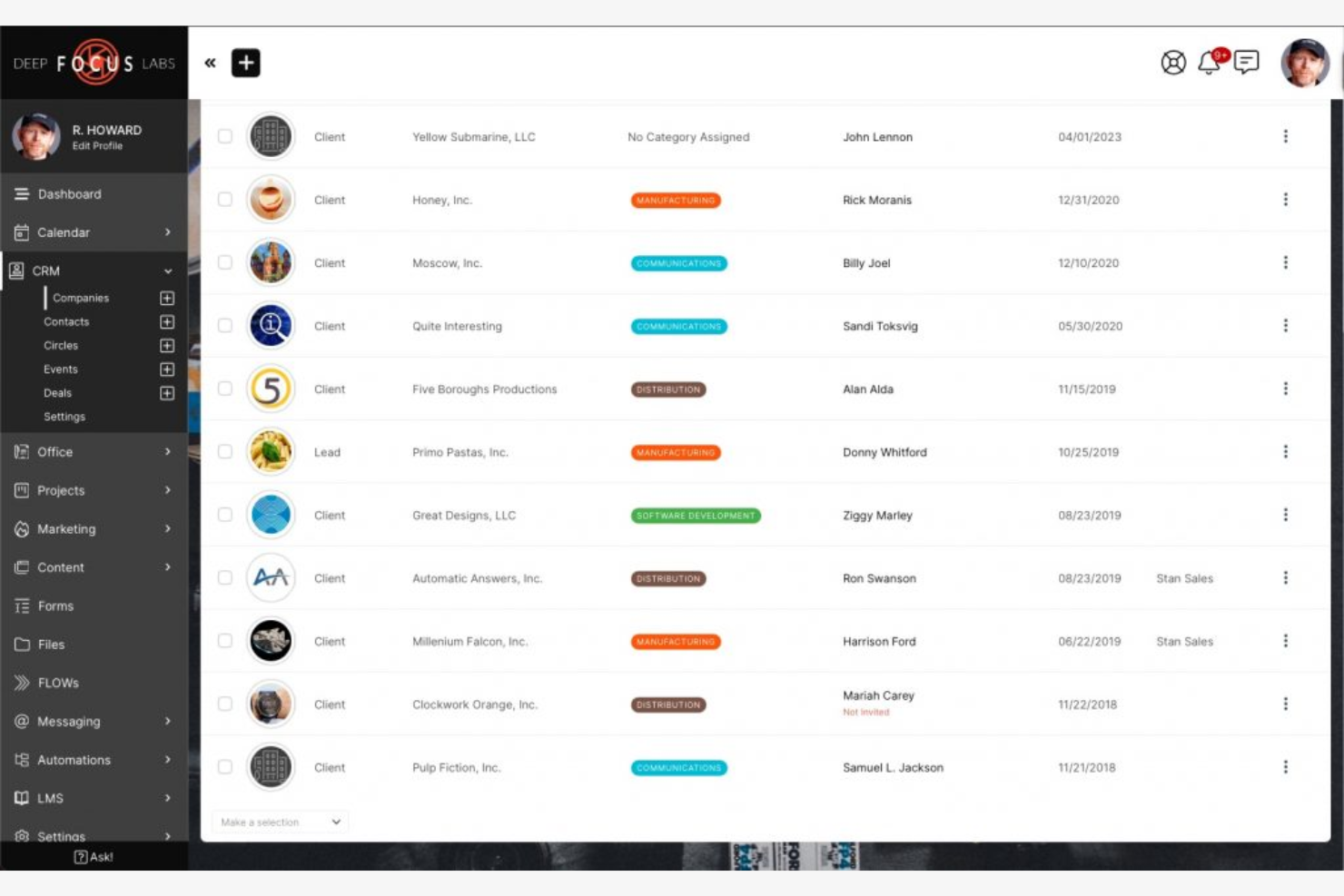
SuiteDash is an all-in-one powerhouse that allows finance firms to create a fully branded, end-to-end ecosystem. It replaces the cobbled-together feel of using separate tools for secure file transfer, CRM, and billing.
Why it's a good HoneyBook alternative: SuiteDash is ideal for teams that need an integrated platform. It offers customizable client portals, project management tools, and automation features to simplify workflows. Its well-rounded suite caters to diverse business needs, making it a versatile alternative to HoneyBook.
Standout Features and Integrations:
Features include white-label branding that enables you to create professional branding. The platform’s secure file sharing allows for protected document exchange and e-signature capabilities.
Integrations include Zapier, QuickBooks Online, Stripe, PayPal, Google Calendar, Zoom, Twilio, and more.
Pros and Cons
Pros:
- Professional brand authority
- Institutional Security
- Integrated platform for small teams
Cons:
- Limited customization
- Rigid billing and communication

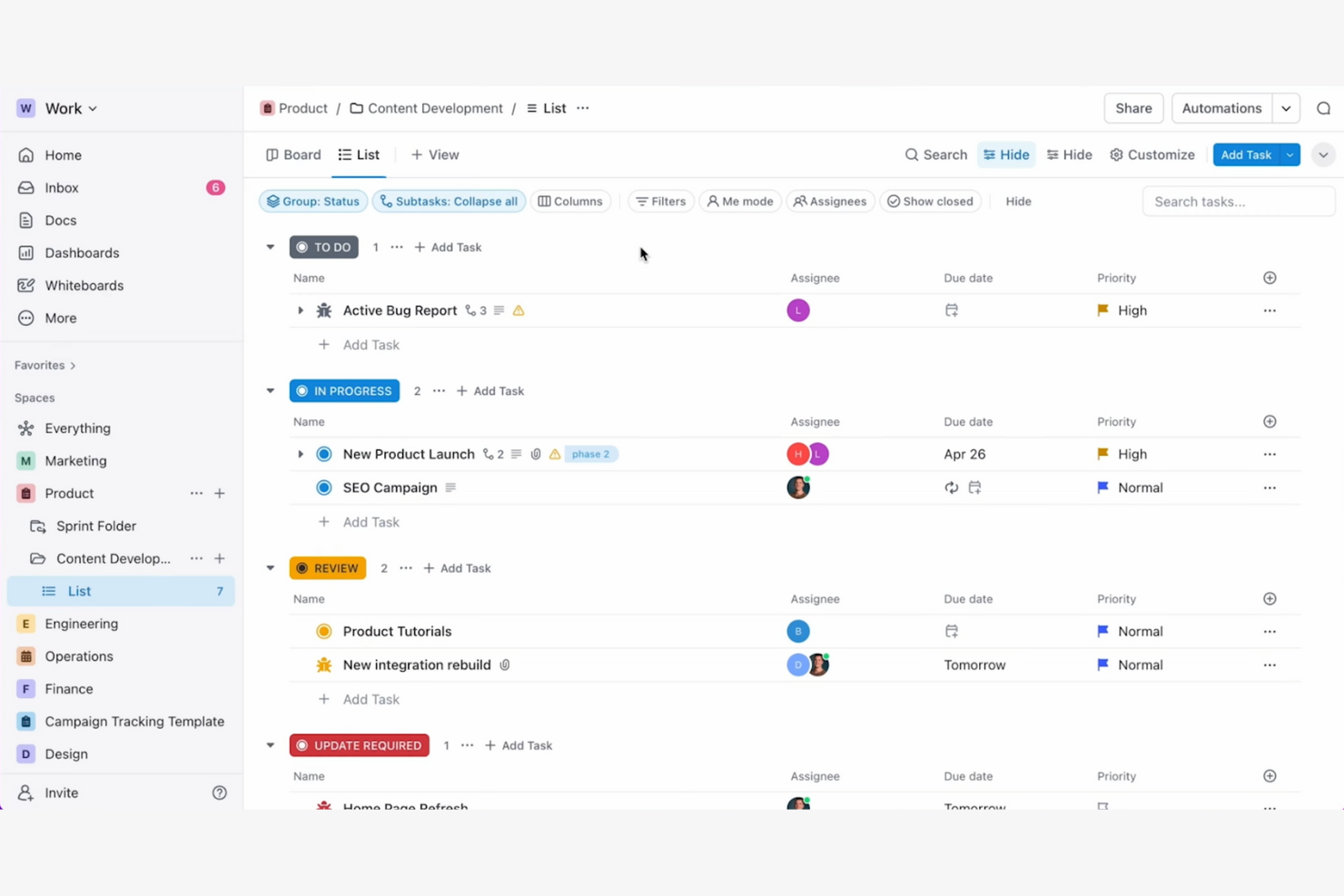
ClickUp is a powerful Work OS that offers the deep hierarchy and automation required to manage high-volume financial operations.
Why it's a good HoneyBook alternative: ClickUp excels in tracking client projects. The platform offers customizable task views, Kanban boards, goal-setting tools, and time tracking to help your team stay organized.
Standout Features and Integrations:
Features include teamwork tools that enable real-time collaboration on client docs. ClickUp’s mind maps and dashboards provide idea visualization and give your team a clear view of project progress and goals.
Integrations include Slack, Google Calendar, Microsoft Teams, Zoom, Dropbox, GitHub, Outlook, Figma, YouTube, Vimeo, Loom, Zapier, Unito, and more.
Pros and Cons
Pros:
- Detailed goal setting
- Project tracking tools
- Customizable task views
Cons:
- Requires setup time
- Intimidating for first-time users

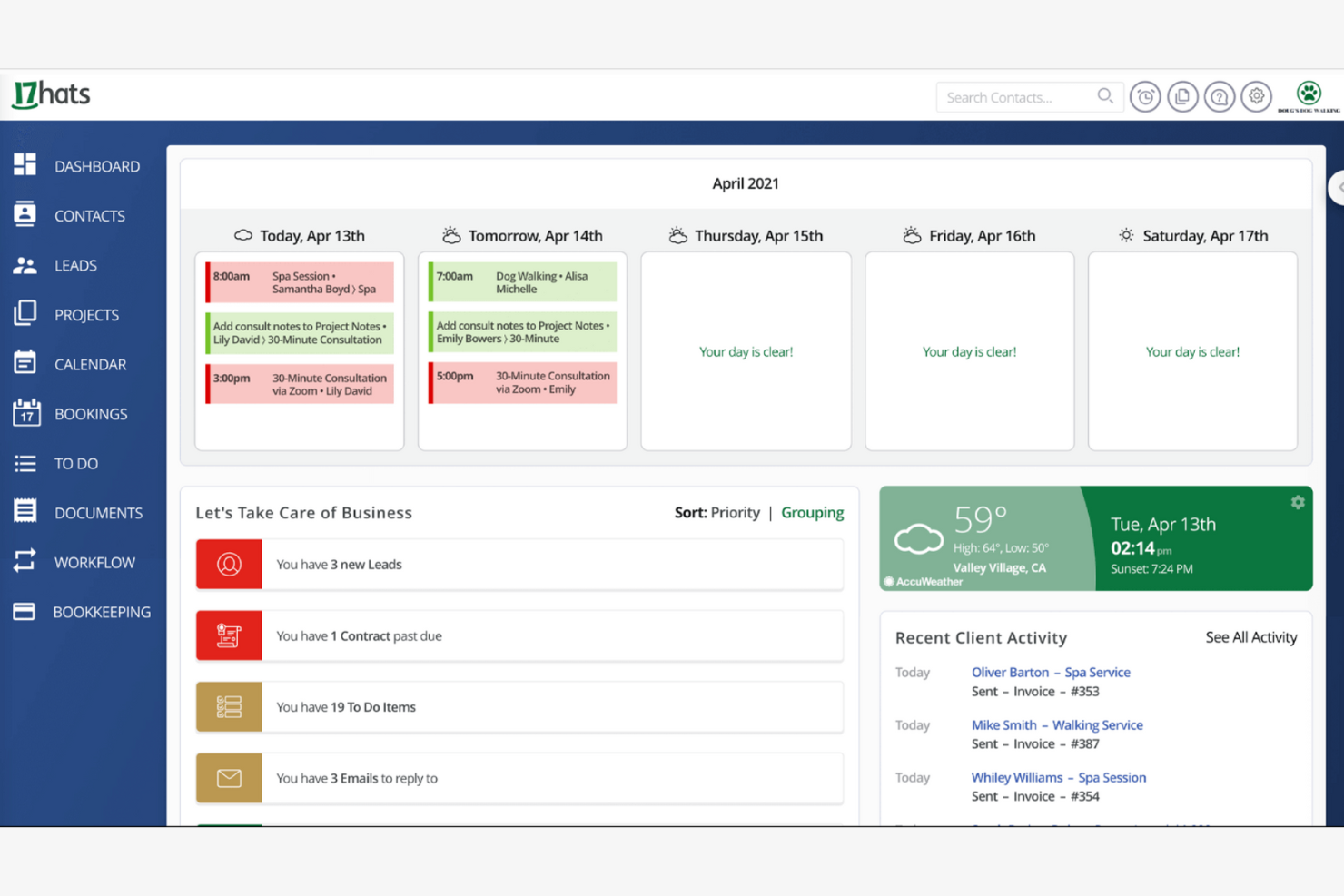
17hats is a business management platform for solo entrepreneurs and freelancers. It offers tools for invoicing, client management, and project tracking.
Why it's a good HoneyBook alternative: 17hats is a highly structured practice management tool that combines CRM, project tracking, and a dedicated bookkeeping module, unlike most competitors. It is designed for independent professionals needing a disciplined financial organization. The platform has automated workflows, online contracts, and scheduler tools in a centralized dashboard.
Standout Features and Integrations:
Features include task management tools and calendar syncing to stay on top of your business processes. 17hats also has customer relationship management (CRM) features to help you track potential leads and manage new clients.
Integrations include QuickBooks, Google Calendar, Zoom, Stripe, and more.
Pros and Cons
Pros:
- Online contract management
- All-in-one dashboard
- Automated workflow features
Cons:
- Basic reporting tools
- Weak data visualization

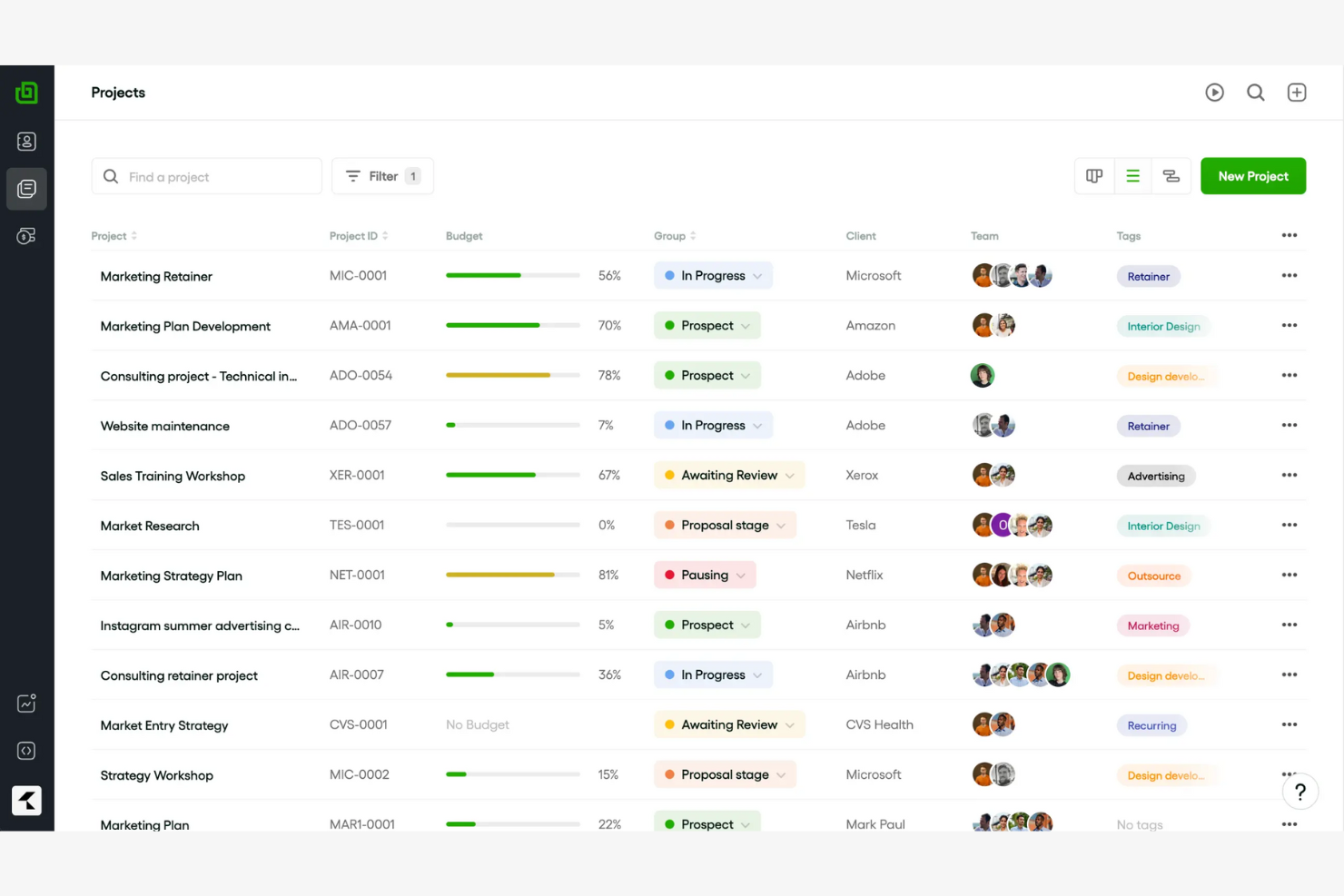
Bonsai is an all-in-one business operations suite that goes beyond simple project tracking by integrating legal-vetted contracts, professional invoicing, and basic bookkeeping into a single, high-end dashboard.
Why it's a good HoneyBook alternative: Bonsai is ideal for freelancers looking for a tailored solution. It offers attorney-vetted contract templates and automated workflows tailored to individual freelancers' needs. The platform's simplicity and focus on specific tasks help freelancers manage their work on client projects efficiently, without overwhelming features.
Standout Features and Integrations:
Features include time tracking tools and expense management capabilities. The platform’s task automation feature helps you save time on routine tasks so you can focus on your core activities.
Integrations include QuickBooks Online, Zapier, Calendly, Xero, HiBob, and more.
Pros and Cons
Pros:
- Customizable templates
- Automated invoicing
- Contract management tools
Cons:
- Few advanced project management tools
- Basic reporting features

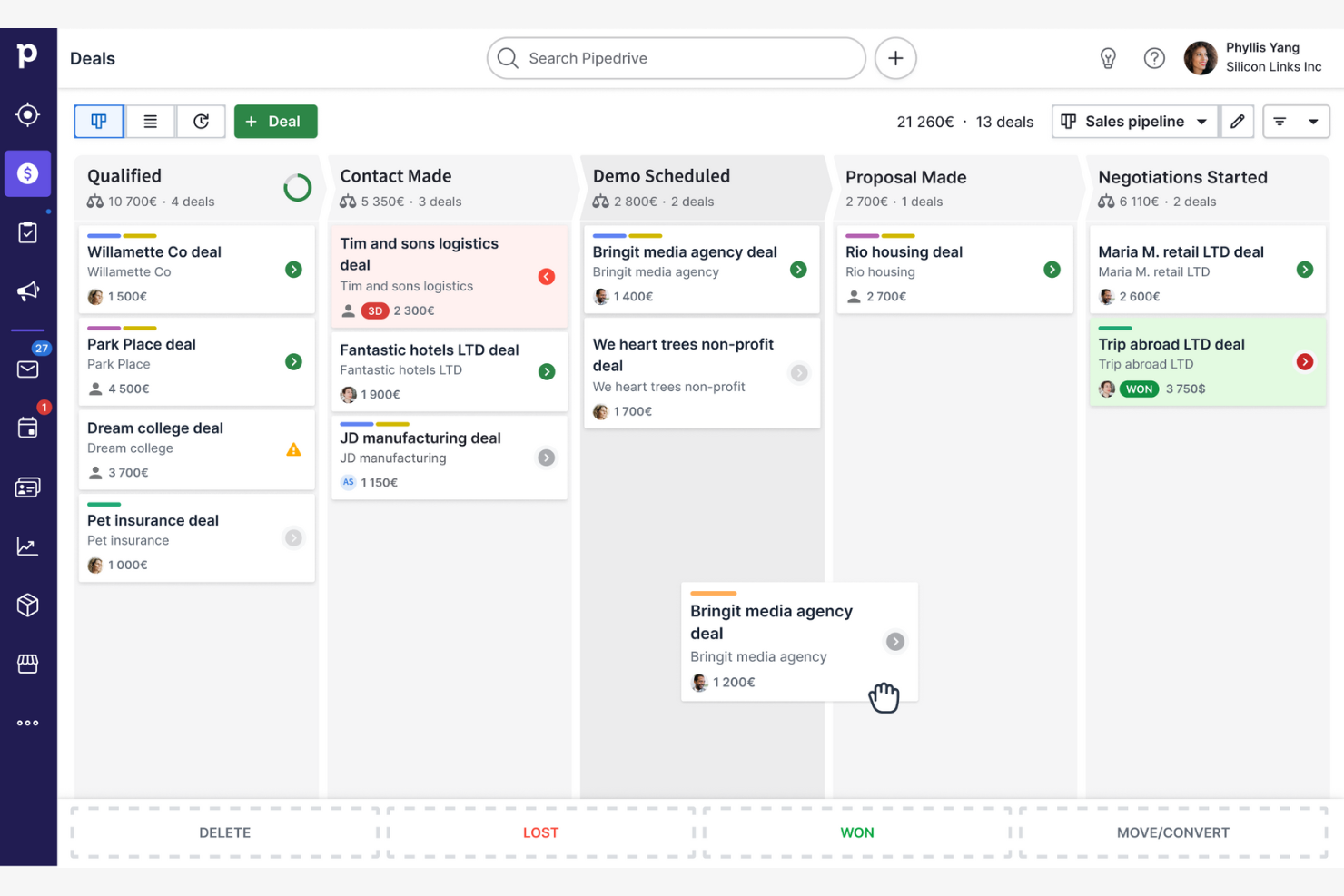
Pipedrive is a sales-focused CRM platform for sales teams and managers. It helps with sales pipeline management, activity tracking, and deal forecasting.
Why it's a good HoneyBook alternative: Pipedrive is ideal for teams that need a sales-focused CRM. Its visual pipeline and customizable stages help keep deals organized, while activity tracking and reminders support day-to-day follow-up. With a clear emphasis on deal management, Pipedrive is a strong alternative to HoneyBook.
Standout Features and Integrations:
Features include goal-setting tools that make it easier to track progress. The email tracking and reporting dashboards allow you to monitor engagement and review sales performance.
Integrations include Zapier, Slack, Trello, Zoom, HubSpot, Asana, and more.
Pros and Cons
Pros:
- Strong deal management features
- Customizable sales stages
- Visual sales pipelines
Cons:
- Can be complex for beginners
- Limited non-sales functions

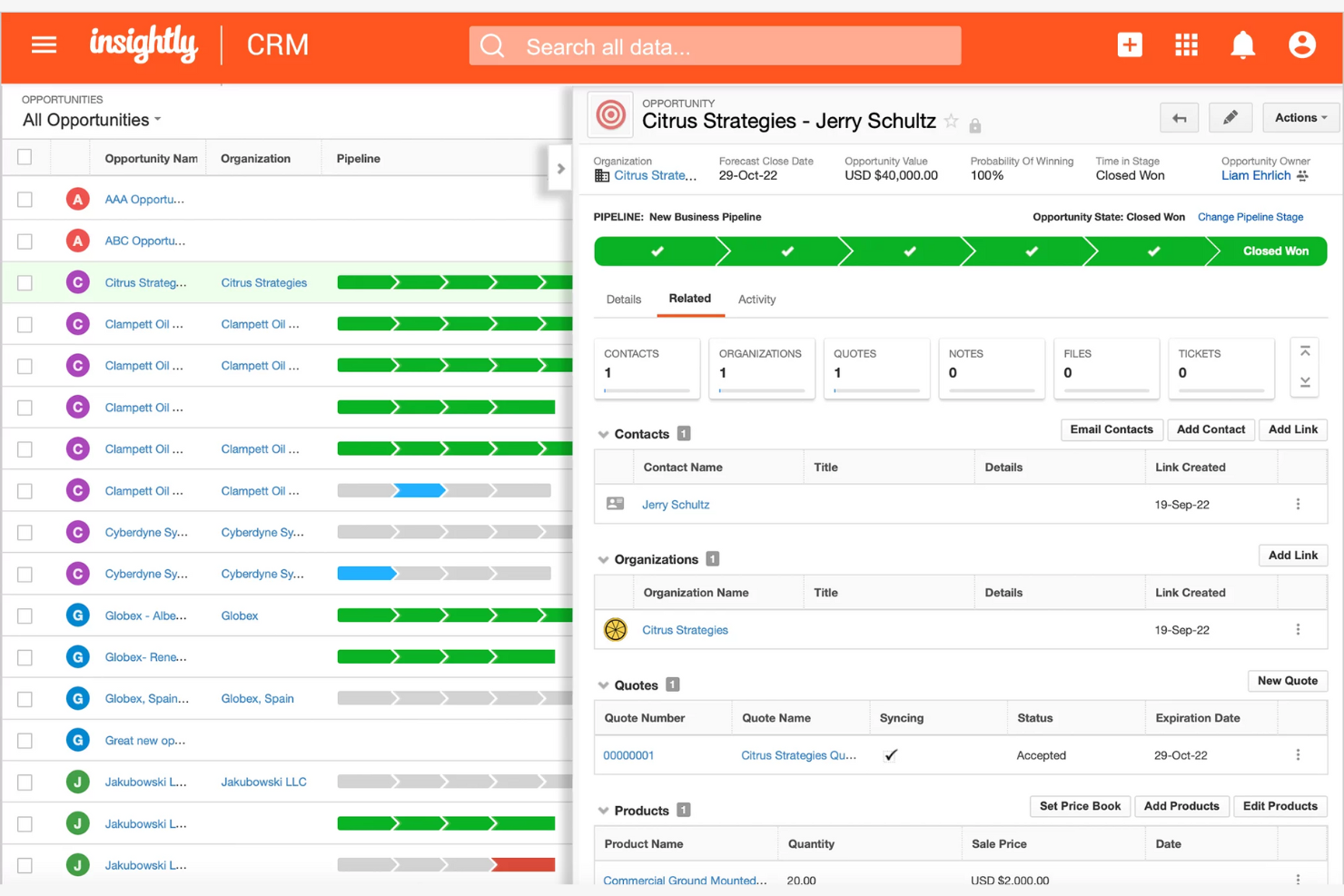
Insightly is a customer relationship management tool for small to medium-sized businesses. It uniquely integrates project management and deep financial connectivity.
Why it's a good HoneyBook alternative: If your team needs a CRM with marketing capabilities, Insightly offers lead routing, email tracking, and automation features to simplify tasks. Its integrated CRM features and email marketing tools make it a strong alternative to HoneyBook.
Standout Features and Integrations:
Features include custom dashboards that provide performance insights. The platform also offers time-saving task automation, and its lead capture management tools allow you to nurture potential clients.
Integrations include QuickBooks Online, Workday, Unbounce, WordPress, Slack, Jira, Shopify, Xero, WooCommerce, DocuSign, and more.
Pros and Cons
Pros:
- Automation for repetitive tasks
- Marketing tools
- Strong CRM capabilities
Cons:
- UI feels outdated
- Limited workflow flexibility

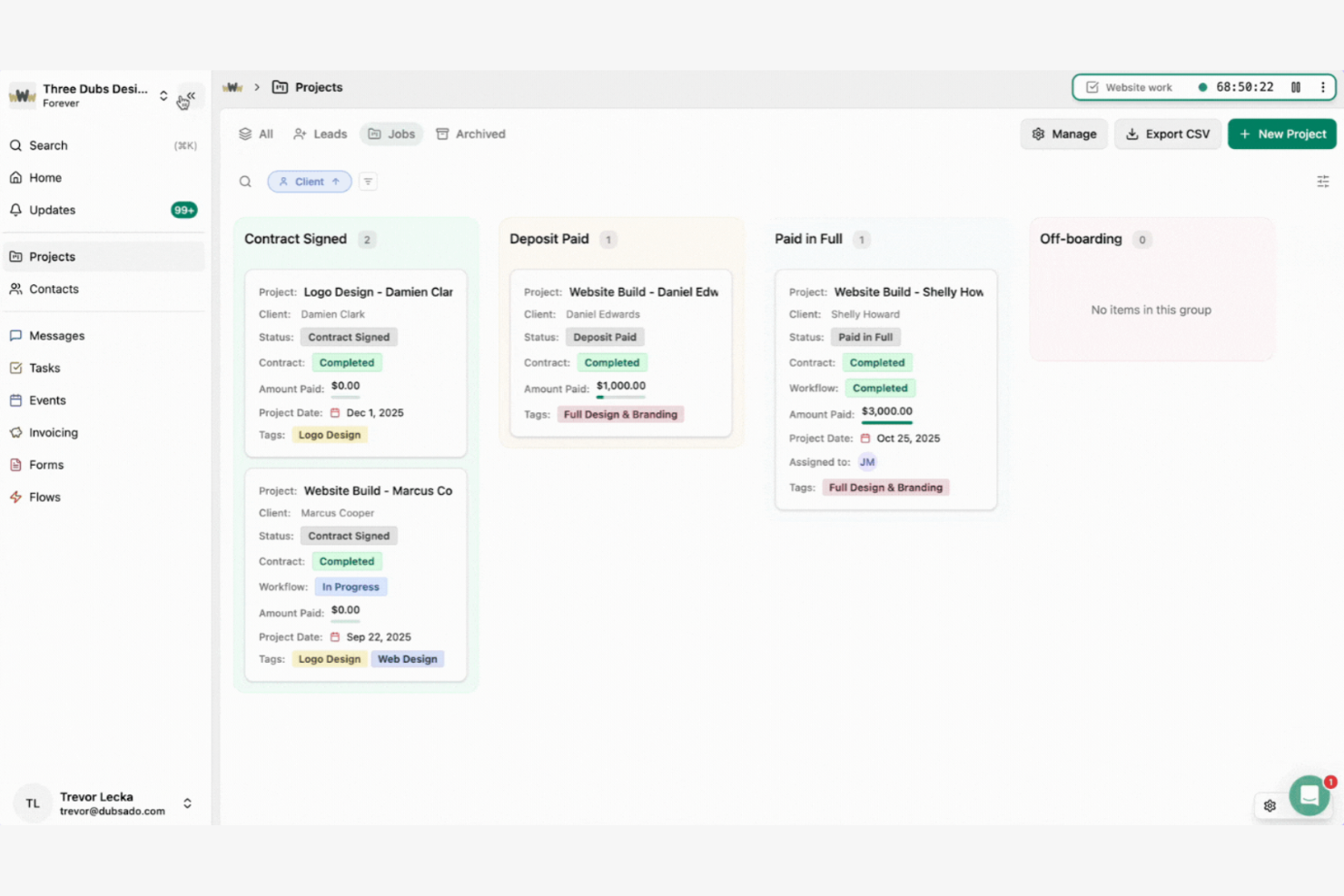
Dubsado is a business management software for creative service-based businesses. It helps with invoicing, payment processing, appointment scheduling, and contract management.
Why it's a good HoneyBook alternative: Dubsado is ideal for creative professionals, offering branded forms, customizable email templates, smart scheduling, and professional proposals. The platform also has online payment capabilities. Dubsado’s focus on creative service businesses makes it a strong HoneyBook alternative.
Standout Features and Integrations:
Features include branded invoicing to help you maintain a professional appearance. Dubsado also offers client portals and automated workflow management tools.
Integrations include QuickBooks Online, Zapier, Stripe, Xero, Google Meet, Microsoft Teams, Zoom, and more.
Pros and Cons
Pros:
- Central client portal
- Customizable email templates
- Tailored for creative businesses
Cons:
- May not be ideal for large teams
- Limited mobile usability

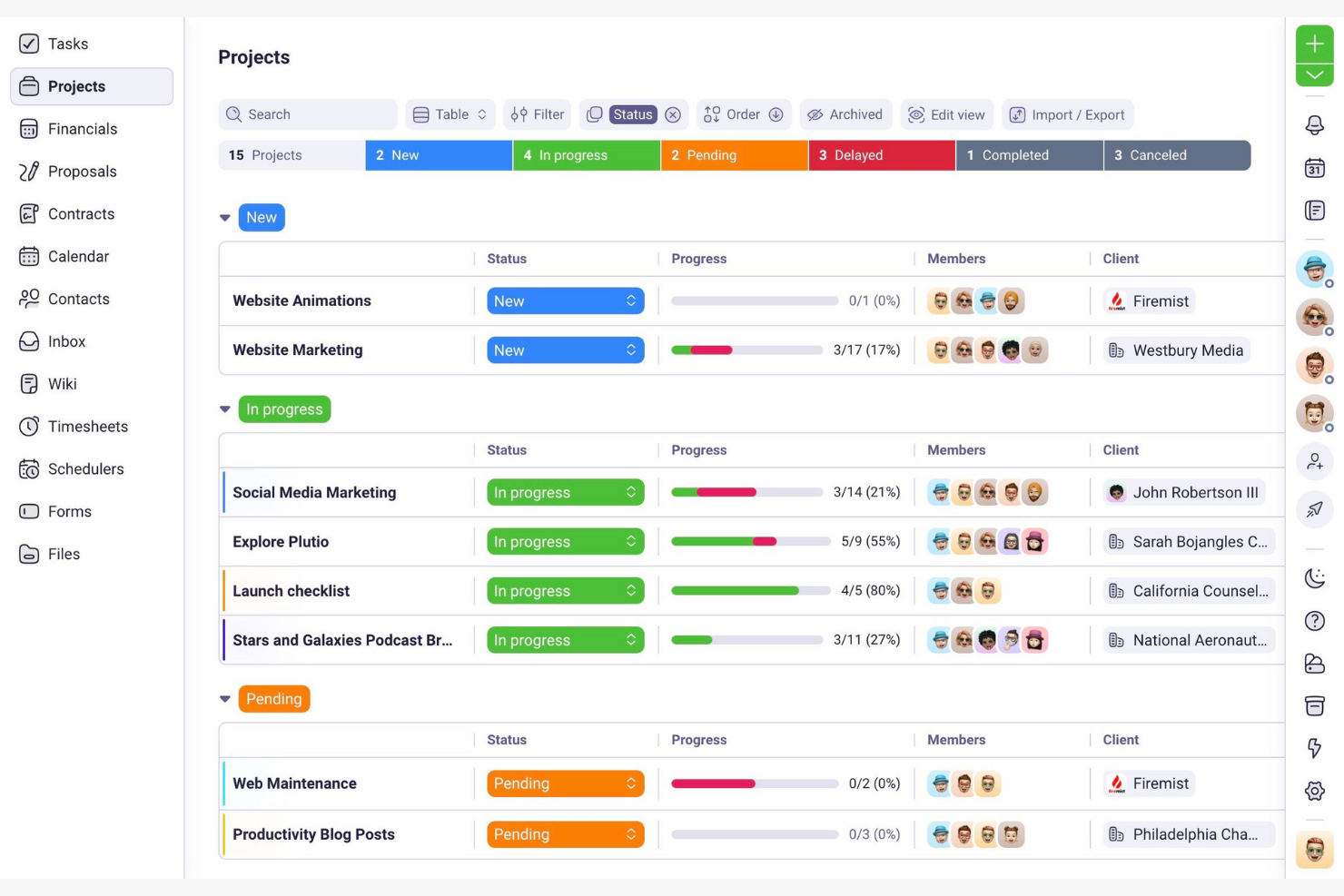
Plutio is a business management platform for freelancers and small teams. It manages tasks such as project management and invoicing.
Why it's a good HoneyBook alternative: Plutio is ideal for small teams because it offers task collaboration features, client portals, project management and communication tools. Its focus on team collaboration sets it apart from HoneyBook.
Standout Features and Integrations:
Features include white-label branding so you can present a professional image. Plutio’s proposal creation tools can help secure new business, and the time tracking capabilities help you stay on top of your billable hours.
Integrations include Zapier, Stripe, PayPal, Square, QuickBooks, Xero, Google Calendar, Google Meet, Slack, Zoom, and more.
Pros and Cons
Pros:
- White-label branding options
- Customizable client portals
- Flexible project management
Cons:
- Occasional performance lag
- Limited advanced features

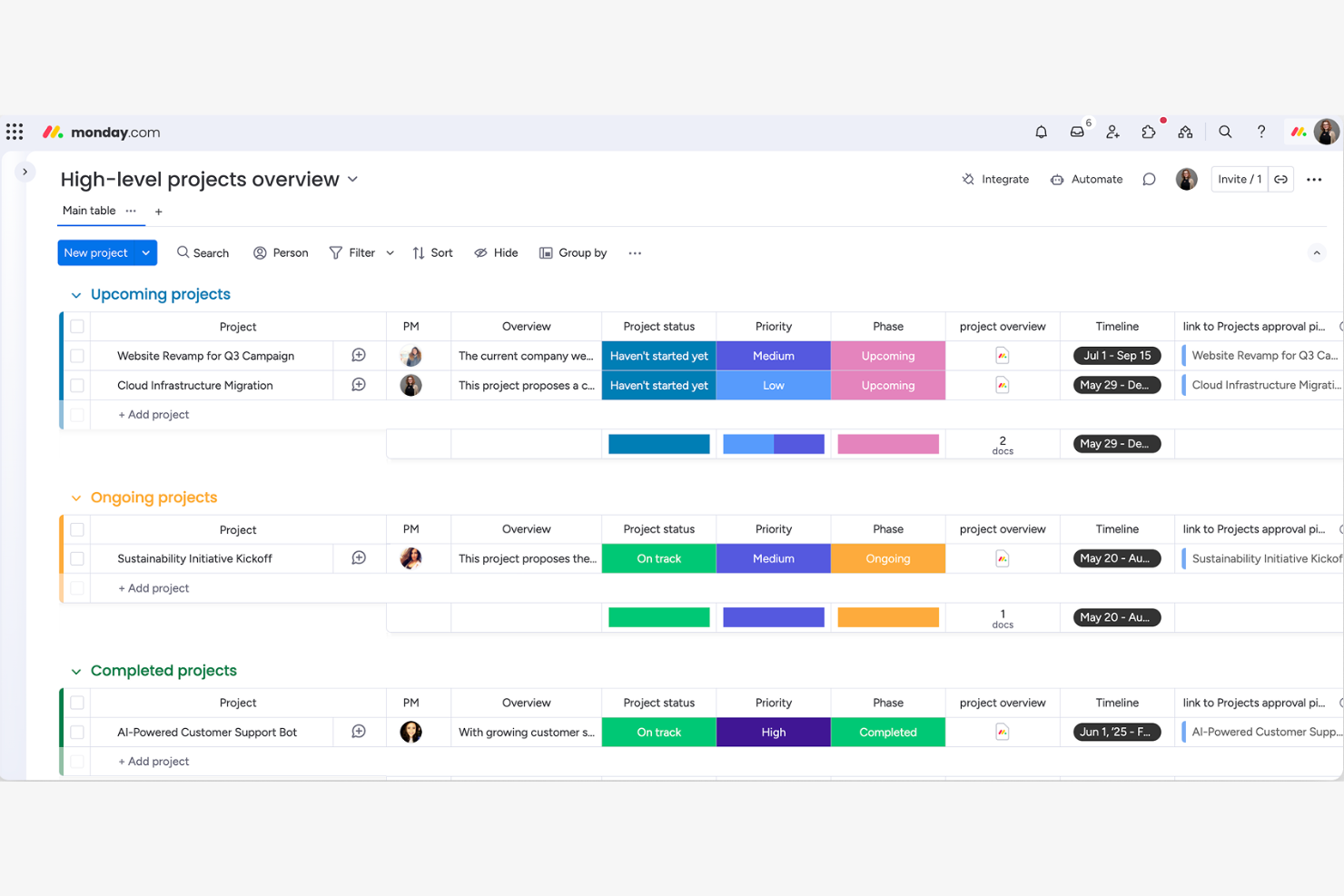
monday.com is a work operating system designed for teams across various industries. It allows high-growth finance firms to build a customized infrastructure for managing multi-entity financial operations. It is the bridge between your CRM and your General Ledger.
Why it's a good HoneyBook alternative: If your team needs a collaborative platform, monday.com includes collaboration tools, visual project tracking, customizable workflows, and automation features to reduce repetitive tasks and improve efficiency. Its focus on collaboration tools and flexibility makes it a strong alternative to HoneyBook.
Standout Features and Integrations:
Features include timeline views for visual project tracking. The platform also has workload management capabilities to ensure teams can balance task distribution. monday.com’s reporting dashboards offer insights into team performance and project status.
Integrations include Slack, Microsoft Teams, Gmail, Dropbox, GitLab, Mailchimp, Excel, Outlook, DocuSign, and more.
Pros and Cons
Pros:
- Strong automation capabilities
- Customizable workflows
- Visual project tracking
Cons:
- Dashboard clutter at scale
- May need another tool for invoicing
New Product Updates from monday.com

monday.com's AI Blocks Now Available to All Users
monday.com AI Blocks are now available to all users, enabling teams to integrate AI directly into workflows. This rollout helps automate tasks and improve productivity across projects. For more information, visit monday.com's official site.


Accelo is a cloud-based business management platform for service businesses. It focuses on automating project management, client relationships, and billing processes.
Why it's a good HoneyBook alternative: Accelo is ideal for service businesses that need a thorough project management solution. The platform offers real-time project tracking and client billing to keep operations running smoothly. It also has workflow automation tools that help reduce repetitive tasks and improve productivity. Accelo's focus on service delivery and project oversight makes it a strong alternative to HoneyBook.
Standout Features and Integrations:
Features include time tracking and resource management capabilities that make it easier to track billable hours and plan team member capacity. Accelo provides a client portal so you can effectively manage client communications.
Integrations include QuickBooks, Xero, Stripe, Continuum, Google Workspace, Salesforce, Mailchimp, HubSpot, PayPal, and more.
Pros and Cons
Pros:
- Automation of repetitive tasks
- Client billing features
- Real-time project tracking
Cons:
- High implementation friction
- Heavy admin configuration
Other HoneyBook Alternatives
Here are some additional HoneyBook alternatives that didn’t make it onto my shortlist, but are still worth checking out:
- Assembly
For team recognition
- Productive
For agency management


HoneyBook Alternatives Selection Criteria
When selecting the best HoneyBook alternatives for this list, I considered common buyer needs and pain points in client management platform products, including project management efficiency and ease of client communication. I also used the following framework to keep my evaluation structured and fair:
Core Functionality (25% of total score)
To be considered for inclusion in this list, each solution had to fulfill these everyday use cases:
- Manage client contacts
- Track project progress
- Automate invoicing
- Schedule appointments
- Generate reports
Additional Standout Features (25% of total score)
To help further narrow down the competition, I also looked for unique features, such as:
- Customizable client portals
- Advanced workflow automation
- Built-in time tracking
- Client feedback tools
- Mobile app accessibility
Usability (10% of total score)
To get a sense of the usability of each system, I considered the following:
- User-friendly interface
- Customizable dashboards
- Ease of navigation
- User-friendly setup process
- Accessibility across devices
Onboarding (10% of total score)
To evaluate the onboarding experience for each platform, I considered the following:
- Availability of training videos
- Pre-built templates
- Interactive product tours
- Access to webinars
- Support from chatbots
Customer Support (10% of total score)
To assess each software provider’s customer support services, I considered the following:
- 24/7 availability
- Multiple support channels
- Response time efficiency
- Quality of support resources
- Availability of a dedicated account manager
Value For Money (10% of total score)
To evaluate the value for money of each platform, I considered the following:
- Pricing transparency
- Competitive paid plans
- Flexible payment options
- Return on investment potential
- Features included in the base price
Customer Reviews (10% of total score)
To get a sense of overall customer satisfaction, I considered the following when reading customer reviews:
- Overall satisfaction ratings
- Commonly mentioned pros and cons
- Feedback on feature effectiveness
- Comments on customer service experiences
- Testimonials about ease of use
Why Look for a HoneyBook Alternative?
While HoneyBook is a good choice for client management, there are several reasons why some users seek alternative solutions. You might be looking for a HoneyBook alternative because:
- You need more customization options
- Your team is growing beyond its capabilities
- You want better integration with other tools
- You're seeking a more affordable solution
- You need features specific to your industry
- You're looking for support in your time zone
If any of these sound like you, you’ve come to the right place. My list includes several client management platform options that are better suited for teams facing these challenges with HoneyBook and seeking alternative solutions.
HoneyBook Key Features
Here are some of the key features of HoneyBook, to help you contrast and compare what alternative solutions offer:
- CRM tools: Manage client relationships and interactions.
- Proposals: Create and send professional proposals to clients easily.
- Scheduling: Coordinate client appointments and meetings with minimal effort.
- Contracts: Draft and sign contracts directly within the platform.
- Payment processing: Invoice clients and accept payments, including Google and Apple Pay.
- AI writing assistant: Generate email drafts tailored to your business needs.
- Custom fields: Personalize project and client information to fit your business.
- Embedded lead forms: Capture leads directly from your website.
- Automation features: Automate repetitive tasks such as follow-up reminders and task assignments.
- Community engagement: Connect with other entrepreneurs and access educational resources.
What’s Next:
If you're in the process of researching a client management platform, connect with a SoftwareSelect advisor for free recommendations.
You fill out a form and have a quick chat where they get into the specifics of your needs. Then you'll get a shortlist of software to review. They'll even support you through the entire buying process, including price negotiations.