
27 Best Integrated Payment Solutions Reviewed in 2026

Best Integrated Payment Solutions Shortlist
Here's my pick of the 10 best software from the 27 tools reviewed.


Managing payments efficiently is a top concern for CFOs. You face challenges such as tracking transactions, ensuring security, and integrating various systems. These tasks can be overwhelming, but integrated payment solutions can simplify the process.
In my experience, these tools can help your team manage payments more effectively, saving time and reducing errors. They combine multiple payment channels, providing a single view of all transactions.
In this article, I'll share my unbiased insights on the best integrated payment solutions available. I'll focus on features, user experience, and how each tool can address your specific needs. My goal is to help you find the right solution to support your financial operations.
Why Trust Our Software Reviews
Best Integrated Payment Solutions Summary
This comparison chart summarizes pricing details for my top integrated payment solutions selections to help you find the best one for your budget and business needs.
| Tool | Best For | Trial Info | Price | ||
|---|---|---|---|---|---|
| 1 | Best for e-commerce platforms | 3-day free trial available | From $29/month (billed annually) | Website | |
| 2 | Best for startups and small businesses | 30-day free trial available | From 2.9% + 30¢ per transaction | Website | |
| 3 | Best for accounting software integration | Free demo available | Pricing upon request | Website | |
| 4 | Best for industry-specific integrations | Not available | Pricing upon request | Website | |
| 5 | Best for point-of-sale capabilities | 30-day free trial + free plan available | From $49/location/month | Website | |
| 6 | Best for multichannel payments | Not available | Pricing upon request | Website | |
| 7 | Best for secure online transactions | Free demo available | Pricing upon request | Website | |
| 8 | Best for fraud prevention tools | Free demo available | From $25/month | Website | |
| 9 | Best for global transaction support | Not available | Pricing upon request | Website | |
| 10 | Best for mobile app payments | Not available | Pricing upon request | Website |
-

LiveFlow
Visit WebsiteThis is an aggregated rating for this tool including ratings from Crozdesk users and ratings from other sites.4.9 -
Float Financial
Visit WebsiteThis is an aggregated rating for this tool including ratings from Crozdesk users and ratings from other sites.4.1 -
Rippling Spend
Visit WebsiteThis is an aggregated rating for this tool including ratings from Crozdesk users and ratings from other sites.4.8


Best Integrated Payment Solution Reviews
Below are my detailed summaries of the best integrated payment solutions that made it onto my shortlist. My reviews offer a detailed look at the key features, pros and cons, integrations, and ideal use cases of each tool to help you find the best one for you.

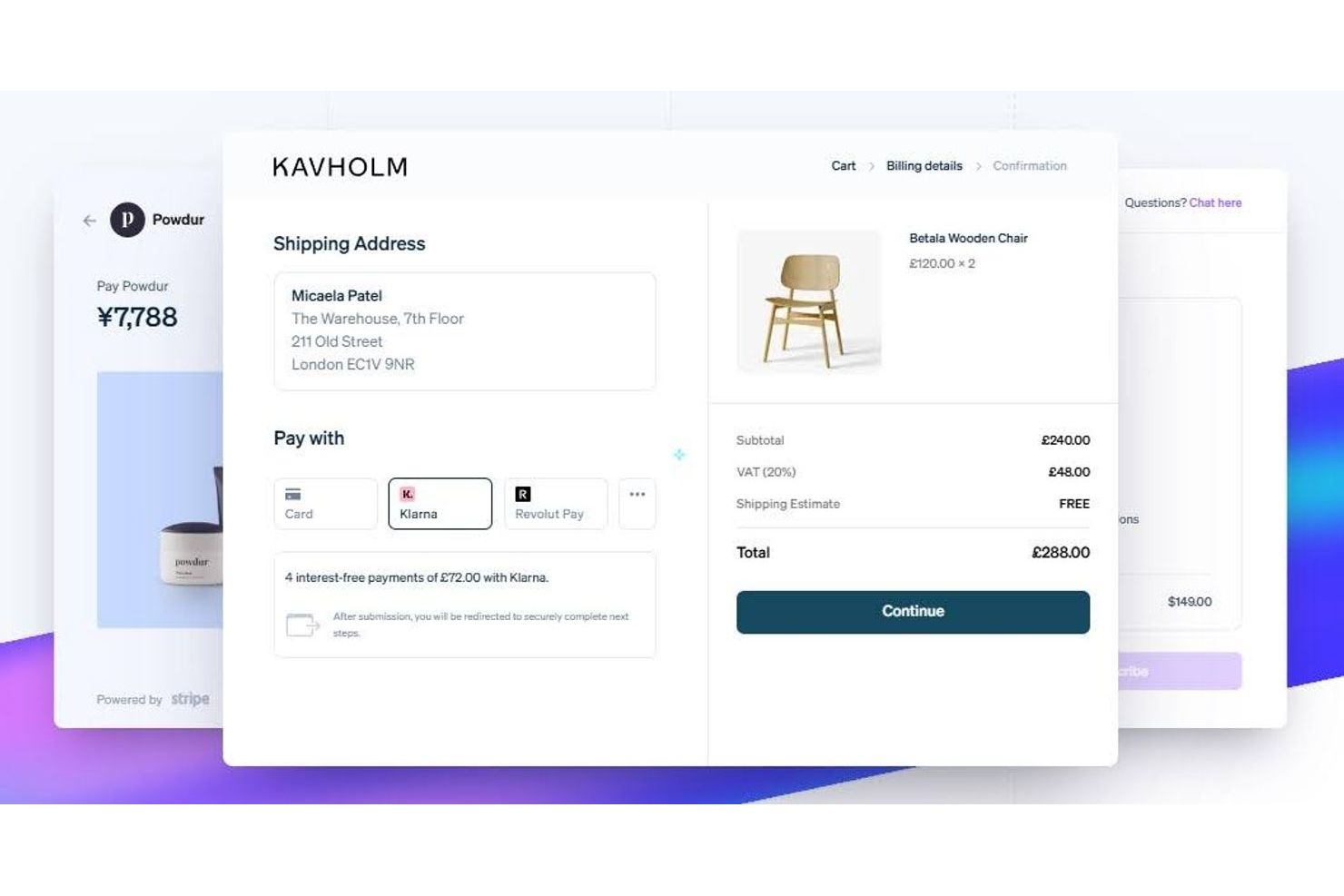
Shopify is an e-commerce platform for businesses of all sizes, particularly SMBs, needing an all-in-one solution to build, manage, and grow online stores.
Why I picked Shopify: Shopify is especially suitable for e-commerce, offering extensive, user-friendly tools for setting up, managing, and scaling online stores. It offers fully integrated in-person and online payments as part of a unified commerce solution. Shopify's analytics tools provide insights into customer behavior and sales trends, helping you make data-driven decisions to optimize marketing and overall store performance.
Standout Features and Integrations:
Features include customizable themes to create a unique, branded shopping experience. Shopify offers real-time inventory management and central customer data, automatically syncing stock across online and physical sales channels, giving you accurate stock counts and customer history in one place. Built-in marketing tools, such as discount codes and email campaigns, help you attract and retain customers.
Integrations include PayPal, Amazon Pay, eBay, Facebook, Instagram, QuickBooks, Xero, Mailchimp, HubSpot, and more.
Pros and Cons
Pros:
- Reliable and secure infrastructure
- Built-in payment gateway for secure transactions
- Vast customization options
Cons:
- Limited free themes
- API rate limits

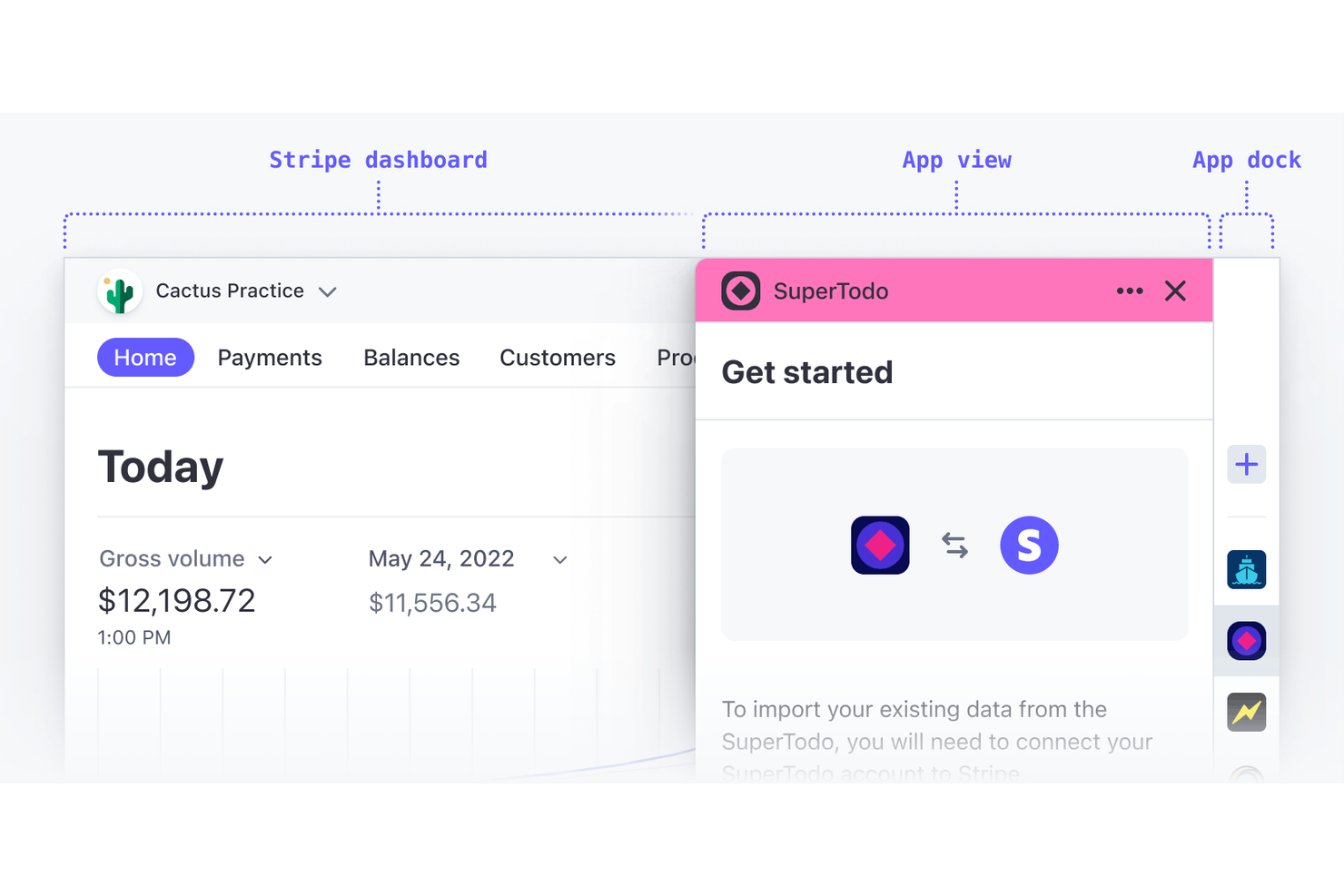
Stripe is a unified financial platform designed for businesses to manage online and in-person payments efficiently. Its user base includes startups and small businesses.
Why I picked Stripe: Stripe is an integrated solution that supports embedded payments, enabling platforms, marketplaces, and SaaS businesses to incorporate payment functionality directly into their own products. The platform is a go-to choice for small businesses and startups due to its wide range of scalable payment solutions, supporting credit cards, bank transfers, and digital wallets. Stripe boosts customer experience with a user-friendly dashboard that brings global payment methods, refunds, dispute management, and reporting together in one unified system, while reducing manual data entry through automation and integrations.
Standout Features and Integrations:
Features include easy-to-use payment links, a customizable checkout experience, and advanced fraud detection tools. Subscription management and invoicing features simplify recurring billing, and advanced analytics tools provide in-depth insights into your business's financial health.
Integrations include WooCommerce, Xero, QuickBooks, NetSuite, Shopify, HubSpot, Wix, and more.
Pros and Cons
Pros:
- AI-driven fraud prevention
- Developer-friendly APIs
- Global reach
Cons:
- Mandatory chargeback fees
- Additional international fees

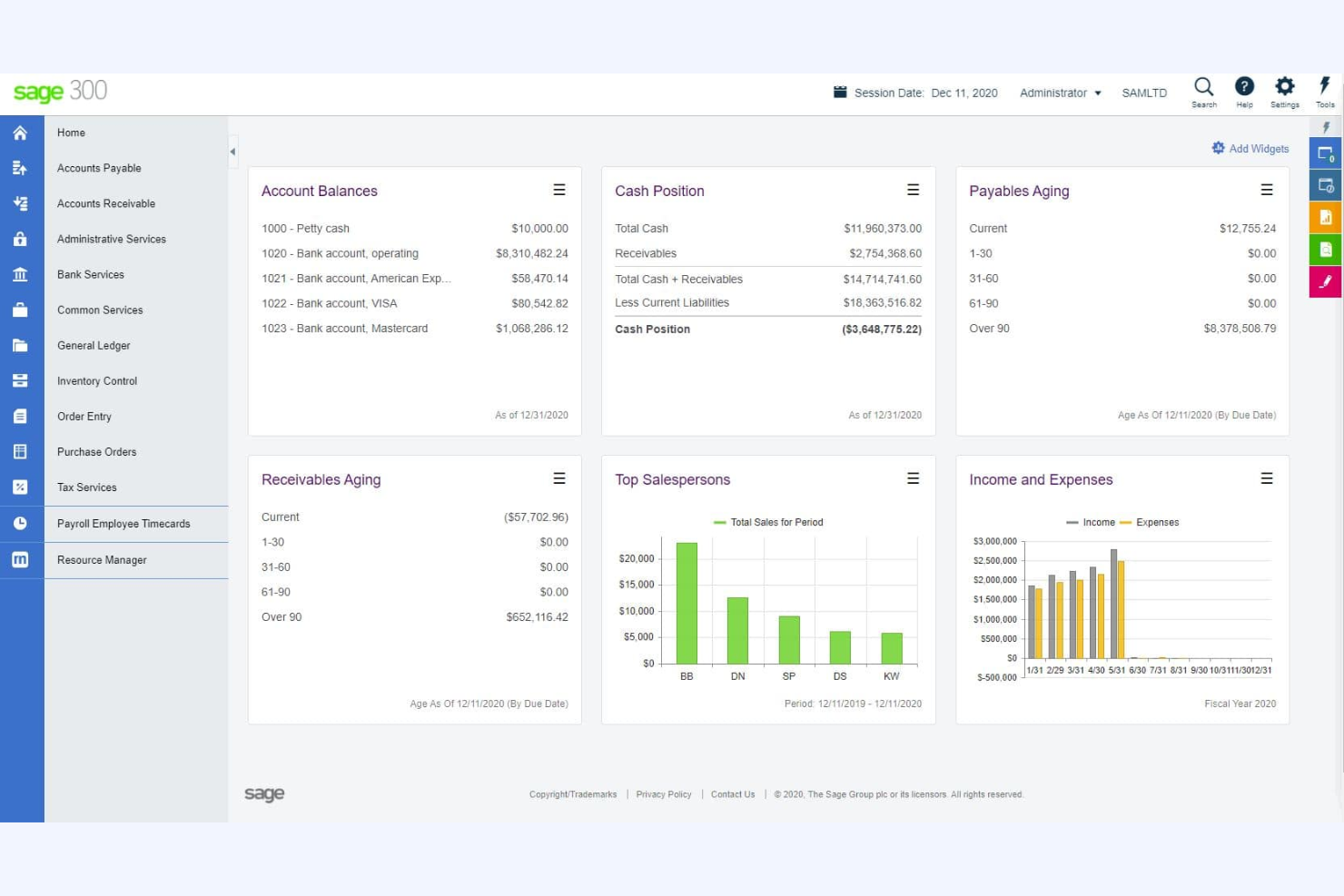
Sage offers integrated payment solutions for small to medium-sized businesses and enterprises seeking to optimize financial management by connecting payment processing directly with accounting software.
Why I picked Sage: Sage is ideal if your business relies heavily on sophisticated financial management tools. The platform simplifies payment processing by automatically syncing transactions with your accounting system, reducing manual entry. Sage supports various payment methods, including credit cards and ACH transfers, giving your business flexibility in how it receives payments. Its reporting tools provide in-depth, actionable insights into your financial data, helping you make informed decisions.
Standout Features and Integrations:
Features include highly customizable invoicing options that allow you to tailor billing to your business needs. Recurring billing capabilities refine subscription services, and industry-standard security measures help protect sensitive financial information.
Integrations include Zapier, Stripe, Gusto, and more.
Pros and Cons
Pros:
- Automated bank feeds
- Sage Intelligence for deep reporting
- Hybrid desktop and cloud power
Cons:
- Limited multi-entity support
- Occasional performance issues

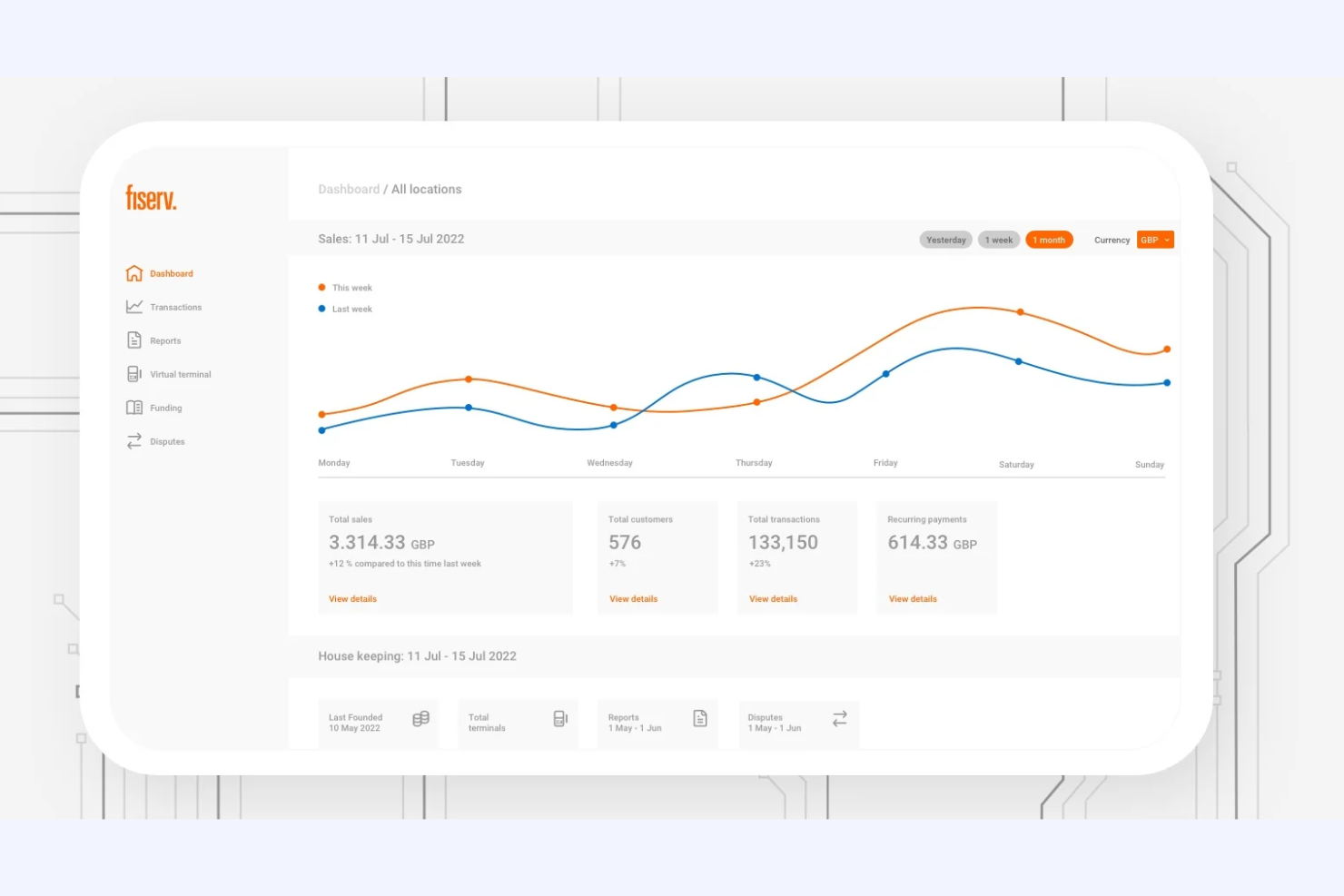
Fiserv is a payment processing platform catering to businesses across various industries. Its primary users include companies seeking tailored payment solutions to fit their specific industry needs.
Why I picked Fiserv: Fiserv provides custom payment experiences, making it a preferred choice for businesses with unique requirements. It supports a wide array of payment methods, including credit and debit cards, ACH, and mobile payments. Fiserv is also known for its integrated payment systems, which connect with business software and broader integrated systems.
Standout Features and Integrations:
Features include advanced data analytics for real-time customer behavior insights and advanced security features to protect sensitive payment information. Fiserv also provides scalable solutions that support growth and ensure long-term support.
Integrations are not publicly listed.
Pros and Cons
Pros:
- Extensive payment options
- All-in-one payment solution
- Full payment control
Cons:
- Complex integration and setup
- Reliance on legacy technology

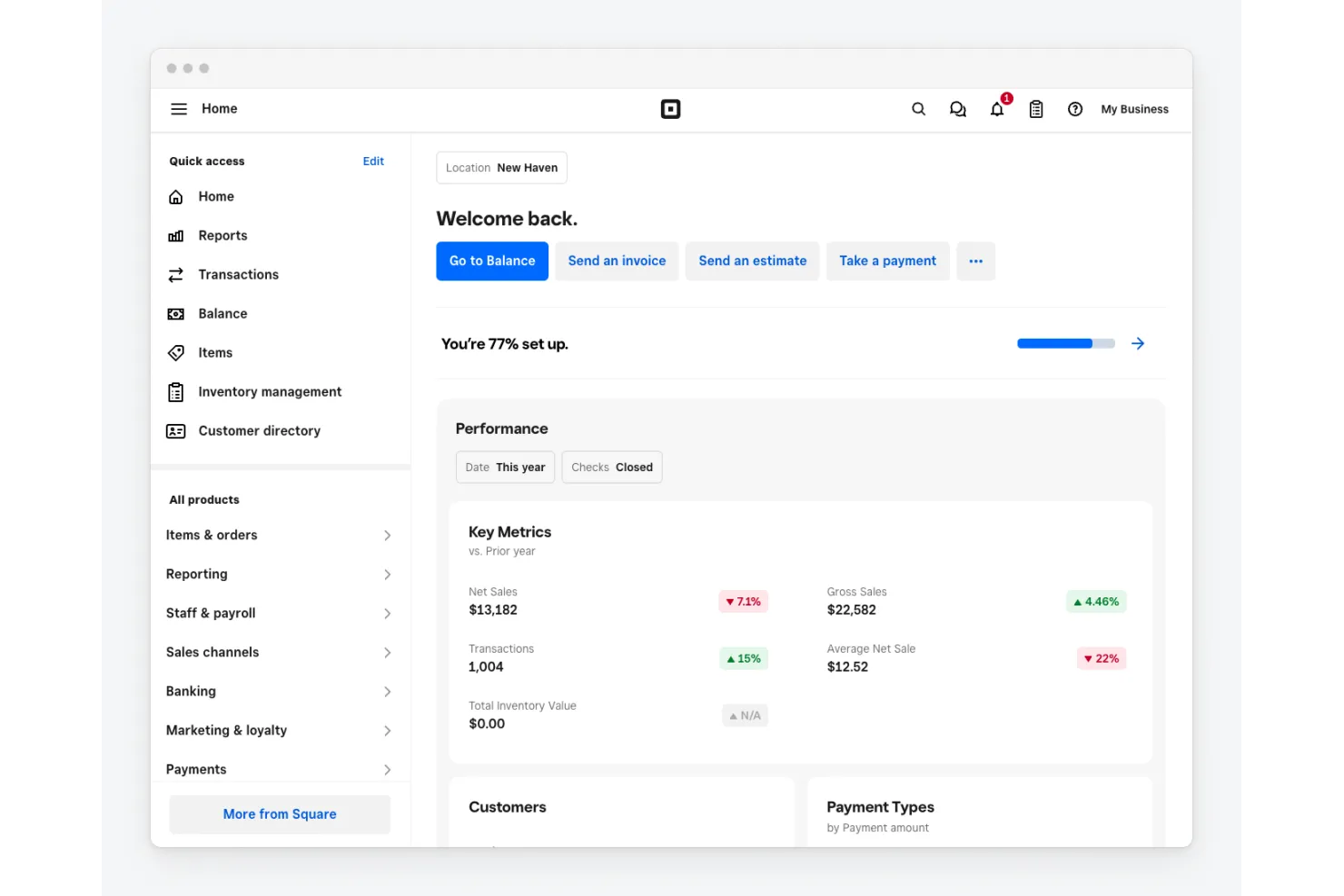
Square offers POS systems designed for businesses of all sizes, particularly retail and service providers, enabling payment processing, sales tracking, and inventory management. It supports merchant services, offering a unified platform for efficient payment acceptance across channels.
Why I picked Square: Square provides simple, intuitive, and easy-to-set-up POS solutions, making it an excellent choice for small businesses and startups. Owners. It offers mobile payment processing capabilities, allowing you to accept payments anywhere via smartphone or tablet, and built-in, real-time inventory management tools to help you monitor stock levels. Detailed sales reporting provides insights into performance, enabling your business to make analytical choices.
Standout Features and Integrations:
Features include customizable checkout options that align with your business needs, and employee management tools for tracking hours and managing schedules. Square also provides marketing tools, such as email campaigns, to help you engage with customers.
Integrations include QuickBooks, Xero, WooCommerce, Wix, Jotform, and more.
Pros and Cons
Pros:
- Versatile for many industries
- Hardware flexibility
- User-friendly and scalable
Cons:
- Limited international usage
- Free account lacks 24/7 phone support
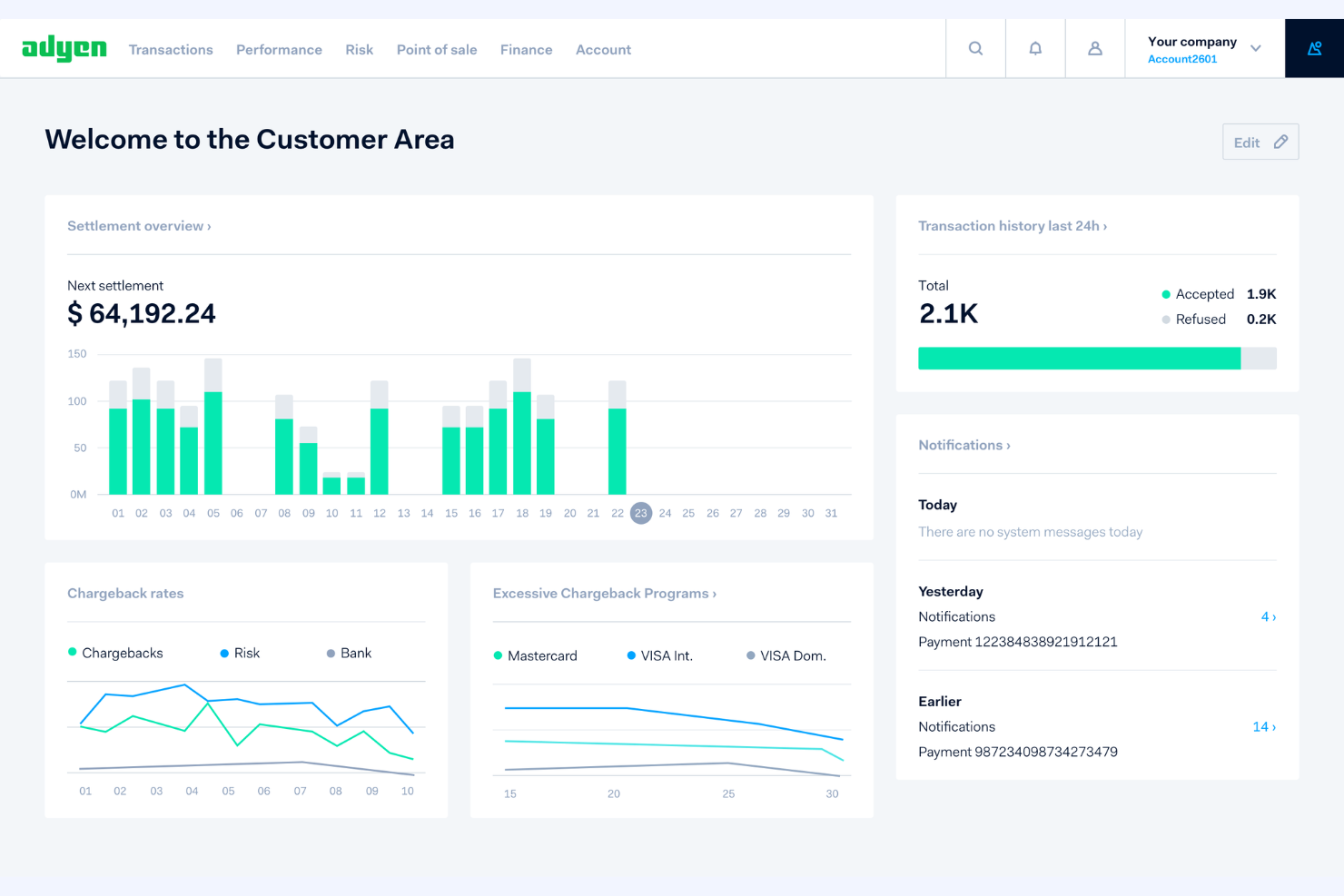
Adyen is an all-in-one global payment platform offering a unified system for online, in-app, and in-store transactions, primarily serving large enterprises and retailers seeking a single, end-to-end solution for diverse payment methods across channels.
Why I picked Adyen: Adyen optimizes multichannel transactions by supporting a vast array of payment methods, offering customers flexibility across online, in-app, and in-store channels. Adyen's single platform approach simplifies reconciliation and reporting, providing a unified view of your sales data.
Standout Features and Integrations:
Features include real-time data insights that allow you to monitor payment performance and optimize results, and easy integration with various sales channels, expanding your customer reach. Adyen's risk management system enables you to customize fraud settings to match your risk tolerance.
Integrations include Shopify, WooCommerce, Microsoft Dynamics 365, Lightspeed, and more.
Pros and Cons
Pros:
- Actionable, data-driven insights
- Advanced risk management
- Global, omnichannel reach
Cons:
- Intense onboarding and integration time
- High minimum fees for low-volume merchants

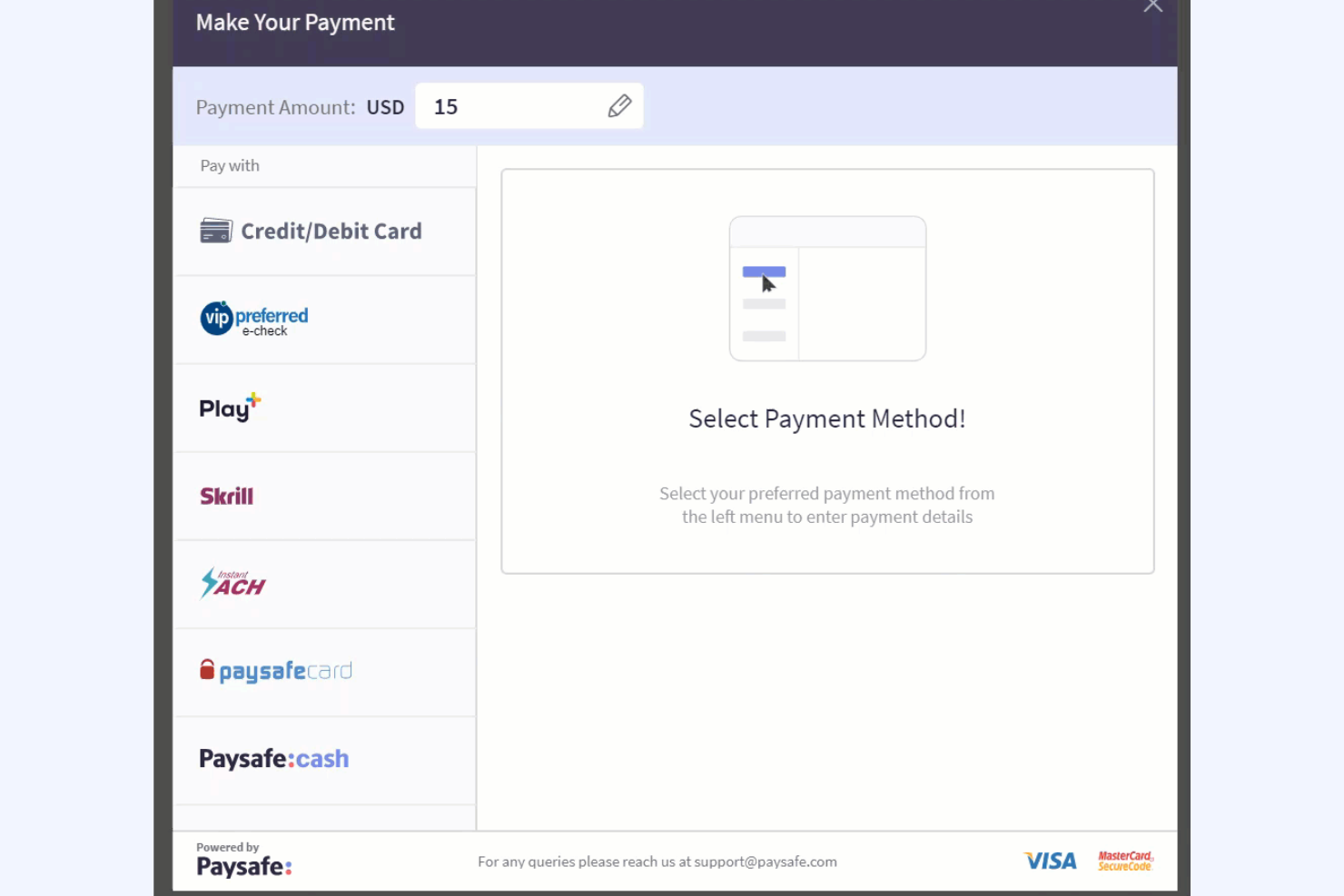
Paysafe is a digital payment platform for businesses that require secure online transaction processing. It's popular among e-commerce companies and online service providers looking for reliable payment solutions. It helps reduce human error by directly connecting POS, ERP, and accounting software to its payment processing platform.
Why I picked Paysafe: Paysafe offers a high level of security for online transactions. It provides end-to-end encryption and advanced fraud detection tools to protect your transactions. With support for multiple payment methods, including credit cards and digital wallets, your business can cater to diverse customer preferences. Paysafe's user-friendly interface makes it easy to manage transactions and generate reports.
Standout Features and Integrations:
Features include customizable payment pages that help maintain brand consistency. The platform offers recurring billing to simplify subscription management and detailed analytics tools to help you track and optimize your payment processes.
Integrations include Shopify, Adobe Commerce, WooCommerce, and more.
Pros and Cons
Pros:
- Broad support for multiple payment methods
- Real-time transaction monitoring
- Built-in fraud protection and tokenization
Cons:
- Restrictive account management
- Hidden and high fees

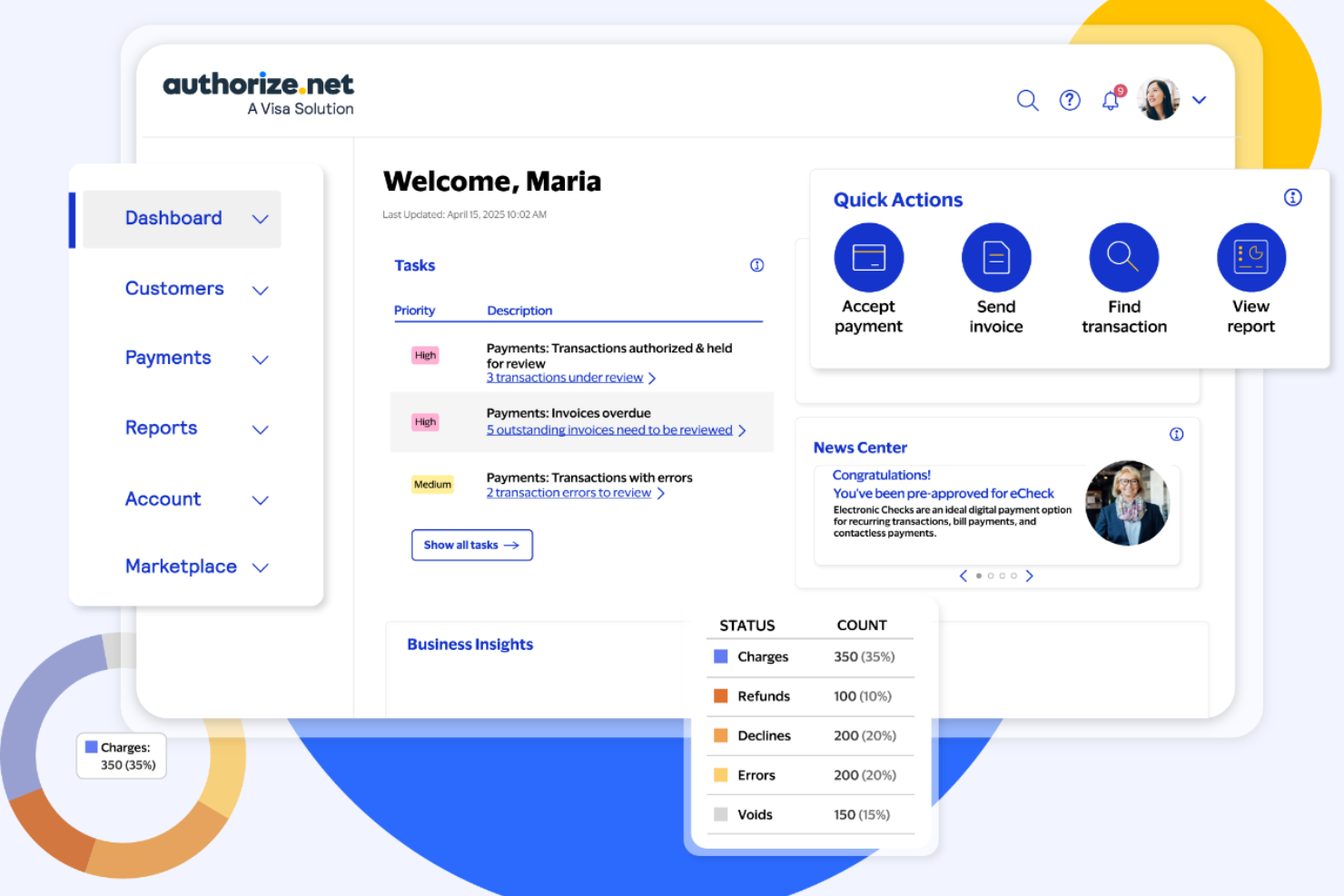
Authorize.net is a payment gateway that handles credit and eCheck payments for online and brick-and-mortar SMBs, ensuring secure transactions and cost-effective, efficient payment processing.
Why I picked Authorize.net: This reliable payment gateway excels in fraud prevention for businesses concerned with transaction security. It offers tools such as the Advanced Fraud Detection Suite and Address Verification Service to help you minimize fraudulent transactions. The platform supports multiple payment methods, including credit cards, eChecks, and various digital payment options, allowing for significant payment flexibility. Authorize.net's user-friendly merchant interface simplifies transaction management, making it accessible even for businesses with limited technical expertise.
Standout Features and Integrations:
Features include automated recurring billing, which enables you to set up and manage subscription-based services. The secure web-based virtual terminal allows you to manually enter payment information for phone, mail, or in-person transactions. Detailed transaction reporting tools provide insights into your sales data.
Integrations include Shopify, WooCommerce, BigCommerce, PrestaShop, Zoho, Adobe Commerce, and more.
Pros and Cons
Pros:
- Established reliability and support
- Gateway flexibility and processor independence
- Advanced fraud prevention suite
Cons:
- Limited geographic scope
- Fixed monthly fees
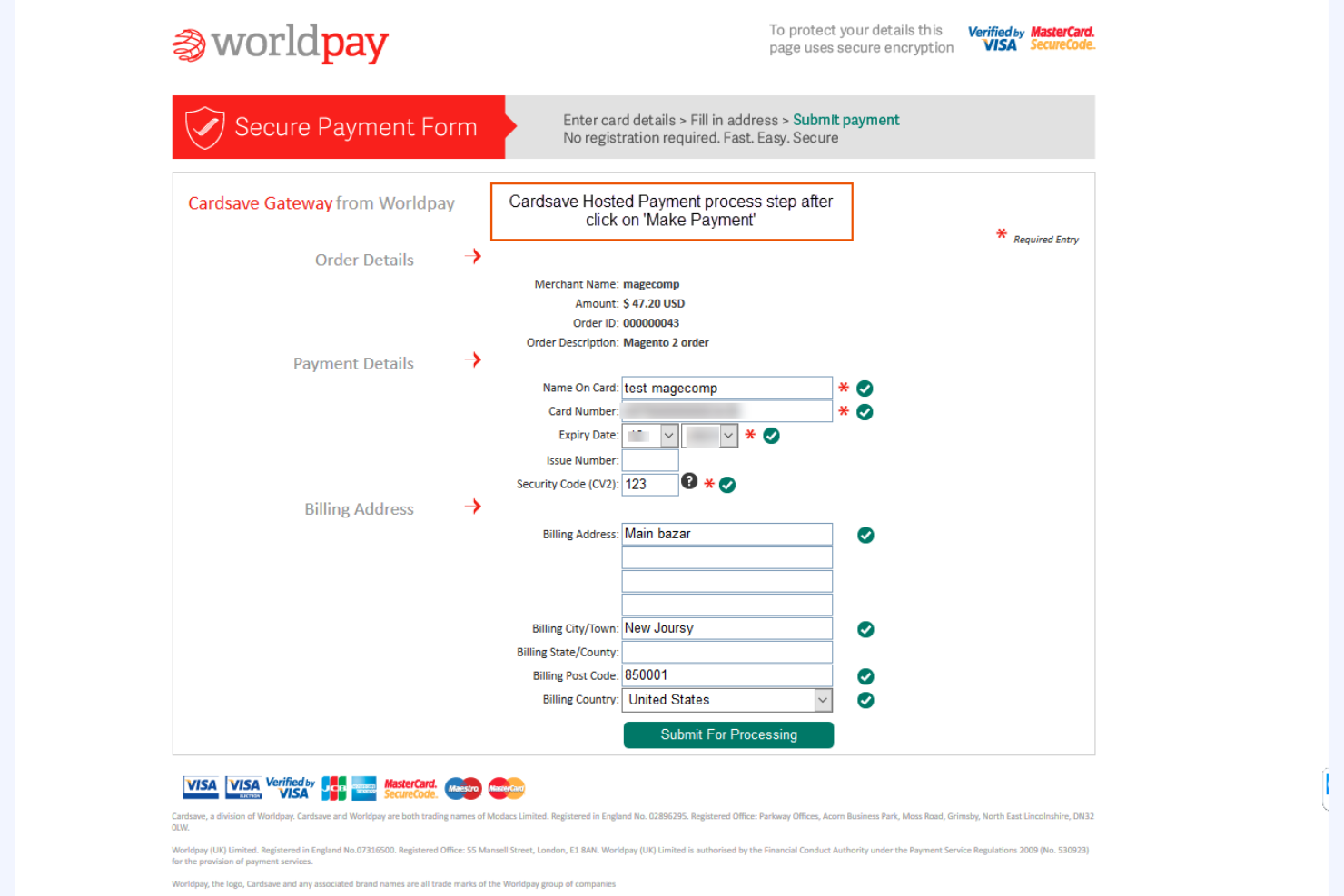
Worldpay is a global payment processing platform for businesses of all sizes that enables you to accept, manage, and process payments across in-store, online, and mobile channels.
Why I picked Worldpay: Worldpay offers extensive global transaction support, including multicurrency payment options, making it a strong choice if your business operates internationally. The platform's fraud protection features help secure cross-border transactions, and its reliable network ensures your business can process payments smoothly across different regions.
Standout Features and Integrations:
Features include real-time transaction monitoring, allowing you to track payments and identify failed transactions instantly. Detailed reporting tools provide insights into your payment data, and customizable checkout options provide tailored customer experiences.
Integrations include Adobe Commerce, WooCommerce, Shopify, BigCommerce, Salesforce, SAP, and more.
Pros and Cons
Pros:
- Massive payment processing scale
- Omnichannel integration
- Extensive global reach
Cons:
- Better suited for enterprise businesses
- Early termination fees
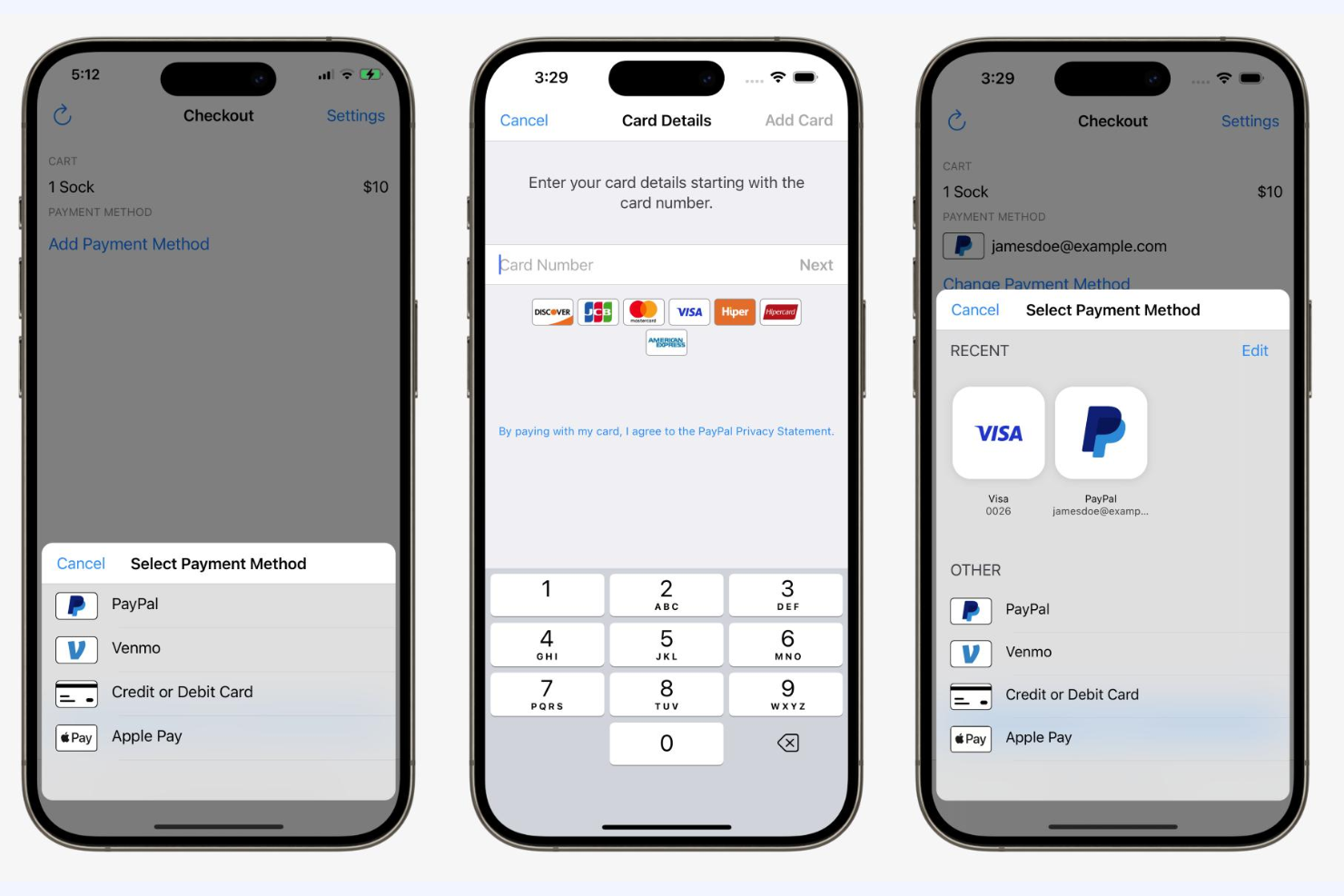
PayPal Enterprise Payments (formerly Braintree) is a full-stack payment gateway and merchant services provider for businesses to process online and mobile payments securely and efficiently. It caters to tech-focused companies, including startups and high-growth enterprises, by offering flexible, developer-friendly integrations.
Why I picked PayPal Enterprise Payments: PayPal Enterprise Payments is a strong choice for mobile commerce because it offers a single integration for many payment methods, including credit cards, PayPal, and digital wallets. PayPal Enterprise Payment’s SDKs enable straightforward integration of payment processing into iOS, Android, and web applications. The platform also provides advanced fraud protection through layered tools to safeguard transactions and customer data.
Standout Features and Integrations:
Features include recurring billing to automate subscription services, detailed reporting for payment insights, and a sandbox environment for testing before going live.
Integrations are not publicly listed.
Pros and Cons
Pros:
- Unified reporting
- Advanced features for subscriptions
- Integrated PayPal ecosystem
Cons:
- Extra cost for advanced security
- Non-refundable processing fees
Other Integrated Payment Solutions
Here are some additional integrated payment solutions options that didn’t make it onto my shortlist but are still worth checking out:
- Visa
For worldwide card acceptance
- Helcim
For transparent pricing
- GoCardless
For direct debit payments
- Payment Depot
For wholesale pricing
- Payoneer
For cross-border payments
- NMI
For white-label solutions
- Elavon
For international expansion
- 2Checkout
For in-store payments
- Stax
For subscription billing
- Payline Data
For flexible payment options
- Upflow
For managing cash flow
- Finix
For software platforms
- Alliant Systems
For property management
- Fortis
For healthcare providers
- PayTrace
For B2B transactions
- Celero
For retail businesses
- Integrated Payment Services
For custom payment solutions


Integrated Payment Solution Selection Criteria
When selecting the best integrated payment solutions to include in this list, I considered common buyer needs and pain points such as transaction security and ease of integration. I also used the following framework to keep my evaluation structured and fair:
Core Functionality (25% of total score)
To be considered for inclusion in this list, each solution had to fulfill these common use cases:
- Process credit and debit card payments
- Handle online and in-person transactions
- Provide transaction security and fraud protection
- Offer multiple currency support
- Generate detailed payment reports
Additional Standout Features (25% of total score)
To help further narrow down the competition, I also looked for unique features, such as:
- Customizable checkout experiences
- Advanced analytics and reporting tools
- Straightforward integration with accounting software
- Support for recurring billing and subscriptions
- Mobile payment capabilities
Usability (10% of total score)
To get a sense of the usability of each system, I considered the following:
- Intuitive user interface design
- Ease of navigation and workflow
- Availability of customization options
- Speed and performance of the platform
- Accessibility on various devices
Onboarding (10% of total score)
To evaluate the onboarding experience for each platform, I considered the following:
- Availability of training videos and tutorials
- Interactive product tours and guides
- Access to templates and resources
- Support from chatbots or live chat
- Regular webinars and workshops
Customer Support (10% of total score)
To assess each software provider's customer support services, I considered the following:
- Availability of 24/7 support
- Multiple channels for contacting support
- Responsiveness and helpfulness of support staff
- Access to an extensive knowledge base
- Availability of dedicated account managers
Value for Money (10% of total score)
To evaluate the value for money of each platform, I considered the following:
- Competitive pricing compared to similar tools
- Transparency in pricing structure
- Availability of flexible pricing plans
- Inclusion of essential features in base plans
- Discounts for annual or volume commitments
Customer Reviews (10% of total score)
To get a sense of overall customer satisfaction, I considered the following when reading customer reviews:
- Consistency of positive feedback across platforms
- Commonly mentioned strengths and weaknesses
- Overall satisfaction with customer support
- Feedback on ease of use and implementation
- Experiences with scalability and performance
How To Choose
It's easy to get bogged down in long feature lists and complex pricing structures. To help you stay focused as you work through your unique software selection process, here's a checklist of factors to keep in mind:
| Factor | What To Consider |
|---|---|
| Scalability | Will the solution grow with your business? Consider whether it can handle increased transaction volumes and support expanding operations without needing frequent upgrades. |
| Integrations | Does it integrate with your existing tools? Check compatibility with your accounting software, CRM, and other key systems to ensure optimal workflow integration. |
| Customizability | Can you tailor the solution to fit your needs? Look for options to adjust workflows, payment methods, and user interfaces to match your business processes. |
| Ease of use | Is the platform user-friendly for your team? Evaluate the learning curve and determine if your team can quickly adapt without extensive training or tech support. |
| Implementation and onboarding | How easy is it to get started? Consider the setup time, availability of onboarding support, and any potential disruptions to your operations during transition. |
| Cost | What are the total costs involved? Look beyond initial pricing. Consider transaction fees, hidden costs, and whether the solution fits within your budget. |
| Security safeguards | Are there adequate security measures? Ensure the solution offers encryption, fraud detection, and compliance with industry standards to protect your transactions. |
| Support availability | What support options are available? Check for 24/7 support, multiple contact channels, and responsiveness to ensure you can get help when needed. |
What Are Integrated Payment Solutions?
Integrated payment solutions are systems that allow businesses to process payments directly through their existing software platforms. Accountants, finance professionals, and business owners generally use these tools to simplify transactions and financial management. Features such as transaction processing, fraud detection, and multicurrency support help with efficient payment handling and security. These tools provide overall value by leveraging advanced processing solutions and payment technology to reduce manual work and improve overall financial management.
Features
When selecting integrated payment solutions, consider the following key features:
- Transaction processing: Enables businesses to handle credit card, debit card, and digital wallet payments efficiently.
- Fraud detection: Provides tools to identify and prevent fraudulent transactions, ensuring secure payment processing.
- Multicurrency support: Allows businesses to accept payments in various currencies, facilitating international transactions.
- Customizable checkout: Enables tailored payment experiences to match brand and customer needs.
- Recurring billing: Simplifies subscription management by automating the billing process for recurring services.
- Integration capabilities: Ensure compatibility with existing accounting, CRM, and other business systems for efficient operations.
- Analytics and reporting: Provide insights into sales and transaction data to help businesses make informed decisions.
- Mobile payment support: Enables payments via mobile devices, expanding payment options for customers.
- Security measures: Include encryption and compliance with industry standards to protect sensitive payment information.
- User-friendly interface: Ensures that the platform is easy to navigate and use, reducing the learning curve for new users.
Benefits
Implementing integrated payment solutions provides several benefits for your team and your business. Here are a few you can look forward to:
- Efficiency improvement: Automate payment processing to reduce manual work and free up time.
- Heightened security: Protect transactions with fraud detection and encryption, ensuring safe payment handling.
- Expanded payment options: Support multiple currencies and mobile payments, catering to diverse customer preferences.
- Better financial insights: Offer analytics and reporting tools that provide valuable data for decision-making.
- Consistent branding: Provide customizable checkout experiences to maintain brand consistency during transactions.
- Simplified subscription management: Automate recurring billing for ongoing services, reducing administrative tasks.
- Smooth integration: Merge smoothly with existing systems, improving overall business operations without disruption.
Costs and Pricing
Selecting integrated payment solutions requires an understanding of the various pricing models and plans available. Costs vary based on features, team size, add-ons, and more. The table below summarizes common plans, their average prices, and typical features included in integrated payment solutions:
Plan Comparison Table for Integrated Payment Solutions
| Plan Type | Average Price | Common Features |
|---|---|---|
| Free Plan | $0 | Basic transaction processing, limited support, and basic reporting. |
| Personal Plan | $25-$50/user/month | Standard payment processing, basic analytics, and limited customization options. |
| Business Plan | $30-$100/user/month | Advanced analytics, multicurrency support, and strengthened security features. |
| Enterprise Plan | $140-$300/user/month | Full customization, dedicated support, and extensive integration capabilities. |
Integrated Payment Solutions FAQs
Here are some answers to common questions about integrated payment solutions:
What is the difference between a payment gateway and a payment processor?
A payment gateway is the technology that captures and transfers payment data from the customer to the acquirer. A payment processor, on the other hand, is the service that communicates the transaction details between the merchant, the issuing bank, and the acquiring bank. When choosing a solution, ensure it includes both components to facilitate end-to-end payment processing. This distinction is important if you want to ensure smooth transactions and proper fund transfers for your business.
Can integrated payment solutions handle international transactions?
Yes, many integrated payment solutions support international transactions. They offer features such as multicurrency support and global payment methods to help your business cater to international customers. If you plan to expand globally, check whether the solution supports multiple currencies and complies with international regulations. This ensures that your business can reach a wider customer base without issues.
How do integrated payment solutions ensure data security?
Integrated payment solutions use encryption and tokenization to protect sensitive payment data. They often comply with PCI-DSS standards to ensure secure data handling. When selecting a solution, look for those with strong security measures to protect your business and customer information. This is especially important for maintaining trust and avoiding potential data breaches.
Do integrated payment solutions offer mobile payment options?
Yes, most integrated payment solutions offer mobile payment options. They support mobile wallets, such as Apple Pay and Google Pay, allowing customers to pay through their smartphones. If your business relies on mobile transactions, ensure the solution you choose is compatible with popular mobile payment methods. This flexibility can boost the customer payment experience and increase sales.
What's Next:
If you're in the process of researching integrated payment solutions, connect with a SoftwareSelect advisor for free recommendations.
You fill out a form and have a quick chat where they get into the specifics of your needs. Then you'll get a shortlist of software to review. They'll even support you through the entire buying process, including price negotiations.