

10 Best Payment Orchestration Platform in 2026

Best Payment Orchestration Platform Shortlist


A payment orchestration platform is software that unifies, automates, and manages payment processing across multiple providers, gateways, and methods. If you're evaluating the best payment orchestration platforms, you're probably facing growing transaction volumes, need more control over payment routing, or want to improve success rates without piling on operational complexity.
Choosing the right orchestration system matters for financial visibility, fraud controls, and delivering a smooth customer payment experience. In this guide, you'll find today’s top platforms broken down by strengths and use cases, so you can decide what’s right for your business goals and compliance needs.
Why Trust Our Software Reviews
We’ve been testing and reviewing financial software since 2023. As finance specialists ourselves, we know how critical and difficult it is to make the right decision when selecting software.
We invest in deep research to help our audience make better software purchasing decisions. We’ve tested more than 2,000 tools for different finance use cases and written over 1,000 comprehensive software reviews. Learn how we stay transparent & our software review methodology.
Best Payment Orchestration Platform Summary
This comparison chart summarizes pricing details for my payment orchestration platform to help you find the best one for your budget and business needs.
| Tool | Best For | Trial Info | Price | ||
|---|---|---|---|---|---|
| 1 | Best for unified commerce infrastructure | Free demo available | Pricing upon request | Website | |
| 2 | Best for global payment method integration | Free demo available | From €2500/month | Website | |
| 3 | Best for scalable API-first payment systems | Not available | Pricing upon request | Website | |
| 4 | Best for marketplace and multi-acquirer setups | Free demo available | Pricing upon request | Website | |
| 5 | Best for automated payment workflow customization | Free demo available | Pricing upon request | Website | |
| 6 | Best for connecting to multiple payment gateways | Free demo available | Pricing upon request | Website | |
| 7 | Best for open-source transaction routing | Free plan available | Pricing upon request | Website | |
| 8 | Best for enterprise-grade transaction routing | Free demo available | Pricing upon request | Website | |
| 9 | Best for cloud-native payments infrastructure | Not available | Pricing upon request | Website | |
| 10 | Best for transaction performance analytics | Free demo available | Pricing upon request | Website |
Best Payment Orchestration Platform Reviews
Below are my detailed summaries of the best payment orchestration platforms that made it onto my shortlist. My reviews offer a detailed look at the features, integrations, and best use cases of each platform to help you find the best one for you.
Adyen
Best for unified commerce infrastructure
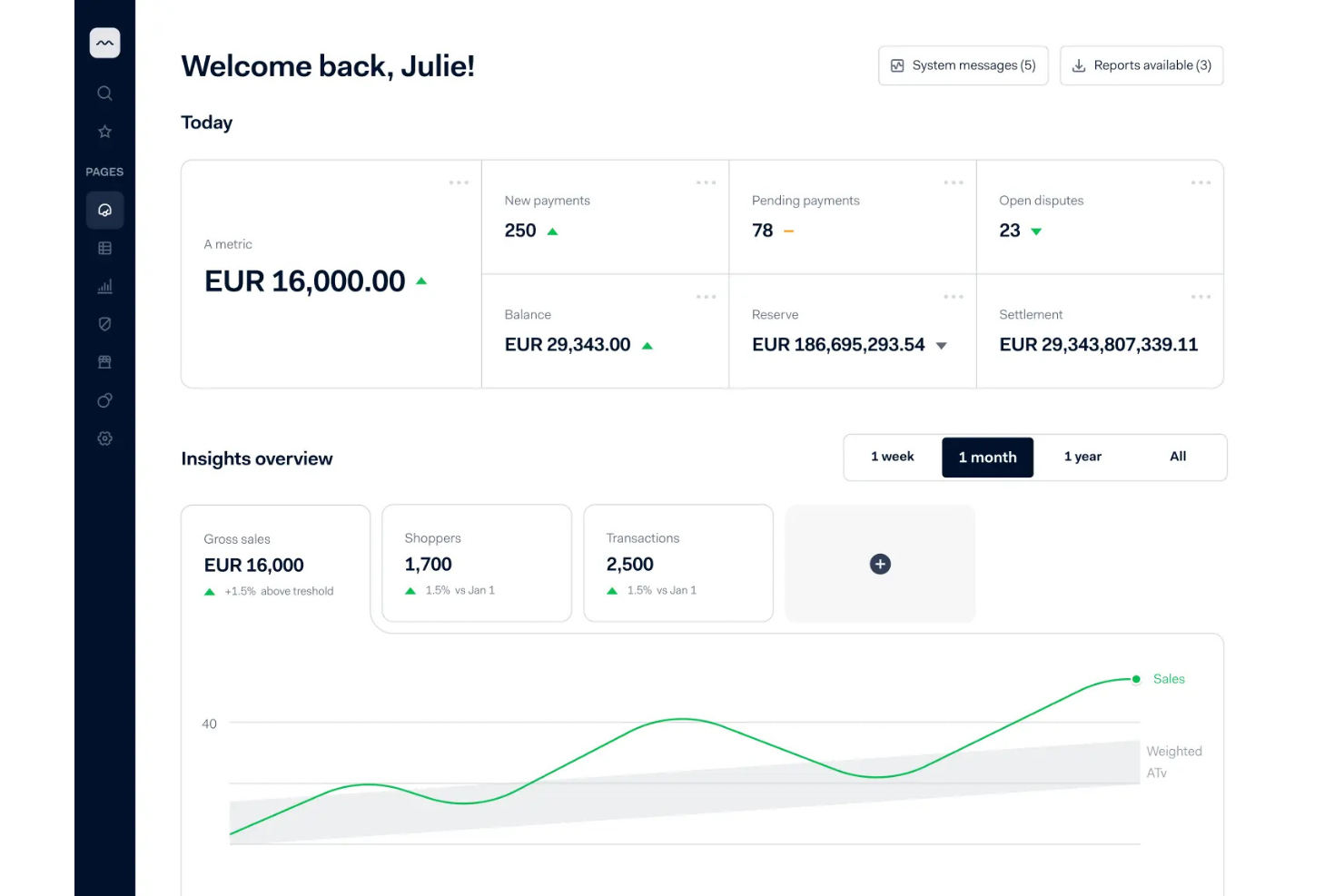
Adyen is a payment platform that combines payment acceptance, intelligent money movement, embedded finance, and data insights into a single API-based infrastructure spanning 150+ currencies and 200+ local payment methods.
Who Is Adyen Best For?
Adyen is a strong fit for enterprise-scale retailers, marketplaces, and platforms that need a single payment infrastructure across in-store, online, and mobile channels globally.
Why I Picked Adyen
I picked Adyen as one of the best because its unified commerce infrastructure is genuinely built from the ground up, not assembled from acquisitions. Adyen owns its acquiring network, which means transaction data from in-store terminals, online checkout, and mobile all flow into one unified dataset.
I particularly like its Shopper Recognition feature, which links customer behaviour across channels using that shared data layer to improve authorization rates across every touchpoint.
Adyen Key Features
- RevenueProtect: Applies machine learning-based risk scoring to detect and block fraudulent transactions in real time.
- Network tokenization: Replaces raw card data with network-issued tokens to increase authorization rates at the scheme level.
- Adyen for Platforms: Lets marketplaces and software platforms embed payment acceptance and payouts directly into their product.
- Balance Platform: Provides built-in tools to issue cards, hold funds, and manage payouts across business entities from a single account structure.
Adyen Integrations
Adyen offers verified integrations with ecommerce and retail platforms including Salesforce Commerce Cloud, Adobe Commerce, SAP Commerce, Oracle Retail, Microsoft Dynamics 365, VTEX, BigCommerce, commercetools, Recurly, and Cegid. An API is available for custom integrations, and Adyen maintains a partner network of over 1,000 businesses across industries like retail, travel, and marketplaces.
Pros and Cons
Pros:
- Smart routing lifts international approval rates
- Cross-channel reporting with real-time visibility
- Owns its acquiring stack end to end
Cons:
- Limited flexibility with external acquiring banks
- Integration needs developer documentation access

Corefy
Best for global payment method integration

Corefy is a payment orchestration platform that connects online businesses and payment institutions to 600+ payment providers worldwide through a single API, covering payments, payouts, routing, reconciliation, and checkout management.
Who Is Corefy Best For?
Corefy is a natural fit for payment service providers, fintech platforms, and marketplaces that need to manage multi-provider payment flows across multiple geographies from a single control layer.
Why I Picked Corefy?
I picked Corefy because it connects global payment methods, payouts, and providers through one orchestration layer. Its 600+ ready-made connectors make it easier to manage multi-provider payment flows across different regions without building separate provider setups.
I also like that Corefy combines routing, cascading, checkout management, chargebacks, and reconciliation in one platform, giving teams a central place to manage and monitor payment operations.
Corefy Key Features
- Chargeback management: A dedicated module for tracking, disputing, and managing chargebacks across all connected payment providers from a single interface.
- Batch payouts: Send bulk payout files to multiple recipients simultaneously across different payment methods and providers.
- Checkout builder: A no-code editor for designing and configuring branded checkout flows, including A/B testing for conversion optimization.
- Automated reconciliation: Matches transaction records against provider statements across multiple PSPs, flagging mismatches and logging corrections automatically.
Corefy Integrations
Corefy offers 600+ built-in connectors to payment providers and acquirers, including Stripe, PayPal, Nuvei, dLocal, Klarna, Cashfree, RazorPay, emerchantpay, ACI Worldwide, and Amazon Payment Services. An API is available for custom integrations, and a Payment Bridge option lets you plug in through 7+ ecommerce platforms for faster go-live.
Pros and Cons
Pros:
- Cascading routes failed payments to next options
- Flexible payment cascade routing logic
- Supports white-label and multi-tenant setups
Cons:
- Built-in analytics could be more detailed
- Advanced setups need deep developer insights


Checkout.com is an API-first payments platform covering card acquiring, dynamic routing, fraud detection, and payout management across 150+ currencies and global payment methods.
Who Is Checkout.com Best For?
Checkout.com is a strong fit for high-growth digital businesses and enterprises that need developer-built, customizable payment infrastructure at global scale.
Why I Picked Checkout.com
I've included Checkout.com in my top picks because its API architecture gives engineering teams direct, granular control over every layer of the payment flow. I particularly like its Intelligent Acceptance product, which uses transaction data to optimize authorization rates through issuer-specific retry logic and network token management.
Checkout.com's Unified Payments API also consolidates local payment methods, card processing, and payouts into a single integration, which matters when scaling across multiple markets.
Checkout.com Key Features
- Fraud Detection Pro: Applies machine learning models to score transactions in real time, with customizable rules to block or flag suspicious activity.
- Forex and currency conversion: Supports dynamic currency conversion and settlement in 150+ currencies, with FX rates applied at the transaction level.
- Disputes management: Centralizes chargeback tracking, evidence submission, and response workflows through a single dashboard.
- Payment links: Generates shareable payment links for one-time or recurring collections without requiring additional front-end development.
Checkout.com Integrations
Checkout.com offers integrations with ecommerce platforms and subscription tools including Shopify, BigCommerce, WooCommerce, Magento 2, Salesforce Commerce Cloud, SAP Commerce Cloud, Chargebee, Recurly, and Zuora. It also connects with payment orchestration partners like Spreedly, Primer, and Gr4vy. An API is available for custom integrations.
Pros and Cons
Pros:
- Reconciliation API not common among competitors
- Vault auto-updates stored card details automatically
- Direct local acquisition across multiple geographies
Cons:
- Occasional delays in settlement payout reporting
- No native POS or in-person payments


APEXX Global is a payment orchestration platform built for enterprise merchants, offering multi-acquirer routing, decline cascading, split payment volume management, and consolidated reporting through a single API connection.
Who Is APEXX Global Best For?
I'd say APEXX Global is a strong fit for enterprise merchants in travel, retail, and ecommerce that need to manage high transaction volumes across multiple acquirers and markets.
Why I Picked APEXX Global
I've included APEXX Global in my top picks because of how it handles multi-acquirer complexity. Its Smart Split feature lets you distribute transaction volume across multiple acquirers or MIDs by currency, card scheme, and issuer country, with interactive dashboards to compare performance in real time.
I also like that its Intelligent Routing Engine (AIRE) pairs with decline cascading, so soft-declined transactions automatically retry through alternative acquirers without disrupting checkout.
APEXX Global Key Features
- Revenue Protect: Instantly reroutes transactions to alternative acquirers during a gateway or acquirer outage, with one-click revert to your original setup once service is restored.
- Consolidated reporting: Automatically pulls and consolidates transaction, settlement, and chargeback data from all connected processors into a single, customizable report format.
- Cost routing: Automatically selects the lowest-cost processing path for each transaction based on currency, card type, and acquirer fees.
- Sandbox testing environment: Lets you replicate your production setup to test routing rules and outage scenarios before changes go live.
APEXX Global Integrations
APEXX Global connects merchants to 200+ acquirers, 150+ alternative payment methods, and 30+ BNPL providers through a single API. Supported payment partners include JP Morgan, Worldpay, Elavon, Barclaycard, PayPal, Apple Pay, Google Pay, Alipay, and WeChat Pay, with an API available for custom integrations.
Pros and Cons
Pros:
- Consultative onboarding with payment experts
- One-click failover during acquirer outages
- Acquirer-agnostic with no routing bias
Cons:
- Pricing details not publicly available
- Primarily built for enterprise-scale merchants


Primer is a payment orchestration platform that lets you build, automate, and manage end-to-end payment flows through no-code workflows, dynamic routing, network tokenization, and built-in reconciliation and observability tools.
Who Is Primer Best For?
Primer is a strong fit for ecommerce and digital businesses that need to customize payment logic without relying on engineering resources for every change.
Why I Picked Primer
I picked Primer as one of the best because its no-code workflow builder genuinely sets it apart. My team can drag and drop processors, fraud tools, and 3DS strategies into a visual canvas, then wire up conditional logic without writing a single line of code.
I also use the A/B testing feature to pit processors against each other by region and let Primer automatically route volume to the better-performing option. That kind of iterative control over payment routing is rare in this space.
Primer Key Features
- Fallbacks: Automatically reroutes a failed transaction to a backup processor in real time, without requiring any manual intervention.
- Dispute automation: Triggers instant refunds and sends real-time notifications to merchants and fraud teams in Slack when a dispute occurs.
- Observability dashboard: Gives you a unified view of every transaction route, decision, and outcome across all connected processors.
- Centralized vault: Stores payment credentials independently of any PSP, so you can route tokens across processors without lock-in.
Primer Integrations
Primer offers 20 pages of integrations across payment processors, payment methods, fraud tools, and productivity apps, including Stripe, Adyen, Checkout.com, Braintree, PayPal, Airwallex, dLocal, Mollie, Klarna, and 2C2P. An API is available for custom integrations, and Zapier support is not clearly documented.
Pros and Cons
Pros:
- Single integration connects all payment providers
- Visual A/B testing across processors
- No-code workflow builder for payment routing
Cons:
- Requires manual entry for legacy equipment data
- Initial setup can be time-consuming


Spreedly is an open payments platform that lets you connect to multiple payment gateways and providers through a single API, with built-in tools for transaction routing, fraud prevention, payment data vaulting, and reporting.
Who Is Spreedly Best For?
Spreedly is a strong fit for mid-market and enterprise businesses that need to manage payment processing across multiple geographies and gateway relationships.
Why I Picked Spreedly
I've included Spreedly in my top picks because its Connect product does something most orchestration platforms struggle with: it links wallets, local payment methods, and processors across 100+ countries through a single unified API. What I like is that you can add or swap providers without re-architecting your entire stack, which removes a real bottleneck when entering new markets.
The intelligent routing layer then directs each transaction to the best-performing provider in real time, which directly supports higher authorization rates across your gateway connections.
Spreedly Key Features
- PCI-compliant payment vault: Securely store and centralize all payment method data in a PCI-compliant environment, reducing the scope and cost of security audits.
- Universal tokenization: Abstracts and normalizes payment credentials across providers and regions, keeping payment data portable across gateways without re-architecting your stack.
- Embedded fraud detection: Real-time risk signals and adaptive controls flag and block fraudulent transactions before they impact revenue.
- Global 3DS authentication: Applies dynamic, region-appropriate authentication standards to each transaction to meet compliance requirements across markets.
Spreedly Integrations
Spreedly's integration ecosystem is one of the largest in the payment orchestration space, with 200+ connections across payment gateways, payment methods, and fraud solutions. Gateway integrations include Stripe, Adyen, Braintree, Checkout.com, CyberSource, Authorize.Net, Worldline, PayPal, NMI, and dLocal, among many others. Fraud solution integrations include Forter, Sift, Signifyd, and Kount. An API is available for custom integrations.
Pros and Cons
Pros:
- Dedicated partner account managers available
- PCI Level 1 vault reduces compliance burden
- Supports 120+ payment gateways globally
Cons:
- Legacy connectors limit protocol flexibility
- Advanced analytics requires external BI tools

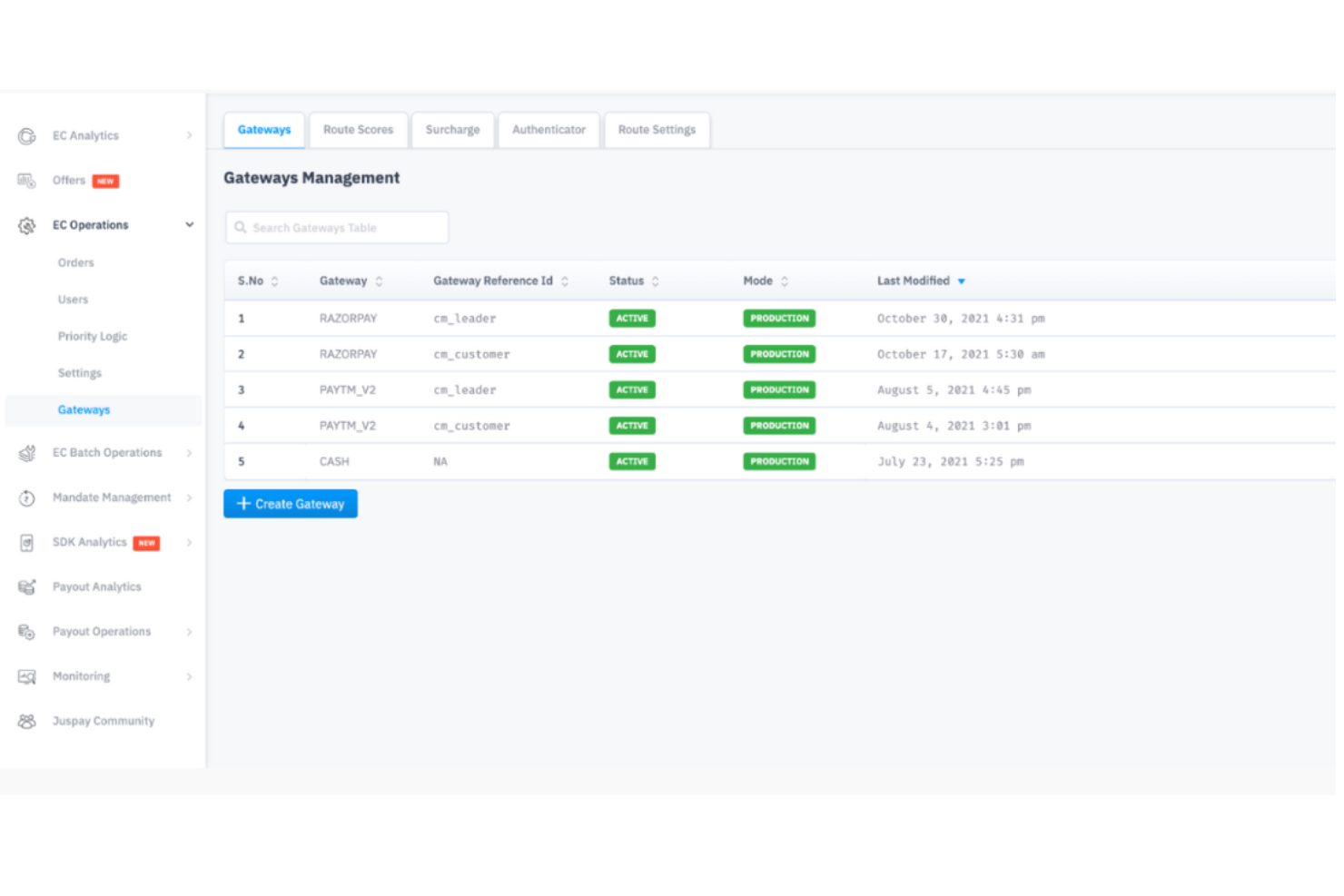
Hyperswitch is an open-source payment orchestration platform that gives you a unified API for connecting to multiple payment processors, with smart routing, a control center, and both cloud-hosted and self-hosted deployment options.
Who Is Hyperswitch Best For?
Hyperswitch is a strong fit for engineering-led fintech teams and digital businesses that want full control over their payment stack through a self-hosted or cloud-deployed open-source setup.
Why I Picked Hyperswitch
I picked Hyperswitch as one of the best because it's the only payment orchestration platform on this list where you can inspect, modify, and self-host the entire codebase. Its intelligent routing engine supports rule-based, volume-based, and ML-driven algorithms, so your team can tune routing logic directly rather than relying on a vendor's black box.
I also like that its modular architecture lets you deploy only the components you need, whether that's the vault, the reconciliation engine, or the revenue recovery retry engine.
Hyperswitch Key Features
- Cost observability: A self-serve dashboard that breaks down scheme, interchange, and acquirer fees so you can audit and optimize payment costs at a granular level.
- Alternative payment method widgets: Embed APMs, BNPLs, A2A rails, and local payment methods directly into your checkout with on-us routing built in.
- Secure authentication: Build PSP-agnostic 3DS workflows that adjust based on risk scores from your fraud and risk management engine.
- Token vault: Store and manage network tokens, PSP tokens, and raw card details across processors in a single secure vault.
Hyperswitch Integrations
Hyperswitch offers 300+ connectors to payment processors, acquirers, fraud and risk management engines, and 3DS authentication providers, including Adyen, Stripe, Checkout.com, Braintree, PayPal, Worldpay, Authorize.net, Airwallex, dLocal, and CyberSource. It also has e-commerce plugins for Shopify, WooCommerce, and Magento. An API is available for custom integrations.
Pros and Cons
Pros:
- Modular pick-and-choose deployment architecture
- Built in Rust for low latency
- Full codebase transparency under Apache 2.0
Cons:
- Needs engineering resources to configure routing
- Self-hosting requires PCI compliance ownership


IXOPAY is a payment orchestration platform that combines intelligent transaction routing, tokenization, and AI-powered payments analytics across a single API with 500+ pre-built payment adapters.
Who Is IXOPAY Best For?
IXOPAY is well suited to enterprise merchants operating across multiple verticals, including retail, fintech, travel, and subscription businesses that need flexible, multi-acquirer routing at scale.
Why I Picked IXOPAY
I picked IXOPAY as one of the best because its intelligent routing engine goes well beyond basic failover. You can configure routing rules based on card type, issuer geography, risk profile, and processing cost simultaneously, so every transaction is directed to the provider most likely to approve it at the lowest fee.
I also like the fee management engine, which calculates external fees and commissions in real time across every PSP in your stack and feeds that data directly back into routing decisions. That feedback loop is what makes IXOPAY's approach to enterprise-grade transaction routing genuinely different from lighter-weight orchestration tools.
IXOPAY Key Features
- Risk and fraud services: Apply velocity checks, 3DS authentication, and configurable fraud rules at the transaction level before a payment is submitted to an acquirer.
- Automated reconciliation and settlement: Match transaction records against acquirer and PSP settlement reports automatically to surface discrepancies without manual reconciliation.
- Universal tokens: Store and port payment credentials across multiple PSPs through a single agnostic token vault, so you're never locked into one provider's data format.
- Anomaly detection: Monitor payment data in real time and flag unusual patterns in authorization rates, decline codes, or transaction volumes using AI-driven analysis.
IXOPAY Integrations
IXOPAY offers 500+ pre-built payment adapters connecting to PSPs, acquirers, alternative payment methods, and fraud services, including Adyen, Stripe, Worldpay, J.P. Morgan, Checkout.com, dLocal, PayPal, and Braintree. An API is available for custom integrations, and Zapier support is not clearly documented.
Pros and Cons
Pros:
- AI-powered anomaly and fee detection
- White-label option for resellers
- Vendor-neutral with no PSP lock-in
Cons:
- High minimum volume requirements
- Lacks advanced real-time anomaly detection


Gr4vy is a cloud-native payment orchestration platform built as an infrastructure-as-a-service (IaaS) that lets enterprise merchants and platforms manage multi-PSP routing, checkout experiences, fraud prevention, and a vendor-agnostic payment vault through a single integration.
Who Is Gr4vy Best For?
Gr4vy is a strong fit for enterprise merchants and multi-sided platforms that need dedicated, cloud-native payment infrastructure they can fully own and control across multiple geographies.
Why I Picked Gr4vy
I've included Gr4vy in my top picks because its IaaS architecture is genuinely different from every other payment orchestration platform I've looked at. Each merchant gets a dedicated, single-tenant cloud instance, so your payment stack shares no servers with other businesses. That means no interference, no shared downtime risk, and bespoke redundancy you actually control.
I also like that Gr4vy supports data residency across multiple regions, keeping transaction data within local compliance boundaries as you scale globally.
Gr4vy Key Features
- Least cost routing: Automatically routes each transaction to the most cost-effective PSP based on rules like card type, geography, or transaction value.
- Dynamic retries: Retries declined transactions through alternative PSPs or adjusted parameters to recover authorization without manual intervention.
- Interoperable token vault: Lets you import, export, and route tokens across multiple PSPs, so you can switch providers without losing card-on-file data.
- Co-badge card routing: Uses BIN intelligence to detect co-badged cards and override the card brand to route through a local acquiring rail when available.
Gr4vy Integrations
Gr4vy offers 400+ connections across payment processors, payment methods, anti-fraud providers, and digital wallets, including Adyen, Stripe, Checkout.com, Braintree, CyberSource, dLocal, Airwallex, PayPal, Apple Pay, and Google Pay. An API is available for custom integrations, and Zapier support is not clearly documented.
Pros and Cons
Pros:
- PCI DSS Level 1 and SOC 2 Type 2 certified
- No-code flow builder for transaction routing
- Dedicated single-tenant cloud instances per merchant
Cons:
- Dashboard limits deep data drilldowns
- Enterprise onboarding takes two to four weeks
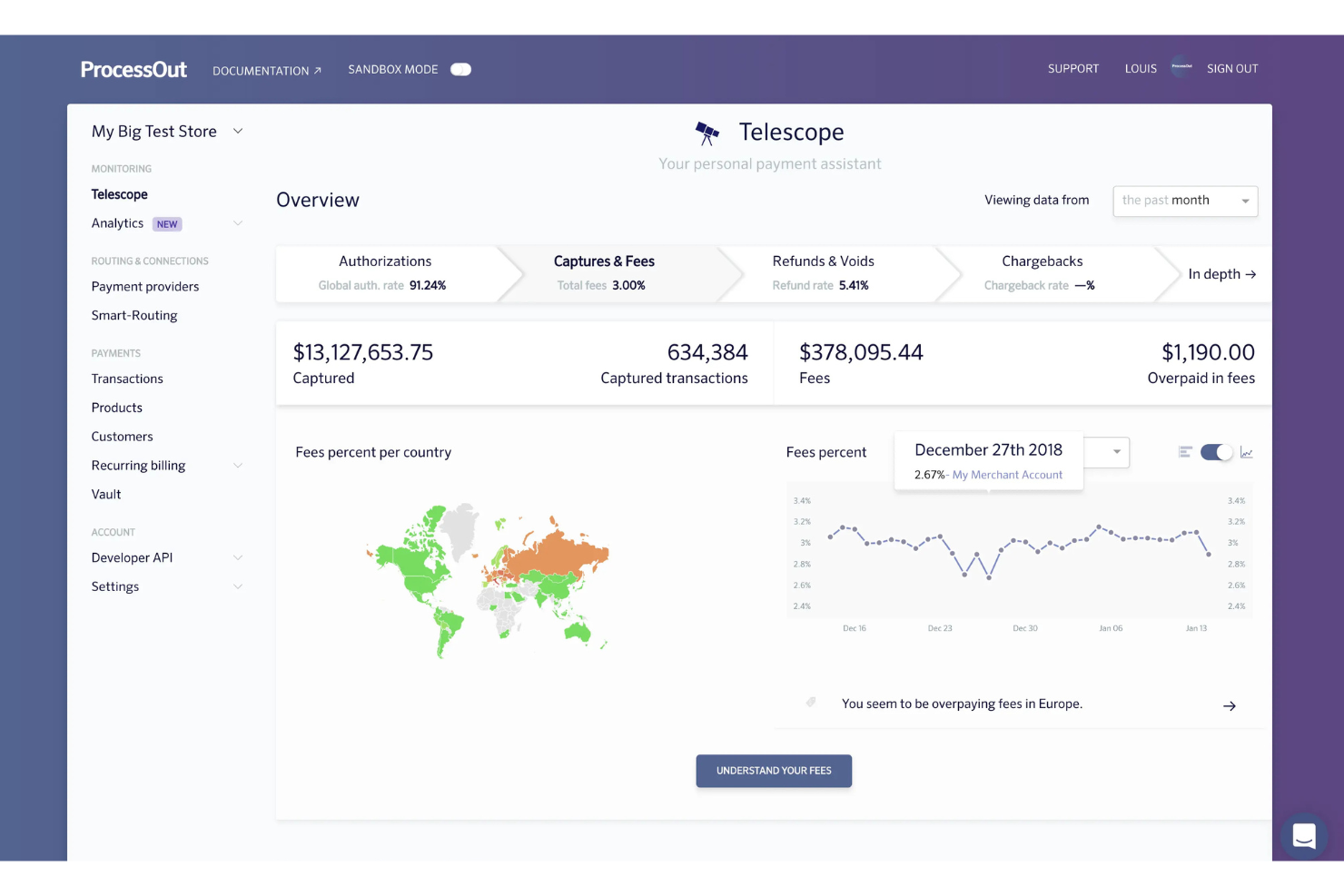
ProcessOut is a payment orchestration platform that combines multi-provider routing, AI-driven smart routing, transaction monitoring via its Telescope analytics system, a PCI-compliant vault, and a centralized ops suite for reconciliation and reporting.
Who Is ProcessOut Best For?
ProcessOut is well-suited for enterprise ecommerce and subscription businesses that need deep visibility into payment performance across multiple processors.
Why I Picked ProcessOut
ProcessOut earns its spot on my shortlist because of Telescope, its agnostic payment monitoring system that analyzes transactions across all your providers and surfaces actionable performance insights. I love that Telescope benchmarks performance across 190+ countries and 10+ industries, so my team can see exactly where conversion is lagging and why.
Paired with AI smart routing, which learns from transaction history to auto-select the best provider, it gives payment managers a genuinely data-driven way to reduce failed transactions.
ProcessOut Key Features
- Dynamic checkout: Personalizes the payment methods shown to each customer based on their transaction's risk profile and geography.
- PCI-compliant vault: Stores PANs and network tokens in a provider-agnostic vault, enabling transaction chaining and retries across multiple PSPs.
- Instant transaction retry: Automatically re-routes failed transactions to an alternative provider without manual intervention.
- Ops suite reconciliation: Centralizes payment data across all providers for automated reconciliation and third-party accounting system integration.
ProcessOut Integrations
ProcessOut connects to over 100 PSPs and alternative payment methods through its single API, including providers like PayPal and Klarna. It also supports data warehouse exports via Amazon S3 for syncing transaction data with external systems and provides a REST API with server SDKs in JavaScript, Ruby, Go, PHP, and Python for custom integrations. Zapier support is not clearly documented.
Pros and Cons
Pros:
- AI routing learns from live transaction patterns
- Vendor-agnostic vault enables flexible PSP switching
- Cross-provider transaction benchmarking in 190+ countries
Cons:
- Advanced reporting needs manual template work
- Strongest fit limited to Europe and North America
Other Payment Orchestration Platform
Here are some additional payment orchestration platform options that didn’t make it onto my shortlist, but are still worth checking out:
- Akurateco
For white-label payment solutions
- CellPoint Digital
For omni-channel payment optimization
- Nuvei
For instant bank transfer support
- Cybersource
For tokenization across card networks
- BlueSnap
For integrated global tax compliance
- Rapyd
For embedded local payout capabilities
- Worldline
For enterprise-level fraud prevention
- PayU
For emerging market payment access
- Solidgate
For subscription billing management


How I Evaluate Payment Orchestration Platforms
When a declined transaction at checkout means lost revenue, I split my evaluation into baseline criteria every platform must meet and the differentiators that separate the best from the rest.
Core Functionality (Table Stakes For This List)
When I'm selecting tools for my list, I rank each one on a scale from 0 (does not offer the functionality) to 5 (excels in this area) for each core functionality listed below. Then, I calculate the tool's total score as a percentage. Each tool needs to achieve a minimum total score of 65% to be considered for inclusion.
- Multi-PSP integration: I evaluate how many PSPs, acquirers, and gateways connect through a single API, and whether adding a new provider requires engineering work or self-service configuration.
- Smart transaction routing: Each platform should let me define routing rules by parameters like geography, card BIN, currency, or cost, and the strongest options offer ML-driven optimization on top of that.
- Cascading and failover: I look for automated retry logic that reroutes declined transactions to alternate acquirers, especially soft decline recovery where the platform intelligently retries based on issuer response codes.
- Unified reconciliation and reporting: Settlement data from every connected PSP should roll up into one view with fee breakdowns, chargeback tracking, and exports that map to your general ledger or ERP.
- Tokenization and vaulting: A PSP-agnostic vault matters most here. I check whether tokens are portable across providers and whether the platform supports network tokens and automatic card-on-file updates.
- Multi-currency and local payment methods: I look at currency coverage alongside alternative payment method support, from digital wallets and bank transfers to BNPL and real-time payment rails across target markets.
Once I have a list of tools that meet these criteria, I consider what sets each platform apart.
Differentiating Factors (What Sets Vendors Apart)
Here's how I compare and contrast different vendors:
Standout Features
Built-in fraud orchestration is a key differentiator. I look for platforms that route transactions through multiple fraud tools with rules you can configure by region or risk profile, rather than relying on a single provider's scoring. A unified tokenization vault also matters, specifically whether it supports network tokens and lets you move card data between PSPs without re-collecting credentials. Consolidated reporting that handles settlement matching across providers is where reconciliation bottlenecks tend to surface.
Beyond Features
Vendor neutrality is the first thing I evaluate. Some orchestrators are owned by a PSP, which can bias routing decisions away from your best option. I also check whether the platform lets you swap or remove providers without contractual penalties. Compliance and data portability matter just as much—I look for PCI DSS Level 1 certification alongside merchant-owned vault data that travels with you if you leave. Pricing transparency rounds out the picture, especially whether the orchestrator layers fees on top of interchange or offers clear per-transaction pricing.
How to Choose a Payment Orchestration Platform
It’s easy to get bogged down in long feature lists and complex pricing structures. To help you stay focused as you work through your unique software selection process, here’s a checklist of factors to keep in mind:
| Factor | What to Consider |
|---|---|
| Scalability | Can the platform support future growth in markets, volumes, and payment methods without frequent upgrades? |
| Integrations | Which PSPs, acquirers, and APMs are natively supported—and what’s required to add new ones as needs evolve? |
| Customizability | How flexible is transaction routing or reconciliation configuration to match your internal policies? |
| Ease of use | Will both technical and finance teams be able to manage and monitor transactions with minimal friction? |
| Implementation and onboarding | What are timelines, internal resource needs, and vendor support during migration and go-live phases? |
| Cost | Are all fees—platform, transaction, and potential add-ons—transparent and aligned with your volume needs? |
| Security safeguards | Is the vendor certified to industry standards (like PCI DSS Level 1), with clear processes for breaches? |
| International capabilities | Does the platform offer local methods, multi-currency support, and compliance in all countries you need? |
What Are Payment Orchestration Platforms?
Payment orchestration platforms are software solutions that connect businesses to multiple payment service providers, acquirers, and local payment methods through a unified API.
They centralize transaction routing, tokenization, reconciliation, and reporting, allowing finance teams to optimize approval rates, reduce costs, and manage payments globally without relying on a single processor or building complex in-house integrations.
Features of Payment Orchestration Platform
When selecting a payment orchestration platform, keep an eye out for the following key features:
- Multi-PSP connectivity: Integrates multiple payment service providers and acquirers into a single interface, giving you flexibility and redundancy in payment processing.
- Smart transaction routing: Dynamically directs each transaction to the optimal provider based on predefined rules like geography, currency, and past approval rates.
- Cascading and failover: Automatically retries declined transactions through alternate providers, helping recover lost sales and improve authorization rates.
- Unified reconciliation: Consolidates transaction, settlement, and chargeback data from all providers for improved reporting and easier financial close processes.
- Tokenization and vaulting: Securely store card credentials in a PCI-compliant, provider-agnostic vault, allowing you to retain control and portability of payment data.
- Alternative payment method support: Provides access to a wide range of global and local payment options, including wallets, bank transfers, and BNPL methods.
- Real-time analytics dashboard: Centralizes payment data and key performance metrics, making it easier to identify trends and resolve operational issues.
- Compliance management: Supports PCI DSS, GDPR, SCA/PSD2, and other relevant regulatory requirements to ensure safe and lawful payment processing.
- Built-in fraud prevention integration: Connects to multiple external fraud tools with rules-based transaction control for managing risk across providers.
- Developer-friendly API and documentation: Offers comprehensive APIs and clear technical guides, speeding up implementation and future updates.
Benefits of Payment Orchestration Platform
Implementing a payment orchestration platform provides several benefits for your team and your business. Here are a few you can look forward to:
- Higher approval rates: Smart routing and cascading help maximize successful transactions by selecting the best PSP or acquirer for each payment attempt.
- Reduced payment costs: Route transactions based on cost parameters and negotiate with multiple providers to minimize processing fees and interchange.
- Simplified reconciliation: Unified reporting and settlement matching consolidate all PSP data, making financial close-outs and audits faster and less error-prone.
- Increased global reach: Support for multiple currencies and alternative payment methods lets you serve customers in more markets without separate integrations.
- Better risk management: Built-in fraud orchestration and failover logic reduce fraud exposure and prevent single points of failure from disrupting business.
- Greater data control: PSP-agnostic token vaults keep your customers’ payment data portable, supporting compliance and making it easier to change providers.
- Faster rollout of payment updates: Developer-friendly APIs and self-service integrations enable quicker launches and easier adaptation to market changes.
Costs and Pricing of Payment Orchestration Platform
Selecting a payment orchestration platform requires an understanding of the various pricing models and plans available. Costs vary based on features, team size, add-ons, and more. The table below summarizes common plans, their average prices, and typical features included in payment orchestration platform solutions:
Plan Comparison Table for Payment Orchestration Platform
| Plan Type | Average Price | Common Features |
|---|---|---|
| Free Plan | $0 | Limited PSP integrations, basic transaction routing, restricted reporting, and community support. |
| Personal Plan | $50–$300/month | More PSP connections, standard routing logic, PCI-compliant vault, improved analytics, and email support. |
| Business Plan | $500–$2,000/month | Advanced routing, unified reconciliation, support for multiple payment methods, API access, and live chat support. |
| Enterprise Plan | $2,500+/month | Custom integrations, intelligent fraud orchestration, dedicated account management, SLA-backed support, and compliance tools. |
Payment Orchestration Platform FAQs
Here are some answers to common questions about the payment orchestration platform:
How does payment orchestration help increase payment approval rates?
Payment orchestration platforms use smart routing and cascading logic to direct each transaction to the provider most likely to approve it, vastly improving conversion rates. This means your business can recover more sales, achieve greater payment success, and reduce declines by switching between PSPs based on card type, location, network status, or historical performance. Refining this payment strategy on the backend ensures you find the right balance for your unique business needs.
Can a payment orchestration platform support multiple currencies and local payment methods?
Yes, most modern payment orchestration platforms support a wide range of currencies and alternative payment options. This allows you to cater to your customers’ preferred payment methods in different regions without building separate integrations for each local provider. By constantly adapting to new payment methods, you can lower your transaction fees and benefit from lower costs across the global payment ecosystem.
Is it possible to switch payment service providers without disrupting customer payments?
Yes, a PSP-agnostic token vault lets you move card-on-file data across providers without requiring customers to re-enter payment details. This protects the overall customer experience and makes it much easier to add, remove, or swap providers while keeping payment workflows smooth for users, maintaining a pop in your overall user experience.
What should I look for when evaluating the security of a payment orchestration platform?
Look for PCI DSS Level 1 certification, support for encryption and network tokenization, and clear compliance with data protection regulations. The platform should also offer strong access controls and regular security audits to protect sensitive payment data.
How long does it typically take to implement a payment orchestration platform?
Implementation timelines can vary based on your existing payment setup and required integrations. Many businesses can get started within weeks if using standard APIs and supported PSPs, but custom migrations, large-scale testing, or enterprise onboarding can take longer.